

Owning a cat in the United States usually means paying several hundred dollars in the first year and then hundreds more every year after that. Evidence from recent cost breakdowns suggests that:
- First-year costs for a cat often land somewhere between roughly $700 and $3,000, depending on adoption fees, medical needs, and supplies.
- Ongoing annual costs commonly fall in a broad range of about $750 to just over $3,000 per year, mainly driven by food, litter, and veterinary care.
- Over a typical cat lifetime, you may be looking at tens of thousands of dollars in total spending.
The goal is not to scare you away from getting a cat, but to help you decide before you adopt whether you can comfortably afford one without risking debt or surrendering the pet later.
Understanding US Cat Ownership Costs vs Your Budget
When people ask for a “cat ownership costs breakdown USA,” they usually want two things:

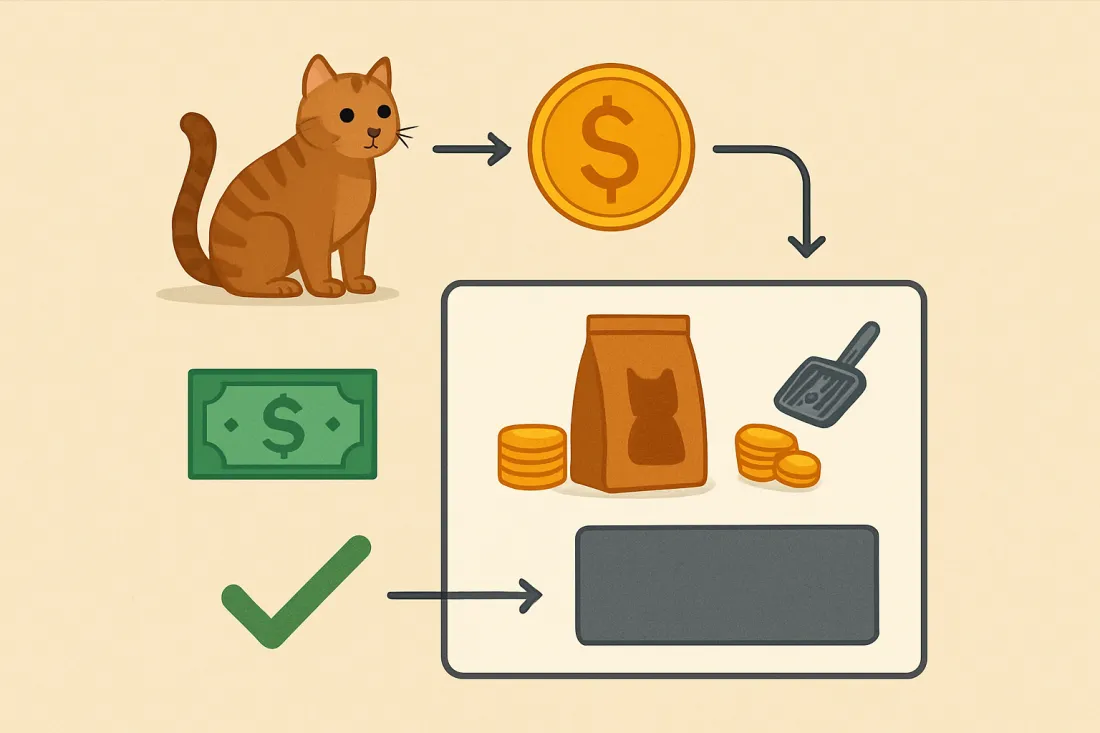
- A realistic, category-by-category look at what they will pay.
- A way to compare those costs with their own monthly budget.
In the United States, the biggest drivers of cat costs are:
- Medical care (vaccines, spay/neuter, checkups, emergencies)
- Food and litter (recurring monthly expenses)
- One-time gear (carrier, litter box, scratching posts, etc.)
- Optional extras (pet insurance, grooming, boarding, pet sitting)
Because prices vary widely between cities, suburbs, and rural areas, you should treat any numbers as planning ranges, not promises. The safest approach is to use the ranges as a starting point, then call at least one local vet and one shelter to confirm typical fees where you live.
Startup vs Ongoing Cat Costs in the USA
It helps to separate what you pay once from what you pay every month or year. The table below compares typical categories and how they show up in your budget.
| Cost category | Startup (first year, mostly one-time) | Ongoing (monthly/annual) | What affects the amount most |
|---|---|---|---|
| Adoption or purchase | One-time fee that can be modest at a shelter or much higher from a breeder | None after adoption | Source (shelter vs breeder), age, pedigree, and whether initial vet care is included |
| Initial vet care | First exam, core vaccines, deworming, testing; some estimates put first-year medical plus spay/neuter in the low hundreds of dollars | Annual exams, booster vaccines, parasite prevention, dental cleanings as needed | Local vet pricing, how many vaccines are needed, whether the cat has existing health issues |
| Spay/neuter | Usually a one-time surgery; sometimes included in adoption fees | None if already done | Weight, age, clinic type (low-cost clinic vs full-service hospital) |
| Basic supplies | Carrier, litter box, scoop, bowls, bed, scratching post, brush, nail clippers, starter toys | Occasional replacement of worn-out items or extra toys | Quality level, brand, and whether you buy new or secondhand for some items |
| Food | First bag or case of food; may be part of your initial shopping trip | Recurring monthly cost; can add up to hundreds of dollars per year | Brand, wet vs dry, portion size, cat’s size and health needs |
| Litter | First bag plus litter box setup | Recurring monthly cost; often one of the biggest predictable expenses | Type of litter, number of cats, how often you fully change the box |
| Grooming | Brushes, combs, nail clippers | Occasional professional grooming for long-haired cats or nail trims if you do not DIY | Coat length, whether you groom at home or use a professional |
| Pet insurance | No major startup cost; you just enroll | Monthly premium that adds up over the year | Cat’s age, breed, coverage level, deductible, and insurer |
| Emergency fund | Initial savings target you build up over time | Ongoing contributions until you reach your target cushion | Your risk tolerance and local emergency vet pricing |
| Boarding / pet sitting | None unless you travel soon after adoption | Occasional cost when you travel and cannot take the cat | How often you travel, whether friends can help, local boarding/sitting rates |
Evidence from recent US cost breakdowns suggests that when you add up adoption, first-year medical care, and supplies, many cat owners see a first-year total somewhere between roughly $700 and just under $3,000. After that, annual totals often land between about $750 and just over $3,000, depending heavily on vet bills and lifestyle choices.
Indoor vs Outdoor Cats: How Costs Differ in the USA
Whether your cat lives strictly indoors or has outdoor access can change both how much you pay and where the money goes.
Cost differences for indoor-only cats
- Food and litter: Predictable and steady. Indoor cats use the litter box for nearly all elimination, so you buy more litter but can control the environment.
- Medical risks: Generally fewer injuries from cars, fights, or predators. That can mean fewer emergency vet visits over the years.
- Parasite prevention: Still needed, but your vet may tailor the plan based on lower exposure to fleas, ticks, and worms.
- Enrichment costs: You may spend more on toys, scratching posts, cat trees, and window perches to keep the cat active and mentally stimulated.
Cost differences for indoor-outdoor or outdoor-access cats
- Medical risks: Higher chance of injuries, abscesses from fights, or trauma from vehicles. Even one emergency visit can add a large, unexpected bill to your annual costs.
- Parasite control: More consistent use of flea, tick, and worm preventives, which adds to recurring costs.
- Vaccination needs: Your vet may recommend additional vaccines or more frequent boosters because of outdoor exposure.
- Lower litter use: Some outdoor-access cats use the litter box less, slightly reducing litter costs, but this saving is often outweighed by higher medical risk.
From a budgeting perspective, an indoor-only lifestyle usually means more predictable, steady costs, while outdoor access can introduce fewer small costs but more risk of big, sudden bills.
Medical and Emergency Cost Scenarios to Plan For
Veterinary care is where cat ownership costs can swing the most. Routine care is relatively predictable, but emergencies can add hundreds or even thousands of dollars in a single event. Because exact prices vary, use these scenarios as planning prompts rather than fixed quotes.
Routine medical care in the US
Typical routine care for a healthy adult cat in the United States includes:
- Annual wellness exam: A once-a-year checkup to catch problems early.
- Vaccines and boosters: Core vaccines and any extras recommended for your area and lifestyle.
- Parasite prevention: Flea, tick, and heartworm prevention depending on local risks.
- Dental care: At-home brushing if possible, plus professional cleanings as recommended.
Recent US estimates suggest that when you combine these routine items, many cat owners spend in the low to mid hundreds of dollars per year on veterinary care alone, not counting emergencies.
Common emergency or non-routine scenarios
Here are examples of situations that can quickly increase annual costs:
- Urinary blockage or severe urinary tract disease: More common in male cats and can require hospitalization and procedures. Bills can easily exceed what you might have budgeted for a normal year.
- Foreign body ingestion: A cat eats string, hair ties, or other objects and needs imaging or surgery.
- Trauma: Falls, car accidents, or animal attacks, especially for outdoor-access cats.
- Chronic illnesses: Conditions like diabetes, kidney disease, or hyperthyroidism that require ongoing medication, special food, and more frequent vet visits.
Because these events are unpredictable, many US cat owners either:
- Buy pet insurance to help with large, unexpected bills, or
- Build a dedicated emergency savings fund for the cat.
If you want a deeper dive into typical vet visit costs, you can review an annual vet costs for dogs and cats in the US guide and compare those ranges with your own budget.
Pet Insurance vs Self-Funded Savings: Which Fits Your Situation?
There is no single right answer to the “insurance vs savings” question. The better option depends on your cash flow, risk tolerance, and the age and health of your cat.
| Option | How it works financially | When it tends to fit best | Key risks or trade-offs |
|---|---|---|---|
| Pet insurance | You pay a monthly premium. If your cat has a covered illness or accident, the insurer reimburses part of the bill after your deductible and co-pay. | Owners who can handle a steady monthly payment but would struggle to pay a large emergency bill all at once. | Policies have exclusions, waiting periods, and coverage limits. If you never face a major illness or injury, you may pay more in premiums than you receive in benefits. |
| Self-funded savings | You regularly set aside money in a dedicated savings account for pet emergencies. | Owners who are disciplined savers and can leave the fund untouched except for pet care. | If a major emergency happens before you have built up enough savings, you may still face a financial crunch. |
| Hybrid approach | You carry a mid-level insurance plan and also keep a small emergency fund to cover deductibles and uncovered items. | Owners who want both some protection from very large bills and flexibility for smaller issues. | Requires both paying premiums and saving; may feel more expensive month to month even though it spreads risk. |
When comparing options, look at:
- Your current savings: Could you pay a four-figure emergency bill tomorrow without going into debt?
- Cat’s age and breed: Older cats and some breeds may be more prone to certain conditions, which can affect both premiums and expected vet costs.
- Policy details: Annual limits, lifetime caps, reimbursement percentage, and what counts as a pre-existing condition.
Cost-Cutting Tips That Do Not Harm Your Cat’s Welfare
There are many ways to reduce cat ownership costs in the USA without compromising your cat’s health or happiness. The key is to cut luxuries and inefficiencies, not essentials like vet care or adequate food.
Smart ways to save
- Adopt from a shelter or rescue: Adoption fees often include spay/neuter, initial vaccines, and sometimes microchipping, which can be more economical than paying for each service separately.
- Use low-cost clinics for routine procedures: Many communities have clinics that offer vaccines, spay/neuter, and microchipping at reduced rates. Check local humane societies or municipal programs.
- Buy quality food in larger bags: Once you know a food agrees with your cat, larger bags or multi-packs can reduce the per-meal cost. Avoid frequent brand switching, which can upset digestion.
- DIY enrichment: Cats often enjoy simple toys like crumpled paper balls, cardboard boxes, and homemade puzzle feeders. You do not need expensive gadgets to keep them entertained.
- Preventive care over crisis care: Staying current on vaccines, parasite prevention, and dental care can reduce the risk of larger, more expensive problems later.
- Keep your cat indoors: Indoor-only cats are less likely to be injured or exposed to infectious diseases, which can reduce emergency vet bills over the cat’s lifetime.
- Compare vet practices: Prices vary. It is reasonable to call a few clinics to ask about exam fees and routine services before choosing a primary vet.
Places you should not cut corners
- Skipping vet visits entirely: Avoiding routine care to save money can lead to late diagnosis of serious conditions, which often costs more and causes suffering.
- Feeding very low-quality diets: Extremely cheap food may contribute to obesity or health issues. Work with your vet to find a diet that fits both your cat’s needs and your budget.
- Declawing as a “furniture protection” strategy: Declawing is painful and can cause long-term problems. Use scratching posts, nail trims, and furniture protectors instead.
- Relying on unverified home remedies: Using random online advice instead of proper veterinary care can be dangerous and may end up costing more if the cat’s condition worsens.
If you want a broader view of responsibilities beyond money, a responsible pet ownership checklist USA can help you think through time, housing, and lifestyle commitments as well.
Decision Criteria: Is a Cat Financially Realistic for You?
To decide whether you can afford a cat long term, compare the typical US cost ranges with your own income, savings, and other obligations.
Key decision criteria
- Stable income: Do you have a reliable source of income that can absorb an extra monthly amount for food, litter, and routine care?
- Emergency cushion: Could you handle at least one significant vet bill without going into high-interest debt?
- Housing stability: Are you likely to move to places that allow cats without large extra fees?
- Time horizon: Cats can live 15 years or more. Are you prepared for a multi-decade financial commitment?
- Other dependents: Children, other pets, or family members with medical needs can all affect how much flexibility you have in your budget.
Budget Planning Checklist for Future Cat Owners in the USA
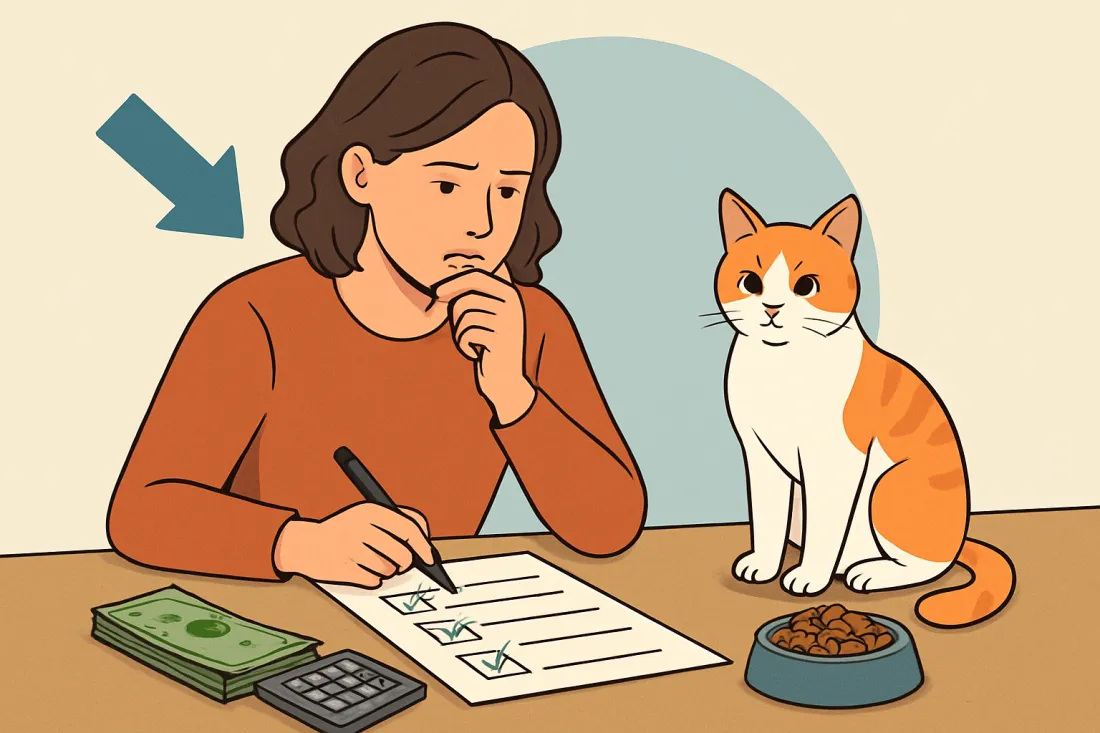
Use this checklist as a step-by-step process before you adopt. It will help you avoid common budgeting mistakes that lead to pet surrender.
Step-by-step budget planning algorithm
- Estimate your first-year total.
- Look up local adoption fees at shelters or rescues.
- Call at least one vet to ask about new-pet exam costs and vaccine packages.
- Price out basic supplies online or at a local pet store (carrier, litter box, scratching post, etc.).
- Add a buffer on top of the total for surprises.
- Estimate your annual ongoing costs.
- Use the evidence-based range of roughly $750 to just over $3,000 per year as a starting point.
- Decide where you are likely to fall in that range based on lifestyle (indoor vs outdoor, insurance vs savings, travel frequency).
- Divide your estimated annual total by 12 to get a monthly figure.
- Compare with your current budget.
- List your current monthly income and essential expenses (housing, food, utilities, debt payments, transportation).
- Check whether you can comfortably add your estimated monthly cat cost without cutting essentials.
- If the numbers are tight, consider waiting and saving more first.
- Decide on insurance vs savings.
- Get sample pet insurance quotes for a cat of the age and breed you are considering.
- Decide whether you prefer a predictable monthly premium or building a savings fund.
- Set a realistic emergency fund target based on local emergency vet pricing (for example, enough to cover at least one major visit).
- Plan for long-term changes.
- Think about how your life might change in the next 10–15 years (moves, children, job changes).
- Ask yourself whether you would still be able to afford the cat if your income dropped or rent increased.
- Put your plan in writing.
- Create a simple monthly line in your budget for “Cat expenses.”
- Set up an automatic transfer to a savings account for pet emergencies, even if it is a small amount at first.
- Review your plan once a year and adjust as your cat ages or your finances change.
Common Mistakes People Make About Cat Costs in the USA
Understanding what often goes wrong can help you avoid painful surprises later.
- Assuming cats are “cheap” pets: While cats can be less expensive than some dogs, they still require hundreds of dollars per year, and emergencies can be costly.
- Budgeting only for food and litter: Many new owners forget to include vet care, pet sitting, and occasional replacements for carriers, beds, or scratching posts.
- Ignoring aging-related costs: Senior cats often need more frequent vet visits, medications, and sometimes special diets, which can push you toward the higher end of annual cost ranges.
- Not planning for emergencies: Counting on “nothing serious happening” is risky. Even one major illness or injury can strain your finances if you have no cushion.
- Choosing a cat based only on looks: Some breeds are more prone to certain health issues, which can increase lifetime costs. Always research typical health concerns before deciding.
- Underestimating travel costs: Boarding or pet sitting during vacations can add a noticeable amount to your yearly total if you travel often.
Who Should Choose a Cat Now vs Later?
Based on the cost breakdown and budgeting steps, here is a practical way to think about timing.
Probably ready to adopt now
- You can comfortably absorb an extra monthly amount in your budget based on your estimated annual cat cost.
- You have, or can quickly build, a basic emergency fund for vet care.
- Your housing is stable and pet-friendly, with no looming moves that would add large pet deposits or fees.
- You have reviewed a responsible pet ownership checklist and feel confident about both time and money commitments.
Better to wait and prepare
- Your budget is already stretched, and adding even a modest monthly pet cost would require cutting essentials.
- You have no savings and would need to rely on high-interest credit for any emergency.
- You expect major life changes soon (moving, job change, new baby) that could affect your finances.
- You are unsure whether you can commit for 10–15 years.
If you fall into the “wait and prepare” group, you can still move toward pet ownership by building savings, stabilizing your housing, and learning more about cat care. That way, when you do adopt, you are far less likely to face the heartbreaking decision of surrendering a pet for financial reasons.
FAQ: Cat Ownership Costs Breakdown USA
What should I understand first about cat ownership costs in the USA?
The most important point is that cat ownership is a long-term financial commitment, not just a one-time adoption fee. Evidence from recent US cost breakdowns shows that first-year totals often land between roughly $700 and just under $3,000, and ongoing annual costs commonly range from about $750 to just over $3,000. Your own number will depend on local prices, your cat’s health, and choices like indoor vs outdoor living and insurance vs savings. You should plan for both predictable monthly costs (food, litter, routine vet care) and unpredictable emergencies.
What budgeting mistakes lead to people surrendering cats?
Common mistakes include underestimating veterinary costs, assuming emergencies will not happen, and adopting when their budget is already tight. Some people also forget to factor in pet deposits or fees when renting, or they do not plan for higher costs as the cat ages. When an unexpected bill or housing change hits, they feel they have no choice but to surrender the cat. Careful planning, an emergency cushion, and honest assessment of your long-term finances can greatly reduce this risk.
What should I do next if I am considering adopting a cat in the USA?
Next steps are:
- Use the budget planning checklist above to estimate your first-year and annual costs.
- Call at least one local vet and one shelter to confirm typical fees in your area.
- Decide whether you will rely on pet insurance, a savings fund, or a mix of both for emergencies.
- Review a broader responsible pet ownership checklist USA to be sure you are ready for the time and lifestyle commitments as well as the financial ones.
- Only once the numbers and responsibilities feel manageable should you start meeting adoptable cats.
How can I adjust if I already have a cat and realize I underestimated costs?
If you already share your home with a cat and your budget feels strained, start by listing your current pet expenses and separating essentials (food, litter, vet care) from optional extras (premium treats, luxury toys, non-urgent services). Look for safe savings such as buying food and litter in bulk, using low-cost clinics for vaccines, and creating DIY enrichment instead of buying frequent new toys. At the same time, build even a small emergency fund with automatic transfers. If you are truly struggling, talk to your vet about payment options or local assistance programs rather than skipping necessary care.