
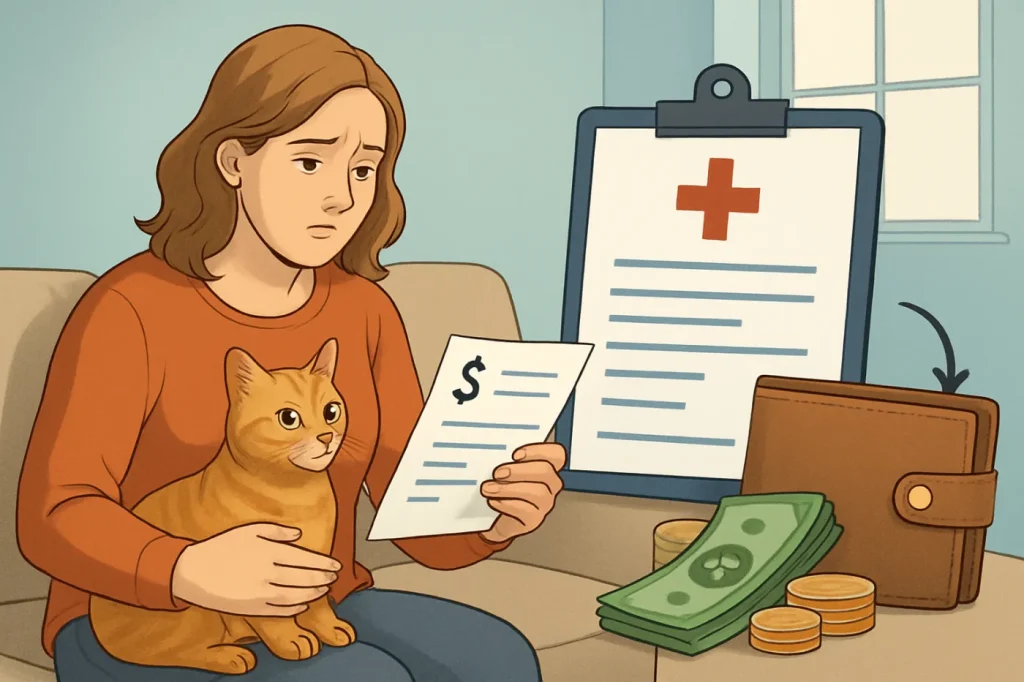
Unexpected vet bills are not rare one-off disasters – they are a normal part of sharing life with a dog or cat in the United States. To stay out of crisis mode, most pet families need to assume that at some point they will face a sudden bill for urgent care, not just routine vaccines and checkups.
Based on typical U.S. experience, many pet owners will see at least one unplanned vet visit over a pet’s lifetime, and common estimates suggest that emergency care for dogs and cats often runs into the hundreds of dollars, with more serious problems easily reaching into the low thousands. Because exact prices vary widely by region and clinic, the safest approach is to plan a dedicated emergency cushion rather than hoping you will never need it.
A practical starting point for many households is to aim for a pet emergency fund that could cover at least one moderate emergency visit and some follow-up care, and then adjust that target up or down based on your pet’s age, breed, lifestyle, and your own risk tolerance. Pet insurance can help smooth out some of the unpredictability, but it does not remove the need for savings.
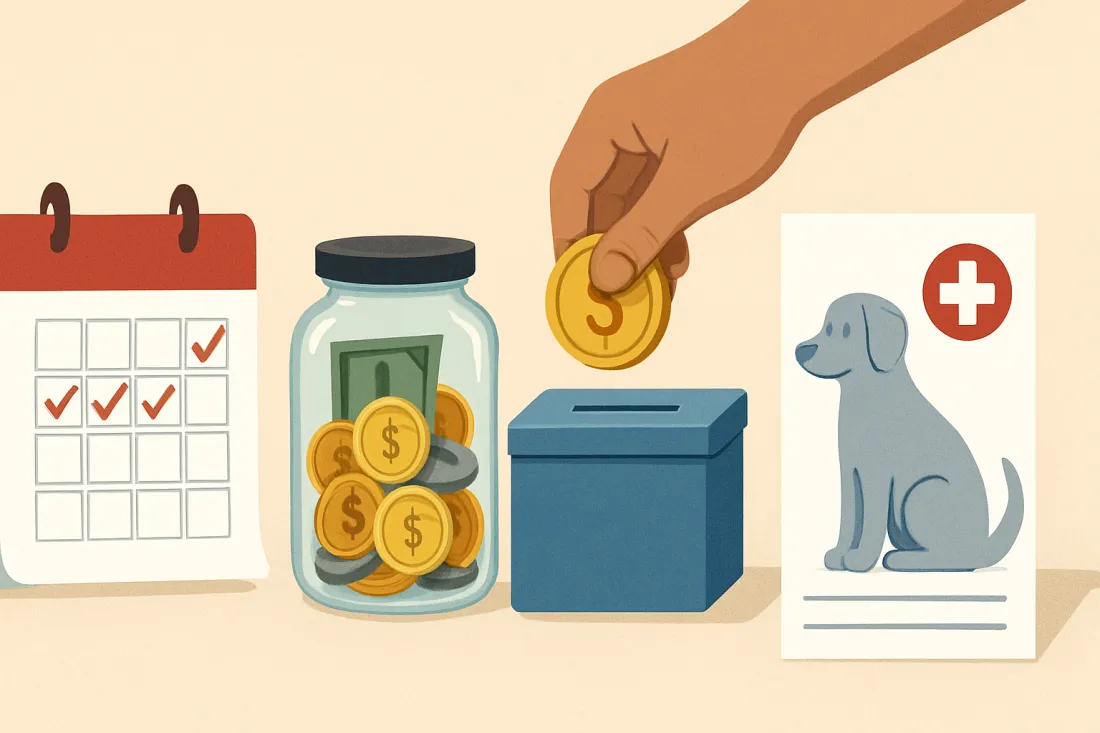
Why unexpected vet costs are a major part of annual pet spending
When people budget for a pet, they usually think about food, vaccines, and maybe grooming. Yet a large share of what many families actually spend on vet care over the years comes from problems they did not see coming: a torn nail that needs sedation, a sudden limp, vomiting that will not stop, or a dental abscess discovered late.

Routine care is relatively predictable. You can look up an annual vet costs for dogs and cats in the US guide or an annual vet care schedule for dogs and cats USA and plan for vaccines, exams, and parasite prevention. The problem is that real life rarely sticks to the schedule:
- A healthy young dog eats something on a walk and suddenly needs X-rays and fluids.
- An indoor cat develops a urinary blockage and needs emergency hospitalization.
- An older pet’s “slowing down” turns out to be a painful dental or joint issue that needs more than routine care.
Evidence from typical U.S. vet cost overviews suggests that a routine visit might be in the low hundreds of dollars, while unexpected care for dogs and cats is often quoted in a range from around several hundred dollars up to roughly $800–$1,500 or more, especially if hospitalization or surgery is involved. Because these events are not spread evenly – you might have nothing for years and then two emergencies in one season – they can easily dominate what you actually spend in a given year.
That is why responsible pet ownership in the U.S. usually includes some form of emergency planning: either savings, insurance, access to credit, or a combination of all three.
Common emergency scenarios for dogs and cats that drive surprise bills
Not every emergency is a dramatic accident. Many of the most common urgent visits start with subtle signs at home. Understanding typical scenarios helps you picture the kinds of bills you might face.
1. Gastrointestinal (GI) upsets and foreign bodies
What it looks like: Vomiting, diarrhea, not eating, straining to poop, or obvious abdominal discomfort. In dogs, this often follows eating trash, toys, socks, or rich human food. In cats, it may be hairballs, sudden diet changes, or underlying disease.
Why it gets expensive: Mild cases may only need an exam and basic meds. But if your vet is worried about dehydration, pancreatitis, or a foreign object, they may recommend bloodwork, X-rays or ultrasound, and IV fluids. If a foreign body is stuck, surgery or endoscopy may be needed, which is one of the more expensive unplanned procedures many owners face.
2. Injuries and trauma
What it looks like: Limping, cuts, bite wounds from dog fights, being hit by a car, falls from furniture or balconies, or rough play injuries.
Why it gets expensive: Even a small puncture wound can need sedation, flushing, sutures, antibiotics, and rechecks. More serious trauma can require emergency stabilization, X-rays, pain control, and sometimes orthopedic surgery. Costs climb quickly when hospitalization and imaging are involved.
3. Urinary blockages and lower urinary tract disease (especially in male cats)
What it looks like: Straining in the litter box, frequent attempts to urinate with little output, crying, licking at the genitals, or blood in the urine. In male cats, a complete blockage is life-threatening within a day or two.
Why it gets expensive: Treatment usually involves emergency catheterization, hospitalization, IV fluids, pain control, and repeated monitoring. Even after discharge, special diets and follow-up visits are common. This is one of the classic “I was not prepared for this bill” situations for cat owners.
4. Dental crises
What it looks like: Bad breath, drooling, pawing at the mouth, dropping food, or suddenly refusing to eat hard kibble. Sometimes the only sign is that the pet seems grumpy or “old.”
Why it gets expensive: A full dental procedure under anesthesia with X-rays and extractions is much more involved than a simple vaccine visit. Many owners delay dental care until there is a crisis, which can mean more extractions and higher costs than if issues were caught earlier.
5. Allergic reactions and skin/ear flare-ups
What it looks like: Sudden facial swelling, hives, intense itching, or vomiting after a sting or new food. Chronic allergies can also lead to repeated ear infections or skin infections.
Why it gets expensive: An acute reaction may need emergency treatment and monitoring. Ongoing allergies can lead to multiple visits per year for ear cleanings, medications, and sometimes long-term allergy management plans.
6. Chronic disease flare-ups in senior pets
What it looks like: Increased drinking and urination, weight loss, coughing, collapse, seizures, or sudden behavior changes in older pets.
Why it gets expensive: Diagnosing and stabilizing conditions like kidney disease, diabetes, heart disease, or cancer often involves bloodwork, imaging, and frequent rechecks. Even if you expect some age-related costs, the timing and severity of flare-ups are hard to predict.
Typical cost ranges for emergency vet visits and surgeries in the US
Exact prices depend heavily on where you live, whether you visit a general practice or a 24/7 emergency hospital, and how sick or injured your pet is. However, U.S. cost overviews give some broad patterns:
- Routine vet visits for dogs are often described with average spends in the low hundreds of dollars.
- Routine visits for cats are often somewhat lower on average than for dogs.
- Unexpected veterinary care for dogs and cats is often quoted in a range from roughly $800–$1,500 for more serious emergencies, especially when hospitalization or surgery is needed.
Because these are broad ranges, the most practical way to use them is as planning anchors, not promises. Think in terms of tiers:
- Minor urgent visit: Exam, basic tests, and simple medications. Often in the same ballpark as a routine visit, but still an unplanned hit to your monthly budget.
- Moderate emergency: Imaging, bloodwork, IV fluids, or a short hospital stay. These are the cases that commonly land in the mid-hundreds to around the lower end of typical emergency ranges.
- Major emergency or surgery: Foreign body removal, urinary blockage treatment, orthopedic repair, or intensive care. These are the situations where bills can reach or exceed the higher end of typical emergency ranges.
Because you cannot know in advance which tier you will face, many pet owners aim for an emergency fund that could at least cover a moderate emergency, while accepting that a major event might still require payment plans, credit, or insurance support.
How age, breed, and lifestyle affect your likely annual surprise costs
Not all pets have the same risk profile. Some are more likely to need emergency care, which means you should plan for higher potential annual surprise costs.
Age-related risk
- Puppies and kittens: High risk of eating things they should not, infectious diseases if not fully vaccinated, and injuries from rough play or falls. Expect a higher chance of at least one unplanned visit in the first year or two.
- Young adults: Often the lowest routine medical costs, but still at risk for trauma, GI upsets, and breed-related issues. This is a good time to build your emergency fund while routine costs are relatively predictable.
- Middle-aged and seniors: Rising risk of chronic diseases (arthritis, dental disease, kidney issues, heart problems, diabetes, cancer). Even if you plan for more frequent routine visits, sudden flare-ups can still create surprise bills.
Breed and body type
Some breeds are more prone to specific expensive conditions. Without naming every breed, consider these patterns:
- Large and giant dogs: Higher risk of joint problems and certain emergency conditions like bloat. Orthopedic surgeries and emergency abdominal surgeries can be among the costlier procedures.
- Flat-faced (brachycephalic) breeds: More prone to breathing issues, eye injuries, and heat intolerance, which can lead to urgent care visits.
- Small dogs with fragile bones: More likely to suffer fractures from jumps or rough handling, which can require orthopedic care.
- Certain cat breeds: Some purebred cats have higher risk of heart disease, urinary issues, or dental problems, which can mean more frequent unplanned vet visits.
Lifestyle and environment
- Outdoor access: Outdoor cats and off-leash or unsupervised dogs face higher risks of trauma, fights, toxin exposure, and getting lost.
- Household hazards: Trash access, unsecured medications, toxic plants, and small chewable objects all increase the chance of GI emergencies.
- Activity level: Very active dogs (agility, hiking, rough play) may have higher injury risk, while very sedentary pets are more prone to obesity-related diseases.
- Multi-pet homes: More pets can mean more chances for fights, resource guarding injuries, or contagious illnesses.
When you combine age, breed, and lifestyle, you can estimate whether your pet is low, medium, or high risk for unexpected annual vet bills and adjust your savings and insurance decisions accordingly.
Comparison table: options for handling unexpected vet bills
| Option | When it fits best | Main advantages | Main limitations | How it affects annual surprise costs |
|---|---|---|---|---|
| Dedicated pet emergency fund | Most households with stable income who can save gradually | Full control, no interest; money can be used for any vet; works even if a claim is denied | Requires discipline and time to build; a single major event can drain it | Turns unpredictable bills into a planned savings target; you still feel the cost but avoid crisis decisions |
| Pet insurance (accident/illness) | High-risk breeds, young pets, or owners who want protection from large, rare bills | Can reimburse a significant share of covered emergencies; easier to say “yes” to recommended care | Monthly premiums, deductibles, and copays; exclusions for pre-existing conditions; reimbursement is not instant | Smooths out large surprise costs into predictable premiums plus a smaller out-of-pocket portion |
| General savings or emergency credit | Owners who already keep a household emergency fund or have responsible access to credit | Flexible; can cover multiple types of emergencies (pet, car, home) | Competes with other priorities; credit adds interest and potential debt stress | Helps you handle one-off bills but may not be sustainable for repeated high-cost events |
| Charities and assistance programs | Households with limited income facing a one-time crisis | Can provide grants, discounts, or partial help when there is no other option | Not guaranteed; application processes; often limited to specific situations or clinics | Best seen as a last-resort safety net, not a primary plan for annual vet costs |
The role of pet insurance in smoothing unpredictable expenses
Pet insurance is one of the main tools U.S. owners use to manage unexpected vet bills, especially for accidents and serious illnesses.
How pet insurance typically works
- You pay a monthly or annual premium.
- You choose a deductible (how much you pay before coverage kicks in) and a reimbursement level (for example, a percentage of eligible costs).
- You pay the vet bill upfront, then submit a claim for reimbursement.
- Policies usually exclude pre-existing conditions and may have waiting periods for certain problems.
Pros of pet insurance for unexpected annual bills
- Makes large, rare bills more manageable by reimbursing a portion of covered costs.
- Can reduce the pressure to choose cheaper but less ideal treatments.
- Helps owners of high-risk breeds or very active pets feel more secure.
Cons and realistic expectations
- Premiums add to your annual pet budget and usually rise as your pet ages.
- You still need cash or credit to pay the vet before reimbursement.
- Not every condition or treatment is covered; pre-existing issues are a common source of denied claims.
- Insurance does not replace the need for some savings; you will still have deductibles, copays, and uncovered items.
For many families, a balanced approach is to combine a reasonably priced insurance plan with a smaller emergency fund that covers deductibles and the portion of bills that insurance will not reimburse.
Building a dedicated pet emergency fund and how much to aim for
There is no single “right” number for every household, but you can use typical U.S. cost ranges as a guide. Since more serious emergencies are often quoted in the hundreds to around $800–$1,500 range, a practical target is to build toward covering at least one moderate emergency, then adjust based on your pet’s risk profile.
Step-by-step process to build your pet emergency fund
- Set a starter goal: If you have no savings yet, aim first for a smaller milestone that feels achievable (for example, enough to cover a minor urgent visit and basic tests). This gives you some buffer while you work toward a larger target.
- Estimate your personal target:
- Low-risk, young, indoor-only pet: you might aim closer to the lower end of typical emergency ranges.
- High-risk breed, outdoor access, or senior pet: consider aiming toward the higher end or beyond, especially if you do not have insurance.
- Automate contributions: Treat the fund like a bill. Set up a monthly transfer into a separate savings account labeled for your pet.
- Keep it liquid: Use an account you can access quickly in an emergency, not long-term investments with penalties.
- Rebuild after use: If you spend from the fund, adjust your budget to refill it over the following months.
- Review yearly: As your pet ages or develops health issues, revisit your target. You may decide to increase your cushion or add insurance.
If you are not sure where to start with your overall pet budget, a structured tool like a pet budget template annual and monthly can help you see how an emergency fund fits alongside routine costs.
Structured checklist: risk factors that mean you should plan for higher emergency costs
Use this checklist to decide whether your pet likely needs a larger emergency cushion or more robust insurance.
- Age and health
- Puppy or kitten that chews or eats non-food items regularly
- Senior pet (around middle age or older for their breed size)
- Diagnosed chronic condition (e.g., kidney disease, diabetes, heart disease, allergies)
- History of previous emergency visits or hospitalizations
- Breed and body type
- Large or giant breed dog with known joint or bloat risks
- Flat-faced (brachycephalic) dog or cat with breathing or eye issues
- Small, delicate dog prone to fractures or dental problems
- Purebred cat or dog with known hereditary disease risks in the breed
- Lifestyle and environment
- Outdoor cat or dog that spends time off-leash or unsupervised
- Home with stairs, balconies, or high furniture and no barriers
- Access to trash, small toys, string, hair ties, or other swallowable objects
- Frequent hiking, dog parks, or rough play with other dogs
- Household finances
- No current savings that could cover a mid-hundreds vet bill
- Limited or no access to low-interest credit
- Income that would be heavily strained by a single large expense
How to use the checklist: If you check several boxes in more than one category, plan for higher emergency costs. That might mean aiming for a larger savings target, choosing a more comprehensive insurance plan, or both.
Practical ways to reduce the risk of expensive emergencies
You cannot prevent every surprise bill, but you can meaningfully lower the odds and severity of many common emergencies.
1. Pet-proof your home
- Secure trash cans and keep food waste out of reach.
- Store medications, cleaning products, and chemicals in closed cabinets.
- Remove or secure small objects pets can swallow: hair ties, string, rubber bands, children’s toys.
- Check your houseplants and yard for species that are toxic to pets and remove or block access.
2. Supervise and manage outdoor time
- Use leashes or secure fenced areas instead of letting dogs roam.
- Consider keeping cats indoors or using supervised outdoor enclosures to reduce trauma and fight risks.
- Avoid off-leash dog parks if your dog is reactive or easily overwhelmed, as fights can lead to costly injuries.
3. Maintain a healthy weight and activity level
- Feed measured portions and avoid constant treats and table scraps.
- Provide regular, appropriate exercise for your pet’s age and breed.
- Work with your vet on a weight-loss plan if your pet is overweight; obesity is linked to joint problems, diabetes, and other costly conditions.
4. Stay on top of preventive care
- Follow your vet’s schedule for vaccines, parasite prevention, and wellness exams.
- Address dental tartar and gum disease early rather than waiting for a painful crisis.
- Ask your vet what early warning signs to watch for in your pet’s breed or age group.
Investing in preventive care may feel like extra spending now, but it often reduces the chance of facing the most severe and expensive emergencies later.
What to do if an emergency hits and you are not financially prepared
Even with good planning, you may face a vet bill before your savings or insurance are where you want them to be. If that happens, focus on staying calm and working through options step by step.
1. Communicate clearly with the vet team
- Explain your financial limits upfront so the team can prioritize diagnostics and treatments.
- Ask for a written estimate with a breakdown of “must do now” versus “can wait” items.
- Discuss alternative treatment plans if the initial estimate is out of reach.
2. Explore payment and financing options
- Ask whether the clinic offers payment plans or works with third-party medical credit providers.
- Check if you have access to a low-interest credit card or line of credit that you can realistically pay off.
- Consider whether friends or family might be able to help with a portion of the cost, with a clear repayment plan.
3. Look into assistance programs and charities
- Some areas have local charities, breed-specific rescues, or general pet assistance funds that may help in true emergencies.
- These programs often have income limits, application processes, and limited funds, so they are not guaranteed, but they can sometimes bridge a gap.
4. Be realistic about limits and quality of life
One of the hardest parts of responsible pet ownership is recognizing when a treatment plan is beyond what you can safely afford or when it would not meaningfully improve your pet’s quality of life. In some situations, humane euthanasia may be the least painful option for the pet and the family, especially when prognosis is poor and costs are very high.
Having thought about your values and financial boundaries before a crisis can make these decisions slightly less overwhelming when emotions are running high.
Integrating emergency planning into your overall annual pet cost picture
Unexpected vet bills feel less like disasters when they are part of a plan. Instead of treating emergencies as rare flukes, assume that over your pet’s lifetime you will face at least a few unplanned visits and possibly one or more major events.
A practical annual plan for many U.S. pet owners includes:
- Routine care budget: Vaccines, exams, parasite prevention, and planned dental cleanings based on your vet’s recommendations.
- Emergency savings target: A dedicated pet fund built gradually to cover at least one moderate emergency, adjusted for your pet’s risk factors.
- Insurance decision: A conscious choice to either carry pet insurance (and budget for premiums and deductibles) or self-insure with larger savings.
- Risk reduction habits: Pet-proofing, supervision, weight management, and preventive care to lower the odds of severe emergencies.
By treating emergency planning as a normal part of your annual pet budget, you protect both your pet’s health and your own financial stability. If you want a deeper dive into how surprise costs fit into the bigger picture, you can also explore guides on unexpected pet expenses to budget for yearly to refine your numbers.
FAQ about unexpected annual vet bills for pets
How can I cover unexpected vet bills without going into long-term debt?
The most sustainable approach is to combine a dedicated pet emergency fund with preventive care and, if it fits your situation, pet insurance. Start by setting a realistic savings goal based on typical emergency cost ranges and your pet’s risk factors, then automate monthly contributions. At the same time, ask your vet which preventive steps could reduce your pet’s specific risks. If you do need to use credit in a crisis, focus on the lowest-interest option you can access and create a clear plan to pay it down, then rebuild your savings.
What is the average yearly vet bill for a dog once emergencies are included?
There is no single average that fits every dog because costs vary by region, size, breed, and health. Some cost summaries suggest that a routine visit for a dog often falls in the low hundreds of dollars, and that unexpected care can range from a few hundred dollars to around $800–$1,500 or more for serious emergencies. Over a given year, a healthy young dog might only need routine care, while another dog of the same age could have an injury or GI emergency that doubles or triples that year’s total. The safest way to plan is to budget for routine care plus an emergency cushion rather than relying on a single average number.
What percentage of pets need unexpected vet care every year?
Exact percentages vary between studies and are influenced by factors like age, breed, and whether owners seek care promptly. However, it is clear from typical vet practice experience that a significant share of pets will need at least one unplanned visit over their lifetime, and many clinics see emergencies daily. Because your individual pet’s risk may be higher or lower than any average, it is more practical to look at your pet’s specific risk factors – age, breed, lifestyle, and health history – and plan as though an emergency could happen in any given year.
What happens if I truly cannot afford a vet bill in an emergency?
If you cannot afford the recommended treatment, talk openly with the vet about your limits. They may be able to offer a scaled-back plan, prioritize the most critical care, or suggest lower-cost options such as outpatient management when safe. You can ask about payment plans, third-party financing, or local assistance programs, though these are not guaranteed. In some cases, you may be faced with very difficult choices, including surrendering the pet to a rescue that can provide care or considering humane euthanasia if the prognosis is poor and suffering is likely. Planning ahead with savings and insurance reduces the chance of reaching this point, but if you do, focus on your pet’s comfort and quality of life while making the most responsible decision you can.