
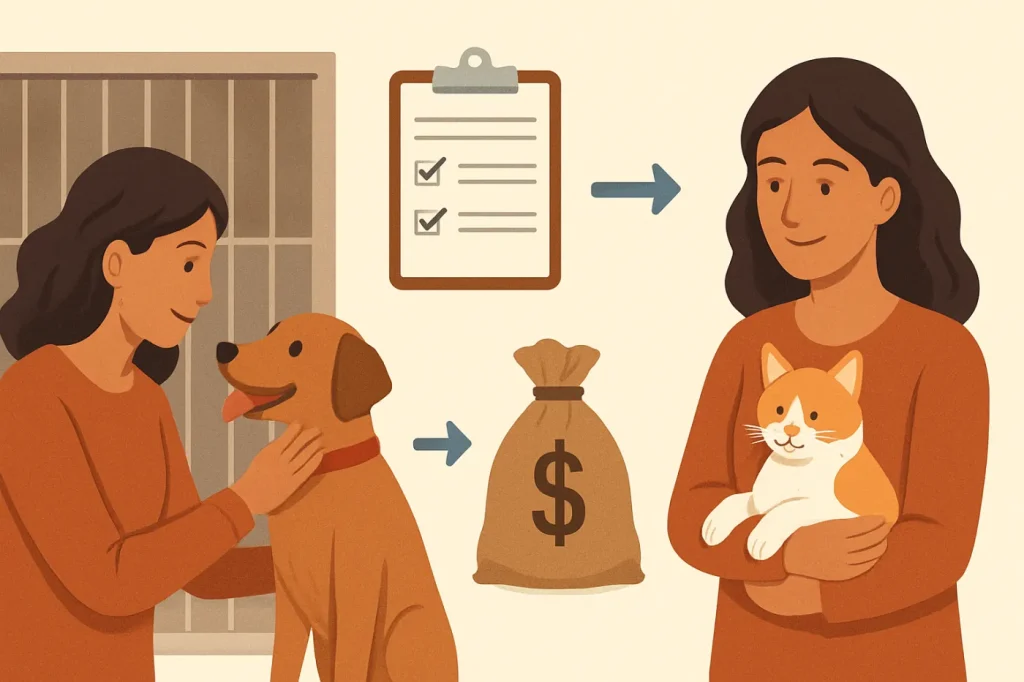
Adopting from an animal shelter in the US usually follows a clear pattern: you meet pets, apply, talk with staff, pay an adoption fee, and take your new pet home the same day or after a short wait. The details vary by shelter or rescue, but the core steps and expectations are very similar across the country.
This guide walks through what actually happens, what paperwork and fees to expect, how shelters decide who is approved, and how to avoid common mistakes that can delay or derail your adoption.
Overview: How adopting from an animal shelter typically works
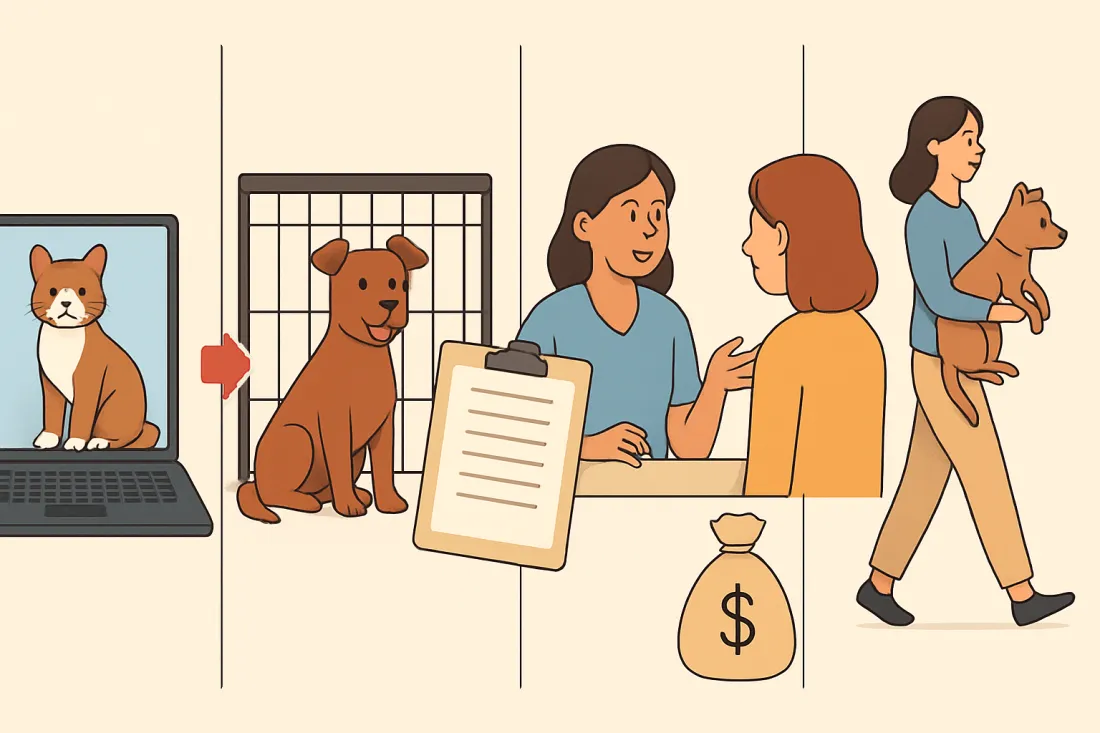
Most US shelters and rescues follow a version of this basic flow:
- Browse adoptable pets online or in person.
- Visit the shelter and meet animals that fit your lifestyle.
- Submit an adoption application (paper or online).
- Have an adoption counseling conversation with staff or volunteers.
- Complete screening checks (ID, housing, vet reference, sometimes landlord approval or home visit).
- Get approved or matched with a specific pet.
- Sign an adoption contract and pay an adoption fee.
- Take your pet home with starter supplies and medical records.
- Follow post-adoption guidance and any follow-up calls or check-ins.
Some adoptions are same-day. Others, especially from foster-based rescues or for puppies and special-needs animals, can take several days or longer while checks are completed and the pet is prepared to leave.
When this process applies and when it may differ
The steps above describe a typical experience at many US shelters and rescues, but details change depending on:
- Type of organization – Municipal shelters may have simpler paperwork; foster-based rescues often have more detailed screening and home checks.
- Type of pet – Puppies, large dogs, and animals with behavior or medical needs often involve extra questions or requirements.
- Local rules and housing – Some areas or landlords have breed, size, or number limits; shelters must respect those.
- Your situation – First-time pet guardians may get more coaching; experienced adopters may move faster but still go through the same core steps.
If you are still deciding between adoption and other options, it can help to compare how shelters work with alternatives like rehoming directly from a current owner or buying from a breeder. For a deeper comparison, see adopt from shelter vs rehome a pet from current owner.
Step-by-step: How the shelter adoption process usually unfolds
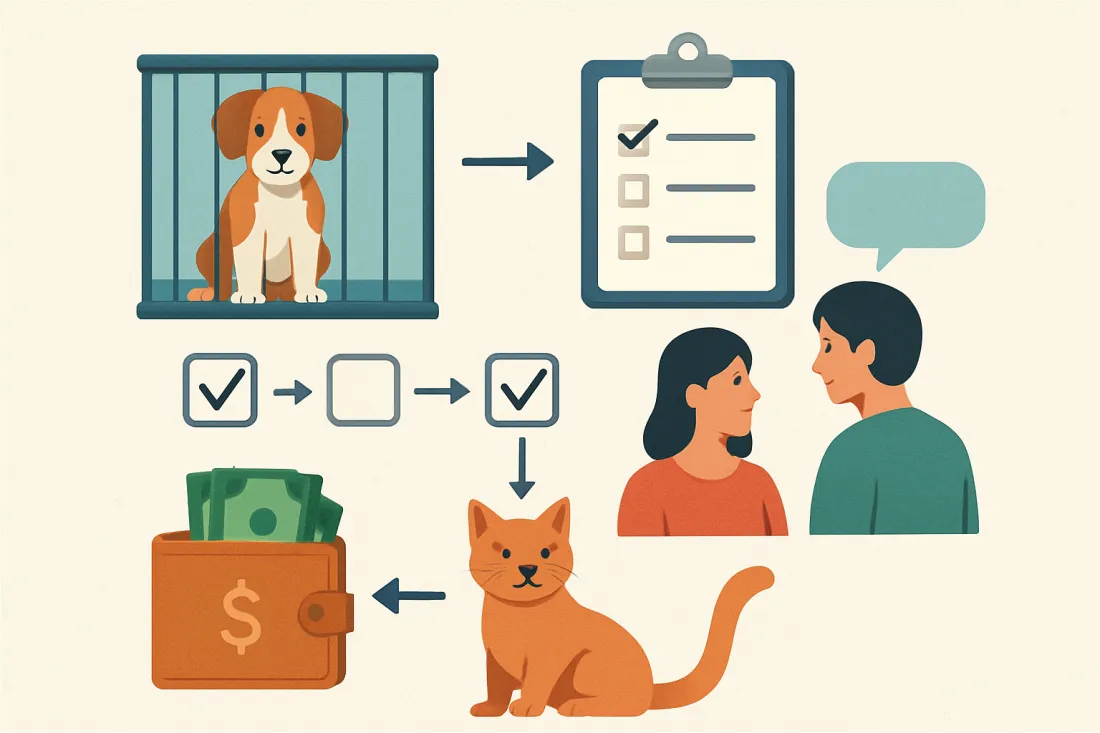
Below is a more detailed look at each stage, so you know what to expect and how to prepare.
1. Research and browse adoptable pets
Most shelters and rescues list their animals on their own websites and on major adoption platforms. You can usually filter by:
- Species (dog, cat, rabbit, etc.)
- Age (puppy/kitten, adult, senior)
- Size and sometimes breed or mix
- Special notes (good with kids, other dogs, indoor-only, medical needs)
Use this stage to narrow down what realistically fits your life: energy level, grooming needs, and how much training you are ready to do.
2. Visit the shelter or meet the pet in foster care
Next, you usually either:
- Walk into the shelter during open hours to meet animals in kennels or visiting rooms, or
- Schedule a meet-and-greet with a foster-based rescue at an adoption event or foster home.
Staff or volunteers will often ask a few quick questions about your home, family, and experience to guide you toward suitable animals. Expect them to be honest about behavior quirks, energy level, and any medical history they know.
3. Complete an adoption application
Once you are interested in a specific pet (or sometimes before you visit), you fill out an application. This can be a short form or several pages, but it usually asks about:
- Your contact information and ID
- Your housing (rent/own, type of home, yard or no yard)
- Who lives with you (adults, children, other pets)
- Your work schedule and how long the pet would be alone
- Past pet experience and what happened to previous pets
- How you plan to handle training, exercise, and veterinary care
Some shelters accept pre-approval applications before you choose a pet, which can speed things up later.
4. Adoption counseling conversation
After you apply, many shelters do a brief counseling session. This is not an interrogation; it is meant to match you with the right pet and set realistic expectations. Topics often include:
- Daily routine and how the pet fits into it
- House rules (furniture, sleeping areas, yard access)
- How you will introduce the pet to children or other animals
- Common adjustment issues like house training, scratching, or barking
- Costs of food, supplies, and routine vet care
This is your chance to ask detailed questions and be honest about any concerns. Shelters prefer a good match over a fast adoption.
5. Screening checks and approvals
Before final approval, shelters typically verify a few things. Not every organization does all of these, but common checks include:
- Photo ID check to confirm your identity and age.
- Landlord or HOA confirmation if you rent or live in a community with pet rules.
- Veterinary reference if you have or recently had pets, to see if they were kept up to date on care.
- Home visit or virtual tour for some rescues, especially for large dogs, puppies, or special-needs animals.
These checks can be quick (same day) or take a few days, depending on how fast references respond and how busy the shelter is.
6. Final match and adoption decision
Once screening is complete, staff decide whether to approve the adoption. They may:
- Approve you for the specific pet you chose.
- Suggest a different pet that better fits your lifestyle.
- Ask you to fix a specific issue first (for example, secure a fence or get landlord approval in writing).
- Decline the application if they believe the match would not be safe or stable.
Approval is not about being a perfect person; it is about whether this particular pet is likely to thrive in your current situation.
7. Adoption contract, fees, and going-home prep
When you are approved, you will:
- Review and sign an adoption contract that outlines your responsibilities and the shelter’s policies.
- Pay the adoption fee (usually by card, cash, or sometimes check).
- Receive medical and vaccination records and any microchip information.
- Get basic supplies or recommendations (collar, leash, starter food, etc., depending on the organization).
Some shelters let you take the pet home immediately. Others may schedule a pickup time after spay/neuter surgery or final health checks.
8. First days at home and follow-up
Many shelters provide written guidance or a quick talk about the first days and weeks at home, including:
- How to set up a safe, quiet space
- How to introduce the pet to other animals and family members
- What behavior changes are normal during adjustment
- When to schedule your first vet visit
Some rescues also do follow-up calls, emails, or visits to see how things are going and offer support if you run into challenges.
What documents and information you usually need to adopt
Requirements vary, but you can usually expect to need the following when adopting from a US shelter or rescue:
- Government-issued photo ID – Driver’s license, state ID, or passport to confirm your identity and age.
- Proof of address – Often your ID is enough; sometimes they may ask for a recent bill or lease if your address is new.
- Landlord or property manager contact – If you rent, shelters may call or ask for written proof that pets are allowed and whether there are size or breed limits.
- Veterinary contact information – If you have current or recent pets, a vet reference helps show your history of care.
- Household details – Names and ages of people in the home, and information about other pets.
- Emergency contact – Some contracts ask for a backup contact in case something happens to you.
Having these details ready can speed up the process and reduce back-and-forth with staff.
Adoption fees: What they usually cover and how to think about cost
Adoption fees in the US vary widely by region, species, age, and organization. Instead of focusing on an exact dollar amount, it is more useful to understand what the fee typically includes and how to compare it with other options.
What adoption fees often include
Most shelters and rescues bundle several services into the adoption fee, which may cover:
- Spay or neuter surgery, or a voucher if not yet done
- Core vaccinations appropriate for the pet’s age
- Basic deworming and parasite prevention
- Microchipping and registration information
- Initial health exam and any known medical treatment provided in care
- Behavior assessment and basic training or socialization work
If you paid for these services separately at a private veterinary clinic, the total would typically be significantly higher than a typical shelter adoption fee, even before adding the cost of acquiring the pet itself from a breeder or store.
Comparison table: Shelter adoption vs other ways to get a pet
This table compares common ways people bring pets into their homes and how the process, screening, and costs typically differ. Exact numbers and policies vary, so use this as a decision guide rather than a price list.
| Option | Typical process | What you usually get for the fee | Screening and requirements | Key pros | Key risks or trade-offs |
|---|---|---|---|---|---|
| Shelter or rescue adoption | Application, counseling, screening, contract, adoption fee | Pet plus bundled vet care such as spay/neuter, vaccines, microchip, and basic health check | Moderate to thorough: ID, housing check, sometimes vet reference or home visit | Supports animal welfare, often lower overall cost for a vetted pet, staff help match you with the right animal | Not every applicant is approved for every pet; limited history on some animals |
| Rehoming from a current owner | Informal meeting and agreement, sometimes a small rehoming fee | Pet, sometimes with existing supplies and vet records if the owner shares them | Usually minimal; depends on what both parties choose to discuss or verify | Can learn directly about the pet’s habits and history; may be faster and more flexible | Less structure and fewer protections; vet care status may be unclear |
| Buying from a breeder | Waitlist or reservation, contract, purchase price, pickup at breeder’s home or facility | Pet, sometimes initial vaccines and basic health checks depending on breeder | Varies widely: responsible breeders screen buyers and provide health info; others may not | More predictability in breed traits; detailed lineage and health testing when breeder is reputable | Higher upfront cost; quality and ethics vary, so research is essential |
| Pet store or informal seller | Immediate purchase, minimal questions, pay and take home | Pet, sometimes with limited health guarantees or paperwork | Often very light; focus is on the sale rather than long-term match | Instant gratification and convenience | Higher risk of poor breeding or sourcing practices; may face higher vet costs later |
If you are still weighing adoption against other options, you may also find it helpful to read about should I adopt a dog or buy from a breeder.
What shelters and rescues actually screen for
Many people worry that shelters are looking for reasons to say no. In reality, most are looking for reasons to say yes, safely. They focus on whether the match is likely to work long term, not on perfection.
Common things shelters and rescues screen for include:
- Stable housing – They want to know you are allowed to have pets where you live and that you are not in the middle of a major move or housing uncertainty.
- Ability to provide basic care – Food, water, shelter, routine vet visits, and emergency care when needed.
- Time and lifestyle fit – Enough time for exercise, training, and companionship, especially for active dogs or young animals.
- Safety for the pet – Secure environment (for example, safe windows for cats, secure fencing or leash plans for dogs).
- Compatibility with children and other pets – Matching the pet’s temperament and history with your household.
- Understanding of the specific pet’s needs – For example, medical conditions, fearfulness, or high energy.
Some rescues also check for serious red flags in public records or with previous vets or shelters, especially if there is a concern about past neglect or cruelty. Policies differ, so if you are unsure, ask the organization directly what they look for.
Common mistakes that can slow down or block an adoption
Knowing what often goes wrong helps you avoid frustration and improve your chances of a smooth adoption.
1. Not checking housing and landlord rules first
A frequent reason for delays or denials is discovering late in the process that your lease or HOA has:
- Breed restrictions
- Weight or size limits
- Limits on number of pets
- Extra pet deposits or fees you were not prepared for
Always confirm your housing rules before applying, and get written approval if possible.
2. Choosing a pet based only on looks
Falling in love with a photo is easy, but choosing a pet whose energy level, size, and temperament do not match your lifestyle is a recipe for stress. For example:
- An ultra-active young dog in a home with no time for daily exercise
- A shy, easily startled cat in a loud, busy household
- A large, strong dog with a guardian who has physical limitations and no training plan
Ask staff to be honest about whether a pet is a realistic fit, even if it is not the one you first noticed.
3. Being defensive or hiding information on the application
Some applicants worry that admitting past challenges (like a pet that was rehomed or a behavior issue) will automatically disqualify them. In reality, hiding information can raise more concerns than the truth. Shelters use your history to:
- Understand what went wrong before and how to avoid it again
- Match you with a pet less likely to trigger the same issues
- Offer resources or training support
Be honest and focus on what you have learned and how you plan to do things differently now.
4. Underestimating long-term costs and commitment
Adoption fees are a one-time expense, but pets need ongoing care for many years. Common ongoing costs include:
- Food and litter or waste bags
- Routine vet visits and vaccines
- Flea, tick, and heartworm prevention where recommended
- Grooming for some breeds
- Training classes or behavior support if needed
Thinking through these costs and time commitments ahead of time helps you choose a pet you can truly support long term.
5. Expecting a “perfect” pet from day one
Even well-adjusted animals need time to decompress and learn new routines. Common early challenges include:
- Accidents in the house
- Vocalizing (barking, whining, meowing) as they adjust
- Hiding, clinginess, or mild separation distress
- Testing boundaries like chewing, scratching, or jumping
Plan for a transition period and use positive reinforcement training. Ask the shelter for behavior resources if you feel stuck.
Structured checklist: How to prepare for adopting from a shelter
Use this practical checklist to get ready before you apply and to stay on track during the process.
Before you visit or apply
- Clarify what you want and can handle:
- Species and approximate size
- Energy level and exercise needs
- Age range you are open to (puppy/kitten, adult, senior)
- Any deal-breakers (no heavy shedding, must be good with kids, etc.)
- Check your housing situation:
- Review your lease or HOA rules for pet limits and restrictions.
- Get written landlord approval if required.
- Confirm any pet deposits or monthly pet fees.
- Plan your budget:
- Estimate monthly costs for food, litter, and supplies.
- Set aside funds for routine vet care and emergencies.
- Gather key information:
- Photo ID and proof of address.
- Landlord or property manager contact details.
- Veterinarian contact information for current or past pets.
- Prepare your home:
- Decide where the pet will sleep and eat.
- Plan safe spaces (crate, room, or quiet area).
- Remove obvious hazards (toxic plants, loose cords, small objects).
During the adoption process
- Ask the shelter about:
- The pet’s known history and how long they have been in care.
- Behavior around children, men, women, and other animals.
- Any medical conditions or medications.
- What they recommend for food, exercise, and training.
- Be transparent on your application:
- Share your real schedule and experience level.
- Explain any past pet issues and what you learned.
- Review the contract carefully:
- Note any requirements about spay/neuter, microchip registration, or training.
- Understand return policies if the match truly does not work out.
Right after you bring your pet home
- Give them time to decompress:
- Limit visitors the first few days.
- Stick to a simple, predictable routine.
- Schedule a vet visit:
- Bring all shelter medical records.
- Discuss vaccines, parasite prevention, and any follow-up care.
- Start training and bonding:
- Use positive reinforcement and short, frequent sessions.
- Enroll in a basic training class if you have a dog and need support.
Decision criteria: How to know if a specific shelter pet is right for you
When you are standing in front of a kennel or meeting a foster pet, it can be hard to think clearly. Use these criteria to guide your decision:
- Energy match – Can you realistically provide the daily exercise and mental stimulation this pet needs?
- Space and noise tolerance – Will your home and neighbors tolerate this pet’s size and vocal habits?
- Family fit – Has the pet been tested or observed around children, cats, or other dogs if you have them?
- Training needs – Are you prepared to handle house training, leash manners, or behavior work this pet may require?
- Medical needs – Are you comfortable with any ongoing medications, special diets, or follow-up care?
- Gut feeling – Do you feel excited and committed to caring for this specific animal, not just the idea of a pet?
If you are focused on adopting a cat specifically, you may also want to read what to know before adopting a cat from a shelter for more species-specific tips.
FAQ: Practical questions about how adopting from an animal shelter works
What should I understand about the shelter adoption process before I start?
Expect that adoption is more like a partnership than a simple purchase. Shelters want to match you with a pet who fits your life and will stay with you long term. That means you will answer questions about your home, schedule, and experience, and you may not be approved for every animal you like. The process often includes browsing pets, visiting, applying, talking with staff, going through basic checks, signing a contract, and paying an adoption fee that typically covers spay/neuter, vaccines, and other vet care. Being prepared with ID, housing information, and a clear idea of what you can handle makes everything smoother.
Is adopting a dog or cat from a shelter a good idea if I am a first-time pet guardian?
Adopting from a shelter can be an excellent choice for first-time guardians because you get support and guidance that you would not receive from many informal sources. Staff can help you choose a pet with a temperament and energy level that fits your experience and lifestyle, and many animals already have basic vet care completed. The key is to be honest about your experience level, choose a pet whose needs match your capacity, and be ready to invest time in training and adjustment. If you want a very specific breed or working-dog level energy, talk openly with the shelter so they can steer you toward a realistic match.
What mistakes should I avoid when adopting from a US shelter or rescue?
Avoid applying for pets without checking your housing rules, choosing based only on appearance, or rushing the decision because you feel pressure to “save” a particular animal. Do not hide information on your application or downplay challenges like long work hours or frequent travel. Skipping preparation at home, such as pet-proofing or planning introductions with existing pets, also sets you up for stress. Taking time to prepare, ask questions, and think through long-term costs and responsibilities helps prevent returns and heartbreak for both you and the animal.
How hard is it to get approved to adopt from a shelter?
For most people who can provide stable housing, basic vet care, and a safe environment, adoption is not meant to be hard. It can feel detailed because shelters ask many questions, but the goal is to find a good match, not to fail you. Challenges usually arise when there are unresolved housing issues, major mismatches between the pet’s needs and the adopter’s lifestyle, or serious concerns in the person’s history with animals. If you are declined for one pet, you can often still be approved for another who better fits your situation.
What should I do next after learning how shelter adoption works?
Next, clarify what kind of pet fits your life, confirm your housing rules, and set a realistic budget for ongoing care. Then research shelters and rescues in your area, read their adoption policies, and start browsing their available animals. Prepare your documents (ID, landlord contact, vet info) and your home setup before you visit. When you are ready, visit in person or attend an adoption event, talk openly with staff, and be patient with the process. Taking these steps now sets you up for a smoother adoption and a stronger start with your future pet.