
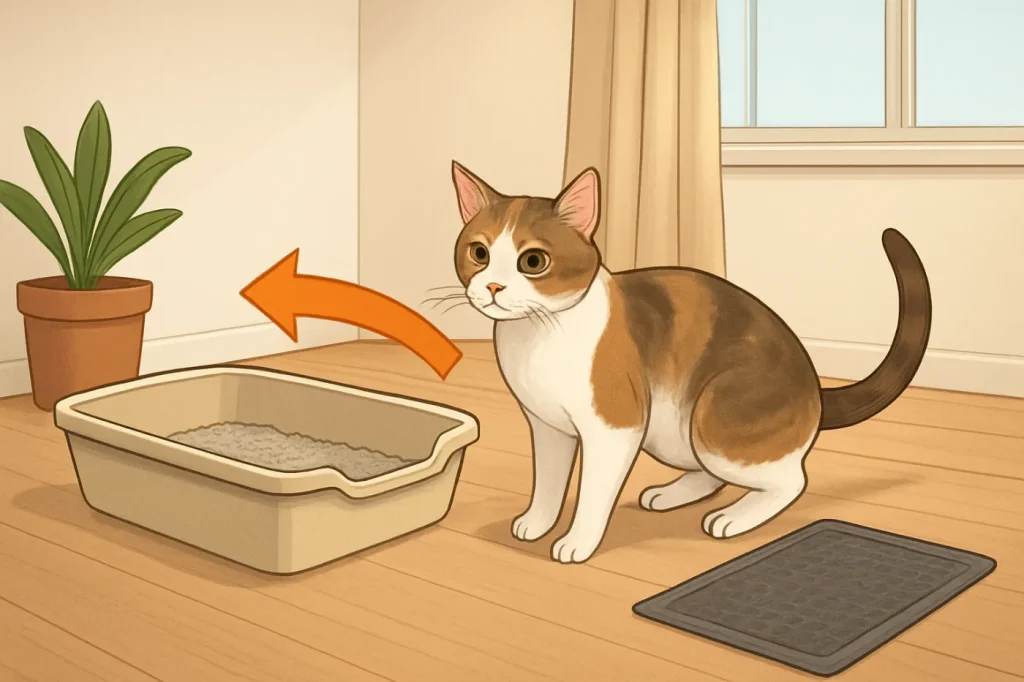
If your cat is peeing or pooping outside the box, avoiding it, or the smell is taking over your home, you usually do not need a miracle product. Most litter box problems come down to a few fixable issues: box number, location, cleanliness, and how safe and comfortable the setup feels to your cat.
This guide walks through how to prevent problems before they start and how to troubleshoot when things are already going wrong.
Key rules to prevent litter box problems
Use these core rules as your baseline. If you follow them, many litter box issues never appear or stay minor and easy to fix.
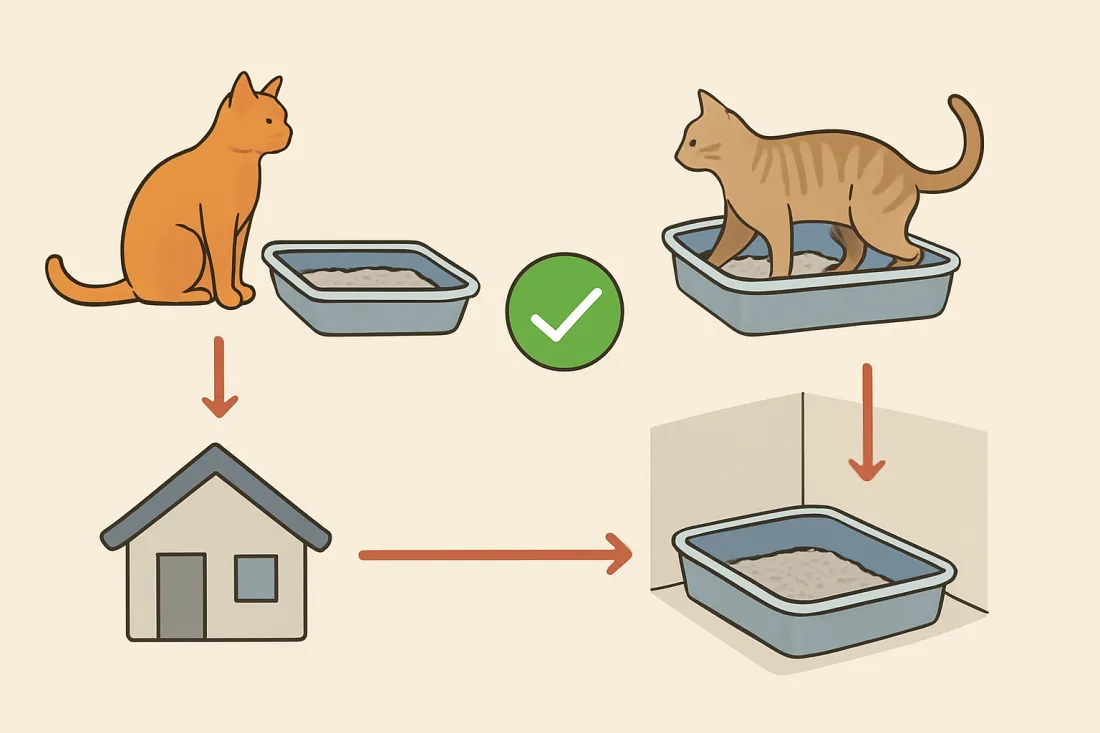
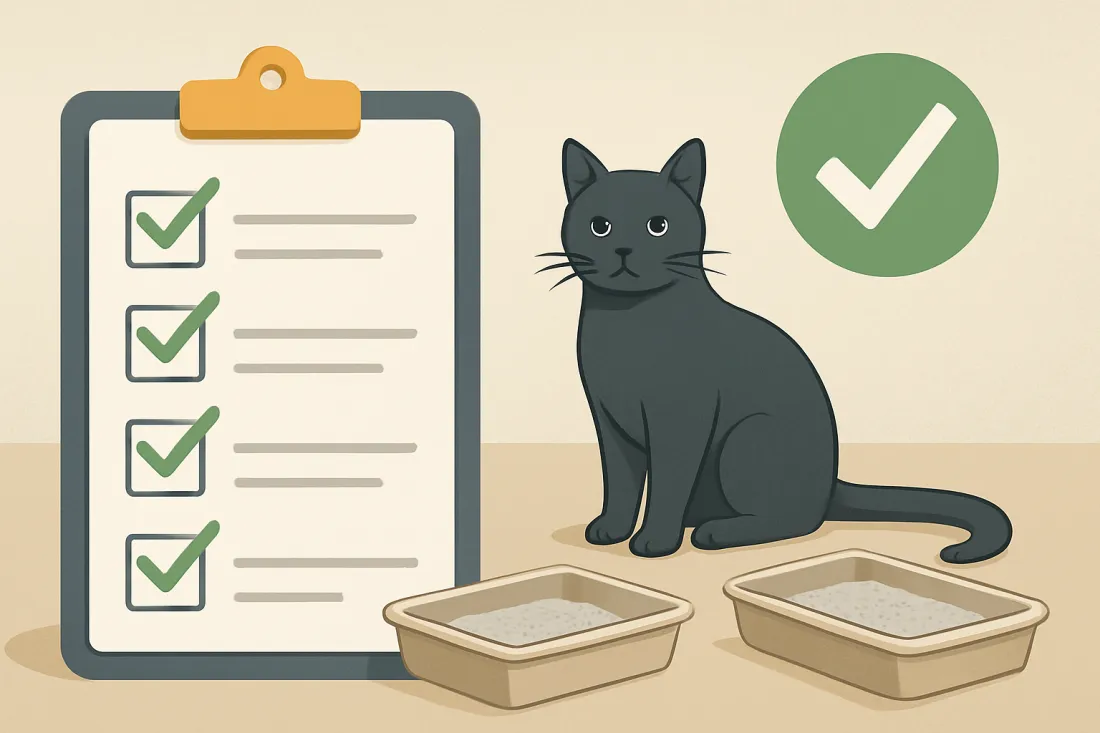
- Golden rule for box numbers: Aim for at least one litter box per cat, plus one extra (for example, 2 cats = 3 boxes). In small homes where that is hard, prioritize at least two boxes in different areas.
- Location matters as much as the box: Place boxes in quiet, low-traffic spots where your cat can see an escape route and is not cornered or startled.
- Keep boxes very clean: Scoop at least once a day; many cats prefer scooping twice daily. Fully change litter and wash the box regularly based on the litter type and smell.
- Use a simple, unscented litter: Most cats prefer fine, sand-like, unscented clumping litter. Strong perfumes or big pellets can cause avoidance.
- Respect your cat’s preferences: If your cat clearly prefers a certain box, litter depth, or style, lean into that instead of fighting it.
- Never punish for accidents: Punishment makes cats more anxious and can make litter box problems worse and harder to fix.
- Rule out medical issues early: Sudden changes in litter box habits can be a sign of pain or illness and need a vet check.
Quick signs your litter box setup is becoming a problem
Catching early warning signs helps you fix issues before your cat fully stops using the box.
- Hesitation at the box: Your cat walks to the box, sniffs, maybe steps in, then leaves without using it.
- Perching on the edge: Cat balances on the rim instead of standing fully inside. This can mean the litter feels bad on their paws or the box is too dirty or small.
- Half-in, half-out peeing: Back end in the box, front paws outside, or vice versa. Often a sign of discomfort, fear of being trapped, or dislike of the litter.
- Using the box but vocalizing: Meowing, yowling, or straining in the box can signal pain or urinary trouble and needs a vet visit.
- Accidents near the box: Pee or poop right next to the box usually means your cat wants to use the box but something about it is wrong (dirty, painful to enter, scary location).
- Strong odor even after scooping: May mean the box is too small, not enough litter, not enough boxes, or the plastic is saturated and needs replacing.
- Over-frequent visits: Repeated short trips to the box with little output can indicate medical issues such as urinary discomfort. That is a vet situation, not a training issue.
How to set up the litter box environment to prevent problems
Think of your litter box setup from your cat’s point of view: safety, privacy, and comfort. Use these steps to design a cat-friendly environment.
1. Choose the right number and placement of boxes
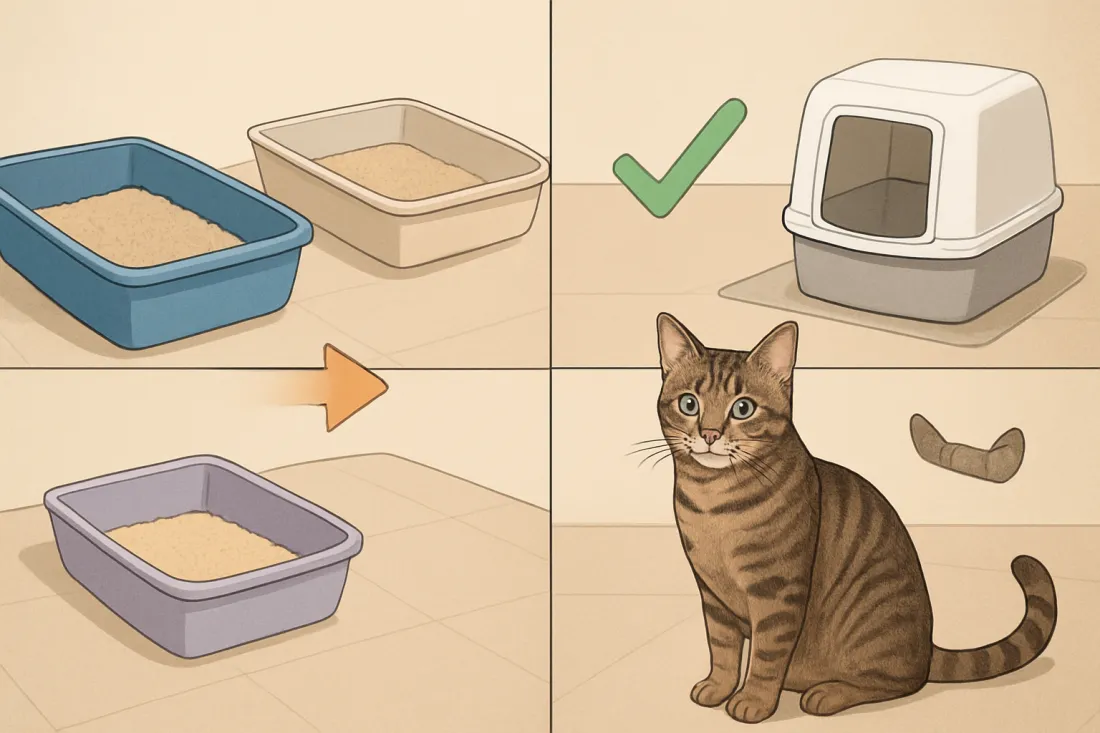
- Number of boxes: Aim for one box per cat plus one extra when space allows. In multi-level homes, have at least one box on each floor your cat uses regularly.
- Spread them out: Do not line all boxes up in one room. To your cat, that can feel like one big bathroom, not multiple choices.
- Good locations:
- Quiet corners of living rooms or bedrooms
- Low-traffic hallways where people do not constantly walk past
- Bathrooms, if there is enough space and the door is usually open
- Where not to put a litter box:
- Right next to noisy appliances (washer, dryer, furnace, loud fans)
- In high-traffic areas like busy hallways or right by the front door
- In tight corners where your cat can feel trapped with only one exit
- Right next to food and water bowls
- Inside a closet that is often closed or behind doors that can accidentally shut
2. Pick a box size and style your cat can actually use
- Size: A good rule is that the box should be about as long as your cat from nose to base of tail, or longer. Many standard boxes are too small for adult cats.
- Height:
- Young, healthy cats often do well with medium to high sides to contain scatter.
- Kittens, seniors, and cats with arthritis usually need at least one box with low sides or a low entry cut-out.
- Covered vs uncovered:
- Uncovered boxes usually feel safer and less smelly to cats because odors can escape and they can see around them.
- Covered boxes can trap smells and make some cats feel trapped. If you use one, keep at least one uncovered option available.
- Entry style: Top-entry boxes can reduce litter tracking but may be hard for older or heavier cats to use comfortably.
3. Choose litter your cat actually likes
- Texture: Many cats prefer fine, sand-like litter that is gentle on paws.
- Clumping vs non-clumping:
- Clumping litter makes scooping urine easier and helps keep the box cleaner.
- Non-clumping may need more frequent full changes to stay fresh.
- Scented vs unscented: Strongly scented litter can be overwhelming to a cat’s sensitive nose. Unscented is usually safer for long-term acceptance.
- Litter depth: Many cats like about a couple of inches of litter so they can dig and cover. Too shallow can lead to scratching the plastic; too deep can feel unstable.
- Changing litter types: If you need to switch, do it gradually over a week or more by mixing the new litter into the old so your cat can adjust.
4. Keep the litter box clean and low-odor
- Scooping: Scoop at least once daily; twice is better for multi-cat homes or small apartments.
- Full change and wash: How often you fully change litter depends on the type and how many cats use the box. When you notice lingering odor after scooping, it is time to change and wash.
- Cleaning products: Use mild, unscented soap and rinse thoroughly. Strong cleaners or lingering fragrances can put cats off.
- Box replacement: Over time, plastic can absorb odors and get scratched. If a box smells even after washing or has deep scratches, consider replacing it.
- Accident cleanup: For pee or poop outside the box, use an enzymatic cleaner designed for pet messes so your cat is not drawn back to the same spot by residual smell.
Step-by-step troubleshooting flow when your cat avoids the box
Use this flow as a practical algorithm when you notice accidents or avoidance. Move step by step; do not change everything at once unless there is an urgent medical concern.
- Check for medical red flags first
- Is your cat straining, crying, or making many small trips to the box?
- Is there blood in the urine or stool, or very loose diarrhea?
- Has your cat suddenly started peeing on soft surfaces like beds or couches?
If yes to any of these, contact your veterinarian promptly. Do not treat this as a behavior-only problem.
- Review box cleanliness
- When was the last time you scooped?
- Does the box smell even after scooping?
- Is there a thick layer of clumped urine at the bottom?
Action: Scoop thoroughly, top up or replace litter, and wash the box if needed. Then watch whether your cat returns to using it.
- Evaluate location and safety
- Has anything changed near the box (new appliance, noisy kids’ play area, new pet, door now closing)?
- Could another pet be ambushing your cat near the box?
Action: Move at least one box to a quieter, more open location with a clear escape route. In multi-pet homes, consider baby gates or barriers that dogs cannot pass but cats can.
- Assess box size and accessibility
- Has your cat grown, gained weight, or become less agile?
- Does your cat struggle to climb into the box or jump down from it?
Action: Add a larger box and at least one with low entry. Keep the old box available while your cat explores the new one.
- Consider litter type and recent changes
- Did you recently switch brands, scents, or textures?
- Did you add a strong deodorizer or baking soda directly to the litter?
Action: If you changed something, try going back to the previous litter your cat used reliably. If you do not know their preference, offer two boxes with different litters and see which one your cat chooses.
- Check for stress and household changes
- Have you moved, remodeled, or changed furniture?
- Is there a new baby, partner, roommate, or pet?
- Are there outdoor cats visible through windows that might be stressing your cat?
Action: Provide extra hiding spots, vertical spaces, and playtime. Keep routines predictable. Make sure there is at least one litter box in a calm, safe-feeling room.
- Address specific accident patterns
- Peeing on beds or couches: Often about comfort and security. Block access temporarily, add an extra box in a nearby quiet area, and increase play and bonding time.
- Peeing on rugs or bathmats: Soft texture may be appealing. Remove or roll up rugs while you reset litter habits, and provide a very clean box with soft, fine litter.
- Pooping outside but peeing in the box: Sometimes a sign the cat dislikes the box location for longer stays or feels rushed. Add a second box in a different spot and make sure there is no pressure from other pets.
- Rebuild positive associations with the box
- Keep the area calm and free from loud noises or rough play.
- Reward your cat with gentle praise or a treat when you see them use the box.
- Avoid hovering or staring, which can make some cats nervous.
Structured checklist: daily and weekly habits to prevent litter box issues
Use this checklist as a routine to keep litter box problems from becoming chronic.
- Daily
- Scoop all boxes at least once (twice for multi-cat homes or small apartments).
- Check for any signs of straining, blood, or unusual stool.
- Look for accidents in common spots (rugs, beds, corners) and clean with enzymatic cleaner if needed.
- Confirm each box is accessible (no closed doors, blocked paths, or trapped corners).
- Do a quick smell check: if you can smell the box from across the room, it likely needs more than scooping.
- Weekly
- Top up litter to maintain a comfortable depth.
- Fully change litter and wash at least one box, especially the most-used one, based on odor and use.
- Inspect boxes for cracks, deep scratches, or stains that hold odor.
- Review box locations: are any areas busier or noisier than they used to be?
- Observe your cat’s body language in and around the box for signs of hesitation.
- Monthly
- Evaluate whether the number of boxes still fits your household (new cat, aging cat, or new floor of the house in use).
- Consider replacing heavily scratched or permanently smelly boxes.
- Check that each cat has at least one box they can reach easily without passing another pet’s favorite resting spot.
Comparison table: common litter box problems, likely causes, and practical fixes
| Problem you see | Likely causes | What to try first | When to call the vet |
|---|---|---|---|
| Cat peeing right next to the box | Box too dirty, too small, hard to enter, or in a stressful spot | Deep clean box, add more litter, move one box to a quieter area, and add a low-entry or larger box | If the behavior appears suddenly and your cat seems restless, drinks more, or visits the box often |
| Cat avoids box but uses soft surfaces (bed, couch, laundry) | Box feels unsafe or uncomfortable; soft surfaces feel better on sore joints or paws; possible stress | Add a large, low-entry box with soft, fine litter in a quiet room; block access to favorite accident spots; increase play and calm interaction | If accidents continue despite changes, or if your cat seems stiff, painful, or less active |
| Strong odor even with regular scooping | Not enough boxes, litter too shallow, box saturated with odor, or poor ventilation | Add another box, increase litter depth, fully change litter and wash boxes more often, and consider replacing old boxes | If urine smell is unusually strong or sharp and your cat is drinking or peeing much more than usual |
| Cat goes to box frequently but produces little urine | Possible urinary discomfort, inflammation, or blockage | Do not wait for it to improve on its own; keep your cat indoors and monitor closely | Contact a veterinarian promptly, especially if your cat strains, cries, or stops producing urine |
| Cat uses box but does not cover waste | Personal preference, dislike of litter texture or depth, or box too small to turn comfortably | Try a larger box and adjust litter depth; experiment with a finer-textured litter; scoop more often to control odor | If this is a new behavior combined with other signs of discomfort or stress |
| Multi-cat home: one cat stops using box | Resource competition, bullying near the box, or not enough boxes in separate areas | Add more boxes in different rooms and on different levels; ensure at least one box per cat plus one extra when possible; create safe paths so one cat cannot block another | If fights, hiding, or other stress behaviors appear along with litter box issues |
Product features to look for in litter boxes and litter (not specific brands)
Choosing the right products is easier when you know which features matter for your cat’s comfort and your home.
Useful litter box features
- Generous size: Longer and wider than your cat’s body so they can turn and dig comfortably.
- Low-entry option: At least one box with a low front for kittens, seniors, or cats with mobility issues.
- Smooth interior: Minimal ridges and corners so clumps do not stick and cleaning is easier.
- Sturdy plastic or similar material: Thick enough not to flex too much when lifted, which can crack or spill.
- Optional high sides: For cats that dig enthusiastically, higher sides on at least one box can reduce scatter while still allowing an open top.
- Easy-to-remove lid (if covered): If you use a covered box, choose one where the lid comes off quickly for cleaning and for offering an uncovered option.
Useful litter features
- Fine, soft texture: Gentle on paws and easy for cats to dig in.
- Low dust: Helps keep the area and your cat’s lungs healthier, especially in small apartments.
- Unscented or lightly scented: Strong perfumes can be off-putting; odor control should come mainly from scooping and litter quality, not heavy fragrance.
- Good clumping (if clumping type): Firm clumps that do not break apart make scooping easier and keep the box cleaner.
- Compatible with your disposal method: Check packaging and local rules before flushing or composting; when in doubt, bag and dispose with household trash.
Common mistakes that make litter box problems worse
Avoiding these missteps can save you and your cat a lot of stress.
- Punishing or scolding your cat for accidents: Yelling, rubbing their nose in messes, or dragging them to the box can create fear and make them hide when they need to go.
- Changing too many things at once: Swapping litter type, box location, and box style all at the same time makes it hard to know what your cat dislikes and can increase stress.
- Relying only on strong fragrances: Covering odor with air fresheners or scented litter instead of cleaning can push your cat away from the box.
- Hiding the box too much: Putting it in a far corner of the basement or a cramped closet may keep it out of sight for humans but can make it unappealing or hard to reach for your cat.
- Ignoring early warning signs: Hesitation, half-in-half-out peeing, or occasional accidents near the box are early signals. Waiting until the problem is daily makes it harder to fix.
- Not considering medical causes: Assuming every issue is “bad behavior” can delay needed treatment for painful conditions.
- Using only one box in a multi-cat home: This can create competition, stress, and ambush opportunities, especially in smaller spaces.
When to seek veterinary help for litter box issues
Behavior and environment matter, but some litter box problems are really health problems. Contact your veterinarian promptly if you notice any of the following:
- Straining or crying in the box: Especially if little or no urine comes out.
- Frequent, tiny pees: Many short trips to the box with only a few drops each time.
- Blood in urine or stool: Any visible red or brownish discoloration should be checked.
- Sudden change in habits: A cat that has used the box reliably for years and suddenly stops, without an obvious environmental change.
- Increased thirst and urination: You notice the water bowl emptying faster and the box filling more quickly.
- Pain signs: Hiding, reduced jumping, stiffness, or hissing when touched near the belly or back.
- Repeated accidents despite environmental fixes: If you have adjusted box number, cleanliness, location, and litter type with no improvement.
Bring notes about when the problem started, how often your cat uses the box, any changes in your home, and photos of the litter or accidents if helpful. This information can make your vet visit more productive.
How litter box habits fit into responsible pet ownership
Preventing litter box problems is part of being a responsible cat guardian. A good setup protects your cat’s health, keeps your home cleaner, and reduces the risk that frustration leads to rehoming or surrender. If you are planning for long-term life with your cat, it can help to think through housing, time, and budget needs in advance; resources on topics like how to avoid having to give up my pet can support that bigger-picture planning.
For apartment dwellers, combining smart litter box placement with broader safety steps such as window screens and hiding electrical cords can make your space more cat-friendly overall. Guides on how to pet proof an apartment for a cat and how to keep an indoor cat happy and safe can help you build a complete environment where good litter box habits are easy for your cat.
FAQ about avoiding common litter box problems
What is the golden rule for litter boxes in a home with cats?
A widely used guideline is to provide at least one litter box per cat, plus one extra when space allows. So, for two cats, aim for three boxes. Spread them out in different areas of your home so each cat has options and does not feel forced to share a single spot. In smaller homes where you truly cannot add that many boxes, prioritize at least two boxes in different locations and keep them very clean.
What usually causes litter box avoidance in cats?
Litter box avoidance is often caused by a combination of factors: a box that is too dirty, too small, hard to access, or placed in a noisy or scary area; litter that feels uncomfortable or smells too strong; stress from changes in the home or conflicts with other pets; or underlying medical issues that make urination or defecation painful. To figure out the cause, first rule out medical problems with a vet visit if the change is sudden or severe, then systematically adjust cleanliness, location, box size, and litter type while observing your cat’s response.
How often is too often for a cat to use the litter box?
Normal litter box frequency varies with age, diet, and water intake, but a noticeable increase in short, frequent trips to the box with little output can be a warning sign. If your cat is visiting the box repeatedly over a short period, straining, or producing only a few drops of urine each time, that is “too often” in a concerning way and should be treated as a reason to call your veterinarian. A sudden change in frequency is more important than any exact number of visits.
Where should you never put a cat litter box?
Avoid placing litter boxes in locations that are noisy, busy, or hard for your cat to escape. That includes right next to washing machines, dryers, or furnaces; in high-traffic hallways; in tight corners where a cat can feel trapped; or directly beside food and water bowls. Also be cautious about closets or rooms where doors may be closed accidentally, cutting off access. Instead, choose quiet, open spots where your cat can see around them and leave easily if they feel uncomfortable.
How can I tell if my cat’s litter box problem is behavioral or medical?
Look at how quickly the problem started and what else has changed. A gradual issue that appears after you move the box, change litter, or add a new pet is more likely to have a behavioral or environmental cause. A sudden change in a previously reliable cat, especially with signs like straining, blood, vocalizing, or many small pees, points more strongly to a medical issue. When in doubt, treat it as medical first and consult your veterinarian, then fine-tune the litter box setup once health problems are ruled out or treated.
Summary: keeping litter box habits healthy and stress-free
Most litter box problems can be prevented or improved by focusing on a few key areas: enough boxes in the right places, a comfortable box and litter your cat likes, consistent cleanliness, and attention to early warning signs. Combine those basics with patience and a willingness to see the bathroom from your cat’s point of view, and you greatly reduce the chance that peeing outside the box becomes a long-term struggle. When changes are sudden, severe, or do not respond to environmental fixes, involve your veterinarian early so health issues are not missed.