Most preventable cat health issues and what actually helps
Many of the most common cat health problems are either preventable or can be delayed and softened with good daily care. The big ones most owners can influence are:
- Dental disease and painful teeth
- Obesity and related problems like diabetes and joint strain
- Parasites (fleas, ticks, worms)
- Vaccine-preventable infections
- Urinary tract issues made worse by dehydration and stress
- Injuries and infections from roaming outdoors
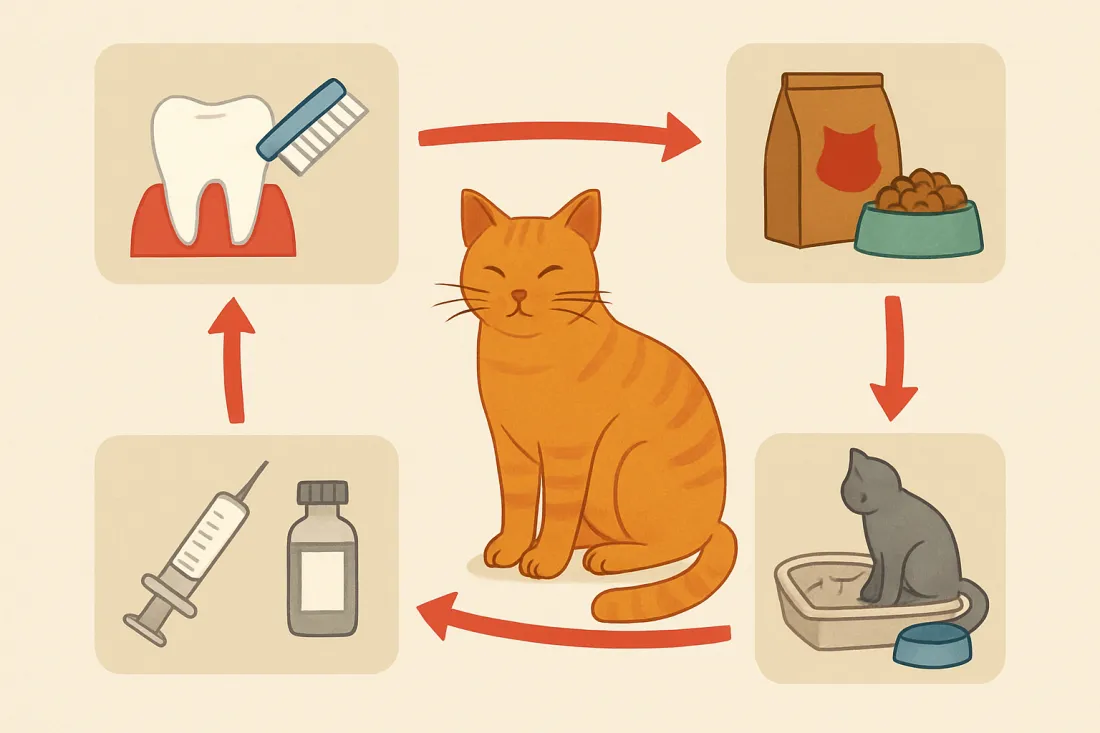
You cannot stop every illness, but you can dramatically lower risk by:
- Keeping vaccines and parasite prevention up to date
- Feeding measured, high-quality food and watching weight
- Brushing teeth and providing dental care
- Keeping cats indoors or supervised, with plenty of enrichment
- Scheduling regular vet checkups and bloodwork as they age
- Acting early when you notice subtle behavior or litter box changes
The rest of the guide walks through how to do this in a realistic way for a typical U.S. household, plus a checklist you can reuse before every annual vet visit.
How preventable cat health problems usually start
Most preventable issues creep up slowly and quietly. A few patterns show up again and again:
- Slow changes that feel “normal.” A cat gains a pound, then another. Litter box clumps get a bit bigger. Breath smells a bit worse. Because cats hide pain and discomfort, owners often miss the early window when simple changes could fix the problem.
- Free-feeding and boredom. A full bowl all day plus little exercise is a recipe for weight gain, hairballs, and sometimes stress behaviors like overgrooming.
- Outdoor risks. Roaming cats are more likely to pick up parasites, infections, and injuries from cars or fights.
- Skipped preventive care. When vaccines, deworming, or dental cleanings slide for a few years, risk quietly builds up.
Thinking in terms of prevention means asking two questions regularly:
- What could go wrong for my cat based on age, lifestyle, and history?
- What small routine can I put in place now to lower that risk?
Indoor-only vs outdoor-roaming cats: health risks compared
Lifestyle is one of the biggest levers you control. Here is how common preventable issues compare for indoor-only and outdoor-roaming cats.
| Health issue | Indoor-only cat | Outdoor-roaming cat | What you can do |
|---|---|---|---|
| Parasites (fleas, ticks, worms) | Lower risk but still possible (brought in on shoes, other pets, or through screens) | Significantly higher risk from wildlife, other cats, and the environment | Use vet-recommended parasite prevention year-round; deworm as advised; check coat and stool changes |
| Infectious diseases | Lower risk, especially in single-cat homes | Higher risk from bites, scratches, and shared environments | Keep core vaccines current; discuss extra vaccines if your cat goes outdoors or to boarding |
| Injuries (cars, fights, falls) | Less common, mostly from indoor hazards (windows, cords, rough play) | Much higher risk of trauma, abscesses, and lost cats | Prefer indoor-only or supervised outdoor time (leash, catio); cat-proof your home |
| Obesity | Common if free-fed and under-stimulated | Less common in very active outdoor cats, but still possible | Measure food, use puzzle feeders, schedule daily play, monitor body condition score |
| Dental disease | Common in both groups; often unnoticed until advanced | Similar risk, plus possible tooth fractures from fights or trauma | Brush teeth if possible, use dental diets or treats as advised, schedule dental checks |
| Stress-related issues (urinary, behavior) | Can be higher if environment is boring or chaotic | Can be higher from territory conflicts and unpredictable events outside | Provide hiding spots, vertical space, routine, and gentle handling; avoid punishment |
For most U.S. homes, an indoor-only or indoor-plus-supervised-outdoor lifestyle gives the best balance of safety and enrichment.
Preventive care basics: vaccines, parasites, and dental health
Preventive vet care is the backbone of avoiding many serious illnesses.
Vaccines: core protection you control
Exact schedules vary, but most cats in the United States are advised to have:
- Core vaccines that protect against widespread, serious diseases (for example, viral respiratory diseases and serious systemic infections).
- Additional vaccines if they go outdoors, live with many other cats, or have other risk factors.
Ask your vet to explain:
- Which vaccines your cat needs based on lifestyle
- How often boosters are recommended for your specific cat
- What side effects to watch for after vaccination
Keeping vaccines current is one of the simplest ways to help prevent life-threatening but avoidable infections.
Parasite prevention: fleas, ticks, and worms
Parasites can cause skin disease, anemia, digestive problems, and can spread some germs to people. Key steps:
- Use a vet-recommended product regularly. Many cats benefit from monthly or seasonal preventives that cover fleas and sometimes ticks and certain worms.
- Check stool and behavior. Diarrhea, weight loss, a dull coat, or visible worms in stool can signal a problem.
- Keep the environment clean. Scoop litter boxes daily and wash hands afterward. This also helps reduce exposure to germs that can pass between cats and people.
Your vet may suggest periodic fecal tests to check for intestinal parasites, especially if your cat hunts or goes outdoors.
Dental care: a major preventable pain source
Dental disease is one of the most common health issues in cats. Plaque and tartar build up, gums become inflamed, and teeth can become painful or infected. Preventive steps:
- Tooth brushing. Daily or several-times-a-week brushing with cat-safe toothpaste is ideal. Start slowly and reward generously.
- Dental diets or treats. Your vet may recommend specific products that help reduce plaque.
- Professional cleanings. Periodic dental cleanings under anesthesia allow the vet to remove tartar and address hidden problems.
- Watch for signs. Bad breath, drooling, pawing at the mouth, or reluctance to eat hard food can signal dental pain.
Untreated dental disease can affect overall health, so catching it early is a powerful form of prevention.
Nutrition and weight management: preventing obesity and related disease
Obesity is a major preventable problem and a risk factor for diabetes, joint pain, and some urinary issues.
How to tell if your cat is overweight
Instead of focusing only on the number on the scale, use a simple body condition check:
- You should be able to feel ribs easily under a thin layer of fat, not have to dig for them.
- From above, your cat should have a visible waist behind the ribs, not a round barrel shape.
- From the side, the belly should tuck up slightly, not hang low in a large pouch.
Your vet can show you how to score body condition and set a healthy target range for your cat.
Feeding routines that help prevent weight gain
- Measure food. Use a measuring cup or scale instead of guessing. Adjust amounts based on your vet’s guidance and your cat’s body condition over time.
- Avoid constant free-feeding. Many indoor cats overeat when food is always available. Scheduled meals make it easier to control portions.
- Limit calorie-dense treats. Treats should be a small fraction of daily calories. Choose small, healthy options and count them as part of the daily total.
- Consider wet food. Wet food can help with hydration and may make portion control easier for some cats.
Encouraging movement and mental stimulation
Exercise and enrichment are as important as diet:
- Daily play sessions. Use wand toys, balls, or interactive toys for at least a few short sessions each day.
- Food puzzles. Puzzle feeders or treat balls make cats “work” for food, slowing eating and adding mental stimulation.
- Vertical space. Cat trees, shelves, and window perches encourage climbing and exploring.
These habits not only help prevent weight gain but also reduce stress-related issues and destructive behavior. If you are planning long-term, combining good health routines with financial planning (such as budgeting for vet care or reviewing unexpected annual vet bills for pets) can make it easier to stick with preventive care.
Common lifestyle-related risks you can reduce
Some risks come directly from how a cat lives day to day.
Indoor boredom and stress
Bored or stressed cats may develop:
- Overgrooming and hair loss
- Stress-related urinary problems
- Destructive scratching or aggression
Prevention focuses on environment:
- Provide hiding spots, high perches, and quiet areas
- Use scratching posts in preferred materials (carpet, sisal, cardboard)
- Keep a predictable routine for feeding and play
- Avoid yelling or physical punishment, which increases fear and stress
Outdoor hazards and preventable injuries
Outdoor-roaming cats face higher risks of:
- Car accidents
- Fights with other animals
- Getting lost or trapped
- Exposure to toxins, parasites, and infections
Safer alternatives include:
- Indoor-only living with rich enrichment
- Leash and harness walks for confident, trained cats
- Secure outdoor enclosures (catios, screened porches)
If you are worried about behavior changes when transitioning a cat indoors, pairing health planning with behavior guidance (for example, avoiding common cat training mistakes to avoid) can make the shift smoother.
Decision guide: which preventive routines matter most for your cat
Use this comparison to decide where to focus first.
| Cat situation | Highest-priority preventable risks | Top 3 routines to start now |
|---|---|---|
| Young indoor-only cat (under 3 years) | Infectious disease, parasites, early dental disease, behavior issues from boredom | Keep vaccines and parasite prevention current; start tooth brushing early; schedule daily interactive play |
| Middle-aged indoor cat (3–8 years) | Weight gain, dental disease, early urinary issues | Measure food and monitor weight; schedule regular dental checks; encourage exercise with toys and climbing |
| Senior cat (8+ years) | Kidney disease, arthritis, dental disease, weight changes (gain or loss) | Plan regular vet visits with bloodwork; monitor appetite, water intake, and litter box output; adjust diet and environment for comfort |
| Outdoor or indoor-outdoor cat | Parasites, infectious disease, injuries, getting lost | Use consistent parasite prevention; keep vaccines fully up to date; consider supervised outdoor time or secure enclosures |
| Multi-cat household | Stress, infectious disease spread, litter box issues | Provide enough litter boxes and resources; maintain vaccination schedules; watch for subtle behavior changes in each cat |
Structured annual care checklist for cat owners
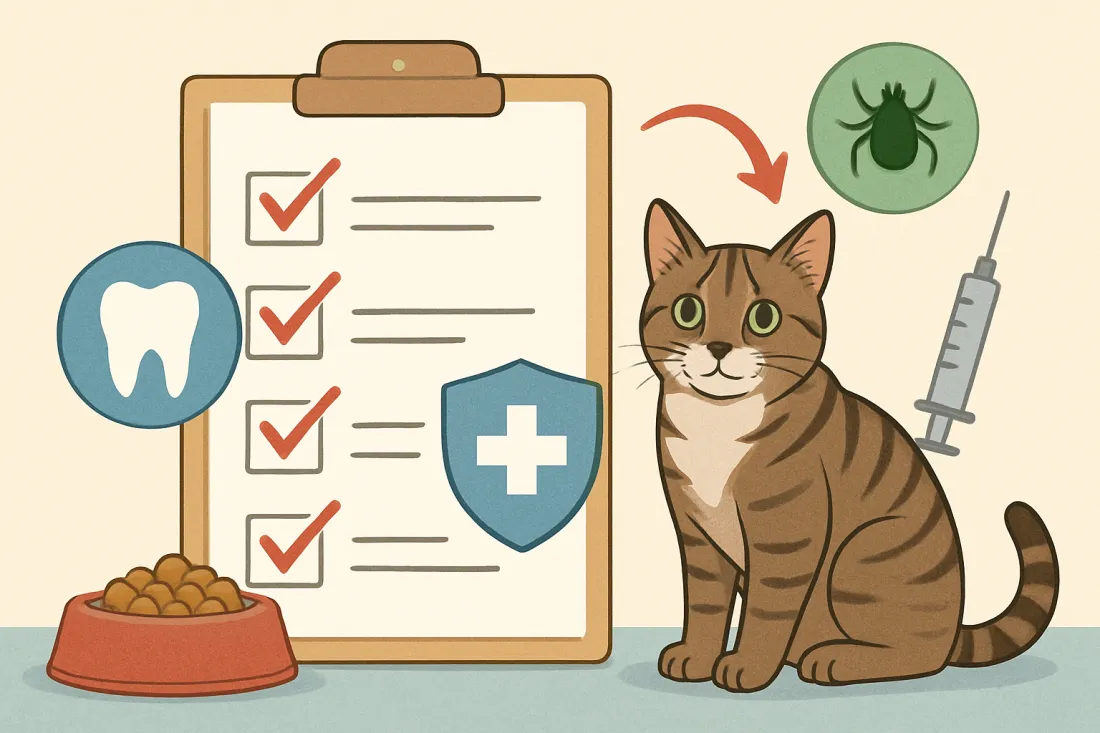
Use this checklist once or twice a year to stay on top of preventable issues.
Home checks (do monthly, review at annual visit)
- Weight and body condition
- ✔ Feel ribs easily under a thin layer of fat
- ✔ Visible waist from above
- ✔ No sudden weight gain or loss since last check
- Mouth and teeth
- ✔ No strong, foul odor from the mouth
- ✔ Gums look pink, not very red or bleeding
- ✔ No drooling, pawing at mouth, or difficulty eating
- Coat and skin
- ✔ Coat looks clean and shiny, not greasy or patchy
- ✔ No visible fleas, flea dirt, or scabs
- ✔ No new lumps or bumps
- Litter box
- ✔ Urine clumps are similar in size to previous months
- ✔ No straining, blood, or crying when urinating
- ✔ Stool is formed, not persistent diarrhea or constipation
- Behavior and activity
- ✔ Normal interest in play and interaction
- ✔ No sudden hiding, aggression, or vocalizing changes
- ✔ Jumping and moving around as usual for age
Before the vet visit (annual or as advised)
- ✔ Note any changes in appetite, thirst, or weight
- ✔ Track litter box changes (more or less urine, accidents, straining)
- ✔ List any vomiting, coughing, or breathing changes
- ✔ Bring a fresh stool sample if your vet recommends parasite testing
- ✔ Write down all foods, treats, and supplements you give
- ✔ Check when vaccines and parasite preventives were last given
At the vet visit
- ✔ Confirm vaccine schedule and parasite prevention plan
- ✔ Ask for a body condition score and ideal weight range
- ✔ Discuss dental health and whether a cleaning is recommended
- ✔ For older cats, ask about bloodwork to screen for kidney, liver, or thyroid issues
- ✔ Review any behavior or litter box concerns, even if they seem minor
Questions to ask your vet about preventable issues
Going in with specific questions helps you get clear, personalized guidance.
- Vaccines and parasites
- “Which vaccines are essential for my cat’s lifestyle, and how often should boosters be done?”
- “What parasite prevention do you recommend for my cat, and how frequently should I use it?”
- “Do we need routine fecal tests or other screening based on my cat’s habits?”
- Weight and diet
- “Is my cat at a healthy weight? What is the ideal range for them?”
- “How much of this specific food should I feed each day?”
- “Are there any diet changes that could help prevent urinary or dental problems?”
- Dental health
- “What is my cat’s current dental condition?”
- “Do you recommend a professional cleaning soon?”
- “Can you show me how to brush my cat’s teeth safely?”
- Age-related screening
- “Based on my cat’s age, what screening tests do you recommend?”
- “How often should we repeat bloodwork or urine tests?”
- Behavior and environment
- “Are there signs of stress or pain you see that I might be missing at home?”
- “What changes at home could help prevent behavior or urinary problems?”
Cost planning notes for U.S. cat owners
Preventive care costs money up front, but it often reduces the chance of larger, urgent bills later. Consider these planning points:
- Budget for routine care. Plan for at least one vet exam per year, plus vaccines, parasite prevention, and occasional dental work. Costs vary widely by region and clinic, so ask your vet for a rough annual estimate for your cat.
- Ask about “senior” plans. As cats age, they may need more frequent checkups and lab tests. Some clinics offer wellness plans that spread these costs over the year.
- Set aside a pet emergency fund. Even with excellent prevention, sudden illnesses or injuries can happen. Saving gradually into a dedicated account can soften the impact.
- Weigh insurance or discount plans carefully. If you consider pet insurance, compare what is covered for preventive care versus emergencies, and check exclusions and waiting periods.
- Preventive vs crisis care. Ask your vet how often they see emergencies that might have been reduced or delayed with earlier screening or dental care. This can help you decide which preventive services to prioritize within your budget.
If finances are tight, talk openly with your vet. Many can help you prioritize the most important preventive steps for your cat’s situation. Planning ahead for both health and money can also make it less likely you will ever face the painful choice of rehoming a pet; if that is a concern, you may find it helpful to read about how to avoid having to give up my pet.
Common mistakes that quietly raise health risks
Avoiding a few widespread habits can make a big difference.
- Free-feeding dry food all day. This often leads to weight gain, especially in indoor cats with little exercise.
- Using human medications or home remedies without vet guidance. Some human drugs and essential oils are dangerous for cats.
- Skipping vet visits because the cat “seems fine.” Many serious conditions, including kidney disease and dental problems, can be advanced before obvious signs appear.
- Assuming hairballs are always normal. Frequent vomiting or coughing up hairballs can signal underlying issues that deserve a vet check.
- Ignoring subtle behavior changes. Hiding more, avoiding jumping, or changes in grooming can be early signs of pain or illness.
- Letting litter box problems slide. Peeing outside the box, straining, or frequent small clumps can be early warnings of urinary or kidney issues.
Summary: key takeaways for preventing common cat health issues
- Many major cat health problems are partly preventable with consistent vaccines, parasite control, dental care, and weight management.
- Indoor or supervised lifestyles usually reduce injuries and infections, as long as you provide enough enrichment to prevent boredom and stress.
- Measured feeding, daily play, and regular body condition checks are simple habits that strongly influence long-term health.
- Annual vet visits (or more often for seniors) help catch silent problems early, when they are easier and often cheaper to manage.
- Planning ahead for both health routines and costs makes it easier to provide steady care throughout your cat’s life.
FAQ about preventable cat health issues
What is the 3-3-3 rule for cats, and how does it relate to health?
The “3-3-3 rule” is a rough guideline often used for newly adopted pets. It suggests that in the first 3 days a cat may feel overwhelmed and hide, in 3 weeks they start to learn your routine, and in about 3 months they begin to feel fully settled. It is not a strict scientific rule, but it is a helpful reminder to be patient. From a health perspective, this settling-in period is a good time to:
- Schedule an initial vet exam and vaccines if needed
- Discuss parasite prevention and any tests recommended for shelter or stray cats
- Watch closely for sneezing, coughing, diarrhea, or behavior changes that might signal illness or stress
Giving a new cat time, a quiet safe space, and gentle handling reduces stress, which in turn supports their immune system and overall health.
What is the most common health issue in cats that owners can help prevent?
Dental disease and obesity are among the most common problems seen in adult cats, and owners can strongly influence both. Plaque buildup and gum inflammation often start early, but regular dental checks and tooth brushing can slow this down. Weight gain usually creeps up over time with free-feeding and low activity; measuring food, limiting treats, and encouraging daily play can prevent many cats from becoming overweight. Because these issues develop gradually, they are easy to overlook. Making mouth checks and body condition scoring part of your routine is one of the most effective preventive steps you can take.
What health practice is not advisable for cats, even if it seems helpful?
A few well-meant practices can actually harm cats:
- Giving human medications without vet approval. Many common pain relievers and cold medicines are toxic to cats.
- Using essential oils or strong fragrances around cats. Some oils and diffusers can irritate airways or be toxic if ingested or absorbed through the skin.
- Putting cats on extreme or fad diets. Sudden diet changes or unbalanced homemade diets can cause digestive upset or nutrient deficiencies.
- Withholding food for long periods in overweight cats. Rapid food restriction can lead to serious liver problems in cats.
Always check with your vet before starting any new medication, supplement, or major diet change.
What is sometimes called the “silent killer” of cats, and can it be caught early?
Some people refer to chronic kidney disease as a “silent” problem in cats because it can develop slowly with few obvious signs at first. By the time cats show clear symptoms like weight loss, increased thirst, and more urination, the disease may already be advanced. You cannot always prevent kidney disease, but you can often catch it earlier by:
- Scheduling regular vet exams, especially for cats over about middle age
- Discussing periodic blood and urine tests to monitor kidney function
- Watching for subtle changes in water intake, urine clump size, and weight
Early detection allows your vet to suggest diet changes and other measures that may help support kidney function and comfort over time.