
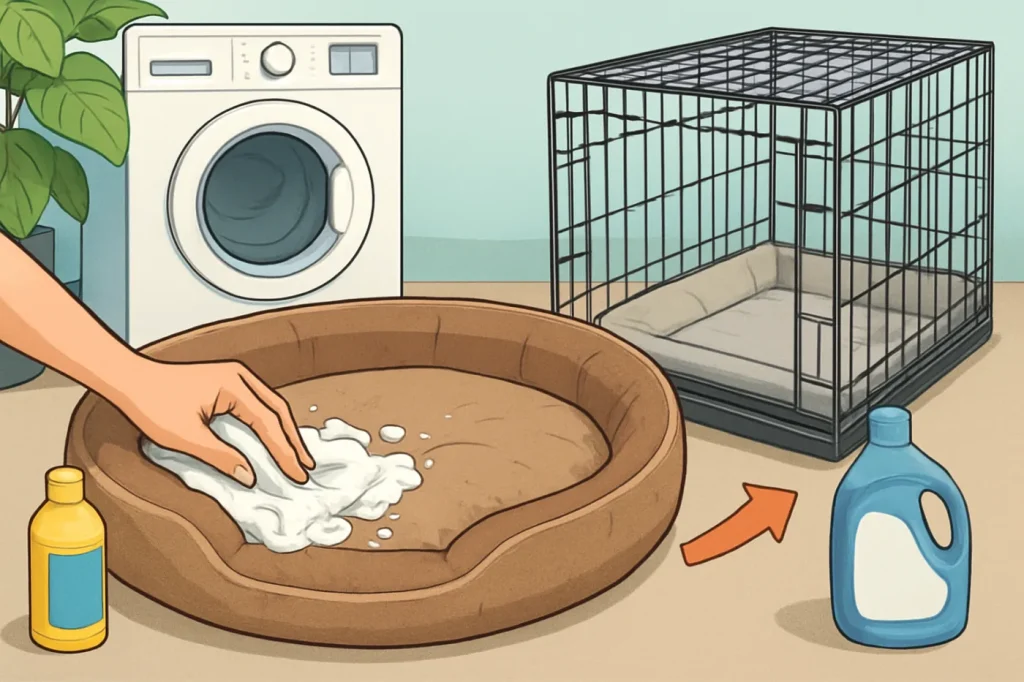
Essential routine for cleaning pet bedding and removing odour
To keep pet odour under control and protect your pet’s skin and lungs, wash soft items that touch your dog or cat regularly, using mild products and enough hot water and drying time to fully remove moisture and bacteria.
As a simple baseline for most homes in the United States:
- Wash main pet beds and blankets about once a week (more often for heavy shedders, seniors, or allergy sufferers).
- Wash soft toys and crate pads about every 1–2 weeks, checking labels first.
- Vacuum and spot-clean sofas, rugs, and car seats used by pets at least weekly, with a deeper clean about monthly.
- Use a fragrance-free, dye-free detergent and avoid strong fabric softeners and harsh chemicals that can irritate pets.
- Dry items completely to prevent musty smells and mildew.
The details below walk through how to do this safely, how to choose products, and what to change if odour lingers.
Why pet bedding holds odour and allergens so easily
Pet beds, blankets, and soft toys trap more than just fur. Understanding what is in the fabric helps you decide how often and how deeply to clean.
- Body oils and dander: Dogs and cats release natural oils that coat fibers. These oils hold onto smells and can make fabrics feel greasy or sticky over time.
- Saliva and accidents: Licking, drooling, and the occasional pee or vomit accident leave behind proteins and bacteria that cause strong, lingering odours.
- Outdoor debris: Pollen, dust, soil, and street grime ride in on paws and fur, then get rubbed into beds and blankets.
- Moisture: Damp fur, spilled water, or a bed placed on a cool floor can keep the filling slightly wet, encouraging mildew and a musty smell.
- Allergens: Pet dander and dust mites build up in soft items, which can trigger allergies for both humans and pets if not washed regularly.
Because of this mix of oils, proteins, and moisture, pet odour rarely disappears with a quick spray or light vacuum. Regular washing and thorough drying are what actually reset the fabric.
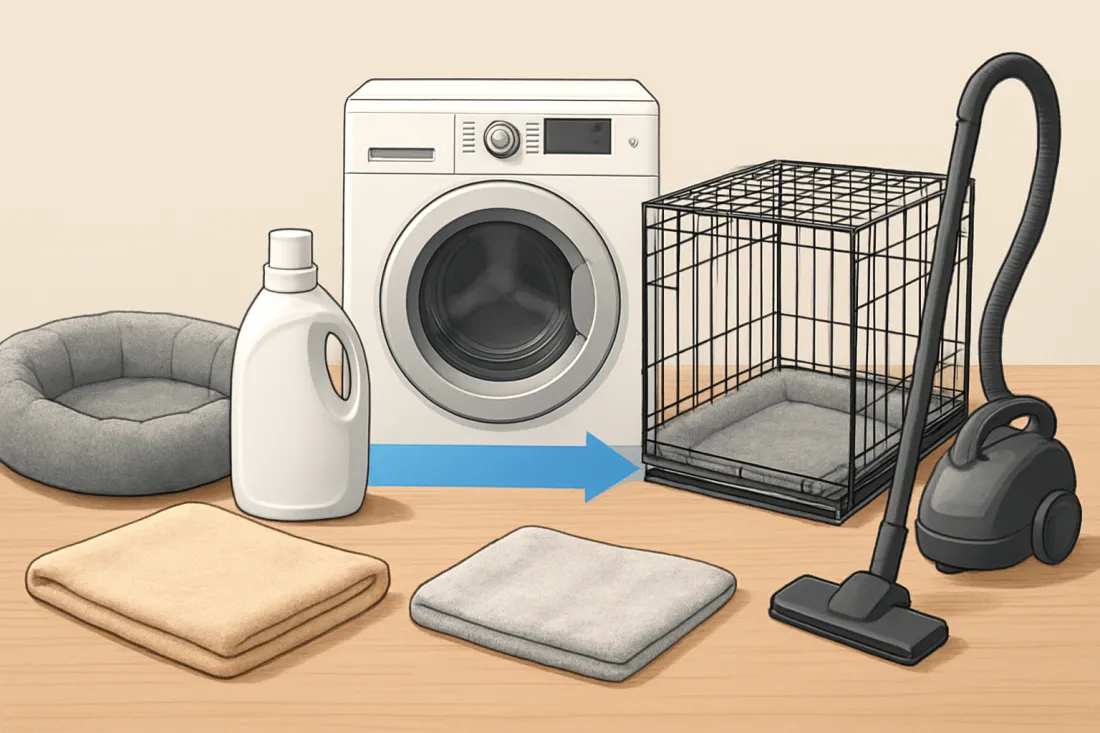
How often to wash dog and cat beds, blankets, and soft toys
There is no single schedule that fits every home, but you can set a routine based on how your pet lives and how sensitive your household is to odours and allergies.
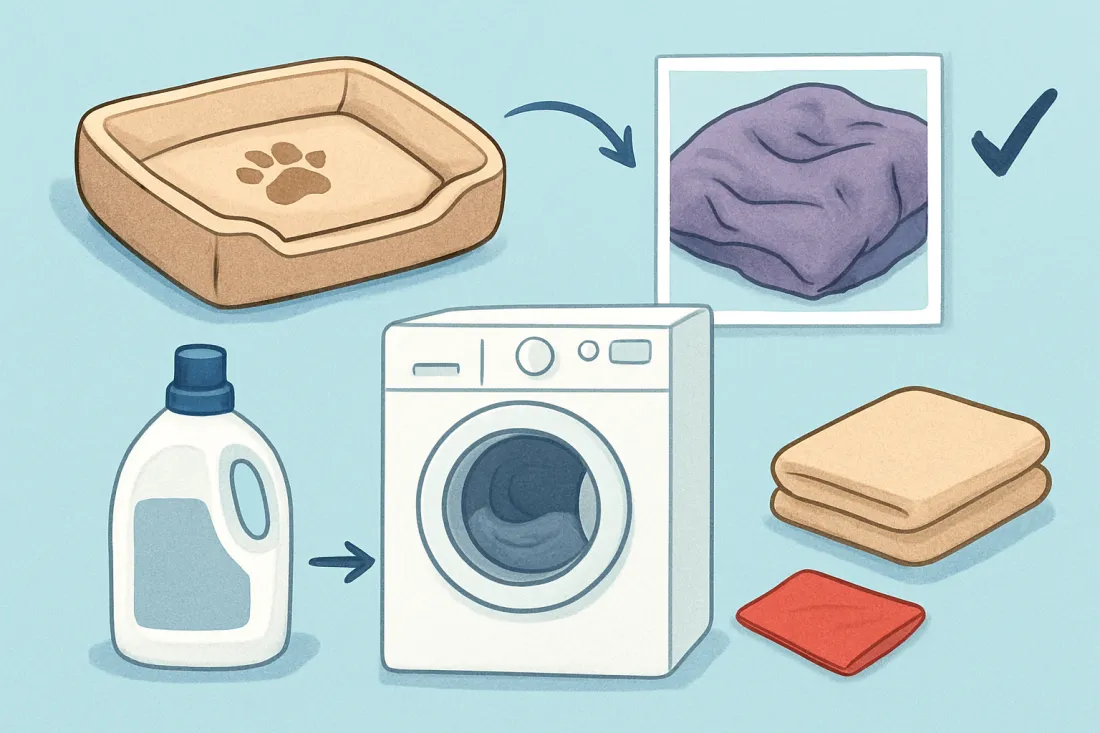
Typical washing frequency by item
- Main pet bed cover: Every 7–10 days for most indoor pets; every 3–5 days if your pet has skin issues, allergies, or spends a lot of time outdoors.
- Bed inner cushion or insert: Every 1–2 months, or sooner if it smells or has visible stains. Some inserts are spot-clean only; always check the label.
- Blankets and throws used by pets: About weekly, or whenever you wash your own bedding if the pet sleeps on your bed.
- Soft toys: Every 1–2 weeks for favorites that are constantly in the mouth; monthly for less-used toys.
- Crate pads and liners: Every 1–2 weeks, plus immediately after any accident.
Signs you should wash more often
Increase washing frequency if you notice:
- A “doggy” or musty smell returning within a day or two of cleaning.
- Visible dirt, saliva marks, or greasy patches on the fabric.
- Your pet scratching more when using the bed or blanket.
- Family members with allergies feeling worse near the pet’s sleeping area.
If you are unsure, err on the side of washing more frequently with gentle products rather than waiting until items smell strong.
Step-by-step: washing pet bedding in a standard US washer and dryer
This process works for most machine-washable beds, blankets, and crate pads. Always check the care label first and follow any specific instructions from the manufacturer.
1. Prep and de-fur before washing
- Shake outside: Take the bed cover or blanket outdoors and shake vigorously to remove loose hair, dust, and crumbs.
- Vacuum thoroughly: Use a vacuum with an upholstery attachment to pull fur and dander out of seams and tufts. This protects your washer from clogs and helps the wash work better.
- Check for damage: Look for torn seams, exposed stuffing, or chewed areas. Repair or replace if stuffing is loose, as it can break apart in the wash.
- Remove covers: If the bed has a removable cover, unzip it and take out the inner cushion or foam insert. Most covers are machine-washable; inserts may be spot-clean only.
2. Pre-treat stains and strong odour spots
- Urine or vomit spots: Blot up any dried residue with paper towels. Rinse the area under cool running water from the back of the fabric to push residue out.
- Mild pre-treatment: Apply a small amount of your regular fragrance-free detergent or a pet-safe stain remover to stained areas. Gently work it in with your fingers or a soft brush.
- Soak for heavy odour: For very smelly items, soak in a basin or tub with cool or warm water and a small amount of detergent for 15–30 minutes before machine washing.
3. Load the washer correctly
- Do a separate pet load: Wash pet bedding separately from human clothes, especially baby items or delicate fabrics.
- Do not overload: The bed cover or blanket should move freely in the drum. If your machine struggles to spin, wash large beds at a laundromat with larger-capacity machines.
- Add detergent: Use the normal amount of a mild, fragrance-free detergent. More detergent does not mean cleaner; it can leave residue that traps odour.
4. Choose cycle, temperature, and extra rinse
- Cycle: Use a regular or heavy-duty cycle for sturdy fabrics; use a gentle cycle for delicate covers or loosely woven blankets.
- Water temperature: Warm water is usually a good balance for removing oils and odour without shrinking most fabrics. Use cool water for items labeled cold-wash only. For very sturdy cotton covers, hot water can help with odour, but check the label first.
- Extra rinse: If your washer has an extra-rinse option, use it to remove more detergent and dander, especially for allergy-prone households.
5. Dry thoroughly without damaging the filling
- Check labels again: Some inserts and foam pieces are air-dry only. High heat can warp foam or melt synthetic filling.
- Dryer settings: For most covers and blankets, use medium heat. For delicate fabrics or anything with elastic, use low heat or air-dry.
- Use dryer balls: Wool or rubber dryer balls help fluff the filling and reduce drying time.
- Ensure items are fully dry: Feel the thickest parts of the bed or blanket. If there is any cool, damp area, continue drying or air-dry until completely dry.
- Air out after drying: Hang or lay the bed in a well-ventilated area for an hour to let any remaining moisture or detergent smell dissipate.
Safe detergents, additives, and temperatures for pet items
Pets spend hours with their noses and skin pressed into their bedding, so the products you use matter. The goal is to remove odour and residue without leaving behind harsh fragrances or irritants.
Choosing a pet-safe detergent
- Look for fragrance-free and dye-free: These formulas reduce the risk of skin irritation and are less overwhelming for sensitive pet noses.
- Avoid strong “fresh scent” products: Heavy perfumes can mask odour temporarily but may bother pets and people with sensitivities.
- Skip bleach unless absolutely necessary: Chlorine bleach can be harsh on fabrics and may leave a strong smell. If you must use it on a white, sturdy item, rinse very thoroughly and use it sparingly.
Using common additives carefully
- Oxygen-based cleaners: Powder or liquid oxygen-based boosters can help with stains and odour on colorfast fabrics. Follow the package directions and test on a small area first.
- Baking soda: Adding a small amount of baking soda to the wash can help neutralize odours. Make sure it fully dissolves and rinse well.
- Vinegar in the rinse: A small amount of white vinegar in the rinse cycle can help cut detergent residue and some odours. Do not mix vinegar directly with bleach.
- Fabric softeners: Liquid softeners and scented dryer sheets can leave residues and strong fragrances. If you use them at all, use very sparingly and watch your pet for any signs of irritation.
Temperature decisions and fabric care
- Hot water: Better at cutting through oils and odour on sturdy cotton covers and towels, but can shrink or fade some fabrics.
- Warm water: A good default for most pet bedding that is labeled machine-washable.
- Cold water: Gentler on colors and delicate fabrics, but may not remove heavy oils and odour as effectively without a longer cycle or pre-soak.
When in doubt, start with warm water and a gentle detergent, then adjust based on how well odour is removed and how the fabric holds up.
Cleaning and deodorizing crates, carriers, and playpens
Hard surfaces around your pet’s bed can hold odour too. A clean crate or carrier helps keep freshly washed bedding from picking up smells again.
Step-by-step crate and carrier cleaning
- Remove all soft items: Take out pads, blankets, and toys for separate washing.
- Vacuum or shake out debris: Remove fur, crumbs, and litter from corners and joints.
- Wash removable trays and plastic parts: Use warm water and a mild dish soap or pet-safe cleaner. Scrub with a soft brush, paying attention to corners and latches.
- Rinse thoroughly: Soap residue can be sticky and attract dirt, so rinse until the water runs clear.
- Disinfect when needed: After illness or accidents, use a pet-safe disinfectant following the label directions. Rinse again if required.
- Dry completely: Towel-dry and then air-dry until no moisture remains, especially on metal bars where rust can form.
- Reassemble with clean bedding: Once everything is dry and odour-free, put the washed bedding back in.
Playpens and soft-sided carriers
- Fabric panels: Many soft-sided carriers have removable, machine-washable liners or pads. Wash these like other pet bedding.
- Mesh and fabric walls: Wipe with a cloth dipped in warm, soapy water, then wipe again with clean water to remove soap.
- Metal or plastic playpens: Clean like crates, focusing on joints and hinges where grime collects.
Managing pet odours on sofas, rugs, and car interiors
Even with clean bedding, pets often nap on sofas, rugs, and car seats. A simple routine keeps these areas from becoming the main source of pet smell.
Soft furniture (sofas, chairs, cushions)
- Use washable covers or throws: Place a washable blanket or slipcover where your pet likes to sleep. Wash it weekly with your pet bedding.
- Vacuum regularly: Use an upholstery tool to vacuum cushions, seams, and under cushions at least once a week.
- Spot-clean stains: For drool or muddy paw prints, blot with a clean cloth and a small amount of upholstery-safe cleaner. Test any product on a hidden area first.
- Deodorize gently: Lightly sprinkle baking soda on fabric, let sit for 15–30 minutes, then vacuum thoroughly. Avoid overusing powders, which can build up in fabric and vacuums.
Rugs and carpets
- Vacuum slowly and often: Go over high-traffic pet areas multiple times to pull up hair and dander.
- Address accidents promptly: Blot (do not rub) urine or vomit, then clean with a pet-safe cleaner designed for carpets. For detailed steps, see guides such as how to clean dog and cat urine from carpet.
- Deep clean periodically: Use a carpet cleaner or schedule professional cleaning for heavily used areas, especially if odour persists despite regular vacuuming.
Car interiors
- Use seat covers: A washable seat cover or hammock in the back seat catches fur and dirt. Wash it with other pet items.
- Vacuum seats and cargo areas: Focus on seams and crevices where fur collects.
- Wipe hard surfaces: Use a mild interior-safe cleaner on door panels, plastic trim, and cargo liners.
- Air out the car: Open windows when parked safely to let lingering odours escape.
Comparison table: cleaning methods for common pet items
| Item | Best cleaning method | When it is appropriate | Risks or limitations | Next action if odour remains |
|---|---|---|---|---|
| Removable bed cover | Machine wash warm, extra rinse, medium-heat dry | Sturdy cotton or polyester covers labeled machine-washable | Hot water or high heat may shrink or fade some fabrics | Repeat wash with pre-soak; consider adding baking soda or an oxygen-based booster |
| Foam bed insert | Spot-clean with mild soap, rinse carefully, air-dry | Solid foam or memory foam inserts without machine-wash label | Soaking can trap water inside foam, leading to mildew and long dry times | If musty smell persists after full drying, replace the insert |
| Fleece blanket | Machine wash cold or warm, gentle cycle, low-heat dry | Lightweight throws and blankets used on beds or sofas | High heat can cause pilling or static; strong softeners may irritate pets | Wash again with less detergent and an extra rinse to remove residue |
| Soft toy with squeaker | Machine wash in mesh bag, gentle cycle, air-dry | Fabric toys without electronic parts or metal pieces | High heat can warp squeakers; weak seams may open in the wash | Discard toys that stay smelly or damaged after washing |
| Plastic crate | Hand wash with mild soap, rinse, air-dry | Everyday cleaning and odour control | Harsh chemicals can leave strong smells or damage plastic | Use a pet-safe disinfectant, then rinse and dry thoroughly |
| Upholstered sofa | Vacuum, spot-clean, occasional professional or machine cleaning | Fabric sofas with pets allowed on furniture | Wrong cleaner can cause stains or fading; too much water can soak cushions | Use washable throws or covers; consider a deeper professional clean |
Structured checklist: monthly soft-surface cleaning plan for pet owners
Use this practical checklist to keep odour under control without guessing what to clean next.
Weekly tasks
- Wash main pet bed covers and crate pads.
- Wash blankets and throws from pet sleeping spots.
- Vacuum pet beds, sofas, and rugs used by pets.
- Spot-clean any fresh stains or accidents on carpets or upholstery.
- Shake out and air pet beds outdoors on a dry day.
Every 2 weeks
- Wash soft toys that are frequently in your pet’s mouth.
- Wipe down crates, carriers, and playpens with warm, soapy water.
- Wash car seat covers or cargo liners used for pet transport.
- Check for wear and tear on beds and toys (loose seams, exposed stuffing).
Monthly tasks
- Deep clean rugs or high-traffic carpet areas used by pets.
- Vacuum under and behind pet beds and furniture where fur collects.
- Wash or replace any heavily used doormats where pets enter the home.
- Inspect foam inserts for musty smells or stains and spot-clean or replace as needed.
- Review your cleaning products and restock mild, pet-safe detergents and cleaners.
Seasonal or as needed
- Increase washing frequency during shedding seasons or wet weather.
- After illness or parasite treatment, clean and disinfect crates, carriers, and frequently used soft items.
- Consider a professional deep clean for carpets or upholstery if odour persists despite regular care.
Common mistakes that make pet odour worse
A few well-intentioned habits can actually lock in smells or irritate your pet. Avoid these pitfalls when cleaning pet bedding and soft surfaces.
- Masking instead of removing: Relying on heavy air fresheners or fabric sprays without washing the fabric leaves the source of odour in place.
- Using too much detergent: Extra soap can cling to fibers, trapping oils and odours and potentially irritating your pet’s skin.
- Skipping the rinse or short-cycling: Very quick washes may not fully remove oils or detergent, especially on thick fabrics.
- Not drying completely: Putting bedding back while even slightly damp can lead to a musty, sour smell and potential mildew.
- Using harsh chemicals: Strong bleach, ammonia, or heavy-duty cleaners can leave powerful fumes and residues that are uncomfortable or unsafe for pets.
- Ignoring the surrounding area: Cleaning the bed but not the crate, floor, or nearby rug allows odour to linger and transfer back to clean bedding.
- Waiting until items smell very strong: The longer oils and bacteria sit in fabric, the harder they are to remove in one wash.
Decision criteria: when to keep cleaning, change products, or replace items
Sometimes odour lingers even after careful washing. Use these checks to decide what to adjust.
Adjust your washing method
- Odour is mild but returns quickly: Wash more often and add an extra rinse to remove more oils and detergent residue.
- Fabric feels greasy or heavy: Use slightly warmer water (if safe for the fabric) and reduce detergent amount; consider a pre-soak.
- Detergent smell is strong: Switch to a fragrance-free formula and use less product.
Check the environment
- Bed on a damp floor or in a humid room: Move the bed to a drier spot or place a washable mat underneath.
- Poor ventilation: Open windows when possible or use a fan to help air out pet areas after cleaning.
- Multiple pets or frequent outdoor play: Increase the frequency of washing and vacuuming to match the higher load of dirt and oils.
When it is time to replace items
- Persistent musty smell in foam even after thorough cleaning and full drying.
- Visible mold or dark spots inside the filling or along seams.
- Flattened or lumpy filling that no longer supports your pet comfortably.
- Frayed seams or exposed stuffing that your pet could ingest.
Replacing a badly worn or permanently smelly bed is often more effective and safer than repeated heavy cleaning attempts.
FAQ: lingering odour, replacement, and next steps
What should I do if pet bedding still smells after washing?
If odour lingers after a normal wash, try these steps:
- Pre-soak the bedding in cool or warm water with a small amount of detergent before washing.
- Add an extra rinse cycle to remove more residue.
- Use a mild deodorizing booster that is safe for pets and colorfast fabrics.
- Dry completely, then air the bed outside in fresh air if weather allows.
- Check nearby surfaces (crate, floor, rug) that might be re-adding odour to the clean bed.
If you have tried these changes and the smell remains, especially a musty or sour odor from inside the filling, it may be time to replace the bed or cushion.
How can I tell when to replace my dog or cat bed instead of cleaning again?
Replace the bed when cleaning no longer restores it to a neutral smell or safe condition. Warning signs include persistent musty odour from the foam, visible mold or stains inside the filling, stuffing that has broken into clumps, or seams that keep splitting. At that point, a new bed is usually better for both hygiene and your pet’s comfort.
What mistakes should I avoid when cleaning pet bedding to remove odour?
Avoid using very strong fragrances or harsh chemicals that only mask odour and may irritate your pet. Do not overload the washer, skip rinses, or put bedding back while still damp. Try not to wait until items smell very strong; regular gentle washing is easier on fabrics and more effective at controlling odour.
What should I do next to keep my home and pet bedding smelling fresh?
Set a simple routine: wash pet beds and blankets weekly, vacuum soft surfaces your pet uses, and clean crates and carriers regularly. Choose mild, fragrance-free detergents and make sure everything dries fully. If you are building a broader routine for a pet-friendly home, explore guides such as how to set up a pet friendly home or a dedicated pet friendly cleaning routine to keep bedding, floors, and furniture working together to stay fresh.