Are professional dental cleanings safe for pets or should you rely on home care only
For most healthy dogs and cats in the United States, a properly planned and monitored professional dental cleaning under anesthesia is generally considered low risk and far safer than leaving moderate or severe dental disease untreated. The bigger long-term danger for many pets is chronic pain, infection, and organ strain from bad teeth and gums, not the cleaning itself. That said, no anesthetic procedure is completely risk free. Your job as a pet owner is to make an informed decision, not a blind leap of faith. That means you should:
- Understand what untreated dental disease actually does to dogs and cats.
- Know the limits of brushing, chews, and other home care.
- Understand what happens during a professional cleaning step by step.
- Learn how vets manage anesthesia safety and what raises risk.
- Ask focused questions before any procedure is scheduled.
- Avoid shortcuts like cosmetic, non-anesthetic “cleanings” that do not treat disease under the gums.
Used this way, professional cleanings and good home care work together to keep your pet’s mouth comfortable and healthy.
What dental disease does to dogs and cats if you skip cleanings
Dental disease is one of the most common health problems in pets. It is not just about bad breath or yellow teeth; it is a slow, often hidden process that can affect your pet’s whole body.
How dental disease starts and progresses
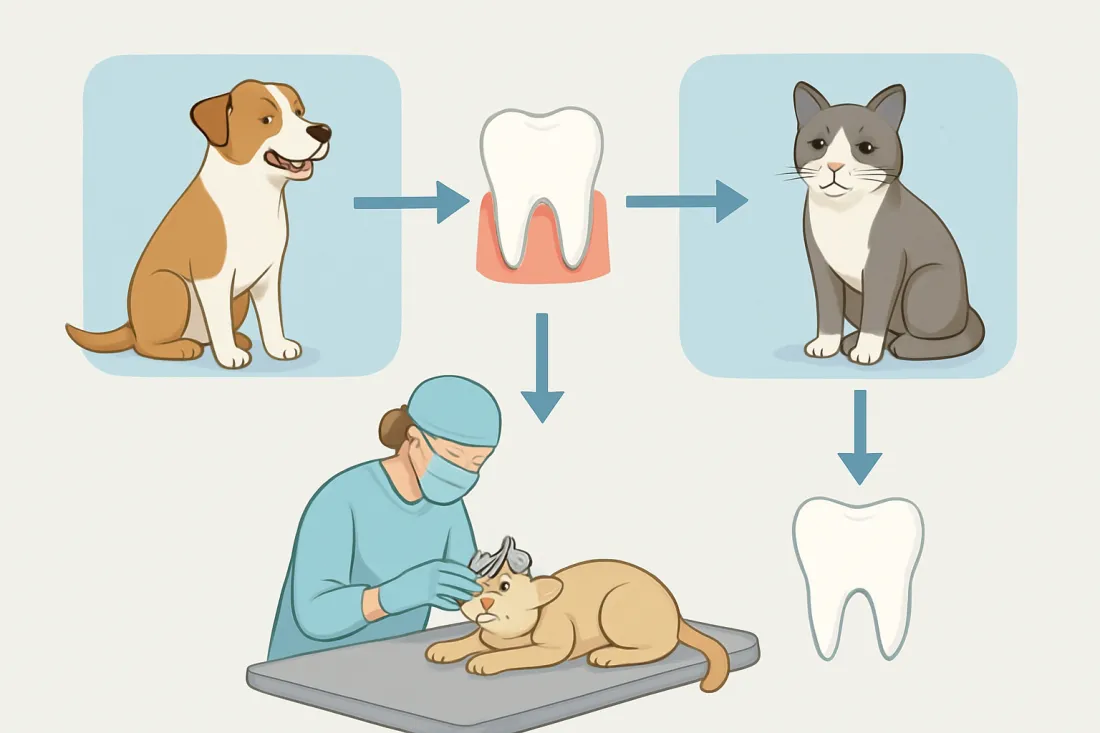
- Within hours after eating, a sticky film of bacteria (plaque) forms on teeth.
- Within days, minerals in saliva harden plaque into tartar (calculus) that clings tightly to the tooth surface.
- As tartar builds up, it irritates the gums, causing redness, swelling, and bleeding (gingivitis).
- If untreated, bacteria and inflammation move under the gumline, damaging the tissues and bone that hold teeth in place (periodontal disease).
This process can be advanced even when your pet is still eating and acting “normal.” Many animals hide pain very well.
What ongoing dental disease does to your pet
Common consequences include:
- Chronic pain and behavior changes – Pets rarely cry out from mouth pain. Instead you may see subtle signs: eating more slowly, dropping kibble, chewing on one side, pawing at the mouth, or becoming withdrawn or irritable.
- Loose, fractured, or lost teeth – As bone around the teeth is destroyed, teeth loosen and can fracture. This is painful and can make chewing difficult.
- Infections and abscesses – Bacteria can form pockets of pus around tooth roots. These may burst into the nasal passages, under the eye, or along the jaw, causing swelling and discharge.
- Persistent bad breath – Strong, foul odor usually reflects significant bacterial overgrowth and gum disease, not just “dog breath.”
- Whole-body impact – Bacteria and inflammatory chemicals from the mouth can enter the bloodstream and put extra strain on organs such as the heart, liver, and kidneys over time.
The longer dental disease is ignored, the more extensive and invasive the eventual treatment tends to be. Regular home care plus periodic professional cleanings help prevent that spiral.
Why home dental care alone is not enough
Home dental care is essential, but it cannot replace professional treatment once disease is established. Understanding what it can and cannot do helps you decide when a cleaning is truly needed.
What good home care can do
Consistent home care can:
- Slow plaque buildup with daily or near-daily toothbrushing using pet-safe toothpaste.
- Support healthier gums by reducing surface bacteria and mild inflammation.
- Extend the time between professional cleanings, especially in young, otherwise healthy pets.
- Help you spot problems early because you are regularly looking in your pet’s mouth.
What home care cannot fix
Even excellent home care cannot:
- Remove hardened tartar – Once plaque has mineralized into tartar, it is too hard to brush off safely.
- Clean under the gumline – The most damaging disease often hides below the surface, where brushes, wipes, and chews cannot reach.
- Show what is happening in roots and bone – Only dental X‑rays can reveal root infections, bone loss, or resorptive lesions.
- Treat advanced periodontal disease – Deep pockets, loose teeth, and infected roots require professional scaling, possible surgery, and often extractions.
This is why many veterinarians recommend a combination of daily home care and periodic professional cleanings rather than choosing one or the other. If you want a deeper dive into how to balance both approaches, you can also read about home dental care vs professional cleaning for pets.
What happens during a professional dental cleaning for pets
Understanding the process makes it less scary and helps you ask specific questions. Details vary by clinic and by your pet’s health, but a typical anesthetic dental cleaning follows a clear sequence.
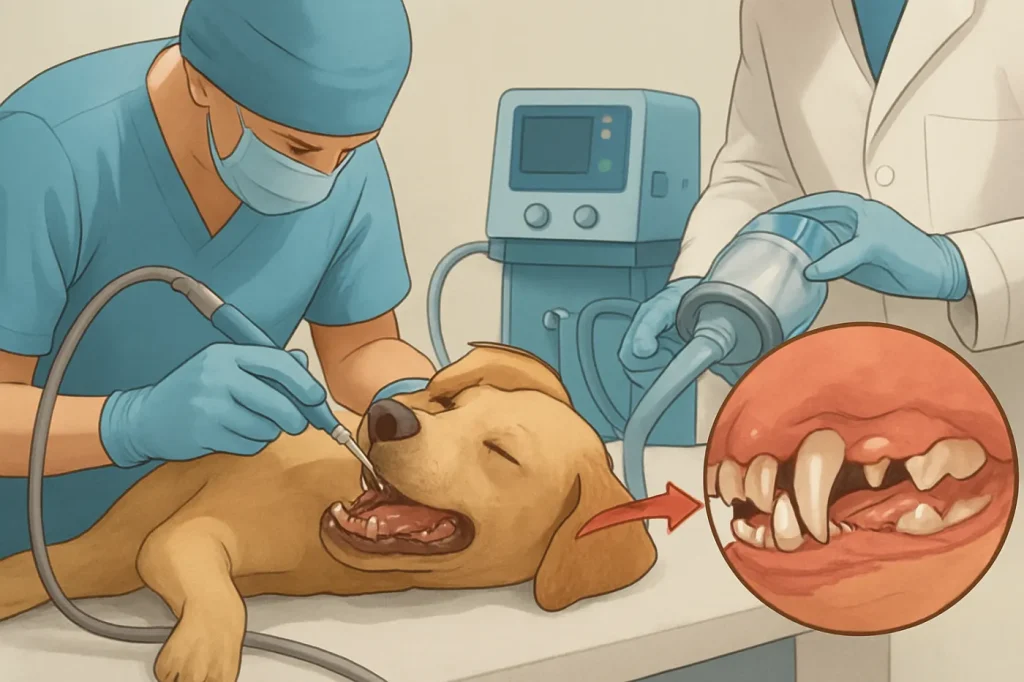
Step-by-step overview of a typical anesthetic dental cleaning
- Pre-anesthetic exam
Your vet reviews your pet’s medical history, listens to the heart and lungs, checks the mouth, and looks for issues that might increase anesthesia risk, such as a heart murmur, dehydration, or breathing problems. - Pre-anesthetic testing
Bloodwork is commonly recommended to check organ function. Older pets or those with known health issues may also need imaging or urine tests. These results help tailor the anesthesia plan and timing. - Pre-medication
Your pet receives medications to reduce anxiety, provide pain relief, and make induction smoother. This often allows lower doses of general anesthetic drugs. - Induction and intubation
An injectable drug is given to bring your pet under anesthesia. A breathing tube is placed in the windpipe to protect the airway and deliver oxygen and anesthetic gas. This also helps prevent water or debris from entering the lungs. - Monitoring during anesthesia
Throughout the procedure, trained staff monitor vital signs such as heart rate, breathing rate, oxygen levels, blood pressure, and temperature. Adjustments are made as needed to keep your pet stable. - Full-mouth exam
With your pet asleep and pain-free, the vet can examine every tooth, probe around the gums, and look for pockets, fractures, or resorptive lesions that are difficult or impossible to assess in an awake animal. - Dental X‑rays
Many clinics take X‑rays of all teeth or at least of suspicious areas to check roots and bone. This often reveals hidden problems such as root infections or bone loss that are not visible above the gumline. - Scaling above and below the gumline
Using ultrasonic and hand instruments, the technician or vet removes tartar from the visible tooth surface and, crucially, from under the gumline where disease is most active. - Polishing
After scaling, teeth are polished to smooth microscopic scratches on the enamel. This makes it harder for new plaque to stick quickly. - Flushing and local treatments
The mouth is rinsed to remove debris and bacteria. The vet may apply local antibiotics, sealants, or other treatments depending on what they find. - Extractions or advanced procedures (if needed)
Severely damaged or infected teeth may be extracted. Your vet will usually discuss likely extractions with you beforehand, but some decisions are made once X‑rays are reviewed during the procedure. - Recovery and pain management
Anesthesia is turned off, and your pet is monitored closely as they wake up. Pain relief is continued as needed. Most pets go home the same day with instructions for feeding, activity, and home care.
Knowing these steps helps you see that a professional cleaning is a structured medical procedure, not just “a quick scrub of the teeth.”
Anesthesia safety for pet dental cleanings: protocols and real risks
Anesthesia is usually the number one concern for owners. Modern veterinary anesthesia is much safer than it used to be, especially when tailored to the individual pet and combined with proper monitoring.
How vets work to keep anesthesia as safe as possible
Common safety measures include:
- Pre-anesthetic screening to identify hidden issues (such as kidney or liver problems) that could affect how drugs are processed.
- Individualized drug choices based on age, breed, weight, and health status.
- Intravenous (IV) access so fluids and emergency medications can be given quickly if needed.
- Continuous monitoring of heart rate, rhythm, blood oxygen, blood pressure, and temperature by trained staff.
- Temperature support (warming blankets or pads) to prevent dangerous drops in body temperature during longer procedures.
- Pain control before, during, and after the procedure to reduce stress on the body and support smoother recovery.
These steps do not remove all risk, but they significantly reduce it for most pets.
Factors that increase anesthesia risk
Some pets are at higher risk than others. Common risk factors include:
- Advanced age – Older pets can still safely undergo anesthesia, but they often need more thorough screening and carefully adjusted drug doses.
- Pre-existing heart, kidney, or liver disease – These conditions can affect how the body handles anesthetic drugs and fluids.
- Breed-related airway issues – Short-nosed (brachycephalic) dogs and cats may have airway challenges that require extra care with intubation and recovery.
- Obesity – Excess weight can affect breathing, circulation, and how drugs are distributed in the body.
- Severe dental infection or other active illness – Ongoing infection and inflammation can put more strain on the body; your vet may start antibiotics or other treatments before the procedure or adjust the plan.
If your pet has any of these factors, it does not automatically mean anesthesia is unsafe. It means your vet should discuss additional precautions, testing, or timing with you so you can weigh the benefits and risks together.
Professional cleaning vs relying only on home care: comparison table
The decision is rarely “professional cleaning or home care.” Most pets need both. This table shows how they differ and work together.
| Aspect | Relying only on home care | Including professional cleanings |
|---|---|---|
| What it can do | Slows plaque buildup on visible surfaces; may reduce mild gum redness and odor. | Removes tartar above and below the gumline; treats established disease and hidden problems. |
| What it cannot do | Cannot remove hardened tartar or clean under the gums; cannot treat deep infection or loose teeth. | Cannot keep teeth clean forever without ongoing home care; plaque will return over time. |
| Comfort and stress for the pet | Usually low stress if introduced gently, but some pets resist brushing or chews. | Pet is fully asleep during the procedure; no awareness of scaling or extractions. |
| Main risks | Progressive dental disease, chronic pain, infections, and potential impact on organs. | Anesthesia-related risks, especially in pets with other health issues; post-op soreness after extractions. |
| Best fit for | Daily maintenance between vet visits; young pets with healthy mouths; support after professional cleaning. | Pets with visible tartar, bad breath, gum bleeding, loose or broken teeth, or unknown dental history. |
| Owner responsibilities | Commit to regular brushing or approved dental chews; watch for signs of disease. | Schedule and prepare for procedures; follow pre-op fasting and post-op care instructions. |
Who should prioritize professional dental cleanings vs mostly home care
Every pet needs some level of both, but the balance changes with age, breed, and mouth condition.
Pets that usually need professional cleanings sooner and more often
Discuss a professional cleaning with your vet sooner rather than later if your pet:
- Is a small-breed dog (they tend to develop dental disease earlier and more severely).
- Is a cat with visible tartar, red gums, drooling, or reluctance to eat dry food.
- Is a middle-aged or senior pet that has never had a dental cleaning.
- Has bad breath, bleeding gums, loose teeth, or difficulty eating.
- Has a history of dental problems or previous extractions.
Pets that might go longer between cleanings (with vet guidance)
Some pets may be able to space out professional cleanings if:
- They are young, healthy, and have minimal tartar on exam.
- You are brushing teeth daily or several times per week and your vet sees the results.
- Your vet notes only mild plaque and healthy gums at annual checkups.
- There are no signs of pain, bad breath, or gum recession.
Even in these cases, your vet may still recommend periodic cleanings to prevent problems that are starting under the surface.
Common mistakes owners make about pet dental safety
Avoiding a few frequent mistakes can dramatically improve your pet’s dental health and safety.
Mistake 1: Assuming bad breath is normal
Many owners think “dog breath” or “cat breath” is just part of pet ownership. Persistent bad breath usually signals bacterial overgrowth and gum disease, not something to ignore.
Mistake 2: Waiting until a pet stops eating
By the time a pet refuses food because of mouth pain, disease is often severe. Watch for earlier signs like chewing on one side, dropping food, or reluctance to play with toys that require gripping.
Mistake 3: Believing home care alone can reverse advanced disease
Brushing and chews are great for prevention and maintenance, but they cannot fix loose teeth, deep pockets, or infected roots. Delaying professional care can mean more extractions and more discomfort later.
Mistake 4: Choosing non-anesthetic “cleanings” as a safer substitute
Non-anesthetic procedures may make teeth look cleaner on the surface but usually cannot safely or thoroughly clean under the gumline, where disease is most serious. They can also be stressful or painful for pets who must be restrained while awake.
Mistake 5: Skipping pre-anesthetic testing to save money
Testing adds cost, but it can reveal hidden issues that change the anesthesia plan or timing. Talk with your vet about which tests are most important for your pet’s age and health, and what information each test provides.
Myths vs facts about non-anesthetic dental cleanings
Non-anesthetic cleanings are often marketed as safer or more natural. It is important to separate marketing claims from what these procedures can realistically do.
- Myth: Non-anesthetic cleanings are just as good as anesthetic ones.
Fact: Without anesthesia, it is very difficult to thoroughly clean under the gumline or take dental X‑rays. The most serious disease is often missed. - Myth: Anesthesia is always more dangerous than leaving teeth alone.
Fact: For many pets with moderate or severe dental disease, the long-term risks of untreated infection and pain outweigh the carefully managed risks of anesthesia. - Myth: If teeth look white after a non-anesthetic cleaning, the mouth is healthy.
Fact: Cosmetic improvement on the visible surfaces does not show what is happening under the gums or in the roots and jawbone. - Myth: Non-anesthetic cleanings are always less stressful for pets.
Fact: Some pets become very anxious or fearful when restrained for dental work while awake. With anesthesia, they sleep through the procedure without awareness.
If you are considering a non-anesthetic option, ask exactly what will be done, how your pet will be restrained, and how disease under the gumline will be detected and treated.
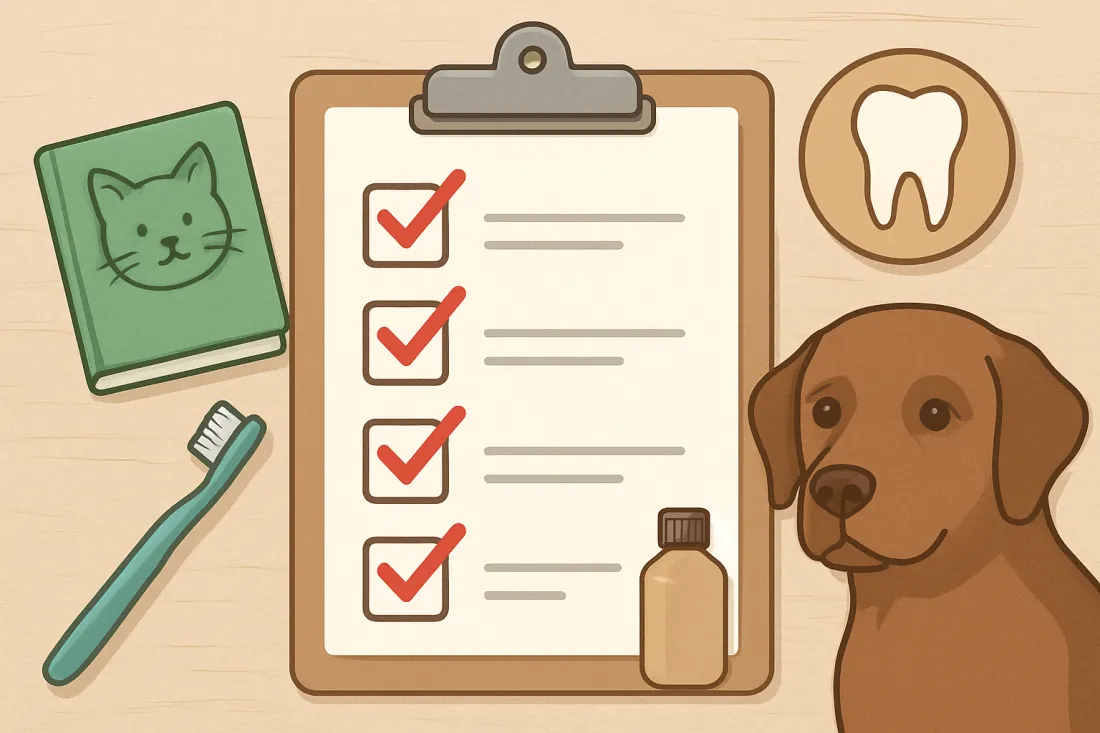
Structured checklist: questions to ask your vet before a dental procedure
Use this checklist at your pre-dental visit to understand your pet’s risks and the clinic’s safety practices. You can keep it on your phone and tick items off as you talk.
Health and risk assessment
- What stage is my pet’s dental disease right now, and which teeth are most affected?
- Are there signs of infection, loose teeth, or other issues that may require extractions?
- Does my pet have any conditions (heart, kidney, liver, breathing issues) that increase anesthesia risk?
- What pre-anesthetic tests do you recommend for my pet’s age and health, and what will each test tell us?
- If test results show a problem, how might that change the anesthesia plan or timing?
Anesthesia and monitoring
- Who will be monitoring my pet during anesthesia, and what training do they have?
- What equipment do you use to monitor my pet’s heart rate, breathing, blood oxygen, and blood pressure?
- Will my pet have an IV catheter and receive fluids during the procedure?
- How do you keep pets warm during and after anesthesia?
- How do you handle emergencies if my pet’s vital signs change suddenly?
Dental procedure details
- Will you take full-mouth dental X‑rays, or only if you see a problem?
- How will you decide whether a tooth needs to be extracted or can be saved?
- What pain control will my pet receive during and after the procedure?
- Roughly how long do you expect the procedure and recovery period at the clinic to take?
Home care and follow-up
- What should I do the night before (fasting, medications, water)?
- What signs after the procedure are normal, and what signs mean I should call you right away?
- When can my pet return to normal food, play, and toothbrushing?
- How often do you expect my pet will need professional cleanings in the future, assuming good home care?
Decision checklist: is it time to schedule a professional dental cleaning
Run through these points to decide whether to call your vet about a cleaning now. If you answer “yes” to several, a dental evaluation is a good next step.
- Visible tartar: Do you see yellow or brown buildup on your pet’s teeth, especially near the gums?
- Gum health: Are the gums red, swollen, or bleeding when your pet chews or when you touch them?
- Breath odor: Is your pet’s breath consistently strong or foul, even shortly after eating?
- Eating and chewing: Has your pet started dropping food, chewing on one side, or avoiding harder kibble or toys?
- Pain signs: Does your pet paw at the mouth, shy away from head touches, or seem more irritable than usual?
- Age and history: Is your pet middle-aged or older, or has it been more than a couple of years since the last professional cleaning?
- Vet feedback: Has your vet already mentioned dental disease at a recent checkup?
Your vet can then recommend the timing and scope of a cleaning based on what they see and any test results.
What to do after reading: practical next steps
To move from worry to action and support responsible pet ownership:
- Look in your pet’s mouth (gently) within the next day or two. Note any tartar, redness, broken teeth, or bad breath.
- Book a dental checkup with your regular vet, especially if you see obvious buildup or your pet is middle-aged or older.
- Bring the question checklist from above to your appointment so you can discuss anesthesia safety and procedure details without forgetting anything.
- Start or improve home dental care with vet-approved toothpaste, brushes, and chews. If you want ideas on using both approaches together, see the guide on combining home dental care and professional cleanings for pets.
- Plan long-term by asking your vet how often they expect your pet will need professional cleanings and setting reminders for rechecks.
FAQ about the safety of professional dental cleanings for pets
What should I really understand about whether professional dental cleanings are safe for pets?
You should understand that for most healthy dogs and cats, a professional dental cleaning under modern anesthesia, with proper screening and monitoring, is generally considered low risk and offers major health benefits. The goal is not just cosmetic cleaning but treating disease under the gumline, relieving pain, and preventing more serious problems later. The key to safety is working with a vet who evaluates your pet’s overall health, tailors the anesthesia plan, and monitors closely throughout the procedure.
What mistakes should I avoid when deciding on a dental cleaning for my dog or cat?
Avoid waiting until your pet is obviously in pain, assuming bad breath is normal, or relying on brushing alone to fix advanced disease. Be cautious about non-anesthetic “cleanings” that promise results without explaining how they address disease under the gums or assess tooth roots. Do not skip recommended pre-anesthetic tests without at least discussing the pros and cons with your vet. Finally, avoid guessing about your pet’s risk level—ask your vet to walk you through their assessment and how they plan to keep your pet safe.
What should I do next if I am still nervous about anesthesia for my pet’s dental cleaning?
If you are anxious, schedule a consultation visit focused only on dental and anesthesia questions. Bring your checklist and ask the vet to explain your pet’s specific risk factors, what monitoring they use, and how they handle complications if they arise. You can also ask whether staging treatment—such as doing bloodwork and imaging first, then scheduling the cleaning—makes sense. Having a clear, personalized plan usually makes the decision much less stressful.
How often do pets typically need professional dental cleanings?
There is no single schedule that fits every pet. Some small-breed dogs and cats with a tendency toward dental disease may need cleanings relatively often, while larger dogs with strong teeth and excellent home care may go longer between procedures. Your vet will base recommendations on your pet’s age, breed, mouth exam, and how quickly tartar returns after a cleaning. Instead of following a fixed calendar, use regular vet checkups to decide when the next cleaning is due.
Are there pets that should not have anesthetic dental cleanings at all?
There are rare situations where a pet’s overall health is so fragile that the risks of anesthesia outweigh the benefits of a cleaning at that time. In those cases, vets may focus on managing pain and infection with medications and gentle home care while monitoring closely. These decisions are highly individual and should be made after thorough testing and discussion with your vet, and sometimes with input from a veterinary specialist.
Summary and reassurance for nervous owners
Feeling uneasy about anesthesia and dental procedures is normal. What matters is not ignoring dental disease out of fear. When you:
- Understand what dental disease does over time,
- Use home care consistently,
- Ask informed questions about anesthesia and monitoring, and
- Work with a veterinary team you trust,
professional dental cleanings become a powerful tool to keep your pet comfortable and healthy for years. The aim is not just clean-looking teeth—it is a pain-free mouth, better breath, and a better quality of life for your dog or cat.