
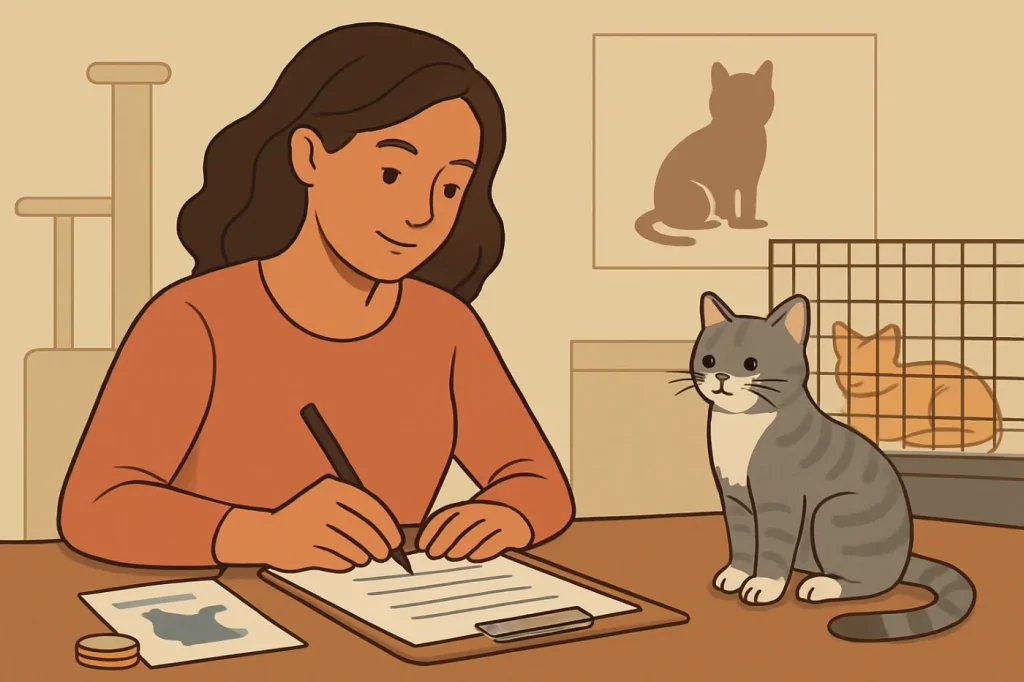
Most cat adoption applications are approved when the shelter sees one thing: a realistic, long-term plan for the cat’s safety and care. You do not need to be perfect, own a house, or have tons of money. You do need to show that you have thought through daily care, vet bills, your home setup, and what could go wrong.
This guide explains how to get approved for a cat adoption by thinking the way shelters and rescues do, and how to present your situation honestly but strongly.
What shelters compare when deciding to approve a cat adoption
Shelters and rescues are not trying to fail you; they are trying to match each cat with a home where that specific cat is likely to be safe and stay for life. When they review your application, they are informally comparing two things:
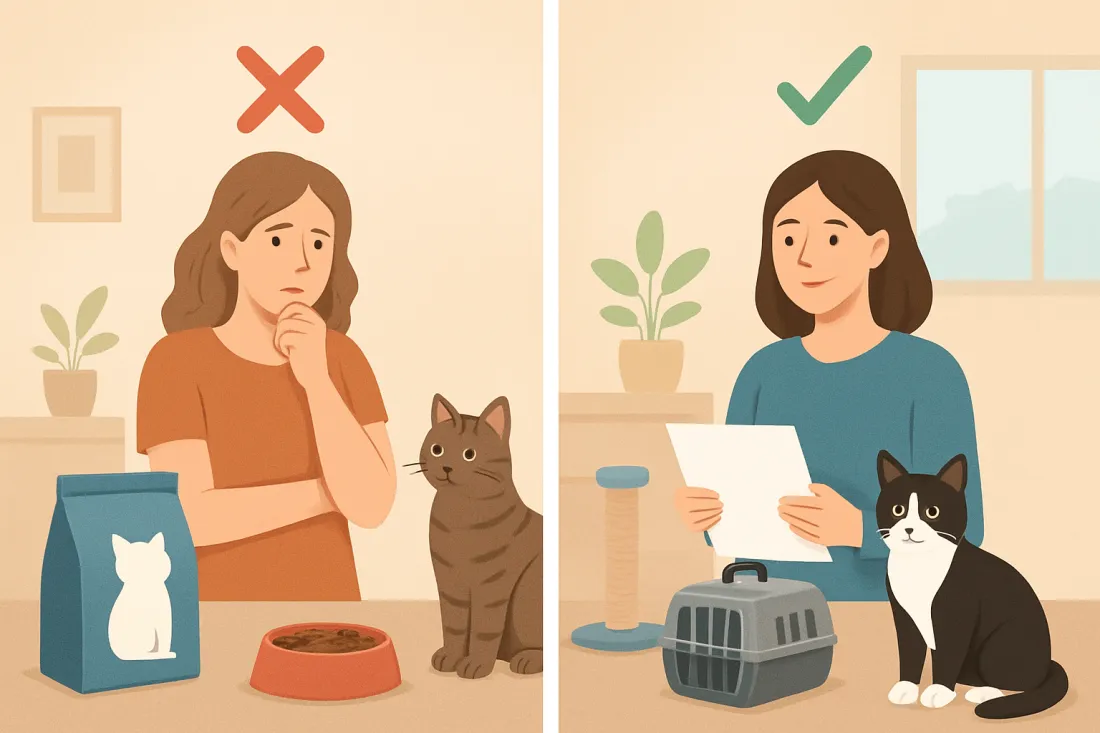
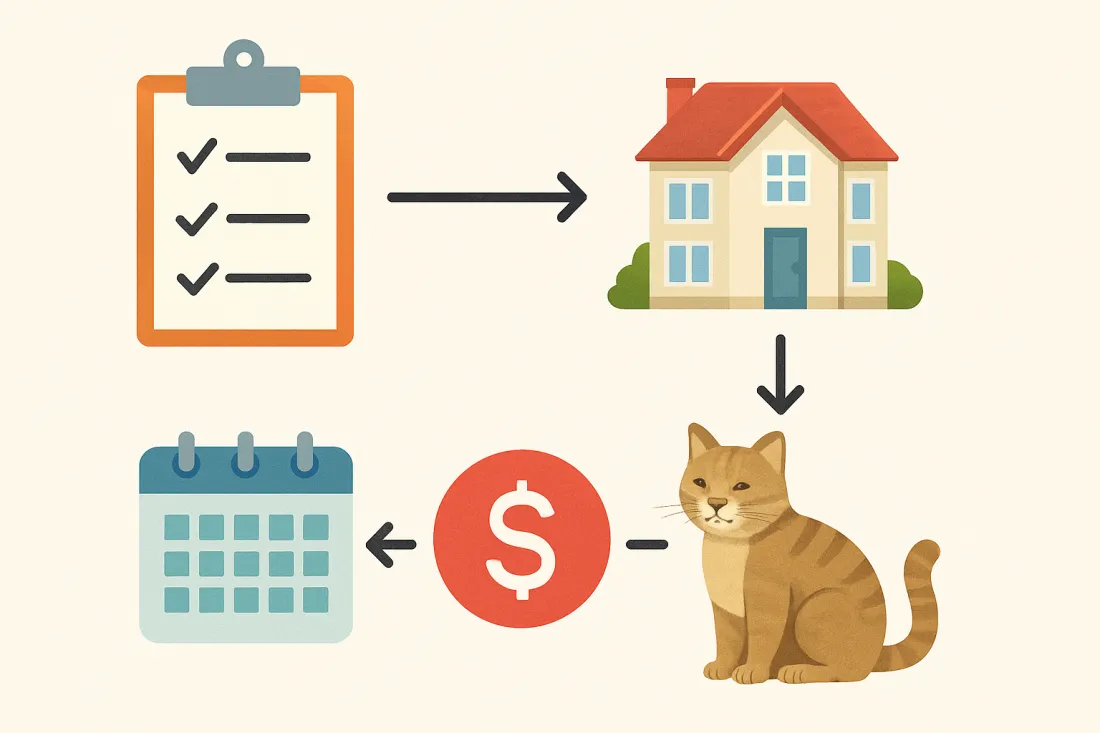
- Your situation and plans (home, schedule, budget, experience, other pets, kids, landlord rules)
- The cat’s needs and risks (age, health, temperament, energy level, history, indoor/outdoor risk)
They approve when those two sides fit. They hesitate or deny when there are clear gaps or red flags and no plan to manage them.
Below is a comparison of how the same factor can look like a strong fit, a workable fit with explanation, or a likely mismatch.
| Factor shelters check | Strong fit (likely to help approval) | Workable with explanation | Risky fit (may lead to denial) |
|---|---|---|---|
| Housing & stability | Stable housing, clear pet rules, plan if you move | Short-term lease but you know future options and pet policies | No idea if pets are allowed, frequent moves, no backup plan |
| Indoor vs outdoor plan | Indoor-only with enrichment and windows, or secure outdoor enclosure | Supervised outdoor time with harness or secure yard and clear safety rules | Free-roaming outdoors near busy roads or predators, no plan to keep cat safe |
| Budget for care | Realistic monthly budget and emergency plan (savings, credit, or pet fund) | Limited income but specific low-cost vet options and a savings plan | No idea what food, litter, or vet care cost; no plan for emergencies |
| Other pets & kids | Current pets vaccinated and friendly; kids taught gentle handling | Some behavior issues but you have a step-by-step intro plan | Aggressive pets, rough or unsupervised kids, no plan to separate animals |
| Safety & declawing | Cat-proofed home, no declawing, safe windows and plants | Some hazards but you are ready to fix them before adoption | Insist on declawing, unsafe balcony or toxic plants with no plan to change |
| Time & expectations | Understand adjustment period and behavior issues; patient attitude | First-time owner but open to training and advice | Expect a “perfect” cat instantly; plan to return cat for normal behaviors |
Use this comparison as a checklist: where you fall into the “workable” or “risky” columns, add a concrete plan or change your setup before you apply.

What shelters and rescues actually evaluate on cat applications
Most applications ask similar questions. Here is what they are really checking and how to answer in a way that supports approval.
1. Housing, landlord rules, and stability
What they look for:
- Pets allowed by landlord or lease
- Reasonable stability (not guaranteed forever, but no obvious chaos)
- Enough space and safe areas for a litter box, food, and hiding spots
How to strengthen your answer:
- Confirm pet rules before applying. If you rent, get written or email permission that mentions cats.
- Describe your home briefly: number of rooms, where the cat will spend most time, where the litter box will go.
- Mention a backup plan if you had to move unexpectedly (family or friend who could foster, or your willingness to look only at pet-friendly rentals).
If you are a renter, you may also want to read about pet adoption rules for renters in the US so you can answer housing questions confidently.
2. Daily schedule and who will care for the cat
What they look for:
- Someone is reliably home enough for feeding, litter scooping, and interaction
- Clear plan for vacations, long shifts, or travel
- Shared responsibility if multiple adults live in the home
How to strengthen your answer:
- Describe a typical weekday and weekend: who feeds in the morning, who scoops litter, who plays with the cat.
- Explain what happens if you work long shifts: another adult, a roommate, or a pet sitter will step in.
- For frequent travel, mention a trusted sitter, boarding option, or family member who has agreed to help.
3. Experience with pets and realistic expectations
What they look for:
- Basic understanding of cat behavior and needs
- Willingness to learn if you are a first-time cat guardian
- Patience with scratching, hiding, or litter box adjustment
How to strengthen your answer:
- If you had pets before, mention how long you had them and what you learned (for example, giving medication, dealing with hairballs, or senior care).
- If you are new to cats, mention that you have read guides or spoken with cat owners, and you are open to advice from the shelter.
- State clearly that you understand cats may scratch, meow at night, or hide at first, and that you will not give up for these normal behaviors.
4. Financial readiness and vet care
What they look for:
- Ability to cover routine care (food, litter, basic vet visits)
- Plan for emergencies (sudden illness or injury)
- Commitment to spay/neuter and vaccinations if not already done
How to strengthen your answer:
- Show that you have looked up typical costs in your area for food, litter, and basic vet visits.
- Mention any savings, credit, or family support you would use for an emergency vet visit.
- List a vet clinic you plan to use, or say you will choose one before adoption and are open to low-cost clinics if needed.
5. Other pets, children, and household members
What they look for:
- All adults in the home agree to the adoption
- Current pets are vaccinated and generally friendly or manageable
- Children are supervised and taught to be gentle
How to strengthen your answer:
- Confirm that everyone in the home has agreed to adopting a cat.
- Describe your current pets’ personalities and how you will introduce them slowly (separate rooms at first, scent swapping, baby gates).
- If you have children, mention their ages and how you teach them to interact with animals (no tail pulling, no chasing, quiet voices).
If you are adopting with kids, it can help to review general pet adoption requirements for families with children so you can anticipate questions about safety and supervision.
Indoor vs outdoor plans: how to explain your choice responsibly
Indoor vs outdoor plans are a major approval factor because they directly affect safety and lifespan.
When you plan to keep the cat indoors only
Many shelters prefer or require indoor-only homes. To show that you are ready:
- Describe how you will keep the cat stimulated: window perches, toys, scratching posts, climbing spaces.
- Mention that you will keep windows and balconies secure (screens, closed windows, or cat-proof barriers).
- Explain that you will not let the cat roam freely outdoors, even if they try to bolt.
When you want some outdoor time
If you want the cat to experience the outdoors, focus on safety and control:
- Consider harness training and supervised walks.
- Use a secure catio or enclosed yard if possible.
- Explain how you will prevent access to busy roads or dangerous wildlife.
Free-roaming outdoor plans near traffic or predators are a common reason for denial. If your area is risky, be ready to adjust your plan to indoor-only or fully supervised outdoor time.
How to show you have budgeted for cat care
You do not need a high income to adopt, but you do need a realistic budget. Instead of guessing, break it into categories and show that you have thought about both monthly and occasional costs.
Key cost categories to think through
- Food: Daily meals, possible special diets for allergies or medical issues.
- Litter: Ongoing cost plus litter box and scoop.
- Routine vet care: Wellness exams, vaccines, flea and tick prevention, dental checks.
- Supplies: Carrier, scratching posts, toys, bowls, bed, nail clippers.
- Emergencies: Sudden illness, injury, or surgery.
On your application, you can write something like: “I have set aside a monthly amount for food, litter, and routine vet care, and I keep an emergency fund/credit line for unexpected vet bills.” If you are on a tight budget, mention any low-cost clinics, wellness plans, or community resources you have researched.
Explaining your home setup: pets, kids, and roommates
Your home does not need to be large or fancy, but it does need to be safe and predictable for a cat.
Other pets
What to share:
- Species, age, and temperament of each pet (for example, “calm 7-year-old dog who ignores cats”).
- Current vaccination and spay/neuter status.
- Any history with cats (good or bad) and how you will manage it.
How to reassure the shelter:
- Describe a slow introduction plan: separate rooms, scent swapping, short supervised visits.
- Mention that you will separate animals if there is tension and work with a trainer or vet if needed.
- Be honest about any aggression and show a specific management plan.
Children
What to share:
- Children’s ages and experience with animals.
- Rules you enforce around pets (no grabbing, no chasing, quiet voices).
- How you supervise interactions.
How to reassure the shelter:
- Explain that adults will always supervise young children with the cat.
- Mention any books, videos, or talks you have used to teach kids about gentle handling.
- Describe safe zones where the cat can retreat away from children.
Roommates and visitors
What to share:
- Whether roommates agree to the cat and understand the rules (doors, feeding, litter).
- How often you have visitors and whether they are comfortable with cats.
- Any house rules to prevent escapes (for example, no propping doors open).
Make it clear that one or two adults are primarily responsible for the cat’s care, even if others help.
Addressing allergies, declawing, and safety issues
Certain topics raise immediate concerns for shelters. Handling them well can make the difference between approval and denial.
Allergies
Undisclosed or unmanaged allergies are a common reason cats are returned. To build trust:
- Be honest if anyone in the home has allergies, even mild ones.
- Mention any steps you already take: air purifiers, allergy medication, regular cleaning.
- If you are unsure about allergies, consider visiting a friend with cats or spending time in a cat room at a shelter before adopting.
Declawing
Many shelters strongly discourage or forbid declawing because it can cause pain and behavior issues. To support approval:
- State clearly that you will not declaw the cat.
- Explain how you will manage scratching: multiple scratching posts, nail trims, and soft nail caps if needed.
- If you previously declawed a cat, acknowledge that you have learned more about the risks and will not do it again.
Home safety
Before applying, walk through your home and look for hazards:
- Unscreened windows or balconies a cat could fall from.
- Toxic plants, chemicals, or small objects that could be swallowed.
- Loose cords, open dryers, or unstable furniture.
On your application, you can mention that you have cat-proofed your home by securing windows, removing toxic plants, and storing chemicals safely.
Sample strong answers to common cat adoption questions
Use these examples as models. Do not copy them word for word; adjust them to your real situation.
“Why do you want to adopt this cat?”
Stronger answer: “I am looking for a calm adult cat who enjoys spending time near people while I work from home. I read your description and it sounds like she prefers a quieter home, which fits my lifestyle. I am ready for a long-term commitment and have already set up a safe room for her to settle in.”
“Where will the cat spend most of its time?”
Stronger answer: “The cat will live indoors only. During the day, she will have access to the living room and bedroom, with window perches and scratching posts. At night or when I am away, I can close doors to keep her safe and make sure windows and balcony doors are secure.”
“What will you do if the cat scratches furniture?”
Stronger answer: “I expect some scratching. I will provide several scratching posts and pads, place them near furniture she targets, and reward her for using them. I will trim her nails regularly and use soft nail caps if needed. I will not declaw.”
“What will you do if the cat has litter box accidents?”
Stronger answer: “First, I would rule out medical issues with a vet visit. I would also check that the litter box is clean, in a quiet location, and that the litter type is comfortable for the cat. I am prepared to try different litters and box styles and to follow behavior advice from the shelter or a vet.”
“How long are you willing to give the cat to adjust?”
Stronger answer: “I understand that some cats take weeks or even months to fully settle. I am prepared to give her as much time as she needs, as long as we are working with the shelter or a vet if serious issues come up.”
Checklist: documents and references that strengthen your application
Use this checklist to prepare before you apply. Having these items ready shows that you are organized and serious.
- Housing proof
- Copy or photo of your lease showing pet rules, or
- Email or letter from landlord stating that cats are allowed
- Household agreement
- Verbal agreement from all adults in the home
- Written note of who is responsible for feeding, litter, and vet visits
- Vet information
- Name and contact of your current or planned vet clinic
- Vaccination records for existing pets
- Budget plan
- Rough monthly amount set aside for food, litter, and routine care
- Emergency plan (savings, credit, or family support)
- References
- Optional: contact details for a previous vet, pet sitter, or landlord who can confirm responsible pet care
- Home setup
- Decided location for litter box, food and water bowls, and scratching posts
- Safe “quiet room” ready for the first days at home
- Education
- Basic reading on cat care and behavior (especially if you are a first-time cat guardian)
- Understanding of the adjustment period, often described as the 3-3-3 guideline
For a more detailed preparation list, you can also review a dedicated family cat adoption checklist to make sure your home and supplies are ready before you bring a cat home.
Understanding the 3-3-3 rule for adopted cats
Many shelters use the “3-3-3 rule” as a simple way to explain how long it can take a cat to adjust:
- First 3 days: The cat may be scared, hiding, not eating much, or acting differently than at the shelter.
- First 3 weeks: The cat starts to learn your routine, explore more, and show more personality.
- First 3 months: The cat is usually more settled, bonded, and comfortable in the home.
On your application or during the interview, mentioning that you understand this adjustment period shows that you are prepared for a gradual transition, not instant perfection.
Common mistakes that can get a cat adoption application denied
Knowing what often disqualifies or delays approval helps you avoid preventable problems.
1. Incomplete or inconsistent information
- Leaving many questions blank or writing “N/A” when they clearly apply.
- Giving different answers online and in person (for example, saying “indoor only” on the form but talking about letting the cat roam outside during the interview).
Fix: Take time to fill out every question honestly and review your answers before submitting.
2. Ignoring landlord or housing rules
- Applying before confirming that cats are allowed.
- Hoping to “convince” a no-pets landlord after adoption.
Fix: Get clear permission first. If pets are not allowed, look for pet-friendly housing or a different landlord before applying.
3. Insisting on declawing or unsafe outdoor access
- Stating that you plan to declaw the cat.
- Planning to let the cat roam freely near busy roads or known predators.
Fix: Commit to no declawing and to safe indoor or supervised outdoor plans.
4. Unrealistic expectations
- Expecting a cat that never scratches, never hides, and instantly loves everyone.
- Planning to return the cat for normal behaviors like meowing, shedding, or needing time to adjust.
Fix: Learn about normal cat behavior and adjustment. Show that you are ready to work through challenges.
5. Lack of plan for emergencies or life changes
- No idea how you would handle a sudden vet bill.
- No plan if your job, housing, or family situation changes.
Fix: Create a basic financial and backup care plan and mention it in your application.
Decision checklist: are you ready to apply for a cat adoption?
Use this quick checklist before submitting your application. If you answer “no” to several items, fix those areas first to improve your chances of approval.
- Housing
- My lease or landlord clearly allows cats.
- I know where the litter box, food, and water will go.
- I have checked windows, balconies, and doors for escape risks.
- Household
- All adults in my home agree to adopting a cat.
- Children know and practice gentle pet rules.
- Roommates understand and accept cat-related responsibilities and rules.
- Other pets
- My current pets are vaccinated and generally manageable.
- I have a step-by-step plan for slow introductions.
- I can separate animals if needed.
- Budget
- I have a monthly amount set aside for food, litter, and routine vet care.
- I have a plan for emergency vet costs (savings, credit, or support).
- Care and time
- I know who will feed, scoop litter, and play with the cat daily.
- I have a plan for vacations and long workdays.
- I understand the 3-3-3 adjustment guideline and am patient.
- Safety and ethics
- I will not declaw the cat.
- I will keep the cat indoors or provide only safe, supervised outdoor time.
- I have removed or secured obvious hazards in my home.
What to do if your cat adoption application is denied
Being denied can feel personal, but it usually means the shelter saw a mismatch or risk they were not comfortable with. You can often turn a denial into a learning step.
1. Politely ask for feedback
Send a brief, respectful message asking if they can share the main reasons for the decision. Some may not be able to give details, but many will highlight specific concerns (for example, housing, outdoor plans, or other pets).
2. Fix what you can
Common improvements include:
- Clarifying or changing your housing situation (getting written pet permission, moving to pet-friendly housing).
- Adjusting from free-roaming outdoor plans to indoor-only or supervised outdoor time.
- Taking a pet care class or reading more about cat behavior if experience was a concern.
- Building a small emergency fund or identifying low-cost vet options.
3. Consider a different cat or organization
Sometimes the issue is not you, but the specific cat. A shy or medically fragile cat may require a very quiet home or experienced guardian. You may be a great match for a different cat with a different personality or needs.
Different shelters and rescues also have different policies. Once you have addressed any clear concerns, you can apply elsewhere with a stronger application.
4. Be honest on future applications
Do not hide a previous denial. Instead, show what you learned: “I was previously denied because of my outdoor plan. Since then, I have decided to keep my future cat indoors only and have prepared my home accordingly.” This shows growth and responsibility.
FAQ about getting approved for a cat adoption
What disqualifies you from adopting a cat?
Common reasons include unsafe housing (no pet permission, frequent evictions), plans for declawing, free-roaming outdoor access in a dangerous area, unmanaged aggression from current pets, or a history of surrendering pets for minor behavior issues. Dishonesty on the application can also lead to denial. Each shelter decides case by case, so improving your housing, safety plans, and understanding of cat care can change the outcome next time.
What is the 3-3-3 rule for adopting a cat?
The 3-3-3 rule is a simple guideline for how long an adopted cat may take to adjust: about 3 days to decompress from the stress of moving, about 3 weeks to start learning your routine and feeling more comfortable, and about 3 months to feel fully settled and bonded. Some cats adjust faster or slower, but mentioning this rule shows that you expect a gradual adjustment, not instant perfection.
How hard is it to get approved to adopt a cat?
For most people who prepare, approval is very achievable. Shelters mainly look for safe housing, a realistic budget for care, agreement from everyone in the home, and responsible plans for indoor vs outdoor time, other pets, and emergencies. If you take time to think through these areas and answer honestly, you are already doing more than many applicants and improving your chances significantly.
What are the usual requirements for adopting a cat?
Requirements vary, but many shelters expect: proof that pets are allowed where you live, a completed application, a basic conversation or interview, agreement to keep the cat safe (often indoors), commitment to vet care and vaccinations, and sometimes references or a home visit. Some also have age or experience guidelines for certain cats, such as shy cats or those with medical needs. Always check the specific shelter’s process and be ready to explain how you will meet a cat’s long-term needs.
Conclusion: focus on the cat’s welfare and your long-term readiness
Getting approved for a cat adoption is not about having a perfect life. It is about showing that you can offer a safe, stable, and loving home, and that you have thought through the realities of daily care, costs, and behavior.
If you prepare your home, clarify your budget, align your indoor or outdoor plans with safety, and answer applications honestly with concrete details, you give shelters exactly what they are looking for: evidence that you are ready to be a responsible, long-term guardian for a cat who needs you.