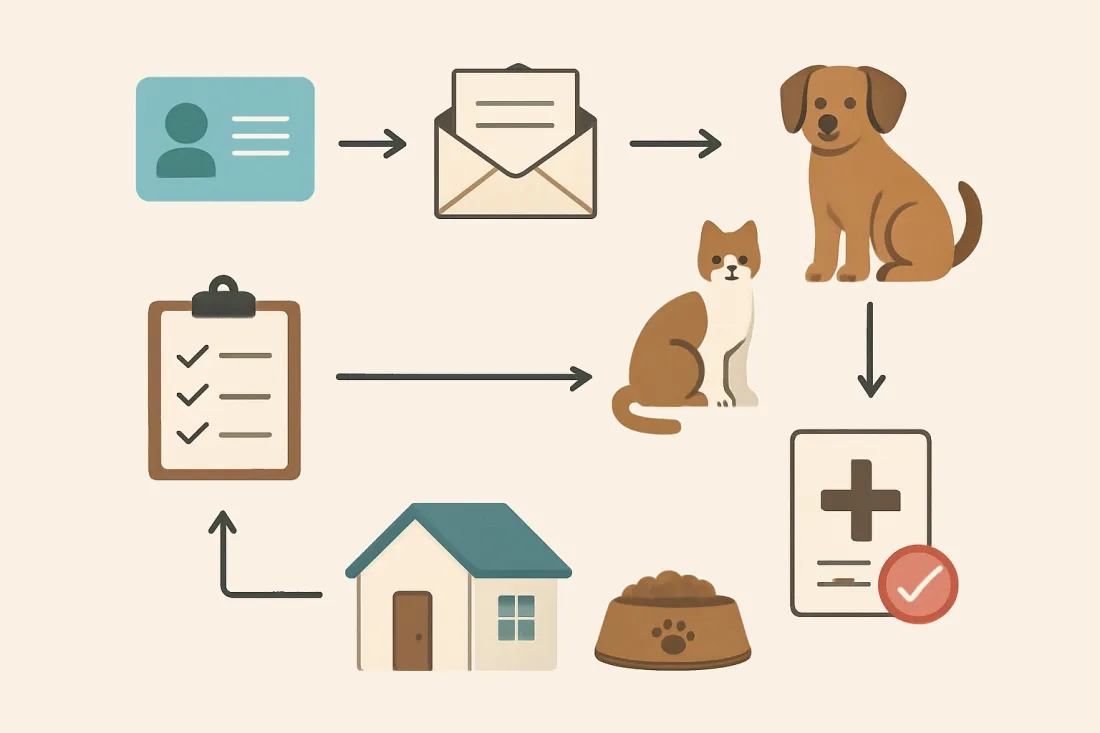

Essential answer: what you need to adopt a dog or cat
To adopt a dog or cat from most U.S. shelters and rescues, you typically need:
- To be at least 18 years old (sometimes older) and show a valid government‑issued photo ID
- Proof of current address and, if you rent, landlord approval for pets
- Completed adoption application and interview with staff or a volunteer
- To meet the pet in person before approval
- Up‑to‑date vaccination and vet records for any pets you already own
- Plan and budget for ongoing costs (food, vet care, supplies, training)
- Safe home setup (indoor space, litter box or yard access, secure doors and windows, and often a plan for exercise or a fenced area for dogs)
Exact rules vary by organization, so always confirm details with the specific shelter or rescue before you apply.
How U.S. pet adoption requirements usually work
Most U.S. shelters and rescues follow a similar structure, even though details differ:
- Basic eligibility: minimum age and ID, ability to care for the pet, and agreement to humane treatment.
- Application and counseling: a form plus a conversation to match you with the right animal.
- Home and lifestyle fit: staff check that your housing, schedule, and experience fit the specific dog or cat.
- Legal and safety checks: landlord rules, local pet limits, and sometimes a brief home visit or virtual tour.
Because there is no single national rule set, think of requirements as a compatibility and safety check rather than a test you can “pass” or “fail.” The goal is to avoid returns and make sure you and the animal are a good long‑term match.
Common U.S. adoption requirements you should expect
Below are the requirements you are most likely to see across U.S. shelters and rescues.
1. Age and identification
Most organizations require that adopters:
- Are at least 18 years old (some may set a higher minimum age)
- Provide a government‑issued photo ID such as a driver’s license, state ID, or passport
- Show that the name and address on the ID match the adoption paperwork
If your ID does not show your current address, you may be asked for an additional document (for example, a utility bill or lease) to confirm where you live.
2. Completed adoption application
You will almost always fill out an application, either online or on paper. Expect questions about:
- Your household (adults, children, roommates, frequent visitors)
- Work schedule and how long the pet would be alone each day
- Past and current pets and how they behaved
- Housing type (house, apartment, condo, mobile home) and whether you rent or own
- Where the pet will sleep and spend time when you are home and away
- How you plan to handle training, exercise, and medical care
Some organizations also ask for:
- Personal references (friends, neighbors, or coworkers)
- Veterinary references (your current or previous vet clinic)
These references help confirm that you have a history of responsible pet care.
3. Meeting the pet in person
Many shelters require you to meet the dog or cat in person before final approval. Often they will also ask you to:
- Bring all household members, especially children
- Bring resident dogs for a supervised meet‑and‑greet with a potential new dog
This helps everyone see how the animals and people interact before making a commitment.
4. Agreement to adoption terms
You will be asked to sign an adoption contract that may include commitments such as:
- Providing food, water, shelter, and medical care
- Keeping the pet primarily indoors (especially cats and small dogs)
- Not declawing cats, if the organization has a no‑declaw policy
- Returning the pet to the organization if you can no longer keep them
- Following local licensing and identification rules (collar tags, microchip registration)
Read the contract carefully and ask questions before signing.
Documents and information to gather before you apply
Having your paperwork ready makes the adoption process smoother and faster. Here is what most adopters should prepare.
1. Identification and proof of address
- Government‑issued photo ID (driver’s license, state ID, passport)
- Proof of current address if not on your ID (lease, mortgage statement, utility bill)
2. Housing and landlord information
If you rent or live in a community with rules (HOA, co‑op, campus housing), gather:
- Landlord or property manager’s name and contact details
- Copy of your lease or pet addendum showing pet policies
- Any written approval for pets, especially for large dogs or multiple animals
- Details on pet deposits, monthly pet rent, or breed/weight limits (for your own planning)
If you own your home, you may simply state that on the application, but some rescues still ask for:
- Confirmation of any HOA or condo rules about pets
- Whether your yard is fenced and how high the fence is
3. Vet and vaccination records for current pets
If you already have pets, shelters often ask for:
- Clinic name, phone number, and city
- Proof that your pets are up to date on core vaccinations
- Proof of spay/neuter if applicable
- Heartworm prevention status for dogs
If you do not have records handy, call your vet and ask them to email or print a summary for you.
4. Personal and emergency contacts
Some applications ask for:
- One or two personal references (non‑family)
- An emergency contact who could care for the pet if something happens to you
Choose people who know your lifestyle and can honestly speak about how you treat animals.
5. Basic plan and budget
You usually will not need to show bank statements, but you should be ready to answer questions like:
- Who will be the pet’s primary caregiver?
- How often can you walk or play with the pet?
- How you will pay for routine and emergency vet care?
Writing out a simple monthly budget for pet care can help you answer confidently.
Landlord and housing verification: what shelters look for
Housing is one of the biggest reasons adoptions fall through, so organizations take it seriously.
If you rent your home
Expect the shelter or rescue to verify that pets are allowed. They may:
- Ask you to upload or bring a copy of your lease or pet addendum
- Call or email your landlord or property manager directly
- Ask specific questions about weight limits, breed restrictions, and pet caps
To avoid surprises:
- Read your lease carefully for pet clauses, including deposits and monthly pet rent.
- Get written approval (email is usually fine) if your lease is vague or silent about pets.
- Clarify limits: maximum number of pets, size limits, and any restricted breeds.
If your landlord says “no pets” or has strict limits, do not assume you can “sneak” an animal in. Many shelters will decline your application if they learn pets are not allowed, because they want to prevent evictions and returns.
If you own your home
You usually have more flexibility, but you still should:
- Check for HOA or condo rules about pets, especially size or breed limits
- Confirm local limits on the number of pets per household, if any
- Be honest about your yard: fenced, partially fenced, or unfenced
Some rescues are strict about fencing for certain dogs (for example, high‑energy or escape‑prone breeds). Others are more flexible if you have a strong exercise plan.
Vaccination and vet history requirements for current pets
Shelters want to protect both your existing animals and the one you adopt. They commonly check that your current pets are:
- Up to date on core vaccinations recommended by your vet
- Spayed or neutered, unless there is a medical reason not to
- Receiving parasite prevention (for example, heartworm prevention for dogs)
If your pets are not current on vaccines or are not spayed/neutered, some organizations may:
- Ask why and consider medical or age‑related exceptions
- Require you to update vaccines or schedule spay/neuter before approving your application
- Recommend a different animal (for example, a cat who must be the only pet)
To prepare:
- Call your vet and confirm your pets’ vaccination status.
- Schedule any overdue appointments before you apply.
- Ask your vet to note in the record if there is a medical reason your pet cannot be vaccinated or altered.
Financial readiness and realistic cost expectations
Adoption fees are often lower than buying from a breeder, and some organizations even waive fees for certain animals or events. But the ongoing cost of care is where most of your budget will go. Because exact dollar amounts vary widely by region and vet clinic, use these as planning categories rather than fixed numbers:
- Initial setup: collar and ID tag, leash, crate or carrier, bed, bowls, litter box and litter for cats, toys, grooming tools.
- Routine care: food, litter, annual vet exams, recommended vaccines, parasite prevention.
- Training and behavior: group classes for dogs, private training if needed, enrichment toys or puzzle feeders.
- Unexpected costs: illness, injury, dental work, or chronic conditions that require ongoing medication.
A simple way to check your readiness:
- Estimate a monthly pet budget that you can consistently afford.
- Set aside an emergency cushion for unexpected vet bills, even if it is small at first.
- Consider pet insurance or a dedicated savings account if that fits your situation.
Shelters may not ask for financial documents, but they will ask questions to be sure you have thought through these responsibilities.
Home environment expectations for dogs and cats
Different organizations have different philosophies, but they usually look for a home that is safe, stable, and appropriate for the specific animal.
For dogs
Common expectations include:
- Indoor living: Most rescues expect dogs to live primarily indoors with the family, not chained or left outside full‑time.
- Exercise plan: Daily walks, playtime, and mental stimulation appropriate for the dog’s age and energy level.
- Safe outdoor space: A securely fenced yard is preferred for some dogs, but many organizations will adopt to apartments or homes without yards if you commit to regular walks and enrichment.
- Alone time limits: A realistic plan for how long the dog will be alone and how you will manage bathroom breaks and boredom.
For cats
Shelters often expect:
- Indoor or indoor‑only lifestyle: Many organizations prefer or require cats to be kept indoors for safety.
- Litter box setup: At least one box per cat, plus one extra, in quiet, accessible locations.
- Vertical space and hiding spots: Cat trees, shelves, or safe high places to retreat.
- Windows and enrichment: Safe window views, toys, and scratching posts to prevent boredom.
General safety checks
Before you adopt, walk through your home and look for:
- Loose electrical cords, small objects, or toxic plants within reach
- Trash cans without lids, especially in kitchens and bathrooms
- Unscreened windows or balconies that a pet could fall from
- Gaps in fences or under gates where a dog could escape
Fixing these issues ahead of time shows shelters that you are serious about safety.
Comparison: adopting a dog vs adopting a cat – what changes in requirements?
| Requirement area | Adopting a dog | Adopting a cat | What to think about before you apply |
|---|---|---|---|
| Daily time commitment | Multiple walks, training, and play sessions every day; bathroom breaks on a schedule. | Short play sessions and social time; litter box scooping; generally more flexible timing. | If your schedule is very tight or unpredictable, a cat may fit more easily than a dog. |
| Housing expectations | Some rescues prefer a fenced yard for certain dogs; apartments can work with a strong exercise plan. | Indoor‑only or mostly indoor homes are often preferred; apartments usually fine with proper enrichment. | Check landlord rules about dogs vs cats, size limits, and pet caps before you choose. |
| Noise and neighbors | Barking can cause neighbor complaints, especially in shared walls housing. | Cats are usually quieter, though some are vocal. | If you have noise‑sensitive neighbors, think carefully about dog breeds and your training plan. |
| Exercise and training | Structured training and daily physical exercise are expected. | Training is still useful (for example, scratching posts, carrier training) but usually less formal. | Be honest about whether you enjoy training and outdoor time in all weather. |
| Meet‑and‑greet requirements | Often must bring resident dogs for a supervised introduction. | Usually no in‑shelter cat‑to‑cat intro; introductions happen slowly at home. | Plan ahead for how you will introduce new and resident pets safely. |
If you are still unsure which species is a better fit, you may find it helpful to explore a resource like the should I adopt a dog or cat quiz for a structured self‑check.
Structured pre‑application readiness checklist
Use this step‑by‑step checklist to see if you are ready to apply today or if you need to prepare more.
Step 1 – Confirm basic eligibility
- I am at least 18 years old (or older if my local shelter requires it).
- I have a valid government‑issued photo ID.
- I can provide my current address and contact information.
Step 2 – Verify housing and landlord approval
- I have read my lease or housing rules and understand pet policies.
- If I rent, I have written confirmation that pets are allowed, including any size or breed limits.
- I know how many pets I am allowed to have in my home.
- My household (roommates, partner, family) agrees with adopting a pet.
Step 3 – Update current pets’ vet care
- My current pets are up to date on core vaccinations, or I have a medical reason documented by a vet.
- My pets are spayed or neutered, or I have discussed alternatives with my vet.
- I can provide my vet’s name and contact information.
Step 4 – Prepare your home environment
- I have a safe indoor space where the new pet can adjust (a separate room for cats or a gated area for dogs).
- I have removed obvious hazards (loose cords, toxic plants, small objects, open windows or balconies).
- For dogs: I have a realistic plan for daily walks and exercise, with or without a yard.
- For cats: I have a plan for litter boxes, scratching posts, and safe hiding spots.
Step 5 – Plan your time and routine
- I have thought through how long the pet will be alone on workdays.
- I know who will feed, walk, and play with the pet each day.
- I have a backup plan for vacations, travel, or emergencies (trusted sitter, boarding, or family help).
Step 6 – Check your budget
- I have estimated a monthly amount I can comfortably spend on pet care.
- I have some way to handle unexpected vet bills (savings, insurance, or support network).
- I understand that adoption is a long‑term commitment that can last many years.
Step 7 – Choose the right type of pet
- I have thought about whether a dog or cat fits my lifestyle better.
- I understand that puppies and kittens require more time and training than adults.
- I am open to listening to shelter staff if they suggest a different animal that fits my situation better.
If you can honestly check most of these boxes, you are likely ready to start applying. If not, use the unchecked items as a to‑do list before you move forward.
Common mistakes that delay or block pet adoptions
Avoiding these issues can save you time and frustration.
1. Not checking landlord or housing rules first
Many applications stall when the shelter discovers that pets are not allowed or that there are strict breed or size limits. Always confirm your housing rules before you fall in love with a specific animal.
2. Underestimating time and energy needs
People sometimes choose a high‑energy dog or a very social cat without realizing how much daily interaction they need. Be honest about your schedule and energy level, and choose a pet whose needs match.
3. Hiding information on the application
Leaving out pets you already own, skipping landlord details, or minimizing behavior issues with past pets can backfire. Shelters are not trying to judge you; they are trying to prevent unsafe or unstable placements. Transparency builds trust.
4. Assuming a fenced yard is the only requirement for dogs
A yard is helpful, but it is not a substitute for walks, training, and attention. Some adopters focus on having a yard and overlook the daily interaction dogs still need.
5. Treating adoption as a trial with no long‑term plan
While some organizations offer foster‑to‑adopt options, adoption itself is meant to be permanent. Going in with a “we’ll see” mindset, without a plan for training or vet care, often leads to returns.
Decision criteria: are you ready for a dog, a cat, or neither yet?
When you are torn between adopting a dog, a cat, or waiting, use these questions as a filter.
Questions that point toward a dog
- Do you enjoy being outdoors in most weather and walking regularly?
- Are you interested in training and teaching commands or tricks?
- Can you arrange midday breaks for a dog that cannot hold it all day?
- Do you want a companion for hikes, runs, or active outings?
If you answer “yes” to most of these, a dog may be a good fit. For a deeper self‑check, you can explore a resource such as the am I ready to adopt a dog quiz.
Questions that point toward a cat
- Is your schedule unpredictable, with some long days away from home?
- Do you live in a smaller space where barking or frequent outdoor trips would be difficult?
- Do you prefer shorter, more flexible play sessions over structured training?
- Are you comfortable with litter box maintenance and indoor enrichment?
If these sound more like you, a cat may fit better. You can also read more targeted guidance such as what to know before adopting a cat from a shelter.
Signs you may want to wait
Consider delaying adoption if:
- You are about to move, change jobs, or go through a major life transition.
- Your housing situation is unstable or your landlord is unsure about pets.
- You cannot currently cover basic vet care or an unexpected medical bill.
- Household members strongly disagree about getting a pet.
Waiting until your situation is more stable is a responsible choice and increases the chances of a successful adoption later.
Understanding the 3‑3‑3 rule for adopted dogs and cats
The “3‑3‑3 rule” is a popular guideline that describes how many pets adjust after adoption. It is not a strict scientific rule, but it helps set realistic expectations.
The 3‑3‑3 rule for dogs
Many adopters notice these rough stages:
- First 3 days: The dog may feel overwhelmed, shut down, or overly excited. They are learning where they are, who you are, and what is happening. Eating and sleeping patterns may be off.
- First 3 weeks: The dog starts to understand your routine. You begin to see more of their true personality, including any behavior challenges that need training.
- First 3 months: The dog is usually more settled and bonded. They understand household rules, and training has had time to take effect.
The 3‑3‑3 rule for cats
Cats often follow a similar pattern, but with their own style:
- First 3 days: Many cats hide, eat less, or explore only at night. This is normal while they process the change.
- First 3 weeks: The cat begins to explore more, use the litter box reliably, and interact with you on their own terms.
- First 3 months: The cat usually feels that your home is their territory. Their personality, play style, and preferred routines become clear.
Knowing this rule helps you prepare emotionally: adoption is not just about getting approved; it is also about giving your new pet time and patience to settle in.
FAQ: practical questions about adopting a dog or cat
What is the 3‑3‑3 rule for adopting dogs?
The 3‑3‑3 rule for dogs is a general guideline that describes how many adopted dogs adjust over time: about 3 days to decompress and recover from the stress of the shelter, about 3 weeks to start learning your routine and showing more of their personality, and about 3 months to feel fully at home and bonded. Every dog is different, but this framework reminds you to be patient and consistent with training and structure during the first months.
What is the 3‑3‑3 rule for adopting cats?
For cats, the 3‑3‑3 rule suggests that it may take around 3 days for a new cat to come out of hiding and begin to relax, about 3 weeks to explore more confidently and settle into basic routines like eating and using the litter box, and about 3 months to feel that your home is truly their territory. Some cats adjust faster or slower, but planning for a few months of gradual adjustment helps you avoid rushing introductions or assuming the cat is unhappy too soon.
Should I adopt a cat or a dog first?
The best choice depends on your lifestyle, housing, and preferences. If you have a busy or unpredictable schedule, live in a small space, or prefer lower‑maintenance daily routines, adopting a cat first often makes more sense. If you enjoy daily walks, training, and outdoor activities, and you can reliably be home for bathroom breaks and exercise, a dog may be a better fit. Consider your landlord’s rules, your budget, and how much time you realistically have each day before deciding.
How much do you usually pay when adopting a cat?
Adoption fees for cats vary widely by organization, region, and the cat’s age or special needs. Some shelters charge a standard fee, some reduce fees for older or special‑needs cats, and some run promotions where fees are discounted or waived. Because exact amounts change over time and by location, check the current fee schedule of the specific shelter or rescue you are considering. Remember to budget for ongoing costs like food, litter, and vet care in addition to any one‑time adoption fee.
Do I need a fenced yard to adopt a dog?
Not always. Some rescues require a securely fenced yard for certain dogs, especially those with high energy or a history of escaping. Others are happy to adopt to apartments or homes without yards if you can show a solid plan for daily walks, exercise, and mental enrichment. When you apply, be honest about your yard situation and describe how you will meet the dog’s exercise needs.
Can I adopt if I already have pets at home?
Yes, many adopters successfully add a new dog or cat to a home with existing pets. Shelters will usually ask for your current pets’ vaccination and spay/neuter status and may require a dog‑to‑dog meet‑and‑greet. They may also suggest a pet whose temperament is more likely to fit your current animals. Plan for slow, supervised introductions and be prepared to separate pets at first if needed.