
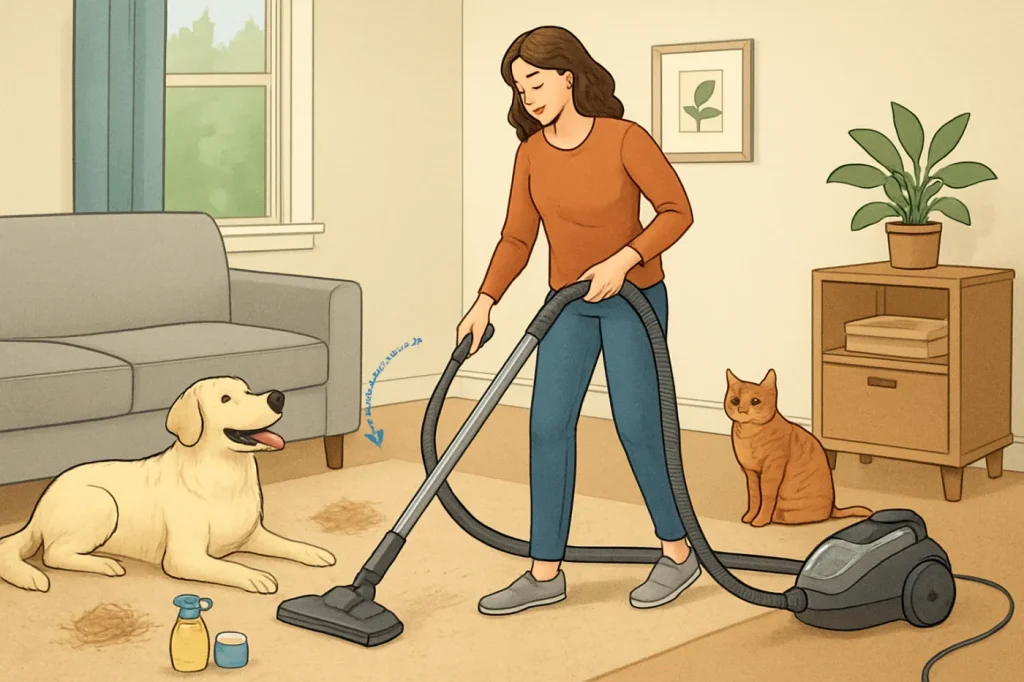
To manage pet hair and odour at home, combine three things: a simple daily routine, the right tools and products, and smart “pet zones” that contain most of the mess. You do not need a spotless show home; you need a system that keeps fur and smells under control with small, regular habits.
Daily vs deep-clean routines for pet hair and odour
Think of pet mess management as two tracks:
- Daily “good enough” habits – 10–20 minutes that stop hair and smells from building up.
- Weekly and monthly deep cleans – targeted sessions that reset the house so daily work stays light.
Most frustration comes from trying to deep-clean only when guests are coming. A lighter, consistent routine is easier on you and more comfortable for your pets.
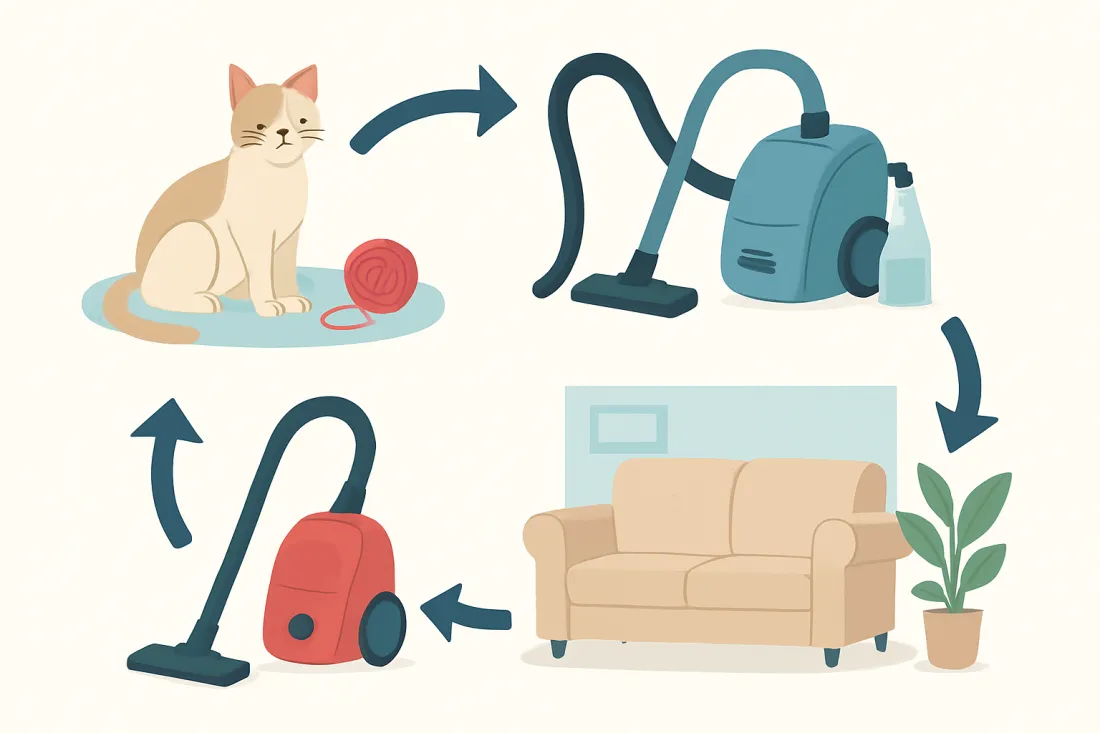
Quick daily cleaning checklist for pet homes
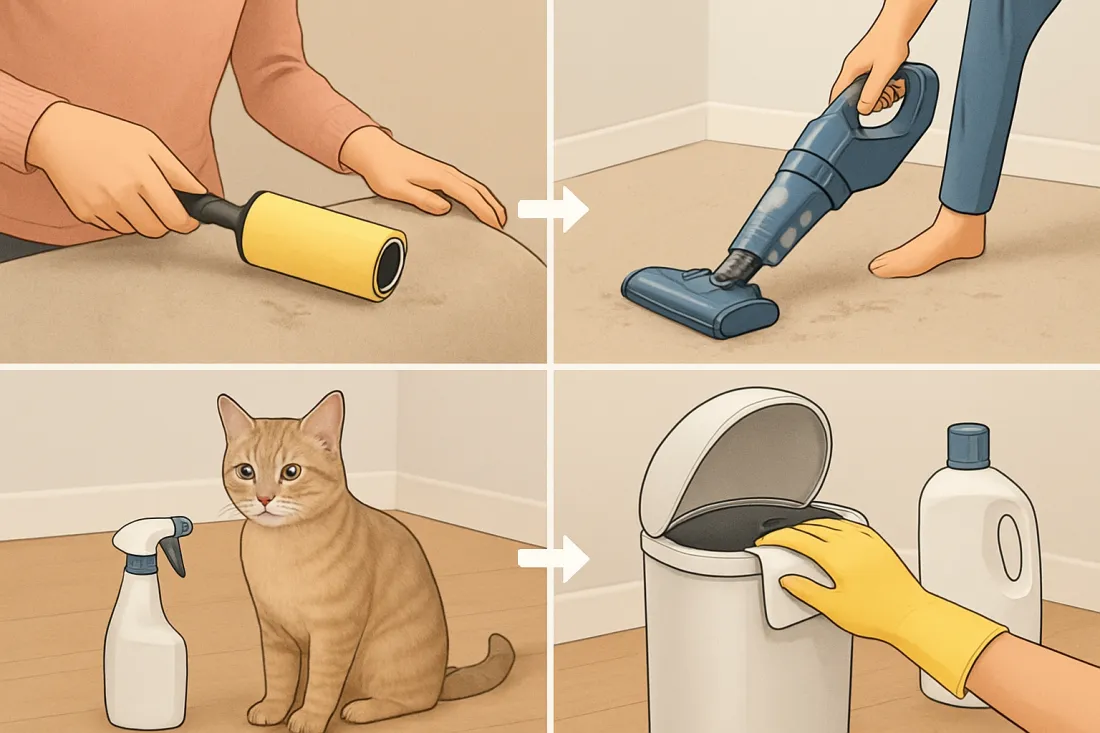
Use this as a realistic daily checklist. Adjust it to your home size and number of pets.
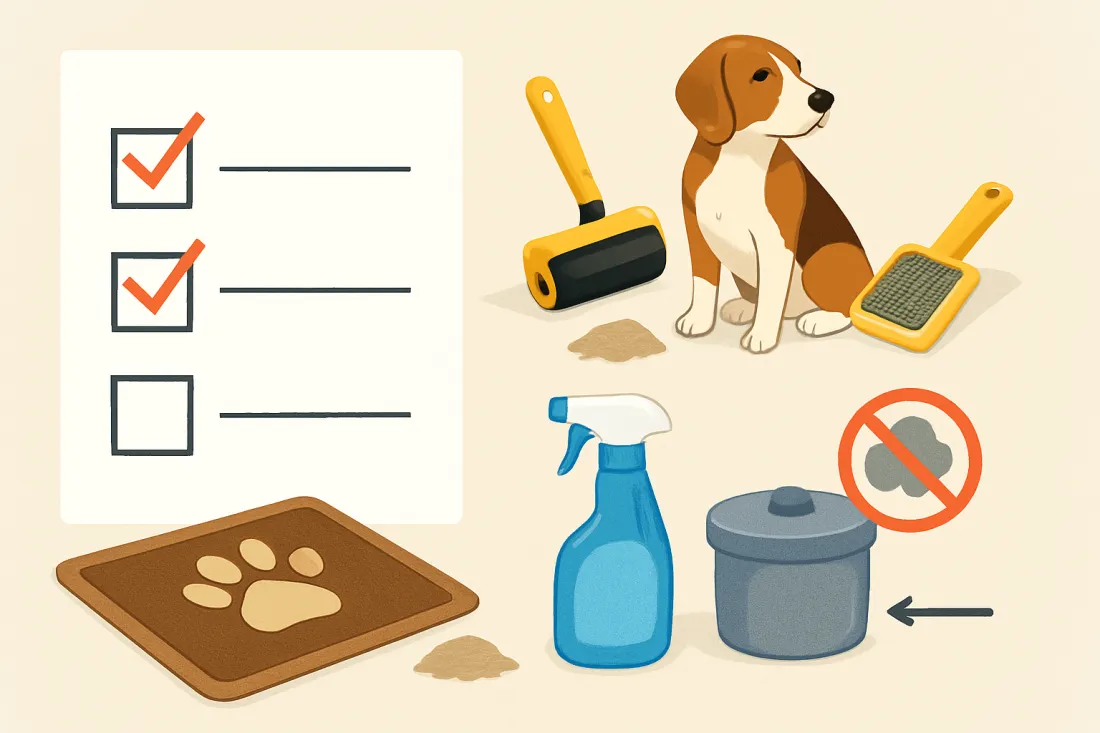
- Do a 2-minute fur sweep in high-traffic areas
Use a cordless vacuum, broom, or electrostatic floor mop on the entryway, main hallway, and the room where your pet spends most time. - Spot-roll furniture and clothes
Keep a lint roller or reusable fur remover by the couch and near the front door. Roll the main seating spots and your outfit before leaving. - Shake or brush pet bedding
Take pet blankets or crate pads outside, shake well, and put them back. This removes a surprising amount of loose hair and dander. - Do a quick litter or potty check
For cats, scoop litter boxes and top up litter if needed. For dogs, check potty pads or the yard and remove waste promptly. - Wipe food and water areas
Wipe around bowls to remove drips, crumbs, and slime. Rinse bowls if they look cloudy or greasy. - Handle fresh accidents immediately
Blot urine or vomit, then treat with an enzyme-based cleaner as soon as you notice it. - Air out the home briefly
If weather and safety allow, open windows for 5–10 minutes to let stale air and pet smells escape.
Comparing daily, weekly, and monthly pet cleaning tasks
This table helps you decide what belongs in your daily routine versus deeper cleaning sessions.
| Task | Best frequency | Why it matters for hair/odour | What happens if you skip it |
|---|---|---|---|
| Quick floor vacuum or sweep in main pet areas | Daily or every other day | Removes loose fur and dander before it spreads through the house. | Hair drifts into bedrooms, clogs filters faster, and feels gritty underfoot. |
| Scooping litter boxes / picking up yard waste | Daily (often twice daily for multiple cats) | Prevents strong ammonia and fecal smells from building up. | Odour becomes noticeable to guests; some pets may avoid the box. |
| Washing pet bedding and blankets | Weekly | Removes body oils, drool, and deep fur that hold odor. | “Dog smell” or “cat smell” lingers even after vacuuming. |
| Vacuuming upholstered furniture thoroughly | Weekly | Pulls embedded hair and dander out of cushions and seams. | Hair transfers to clothing; guests sit in visible fur. |
| Washing hard floors with pet-safe cleaner | Weekly or biweekly | Removes sticky residue, paw prints, and odor-causing films. | Floors look dull, and faint smells remain after accidents. |
| Deep cleaning litter boxes (wash and refill) | Every 2–4 weeks | Resets odor and removes urine build-up on box surfaces. | Persistent litter box smell even with daily scooping. |
| Washing removable sofa covers, throws, and cushion covers | Monthly or as needed | Removes oils and dander that vacuuming cannot reach. | Fabric smells “doggy” or musty despite regular vacuuming. |
| Changing HVAC or room air purifier filters | Check monthly; replace per manufacturer guidance | Traps hair and dander so they do not recirculate. | Filters clog, airflow drops, and odors linger longer. |
Targeted strategies for pet hair control on floors, furniture, and clothes
Different surfaces need different tools. Matching the tool to the surface saves time and frustration.
Managing pet hair on floors
- Hard floors (wood, tile, vinyl)
- Use a soft-bristle broom or electrostatic dust mop to pull hair into piles without sending it airborne.
- Follow with a vacuum if you have gaps, rugs, or baseboards where fur collects.
- A robot vacuum can help with daily maintenance, but still plan a weekly manual pass in corners and under furniture.
- Carpet and rugs
- Vacuum slowly in overlapping passes; speed matters more than power for lifting hair.
- Use a vacuum with a beater bar or brush roll designed for pet hair, and clean the brush regularly so it does not clog.
- For stubborn hair, use a rubber broom or a slightly damp rubber glove to “squeegee” hair out of fibers before vacuuming.
Managing pet hair on furniture
- Use washable barriers – Put washable throws or blankets on your pet’s favorite spots. Wash these weekly instead of deep-cleaning the whole sofa.
- Vacuum with upholstery tools – Use the small upholstery or crevice attachment to reach seams, buttons, and between cushions.
- Try fabric-safe hair removers – Reusable lint brushes, rubber brushes, or specialty pet hair tools can grab embedded fur without damaging fabric.
- Rotate cushions – Flip or rotate cushions so one side does not become permanently matted with hair.
Managing pet hair on clothes
- Keep a “fur-free zone” closet – Store work clothes or guest-ready outfits in a closed closet away from pet beds and litter boxes.
- Use pre-wash tricks – Tumble clothes in the dryer on a short, no-heat cycle with a dryer ball or damp washcloth to loosen hair before washing.
- Wash with extra rinse – An extra rinse cycle can help flush out hair and dander.
- Keep lint rollers in key spots – Near the front door, in the car, and by your desk for last-minute touch-ups.
Grooming as the first line of defense
Regular grooming reduces the amount of hair that ends up in your home:
- Brush shedding dogs and cats with a tool suited to their coat type, following your vet or groomer’s advice.
- Brush outdoors or in an easy-to-clean area to keep loose hair from spreading.
- Schedule professional grooming on a cadence that keeps shedding manageable for your breed and climate.
Odour control strategies: litter boxes, accidents, and wet dog smell
Most pet odors come from three sources: bathroom habits, skin and coat, and fabrics that trap smells. Tackle each source directly instead of just masking it with fragrance.
Keeping litter box smells under control
- Right number of boxes – Many behavior professionals suggest having at least as many boxes as cats, plus one extra. Adjust based on your space and your cats’ habits.
- Daily scooping – Scoop solids and clumps at least once a day; twice is better for multi-cat homes.
- Deep clean regularly – Empty the box, wash with mild unscented soap and warm water, dry thoroughly, and refill with fresh litter every few weeks or sooner if odor builds.
- Ventilation over heavy fragrance – Place boxes in a low-traffic but ventilated area. Strongly scented litters or air fresheners can bother some cats and people.
- Mat and containment – Use a litter mat to catch tracked granules and vacuum around the area regularly.
Handling urine, feces, and vomit accidents
- Act quickly – The fresher the mess, the easier it is to remove both stain and odor.
- Blot, do not rub – Use paper towels or a clean cloth to blot up as much liquid as possible. Rubbing can push it deeper into carpet or upholstery.
- Use an enzyme-based cleaner – Enzyme cleaners are designed to break down the proteins in urine and other organic messes, which helps remove the odor source.
- Test on a small area first – Especially on delicate fabrics or finishes, test any cleaner in an inconspicuous spot.
- Allow full drying time – Odors can seem stronger while an area is drying. Wait until it is completely dry before deciding if you need a second treatment.
- For older stains – You may need to repeat enzyme treatments or consult a professional cleaner if the stain has soaked into padding or subflooring.
Dealing with wet dog smell and general pet odor
- Dry thoroughly after baths or rain – Towel-dry your dog well and, if they tolerate it, use a pet-safe dryer on a low, comfortable setting.
- Wash collars, harnesses, and soft toys – These items can hold strong odors. Check labels and wash in mild detergent as often as needed.
- Clean high-contact surfaces – Wipe down doors, walls at dog-height, crate bars, and window sills where pets rest their heads.
- Use washable covers – Cover dog beds and favorite nap spots with washable covers you can launder weekly.
- Consider air filtration – A room air purifier with a filter appropriate for pet dander and odors can help reduce background smells.
- Check for health issues – Persistent strong odor from your pet’s skin, ears, or mouth can signal a medical problem. If regular grooming does not help, consult your veterinarian.
Recommended cleaning schedule for pet households
Use this as a starting point and adjust based on how many pets you have, their size, and whether they are mostly indoor or outdoor.
Daily tasks
- Quick vacuum or sweep of main pet areas.
- Scoop litter boxes and remove yard waste.
- Wipe around food and water bowls; rinse if dirty.
- Shake out pet blankets or bed covers.
- Spot-clean any accidents with an enzyme cleaner.
- Open windows briefly to refresh air when possible.
Weekly tasks
- Wash pet bedding, crate pads, and washable throws.
- Vacuum all carpets and rugs thoroughly.
- Vacuum upholstered furniture and pet zones.
- Mop hard floors with a pet-safe cleaner.
- Wash food and water bowls with hot, soapy water.
- Brush your pet as recommended for their coat type.
Every 2–4 weeks
- Empty and wash litter boxes; refill with fresh litter.
- Wash removable sofa covers and cushion covers if used heavily by pets.
- Wash collars, harnesses, and soft toys if they smell or look dirty.
- Check and clean vacuum filters and brush rolls.
Monthly or as needed
- Check HVAC or air purifier filters and replace per manufacturer guidance.
- Spot-clean walls, doors, and baseboards at pet height.
- Move furniture to vacuum fur “nests” underneath and behind.
- Review your routine and adjust if hair or odors are creeping back faster than you like.
Safe vs unsafe cleaning products around pets
Pets walk on, lick, and lie on the surfaces you clean, so product choice matters. Always read labels and follow directions, and when in doubt, ask your veterinarian for guidance.
Generally safer approaches
- Mild, fragrance-free cleaners – Unscented or lightly scented products reduce the chance of irritating sensitive noses and skin.
- Pet-specific cleaners – Products labeled for pet stains and odors are usually formulated with typical pet exposures in mind.
- Diluted solutions as directed – Using the recommended dilution helps avoid residue build-up.
- Thorough rinsing on food-contact surfaces – Rinse and dry bowls, feeding mats, and crate trays after cleaning.
- Ventilation during and after cleaning – Open windows or run fans to clear fumes before pets re-enter the area.
Products and practices to be cautious with
- Strong disinfectants and concentrated cleaners – Some ingredients can be harmful if pets lick or walk on wet surfaces. Keep pets away until surfaces are completely dry and, when needed, rinsed.
- Heavy fragrances and air fresheners – Strong scents can bother pets and people and may mask, rather than solve, odor problems.
- Mixing cleaning products – Combining products can create irritating fumes. Stick to one cleaner at a time unless a manufacturer specifically instructs otherwise.
- Essential oils and homemade mixes – Some essential oils and DIY mixtures can be irritating or harmful to pets. Check with your vet before using them around animals.
Setting up pet zones to contain mess and odor
Thoughtful layout can reduce how far hair and smells travel.
Create “mess-friendly” pet zones
- Choose easy-clean flooring – Place beds, litter boxes, and feeding stations on hard floors or washable mats rather than on carpet.
- Use washable layers – Put washable rugs or mats under food bowls, litter boxes, and crates to catch spills and tracked litter.
- Define a main hangout area – Encourage your pet to relax in one or two main rooms by placing comfortable beds and toys there. This concentrates hair and dander where you can clean most easily.
- Limit bedroom access if needed – If allergies or hair on bedding are a problem, keep bedroom doors closed and provide extra comfort in allowed areas.
Entryway and outdoor considerations
- Set up a paw-cleaning station – Keep a mat, towel, and pet-safe wipes by the door to clean paws after walks or yard time.
- Hang leashes and harnesses – Store walking gear near the door but off the floor to avoid dirt piles.
- Maintain the yard – Regularly pick up waste and manage muddy areas to reduce what gets tracked indoors.
If you are still planning your layout or adopting a new pet, you may find it helpful to review guidance on how to set up a pet friendly home so cleaning and comfort are built in from the start.
Troubleshooting persistent smells or stains
If you feel like you are cleaning constantly but still notice odors or marks, work through this simple diagnostic checklist.
Step-by-step troubleshooting checklist
- Identify the source area
- Walk room by room and note where the smell is strongest.
- Check less obvious spots: under furniture, behind doors, inside closets, and around vents.
- Check for hidden accidents
- Look for discolored patches on carpets, rugs, and baseboards.
- Use your nose at close range; if safe, you can also use a dedicated pet stain detector light to find old spots.
- Re-treat with an enzyme cleaner
- Apply generously to any suspected urine or vomit areas so it can reach deeper layers.
- Follow product directions for dwell time and blotting.
- Evaluate soft furnishings
- Smell cushions, throws, and curtains near pet zones.
- Wash or dry-clean items that hold odor, or consider replacing heavily saturated items like very old pet beds.
- Inspect litter boxes and pet toilets
- Check for urine build-up on box sides, lids, or surrounding walls.
- Clean the entire area, including mats and nearby surfaces.
- Consider ventilation and filtration
- Open windows when practical and run exhaust fans in bathrooms or laundry rooms where litter boxes may be located.
- Use or maintain air purifiers if you have them; clean or replace filters as recommended.
- Rule out health issues
- If your pet’s breath, ears, or skin smell unusually strong despite regular grooming, schedule a vet check.
- Frequent accidents in the same spot can also signal a medical or behavioral issue that needs professional input.
- Call in professional help if needed
- For deep-set stains in carpet padding or subfloors, a professional cleaner or flooring specialist may be needed.
- If you rent, review your lease and communicate early if you discover damage that may require repairs.
Common mistakes when managing pet hair and odour
Avoiding a few typical missteps can make your efforts much more effective.
- Relying only on air fresheners – Sprays and plug-ins may mask smells temporarily but do not remove the source.
- Cleaning only before guests arrive – Infrequent, intense cleaning is exhausting and lets hair and odor build up.
- Using harsh cleaners without rinsing – Strong residues can irritate paws and noses and may not be safe if licked.
- Ignoring grooming – Skipping regular brushing and bathing (as recommended for your pet) means more hair and odor in the home.
- Not replacing old, saturated items – Very old beds, rugs, or cushions can hold odors even after washing.
- Placing litter boxes in cramped, unventilated corners – This concentrates and traps smells.
- Letting vacuum filters clog – A clogged filter reduces suction and leaves hair and dander behind.
Decision criteria: tailoring your routine to your home
There is no single routine that fits every pet household. Use these criteria to customize your approach:
- Number and type of pets – Multiple pets or heavy-shedding breeds usually need more frequent vacuuming and grooming.
- Allergies in the household – If someone has allergies, prioritize air filtration, frequent bedding washes, and keeping at least one room as a low-dander zone.
- Flooring types – Homes with mostly carpet may need more vacuuming; homes with hard floors may focus on sweeping and mopping.
- Home size and layout – In smaller spaces, odors can concentrate more quickly, so ventilation and litter box placement matter more.
- Time and energy – If your schedule is tight, invest in time-saving tools (like a robot vacuum) and simplify by using washable covers and mats.
- Guest expectations – If you host often, keep a “company-ready” set of throws, towels, and a quick 10-minute tidy routine for hair and odor.
FAQ about managing pet hair and odour at home
What is the single most important habit for controlling pet hair and odour?
The most impactful habit is a short, consistent daily routine: quick floor cleaning in main pet areas, daily litter or yard cleanup, and fast attention to any accidents. These small tasks prevent hair and smells from building up, so deep cleans stay manageable.
How can I tell if my home still smells like pets to guests?
Because you live with the smell every day, your nose adapts. To check, step outside for a few minutes, then come back in and notice your first impression. You can also ask a trusted friend to be honest about what they smell when they enter. If they notice litter, urine, or “wet dog” odors, focus on those specific sources with the troubleshooting checklist.
What mistakes should I avoid when cleaning up pet urine?
Avoid rubbing the area, using only water, or covering the smell with strong fragrance. Rubbing can spread the stain deeper into fibers, and water alone often leaves odor behind. Instead, blot thoroughly, then use an enzyme-based cleaner designed for pet messes and allow it to work for the full recommended time.
What should I do next if I feel overwhelmed by pet hair and odour?
Start small by choosing one room as your “test zone.” Apply the daily checklist only there for a week so you can see what works without tackling the whole house. Then expand your routine room by room. If you are planning changes to your space or adopting a new pet, reading about how to set up a pet friendly home can help you design a layout that is easier to keep clean from the beginning.
Summary: a realistic plan for a clean, pet-friendly home
Managing pet hair and odour at home is less about perfection and more about steady, simple habits. Combine regular grooming, a short daily cleaning checklist, weekly and monthly deep-clean tasks, and smart pet zones that are easy to maintain. Choose cleaning products with your pets’ safety in mind, and tackle smells at the source instead of masking them. With a routine tailored to your pets, flooring, and schedule, you can enjoy a comfortable, guest-ready home without giving up the joy of living with animals.