
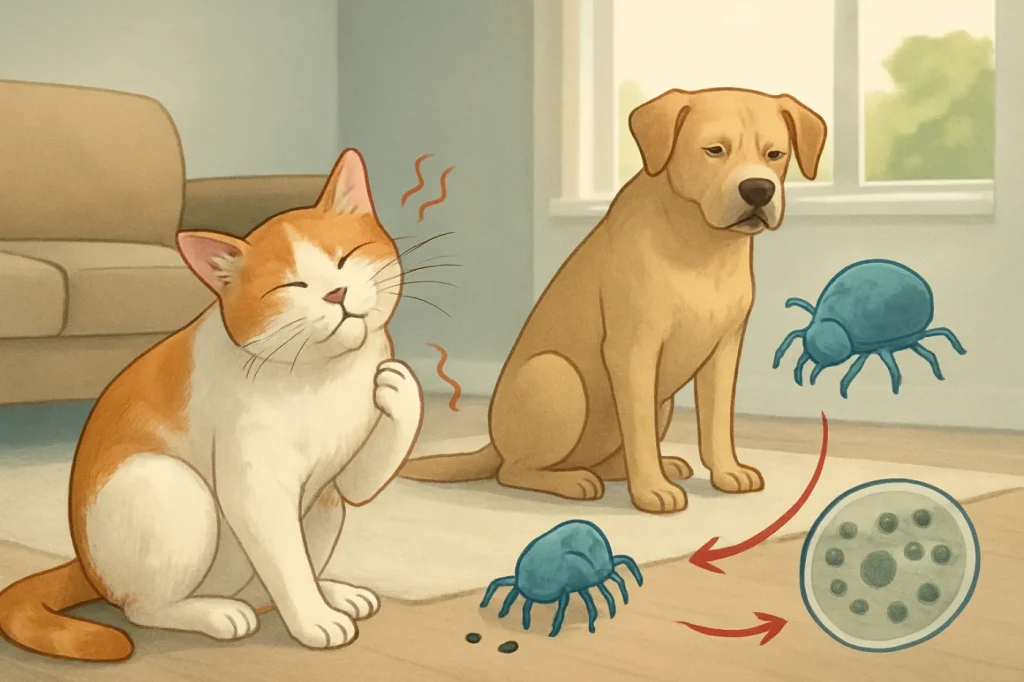
Environmental allergies in pets are usually lifelong, but flare-ups at home do not have to be. By understanding what triggers your dog or cat and making a few focused changes in your house and routine, you can often reduce itching, licking, and skin infections and make veterinary treatment work better.
Understanding environmental allergies in pets and why they’re so common
Environmental allergies (often called “atopy” or “atopic dermatitis”) happen when a pet’s immune system overreacts to things in their surroundings that are normally harmless. Instead of ignoring pollen, dust mites, or mold spores, their body treats them like a threat and creates inflammation in the skin, ears, or sometimes the eyes and nose.
In the United States, pets spend a lot of time indoors with us and also go in and out multiple times a day. That means they are exposed to both indoor and outdoor allergens year-round. Central heating and air conditioning can keep dust and dander circulating, while long growing seasons in many states mean more months of pollen and grasses.
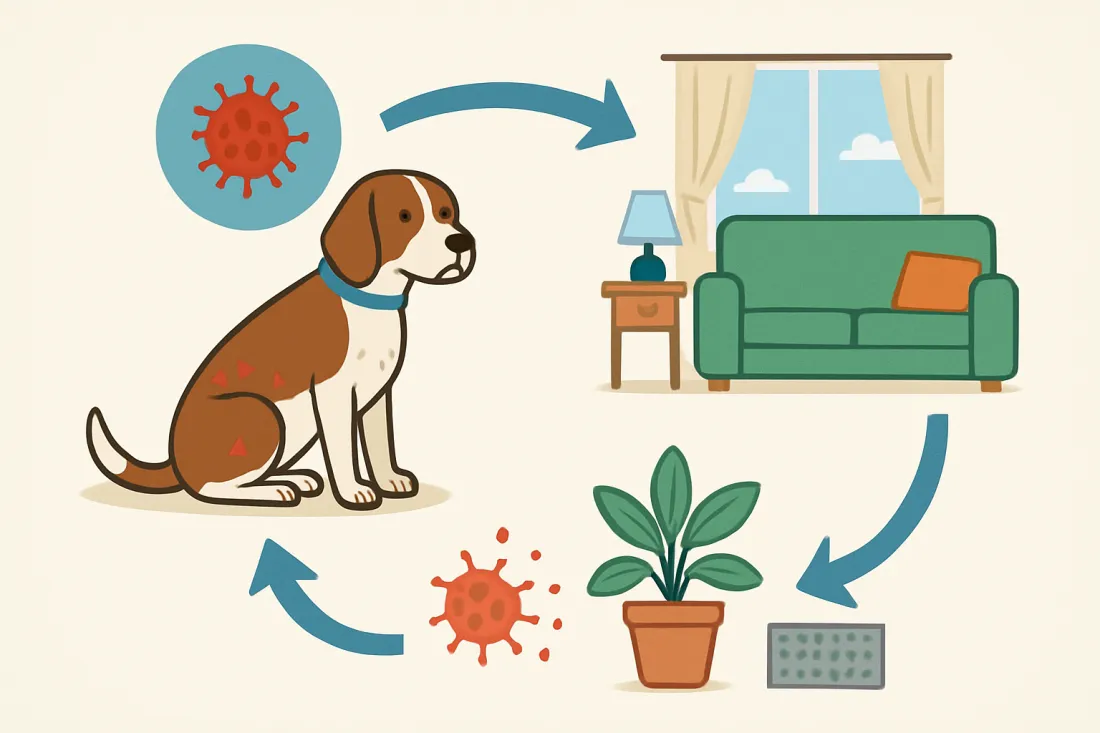
Typical signs that suggest environmental allergies rather than food poisoning or a one-time irritant include:
- Chronic or recurring itchiness (scratching, chewing, licking, rubbing on furniture)
- Red, inflamed skin, especially on paws, belly, armpits, groin, face, or ears
- Frequent ear infections or head shaking
- Staining of fur from saliva on paws or legs from constant licking
- Symptoms that come and go with seasons or weather changes
Home management will not “cure” environmental allergies, but it can:
- Reduce the amount of allergen your pet contacts or inhales
- Lower the intensity and frequency of flare-ups
- Help medications from your veterinarian work more effectively
- Improve comfort and quality of life for both you and your pet
Common US environmental allergy triggers for dogs and cats
Most allergic pets react to several things at once. You may never know every single trigger, but understanding the big categories helps you focus your efforts.
Outdoor triggers
- Tree pollen – Common in spring in many parts of the U.S. Trees like oak, maple, and birch release large amounts of pollen that can stick to fur and paws.
- Grass pollen – Often a late spring and summer problem. Dogs who love rolling or lying in grass may show red bellies and itchy paws.
- Weed pollen – Many weeds release pollen in late summer and fall. Ragweed is a well-known example that can bother both people and pets.
- Outdoor molds – Molds grow in damp soil, leaf piles, and mulch. After rain or in humid climates, mold spores can increase.
Indoor triggers
- Dust mites – Microscopic creatures that live in household dust, especially in bedding, upholstery, and carpets. Warm, humid homes tend to have more of them.
- Indoor molds – Found in bathrooms, basements, around windows, and anywhere moisture collects. Leaks and poor ventilation make mold worse.
- Household cleaners and fragrances – Strongly scented sprays, air fresheners, fabric softeners, and some cleaning products can irritate sensitive pets. They may not cause a classic allergy, but they can inflame skin and airways and worsen existing allergies.
- Cigarette or vape smoke – Smoke particles cling to fur, furniture, and curtains and can irritate the skin and respiratory tract.
Many allergic pets react to both indoor and outdoor triggers, which is why symptoms may never fully disappear without medical treatment, even with excellent home management.
Indoor vs outdoor allergies and how seasons affect your pet
Understanding whether your pet is more sensitive to indoor or outdoor allergens helps you decide where to focus your energy and money.
Clues that indoor allergens are a major problem
- Itching and skin problems are present all year, with no clear “off season.”
- Symptoms may worsen when windows are closed and the heat or AC runs constantly.
- Your pet seems itchier after lying on carpets, rugs, or their bed, or after spending time in certain rooms (like a damp basement or bathroom).
- Multiple pets in the home show mild irritation, sneezing, or red eyes in the same rooms.
Clues that outdoor allergens are a major problem
- Symptoms spike during certain months (for example, every spring and fall) and improve in winter or after a hard frost in many regions.
- Your pet is itchier after walks, yard time, or visits to parks and fields.
- Redness and licking are worst on paws and lower legs, where they contact grass and soil.
- Bathing or rinsing your pet after outdoor time gives noticeable short-term relief.
Many U.S. pets have a mix of both. You may notice two or three “bad” seasons each year, with milder but still present symptoms in between. Tracking your pet’s flare-ups on a simple calendar for a few months can help you and your veterinarian see patterns and decide whether to focus more on indoor cleaning or outdoor management.
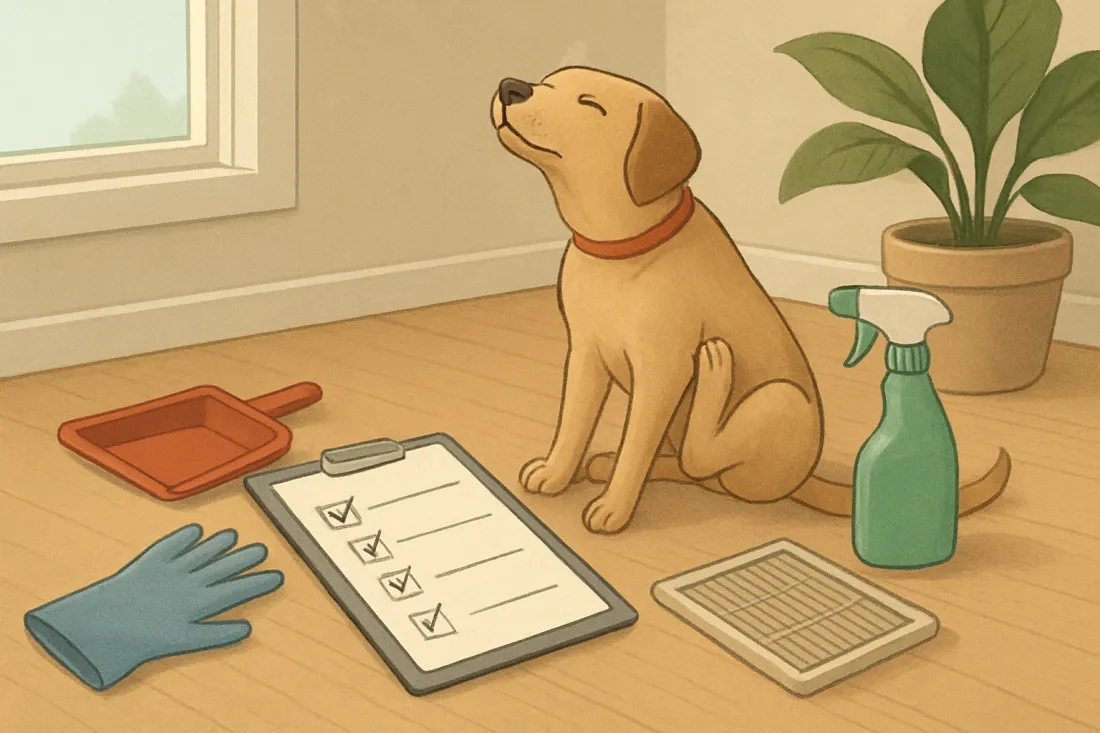
Checklist: simple home changes to reduce allergens for your pet
Use this practical checklist to adjust your home step by step. You do not need to do everything at once; start with the easiest changes and build from there.
Daily and weekly cleaning habits
- Vacuum high-traffic areas at least weekly – Use a vacuum with a good filter and pay attention to carpets, rugs, and upholstery where dust and pollen collect.
- Damp dust instead of dry dusting – Use a slightly damp cloth or microfiber to trap dust rather than pushing it into the air.
- Wash pet bedding regularly – Aim for once a week in hot water if the fabric allows. Use a fragrance-free, dye-free detergent.
- Clean soft furnishings – Wash throw blankets and cushion covers your pet lies on every 1–2 weeks.
- Empty and clean litter boxes often – For cats, a clean box reduces ammonia and dust that can irritate airways.
Air quality and filtration
- Use HVAC filters designed to capture small particles – Choose filters that are labeled to trap dust, pollen, and pet dander, and replace them as often as the manufacturer recommends.
- Consider a room air purifier – Place it in the room where your pet spends the most time, especially bedrooms or living rooms.
- Ventilate damp areas – Use bathroom fans, kitchen exhaust fans, or open windows when weather allows to reduce moisture and mold growth.
- Fix leaks promptly – Address roof, window, or plumbing leaks to prevent mold-prone damp spots.
Surfaces and fabrics
- Create at least one low-allergen “safe zone” – In one room, minimize rugs, heavy curtains, and clutter so it is easier to clean and keep dust low.
- Use washable covers – Put washable covers on pet beds, sofas, and chairs where your pet sleeps.
- Limit access to dusty storage areas – Keep pets out of attics, garages, or cluttered basements where dust and mold are common.
Outdoor and entryway habits
- Wipe paws and belly after outdoor time – Use a damp cloth or pet-safe wipes to remove pollen and grass from paws, legs, and underside.
- Keep grass trimmed – Shorter grass can reduce pollen load and makes it easier to spot skin irritation or ticks.
- Rinse off after heavy pollen exposure – During peak seasons, a quick rinse or light bath after park visits can help.
- Use a doormat and towel station – Keep a mat and towel near the door to wipe paws before your pet walks through the house.
Household habits
- Avoid indoor smoking or vaping – Keep smoke and vapor outside and away from pets.
- Store strong chemicals securely – Keep paints, solvents, and lawn chemicals in closed areas your pet cannot access.
- Introduce new products one at a time – If you change detergents or cleaners, watch your pet for increased itching or redness.
Choosing pet-safe cleaning and laundry products
Cleaning products do not have to be labeled “pet-safe” to be appropriate, but they should be gentle, low in fragrance, and used correctly. Allergic pets often have already-inflamed skin, so harsh chemicals and heavy scents can make them much more uncomfortable.
What to look for
- Fragrance-free or lightly scented – Choose products labeled fragrance-free or unscented for floors, surfaces, and laundry.
- Dye-free detergents – Dyes can irritate sensitive skin. A simple, clear detergent is usually better.
- Rinse well – When mopping floors or cleaning surfaces your pet lies on, rinse with clean water if the product instructions allow.
- Short ingredient lists – Fewer additives often mean fewer potential irritants.
Products and practices to use carefully
- Strong disinfectant sprays and wipes – Reserve heavy-duty disinfectants for small areas where needed and keep pets away until surfaces are dry.
- Air fresheners and plug-ins – Continuous fragrance can irritate sensitive pets. If you use them, avoid placing them near pet beds or litter boxes.
- Fabric softeners and dryer sheets – These can leave residues on blankets and pet beds. If your pet is itchy, try washing their items without softener.
- Essential oils and diffusers – Some oils are unsafe for pets, and even safe ones can be irritating. Always check with your veterinarian before using oils around pets.
When in doubt, test a new product on items your pet does not sleep on first, and watch for any increase in scratching, licking, or redness over the next few days.
Managing walks and outdoor time during high-pollen days
Outdoor time is important for your pet’s physical and mental health, even if they have allergies. The goal is to reduce pollen exposure, not eliminate outdoor time completely.
Adjusting timing and routes
- Avoid peak pollen times when possible – Pollen levels are often higher in the early morning and on dry, windy days. When you can, walk later in the morning or after rain, when pollen may be lower in the air.
- Choose routes with less tall grass and weeds – Stick to sidewalks and short grass rather than fields, ditches, or overgrown areas.
- Limit rolling in grass – Gently discourage your dog from rolling or lying in grass during peak seasons.
- Use a harness instead of a collar – For dogs with neck or facial itching, a harness can reduce friction and irritation.
After-walk routines
- Wipe paws, legs, and belly – Keep a container of pet-safe wipes or a damp cloth by the door. Wipe each paw, between toes, and the underside after every walk.
- Brush out loose debris – A quick brush can remove pollen, grass seeds, and dust from the coat.
- Change your own clothes – If your pet is very sensitive, changing clothes and washing your hands after yard work or hikes can reduce the pollen you bring back to them.
If your veterinarian has recommended protective clothing (such as a lightweight shirt or booties), use them consistently and wash them regularly in a gentle detergent.
Bathing and grooming routines that support allergy control
Bathing and grooming can be powerful tools for managing environmental allergies, but overdoing it or using the wrong products can dry out the skin and make itching worse.
Bathing guidelines
- Ask your vet about ideal frequency – Many allergic pets benefit from regular baths, but the right schedule depends on your pet’s skin and coat. Some may do well with weekly baths; others need them less often.
- Use a gentle, pet-specific shampoo – Human shampoos, dish soaps, or harsh degreasers can strip natural oils and irritate the skin.
- Rinse thoroughly – Leftover shampoo can cause itching. Rinse until the water runs clear and the coat feels squeak-free.
- Pat dry instead of vigorous rubbing – Rubbing can irritate already-inflamed skin. Use a towel to gently press out water.
Between-bath care
- Regular brushing – Brushing removes loose hair, dirt, and pollen and helps distribute natural oils. Choose a brush suited to your pet’s coat type.
- Paw care – Check between toes for redness, moisture, or debris. Keep fur between paw pads trimmed if your groomer or vet recommends it.
- Ear checks – Allergic pets are prone to ear infections. Look for redness, odor, or discharge and ask your vet about a routine ear cleaner if needed.
- Trimmed coat where appropriate – For some dogs, a shorter but not shaved coat can make it easier to bathe and check the skin. Always ask your vet or groomer what length is safe for your pet’s breed and climate.
Never apply over-the-counter creams, ointments, or human medications to itchy areas without veterinary guidance. Some products that are safe for people can be harmful if licked by pets.
Home management vs veterinary treatment: how to know when it’s not enough
Even the best home routine has limits. Environmental allergies are a medical condition, and most affected pets need some level of veterinary care to stay comfortable and avoid complications.
Signs that home changes alone are not enough
- Your pet is still scratching, licking, or chewing daily despite consistent cleaning and grooming changes.
- You see open sores, scabs, or thickened, darkened skin.
- There is a strong odor from the skin or ears, or you notice discharge.
- Your pet seems restless, has trouble sleeping, or is less interested in play because of itching.
- Symptoms are getting worse or spreading to new areas.
Veterinarians can help by:
- Ruling out other causes of itching, such as fleas, mites, or infections.
- Prescribing medications to control itch and inflammation.
- Recommending medicated shampoos, ear cleaners, or topical treatments.
- Discussing allergy testing or long-term allergy therapies when appropriate.
Think of home management and veterinary care as partners. Home changes reduce the allergen load, while medical treatment calms the overactive immune response. Together, they usually give the best results.
Comparison: indoor-focused vs outdoor-focused allergy management
Most allergic pets need a mix of indoor and outdoor strategies, but one side may deserve more of your attention. Use the comparison below to see which focus fits your situation better.
| Scenario | When indoor-focused changes help most | When outdoor-focused changes help most | Main risks if you ignore this area |
|---|---|---|---|
| Season pattern | Itching is present all year with no clear break, or worse when windows are closed and HVAC runs constantly. | Itching clearly worsens in specific seasons and improves in winter or after heavy frost. | Missing the main trigger means your pet stays uncomfortable and may need higher medication doses. |
| Where symptoms show | Redness and irritation appear on belly, chest, and areas in contact with bedding and carpets. | Paws, lower legs, and areas that touch grass are most affected after walks or yard time. | Skin damage from constant licking and scratching, leading to infections. |
| Home environment | Carpets, rugs, and soft furnishings are common; there may be damp areas or visible dust. | Pet spends long periods outdoors or in yards with tall grass, weeds, or leaf piles. | Dust mites and mold indoors, or heavy pollen and outdoor mold, continue to trigger flare-ups. |
| Best first steps | Increase vacuuming, wash bedding weekly, improve ventilation, and consider air filtration. | Adjust walk times, wipe paws and belly after outings, keep grass trimmed, and rinse after heavy pollen exposure. | Without targeted changes, you may feel you have “tried everything” when key triggers are still present. |
Typical dog and cat scenarios: how home management looks in real life
The details will be different for every household, but these common patterns can help you picture what to focus on.
Scenario 1: Itchy suburban dog with seasonal flares
A medium-sized dog in a U.S. suburb starts licking paws and scratching every spring and fall. Walks are usually on grassy sidewalks and in a local park. Indoors, the home has carpets and central air.
Helpful home steps might include:
- Walking later in the morning and after rain when possible.
- Wiping paws and belly after every walk and brushing the coat once a day during peak seasons.
- Keeping the yard grass short and avoiding tall weeds.
- Vacuuming carpets weekly and washing the dog’s bed in fragrance-free detergent.
- Working with a veterinarian on an itch-control plan for the worst months.
Scenario 2: Indoor cat with year-round itching
An indoor-only cat in an apartment has red, itchy skin on the belly and inner thighs and grooms constantly. There are no fleas, and food changes have not helped. The apartment has wall-to-wall carpet and limited ventilation.
Helpful home steps might include:
- Vacuuming carpets and upholstery regularly, especially in the cat’s favorite resting spots.
- Creating one low-clutter, easy-to-clean “safe room” with fewer fabrics and a washable cat bed.
- Washing bedding and soft blankets weekly in a gentle, fragrance-free detergent.
- Using a room air purifier where the cat spends most time.
- Discussing with a veterinarian whether additional medical treatment is needed to control itching.
If you or family members also have allergies, you may find it helpful to read about how to live with cat allergies and keep your cat, which includes more ideas for managing shared environments.
Decision checklist: what to do next for your allergic pet
Use this short decision checklist to plan your next steps.
- Confirm the pattern
Ask yourself: When is my pet worst? Which body areas are most affected? Note any seasonal or location patterns for the next few weeks. - Pick your top three home changes
Choose one cleaning habit, one air or surface change, and one outdoor or grooming change from the earlier checklist to start this week. - Set a simple schedule
Decide how often you will vacuum, wash bedding, or wipe paws. Put reminders on your phone or calendar. - Monitor your pet’s comfort
Watch for changes in scratching, licking, and sleep over the next month. Small improvements still matter. - Decide when to involve your vet
If your pet is still uncomfortable, has open sores, or seems distressed despite your efforts, schedule a veterinary visit to discuss medical options. - Review and adjust every season
Each new season, review what worked, what did not, and which triggers seem strongest. Adjust your routine rather than starting from scratch.
FAQ about environmental allergies and home management for US pets
How can I tell if my pet’s itching is from environmental allergies and not food?
Food and environmental allergies can look very similar, and many pets have both. Environmental allergies often show a clear seasonal pattern or are linked to certain locations, such as after walks or time in specific rooms. Food allergies are more likely to cause year-round symptoms that do not change with seasons. Because other problems like fleas or infections can also cause itching, the safest approach is to have your veterinarian examine your pet and guide any diet trials or allergy testing.
What are the biggest home management mistakes owners make with allergic pets?
Common mistakes include over-bathing with harsh shampoos, using heavily scented cleaners and air fresheners near pet beds, assuming a single change (like switching food) will solve everything, and giving human medications without veterinary advice. Another frequent issue is trying many changes for a few days and then stopping. Environmental allergy management works best when small, realistic steps are done consistently over time.
Is it realistic to manage environmental allergies at home without medication?
Some pets with very mild allergies may do reasonably well with home changes alone, especially if their main triggers are limited and easy to avoid. However, many allergic pets need at least occasional medical support to stay comfortable and prevent skin or ear infections. Think of home management as the foundation that reduces triggers, while medication is the tool that calms the immune system when it overreacts. Your veterinarian can help you find the lowest effective level of treatment for your pet.
What should I do first after realizing my pet might have environmental allergies?
Start by observing and writing down when and where your pet is most itchy, then choose a few simple home changes such as washing bedding weekly, wiping paws after walks, and switching to fragrance-free detergents. At the same time, schedule a veterinary appointment to rule out other causes of itching and discuss an overall plan. Bringing your notes about patterns and what you have already tried will help your veterinarian tailor recommendations to your home and your pet.
Can improving my own allergy management help my pet too?
Often, yes. Many steps that help people with allergies—like using better air filters, vacuuming more often, and reducing dust and mold—also reduce triggers for pets. If your family is preparing your home for a new cat and has human allergies, guidance on how to prepare home for cat when family has allergies can give you additional ideas that benefit both people and animals.