
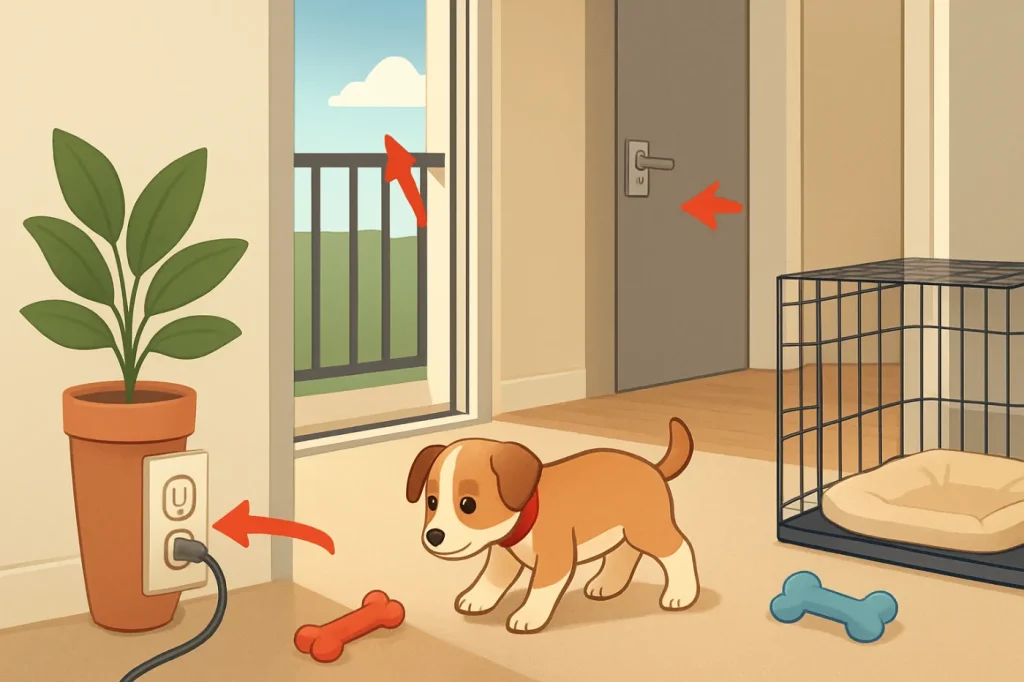
Pet proofing an apartment for a new puppy means doing three things at once: removing obvious hazards, blocking escape routes, and creating safe, puppy-sized zones where they can eat, sleep, and play without wrecking your place or annoying neighbors.
If you focus on outlets and chew toys only, you miss the big apartment-specific risks: balconies, shared hallways, thin walls, and tight spaces packed with cords, cleaners, and clutter. The process below walks you through each room, plus moving day, so your puppy’s first weeks are safe and calm instead of chaotic.
Key apartment risks to fix before your puppy arrives
Most apartments share a similar set of puppy hazards. Use this as a quick scan before you dive into room-by-room details.
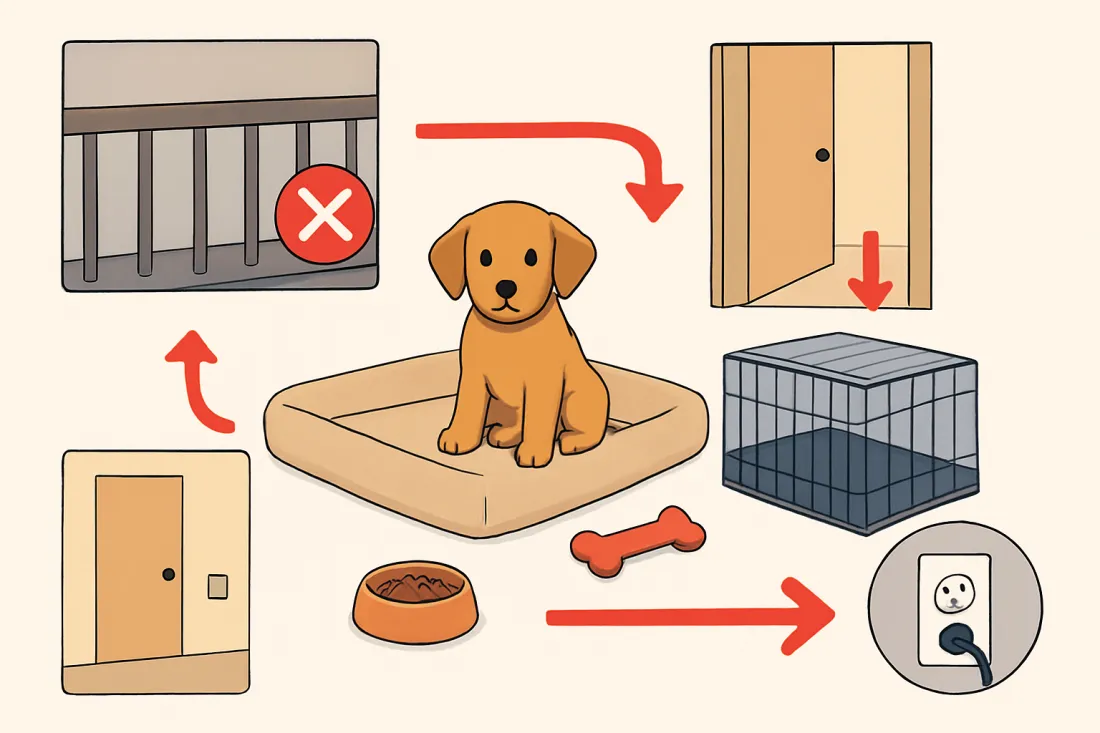
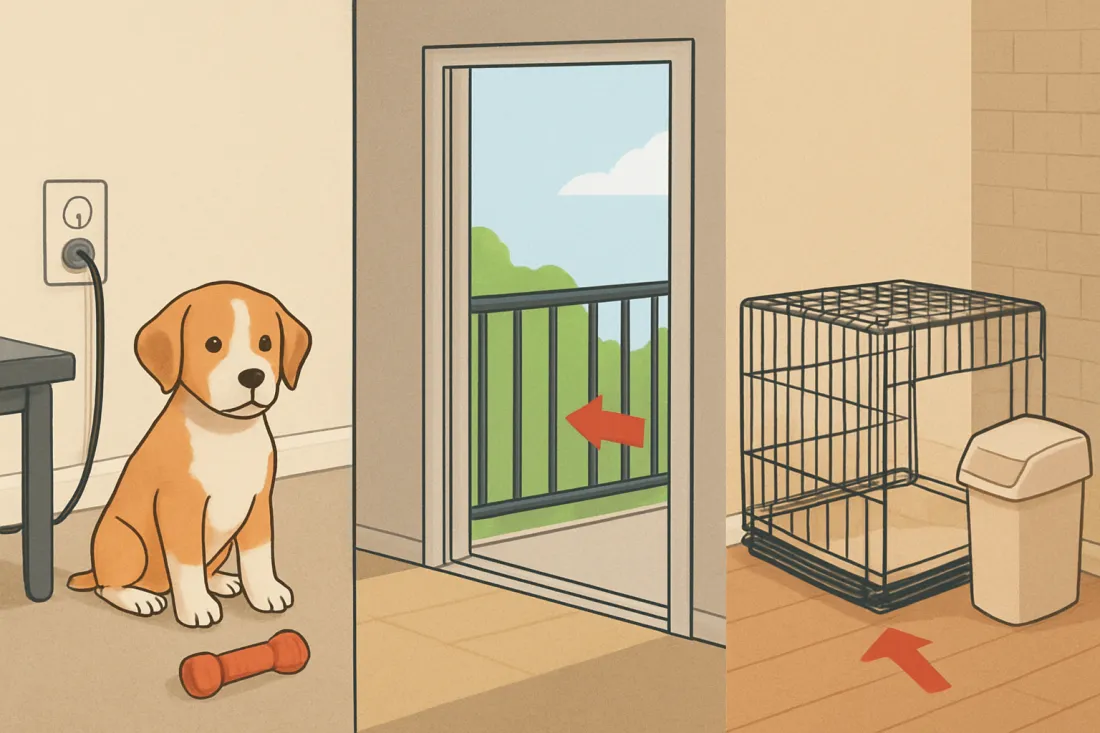
- Escape routes: loose balcony railings, gaps under doors, torn window screens, open stairwells, propped-open building doors.
- Fall risks: balconies, open windows, furniture near windows, slippery stairs or loft ladders.
- Chew and shock risks: power cords, chargers, extension strips, dangling blind cords, phone and internet cables.
- Toxic items at nose level: cleaning sprays under the sink, laundry pods, trash cans, human medications, cosmetics, and some houseplants.
- Choking and blockage hazards: coins, hair ties, kids’ toys, socks, batteries, earbuds, small decor, and loose rug tassels.
- Noise and neighbor issues: barking at hallway sounds, nails on hard floors, whining when left alone, doors that slam or echo.
- Limited outdoor access: no private yard, shared elevators and hallways, busy streets right outside the building.
Plan to manage these in two layers: a long-term layout (gates, crate, safe zones) and a daily habit layer (closing doors, picking up clutter, storing bags and shoes).
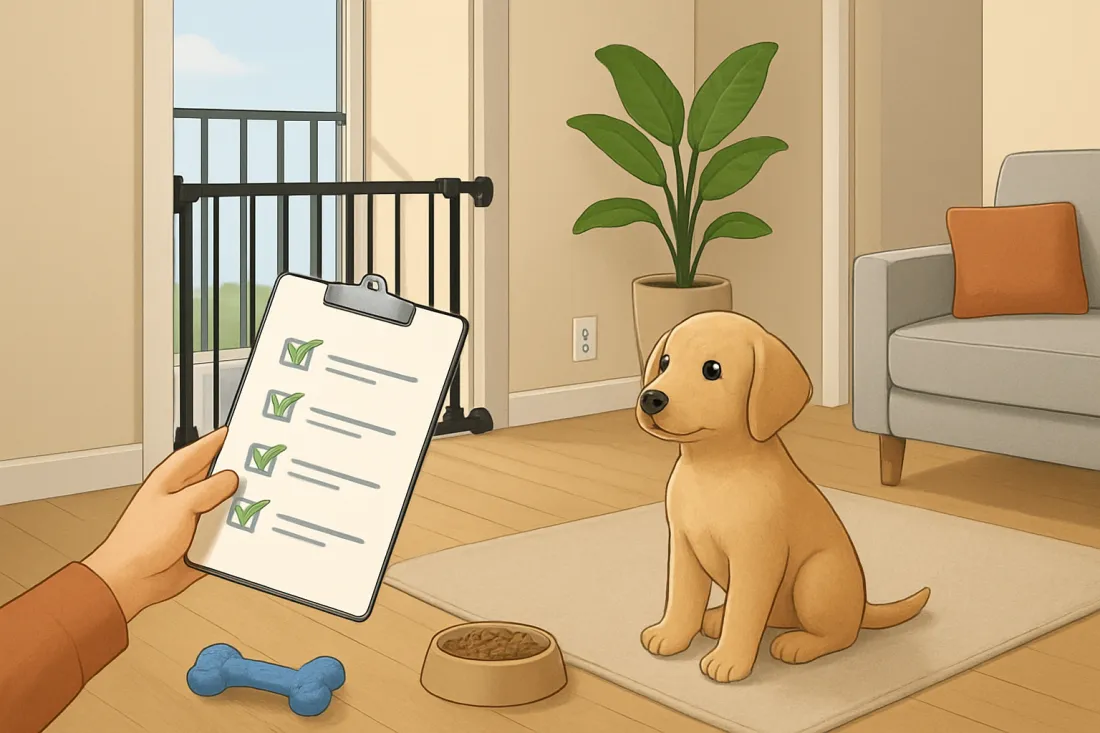
Room-by-room pet-proofing checklist for a small apartment
Walk your apartment with this checklist on your phone. Imagine a curious toddler who can chew, jump, and squeeze into gaps but cannot understand “no” yet.
Kitchen: high-risk zone for food and chemicals
- Install childproof latches on cabinets with cleaning products, trash bags, or sharp objects.
- Use a lidded trash can or place the trash behind a closed door or inside a cabinet.
- Store human food (especially chocolate, grapes/raisins, onions, xylitol-sweetened items, alcohol, coffee grounds) in closed cabinets or the fridge.
- Keep counter edges clear of food, knives, and dangling cords from appliances.
- Block access to the dishwasher when open; remove food scraps and keep detergent pods out of reach.
- Check for gaps behind appliances where a small puppy could get stuck; block with boards or heavy items if needed.
Living room: cords, clutter, and soft furnishings
- Bundle and cover electrical cords with cord covers or cable management boxes; keep power strips behind furniture if possible.
- Mount or secure TVs and floor lamps so a tugged cord or bump cannot topple them.
- Pick up small objects: remote batteries, coins, game pieces, kids’ toys, sewing supplies, and anything smaller than a tennis ball.
- Move houseplants to shelves or rooms the puppy cannot access, especially if you are unsure whether they are safe.
- Use washable throws or slipcovers on couches to protect from accidents and muddy paws.
- Create a designated play area with a washable rug, chew toys, and a bed, so the puppy learns where fun happens.
Bedroom: laundry, cords, and hiding spots
- Keep laundry in a hamper with a lid; socks, underwear, and tights are common blockage hazards.
- Secure phone chargers and lamp cords so they do not dangle off the nightstand.
- Check under the bed for clutter and block access if there are wires or items that cannot be removed.
- Store medications, vitamins, and cosmetics in drawers or on high shelves, not on bedside tables.
- Decide whether the bedroom will be a nighttime safe zone (crate or pen) or a no-puppy area, and set up gates or doors accordingly.
Bathroom and laundry area: chemicals and sharp items
- Close the toilet lid to prevent drinking or falling in.
- Store cleaning products, bleach, toilet tablets, and drain cleaners in cabinets with latches or on high shelves.
- Keep razors, floss, cotton swabs, and hair ties in drawers, not on the counter.
- Hang shower curtains so they do not pool on the floor where they can be chewed.
- Keep laundry detergent and pods in closed containers out of reach.
- Use a closed hamper for towels and clothes.
Balcony, patio, and windows: falls and escapes
- Inspect balcony railings and gaps; if a puppy’s head could fit through, block with mesh or keep the puppy off the balcony.
- Check window screens for tears or loose frames; repair or replace before allowing windows to be open.
- Move furniture away from balcony railings and window ledges so the puppy cannot climb and look over the edge.
- Do not leave the puppy unsupervised on a balcony, even if it looks secure.
- Store balcony plants, fertilizers, and tools out of reach or in a closed storage box.
Common apartment hazards: foods, plants, cords, and chemicals
This section is a practical reference list. If you are unsure about a specific item, keep it out of reach and ask your vet at the next visit.
Household foods to keep away from puppies
- Chocolate and cocoa products
- Grapes, raisins, and foods containing them
- Onions, garlic, leeks, and chives (including powders and mixes)
- Alcoholic drinks and unbaked yeast dough
- Xylitol-sweetened gum, candy, or baked goods (often labeled as “sugar-free”)
- Coffee grounds, tea bags, and energy drinks
- Fatty table scraps and cooked bones (splinter and cause blockages)
Typical apartment plants to double-check
- Peace lily, philodendron, pothos, and similar decorative vines
- Aloe plants kept on low stands
- Seasonal bouquets with lilies or other unknown flowers
- Herb pots on low windowsills (some are safe, but puppies may dig and spill soil)
Because plant safety varies by species, treat any plant at nose level as “off limits” until you confirm it is safe with a reliable pet resource or your vet.
Cords, small objects, and cleaning products
- Cords: phone and laptop chargers, lamp cords, TV and speaker cables, internet router wires, blind cords, and extension cords.
- Small objects: coins, keys, jewelry, batteries, earbuds, pen caps, Lego-style toys, marbles, dice, and magnets.
- Cleaning products: all-purpose sprays, floor cleaners, toilet bowl tablets, drain openers, glass cleaners, oven cleaners, and disinfectant wipes.
As a rule of thumb, if an item can fit fully in your puppy’s mouth or would be dangerous if punctured or swallowed, it should be stored high or behind a latch.
Crate and safe-zone setup for a small apartment
A well-planned crate and “puppy zone” make apartment life much easier. They protect your belongings, help with house training, and give your puppy a calm place to rest.
Choosing the right location
- Pick a quiet but social area, like a corner of the living room, where the puppy can see you but is not in the middle of foot traffic.
- Avoid placing the crate right next to loud appliances (washer, dryer, TV speakers) or drafty doors.
- If your apartment is very small, consider a multi-use area where the crate doubles as a side table once the puppy is settled.
Setting up the crate
- Choose a crate size where the puppy can stand, turn around, and lie down comfortably, but not so large that they can use one corner as a bathroom.
- Use a crate divider if you buy an adult-size crate for a growing puppy.
- Add a washable bed or pad and a safe chew toy; avoid loose blankets if your puppy chews and swallows fabric.
- Cover part of the crate with a light blanket to create a den-like feel, leaving at least one side open for airflow.
Creating a puppy safe-zone or playpen
In a small apartment, a playpen or gated area is often more practical than giving a puppy full run of the space.
- Use a freestanding playpen or baby gates to fence off a section of the living room or kitchen.
- Line the area with a washable rug or mat that has grip on the bottom.
- Place water, a bed, and 3–4 safe toys inside; rotate toys every few days to keep interest high.
- Keep no cords, plants, or fabric items inside the zone.
- Use this area for short alone-time practice so the puppy learns that being confined is normal and safe.
Comparison: full access vs. gated safe zone in an apartment
| Setup | Pros in an apartment | Cons and risks | Best for |
|---|---|---|---|
| Full access to most rooms | More freedom and exploration; fewer gates and barriers to step over. | Harder to supervise; higher risk of chewing, accidents, and damage to landlord’s property. | Older, well-trained dogs or very small, already house-trained puppies. |
| One gated safe zone + crate | Easier to puppy proof thoroughly; simpler cleanup; clear routine for naps and play. | Requires some floor space; you need to step over or open gates frequently. | Most new puppies in apartments, especially during the first few months. |
| Crate only (no playpen) | Compact; good for sleeping and short alone times; protects during unsupervised moments. | Puppy needs more active supervision when out; limited room to play safely. | Very small apartments or owners home and actively supervising most of the day. |
Noise, neighbors, and multi-unit building realities
Apartment walls and floors often carry sound. Planning for noise early can prevent complaints and stress.
- Soundproof the puppy zone: place the crate or playpen away from shared walls if possible, and use rugs to soften footsteps and dropped toys.
- Manage hallway triggers: use a white noise machine or fan near the door to muffle sounds of neighbors coming and going.
- Practice short absences: start with leaving the puppy alone for a few minutes while you step into the hallway, gradually increasing time so barking does not become a habit.
- Trim nails regularly: shorter nails mean quieter footsteps on hardwood or tile floors.
- Talk to neighbors: a quick, friendly heads-up that you are working on training can make people more patient if they hear occasional whining at first.
Also review any building rules about pets. If you need help understanding typical expectations, a guide on apartment pet rules for dogs can give you a sense of what many landlords look for.
Moving-in day: step-by-step apartment pet-proofing plan
Use this as a simple algorithm for the day your puppy arrives. It keeps things calm for both of you.
- Before pickup
- Walk through each room and remove obvious hazards: cords, small objects, open trash, and low plants.
- Set up the crate with bedding and a chew toy.
- Assemble the playpen or gated safe zone with water, toys, and a washable mat.
- Place cleaning supplies and laundry products in latched cabinets or on high shelves.
- Confirm balcony doors and windows are closed and secure.
- Arrival at the apartment
- Carry the puppy straight to the designated potty area outside if possible.
- After a short sniff and potty break, bring them into the apartment and go directly to the safe zone.
- Let the puppy explore only that area at first, with you sitting nearby.
- First hour inside
- Offer water and a small amount of food if it is mealtime.
- Allow gentle exploration of one or two nearby rooms while you supervise closely.
- Interrupt chewing on furniture or cords by calmly redirecting to a chew toy.
- First evening routine
- Take the puppy out for frequent potty breaks (after play, after eating, after naps).
- Keep visitors and noise low; avoid overwhelming the puppy with too many new people.
- End the day with a calm potty break, then settle the puppy in the crate or safe sleeping area.
- First week adjustments
- Notice which items attract the puppy’s attention and rearrange the apartment accordingly.
- Start a consistent schedule for feeding, potty breaks, play, and rest.
- Begin basic training and house training; a detailed guide to house training a puppy in an apartment can help you plan timing and routines.
Printable-style pet-proofing inspection checklist
Use this checklist as a final sweep before and after your puppy arrives. You can copy it into a notes app and tick items off.
- Whole apartment
- All electrical cords are bundled, covered, or out of reach.
- Small objects (coins, batteries, kids’ toys, jewelry) are off the floor.
- Houseplants are moved to high shelves or puppy-free rooms.
- Medications and supplements are stored in closed cabinets.
- Trash cans have lids or are behind closed doors.
- Kitchen
- Cleaning products and dishwasher pods are in latched cabinets.
- Human food is stored in the fridge or closed cupboards.
- Counter edges are clear of food, knives, and dangling cords.
- Trash can is secure and cannot be tipped easily.
- Living room
- TV and lamps are stable and cannot be pulled over.
- Cords are not dangling where the puppy can chew them.
- A defined puppy zone (crate or playpen) is set up.
- Washable covers or throws protect main seating areas.
- Bedroom
- Laundry is in a hamper with a lid.
- Chargers and lamp cords are secured.
- Under-bed area is either cleared or blocked off.
- Nightstand surfaces are free of pills and small items.
- Bathroom and laundry
- Toilet lid stays closed.
- Cleaning products and detergents are stored high or latched.
- Razors, floss, and cosmetics are in drawers.
- Laundry pods and softeners are out of reach.
- Balcony and windows
- Balcony railings and gaps are checked and blocked if needed.
- Window screens are intact and secure.
- Furniture is not positioned so the puppy can climb to ledges.
- No unsupervised balcony time is allowed.
- Noise and neighbors
- Puppy zone is not against a shared wall if you can avoid it.
- Rugs or mats are placed in high-traffic areas to soften noise.
- You have a plan for short alone-time training sessions.
Typical mistakes when pet proofing an apartment
- Allowing too much freedom too soon: giving a puppy full access to the apartment before they are house trained or used to the space often leads to accidents and chewing.
- Underestimating vertical reach: puppies quickly learn to jump on couches and low tables, so hazards on surfaces are just as important as hazards on the floor.
- Ignoring “boring” items: many puppies prefer socks, tissues, and remote controls over toys; these need to be stored, not left out.
- Skipping balcony and window checks: assuming a balcony is safe because it feels solid can be risky for small, curious puppies.
- Not planning for alone time: waiting until you must leave for hours to introduce the crate or playpen can increase anxiety and barking.
How the 3-3-3, 7-7-7, and 10-10-10 “rules” relate to apartment life
These “rules” are informal ways people describe how long it can take a new dog to adjust. They are not strict timelines, but they can help you set expectations in an apartment setting.
- 3-3-3 rule (often used for new dogs in general)
- First 3 days: many puppies feel overwhelmed and tired. Keep the apartment calm, limit visitors, and stick to the safe zone.
- First 3 weeks: routines start to form. This is when you refine your pet-proofing based on what the puppy actually chews or explores.
- First 3 months: the puppy usually feels more secure and understands basic rules. You may be able to safely expand access to more rooms.
- 7-7-7 and 10-10-10 ideas
- These are similar “milestone” concepts some owners use to remind themselves that adjustment happens in stages (for example, 7 days, 7 weeks, 7 months, or 10-day, 10-week, 10-month checkpoints).
- The key takeaway is that apartment pet proofing is not one-and-done. Revisit your setup every few weeks as your puppy grows, jumps higher, and learns to open doors or push gates.
Because puppies change quickly, it also helps to review broader safety tips for different environments. A more general guide on how to pet proof your home and yard can give you ideas to adapt if you later move to a larger space.
FAQ: fast answers about pet proofing an apartment for a new puppy
How do I puppy proof my apartment quickly?
Start with the highest risks: secure cords, close off one safe zone with a crate or playpen, move plants and small objects out of reach, latch cabinets with cleaners, and check balcony and window safety. Then walk each room at puppy-eye level and remove anything chewable, swallowable, or sharp.
Where should a puppy sleep in an apartment?
Most people use a crate or bed in a quiet corner of the bedroom or living room. Choose a spot where the puppy can rest without being stepped over but can still hear and smell you. Consistency matters more than the exact room, so keep the sleeping spot the same each night.
How do I protect my landlord’s floors and furniture?
Use washable rugs or mats in high-traffic areas, place a waterproof layer under the puppy’s bed, and cover couches with washable throws. Keep nails trimmed and provide plenty of chew toys so the puppy is less tempted by baseboards or table legs.
How often should I re-check my apartment setup?
Plan a quick safety check every couple of weeks during the first few months. As your puppy grows, they can reach higher surfaces, jump onto furniture, and push through barriers that used to hold them, so your pet-proofing needs to evolve with them.
Can I leave my puppy on the balcony for fresh air?
It is safer not to leave a puppy unsupervised on a balcony. Even railings that look solid can have gaps a small puppy can squeeze through or climb over, and changes in weather or noise can startle them into risky behavior. Supervised, short visits are a better option.