
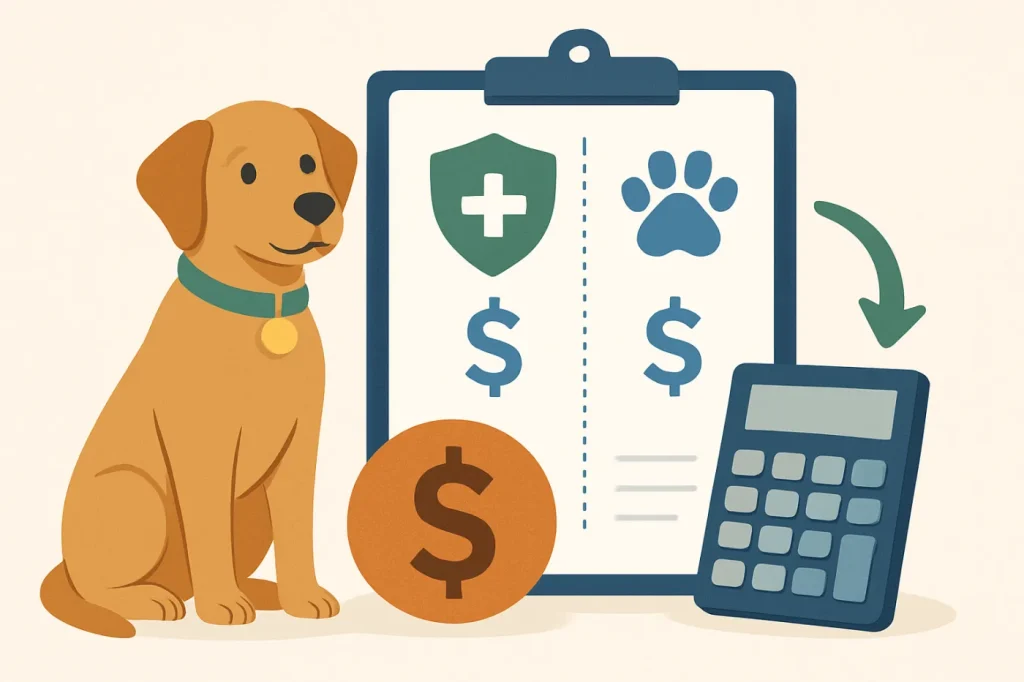
If you are trying to decide whether to buy pet insurance for your dog or just pay vet bills out of pocket, you are really asking one thing: will the annual cost of premiums be lower or higher than what you are likely to spend on vet care over time?
For many dog owners in the United States, a well-chosen accident-and-illness policy can be worth it over a dog’s lifetime, especially for breeds prone to expensive conditions or owners who would struggle to pay a sudden four-figure vet bill. For very healthy mixed-breed dogs, or owners with strong savings and high risk tolerance, self-funding (saving the money yourself) can be a reasonable alternative.
The rest of this guide walks through how pet insurance works in the US, realistic annual cost ranges, side-by-side comparisons with paying out of pocket, and a simple decision flow to help you choose.
How dog pet insurance typically works in the US
Most dog pet insurance policies in the United States follow the same basic structure:
- You pay a monthly premium for coverage.
- You choose a deductible (how much you pay out of pocket each year before reimbursement starts).
- You choose a reimbursement percentage (commonly 70%, 80%, or 90% of covered costs after the deductible).
- You may choose an annual coverage limit (for example, a few thousand dollars per year vs. a higher or unlimited cap).
- You pay the vet bill up front, then submit a claim to the insurer for reimbursement.
Key points to understand before comparing costs:
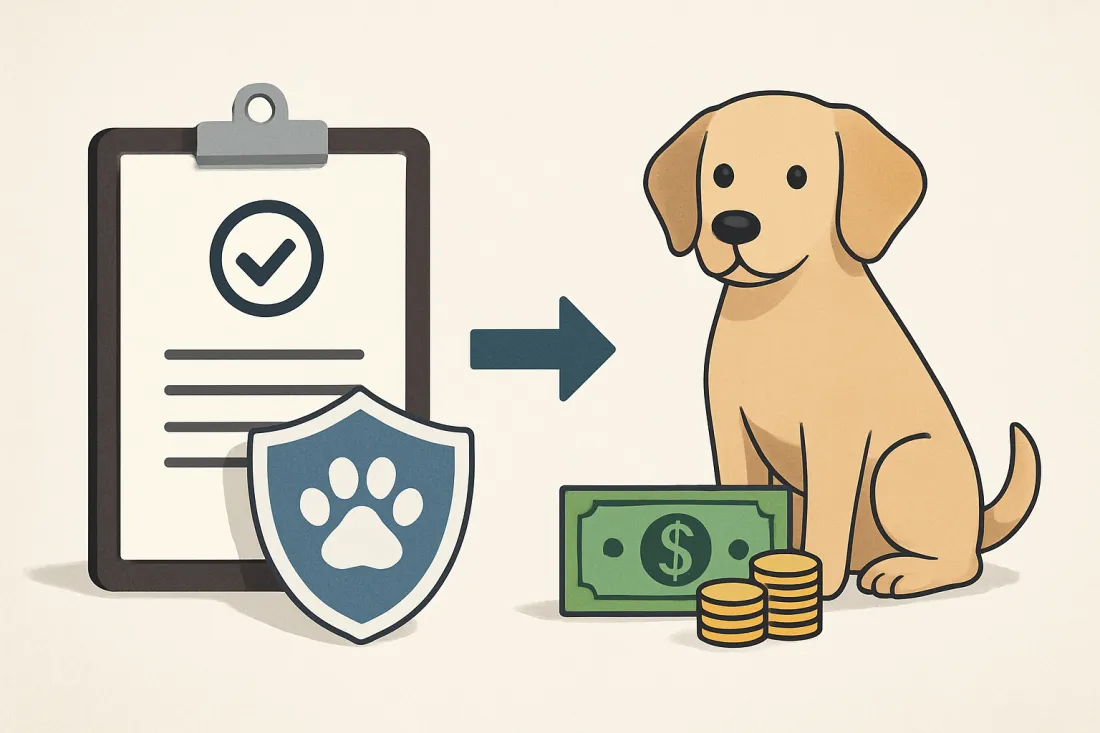
- Pre-existing conditions are usually not covered. Anything your dog had symptoms of or was diagnosed with before the policy starts is typically excluded.
- Waiting periods apply. There is usually a short waiting period after you buy the policy before accident and illness coverage begins.
- Routine care is often separate. Wellness items like vaccines, flea prevention, and dental cleanings are usually not covered by standard accident-and-illness policies; some companies sell optional wellness add-ons.
- Coverage details vary. Each insurer defines what is covered, what counts as hereditary or congenital, and what limits or exclusions apply.
Because of these moving parts, the value of pet insurance depends on how much you pay in premiums each year versus how likely your dog is to need expensive care that is actually covered.

Typical monthly and annual premiums for dogs
Evidence from recent US market snapshots suggests the following:
- The average annual cost for an accident-and-illness policy for dogs has been reported around $800–$900 per year in recent data, based on national averages.
- Another analysis of popular plans found an average around $45–$50 per month (roughly $540–$600 per year) for a dog policy with a moderate annual limit, a mid-range deductible, and about 80% reimbursement.
- Accident-only policies for dogs can be significantly cheaper, with some data points around $15–$20 per month (roughly $180–$240 per year), but they do not cover illnesses.
Your actual premium can be higher or lower depending on:
- Dog’s age (older dogs usually cost more to insure).
- Breed (breeds prone to joint issues, heart disease, or cancer often have higher premiums).
- Location (urban areas with higher vet costs often mean higher premiums).
- Coverage choices (higher annual limits, lower deductibles, and higher reimbursement percentages all increase premiums).
Because premiums vary, it is useful to think in ranges rather than a single number:
- Budget accident-only coverage: often in the low hundreds of dollars per year.
- Mid-range accident-and-illness: commonly in the mid-hundreds per year.
- Comprehensive, high-limit coverage for a high-risk breed: can reach the high hundreds or more per year.
To compare fairly with self-funding, you will want to estimate your likely annual premium for the next several years, not just the first year.
Common deductibles, co-pays, and how they affect your cost
Beyond the premium, your out-of-pocket cost depends heavily on the deductible and reimbursement percentage you choose.
- Deductible: Common annual deductibles for dog policies are in the low hundreds of dollars range (for example, $250, $500, or similar). A higher deductible usually means a lower premium, but you pay more before insurance kicks in each year.
- Reimbursement percentage: Many plans let you choose around 70%, 80%, or 90% reimbursement. Higher reimbursement means a higher premium but lower out-of-pocket cost on each covered bill.
- Co-pay: The portion you pay after the deductible. For example, with 80% reimbursement, your co-pay is 20% of covered costs.
- Annual limit: Some owners choose a moderate annual limit (for example, around $5,000) to keep premiums down, while others pay more for higher or unlimited annual limits.
How this plays out in practice:
- If you pick a low deductible and high reimbursement, your premium will be higher, but a big emergency bill will be mostly covered.
- If you pick a high deductible and lower reimbursement, your premium will be lower, but you will pay more out of pocket when something happens.
When comparing insurance vs. self-funding, you need to consider both the annual premium and the likely out-of-pocket share on claims.
Comparison table: insurance vs self-funding for common dog scenarios
The table below compares typical cost patterns for three simplified scenarios over a one-year period. These are not exact quotes, but they show how the math can work using realistic ranges from current market snapshots.
| Scenario | Out-of-pocket only (no insurance) | With mid-range accident & illness insurance | When insurance tends to be worth it |
|---|---|---|---|
| 1. Healthy year Young mixed-breed dog, only routine care (vaccines, preventives, wellness exam) |
You pay only routine vet costs. No big bills, so total may stay in the low hundreds of dollars range for the year. |
You pay annual premium (for example, mid-hundreds of dollars) plus routine care, which is usually not covered. Total cost is typically higher than self-funding in a healthy year. |
Insurance usually not worth it for that year financially, but you are paying for protection if next year is not so lucky. |
| 2. One emergency accident Dog swallows a toy and needs surgery; total vet bill could easily reach into the low-to-mid four figures. |
You pay the full surgery cost yourself, which may be several thousand dollars at once. This can strain savings or require credit. |
You pay the annual premium plus your deductible and co-pay. Depending on your plan, insurance might cover a large share of the surgery cost, potentially saving you a significant amount compared with paying everything yourself. |
Insurance often pays off in a year with a major accident, especially if the bill is in the several-thousand-dollar range. |
| 3. Chronic illness year Dog develops a long-term condition (for example, a hormonal or joint issue) needing repeated visits, tests, and medication. |
You pay every exam, test, and medication cost yourself, which can add up to four figures over the year and continue in future years. | After you meet your deductible, the plan may reimburse a large share of each covered visit and medication, up to your annual limit. Over multiple years, the premium plus your share may still be lower than paying everything out of pocket. |
Insurance is often most valuable for chronic conditions that generate ongoing costs year after year, as long as they are covered and not pre-existing. |
These examples show a key truth: insurance usually costs more in “good” years and less in “bad” years. The decision is about whether you want to trade some extra cost in healthy years for protection against rare but expensive events.
Scenario-based cost comparisons over several years
To really answer whether pet insurance is worth it for your dog, think in multi-year scenarios rather than a single year.
Scenario A: Healthy dog, few problems for 5 years
- You buy a mid-range accident-and-illness policy and pay a premium in the mid-hundreds of dollars per year.
- Over 5 years, you might pay a few thousand dollars in premiums.
- If your dog only needs routine care and one or two minor sick visits, you may never hit the deductible or only get small reimbursements.
Financial outcome: In this scenario, self-funding usually wins. You could have saved the premium money in a dedicated account and still had funds left over.
Scenario B: One major emergency plus otherwise healthy years
- Same mid-range policy, same premium level.
- Over 5 years, you again pay a few thousand dollars in premiums.
- In year 3, your dog has a serious emergency (for example, surgery or intensive care) with a bill in the several-thousand-dollar range.
- Insurance reimburses a large portion of that bill after your deductible and co-pay.
Financial outcome: Depending on the exact bill and coverage, the reimbursement in that one bad year can offset a large share of the premiums you paid in the other years. In some cases, you may come out ahead; in others, you may roughly break even but gain peace of mind and the ability to approve treatment without worrying about immediate cost.
Scenario C: Chronic illness starting early
- Your dog develops a covered chronic condition (for example, a long-term endocrine or joint issue) while insured.
- Each year, you have multiple vet visits, tests, and ongoing medication costs.
- Once you meet your deductible, the insurer reimburses a large share of these costs up to the annual limit.
Financial outcome: Over several years, the total reimbursements for chronic care can exceed the total premiums you pay, especially if your dog is a breed prone to such conditions and you enrolled before symptoms started.
Where the “break-even” point often lies
There is no single dollar amount where pet insurance always becomes “worth it,” but you can think in terms of risk thresholds:
- If you can comfortably pay a sudden bill in the low four figures from savings, you may be more willing to self-fund.
- If a bill in the mid four figures or higher would be very hard to cover, insurance can be a way to protect against that level of risk.
- If your dog’s breed and age make such bills more likely, insurance becomes more attractive.
Ultimately, the value depends on how your dog’s actual health history compares with the average assumptions built into premiums.
Pros and cons of pet insurance for dogs
Advantages of dog pet insurance
- Protects against large, unexpected bills. A single emergency surgery or hospitalization can cost several thousand dollars. Insurance can turn that into a more manageable combination of premium, deductible, and co-pay.
- Helps you say “yes” to recommended care. Knowing that a large portion of covered costs will be reimbursed can make it easier to approve diagnostics or treatments that might otherwise feel out of reach.
- Spreads risk over time. Instead of hoping nothing big happens, you pay a predictable premium each month or year.
- Especially helpful for high-risk breeds. Dogs prone to joint problems, heart disease, or certain cancers are more likely to generate high vet bills, making coverage more likely to pay off.
Drawbacks and limitations
- May cost more than you get back. If your dog stays relatively healthy, you may pay more in premiums than you receive in reimbursements.
- Pre-existing conditions are usually excluded. If your dog already has a diagnosed condition or documented symptoms before enrollment, related costs may never be covered.
- Not all treatments are covered. Some policies limit coverage for hereditary or congenital conditions, behavioral issues, or certain therapies. Always check the fine print.
- Premiums can rise over time. As your dog ages and vet costs increase, premiums may go up, changing the cost-benefit balance.
- Routine care often not included. You still need to budget for vaccines, preventives, and dental care unless you add a wellness plan.
Who benefits most from dog pet insurance vs self-funding
Pet insurance is not a one-size-fits-all product. It tends to be most useful for certain owners and dogs.
Owners who often benefit from insurance
- Owners without large emergency savings. If a sudden vet bill in the several-thousand-dollar range would force you into debt or hard choices, insurance can be a financial safety net.
- Owners of high-risk breeds. Breeds known for hip, elbow, heart, or cancer issues are more likely to generate high vet costs. Insuring them while young and healthy can be valuable.
- Owners who want maximum treatment options. If you know you would pursue advanced diagnostics or specialty care if needed, insurance can help make those options realistic.
- First-time dog owners unsure about future costs. Insurance can provide structure while you learn what typical vet bills look like and decide how much you want to self-fund.
Owners who may be better off self-funding
- Owners with strong savings and high risk tolerance. If you can comfortably pay large vet bills from savings and prefer not to pay ongoing premiums, self-funding can make sense.
- Owners of older dogs with existing conditions. If your dog already has multiple health issues, many of those may be excluded as pre-existing, reducing the value of a new policy.
- Owners of low-risk mixed-breed dogs with modest care expectations. If you are comfortable with basic care and less likely to pursue expensive interventions, you may prefer to save the premium money.
At what point is pet insurance not worth it?
Pet insurance tends to be less worth it when:
- Your dog is already older with several diagnosed conditions that will not be covered.
- Premiums have risen to the point where they approach what you would expect to spend on vet care anyway, even in a bad year.
- You have built a dedicated pet emergency fund that could handle realistic worst-case bills.
- You are comfortable with the possibility of declining very expensive treatments if they become necessary.
There is no universal cutoff age or dollar amount; it is about comparing your current premium and coverage to your dog’s realistic future health needs.
Decision flow: insure your dog or self-fund vet costs
Use this step-by-step flow as a practical decision tool.
- Check your emergency savings.
If your dog needed a vet procedure costing several thousand dollars tomorrow, could you pay it without debt or serious hardship?- No: Insurance is likely worth strong consideration. Continue to step 2.
- Yes: You may lean toward self-funding, but continue to step 2 to confirm.
- Assess your dog’s risk profile.
Consider age, breed, and current health.- High-risk breed or early signs of health issues (but not yet diagnosed): Insurance becomes more attractive if you can enroll before conditions are documented.
- Young, healthy mixed-breed with no issues: Risk is lower, but insuring early can protect against future surprises.
- Older dog with several diagnosed conditions: Many issues may be excluded; insurance value may be limited.
- Estimate a realistic premium range.
Get a few quotes using your dog’s real age, breed, and ZIP code. Look for:- Accident-and-illness plans with moderate annual limits.
- Deductibles in the low-to-mid hundreds of dollars range.
- Reimbursement around 70–80% as a starting point.
- Compare premium vs. likely vet costs.
Think about your dog’s expected care over the next 3–5 years:- If the annual premium is close to what you would expect to spend even in a healthy year, insurance may be less attractive.
- If the premium feels manageable and you worry about rare but large bills, insurance may be a good fit.
- Check coverage details for key conditions.
Review sample policies for:- Hereditary and congenital coverage.
- Orthopedic conditions (hips, knees, spine).
- Cancer and chronic diseases.
- Any breed-specific exclusions.
If the policy excludes the conditions you are most worried about, its value drops.
- Decide on your risk strategy.
Based on the steps above:- If you cannot handle large bills and your dog has moderate to high risk, lean toward insurance.
- If you can handle large bills and your dog has low risk, consider self-funding.
- If you are unsure, you might start with a higher-deductible plan (lower premium) while building a pet emergency fund.
For a deeper dive into how premiums compare with typical vet bills, you may also want to review data on annual vet costs for dogs and cats in the US.
Practical checklist: questions to ask dog pet insurers
Before you buy any policy, use this checklist to compare options and avoid surprises.
- What exactly is covered?
Ask for clear details on accidents, illnesses, hereditary and congenital conditions, cancer, and chronic diseases. - What counts as a pre-existing condition?
How far back do they look in medical records? How do they handle conditions that were suspected but not diagnosed? - Are there waiting periods?
How long before accident coverage starts? How long before illness coverage starts? Are there longer waits for orthopedic issues? - What are the annual and lifetime limits?
Is there a per-incident limit, an annual limit, or a lifetime cap? What happens if your dog hits the limit? - What deductible and reimbursement options are available?
How do premiums change if you choose a higher deductible or lower reimbursement percentage? - How are premiums likely to change as my dog ages?
Do they typically increase premiums each year? Are there age bands where costs jump? - Are there breed-specific exclusions or surcharges?
Does your dog’s breed affect coverage or price? Are certain conditions excluded for that breed? - How are chronic conditions handled?
Once a chronic condition is covered, will it remain covered year after year, or can it be reclassified? - What is the claims process like?
Do you submit claims via app, email, or mail? How long do reimbursements typically take? - Is routine wellness care available as an add-on?
If so, what does it cover, and how does the added cost compare with paying for wellness out of pocket?
Common mistakes when comparing dog pet insurance to self-funding
Avoid these frequent errors that can skew your decision.
- Comparing only the first-year premium.
Premiums often rise as your dog ages. Always think in multi-year terms. - Ignoring exclusions and waiting periods.
A cheap policy that excludes the conditions you are most worried about may not be a bargain. - Assuming wellness is covered.
Most standard policies do not cover vaccines, routine bloodwork, or dental cleanings. Budget for these separately. - Underestimating the cost of rare events.
It is easy to focus on typical annual costs and forget that a single emergency can cost as much as several years of premiums. - Over-insuring beyond your comfort level.
Choosing the highest possible limit and lowest deductible may feel safe but can make premiums hard to sustain long term. - Waiting too long to enroll.
Delaying until your dog shows early signs of problems can mean those issues are classified as pre-existing and never covered.
FAQ: dog pet insurance cost and coverage questions
At what point is pet insurance not worth it for a dog?
Pet insurance tends to be less worth it when your annual premium approaches what you would expect to spend on vet care even in a bad year, and when the conditions most likely to affect your dog are excluded as pre-existing or breed-specific. It is also less attractive if you have built a solid emergency fund that could comfortably cover realistic worst-case bills and you are comfortable accepting the financial risk yourself. The tipping point is different for each owner, but if premiums feel high and coverage feels narrow, it is time to re-evaluate.
How much should dog pet insurance cost per year?
Recent US market snapshots suggest that many accident-and-illness policies for dogs fall somewhere in the mid-hundreds of dollars per year, while accident-only plans can be in the low hundreds per year. Your dog’s age, breed, and location, plus your chosen deductible, reimbursement percentage, and annual limit, can push your premium lower or higher than these ranges. Instead of chasing a single “right” price, get multiple quotes and compare what you pay each year to what you are realistically protecting yourself against.
Does dog pet insurance cover hip dysplasia?
Coverage for hip dysplasia varies by insurer and policy. Some plans do cover hip dysplasia as long as your dog shows no signs of it before enrollment and you meet any waiting period requirements. Others may treat it as a hereditary or orthopedic condition with special rules, limits, or exclusions, especially for high-risk breeds. Always check the sample policy for hereditary and orthopedic coverage, and ask specifically how hip dysplasia is handled for your dog’s breed and age.
Does dog pet insurance cover hyperthyroidism or other hormonal issues?
Many accident-and-illness plans can cover hormonal conditions such as thyroid disorders if they are diagnosed after the policy is in force and are not considered pre-existing. However, coverage details differ, and some policies may have specific limits or exclusions for certain chronic diseases. Before enrolling, review the policy’s illness coverage section and ask how chronic endocrine conditions are handled over multiple years, including whether coverage continues as long as you keep the policy active.
How do I compare pet insurance with just saving money for my dog?
To compare fairly, estimate your likely annual premium for the next 3–5 years and add it up. Then ask yourself whether you could realistically save that same amount in a dedicated pet fund and still handle a large, unexpected bill if it happened early, before your savings had time to grow. Insurance is usually better at protecting you from early, high-cost events, while self-funding can work if you have time and discipline to build a substantial cushion and are comfortable with the risk of a big bill arriving before you are ready.
Conclusion: is pet insurance worth it for your dog?
Pet insurance for dogs in the United States is rarely a guaranteed money-saver, but it can be a powerful risk-management tool. For many owners, especially those with limited savings or higher-risk breeds, the annual cost of a solid accident-and-illness policy is a reasonable trade for protection against rare but financially painful vet bills.
If you prefer predictable monthly costs, want the option to pursue advanced treatment if needed, and do not have a large emergency fund, insurance is likely worth serious consideration. If you have strong savings, a low-risk dog, and are comfortable accepting the possibility of paying large bills yourself, self-funding can be a rational choice.
Take the time to gather a few quotes, walk through the decision flow, and use the checklist of questions with potential insurers. With a clear view of both annual costs and worst-case scenarios, you can choose the approach that best fits your dog, your budget, and your peace of mind.