
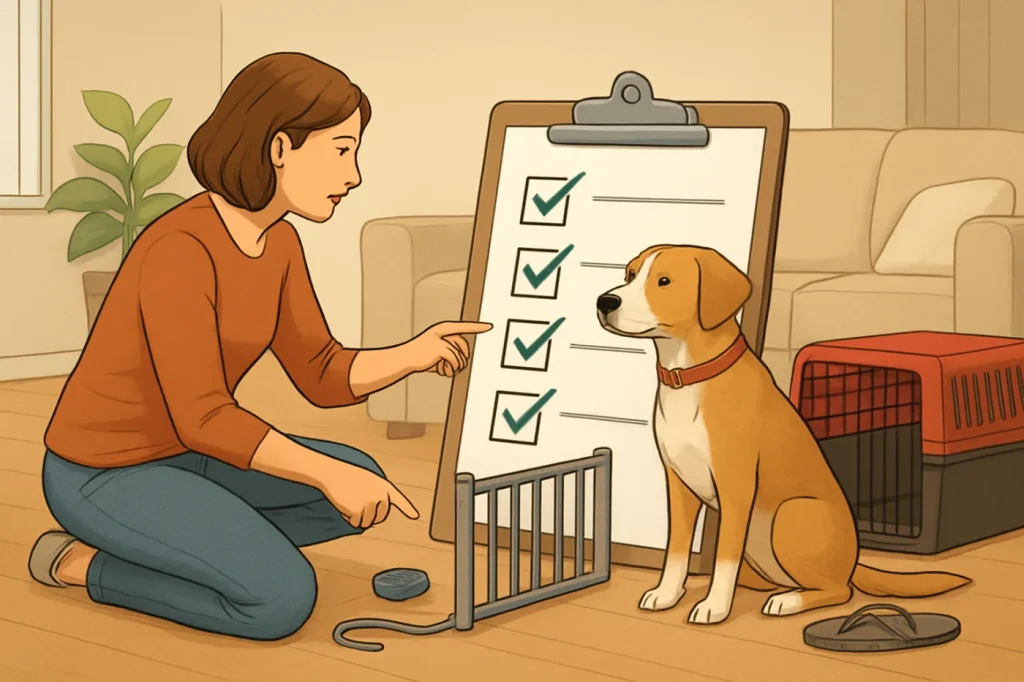
Start here: what pet proofing really means for new dog owners
Pet proofing means preparing your home, yard, and car so a curious dog can explore with a much lower risk of getting hurt, poisoned, lost, or overwhelmed. It is less about buying cute accessories and more about removing hazards, blocking access, and setting up safe routines before your dog arrives. For a new dog owner, a solid pet proofing checklist should help you:
- Spot common dangers you no longer notice (wires, trash, dropped pills, open doors).
- Decide which rooms are dog-safe, supervised-only, or off-limits.
- Choose the right containment tools (gates, crates, pens) for your space and your dog’s age and size.
- Prepare for car rides and travel so your dog is secure from day one.
- Know when to re-check your setup as your dog grows, jumps higher, or learns to open doors.
If you do only three things before your dog comes home:
- Block access to trash, medications, and cleaning chemicals.
- Set up a safe confinement area (crate or pen plus a gated room).
- Walk through every room at dog-eye level to remove chewable or swallowable items.
Key hazards new dog owners often underestimate
Many first-time owners focus on obvious dangers like sharp objects and forget the everyday items that quietly cause the most emergencies. Use this hazard list as a quick scan before the detailed room-by-room checklist.
Common toxic foods for dogs
These foods are widely recognized as unsafe for dogs and should be kept completely out of reach:
- Chocolate and cocoa products.
- Grapes and raisins.
- Onions, garlic, chives, and leeks.
- Xylitol-sweetened products (sugar-free gum, some peanut butters, candies).
- Alcohol and unbaked yeast dough.
- Caffeinated drinks (coffee, tea, energy drinks).
- Macadamia nuts and large amounts of other salty snacks.
Store these in closed cabinets or high shelves, not on counters or in open bags.
Household chemicals and medications
Many poisonings happen because a dog chews through a bottle or licks up a spill. Treat all of the following as off-limits:
- Human medications and vitamins (prescription and over-the-counter).
- Pet medications not currently being given.
- Cleaning sprays, bleach, disinfectant wipes, toilet bowl cleaners.
- Automotive fluids (antifreeze, windshield washer fluid, motor oil).
- Pest control products (rat poison, ant baits, insect sprays).
- Fertilizers, weed killers, and ice-melt products.
Keep them in high cabinets or locked storage, and wipe up any spills immediately.
Potentially toxic or risky plants
Many common house and yard plants can upset a dog’s stomach or cause more serious issues if chewed. Risky examples include:
- Lilies and similar flowering plants.
- Dieffenbachia (dumb cane), philodendron, pothos.
- Aloe vera plants.
- Some decorative bulbs (tulip, daffodil) and certain shrubs.
Because plant safety varies by species, double-check each plant you own with a reliable pet-toxicity resource or your veterinarian and move risky ones out of reach or out of the home.
Choking and obstruction hazards
Dogs explore with their mouths. Anything that fits fully into the mouth or can be shredded into pieces is suspect:
- Coins, batteries, paper clips, rubber bands.
- Small toys, building blocks, doll accessories.
- Socks, underwear, hair ties, scrunchies.
- String, ribbon, yarn, floss, and fishing line.
- Plastic bags and food wrappers.
If you would worry about a toddler swallowing it, assume your dog might as well.
Room-by-room pet proofing checklist for new dog owners
Use this section as your practical walkthrough. Move room by room and check items off as you go. If you live in a studio or open-plan space, think in “zones” instead of rooms.
Kitchen safety checklist
The kitchen is one of the highest-risk rooms because of food, heat, and sharp objects.
- Secure trash and recycling: Use a lidded, heavy, or latched trash can. Place it in a cabinet or pantry if your dog is strong or persistent.
- Block access to food prep areas: Keep dogs out of the kitchen while cooking, especially when using hot oil, boiling water, or sharp knives.
- Store food safely: Put bread, snacks, and leftovers in cabinets or the fridge, not on counters. Use closed containers for dog food to help prevent raids.
- Protect stove and oven areas: Turn pot handles inward, avoid leaving hot pans at the edge, and never leave a dog unsupervised near a gas stove.
- Secure cleaning products: Move dish soap, dishwasher pods, and sprays from under-sink cabinets to higher shelves or use childproof latches.
- Watch electrical cords: Tuck away cords from appliances and consider cord covers if your dog likes to chew.
- Prevent floor grazing: Pick up dropped food immediately, especially bones, onions, grapes, and chocolate.
Living room and common areas checklist
Living rooms often look harmless but hide many chewable and tippable items.
- Manage electrical and device cords: Bundle and route cords behind furniture or inside cord covers. Unplug chargers when not in use.
- Stabilize furniture: Secure wobbly shelves, TV stands, and floor lamps so they cannot be knocked over during zoomies.
- Protect remote controls and gadgets: Store remotes, game controllers, and earbuds out of reach to help avoid battery and plastic ingestion.
- Remove small decor items: Move candles, potpourri, glass figurines, and small frames to higher shelves.
- Check rugs and carpets: Remove or secure loose rugs that could cause slipping for both you and your dog.
- Designate a dog-safe zone: Set up a bed or mat where your dog can relax. Keep this area free of trailing cords and clutter.
- Use gates where needed: If stairs or certain rooms are off-limits, install sturdy baby or pet gates.
Bedroom safety checklist
Bedrooms often contain tempting soft items and medications.
- Put medications away: Keep all pill bottles, supplements, and ointments in closed drawers or cabinets, not on nightstands.
- Secure laundry: Use a hamper with a lid. Socks, underwear, and pantyhose are common obstruction risks.
- Manage cords and chargers: Keep phone and laptop chargers off the floor or inside cord organizers.
- Check under the bed: Remove forgotten items like dropped pills, coins, or food wrappers.
- Decide on bed access: If you do not want your dog on the bed, be consistent from day one and provide a comfortable dog bed nearby.
- Store cosmetics and lotions: Many can upset a dog’s stomach. Keep them in drawers or closed containers.
Bathroom and laundry room checklist
These rooms combine water, chemicals, and small objects.
- Close toilet lids: Help prevent drinking from treated toilet water and reduce drowning risk for very small dogs.
- Store cleaning products high: Move toilet cleaners, bleach, and sprays to high shelves or locked cabinets.
- Secure trash: Use a lidded bin for tissues, razors, floss, and sanitary products.
- Put away personal care items: Keep razors, soap, dental floss, cotton swabs, and hair ties in drawers.
- Manage laundry products: Store detergent pods, fabric softeners, and stain removers out of reach.
- Check washer and dryer: Always look inside before closing doors, especially with small dogs who like to hide in warm spaces.
Yard, balcony, and entryway checklist
Outdoor and transition areas are key for preventing escapes and injuries.
- Inspect fencing: Walk the entire fence line. Look for gaps, loose boards, or places a dog could dig under or squeeze through.
- Secure gates: Ensure gates latch firmly. Add a lock if children or delivery people use the gate.
- Check balcony safety: Make sure railings are close enough that a dog cannot slip through or get stuck. Supervise dogs on balconies.
- Remove yard hazards: Pick up sharp tools, nails, and construction debris. Store garden tools and chemicals in a shed or locked box.
- Review outdoor plants: Identify and relocate or fence off any plants that may be toxic to dogs.
- Secure pools and ponds: Use fencing or covers and supervise dogs near water until you know they can safely exit.
- Organize the entryway: Keep leashes, harnesses, and poop bags in one place. Remove shoes with loose laces or insoles that might be chewed.
For a deeper room-by-room walkthrough focused on hazards like cords, furniture, and cleaning products, you can also review guidance similar to pet proofing a home for a new puppy and adapt it to your dog’s age and size.
Safe containment options: gates, crates, and pens compared
Containment tools are not punishments; they are safety equipment. The right choice depends on your dog’s age, size, and how much freedom your home can safely offer.
| Containment option | Best for | Main benefits | Limitations and risks | When to choose it |
|---|---|---|---|---|
| Crate | Puppies, new rescues, dogs who like dens | Helps with house training, limits night-time and unsupervised mischief, offers a safe retreat | Must be introduced gradually; wrong size or overuse can cause stress or accidents | Use when you cannot supervise closely for short periods, for safe sleep, and for travel if the crate is designed for vehicle use |
| Exercise pen (x-pen) | Puppies and small to medium dogs | More space than a crate, room for bed, water, and toys; flexible shape; portable | Some dogs may climb or push it over; not ideal for strong or large jumpers | Use for daytime confinement in a living area where the dog can see family activity |
| Baby/pet gates | Most dogs, especially in multi-room homes | Blocks access to stairs, kitchens, or kids’ rooms; allows airflow and visibility | Some dogs learn to jump or push through; pressure-mounted gates can be unstable if not installed correctly | Use to create dog-safe zones and keep high-risk rooms off-limits |
| Closed doors | Calm or older dogs, or as a backup barrier | No extra cost; clear boundary; easy to use | Doors can be left open accidentally; some dogs scratch or chew at doors | Use for bedrooms, offices, or storage rooms that do not need dog access |
Decision tips:
- Age and training: Young puppies usually need a crate plus a small gated area. Adult dogs with good manners may only need gates or closed doors.
- Size and strength: Large or strong dogs may require hardware-mounted gates and heavier pens.
- Time alone: If your dog will be alone for several hours, choose a setup that allows room to move, stretch, and access water.
- Behavior: If your dog panics in a crate, work with a trainer to build positive associations and use a larger confinement area in the meantime.
If you want a broader view of daily routines that support safe confinement, a resource like a daily dog care checklist for busy owners can help you plan potty breaks, exercise, and downtime around your containment choices.
Car and travel safety basics for your new dog
Your car is another environment that needs pet proofing. An unsecured dog can distract the driver, be thrown forward in a sudden stop, or bolt out of an open door.
Choosing safe restraint in the car
Common options include:
- Travel crate designed for vehicles: Placed in the back seat or cargo area and secured with straps or seat anchors. Helps prevent roaming and offers a defined safe space.
- Dog seat belt harness: A harness designed to attach to the car’s seat belt system. Use only with a sturdy harness, never a collar.
- Booster seat for small dogs: Elevates the dog while attaching to a harness and seat belt, which can reduce motion discomfort and distraction.
When choosing, check current product safety information, look for designs intended for car use, and follow the manufacturer’s installation instructions carefully.
Car interior pet proofing checklist
- Block front-seat access: Use a barrier or keep your dog restrained in the back seat to avoid driver distraction.
- Secure windows: Use window locks to prevent accidental opening. Avoid letting your dog ride with their head fully out of the window to reduce risk of debris injuries.
- Manage temperature: Pre-cool or pre-heat the car before loading your dog. Never leave a dog alone in a parked car, even with windows cracked, because temperatures can change quickly.
- Clear loose items: Remove sharp tools, groceries, and small objects from the floor and seats where your dog rides.
- Pack a travel kit: Include water, a bowl, poop bags, a towel, and a spare leash for every trip longer than a few minutes.
Move-in day safety checklist you can reuse or print
Use this condensed checklist on the day your dog comes home. Copy it into a note or print it and check items off as you go.
Home setup before the dog arrives
- Choose your dog’s primary safe area (room plus crate or pen) and set it up with bed, water, and safe chew toys.
- Install gates to block stairs, kids’ rooms, or the kitchen if needed.
- Walk through each room at dog-eye level and remove small or chewable items from floors and low shelves.
- Put all medications, vitamins, and supplements into closed cabinets.
- Move cleaning products, detergents, and sprays to high shelves or locked storage.
- Secure trash cans with lids or place them inside cabinets.
- Check that electrical cords are bundled and not dangling where your dog can chew.
- Relocate or fence off any plants you have not confirmed as dog-safe.
- Inspect your yard fence and gates for gaps, loose boards, or digging spots.
- Prepare a dog-safe spot for food and water bowls away from heavy foot traffic.
Arrival day routine
- Bring your dog straight to the designated potty area before entering the home.
- Introduce the safe area first (crate or pen) so your dog has a calm place to retreat.
- Supervise closely whenever the dog explores a new room; keep a leash on indoors if needed for gentle guidance.
- Keep kids’ toys, shoes, and backpacks off the floor for the first few days.
- Store the welcome gifts (treats, toys) in one closed container out of reach.
- Confirm that your dog’s ID tag and microchip information (if applicable) are up to date before any outdoor time.
First-night checks
- Decide where your dog will sleep and stick to that plan to avoid confusion.
- Remove water a little while before bedtime if house training, following your vet’s guidance.
- Do a quick sweep of the floor in the kitchen, living room, and bedroom for dropped food or small objects.
- Close bedroom and bathroom doors you do not want your dog entering overnight.
- Confirm your crate or pen is secure and free of loose tags, collars, or hanging items that could snag.
When and how to re-check pet proofing as your dog grows
Pet proofing is not a one-time task. Dogs change quickly, especially in the first year.
Key times to reassess safety
- Every few weeks with a puppy: As they grow taller and stronger, they can suddenly reach counters, jump gates, or open doors.
- After any new skill appears: If your dog learns to jump on the couch, open a lever door handle, or push a gate, update your barriers.
- When your schedule changes: New work hours or travel can mean longer alone time, requiring sturdier containment or more enrichment.
- When you move or remodel: New layouts, stairs, or balconies need a fresh safety walkthrough.
- As your dog ages: Senior dogs may need ramps, non-slip rugs, and blocked stairs to help prevent falls.
Simple re-check routine
Once a month, do a short safety scan:
- Walk the main living areas and pick up any new clutter, cords, or small objects.
- Test gates, latches, and crate doors for looseness or damage.
- Check trash cans and laundry baskets for easy access points.
- Review your yard fence and gate after storms or yard work.
- Look at your dog’s toys and chews; discard anything broken or small enough to swallow.
If you want a broader view of long-term responsibilities beyond safety, a resource like a responsible pet ownership checklist for new dog owners can help you connect pet proofing with training, health care, and daily routines.
Typical pet proofing mistakes new dog owners should avoid
Understanding what often goes wrong can save you stress and vet visits.
- Assuming “my dog will not do that”: Even calm dogs can surprise you when bored, anxious, or left alone longer than usual. Plan for curiosity, not perfection.
- Relying on verbal commands instead of barriers: New dogs do not yet understand your rules. Use gates, crates, and closed doors while you build training.
- Leaving “just for a minute” hazards out: Open pill bottles, chocolate on the coffee table, or a bag of trash on the floor can cause problems in seconds.
- Choosing toys based only on cuteness: Some toys are too small, too flimsy, or have easily removable parts. Pick size-appropriate, sturdy toys and supervise with new ones.
- Overlooking guests’ belongings: Visitors may bring medications, gum, or snacks in bags left on the floor. Provide a safe place for guests to store their things.
- Not updating as the dog grows: A gate that worked for an 8-week-old puppy may be useless for a 6-month-old jumper.
- Using unsafe DIY fixes: Temporary barriers made from unstable furniture or loose boards can fall and injure your dog.
Decision criteria: how safe is “safe enough” for your home?
You cannot remove every possible risk, but you can reduce the most likely and serious ones. Use these criteria to decide where to focus your effort.
- Severity of harm: Prioritize anything that could cause poisoning, choking, falls, or escape over minor annoyances like chewed shoes.
- Likelihood of access: Focus on items your dog can easily reach or has already shown interest in (trash, laundry, kids’ toys).
- Time unsupervised: The longer your dog is alone, the more secure your setup should be. If you work long hours, invest more in sturdy containment and enrichment.
- Dog’s personality: High-energy, anxious, or very food-motivated dogs usually need stricter pet proofing than calm, low-drive dogs.
- Household complexity: Homes with children, roommates, or frequent guests need clearer rules and more consistent storage habits.
If you are unsure whether a setup is safe enough, ask yourself: “Would I leave a curious toddler alone here for an hour?” If the answer is no, add barriers, storage, or supervision for your dog as well.
What to do next after using this pet proofing checklist
Once you have walked through your home and car with this checklist:
- Fix the high-risk items first: Secure trash, medications, chemicals, and escape routes.
- Set up your dog’s safe area: Choose a crate, pen, or gated room where your dog can rest and stay when you cannot supervise.
- Plan your first week: Decide who is responsible for walks, feeding, and supervision at different times of day.
- Schedule a vet visit: Arrange a checkup soon after adoption to review vaccines, parasite prevention, and any specific safety concerns for your dog’s breed, age, or health.
- Review and adjust: After a week with your dog, walk through the checklist again and update anything your dog has shown particular interest in.
A thoughtfully pet-proofed home does not have to look like a fortress. With a few smart barriers, better storage habits, and regular re-checks, you can give your new dog freedom to explore while helping keep them safe and healthy for years to come.
FAQ about pet proofing checklist for new dog owners
What should new dog owners understand about pet proofing?
Pet proofing is about preventing common, predictable accidents before they happen. It means removing or blocking access to hazards like toxic foods, medications, cleaning products, electrical cords, and escape routes, and setting up safe confinement areas so your dog is protected when you cannot watch them closely.
Is pet proofing different for puppies and adult dogs?
Yes. Puppies usually chew more, have less bladder control, and cannot jump as high at first, so they need closer supervision, smaller safe areas, and more chew-proofing. Adult dogs may jump higher, open doors, or reach counters, so you may need taller gates, sturdier latches, and more attention to counter-surfing risks. In both cases, adjust your setup as your dog’s abilities change.
How often should I re-check my home for pet safety?
With a growing puppy, re-check every few weeks. With an adult dog, a quick monthly scan of main areas is usually helpful, plus any time you change your routine, move furniture, remodel, or notice new behaviors like jumping on counters or chewing new items.
What are the biggest pet proofing mistakes to avoid?
Common mistakes include leaving trash and medications accessible, assuming a dog will obey rules before training is complete, relying on flimsy barriers, and forgetting about guests’ bags or kids’ toys on the floor. Another frequent issue is failing to update gates and storage as the dog grows or becomes more confident.
Do I really need a crate or can I skip it?
You do not have to use a crate, but many owners find it very helpful for house training, travel, and giving a dog a secure resting place. If you choose not to crate, you will need another secure area such as a gated room or sturdy exercise pen and may need to work harder to prevent unsupervised chewing or accidents.
What should I do next after reading a pet proofing checklist?
Pick one room—often the kitchen—and complete the checklist there today. Then set up your dog’s safe area with a crate or pen and gates. Over the next few days, work through the remaining rooms and your car, and schedule a vet visit to discuss any breed-specific or health-related safety concerns for your new dog. For a broader starter kit of tasks, you can also look at a first time dog owner checklist USA to pair safety with training and daily care.
Practical control table
Use 4 control steps: 1 inspect, 2 clean, 3 test, 4 check again.
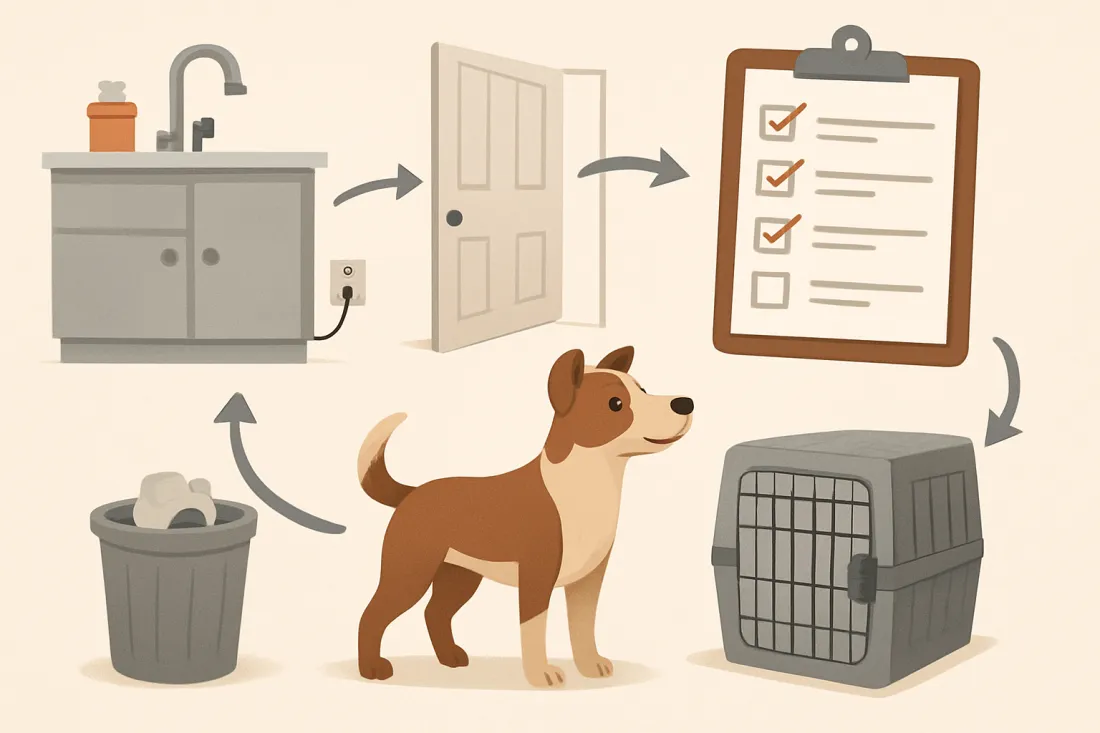
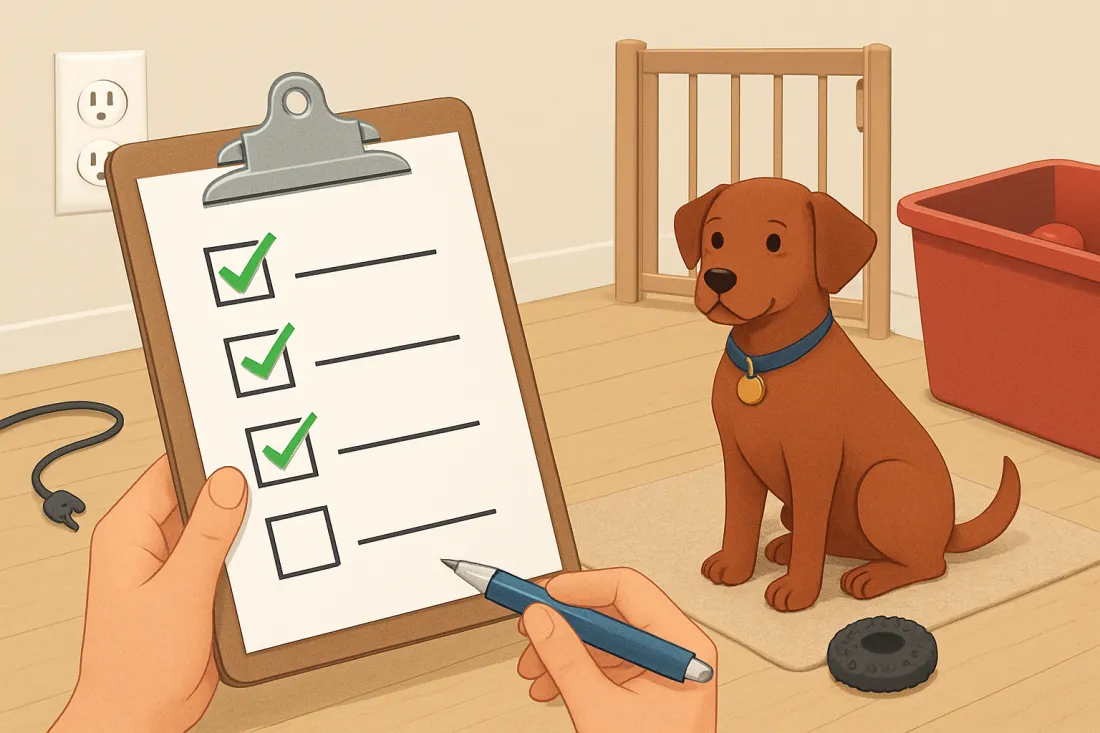
| Step | What to check | Safe action |
|---|---|---|
| 1 | Main risk or visible symptom | Stop use and inspect accessible parts without disassembly. |
| 2 | Dirt, filter, seal, or ventilation issue | Clean only accessible parts and avoid forcing components. |
| 3 | Problem returns after basic care | Test normal operation and do not ignore a repeated warning sign. |
| 4 | Condition after the next use | Record the result and get professional help if the issue returns. |