Responsible dog socialization in one practical checklist
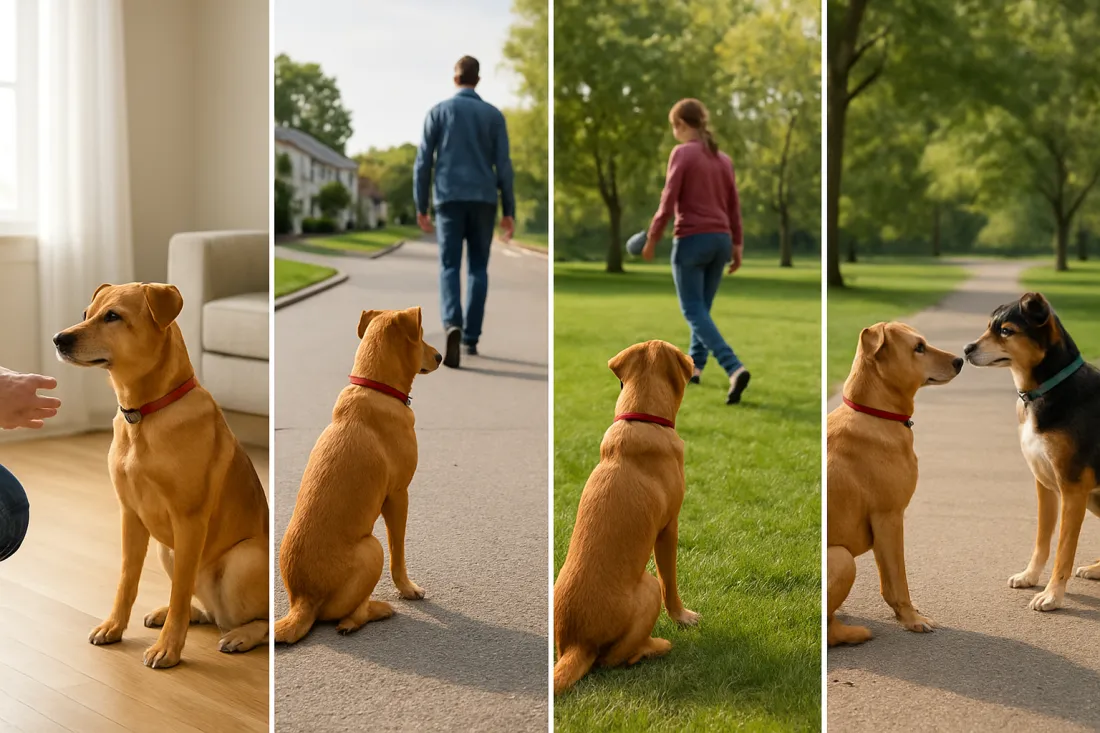
Responsible dog socialization means calmly and gradually teaching your dog to feel safe and confident around everyday people, animals, places, sounds, and handling. The goal is not to make your dog “love everything,” but to help them cope without fear or aggression. Use this checklist to:
- Plan what to expose your puppy or adult dog to.
- Introduce new experiences in a safe, humane way.
- Avoid common US-specific trouble spots like dog parks, kids, and delivery drivers.
- Decide when it is time to call a certified trainer or behavior professional.
You do not have to finish everything in one week. Think of socialization as a series of small, positive experiences over months and years.
What socialization is (and what it is not)
Socialization is the process of helping a dog build positive or neutral associations with the world around them. Good socialization looks like:
- Short, controlled exposures to new things.
- Plenty of distance so the dog can stay relaxed.
- Pairing new experiences with treats, play, or praise.
- Letting the dog choose to approach or move away.
Socialization is not:
- Forcing your dog to “face their fears” until they shut down.
- Letting strangers or kids rush in and grab your dog.
- Throwing a shy dog into a crowded dog park and hoping they “get used to it.”
- Ignoring signs of stress because “they’ll be fine.”
Well-socialized dogs are usually easier to live with, safer around people and other animals, and better able to cope with change (moving house, new baby, travel, etc.). Socialization is a core part of responsible pet ownership, along with health care, safety, and basic training. If you are just starting out as an owner, it can help to pair this guide with a broader responsible pet ownership checklist for new dog owners.
Age windows: puppies, adolescents, and adult dogs
There is a sensitive socialization window in early puppyhood when dogs are especially open to new experiences. Many trainers consider the most critical period to be in the first few months of life, and that openness tends to fade as puppies approach several months of age. That does not mean older dogs cannot learn; it just means you may need to go slower and manage expectations.
Puppies under 4 months
- Focus on gentle exposure to many different people, surfaces, sounds, and handling.
- Keep sessions very short (a few minutes) and end while the puppy is still happy.
- Protect their health: follow your vet’s vaccination advice about where it is safe to go.
- Prioritize quality over quantity. One calm, positive meeting with a friendly child is better than 10 chaotic ones.
Puppies 4–12 months (adolescents)
- Expect fear periods: your puppy may suddenly act scared of things they used to ignore.
- Go back to basics: increase distance, use more treats, and avoid forcing interactions.
- Work on impulse control games (sit, wait, hand target) around mild distractions.
- Introduce more real-life situations: outdoor seating at a café, car rides, vet lobby visits.
Adult, shy, or rescue dogs
- Think “slow and steady.” You are doing remedial socialization, not racing a deadline.
- Start with very easy versions of triggers (e.g., people far away, quiet times of day).
- Use high-value rewards and keep sessions extremely short.
- Accept that some dogs will never enjoy certain situations (crowded dog parks, busy festivals). Your job is to keep them safe and comfortable, not to force them to fit every scenario.
If your dog’s fear or reactivity feels intense, or you are not sure how to proceed safely, skip ahead to the section on getting professional help.
How to introduce new experiences safely
Use this simple formula for every new experience: See it → Treat → Retreat.
- Start at a safe distance. Your dog should notice the new thing but still be able to eat treats and respond to you.
- Pair with something good. As your dog looks at the new thing, calmly feed tiny treats or play a gentle game.
- Watch body language. If your dog tenses, freezes, or refuses food, you are too close or it is too intense.
- Retreat before it goes wrong. Move away while calmly feeding treats. Ending early keeps the experience positive.
- Repeat in short sessions. Over days or weeks, gradually decrease distance or increase intensity only if your dog stays relaxed.
Key stress signals to watch for
Early, subtle signs:
- Turning head or body away, avoiding eye contact.
- Lip licking, yawning when not tired.
- Sudden sniffing of the ground or scratching (displacement behaviors).
- Tail held low or tucked, ears pinned back.
Clear signs your dog is not coping:
- Refusing food they normally love.
- Freezing or trying to hide behind you.
- Lunging, barking, or growling.
- Trying to escape, pulling hard to get away.
If you see these stronger signs, increase distance immediately and make the next session easier.
Responsible dog socialization checklist by category
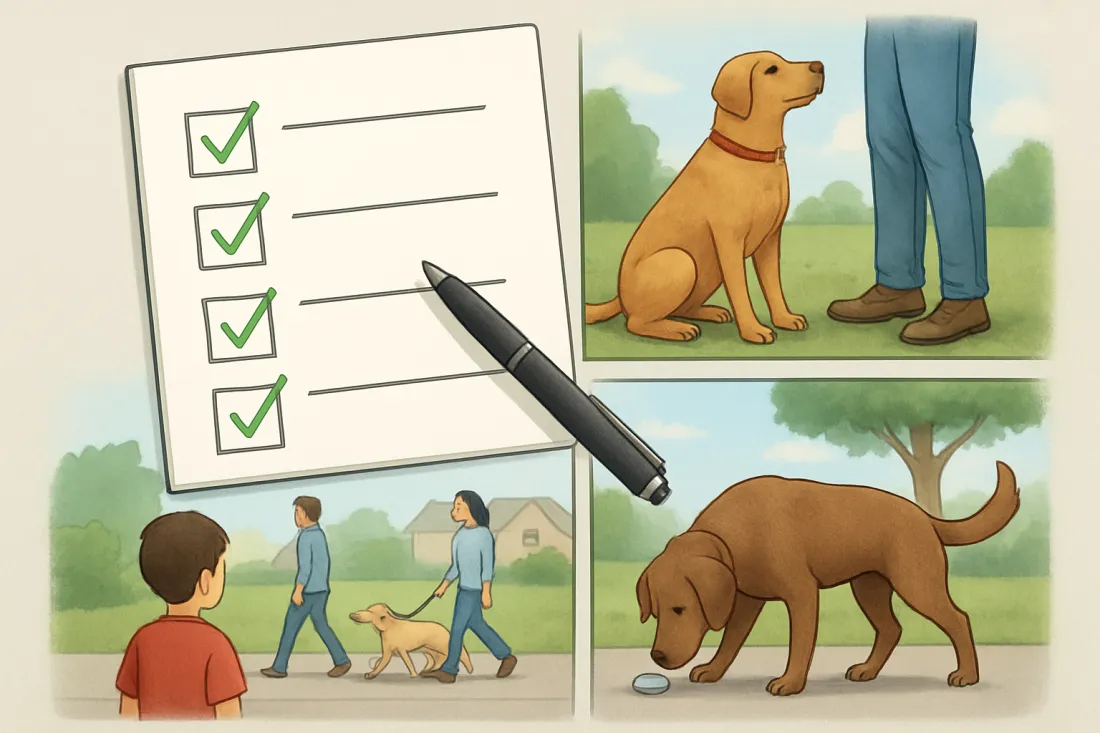
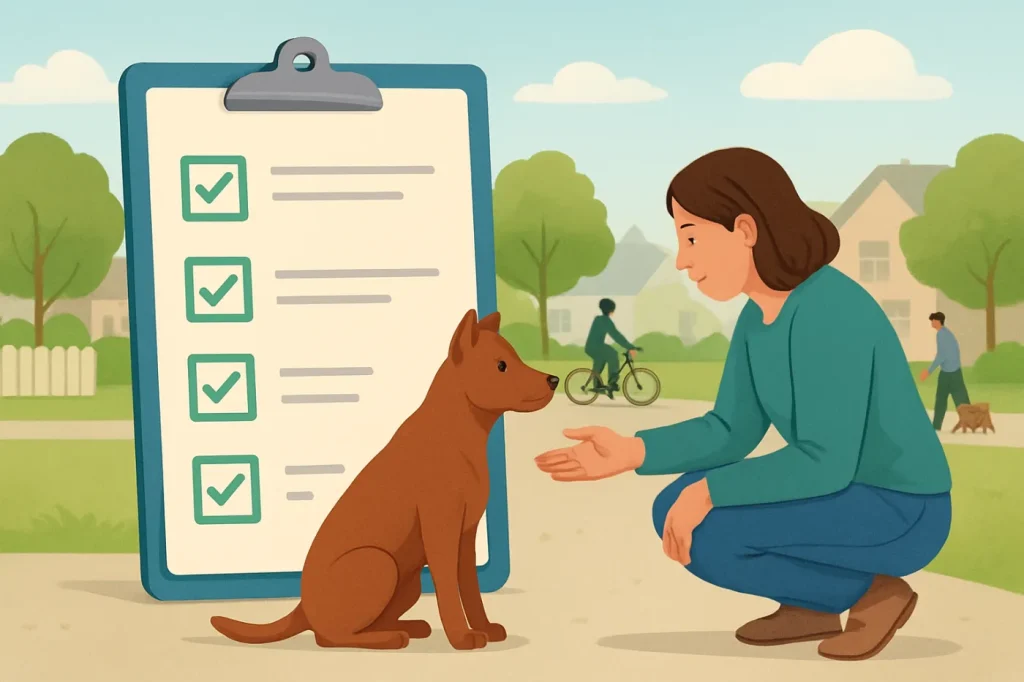
Use this filled-in checklist as a guide. You do not need to tick every item, but aim to give your dog calm, positive exposure to a wide variety of examples in each category.
Comparison table: socialization goals vs. common mistakes
| Category | Responsible socialization goal | Common mistake to avoid | Safer alternative |
|---|---|---|---|
| People | Dog can calmly see different types of people without fear or overexcitement. | Letting crowds of strangers rush in to pet the dog. | Ask one person at a time to stand sideways, let the dog choose to approach, then reward. |
| Dogs | Dog can pass other dogs on leash and interact politely with a few known, friendly dogs. | Throwing a young or shy dog into a busy dog park. | Arrange 1–1 playdates with a stable adult dog in a fenced yard or quiet park. |
| Places | Dog can walk calmly in typical US environments (sidewalks, parks, lobbies). | Dragging a scared dog into a noisy store or elevator. | Start with quiet times, short visits, and lots of treats at a distance. |
| Sounds | Dog recovers quickly from normal household and street noises. | Playing loud recordings at full volume or ignoring panic. | Start at low volume, pair with treats, and stop before the dog is overwhelmed. |
| Handling | Dog accepts gentle handling needed for home care, vet, and grooming. | Forcing nail trims or restraint while the dog struggles. | Train cooperative care: touch → treat, one small step at a time. |
People checklist
Expose your dog to people at a distance first, then closer if they stay relaxed.
- Adults of different ages and body types (with and without hats, sunglasses, backpacks).
- Children: toddlers (at a distance), school-age kids walking, running, playing ball.
- People using mobility aids: wheelchairs, walkers, canes, crutches, strollers.
- Delivery drivers (packages, uniforms, hand trucks) at your front door or lobby.
- Maintenance workers: landscapers with leaf blowers, snow shoveling, ladder use.
- People doing unusual movements: jogging, skateboarding, biking, yoga in the park.
Rule: Your dog never has to greet a person to have a successful socialization experience. Calmly watching from a distance and eating treats is a win.
Dogs and other animals checklist
- Calm adult dog your dog can follow on a walk.
- One friendly, well-matched playmate in a fenced area.
- Dogs behind fences or on balconies (practice walking by without reacting).
- Dogs passing on the sidewalk (cross the street if needed to keep your dog calm).
- Cats or small animals at a distance (behind a barrier or in a carrier).
- Wildlife at a distance: squirrels, birds, ducks in a park.
Places and surfaces checklist
Focus on typical US environments your dog is likely to encounter.
- Apartment hallways and stairwells; elevators and parking garages.
- Single-family neighborhood sidewalks, cul-de-sacs, and driveways.
- City streets with moderate traffic, crosswalks, and curb ramps.
- Different parks: quiet neighborhood park, busier city park, trails.
- Pet-friendly store or garden center (if your dog is ready and allowed).
- Vet clinic lobby: short visits just to weigh your dog and get treats.
- Grooming salon lobby or self-wash station (short, treat-filled visits).
- Car rides: short trips with nothing scary at the end.
- Surfaces: grass, gravel, sand, metal grates, wet pavement, ramps.
Sounds checklist
- Household: vacuum, blender, hair dryer, washing machine, doorbell.
- Street: garbage truck, sirens at a distance, honking, motorcycles.
- Building: elevator dings, intercom buzzers, hallway doors closing.
- Kids playing: shouting, bouncing balls, skateboards on pavement.
- Weather: light rain, wind, distant thunder (keep it mild and safe).
You can use sound recordings at low volume, but always watch your dog’s body language and stop if they look worried.
Handling and care checklist
- Touching collar and harness, clipping and unclipping leash.
- Gently lifting ears, looking in mouth, touching paws and nails.
- Brief, gentle restraint: one arm around chest, then treat and release.
- Brushing different body areas for 1–2 strokes, then treat.
- Wiping paws with a towel after walks.
- Standing on a mat or scale (useful for vet visits).
Always pair handling with treats and stop before your dog struggles.
US-specific socialization scenarios and how to handle them
Apartment living and elevators
- Hallways: Practice loose-leash walking when the hallway is quiet. Reward your dog for ignoring doors and smells.
- Elevators: Start by standing near the elevator without riding it. Feed treats as doors open and close. When your dog is relaxed, ride one floor at a quiet time, feeding treats the whole way.
- Neighbors: Ask a calm neighbor to help. Have them ignore your dog at first, then toss treats from a distance.
Suburban neighborhoods and delivery drivers
- Practice “sit and watch” as delivery trucks pass. Reward calm behavior.
- Teach a simple cue like “go to mat” or “place” when the doorbell rings, then reward on the mat.
- If your dog barks at the door, start with recordings of doorbells at low volume and pair with treats before practicing the real thing.
Dog parks and off-leash areas
Dog parks can be risky for puppies, shy dogs, and dogs with unknown histories.
- Watch from outside the fence first. If your dog looks tense or overwhelmed, skip going in.
- Choose off-peak times and smaller areas for first visits.
- Keep the first session under 10–15 minutes and leave while things are still going well.
- If you see bullying, ganging up, or rough play that does not pause, leave calmly.
Many dogs do better with a few known playmates than with large, unpredictable groups.
Kids and family gatherings
- Teach kids to “be a tree”: stand still, hands at their sides, let the dog come to them.
- Use baby gates or pens during parties so your dog can retreat and relax.
- Supervise every interaction between dogs and young children, even with “good” dogs.
- Give your dog a safe zone (crate, bed, or room) where kids are not allowed to follow.
Vet clinics and groomers
- Do “happy visits” where you stop by, get treats from staff, and leave without procedures.
- Practice standing on a mat or low platform at home to mimic exam tables.
- Teach a chin-rest behavior (dog rests chin in your hand or on a towel) to use during exams.
- For grooming, start with very short sessions: show brush → treat, touch with brush → treat, one stroke → treat.
Positive reinforcement basics and simple training games
Positive reinforcement means rewarding the behaviors you like so your dog offers them more often. Rewards can be food, toys, sniffing, or access to something your dog wants. Core principles:
- Reward quickly (within a second or two) so your dog connects the behavior with the reward.
- Keep treats tiny and soft so your dog can eat them fast.
- Train in easy environments first, then add distractions gradually.
Simple games that support socialization
- Look at that: When your dog notices a person, dog, or sound, say “yes” and give a treat. This teaches them that noticing things calmly makes good stuff happen.
- Hand target: Hold out your hand; when your dog touches it with their nose, treat. Use this to guide them past triggers or into position without pulling.
- Find it: Toss a treat on the ground and say “find it.” Sniffing helps dogs relax and can redirect them from mild triggers.
- Settle on mat: Reward your dog for lying on a mat. Gradually practice this near mild distractions like the TV, then near the front door.
These games give your dog clear, easy jobs to do when the world feels busy.
What to avoid: flooding, unsafe intros, and dog park mistakes
Flooding (overwhelming your dog)
Flooding is exposing your dog to something they fear at full intensity with no way to escape, hoping they “get over it.” This can make fear worse and damage trust. Examples to avoid:
- Dragging a dog that fears strangers through a crowded festival.
- Forcing a noise-sensitive dog to stay outside during fireworks.
- Holding a struggling dog for nail trims or grooming.
Instead, break the situation into tiny steps and only move forward when your dog is relaxed.
Unsafe introductions to people and dogs
- Do not let strangers lean over, hug, or grab your dog without consent.
- Do not allow off-leash dogs to rush your leashed dog if you can prevent it.
- Skip introductions entirely if your dog is already tense or growling.
- Teach polite greetings: four paws on the floor earns attention; jumping makes attention go away.
Dog park pitfalls
- Bringing toys or high-value chews that may trigger guarding.
- Letting your dog stay when play is one-sided or too rough.
- Using the dog park for exercise when your dog is actually fearful or reactive.
If you are unsure whether the dog park is right for your dog, choose leashed walks, sniffing games, and small playdates instead.
Adapting the checklist for shy, rescue, or reactive dogs
Some dogs need a customized plan. Use these decision criteria to adapt the checklist.
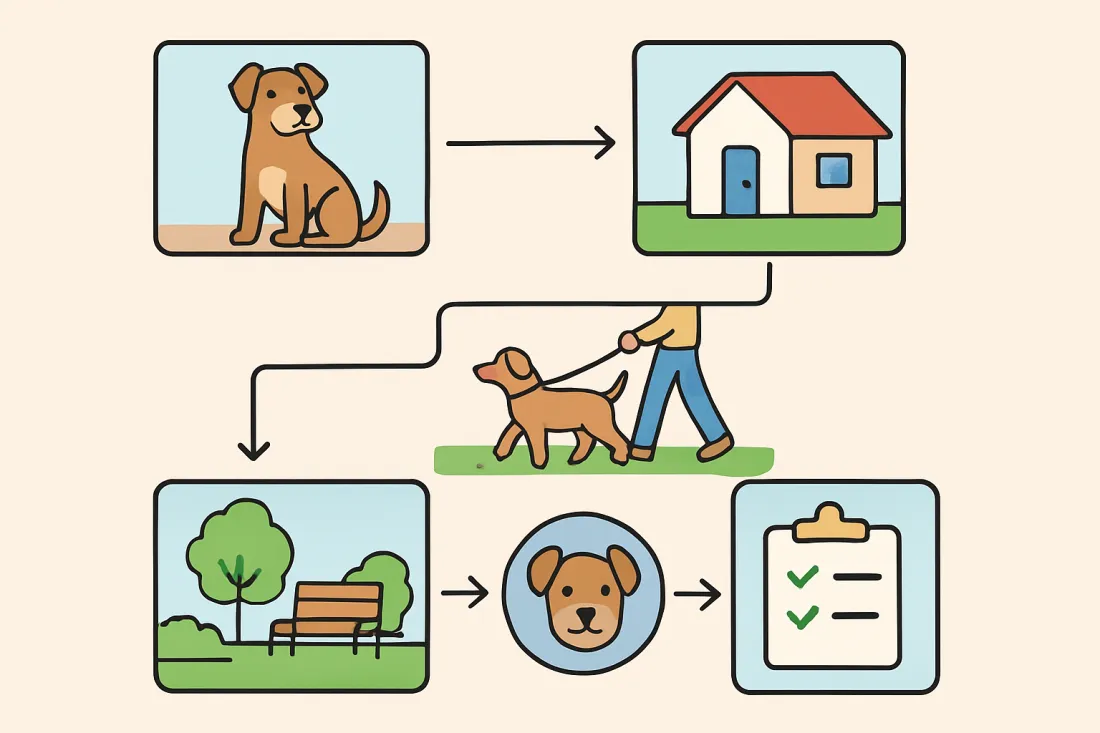
Step-by-step algorithm for cautious dogs
- Identify triggers. Make a short list of what reliably worries your dog (men in hats, other dogs, doorbell, etc.).
- Rate intensity. On a 1–5 scale, note how upset your dog gets. Focus first on 1–2 level triggers.
- Control distance. Start far enough away that your dog notices the trigger but can still eat treats and respond to you.
- Pair with rewards. Every time your dog looks at the trigger, calmly feed a treat or play a simple game.
- End early. Keep sessions under a few minutes and stop before your dog is stressed.
- Adjust difficulty. If your dog stays relaxed for several sessions, move a little closer or increase duration. If they struggle, go back a step.
- Log progress. Note what worked and what did not so you can adjust or share with a trainer.
Extra rules for reactive dogs (barking, lunging)
- Avoid known triggers while you build skills; management is not “giving up,” it is safety.
- Use equipment that gives you control without pain (well-fitted harness, sturdy leash).
- Increase distance as soon as you see early stress signs, before barking starts.
- Practice pattern games (hand target, “find it”) at home so they are automatic outside.
For many reactive or very fearful dogs, working with a certified professional is the safest path.
When to seek help from a certified trainer or behaviorist in the US
Consider professional help if you notice any of these:
- Growling, snapping, or biting toward people or other animals.
- Intense reactivity: lunging, barking, or screaming on leash.
- Severe separation distress (destruction, self-injury, constant vocalizing when alone).
- Shut-down behavior: your dog freezes, will not move, or refuses food in normal situations.
- Progress is not happening despite careful, gradual work.
What to look for in a US-based professional:
- Uses humane, reward-based methods and avoids tools that cause pain or fear.
- Has education or certification in behavior and training from reputable organizations.
- Is willing to work with your vet if medication or medical checks are needed.
- Provides written plans and encourages you to ask questions.
Your primary vet can often recommend local trainers or veterinary behavior professionals. For many families, combining a structured socialization plan with basic training support (for example, following basic dog training rules for responsible owners) gives the best long-term results.
Practical socialization checklist you can follow this week
Use this as a simple, actionable plan. Adjust the pace to your dog.
- Day 1–2: Short walks on quiet streets; reward for checking in with you. Introduce one new household sound at low volume (vacuum in another room) with treats.
- Day 3–4: Watch people from a distance (park bench, apartment window, or parking lot). Reward every calm look. Practice gentle handling (paws, ears) for a few seconds at a time.
- Day 5–6: Visit a new place: different park, pet-friendly store lobby, or vet clinic parking lot. Keep it short and treat-heavy. Practice hand target and “find it” around mild distractions.
- Day 7: Review. Note what your dog found easy and what was hard. Make next week’s plan: repeat easy wins, and break hard things into smaller steps.
Repeat this weekly rhythm, swapping in new people, places, and sounds while keeping sessions short and positive.
FAQ: responsible dog socialization
What should I understand about a responsible dog socialization checklist?
A responsible checklist is not a race to tick boxes. It is a guide to help you plan calm, positive exposures across people, animals, places, sounds, and handling. The priority is your dog’s emotional state: if they stay relaxed and recover quickly, you are on the right track.
What mistakes should I avoid when socializing my dog?
Avoid flooding (overwhelming your dog), forcing greetings, relying on busy dog parks for social skills, and ignoring early stress signals. Do not assume every dog wants to be petted or play; your dog is allowed to say “no.”
How do I know if my dog is well socialized?
No dog is perfect, but a well-socialized dog can usually walk through typical environments (sidewalks, parks, lobbies) without panicking, can see people and dogs at a distance without major reactions, and can recover from normal surprises like a dropped object or a door slamming.
What should I do next after reading this checklist?
Pick 3–5 items from the people, places, sounds, and handling sections that fit your life this week. Plan short, specific sessions, write down how your dog responds, and adjust. If you are also preparing for life changes like moving or adopting your first dog, you may want to review a broader first time dog owner checklist USA to cover health, safety, and training alongside socialization.
Can I socialize an adult rescue dog?
Yes, but think of it as gentle, remedial socialization. Go slowly, keep distance from triggers, and prioritize safety and trust. Many adult dogs make excellent progress with a thoughtful plan and, when needed, guidance from a reward-based professional.