
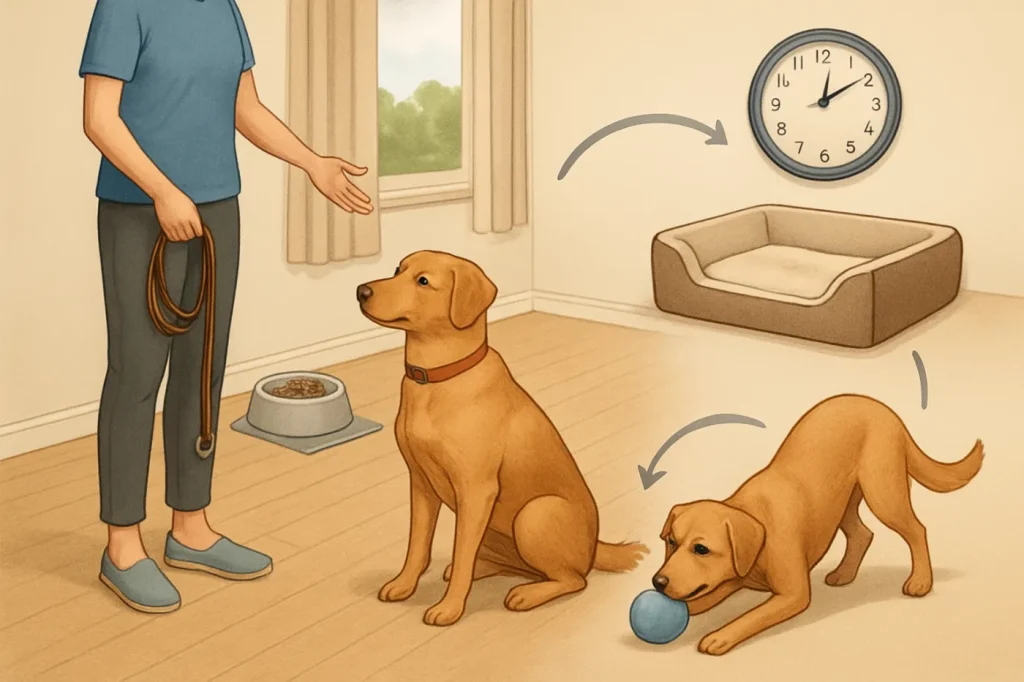
A well-behaved dog is almost always the result of a steady, dog-friendly routine. When your dog knows when to eat, walk, rest, and play, it is much easier to get calm behavior, good manners, and fewer problems at home.
This guide walks through how to build a realistic daily routine that fits your schedule, keeps your dog exercised and mentally engaged, and quietly trains good manners all day long.
How Daily Routine Shapes Your Dog’s Behavior
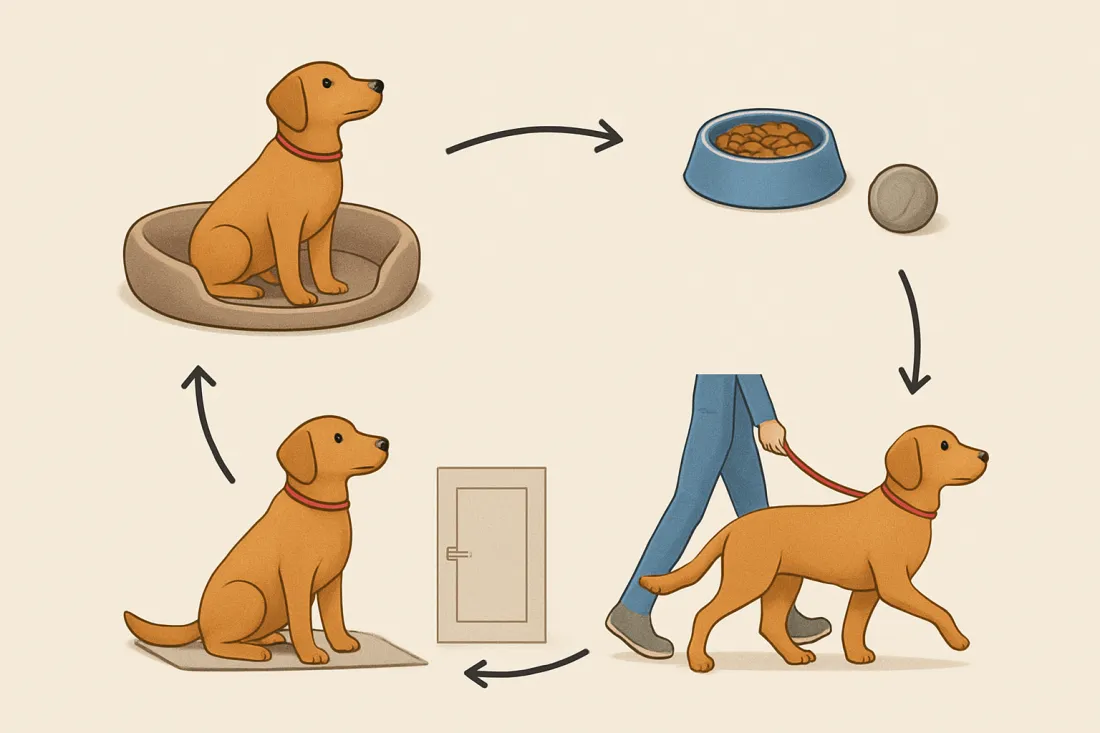
Dogs thrive on predictability. A simple, repeatable routine does three big things for behavior:
- Reduces stress and anxiety – When your dog can predict when food, walks, and bathroom breaks happen, there is less pacing, whining, or barking for attention.
- Prevents many problem behaviors – Regular outlets for energy and mental work make chewing, digging, and wild zoomies less likely.
- Turns training into habit – Repeating the same rules at the same times (before meals, at the door, on walks) helps manners become automatic.
Think of routine as a daily rhythm: the same types of activities in a similar order every day, even if the exact clock times move a little.
Key Factors That Shape the Right Routine for Your Dog
There is no single “perfect” schedule. Use these factors to customize any sample routine so it works for your dog and your life.
Age and life stage
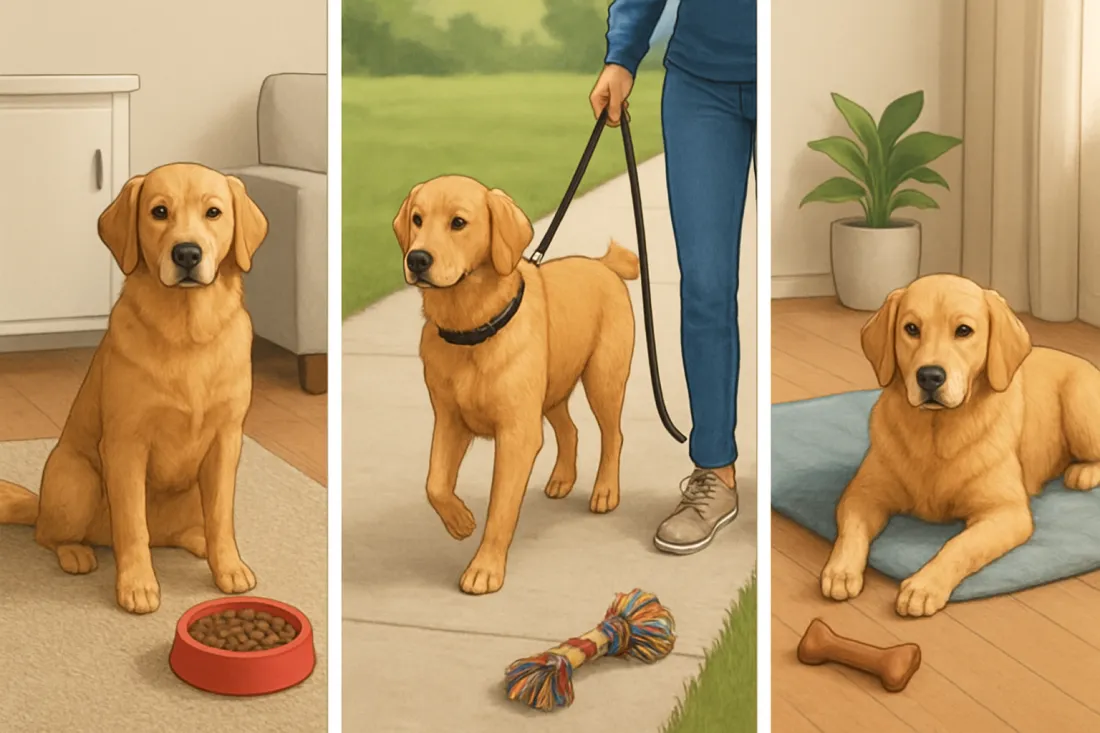
- Puppies – Need frequent bathroom breaks, short bursts of activity, and lots of sleep. Many puppies need to go out after waking, after eating, after play, and at least every few hours during the day.
- Adult dogs – Often do well with two meals, several potty breaks, and at least one solid exercise session plus shorter walks and play. They still need mental enrichment and clear rules.
- Senior dogs – May need more bathroom breaks again, gentler exercise, and extra rest. Keep the pattern, but shorten or soften activities and watch for stiffness or fatigue.
Breed type and energy level
- High-energy types – Many herding, sporting, and working dogs need more vigorous exercise and mental work to stay calm indoors.
- Moderate-energy dogs – Often do well with daily walks, some play, and regular training games.
- Lower-energy or toy dogs – May be satisfied with shorter walks and indoor play, but still need enrichment and consistent rules.
Health and special needs
- Joint issues, breathing problems, or recent surgery may limit running, jumping, or long walks.
- Sensitive stomachs or food allergies may affect feeding times and treat choices.
- Fearful or reactive dogs may need quieter walking routes and shorter, more frequent sessions.
Before making big changes to exercise or diet, check your dog’s current health plan with your veterinarian.
Your work schedule and lifestyle
Your routine must be realistic for you. A dog can do well with a 9–5 owner, a work-from-home parent, or a shift worker, as long as the pattern is consistent and core needs are met. If you are away for long stretches, you may need help from a dog walker, neighbor, or daycare. If your days are especially packed, a focused daily dog care routine for busy owners can give more targeted ideas.
Exercise Guidelines by Size and Energy Level
Every dog is an individual, but size and energy level give a useful starting point. Then adjust based on how your dog behaves after activity.
| Dog type | Typical daily exercise pattern | U.S.-friendly examples | Signs you may need to adjust |
|---|---|---|---|
| Small, low–moderate energy | Several short walks plus indoor play spread through the day. | Two neighborhood walks, indoor fetch down a hallway, gentle tug, short training games. | Too little: barking at windows, zoomies at night. Too much: reluctance to walk, limping, hiding. |
| Medium, moderate energy | At least one longer walk plus one or two shorter walks or play sessions. | Morning walk around the block, evening walk at a local park, backyard fetch, basic obedience practice. | Too little: chewing household items, digging, pestering family. Too much: slow to get up, sore after active days. |
| Medium–large, high energy | Regular, more vigorous activity most days, plus mental work. | Jogging with you (if your vet approves), hiking on local trails, structured games like fetch or frisbee, scent games. | Too little: constant demand for attention, destructive chewing, difficulty settling. Too much: overexcitement that is hard to calm, stiffness the next day. |
| Senior or mobility-limited | Short, gentle walks and light play, more frequent but shorter outings. | Slow strolls on flat sidewalks, sniffing in the yard, gentle indoor games. | Too little: weight gain, restlessness. Too much: panting heavily, lagging behind, soreness. |
Use this as a starting point, then fine-tune based on your dog’s body language and recovery after exercise.
Weekday Routine Examples for Different Lifestyles
These sample schedules show how to weave exercise, training, and enrichment into a typical U.S. weekday. Adjust times freely, but try to keep the order of events similar from day to day.
Work-from-home daily rhythm
For an adult, moderate-energy dog with an owner at home most of the day:
- 7:00 a.m. – Wake up, quick potty break.
- 7:15 a.m. – Breakfast in a puzzle feeder or slow bowl. Ask for a sit and wait before setting the bowl down.
- 7:30–8:00 a.m. – Walk around the neighborhood. Practice loose-leash walking and a few sits at corners.
- 8:30–11:30 a.m. – Owner works. Dog rests in a bed or crate near your workspace. Offer a safe chew or stuffed toy to encourage calm.
- Mid-morning (5–10 minutes) – Short potty break and quick training game (for example, “find it” with treats or practicing recall in the yard).
- 12:00 p.m. – Potty break and brief walk. Light play if weather allows.
- 12:30 p.m. – Quiet time while you eat. Dog settles on a mat; reward calm behavior with occasional treats.
- 1:00–4:30 p.m. – Work block. Dog naps. Provide a long-lasting chew or lick mat once during this period.
- 3:00 p.m. – Quick potty break and stretch.
- 5:00 p.m. – Longer walk, park visit, or backyard fetch session.
- 6:00 p.m. – Dinner with simple obedience before the bowl.
- 7:00–8:00 p.m. – Family time: light play, grooming, or cuddling. Short training session (5–10 minutes).
- 9:00 p.m. – Calm enrichment (snuffle mat, gentle chew) in the living room while you relax.
- 10:00 p.m. – Final potty break, then bed in a consistent sleeping spot.
Classic 9–5 workday schedule
For an owner away from home roughly eight to nine hours. If your dog is alone for long stretches, consider a midday dog walker, trusted neighbor, or daycare.
- 6:00 a.m. – Wake up, potty break.
- 6:10–6:40 a.m. – Morning walk or active play (fetch, tug, short jog if appropriate). Include a few training cues.
- 6:45 a.m. – Breakfast. Use a food puzzle or scatter some kibble in a snuffle mat.
- 7:15 a.m. – Calm time while you get ready. Dog relaxes in a safe area with a chew.
- 7:45–8:00 a.m. – Final potty break before you leave. Keep departures low-key to avoid building anxiety.
- Workday – Dog rests at home. Ideally, arrange a midday potty break and short walk or play visit.
- 5:30 p.m. – Arrive home. Take your dog outside before greeting excitedly. Short walk and bathroom break.
- 6:00 p.m. – Dinner with basic manners (sit, wait, release cue).
- 6:30–7:00 p.m. – Quality time: walk, park visit, or backyard games. Mix in training (recall, loose-leash, leave-it).
- 7:30–9:00 p.m. – Indoor relaxation with a chew, grooming, or light play.
- 9:30 p.m. – Final potty break and bedtime.
Evening or night shift routine
Shift work can still support a stable routine if you keep the same pattern on workdays and a similar one on days off.
- Late morning – Wake up, potty break, breakfast.
- Late morning–midday – Main exercise session (walk, hike, or dog park if your dog is social and comfortable).
- Early afternoon – Rest time while you prepare for work. Offer a chew or puzzle toy.
- Before leaving – Potty break and a brief training game.
- During shift – Dog rests at home. Try to arrange a check-in or walk if you are gone many hours.
- After shift – Quiet potty break and light snack if needed. Keep things calm to support sleep.
- Sleep period – Dog sleeps in the same room or a familiar space, with blackout curtains or white noise if needed.
On days off, keep feeding times, walk order, and sleep location as similar as possible, even if you shift them slightly.
Comparison Table: Which Routine Fits Your Life and Your Dog
This table compares how three common lifestyle patterns cover your dog’s core needs and where each pattern can go wrong.
| Routine type | Morning focus | Daytime plan | Evening focus | Key risk to watch |
|---|---|---|---|---|
| Work-from-home | Short potty break, breakfast, walk with training. | Alternating work blocks with brief potty and play breaks. | Longer walk or play, family time, calm enrichment. | Dog becoming overstimulated by constant access to you; build in independent rest time. |
| Classic 9–5 | Potty, exercise, breakfast before leaving. | Dog rests at home; ideally a midday potty and short walk. | Potty, dinner, exercise, and training after work. | Dog being left too long without a break; arrange help if needed. |
| Evening or night shift | Later wake-up, breakfast, main exercise session. | Rest while you prepare and commute; enrichment before leaving. | Quiet potty and snack after shift, then sleep period. | Routine changing too much between workdays and days off; keep pattern similar. |
Using Everyday Moments to Train Good Manners
Formal training sessions are helpful, but the strongest manners come from tiny, repeated moments built into your routine.
Mealtimes as training opportunities
- Ask for a sit before you pick up the bowl.
- Have your dog wait while you place the bowl down.
- Use a release word (for example, “OK”) to let them eat.
- Practice gentle handling by briefly touching collar or harness and rewarding calm behavior.
Walks that teach leash manners
- Ask for a sit at the door before going out.
- Reward your dog for walking with a loose leash by giving treats or praise when the leash is slack.
- Use stop-and-go: if your dog pulls, stop. Move again when the leash relaxes.
- Use real-life rewards: sitting at a curb earns the chance to cross the street.
Door greetings and visitors
- Teach a “place” cue: send your dog to a mat or bed when the doorbell rings.
- Reward calm behavior (four paws on the floor) with attention. If your dog jumps, calmly step back and ignore until they settle.
- Ask visitors to greet only when your dog is sitting or standing calmly.
Household rules made simple
- Before going outside, ask for a sit and eye contact.
- Before getting on the couch (if allowed), ask for a simple cue like “sit” or “down.”
- During TV time, reward your dog for lying quietly on a mat with occasional treats.
Mental Enrichment Ideas to Keep Your Dog Balanced
Mental work can tire a dog as much as physical exercise. Adding even 10–15 minutes of enrichment can noticeably reduce problem behaviors.
Food-based enrichment
- Puzzle feeders – Toys that make your dog work for kibble.
- Stuffed toys – Fill a safe, hollow toy with part of your dog’s meal and a smear of dog-safe spread. Freeze for a longer challenge.
- Snuffle mats – Hide kibble in a fabric mat so your dog can sniff and search.
- Scatter feeding – Toss kibble in the grass in your yard and let your dog hunt for it.
Sniff walks and exploration
- Take a sniff walk where the goal is exploring smells, not distance or speed.
- Let your dog choose the route for part of the walk when safe.
- Visit different safe environments: quiet neighborhoods, parks, or dog-friendly stores that allow pets.
DIY brain games at home
- Find it – Hide treats around a room while your dog waits, then release them to search.
- Cup game – Place a treat under one of three cups, shuffle, and let your dog sniff and choose.
- Cardboard box fun – Put crumpled paper and a few treats in a box for your dog to dig through.
- Trick training – Teach simple tricks like spin, paw, or bow in short, fun sessions.
Alone-Time Management and Preventing Separation Problems
Calm alone time is a learned skill. Building it into your routine protects against separation issues and helps your dog cope with real-life schedules.
Step-by-step alone-time plan
- Set up a safe space – Use a crate, gated room, or pen with a bed, water, and safe chew toys.
- Pair the space with good things – Feed some meals there, give special chews only in that area, and let your dog come and go while you are home.
- Practice short absences in the home – Step out of the room for 1–2 minutes while your dog enjoys a chew. Return calmly.
- Gradually increase time – Add a few minutes at a time, mixing short and slightly longer absences so it is not always harder.
- Move to brief real departures – Step outside the front door for a few minutes, then come back in without a big greeting.
- Build toward your real schedule – Slowly extend the time away, watching for signs of stress such as heavy panting, pacing, or vocalizing.
- Keep departures and arrivals low-key – Avoid big emotional goodbyes or greetings that make coming and going a huge event.
- Provide enrichment when you leave – Offer a stuffed toy or puzzle feeder as you go so your dog associates your departure with something positive.
Warning signs your dog is not coping well alone
- Excessive barking or howling when left.
- Destructive chewing focused on doors or windows.
- House soiling only when alone.
- Heavy panting, drooling, or pacing before you leave.
If you see these signs, shorten absences, add more gradual practice, and consider working with a qualified trainer or behavior professional.
Evening Wind-Down and Sleep Setup
A calm evening routine helps your dog switch from “go” to “rest,” which supports better behavior the next day.
Elements of a good wind-down
- Predictable last walk – A short, calm potty walk at roughly the same time every night.
- Quiet activities – Gentle petting, light grooming, or a soft chew instead of rough play right before bed.
- Consistent sleep spot – A crate, dog bed, or your bedroom floor, depending on your household rules, but the same place each night.
- Comfortable environment – Appropriate temperature, low light, and minimal noise. Some dogs relax with a fan or white noise.
Helping puppies and new dogs settle at night
- Offer a recently worn T-shirt with your scent near the bed (if your dog does not chew fabric).
- Use a nightlight or soft background sound if complete darkness or silence seems stressful.
- Stick to a steady bedtime and wake time for the first few weeks to build the habit.
Daily Routine Checklist and Simple Planner
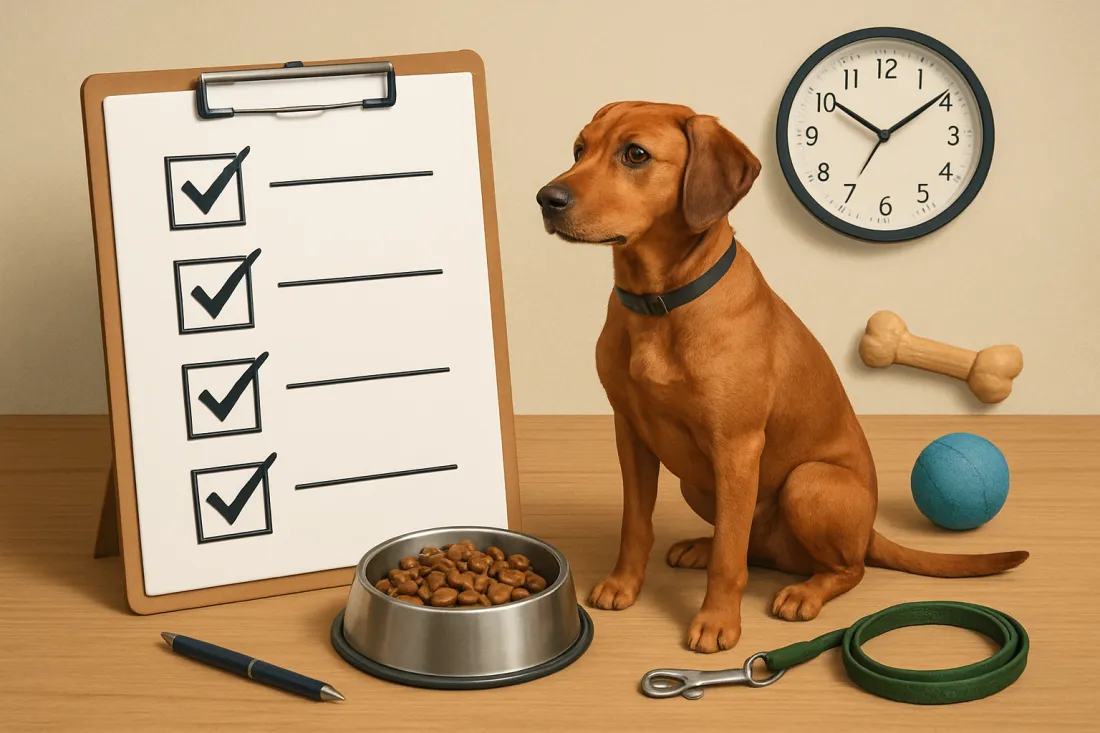
Use this checklist as a planner you can copy into a notebook, whiteboard, or digital note. Checking items off each day helps turn good intentions into habits.
Daily routine checklist
- Morning
- First potty break within about 15–30 minutes of waking.
- Breakfast with sit and wait before the bowl.
- At least one walk or play session (length adjusted to your dog).
- Short training game (about 2–5 minutes).
- Midday
- Potty break (or more for puppies and seniors).
- Mental enrichment (puzzle feeder, snuffle mat, or DIY game).
- Calm rest period in a crate or bed.
- Afternoon/Evening
- Potty break after work or school.
- Main exercise session (walk, park, or active play).
- Dinner with built-in manners.
- Short training session (loose-leash, recall, or tricks).
- Night
- Calm family time with a chew or gentle play.
- Final potty break.
- Bedtime in a consistent sleep spot.
Turning this into a simple routine planner and habit tracker
You can create a basic planner and tracker with materials you already have:
- Draw a grid on paper, a whiteboard, or in a notes app.
- Down the left side, list the main parts of the day: Morning, Midday, Afternoon/Evening, Night.
- Under each part, write the key actions from the checklist that matter most for your dog.
- Across the top, write the days of the week.
- Each day, add a checkmark where you complete an item. Aim for steady patterns rather than perfection.
This simple layout works for the whole family and makes it easier to stay consistent, even on busy days.
Common Routine Mistakes That Undermine Good Behavior
Even caring owners can accidentally create patterns that encourage unwanted behavior. Watch for these issues and adjust early.
- Weekend-only exercise – Long hikes only on weekends with very little activity during the week can leave a dog restless and frustrated Monday through Friday.
- Unpredictable potty breaks – Going out at random times makes house training harder and can lead to accidents.
- Feeding at constantly changing times – Dogs may beg more or seem anxious if meals are unpredictable.
- Accidentally rewarding bad behavior – Letting your dog out of the crate when they bark, or giving attention when they jump, teaches them that these behaviors work.
- Too much excitement before bed – Rough play or high-intensity games right before bedtime can make it hard for your dog to settle.
- Leaving a young dog alone too long, too soon – Jumping from short absences to many hours alone can trigger separation problems.
- No built-in mental work – Physical exercise without puzzles or training can still leave a smart dog bored and mouthy.
When you see a behavior you do not like, ask two questions: “What is my dog getting out of this?” and “What in our routine might be feeding it?” Then adjust timing, structure, or your responses.
Troubleshooting Behavior Issues Linked to Routine
Many common behavior problems improve when the daily schedule changes. Use this mini diagnostic table to decide what to adjust.
| Behavior issue | Likely routine cause | Routine adjustment to try |
|---|---|---|
| Hyper at night, zoomies in the living room | Not enough daytime exercise or mental work; last activity too early. | Add a late-afternoon walk or play session; include a short training game after dinner; keep the last 30–60 minutes before bed calm. |
| Chewing furniture or shoes | Boredom, lack of appropriate chews, or long unsupervised periods. | Provide daily chew options, rotate toys, add puzzle feeders, and limit free access when unsupervised using gates or crates. |
| Frequent indoor accidents | Inconsistent potty schedule or expecting the dog to hold it too long. | Set regular outdoor times (after waking, after meals, after play, before bed); praise and reward outdoor toileting. |
| Pulling on leash | Walks are the only outlet for energy; no rules or training during walks. | Give a chance to run or play in a safe area before walks if possible; practice short, focused loose-leash sessions with rewards. |
| Jumping on guests | No clear greeting routine; jumping is rewarded with attention. | Teach a “place” cue and reward calm on a mat; ask guests to ignore jumping and greet only when your dog is sitting or standing calmly. |
| Whining or barking when you leave | Alone time not practiced gradually; departures are emotional events. | Introduce short, frequent alone periods with chews; keep departures and arrivals low-key; consider professional help if it worsens. |
If a behavior persists despite routine changes, consult your veterinarian to rule out medical causes, then consider a qualified trainer or behavior specialist.
Adjusting Your Dog’s Routine Over Time
Your dog’s needs will change. Use these decision points to know when to tweak the schedule.
- Energy after exercise – If your dog still seems wound up after regular activity, add mental work or slightly increase exercise. If they seem sore or reluctant, scale back.
- Weight and body condition – If your dog is gaining weight, talk to your vet about adjusting food and increasing gentle activity.
- Age changes – As your dog becomes a senior, shorten intense sessions and add more frequent, gentle walks.
- Life changes – New job, baby, or move? Shift the routine gradually over several days instead of all at once.
- Behavior feedback – Use the troubleshooting table whenever new issues appear; often a small routine change helps.
FAQ About Dog Routines and Common “Rules”
What is a good daily schedule for a dog?
A solid daily schedule usually includes:
- Morning potty break and exercise.
- Two meals at consistent times.
- Several bathroom breaks spaced through the day.
- At least one focused exercise session plus shorter walks or play.
- Daily mental enrichment (puzzles, sniff walks, or training).
- Planned alone time practice.
- Evening wind-down and a regular bedtime.
The exact times can shift, but keeping the same order of events helps your dog feel secure.
What is the 7-7-7 rule for dogs?
People sometimes mention “7-7-7” as a loose way to think about how long it can take a dog to adjust to a new situation, such as a new home or routine. The idea is that many dogs show noticeable changes after several days, then several weeks, then several months. It is not a strict rule or a guarantee, but a reminder to be patient and consistent as your dog settles in.
What is the 10-10-10 rule for dogs?
The phrase “10-10-10 rule” is used informally in different ways, often to describe breaking training or adjustment into stages over time. There is no single, official definition. Instead of focusing on a specific number pattern, it is more helpful to watch your individual dog and adjust your routine based on their stress level, behavior, and progress.
What is the 3-3-3 rule for dog training or adoption?
The “3-3-3 rule” is a popular guideline for new dogs in a home. It suggests that many dogs:
- May feel overwhelmed in the first few days.
- Start to relax and learn the routine over the next few weeks.
- Often feel more fully settled and show their true personality after a few months.
It is not a precise timeline, but it encourages patience and consistent routines while your dog adjusts.
How strict should I be with timing?
Most dogs do not need minute-by-minute precision. Aim for consistent blocks of the day (morning, midday, evening) and a steady order of events. For example, “wake, potty, breakfast, walk” every morning, even if the exact time changes by an hour.
Can a busy owner still have a well-behaved dog?
Yes. Many busy people raise wonderful dogs by using a realistic routine, building training into everyday tasks, and getting help when needed. A focused daily dog care checklist for busy owners can help you cover the essentials efficiently.
A well-behaved dog comes from many small, consistent choices. Start with a simple routine, adjust based on your dog’s feedback, and treat every day as another chance to practice the habits you want to see.