
For many couples, the question is not if they want a dog, but when. You might be wondering: should we get a dog before having kids, or wait until after?
The most practical answer is:
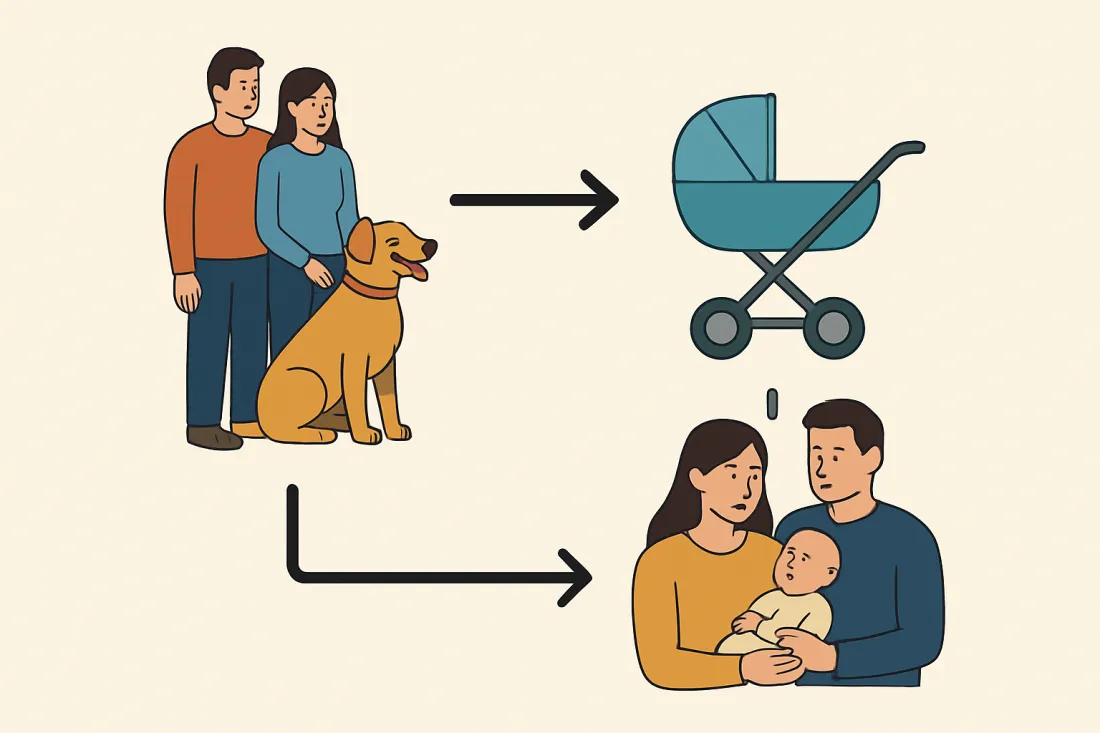
- Get a dog before kids only if you have at least 1–2 stable years ahead with no active plans to conceive, move, or change jobs, and you genuinely want a dog for life, not as a “practice baby.”
- Wait until after kids if you are already trying for a baby, expect major life changes soon, or feel unsure you can handle disrupted sleep, training, and vet costs on top of pregnancy and newborn care.
Both options can work well. The real decision is about your time, energy, money, and long-term commitment, not just the calendar.
How getting a dog before kids can help (and how it can backfire)
Thinking about a dog as a “test run” for parenthood is common, but it has real upsides and downsides.
Potential benefits of a dog before kids
- Builds daily responsibility muscles
Regular walks, feeding, grooming, and training can help you and your partner practice sharing chores, communicating, and sticking to routines. - Strengthens your relationship
Working through training challenges, vet visits, and travel logistics together can show how you both handle stress and problem-solving. - Emotional support during fertility and pregnancy
A well-adjusted dog can offer companionship and stress relief during big life transitions. - Dog is already trained when baby arrives
If you adopt early enough and invest in training, you may enter the baby phase with a calmer, predictable dog that understands house rules.
Real risks and drawbacks
- Jealousy and stress when the baby arrives
Many dogs struggle when attention suddenly shifts to a newborn. They may act out (barking, chewing, accidents) or become clingy or withdrawn. - Overwhelm and burnout
Newborn care is intense. Adding a young, high-energy, or poorly trained dog can push even capable parents to the edge and increase conflict between partners. - Rehoming pressure
Some overwhelmed families end up considering rehoming when the dog’s needs clash with baby care. That is heartbreaking and stressful for everyone. - Financial strain
Vet bills, food, grooming, and training add up. If you are also saving for maternity leave, childcare, or a bigger home, this can be a serious burden.
If you are unsure whether a dog is even the right pet for you, it may help to step back and explore your broader options with a resource like a should I adopt a dog or cat quiz before you lock in the timing question.
Dog before vs. dog after kids: comparison table
Use this table to see how the timing fits different priorities.
| Timing option | When it usually fits best | Main benefits | Main risks | Key questions to ask |
|---|---|---|---|---|
| Get a dog 1–3 years before trying for kids | You have stable jobs, housing, and no immediate pregnancy plans. | Time to train and bond; dog is more settled when baby arrives; you practice sharing responsibilities. | Plans can change and baby may arrive sooner than expected; dog may still be young and demanding. | Could we realistically give this dog daily exercise and training for the next decade, even with a toddler? |
| Get a dog when already trying for a baby | You are actively trying to conceive or planning pregnancy within months. | Short-term joy and companionship. | High chance of overlapping puppy demands with pregnancy or newborn care; increased stress and rehoming risk. | If we get pregnant quickly, will we regret adding a dog right now? |
| Get a dog during pregnancy | You feel a strong urge to “nest” and add a pet before baby. | Some time to train before birth if pregnancy is smooth. | Pregnancy symptoms can limit walks and training; complications could leave the dog under-exercised and frustrated. | What happens to the dog’s care plan if I am on bed rest or have a complicated birth? |
| Get a dog after baby is born (toddler or preschool age) | You want to understand your child’s temperament and schedule first. | Dog choice can match your child’s energy and needs; you avoid newborn + puppy overlap. | Harder to find time for training with an active toddler; child may need teaching on gentle handling. | Will we have the bandwidth to supervise dog–child interactions and training every single day? |
| Wait until kids are older (school age) | You prefer to delay extra responsibility until family life is more predictable. | Kids can help with chores; easier to explain rules and safety; more flexible schedules. | Children may be disappointed by waiting; you miss early years of pet companionship as a couple. | Are we okay saying “not yet” and revisiting the dog decision in a few years? |
How to assess your lifestyle and schedule honestly
Before focusing on babies, look at your current life with a dog’s daily needs in mind. Most dogs need:
- Multiple bathroom breaks every day.
- Daily exercise (often at least 30–60 minutes of walking or play for many breeds).
- Training time, especially in the first year.
- Company and mental stimulation, not just food and water.
Daily schedule check
Walk through a typical weekday and weekend:
- Work hours: How many hours is your home empty? Do you work from home, hybrid, or fully on-site?
- Commute: Does commuting add 1–3 extra hours away from home?
- Evening commitments: Gym, classes, social events, or overtime that keep you out at night?
- Sleep needs: Are you already exhausted, or do you have some buffer for disrupted sleep during puppy months?
If your dog would be alone most weekdays for long stretches, you will need a plan for dog walkers, daycare, or a trusted friend or neighbor. That adds both cost and coordination.
Energy and mental load check
Ask yourselves:
- On a scale of 1–10, how stressed are we right now?
- Do we have any ongoing mental health challenges that might make extra responsibility harder?
- Are we already arguing about chores or time together?
If your stress is already high, adding a dog before kids may not be the best way to “prepare” for parenting. It may simply make you more tired and less patient with each other.
Housing and lifestyle stability
Consider the next 2–3 years:
- Are you planning to move, change jobs, or relocate to another city?
- Does your current or future housing allow dogs, and are there size or breed limits?
- Is there safe outdoor space or nearby parks for walks?
A dog is a 10+ year commitment for many breeds. If you expect big changes soon, waiting until after those changes may be kinder to you and the dog.
Financial responsibility breakdown for a dog before kids
Dogs are a long-term financial commitment. Exact costs vary widely by size, health, and location, but you can think in terms of categories rather than precise numbers.
Upfront costs
- Adoption or purchase fee: Shelters and rescues typically charge an adoption fee; breeders charge more, especially for popular or purebred dogs.
- Initial vet care: Health check, vaccines, parasite prevention, and spay/neuter if not already done.
- Basic supplies: Crate, bed, bowls, leash, collar or harness, ID tags, toys, grooming tools, and baby gates if needed.
- Training: Group classes or private sessions, especially important if you plan to have children later.
Ongoing monthly and yearly costs
- Food: Larger dogs typically eat more and cost more to feed than smaller dogs.
- Routine vet care: Annual exams, vaccines, and parasite prevention.
- Grooming: Professional grooming for some breeds; others may only need at-home brushing and nail trims.
- Pet insurance or savings: Many owners choose insurance or set aside savings for unexpected vet bills.
- Dog walking or daycare: If you work long hours or travel, you may need paid help.
Emergency and long-term costs
- Unexpected illness or injury: Surgeries, diagnostics, or long-term medications can be significant.
- Behavior support: If your dog develops anxiety, reactivity, or aggression, you may need a qualified trainer or behavior professional.
- End-of-life care: Senior dogs often need more medical support.
Before you decide on timing, compare dog costs with upcoming family expenses such as prenatal care, unpaid leave, childcare, and a larger home or car. If you are already stretching to cover those, adding a dog now may not be fair to anyone.
Health and safety considerations for future children
Most dogs and children can live together safely and happily, but it does not happen automatically. It takes planning, training, and supervision.
Choosing the right dog for a future family
When you know kids are in your future, look beyond looks and focus on:
- Temperament: Calm, tolerant, and people-friendly dogs are usually easier around children than highly anxious or easily startled dogs.
- Energy level: Very high-energy dogs can be hard to manage with a newborn; very low-energy dogs may not enjoy rough play with older kids.
- Size and strength: Large dogs can accidentally knock over toddlers; very small dogs can be easily injured by clumsy hands.
- History: If adopting an adult dog, ask about their experience with children and how they respond to handling.
Whatever dog you choose, plan to set house rules every responsible dog owner should have long before a baby arrives. Clear rules make it easier to keep everyone safe.
Preparing a dog for a baby
Even if you do not have kids yet, you can start building skills that will matter later:
- Teach solid basics: sit, stay, come, leave it, drop it, and go to your bed.
- Practice calm behavior around food, toys, and people moving quickly.
- Get your dog used to gentle handling of paws, ears, tail, and collar.
- Reward calm behavior around baby-like sounds (crying recordings) and equipment (strollers, swings).
Once a baby is in the picture, never leave dogs and young children unsupervised, no matter how gentle the dog seems. Most bites happen when adults assume “he would never do that.”
Allergies and hygiene
Consider:
- Family history of allergies or asthma.
- Whether you are prepared for extra cleaning: vacuuming fur, washing hands after petting, and keeping dog-free zones like the baby’s crib.
- Regular parasite prevention and vet checks to reduce health risks.
If allergies are a concern, talk with a healthcare professional before committing, and plan how you would handle it if your future child turns out to be allergic.
Key questions to discuss with your partner before deciding
Do not skip this conversation. Many couples underestimate how much a dog will change their daily life and finances.
Division of labor and expectations
- Who will handle morning walks, evening walks, and late-night bathroom trips?
- Who will schedule and attend vet appointments?
- Who will do training homework between classes?
- What happens if one of us travels or works late regularly?
Non-negotiables and boundaries
- Are there any breeds, sizes, or ages of dogs that are off-limits for either of us?
- Are we okay with dog hair on furniture, or do we want strict no-sofa rules?
- How will we handle barking, chewing, or accidents without blaming each other?
Future what-ifs
- What if we have twins, a child with special needs, or a complicated pregnancy?
- What if one of us loses a job or we need to move quickly?
- Under what circumstances, if any, would we consider rehoming, and how can we prevent reaching that point?
If you are already wondering whether you could ever rehome a dog, it may help to read a resource like how to decide if you should rehome your dog to understand how painful that decision can be and why it is worth avoiding through careful planning.
Structured checklist: are we ready for a dog before kids?
Use this checklist as a decision tool. If you cannot honestly check most of these boxes, waiting may be wiser.
Time and energy
- We can give a dog at least one meaningful walk or play session every day, even in bad weather.
- At least one of us has enough energy after work to train and interact with a dog.
- We have a realistic plan for the dog during vacations, long workdays, and emergencies.
Stability and planning
- Our housing allows dogs and is likely to stay dog-friendly for the next few years.
- We are not planning a major move or job change in the next 6–12 months, or we have a clear plan for the dog if we do.
- We understand that a dog is a 10+ year commitment and are prepared for that.
Finances
- We have room in our budget for ongoing dog expenses without cutting essentials.
- We have some savings or insurance plan for unexpected vet bills.
- We have thought about how dog costs fit alongside pregnancy, birth, and childcare expenses.
Relationship and mindset
- We both genuinely want a dog, not just one partner convincing the other.
- We see the dog as a family member, not a temporary “practice baby.”
- We are willing to invest time in training and socialization, not just hope the dog “turns out fine.”
Future kids and safety
- We are prepared to supervise all interactions between our future dog and young children.
- We are willing to hire a trainer or behavior professional if issues arise, especially around kids.
- We are ready to adjust routines (sleep, visitors, playtime) to keep both dog and baby safe and comfortable.
If you checked most boxes and feel excited rather than anxious, getting a dog before kids could work for you. If many boxes are unchecked or you feel tense, consider waiting or exploring alternatives.
Common mistakes couples make when getting a dog before kids
Knowing what often goes wrong can help you avoid it.
- Treating the dog as a parenting test
Dogs are not disposable practice children. Going in with a “we can always rehome if it is too hard” mindset is unfair to the dog. - Underestimating puppy demands
Puppies need frequent bathroom breaks, training, and supervision. Overlapping that with pregnancy or a newborn can be overwhelming. - Choosing based on looks, not lifestyle
High-energy or working breeds can be wonderful but may not fit a busy, indoor-focused family planning babies soon. - Skipping training
Hoping a dog will “grow out of” jumping, mouthing, or guarding can backfire once a baby is crawling and grabbing. - Ignoring early warning signs
Growling, stiff body language, or avoidance around children or handling should be taken seriously and addressed with professional help.
Alternatives and compromises if you are not fully ready
If you love dogs but are unsure about timing, there are ways to have dogs in your life without a full commitment right now.
- Fostering
Short-term care for rescue dogs can give you hands-on experience with different ages and temperaments. It is still a commitment, but usually for weeks or months rather than years. - Dog sitting or walking
Offer to help friends, family, or neighbors with their dogs. You will see what daily care feels like without long-term responsibility. - Volunteering with shelters or rescues
Spend time walking or socializing dogs. This can help you understand behavior, training needs, and what kind of dog might fit your future family. - Waiting until after your first child
Once you know your child’s temperament, energy level, and any health needs, you can choose a dog that fits better.
Using these options for a year or two can give you much clearer data about whether a dog before kids is realistic for your family.
FAQ about getting a dog before having kids
Is it better to get a dog before or after having kids?
It depends on your situation. Getting a dog before kids can work well if you have stable housing, predictable schedules, and at least a year or two to focus on training and bonding before a baby arrives. It can help you practice sharing responsibilities and build routines.
Waiting until after kids is often safer if you are already trying for a baby, expect major life changes, or feel stretched financially or emotionally. When you wait, you can choose a dog that matches your child’s energy and needs, and you avoid overlapping the most intense puppy and newborn phases.
What is the 3–3–3 rule for dogs?
The “3–3–3 rule” is a common way to describe how many dogs adjust after adoption:
- First 3 days: Many dogs feel overwhelmed and may be shut down, anxious, or overly excited.
- First 3 weeks: They start to learn your routine and show more of their true personality and behavior.
- First 3 months: They usually feel more secure, understand house rules better, and are more fully integrated into the family.
This is a guideline, not a strict timeline, but it is a useful reminder that adjustment takes time. If you are planning a baby soon, make sure you have enough months for your dog to settle before adding more change.
Are kids happier with a dog in the family?
Many families feel that dogs add joy, companionship, and opportunities for kids to learn empathy and responsibility. Some children thrive with a pet they can play with and care for.
However, a dog does not automatically make kids happier. If the dog is poorly matched to the family, under-exercised, or not well trained, it can increase stress, cause conflicts, or even create safety concerns. The key is choosing the right dog at the right time and committing to training and supervision.
What is the 7–7–7 rule for dogs?
The “7–7–7 rule” is another informal way some people describe adjustment periods, often stretching the idea of gradual settling over longer time frames. The exact meaning can vary, but the core idea is similar to the 3–3–3 rule: dogs need time to decompress, learn routines, and feel secure.
Rather than focusing on specific numbers, it is more helpful to expect that your dog will need weeks and months, not just days, to fully adjust. If you are planning a baby, build in enough time for your dog to feel confident and well trained before your household changes again.
Conclusion: how to decide if a dog before kids is right for you
There is no single right answer to whether you should get a dog before having kids. The best choice depends on:
- Your current and future schedules.
- Your financial stability and upcoming family expenses.
- Your housing situation and long-term plans.
- Your willingness to commit to training, supervision, and care for the dog’s entire life.
- How much time you realistically have before pregnancy and baby-related changes.
If you have time, stability, and enthusiasm for a long-term commitment, a dog before kids can be a wonderful addition and a chance to grow as a couple. If you feel rushed, uncertain, or stretched thin, it is completely valid—and often kinder—to wait, foster, or stay involved with dogs in lower-commitment ways until your family is more settled.
Whatever you decide, approaching the choice with honesty, planning, and respect for the dog’s needs is the foundation of responsible pet ownership and a happier future family.