
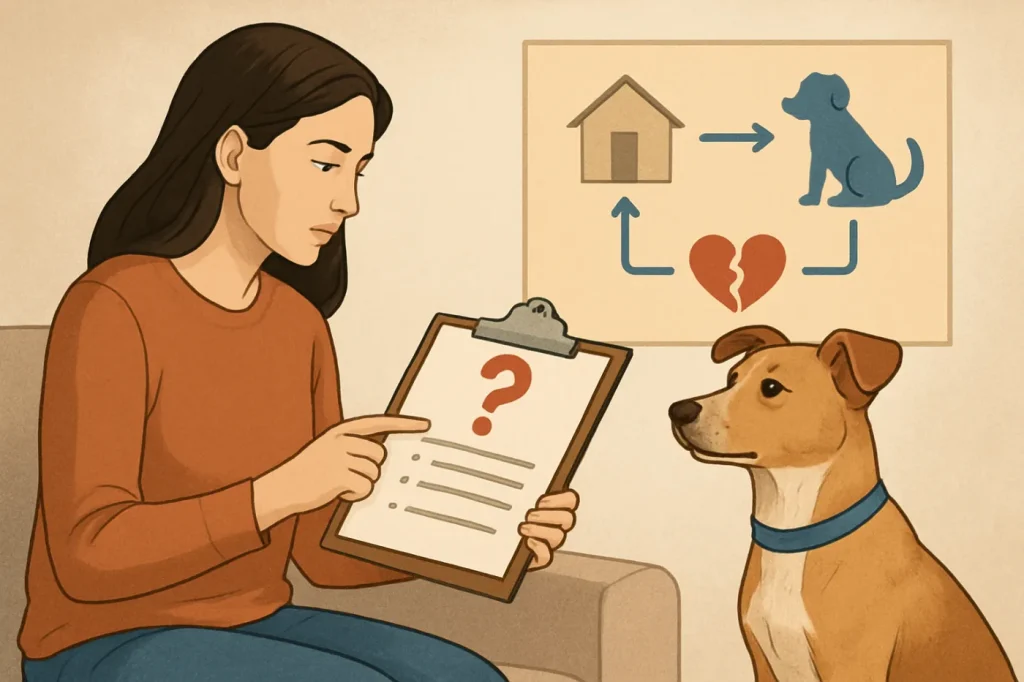
Before adopting a rescue dog, focus less on getting every detail of their past and more on understanding how that history might shape their behavior, stress triggers, and care needs. You usually will not get a full biography, but you can still make smart decisions by asking targeted questions, watching how the dog behaves, and planning support if problems show up.
Key things to understand about a rescue dog’s history
When people ask what to know about a rescue dog’s history, they usually want to know three things:
- Why the dog ended up in a shelter or rescue
- Whether the dog has experienced trauma, neglect, or poor socialization
- How that past might affect behavior, training, and safety in a new home
You rarely get perfect answers, but you can still prepare by:
- Learning the most common reasons dogs are surrendered and what each one tends to mean for behavior
- Asking the shelter specific, behavior-focused questions instead of vague ones about “what happened”
- Planning what you will do if the history is unknown or incomplete
- Knowing when to bring in a trainer or behavior professional instead of trying to “love it away” on your own
Common reasons dogs end up in shelters and what they can mean
Most rescue dogs are not “bad dogs.” They are usually victims of human circumstances. Understanding the likely backstory helps you predict what support they might need.
| Reason the dog was surrendered | What it often means for behavior | What to ask or watch for | How you can prepare |
|---|---|---|---|
| Owner moving, financial issues, illness, or death | Dog may be well socialized and trained but stressed and grieving after losing their person and routine. | Ask if the dog lived indoors, was house-trained, and used to kids or other pets. | Expect clinginess, mild separation distress, and confusion. Keep routines predictable and gentle. |
| “No time” or lifestyle change (new baby, longer work hours) | Dog may be under-exercised, under-trained, and full of pent-up energy, but not necessarily aggressive. | Ask how much exercise they got and whether they pulled on leash, jumped, or mouthed. | Plan for daily physical and mental exercise and basic training to channel energy. |
| Behavior issues (barking, chewing, house-soiling, reactivity) | Dog may have anxiety, poor boundaries, or never learned house manners. Problems may improve with structure, but some can be long-term. | Ask what specific behaviors led to surrender, how often they happened, and in what situations. | Be ready to manage triggers, use crates or gates, and work with a trainer if needed. |
| Neglect (kept outside, little contact, poor vet care) | Dog may be under-socialized, fearful of new things, and unsure about indoor life. | Ask where the dog lived (yard, chain, crate, indoors) and how they react to handling. | Introduce indoor life slowly, pair new experiences with treats, and keep expectations low at first. |
| Suspected or confirmed abuse | Dog may have intense fear responses, flinching, hiding, or defensive aggression when scared. | Ask what behaviors make staff think there was abuse (e.g., cowering at raised hands, fear of men). | Use gentle, predictable handling, avoid punishment, and plan to involve a behavior professional early. |
| Stray with unknown background | History is a mystery. Dog may be well-adjusted or may have gaps in socialization and training. | Ask how long they were a stray (if known) and how they behave in the shelter and foster home. | Rely on current behavior, not guesses. Assume they need basic training and careful introductions. |
Remember that a surrender reason is only one piece of the puzzle. Two dogs surrendered for “too much energy” can behave completely differently in a new home. Use the reason as a clue, not a label.
How a dog’s history can affect behavior and care needs
A dog’s past shapes how safe they feel, how they read the world, and how quickly they can adapt. You do not need every detail, but you do need to understand the patterns that often show up.
Effects of trauma and fear
Dogs who have been hurt, scared, or overwhelmed in the past may show:
- Startle responses to sudden movements, loud noises, or certain objects (like brooms or hats)
- Shutting down (freezing, hiding, refusing food) when stressed
- Defensive aggression (growling, snapping) when they feel cornered or touched in sensitive areas
- Extreme sensitivity to specific types of people (for example, men, children, or people in uniforms)
These behaviors are usually about fear, not “dominance” or stubbornness. They call for slow exposure, choice, and safety, not harsh corrections.
Effects of neglect and poor socialization
Dogs who were isolated, kept outdoors, or rarely handled often struggle with:
- Overwhelm in normal environments (busy streets, elevators, TVs, vacuum cleaners)
- Difficulty reading social cues from other dogs or people
- House-training gaps because they never lived indoors
- Clumsiness with boundaries (jumping, mouthing, grabbing food) because no one taught them manners
These dogs usually benefit from very gradual exposure to new things, clear routines, and lots of reward-based training for calm behavior.
Effects of repeated rehoming or long shelter stays
Dogs who have bounced between homes or spent a long time in a shelter can show:
- Separation-related distress (whining, barking, destruction when left alone)
- Difficulty settling because they are used to constant noise and activity
- Over-attachment to one person, shadowing them everywhere
- Regression in training when stressed by a new environment
These dogs often need a very predictable routine, gradual alone-time training, and patience while they learn that this home is permanent.
Why current behavior matters more than the story
It is natural to want to know exactly what happened to your dog. But focusing too much on the story can lead to mistakes, such as:
- Excusing unsafe behavior because “he was abused” instead of addressing it safely
- Feeling guilty for setting boundaries because “she has been through enough”
- Assuming certain triggers (“he must hate men”) without watching the dog’s actual reactions
The most useful information is what the dog is doing now in real situations. History gives context; behavior gives instructions.
Smart questions to ask about a rescue dog’s history
Instead of asking only “What is this dog’s story?”, ask questions that connect past experiences to behavior and care needs. Staff and foster carers often know more than you think, but you have to ask the right way.
Behavior and temperament questions
- “What have you noticed about this dog’s personality day to day?” (shy, bold, easygoing, intense)
- “How does this dog react to strangers, kids, and visitors?”
- “How does this dog do with other dogs on leash and off leash?”
- “Has this dog been around cats or small animals? What happened?”
- “Have you seen any guarding of food, toys, or resting spots?”
- “How does this dog handle being touched—paws, ears, collar, grooming?”
Daily life and routine questions
- “Is this dog house-trained? How often do they need to go out?”
- “Where has the dog been living—kennel, foster home, apartment, house with yard?”
- “How much exercise does this dog seem to need to relax?”
- “How does the dog behave when left alone? Any barking, howling, or destruction?”
- “What kind of feeding schedule and food have you been using?”
Medical and handling history questions
- “What medical history do you have—vaccines, surgeries, chronic issues?”
- “Has the dog ever been sedated or muzzled for vet care or grooming?”
- “Are there any areas of the body the dog does not like touched?”
- “Have you noticed stiffness, limping, or sensitivity that might indicate pain?”
Questions about the surrender or background
- “Do you know why the previous owner surrendered this dog?”
- “Did the previous home have children or other pets?”
- “Was the dog mostly indoors, outdoors, or both?”
- “Has the dog been returned from adoption before? If so, why?”
Write the answers down or take photos of any paperwork you are allowed to keep. This becomes your starting map for training, management, and vet care.
What to do if a rescue dog’s history is unknown
Many dogs come in as strays or with owners who give very little information. An unknown history does not mean you should walk away, but it does mean you should be more deliberate about how you test fit and manage risk.
Rely on behavior you can see
When history is missing, treat the dog’s current behavior as your main data source:
- Spend time with the dog in different settings if allowed—quiet room, outdoor yard, near other dogs
- Watch how quickly they recover from mild stress (a dropped object, a new person entering)
- Notice whether they seek contact, avoid it, or switch between the two
- Ask if you can see the dog on a short walk to observe leash behavior and reactions to the environment
Ask for a trial or foster-to-adopt period if possible
Some shelters and rescues offer short-term foster or trial placements. This can be especially helpful when history is unknown or when you have kids or other pets at home. During a trial:
- Keep the dog’s world small at first—limited rooms, simple routines
- Introduce new people and animals slowly and with supervision
- Take notes on any concerning behavior so you can discuss it with the rescue
Assume training gaps and plan to fill them
With an unknown history, it is safer to assume the dog:
- Is not fully house-trained
- Does not know your rules about furniture, doors, and food
- May not have solid recall or leash skills
Set the dog up for success with management (baby gates, leashes indoors, crates if appropriate) and reward-based training from day one. If you want a detailed routine for the first month, you can pair this guidance with a structured plan like a first 30 days with a rescue dog routine.
Practical checklist: Using a rescue dog’s history to set them up for success
Use this checklist before and after adoption to turn history (or lack of it) into concrete actions.
Before you adopt
- Clarify your household needs
- Decide what you can and cannot handle (e.g., no dogs with bite history around small children, okay with house-training work).
- List your non-negotiables: size limits, energy level, compatibility with other pets.
- Gather behavior-focused information from the shelter
- Ask about temperament, triggers, and daily routine, not just the surrender story.
- Request any behavior evaluations or notes from foster homes.
- Ask about medical and pain-related issues
- Get copies of available vet records.
- Ask if any behavior might be linked to pain (stiffness, sensitivity, changes in mood).
- Assess fit with your lifestyle
- Compare the dog’s energy level and needs with your schedule.
- Consider whether you have time and budget for training or behavior support if needed.
- Plan your first weeks at home
- Decide where the dog will sleep, eat, and go to the bathroom.
- Set up management tools (gates, crate, safe space) before the dog arrives.
After you bring the dog home
- Keep the environment calm and predictable
- Limit visitors and outings in the first days.
- Stick to consistent feeding, walking, and rest times.
- Watch for early behavior patterns
- Note how the dog reacts to handling, noises, and being left alone.
- Write down any growling, snapping, or intense fear responses with context.
- Introduce rules and training gently
- Reward the behaviors you like (calm on a mat, sitting for attention).
- Avoid harsh corrections; use management instead of punishment.
- Schedule a vet check
- Ask the vet to screen for pain or medical issues that might affect behavior.
- Share any concerning behaviors you have seen so far.
- Decide if you need professional help
- If you see safety red flags or feel overwhelmed, start looking for a qualified trainer or behavior professional early.
- Ask the shelter or your vet for recommendations.
Common mistakes people make with rescue dog histories
Good intentions can still lead to problems if you misunderstand what a dog’s past means. Avoid these frequent mistakes:
1. Treating the dog as “broken” or fragile forever
Some adopters walk on eggshells because they know the dog had a hard past. While empathy is important, constantly expecting the dog to fall apart can:
- Prevent you from setting healthy boundaries
- Keep the dog from learning new skills and confidence
- Make normal training feel “mean,” even when it is fair and kind
Instead, acknowledge the past but focus on building new, positive experiences.
2. Ignoring red flags because “love will fix it”
Affection helps, but it does not automatically solve serious fear, aggression, or anxiety. Common red flags include:
- Repeated growling or snapping when approached near food, toys, or resting spots
- Attempts to bite when handled, groomed, or leashed
- Panicked attempts to escape or destructive behavior when left alone
- Intense reactivity toward people or dogs that does not improve with distance
These are signals to involve a professional, not to “wait and see” indefinitely.
3. Over-sharing or dramatizing the dog’s past
It can be tempting to repeat dramatic stories about abuse or neglect. But:
- Stories are sometimes guesses, not confirmed facts
- Other people may handle the dog differently (too roughly or too softly) based on the story
- Focusing on drama can overshadow the dog’s progress and strengths
Share what others need to know for safety and care, but do not turn the dog’s past into their whole identity.
4. Expecting the dog to behave like a previous pet
Even if you have had dogs your whole life, a rescue with a different history may not respond the same way. Assuming “all dogs love kids” or “all my dogs were fine at the dog park” can put everyone at risk. Treat this dog as an individual with their own learning curve.
5. Skipping structure because you feel sorry for the dog
Letting a new rescue dog have total freedom—on furniture, at windows, around visitors—can backfire. Many dogs feel safer with clear rules and predictable routines. Structure is not punishment; it is reassurance.
Decision criteria: Is this rescue dog’s history a good fit for your home?
Use these criteria to decide whether a particular dog’s background and behavior match your household.
- Safety with children and vulnerable people
- If the dog has a known bite history or serious guarding issues, be very cautious about homes with young kids or frail adults.
- If history is unknown, insist on supervised, gradual introductions and be ready to say no if you see concerning behavior.
- Compatibility with other pets
- If the dog has a record of aggression toward other animals, consider whether you can safely manage that in your space.
- If the dog has only lived as an only pet, plan slow, controlled introductions and separate spaces at first.
- Energy level and exercise needs
- High-energy dogs from “no time” homes may thrive with active adopters but overwhelm quieter households.
- Lower-energy or older dogs from stable homes may suit people wanting a calmer companion.
- Training and behavior support capacity
- Ask yourself honestly how much time and money you can invest in training or behavior help.
- If the dog’s history suggests complex issues (trauma, multiple returns, severe anxiety), plan for more support.
- Housing and lifestyle constraints
- Consider landlord rules, noise sensitivity of neighbors, and your work schedule.
- A dog with separation distress may struggle in a small apartment with thin walls if you are gone all day.
When to involve a trainer or behavior professional
Bringing in a qualified trainer or behaviorist is not a failure; it is part of responsible pet ownership, especially with rescue dogs whose histories may include trauma or neglect.
Clear signs you should seek help soon
Consider professional help if you notice any of the following:
- Safety concerns
- Growling, snapping, or biting directed at people or other animals
- Guarding food, toys, or spaces in a way that feels intense or unpredictable
- Severe fear or anxiety
- Panic when left alone, including self-injury or attempts to escape
- Extreme reactions to common triggers (cars, strangers, noises) that do not ease with distance
- Persistent stress
- Refusing to eat for more than a short adjustment period
- Constant pacing, panting, or inability to settle even in a quiet home
- Regression or worsening behavior
- Problems that get more frequent or intense over several weeks instead of improving
What kind of professional to look for
When you search for help:
- Look for trainers or behavior professionals who use reward-based, humane methods.
- Avoid anyone who relies heavily on fear, pain, or intimidation to “fix” behavior.
- Ask your vet or the shelter for recommendations; they often know local options.
For many rescue dogs, basic training support is enough. If your dog has more complex issues, you might also benefit from structured programs such as basic obedience training for rescue dogs to build communication and confidence.
What to do next after learning about a rescue dog’s history
Once you understand how a dog’s past can affect their behavior, turn that knowledge into action:
- Decide what kind of history and behavior you can realistically handle.
- Use the question lists and checklist above when you visit shelters or rescues.
- Plan your first weeks at home with structure, patience, and support in mind.
- Stay flexible—some dogs will surprise you by adapting faster or slower than expected.
If you are also considering other types of pets, you may find it helpful to compare what you have learned here with guidance on what to know before adopting a cat from a shelter so you can choose the companion that best fits your home.
FAQ about understanding a rescue dog’s history
What is the most important thing to know about a rescue dog’s history?
The most important thing is not every detail of what happened, but how that past is showing up in the dog’s current behavior. Focus on what makes the dog feel safe or unsafe, what triggers fear or stress, and what they already know about living with people. Use the history you are given as context, then watch how the dog behaves in real situations to guide your training and management.
Can a rescue dog with a difficult past become a well-adjusted family pet?
Many rescue dogs with hard histories go on to live stable, happy lives, but the path can vary. Progress depends on the dog’s individual temperament, the type and length of past stress, and the support they receive in their new home. Consistent routines, reward-based training, and, when needed, professional help give these dogs the best chance to build new, positive patterns that matter more than their past.
What common mistakes should adopters avoid when thinking about a rescue dog’s past?
Avoid assuming that love alone will erase serious behavior problems, excusing unsafe behavior because the dog “had it rough,” and skipping structure because you feel sorry for them. It is also a mistake to compare the dog to previous pets or to treat dramatic stories as more important than what you see day to day. Balanced empathy—kindness plus clear boundaries—helps most rescue dogs thrive.
What should I do if the shelter cannot tell me much about a dog’s background?
If history is unknown, spend extra time observing the dog’s behavior in different settings, ask for any notes from staff or foster homes, and assume there may be gaps in training and socialization. Set up your home with management tools, introduce new situations slowly, and be ready to adjust your expectations. If the rescue offers a trial or foster-to-adopt option, use that time to see how the dog fits your household.
When should I walk away from adopting a particular rescue dog because of their history?
It may be wise to step back if the dog’s known or suspected history includes behavior that conflicts with your non-negotiables—for example, a bite history around children when you have young kids, or intense dog aggression when you live in a crowded building with many dogs. Walking away from a poor match is not a failure; it is a responsible choice that protects both your household and the dog from another stressful return.