
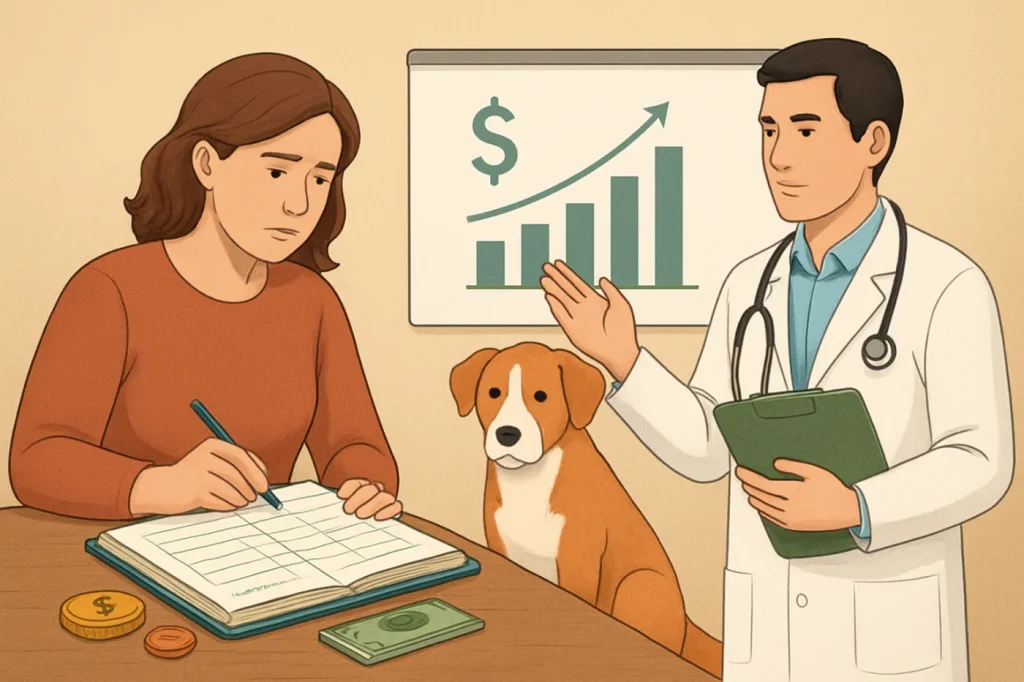
Budgeting for chronic illness vet bills means planning for two things at the same time: regular, predictable monthly costs (meds, food, monitoring) and occasional big spikes (flare-ups, tests, emergencies). The goal is not to predict every dollar, but to build a plan so a diagnosis like diabetes, allergies, or arthritis does not instantly become a financial crisis.
This guide walks through how to estimate long-term costs, talk with your vet about money, compare options like insurance and savings, and make decisions that protect both your pet’s quality of life and your budget.
Chronic vs acute vet costs and why it matters for your budget
Understanding the difference between chronic and acute conditions helps you know what kind of budget you need:

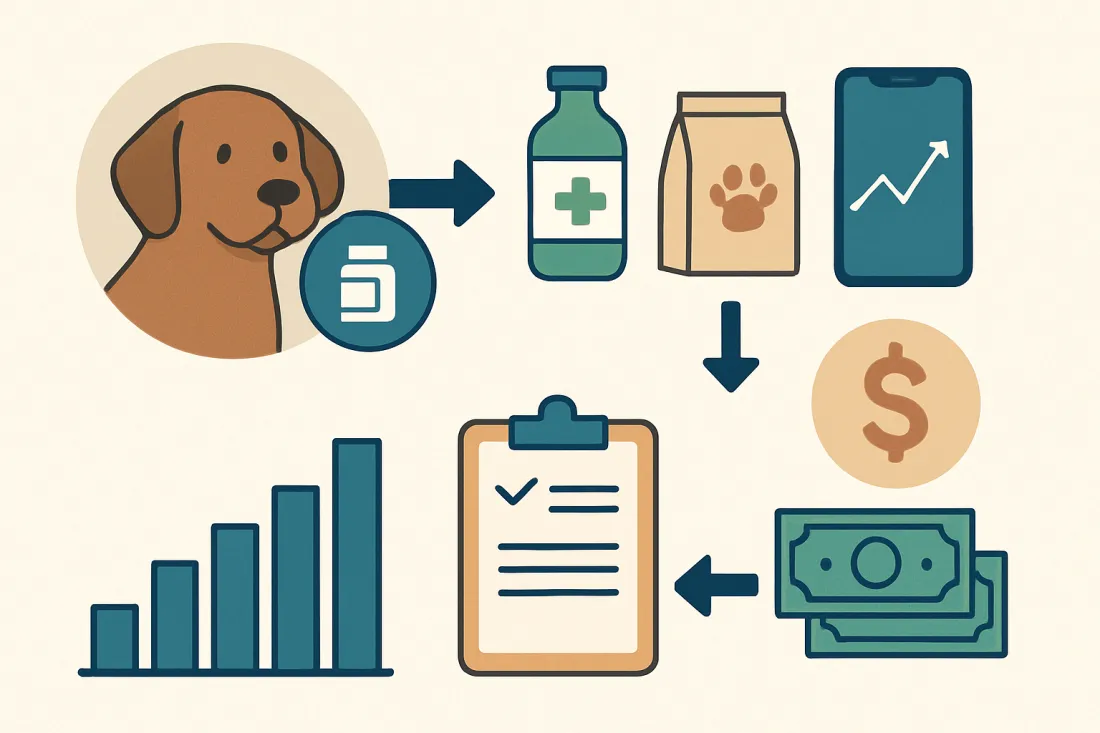
- Acute conditions are sudden problems that usually have a clear start and end: a broken bone, a swallowed toy, a one-time infection, a single surgery.
- Chronic conditions are long-term or lifelong: diabetes, arthritis, heart disease, kidney disease, chronic allergies, some skin conditions, some eye problems.
Financially, they behave very differently:
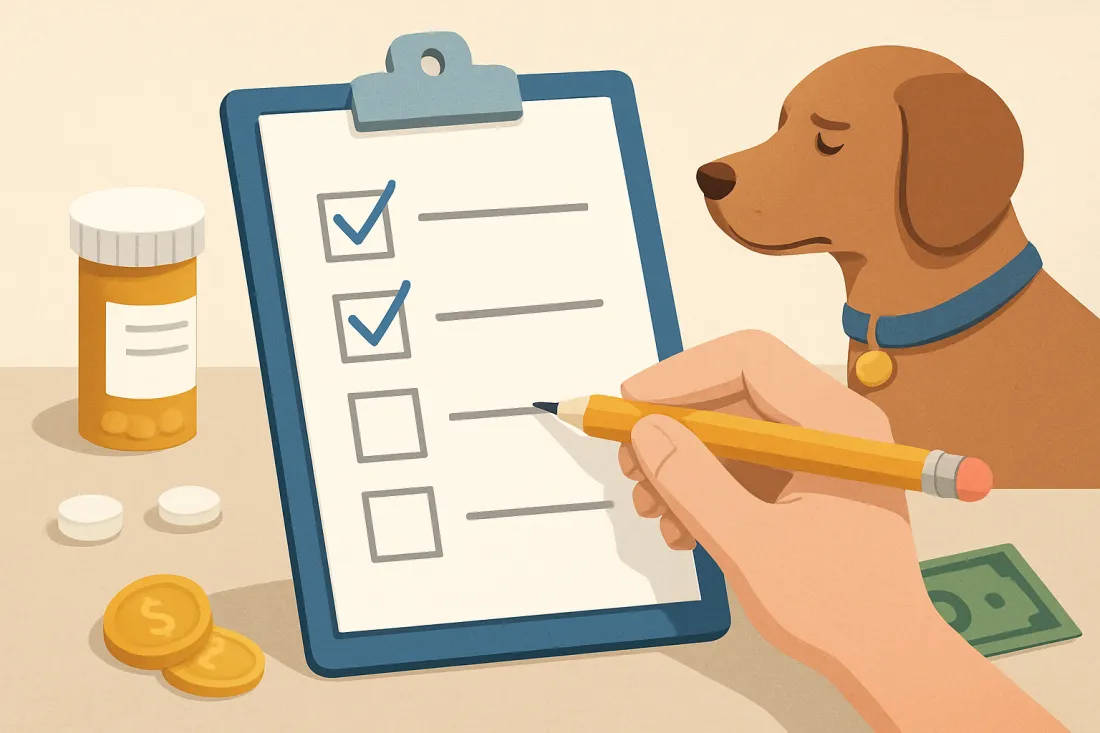
- Acute = big one-off bills (for example, an emergency visit and surgery) plus short-term follow-up.
- Chronic = ongoing monthly costs (meds, prescription food, monitoring) plus occasional spikes (rechecks, bloodwork, imaging, hospital stays during flare-ups).
For chronic illness, the key questions are:
- What will this cost me each month if things are stable?
- What are the likely big-ticket events in the next 12–24 months?
- How can I spread those costs out or prepare for them now?
If you are still deciding whether you can afford a pet at all, it can help to start with a general overview like can i afford a cat calculator and then layer chronic-illness planning on top.
Common chronic conditions and how they typically affect your budget
Exact prices vary widely by region and clinic, and they change over time. Instead of memorizing numbers, use these examples as a way to think about patterns of cost and what to ask your vet.
Diabetes (dogs and cats)
Typical cost pattern:
- Upfront phase (first 3–6 months): diagnosis tests, starting insulin, frequent vet visits and bloodwork to adjust the dose. This is usually the most expensive phase per month.
- Maintenance phase: insulin, syringes or pens, monitoring (home glucose checks or periodic vet curves), and regular checkups.
- Risk of emergencies: diabetic crises can mean emergency hospitalization, which can be a large, sudden bill.
Budget impact:
- Expect a higher monthly baseline for meds and supplies.
- Plan for extra vet visits in the first year and then at least a few times a year long term.
- Have an emergency cushion for at least one serious flare-up or complication.
Allergies and chronic skin/ear disease
Typical cost pattern:
- Ongoing meds: allergy meds, special shampoos, ear drops, sometimes prescription diets.
- Diagnostics: skin scrapings, cultures, allergy testing, food trials.
- Flare-ups: extra vet visits and meds when infections or severe itch return.
Budget impact:
- Costs can be very up-and-down: some months low, some months much higher.
- Prescription diets and long-term meds can add a steady monthly line item.
- Allergy shots or advanced meds may be more expensive per month but reduce flare-ups and emergency visits.
Arthritis and joint disease
Typical cost pattern:
- Daily or regular meds: pain relief, anti-inflammatory drugs, joint supplements.
- Supportive care: weight management food, ramps, orthopedic beds, sometimes physical therapy.
- Possible surgery: in some cases, surgery or advanced procedures may be recommended.
Budget impact:
- Mostly predictable monthly costs for meds and supplements.
- Occasional larger costs for imaging, joint injections, or surgery.
- Quality-of-life improvements (like ramps) are often one-time purchases that can reduce long-term strain and pain.
Heart disease, kidney disease, and other organ problems
Typical cost pattern:
- Prescription diets that become a permanent monthly cost.
- Regular monitoring: bloodwork, urine tests, blood pressure checks, imaging.
- Medications that may increase over time as disease progresses.
- Possible hospital stays during crises.
Budget impact:
- Steady monthly costs for food and meds.
- Planned monitoring visits every few months.
- Need for an emergency fund for sudden worsening or hospital care.
Monthly vs annual cost examples for chronic care
Because exact prices are so variable, think in ranges and structure instead of fixed numbers. A simple way to plan:
- List monthly recurring items: meds, special food, supplies.
- List expected vet visits in the next 12 months: rechecks, bloodwork, imaging.
- Add a buffer for at least one flare-up or emergency.
Example structure for a chronic condition (numbers are placeholders to show the math, not actual price guarantees):
- Monthly baseline
- Meds and supplies: imagine your vet quotes a range like “around $X–$Y per month.”
- Prescription food: your vet or clinic can give a monthly estimate based on your pet’s weight.
- Annual predictable costs
- Recheck visits and routine bloodwork: ask your vet how many times a year and a typical range per visit.
- Vaccines and routine preventive care: add these to your annual total.
- Annual unpredictable costs
- At least one flare-up or complication: plan a cushion that feels realistic for your situation.
Once you have those pieces, you can turn them into a monthly budget:
- Add up the annual predictable costs and divide by 12.
- Add that number to your monthly baseline.
- Decide how much you can set aside monthly toward an emergency cushion for unpredictable costs.
Some financial writers suggest aiming for several thousand dollars in a pet emergency fund over time. If that feels impossible, focus on steady progress: even a small automatic transfer each month builds a buffer that can make a big difference later.
Comparison: savings, pet insurance, and credit for chronic vet bills
Most people end up using a mix of tools. The right blend depends on your pet’s age, current health, your income, and your risk tolerance.
| Option | Best fit | Main advantages | Main risks/limits | What to check |
|---|---|---|---|---|
| Dedicated savings (pet emergency fund) | Any pet; especially if you prefer control and hate debt |
|
|
|
| Pet insurance (illness/accident plans) | Young or middle-aged pets before diagnosis; owners who want protection from large, unexpected bills |
|
|
|
| Credit cards or medical credit lines | Owners with limited savings who face a sudden large bill |
|
|
|
| Payment plans with your vet | Established clients with a good payment history |
|
|
|
| Charities and assistance programs | Owners in financial hardship facing urgent treatment decisions |
|
|
|
If you are comparing insurance vs self-funding more broadly, a deeper dive like is pet insurance worth it in the US can help you decide.
How to talk to your vet about long-term costs
Many people feel embarrassed bringing up money, especially when they love their pet. But vets deal with financial constraints every day. Clear, honest conversations usually lead to better, more realistic care plans.
What to say to open the conversation
Simple, direct phrases work best:
- “I want to do the best I can for her, but I do have a budget. Can we talk about the long-term costs of this condition?”
- “Can you walk me through the ‘ideal plan’ and then a ‘budget-conscious plan’ so I can see the difference?”
- “If we choose this medication, what might my monthly costs look like?”
Key financial questions to ask after a chronic diagnosis
Use this as a checklist during or after the appointment.
- Diagnosis and first year
- What tests are essential now, and which are optional or can wait?
- What do you expect the first 3–6 months of treatment to involve?
- Are there different treatment tiers (gold standard vs more basic) and how do their costs and outcomes differ?
- Ongoing monthly costs
- What medications, foods, or supplies will my pet likely need long term?
- Are there generic or lower-cost alternatives that are still safe and effective?
- How often will we need refills, and can any be written for 60–90 days to reduce visit fees?
- Monitoring and rechecks
- How often do you expect to see my pet for this condition when stable?
- What tests will be needed at those visits?
- What changes at home should make me call you sooner?
- Emergencies and flare-ups
- What are the warning signs of a crisis for this condition?
- If a crisis happens, what kind of care is usually needed?
- Is there anything I can do at home to reduce the risk of emergencies?
- End-of-life and quality of life
- What does a “good quality of life” look like for this condition?
- What changes would tell us that treatments are no longer helping enough?
- Can we talk ahead of time about palliative options and euthanasia so I know what to expect emotionally and financially?
Structured checklist: financial planning after a chronic diagnosis
Use this step-by-step process over the first few weeks after diagnosis. You do not have to do it all in one day.
- Get a written treatment plan
- Ask your vet for a written summary of the diagnosis, recommended meds, monitoring schedule, and follow-up visits.
- Request a rough cost range for each part, knowing it is an estimate, not a guarantee.
- Separate “must-haves” from “nice-to-haves”
- Highlight treatments that are essential for your pet’s comfort and survival.
- Mark optional add-ons (extra imaging, advanced therapies) that could be delayed or skipped if needed.
- Build a simple 12-month cost picture
- List monthly recurring items (meds, food, supplies).
- List expected recheck visits and tests with approximate timing.
- Add a line for “emergency/flare-up cushion.”
- Compare with your current budget
- Look at your income and essential expenses.
- Decide what you can realistically allocate monthly to pet care and savings.
- If there is a gap, identify specific areas to cut back or ways to increase income.
- Decide on your mix of tools
- How much can you put into a dedicated pet savings fund each month?
- Do you already have pet insurance, and what does it cover for this condition?
- What backup options (credit, payment plans, assistance) are acceptable to you if a large bill appears?
- Set up automation where possible
- Automate a monthly transfer to a pet savings account.
- Set reminders for meds, refills, and recheck appointments to avoid late fees or emergency visits caused by missed doses.
- Schedule a follow-up money talk with your vet
- After living with the plan for 1–3 months, ask your vet to review what is working and what feels too expensive.
- Discuss any adjustments: different meds, longer refill intervals, or alternative monitoring strategies.
- Revisit the plan at least once a year
- As your pet ages or the disease changes, costs and options may shift.
- Update your 12-month picture and savings goals annually.
Tips for finding lower-cost meds and supplies safely
Cutting costs should never mean cutting safety. Focus on strategies that your vet supports.
Ask about generics and alternative drugs
- Many human medications have generic versions that are less expensive than brand-name pet drugs.
- Ask your vet: “Is there a generic or different medication that would be safe and effective but more affordable?”
- Never switch or adjust doses without your vet’s guidance; some human meds are dangerous for pets.
Use written prescriptions wisely
- Ask your vet if they can write a prescription you can fill at a reputable pharmacy.
- Compare prices between your vet’s pharmacy, local human pharmacies, and well-known online pharmacies.
- Confirm that any online pharmacy is properly licensed and, if applicable, recognized by your vet.
Buy in larger quantities when safe
- For stable, long-term meds, a 60- or 90-day supply may have a lower cost per dose.
- Ask your vet if it is safe to buy larger quantities and whether the medication has a long enough shelf life.
Look for manufacturer discounts and clinic programs
- Some drug manufacturers offer rebates or loyalty programs for chronic meds.
- Ask your vet staff if they know of any current programs for your pet’s medications.
- Some clinics have wellness plans that bundle routine care into a monthly fee; check whether these help with your specific chronic condition or only cover preventive care.
Be careful with “cheap” sources
- Avoid unverified online sellers, marketplace listings, or medications without proper packaging and labeling.
- Do not split or share human prescriptions with your pet unless your vet has explicitly approved that exact medication and dose.
- If a deal looks too good to be true, ask your vet to review it before you buy.
Planning for end-of-life and quality-of-life decisions
Chronic illness often ends with difficult choices. Thinking about them early can reduce both emotional and financial panic later.
Define your own limits and values
- What does a good life look like for your pet? Eating, moving around, interacting, enjoying favorite activities?
- What level of daily pain or disability would you consider unacceptable?
- What financial limits do you have for major interventions like surgery or hospitalization?
There are no universal right answers. The goal is to align treatment with your pet’s comfort and your realistic resources.
Talk with your vet about future scenarios
- Ask your vet to describe the likely course of the disease: slow and steady, or periods of crisis?
- Discuss what palliative care could look like: pain control, comfort measures, home modifications.
- Ask what signs would suggest that euthanasia is the kindest option.
Budget for the final phase
- Set aside some funds over time for end-of-life care, including euthanasia and aftercare options.
- Ask your vet clinic for a general range of costs for these services so you are not blindsided later.
- Consider whether at-home euthanasia is important to you and what that might cost in your area.
Planning ahead does not mean you are “giving up.” It means you are preparing to make compassionate decisions without last-minute financial panic.
Who should choose which budgeting approach for chronic vet bills
Different financial situations call for different strategies.
- Stable income, limited savings, young pet
- Consider a mix of pet insurance (before any diagnosis) plus a growing savings fund.
- Focus on preventive care to reduce the risk of some chronic issues.
- Stable income, some savings, pet already diagnosed
- Build a detailed 12-month cost plan with your vet.
- Increase your dedicated pet savings and use credit only as a backup.
- Look for safe ways to lower monthly costs (generics, larger refills, prescription shopping).
- Unstable income or debt, pet with chronic illness
- Prioritize must-have treatments that directly affect comfort and survival.
- Talk openly with your vet about budget-conscious plans.
- Explore payment plans, assistance programs, and community resources.
- Be honest with yourself about your limits and discuss quality-of-life thresholds early.
- Retired or fixed income, older pet
- Focus on predictable monthly costs and avoid taking on high-interest debt if possible.
- Ask your vet to prioritize comfort-focused care and minimize frequent, expensive tests unless they clearly change treatment.
Common mistakes when budgeting for chronic illness vet bills
Avoiding a few typical pitfalls can save both money and stress.
- Waiting too long to talk about money
- Silence can lead to a treatment plan you cannot sustain, followed by crisis decisions later.
- Instead, bring up your budget at the first or second visit after diagnosis.
- Only planning for the next visit
- Focusing on today’s bill alone hides the true long-term cost.
- Ask your vet for a 6–12 month outlook so you can plan ahead.
- Skipping meds or checkups to save money without telling your vet
- Stopping meds suddenly or skipping monitoring can cause emergencies that cost far more.
- If you are struggling, tell your vet and ask for a lower-cost plan.
- Relying entirely on high-interest credit
- Using credit for every bill without a payoff plan can create long-term debt.
- Try to combine credit with a realistic payoff schedule and a small savings habit.
- Assuming you are a burden for asking about cost
- Most vets would rather adjust a plan than see a pet go without care or be surrendered.
- Being honest about money is part of being a responsible pet owner.
Decision checklist: are you financially ready to manage a chronic condition?
Use this quick checklist to see where you stand and what to do next.
- Understanding the condition
- I know whether my pet’s condition is chronic, acute, or both.
- I understand the basic treatment plan and what “stable” looks like.
- Cost picture
- I have a rough monthly estimate for meds, food, and supplies.
- I know how many recheck visits and tests are likely in the next 12 months.
- I have a target amount I would like in a pet emergency fund.
- Budget fit
- I have looked at my income and essential expenses.
- I know how much I can realistically set aside each month for pet care and savings.
- I have identified at least one area of my budget I can adjust if needed.
- Tools and backup plans
- I know whether pet insurance is an option or already in place, and what it covers.
- I have decided how I feel about using credit or payment plans if a large bill appears.
- I know at least one local or national assistance resource I could contact in a crisis.
- Quality-of-life planning
- I have thought about what a good quality of life means for my pet.
- I have a sense of my financial and emotional limits for major interventions.
- I am willing to revisit these decisions with my vet as the disease changes.
If you find big gaps, that is not a failure. It is a sign to schedule a money-focused conversation with your vet and, if helpful, review broader cost guides like how to afford vet bills for dogs and cats or unexpected annual vet bills for pets in your area.
FAQ about budgeting for chronic illness vet bills
What do vets do when you cannot afford chronic illness vet bills?
When you are honest about your limits, many vets will try to build a tiered plan. That might include:
- Prioritizing treatments that directly affect comfort and survival.
- Using generic medications or different drugs that are still effective but less expensive.
- Spacing out some monitoring tests once your pet is stable, if it is medically reasonable.
- Offering written prescriptions so you can compare pharmacy prices.
- Discussing payment plans or connecting you with local assistance resources if available.
In some cases, if even basic care is not affordable, your vet may gently raise options like palliative-only care or, in severe situations, euthanasia as a way to prevent ongoing suffering. These conversations are emotionally heavy, but they are meant to protect your pet’s welfare, not judge your finances.
How can I pay for chronic vet bills if I have no money and bad credit?
When money and credit are both tight, focus on a combination of cost reduction, small consistent savings, and targeted help:
- Ask your vet for the most budget-conscious treatment plan that still keeps your pet comfortable.
- Use generics, written prescriptions, and price comparisons to lower monthly costs.
- Look into local animal welfare groups, charitable funds, or disease-specific assistance programs that sometimes help with chronic or emergency care.
- Start a very small automatic savings transfer, even a few dollars per paycheck, into a separate account for pet expenses.
- Consider community support options, such as friends or family who might help with a specific bill, being clear that it is a one-time request.
If, after exploring these options, you still cannot meet your pet’s basic needs, talk openly with your vet about humane alternatives. It is painful, but it is more responsible than silently skipping essential care while your pet suffers.
How much is reasonable to spend on chronic illness vet bills?
There is no universal “right” number. What is reasonable depends on:
- Your income and essential expenses (housing, food, utilities, childcare).
- Your existing debts and savings.
- Your pet’s age, prognosis, and quality of life with treatment.
- Your own stress level and mental health when facing ongoing bills.
A practical approach is:
- Decide on a monthly amount you can commit to pet care without skipping essentials.
- Set a personal ceiling for one-time emergency or advanced procedures, and write it down.
- Share those limits with your vet so they can tailor recommendations.
Changing your mind later is allowed. As your finances or your pet’s condition change, you can adjust what feels reasonable.
How do I stop feeling like a burden when my pet has a chronic illness?
Many owners feel guilty or ashamed when they cannot afford every possible treatment. Remember:
- You did not cause your pet’s illness by having a limited budget.
- Being honest about money and seeking a realistic plan is part of responsible pet ownership.
- Your pet values daily comfort, routine, and your presence more than expensive procedures.
- Choosing palliative care or, when necessary, humane euthanasia can be an act of love, not failure.
If guilt is overwhelming, consider talking with a counselor, support group, or trusted friend. You do not have to carry the emotional weight of chronic illness and money stress alone.