What treatment for chronic kidney disease in cats really looks like day to day
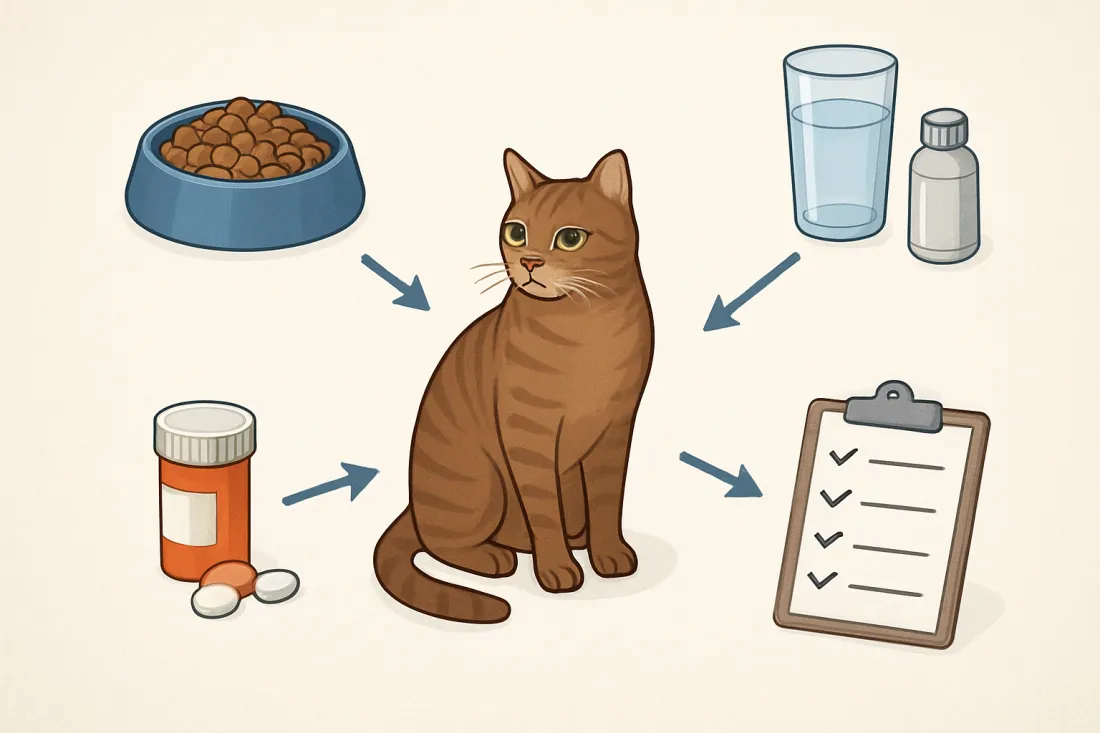
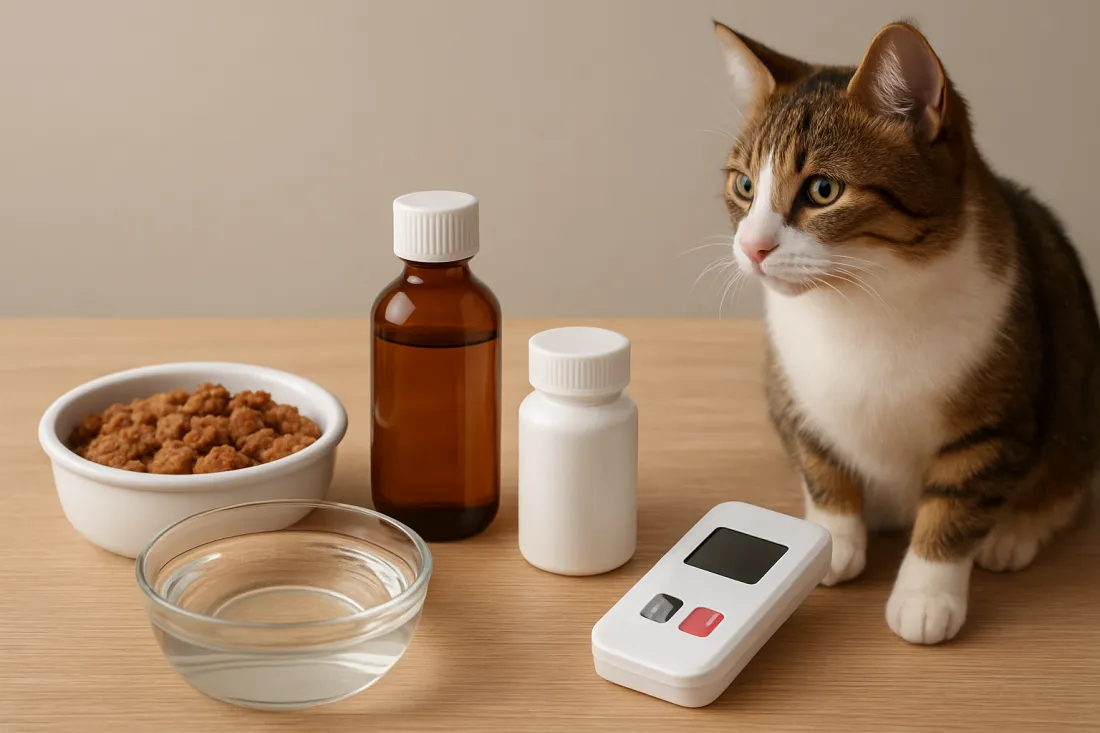
When a cat is diagnosed with chronic kidney disease (CKD), treatment usually means long‑term management, not a one‑time cure. Most cats do best with a combination of:
- Prescription kidney diet (often the single most important treatment)
- Careful hydration support (water access, wet food, sometimes fluid therapy)
- Medications and supplements to control symptoms and slow progression
- Regular blood and urine tests to adjust the plan
- Home monitoring of appetite, weight, drinking, peeing, and comfort
The exact mix depends on the stage of kidney disease, your cat’s age, other health problems, and what you can realistically do at home. A realistic goal is to keep your cat comfortable, eating, and enjoying life for as long as possible.
Understanding chronic kidney disease in cats in simple terms
Chronic kidney disease means the kidneys are slowly losing their ability to do their normal jobs over months to years. In cats, those jobs include:
- Filtering waste products from the blood
- Balancing water, salts, and minerals (like potassium and phosphorus)
- Helping control blood pressure
- Helping make red blood cells
When kidneys are damaged, waste builds up, fluid balance is off, and other organs are affected. CKD is common in older cats, but younger cats can develop it from birth defects, infections, toxins, or other diseases. CKD is usually progressive. Treatment focuses on slowing that progression and managing the side effects.
Stages of kidney disease and why they matter for treatment
Vets often describe CKD in stages from mild to severe. Different systems exist, but the idea is the same: higher stage = more kidney damage and more symptoms. You do not need to memorize numbers. What matters is asking your vet which stage your cat is in and what that means for treatment. In general:
- Early / mild CKD – Bloodwork is only slightly abnormal. Your cat may seem normal or just a bit thirstier or pickier with food. Treatment often focuses on diet change, monitoring, and mild supplements.
- Moderate CKD – Waste products are more elevated. You may see weight loss, vomiting, bad breath, or more obvious thirst and urination. Treatment usually adds medications, more frequent checks, and sometimes fluid therapy.
- Advanced / severe CKD – Kidneys are badly damaged. Cats often feel unwell, may not eat, and can be dehydrated or anemic. Treatment is more intensive and focuses on comfort, nausea control, and quality of life. Some cats need frequent fluids and multiple medications.
Ask your vet to explain your cat’s stage in plain language and how it affects the plan now and in the next 6–12 months.
Common symptoms of chronic kidney disease in cats
Recognizing symptoms helps you catch CKD earlier and monitor how well treatment is working. Common signs include:
- Increased thirst – You notice your cat at the water bowl more often or the water dish empties faster.
- Increased urination – Larger clumps in the litter box, or accidents outside the box.
- Weight loss – Even if your cat seems to eat normally at first.
- Decreased appetite – Picky eating, walking away from food, or eating less than usual.
- Vomiting or nausea – Occasional or frequent vomiting, lip licking, drooling, or sniffing food and walking away.
- Lethargy – Sleeping more, less interest in play or interaction.
- Bad breath – A chemical or ammonia‑like smell can be related to kidney waste buildup.
- Poor coat quality – Dull, unkempt fur, less grooming.
None of these signs prove CKD by themselves, but they are strong reasons to see a vet for blood and urine tests.
Diagnostic tests for feline kidney disease explained
To diagnose and stage CKD, vets usually combine several tests. Understanding them helps you follow treatment decisions.
- Blood chemistry panel
Checks waste products and other values. Your vet may mention:- Creatinine and BUN – Waste products that rise when kidneys are not filtering well.
- SDMA – A marker that can rise earlier in kidney disease than creatinine in some cats.
- Phosphorus – Often increases as CKD worsens; controlling it is a key treatment goal.
- Potassium – Can be low or high; both can cause weakness or heart issues.
- Calcium and other electrolytes – Help guide diet and medication choices.
- Complete blood count (CBC)
Looks at red and white blood cells. CKD cats can develop anemia (low red cells), which affects energy and treatment choices. - Urinalysis
Checks urine concentration, protein, blood, and signs of infection. CKD cats often have dilute urine and may leak protein. Urine tests also help rule out urinary tract infections. - Urine culture
If infection is suspected, a culture identifies bacteria and which antibiotics are likely to work. - Blood pressure measurement
High blood pressure is common in CKD and can damage eyes, brain, and heart. If present, it usually needs medication. - Imaging (ultrasound or X‑rays)
Sometimes used to look at kidney size and structure, check for stones, cysts, or tumors, and rule out other problems.
Ask your vet to walk you through which values are most important for your cat and what changes they are watching over time.
Comparison of main treatment options for chronic kidney disease in cats
| Treatment option | When vets often use it | Main benefits | Challenges or risks | What you do at home |
|---|---|---|---|---|
| Prescription kidney diet | Usually from early CKD onward, if your cat will eat it | Helps reduce kidney workload, control phosphorus, and support longer, better quality life | Some cats dislike the taste; switching too fast can cause food refusal | Transition slowly, monitor appetite and weight, avoid extra high‑phosphorus treats |
| Hydration support (wet food, water fountains) | All stages; especially when your cat drinks or pees more | Helps prevent dehydration, supports kidney function, may reduce constipation | Some cats resist diet changes; fountains need cleaning and maintenance | Offer multiple water sources, feed more wet food, track litter box clump size |
| Subcutaneous (under‑the‑skin) fluids | Moderate to advanced CKD, or when your vet sees dehydration | Improves hydration, can boost energy and appetite in many cats | Needles can be stressful; risk of over‑hydration if given incorrectly | Give fluids at home as instructed, watch for breathing changes or swelling |
| Medications for nausea and appetite | Any stage when your cat is nauseous or not eating well | Reduces vomiting and nausea, helps maintain food intake and weight | Some meds are bitter or need precise dosing; possible side effects | Give pills or liquids on schedule, monitor for behavior changes or GI upset |
| Phosphate binders | When blood phosphorus stays high despite kidney diet | Helps control phosphorus, which may slow disease progression and improve comfort | Must be given with food; can cause GI upset in some cats | Mix with meals exactly as prescribed, recheck bloodwork as advised |
| Blood pressure medication | When high blood pressure is diagnosed | Protects eyes, brain, heart, and remaining kidney function | Needs regular monitoring; under‑ or over‑dosing can be harmful | Give daily, return for blood pressure checks, watch for weakness or collapse |
| Potassium or other supplements | When blood tests show specific deficiencies | Can improve muscle strength, heart rhythm, and overall well‑being | Too much can be dangerous; must match lab results | Use only what your vet prescribes, never add over‑the‑counter supplements on your own |
| Pain management and comfort care | Advanced CKD or when arthritis, mouth pain, or other issues are present | Improves quality of life, mobility, and willingness to eat and interact | Some pain meds are processed by kidneys or liver and need careful dosing | Give meds exactly as directed, report any sedation, vomiting, or behavior changes |
Diet and prescription food for cats with kidney disease
Diet is often the foundation of CKD treatment. Kidney diets are specially formulated to:
- Limit phosphorus and sometimes protein to reduce kidney workload
- Provide high‑quality, easily digestible protein
- Adjust sodium and other minerals
- Add omega‑3 fatty acids and other nutrients that may support kidney health
How to transition to a kidney diet Cats can be very sensitive to food changes. A rushed switch can backfire.
- Go slowly – Over 1–2 weeks or longer, mix a small amount of kidney food into the current food and gradually increase the proportion.
- Prioritize calories over perfection – A cat eating a non‑ideal food is better than a cat not eating at all. If your cat refuses the kidney diet, tell your vet; there may be alternative brands, flavors, or strategies.
- Use variety within the kidney range – Many brands offer multiple flavors and textures (pâté, chunks, dry). Rotating can help picky cats.
- Limit high‑phosphorus extras – Frequent treats like cheese, liver, or certain fish can undo diet benefits. Ask your vet which treats are safer.
What if my cat will not eat kidney food? This is common. Options to discuss with your vet include:
- Trying different kidney diet brands or flavors
- Warming food slightly to enhance smell
- Adding a small amount of a favorite food as a topper
- Using nausea or appetite medications to make eating easier
- Using phosphate binders with a non‑kidney diet if no kidney food is accepted
Never starve or severely restrict food to “force” a diet change. Cats can develop serious liver problems if they do not eat for even a few days.
Hydration and fluid therapy for cats with CKD
Because CKD cats lose more water in their urine, staying hydrated is critical. Daily hydration strategies at home
- Offer multiple water bowls in quiet, accessible spots.
- Use wide, shallow bowls to avoid whisker stress.
- Consider a cat water fountain if your cat likes running water.
- Feed more wet food; you can add a little extra water or broth (without onions, garlic, or added salt) if your vet approves.
- Monitor litter box clumps; very small clumps may signal dehydration, while very large clumps show increased urine output.
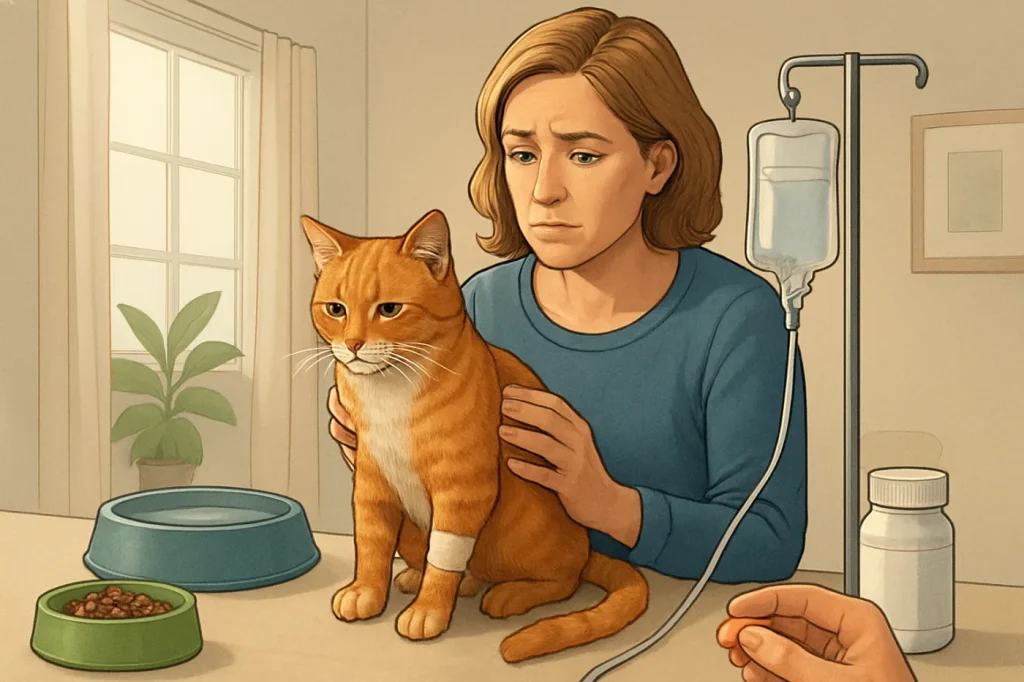
Subcutaneous (under‑the‑skin) fluids Many CKD cats eventually benefit from fluids given under the skin at home. Your vet or nurse can teach you how. What to know:
- Fluids are usually given on a schedule (for example, every few days), but the exact plan must come from your vet.
- They help correct mild to moderate dehydration and can improve energy and appetite.
- You will learn how to hang the fluid bag, insert the needle under the skin, and watch for a small “fluid pocket” that absorbs over a few hours.
- Contact your vet urgently if you notice trouble breathing, extreme lethargy, or swelling in the legs or chest area after fluids.
Do not start or change fluid amounts without veterinary guidance.
Medications and supplements commonly used in feline CKD
Every cat’s prescription list is different, but common categories include:
- Nausea and vomiting control
Used when waste buildup makes cats feel sick. These drugs can reduce vomiting, lip licking, drooling, and food refusal. - Appetite stimulants
Help cats who are not eating enough on their own. They are often used short‑term while other treatments take effect. - Phosphate binders
Powders, liquids, or tablets given with meals to reduce phosphorus absorption when diet alone is not enough. - Blood pressure medications
Given if your cat has high blood pressure, to protect organs and reduce the risk of sudden blindness or neurologic problems. - Potassium supplements
Used when blood tests show low potassium, which can cause weakness, poor appetite, and heart rhythm issues. - Antacids or stomach protectants
Help with stomach irritation, ulcers, or acid‑related discomfort. - Medications for protein loss in urine
Some cats leak protein in their urine; certain drugs can reduce this and may help protect remaining kidney function. - Antibiotics
Used only if a urinary tract infection or other infection is confirmed or strongly suspected. - Supplements
Your vet may suggest specific products (for example, omega‑3 fatty acids or kidney‑support formulas). Do not add over‑the‑counter supplements without checking; some can be harmful in CKD.
Always tell your vet about any other medications or supplements your cat receives, including joint products, calming aids, or herbal remedies.
Home monitoring checklist for a cat with chronic kidney disease
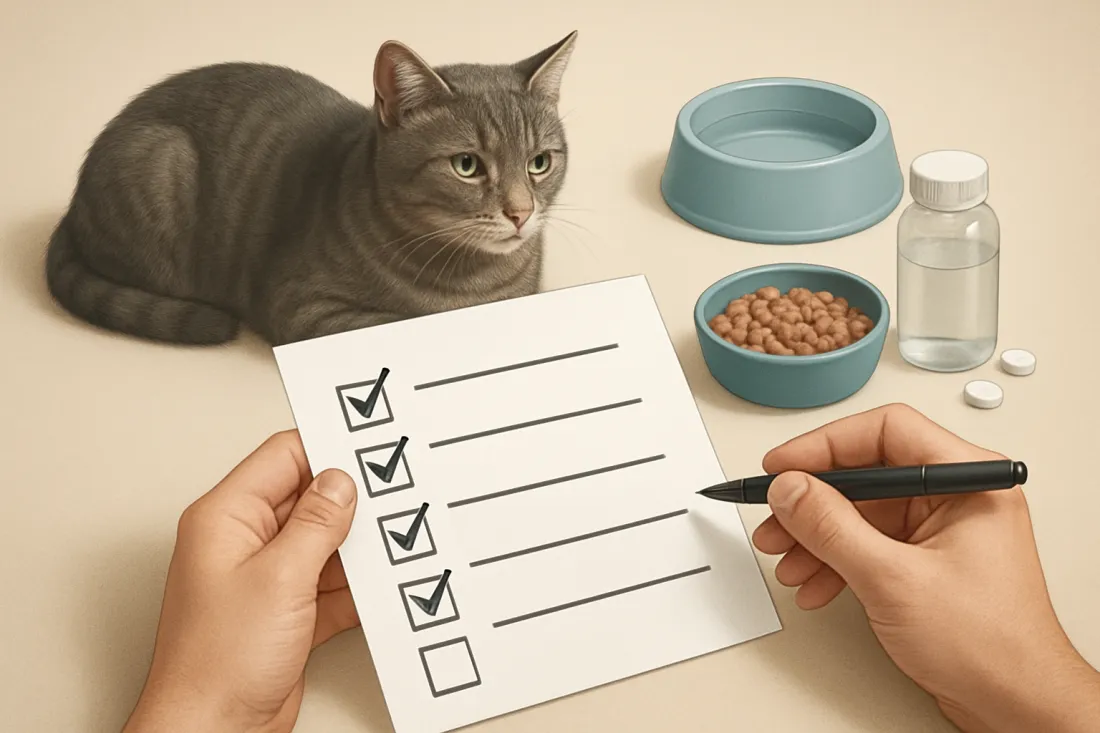
Use this practical checklist to track your cat between vet visits. Bring notes or photos to appointments.
- Daily
- Appetite: How much of each meal is eaten? Any food refusal?
- Water intake: Notice changes in how often your cat drinks.
- Vomiting: Note frequency, time, and what the vomit looks like.
- Energy and behavior: Is your cat hiding, less social, or less playful?
- Litter box: Size and number of urine clumps; any accidents or straining.
- Medications: Check off each dose given; watch for side effects.
- Weekly
- Weight: If possible, weigh your cat on a baby scale or by weighing yourself with and without the cat. Sudden loss is a red flag.
- Body condition: Feel along the ribs and spine; are bones more prominent?
- Coat quality: Is the fur greasy, dull, or matted more than usual?
- Every vet visit
- Bring your notes and questions.
- Ask for updated weight and blood pressure.
- Review blood and urine results and what changed since last time.
- Confirm the current medication list and doses.
- Call your vet promptly if you notice
- Not eating for more than 24 hours, or eating much less for several days.
- Repeated vomiting or diarrhea.
- Sudden blindness signs (bumping into things, wide pupils that do not respond to light).
- Severe lethargy, collapse, or trouble breathing.
- Very swollen belly, legs, or face after fluids.
Step‑by‑step plan after a chronic kidney disease diagnosis
This structured checklist turns a new diagnosis into manageable steps.
- Clarify the diagnosis
- Ask your vet which stage of CKD your cat has.
- Request a simple explanation of key blood and urine results.
- Confirm whether any other conditions (like thyroid disease or diabetes) are present.
- Agree on priorities for the next 4–6 weeks
- Is the main goal to improve appetite, control vomiting, manage blood pressure, or start a new diet?
- Write down the top 2–3 goals so you know what to watch.
- Set up the treatment routine
- List all medications, doses, and times of day.
- Plan how you will give pills or liquids (pill pockets, flavored liquids, gentle restraint).
- If fluids are prescribed, schedule training and your first at‑home session.
- Adjust the diet gradually
- Choose at least one kidney diet option to try.
- Plan a slow transition and decide how you will track intake.
- Ask which treats are acceptable.
- Prepare your home
- Place extra water bowls and litter boxes in easy‑to‑reach locations.
- Create a quiet, comfortable resting area with a warm bed.
- Consider low‑sided litter boxes if your cat has arthritis or weakness.
- Schedule follow‑up testing
- Ask when the next blood and urine tests should happen.
- Put reminders in your calendar.
- Review and adjust regularly
- At each visit, review what is working and what is hard to manage.
- Discuss any changes in appetite, weight, or behavior.
- Update the plan as your cat’s needs change.
Quality of life considerations for cats with kidney disease
CKD is a long‑term condition, so quality of life is as important as lab numbers. Signs your cat is still enjoying life
- Shows interest in food and favorite treats
- Seeks attention, purrs, or enjoys grooming
- Moves around the home, explores, or uses favorite spots
- Grooms at least somewhat, even if less than before
- Has more good days than bad days over a few weeks
Signs that quality of life may be poor
- Persistent lack of appetite despite treatment
- Frequent vomiting or nausea that does not improve
- Constant hiding, little interest in interaction
- Difficulty moving to food, water, or litter box
- Obvious pain, distress, or trouble breathing
- More bad days than good days over time
Discuss these signs openly with your vet. Together, you can decide when to adjust treatment, focus more on comfort, or consider humane end‑of‑life options.
Common mistakes to avoid when treating feline chronic kidney disease
Avoiding a few key pitfalls can make a big difference.
- Stopping medications or diet without guidance
Suddenly stopping a kidney diet, blood pressure medication, or other prescribed treatment can cause setbacks. Always talk to your vet before changing anything. - Letting your cat go without food
Trying to “force” a diet change by offering only kidney food can lead to dangerous fasting. If your cat will not eat the new food within a day, contact your vet for a different strategy. - Using human painkillers or random supplements
Many human drugs and some over‑the‑counter pet products are unsafe for CKD cats. Never give medications or supplements without veterinary approval. - Skipping follow‑up tests
CKD and its treatment change over time. Without blood, urine, and blood pressure checks, it is easy to miss problems like high phosphorus or anemia until your cat feels very sick. - Over‑ or under‑doing fluids
Giving more subcutaneous fluids than prescribed, or stopping them on your own, can both be harmful. Follow the plan and ask before making changes. - Focusing only on numbers, not behavior
Lab values matter, but your cat’s comfort, appetite, and behavior are just as important. Share what you see at home; it helps your vet fine‑tune treatment.
Key questions to ask your vet about your cat’s kidney disease
Bringing written questions can make appointments more productive. Useful questions include:
- Which stage of chronic kidney disease does my cat have, and what does that mean in everyday terms?
- What are the top priorities for treatment right now (diet, blood pressure, nausea, fluids)?
- Which specific foods do you recommend, and how should I transition safely?
- What medications and supplements is my cat on, and what is each one for?
- What side effects should I watch for with these medications or fluids?
- How often should we repeat bloodwork, urine tests, and blood pressure checks?
- What changes at home should prompt an urgent call or emergency visit?
- How will we know when to adjust the treatment plan or focus more on comfort care?
- Are there any lifestyle changes (litter box setup, ramps, extra beds) that would help my cat feel better?
- What is a realistic outlook for my cat, and how can I tell if they are still having more good days than bad?
If you are worried about costs, you can also ask about prioritizing tests and treatments and discuss options like pet insurance or payment planning. For broader budgeting tips, you may find it helpful to read guidance such as how to afford vet bills for dogs and cats.
How to decide on the right treatment mix for your cat
There is no single “best” CKD plan. Decisions usually balance:
- Stage and lab results – More advanced disease often needs more intensive treatment.
- Your cat’s personality – Some cats tolerate pills and fluids well; others become highly stressed.
- Your schedule and comfort level – Daily fluids or multiple medications may not be realistic for every household.
- Other health issues – Arthritis, heart disease, or diabetes can change what is safe or practical.
- Financial limits – Being honest about your budget helps your vet prioritize the most impactful options.
Tell your vet what you can realistically do. A slightly simpler plan you can follow consistently is better than a perfect plan that is impossible to maintain.
Frequently asked questions about treatment options for chronic kidney disease in cats
What is the most important treatment for a cat with chronic kidney disease?
For many cats, a well‑accepted prescription kidney diet is the single most important long‑term treatment. It helps reduce kidney workload and control phosphorus, which can slow disease progression and improve comfort. That said, diet alone is rarely enough. Hydration support, nausea control, and blood pressure management are also crucial when needed. The “most important” treatment for your cat is the one that addresses their biggest current problem while still being realistic to give every day.
Can a cat with chronic kidney disease live a normal life?
Many cats with early or moderate CKD can live for years with good quality of life when the disease is caught early and managed consistently. They may need special food, regular checkups, and occasional medications, but can still play, cuddle, and enjoy daily routines. In advanced stages, the focus often shifts to comfort and minimizing distress. The outlook varies widely, so ask your vet for a personalized discussion based on your cat’s stage, lab results, and response to treatment.
What treatment mistakes should I avoid with a cat that has kidney disease?
Avoid letting your cat go without food to “force” a diet change, stopping medications or fluids without veterinary advice, using human painkillers or random supplements, and skipping follow‑up tests. Also avoid ignoring subtle changes like increased hiding, smaller meals, or more vomiting; these can be early signs that the treatment plan needs adjustment. When in doubt, call your vet and describe what you are seeing at home.
What should I do right after my cat is diagnosed with chronic kidney disease?
Right after diagnosis, focus on understanding the stage, agreeing on 2–3 short‑term goals with your vet, and setting up a simple routine you can follow. Ask for written instructions for medications, diet transition, and any fluid therapy. Prepare your home with extra water bowls and easy‑access litter boxes, and start a daily log of appetite, drinking, and litter box habits. Schedule the recommended follow‑up tests so you can see how your cat responds to the initial plan.
How often should a cat with chronic kidney disease see the vet?
Visit frequency depends on disease stage and stability. Newly diagnosed or unstable cats may need rechecks and lab work after a few weeks to fine‑tune treatment. Stable cats in earlier stages are often seen every few months, while advanced CKD cats may need closer monitoring. Rather than relying on a fixed schedule, ask your vet for a specific plan for your cat and confirm when to come in sooner if symptoms change.
What to do next if your cat has or might have kidney disease
- If you suspect CKD based on thirst, urination, weight loss, or vomiting, book a vet visit for blood and urine tests as soon as you can. Regular checkups are also part of a good annual vet care schedule for dogs and cats USA.
- If your cat is already diagnosed, use the step‑by‑step plan above to organize questions, treatment routines, and follow‑ups.
- Watch your cat’s behavior and comfort as closely as you watch lab results; both matter for decisions.
- Ask for help if giving medications or fluids feels overwhelming; vets and nurses can often suggest easier techniques or adjustments.
With realistic expectations, consistent care, and a plan tailored to your household, many cats with chronic kidney disease can continue to enjoy their lives and their bond with you for a long time.