
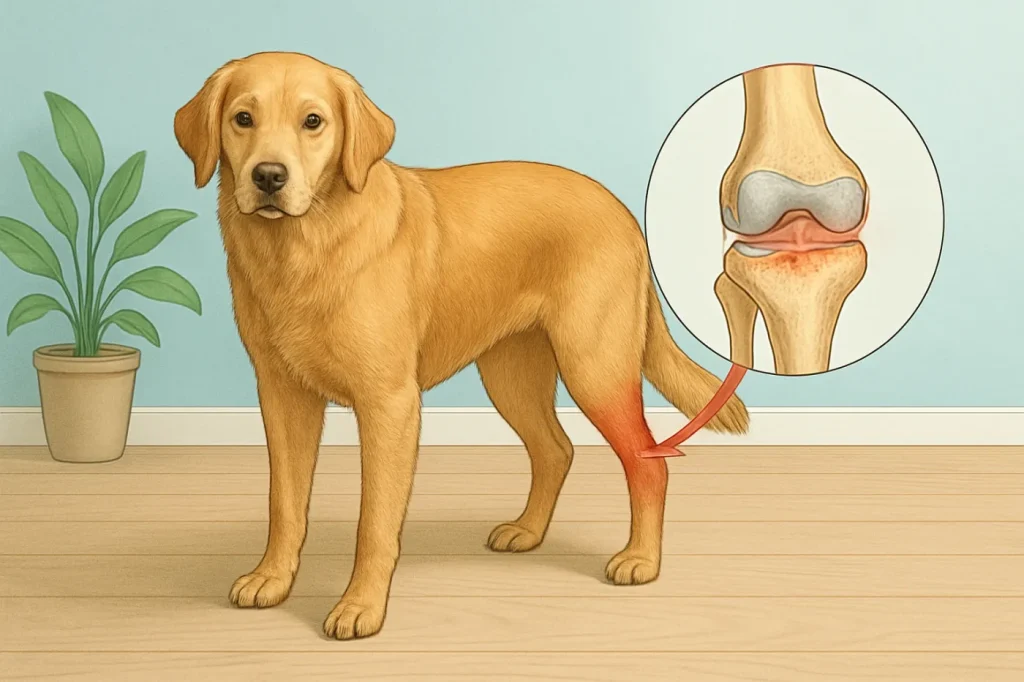
Arthritis in dogs is a long-term joint disease that makes movement painful, stiff, and less flexible. It happens when the structures inside a joint become inflamed and gradually break down, so everyday actions like standing up, walking, or climbing stairs become uncomfortable or even painful for your dog.
Most dogs with arthritis can still enjoy life for many years if the problem is recognized early and managed well. Understanding what arthritis is, which types exist, and how it shows up at different ages is a key part of responsible pet ownership.
What arthritis in dogs actually is
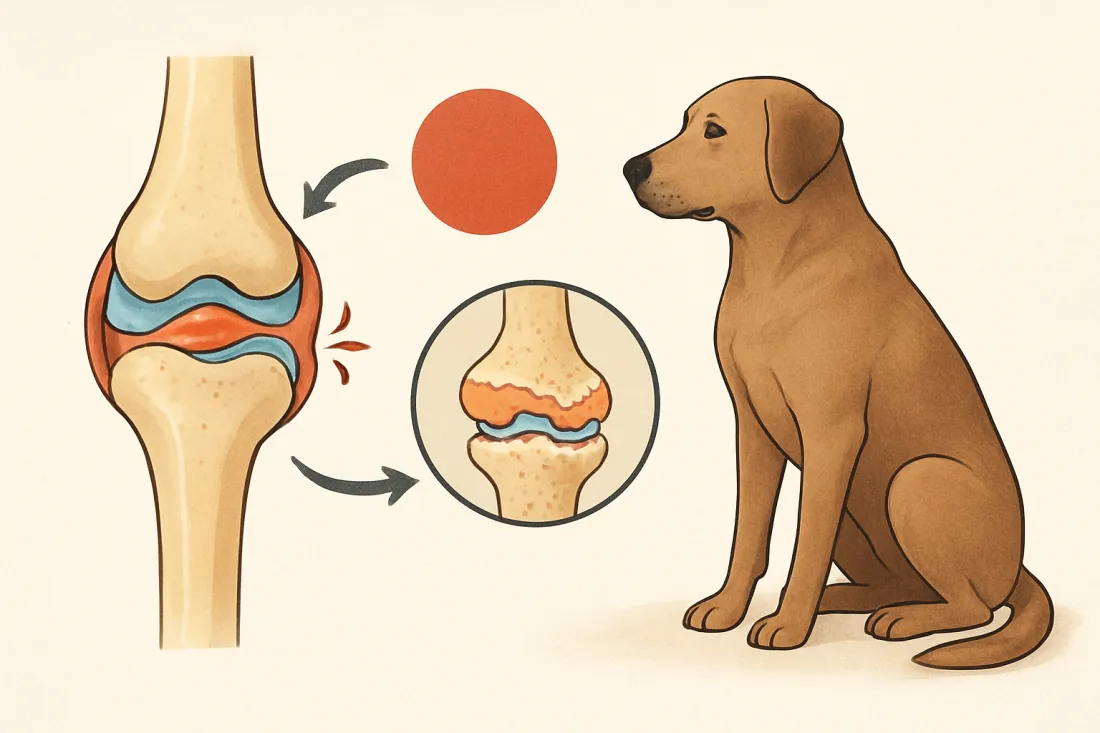
Arthritis in dogs is a chronic (long-lasting), progressive disease of one or more joints. Over time it usually gets worse rather than going away on its own. It typically involves:
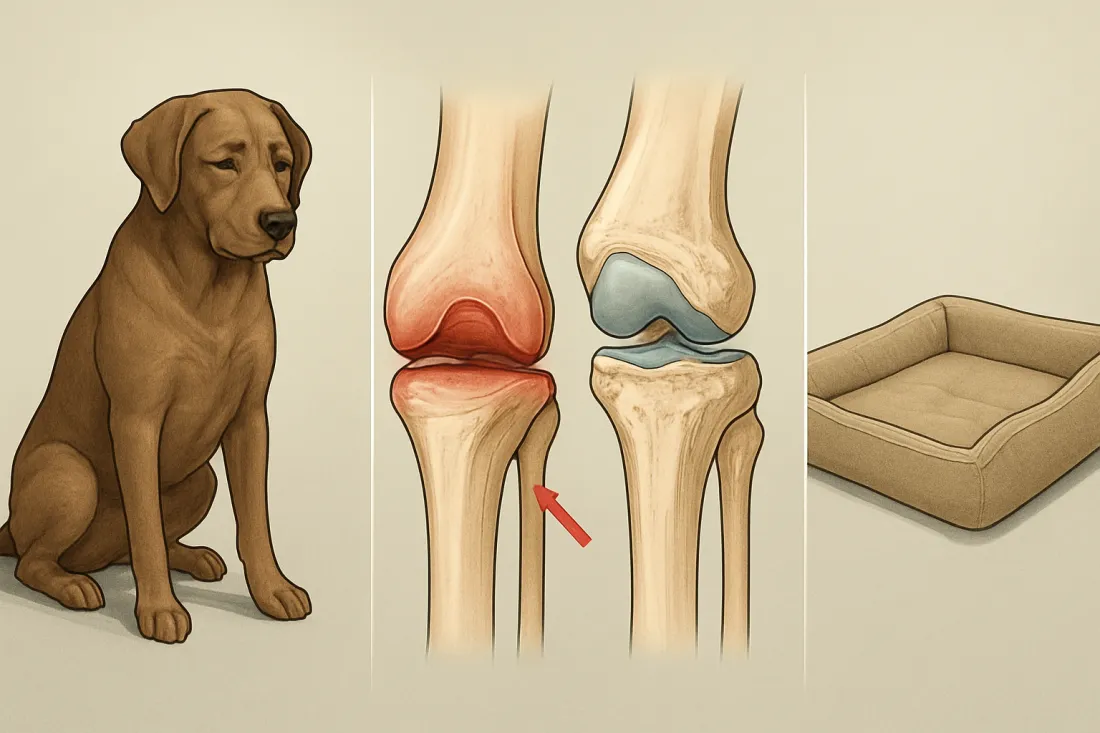
- Inflammation inside the joint, which makes it swollen and sore.
- Degeneration (wear and tear) of cartilage, the smooth tissue that cushions the ends of bones.
- Changes to the bone, such as small bony growths around the joint.
- Thickening of joint tissues, which reduces normal movement.
As these changes build up, the joint surface becomes less smooth and more painful to move. Dogs often show this as stiffness, limping, slowing down on walks, or avoiding activities they used to enjoy.
Arthritis is often called osteoarthritis or degenerative joint disease. These terms usually refer to the most common type of arthritis in dogs, where wear and tear and joint changes build up over time.
Main types of arthritis in dogs
Not all arthritis is the same. Knowing the main types helps you understand why your dog might be affected and what your veterinarian may look for.
| Type of arthritis | What it means | Typical causes or triggers | Commonly affected dogs | What it looks like day to day |
|---|---|---|---|---|
| Osteoarthritis (degenerative joint disease) | Cartilage slowly wears away; bone and joint tissues change and become painful. | Long-term wear and tear, previous injuries, joint shape problems, extra weight. | Middle-aged and senior dogs; large breeds; dogs with old injuries. | Stiffness after rest, slower on walks, trouble with stairs, reluctance to jump. |
| Immune-mediated arthritis | The dog’s immune system mistakenly attacks its own joints, causing inflammation. | Immune system dysfunction; sometimes linked to infections or other immune diseases. | Often younger to middle-aged adults; can affect multiple joints at once. | Sudden or shifting lameness, multiple swollen joints, fever, dog seems very unwell. |
| Infectious (septic) arthritis | Bacteria or other germs get into a joint and cause infection and inflammation. | Penetrating wounds, surgery, spread from another infection in the body. | Any age; often just one joint is affected. | Very painful, hot, swollen joint; dog may not put weight on the leg; often fever. |
| Arthritis secondary to developmental joint disease | Abnormal joint development leads to early wear and arthritis. | Inherited or developmental problems that affect how the joint forms. | Often large or giant breeds; signs may start in young adulthood. | Early stiffness, difficulty rising, bunny-hopping gait, tiring quickly on walks. |
For most pet dogs, when people say “arthritis,” they are talking about osteoarthritis, the degenerative type that slowly worsens over time. However, your veterinarian will consider all types when diagnosing your dog, especially if signs appear suddenly or your dog seems generally unwell.
Common causes and risk factors for arthritis in dogs
Arthritis usually develops because several factors come together over time. Some can be influenced by owners, and some cannot.
Factors you cannot change
- Age: The risk of osteoarthritis increases as dogs get older. Joint tissues have been working for years and naturally show more wear.
- Breed and size: Large and giant breeds often put more stress on their joints simply because they are heavier. Some breeds are also more prone to joint shape problems.
- Genetics: Some dogs inherit a tendency toward hip or elbow problems or other joint issues that later lead to arthritis.
- Past injuries: A previous fracture, ligament tear, or dislocation can damage the joint and set the stage for arthritis later in life.
Factors you can influence
- Body weight: Extra weight puts extra load on joints every time your dog moves. Even a moderate amount of excess weight can increase strain and discomfort.
- Activity style: Repetitive high-impact activities (like constant jumping for balls or running on hard surfaces) can stress joints, especially in young, growing dogs.
- Joint support and muscle strength: Weak muscles around a joint mean less support and more strain on the joint surfaces.
- Delay in treating joint problems: If early joint issues (like a mild limp or ligament injury) are ignored, the joint may become unstable and wear down faster.
Responsible pet ownership includes managing the factors you can control: keeping your dog at a healthy weight, choosing sensible exercise, and getting early veterinary help for limping or stiffness.
How arthritis affects dogs at different life stages
Arthritis does not look the same in a young adult dog as it does in a senior. Recognizing age-specific signs helps you notice problems sooner.
Early adulthood (around 1–5 years)
Arthritis is less common in very young dogs, but it can appear if there are developmental joint problems or serious injuries. Signs may be subtle and easy to miss.
- Occasional limping after hard play that seems to come and go.
- Reluctance to jump into the car or onto furniture, even though the dog is otherwise energetic.
- “Bunny hopping” with the back legs when running, instead of moving each leg separately.
- Uneven muscle size in the back legs or shoulders.
At this stage, owners sometimes assume the dog is just “sore from playing.” Repeated or persistent signs, even if mild, are a reason to talk to your veterinarian.
Middle age (around 5–9 years, depending on breed)
Many dogs first show clearer arthritis signs in middle age. Owners may notice changes in routine rather than obvious pain.
- Stiffness when getting up after sleeping, especially in the morning.
- Taking longer to warm up on walks, then moving more freely after a few minutes.
- Slowing down on walks or lagging behind, especially on hills or stairs.
- Hesitation before jumping, climbing stairs, or getting into the car.
- Less interest in rough play or long fetch sessions.
- Occasional limping that improves with rest but keeps returning.
Because these changes can be gradual, it is easy to label them as “just getting older.” However, they are often early arthritis signs, and this is a key time when treatment and lifestyle changes can make a big difference.
Senior dogs (often 8+ years, earlier for giant breeds)
In older dogs, arthritis can significantly affect daily comfort and independence.
- Marked stiffness or difficulty rising, sometimes needing help to stand.
- Shorter, slower walks; some dogs may refuse longer routes they used to enjoy.
- Noticeable limping or favoring one or more legs.
- Struggling with slippery floors, stairs, or getting into the car.
- Changes in posture, such as a hunched back or tucked-up abdomen.
- Behavior changes: irritability, restlessness at night, or avoiding being touched in certain areas.
- Muscle loss around affected joints, making limbs look thinner.
Senior dogs can still have a good quality of life with arthritis, but they often need a combination of pain relief, joint support, and home adjustments.
Typical signs and symptoms of arthritis in dogs
While age influences how arthritis looks, many signs are common across life stages. Watch for:
- Movement changes: stiffness, limping, slower pace, difficulty jumping or climbing.
- Behavior changes: less playful, more withdrawn, grumpy when touched near joints.
- Daily routine changes: reluctance to go on walks, struggling to get comfortable, pacing at night.
- Physical changes: swollen joints, muscle loss, changes in posture.
Dogs rarely cry out with chronic arthritis pain. Instead, they quietly adjust how they move. Any ongoing change in movement or behavior is worth a veterinary visit.
When to call the vet about possible arthritis
Contact your veterinarian if you notice any of the following for more than a few days:
- Limping or favoring one leg, even if it seems mild.
- Stiffness after rest that keeps coming back.
- Reluctance to jump, climb stairs, or get into the car.
- Obvious slowing down on walks or refusing usual exercise.
- Behavior changes such as irritability, hiding, or avoiding touch.
Seek urgent veterinary care if you see:
- A suddenly very painful, hot, or swollen joint.
- Your dog cannot put weight on a leg at all.
- Severe lethargy, fever, or your dog seems generally very unwell along with joint pain.
- Sudden paralysis or loss of control of the back legs.
These urgent signs can indicate infection, serious injury, or other conditions that need prompt treatment.
How vets diagnose arthritis in dogs
To confirm arthritis and rule out other problems, your veterinarian may:
- Take a detailed history: when signs started, how they have changed, and what makes them better or worse.
- Perform a physical and orthopedic exam: feeling joints for pain, swelling, or reduced movement; watching your dog walk and move.
- Recommend imaging: X-rays are commonly used to look for joint changes; sometimes more advanced imaging is suggested.
- Order lab tests: blood work or joint fluid analysis may be used if immune-mediated or infectious arthritis is suspected.
Diagnosis is important because different types of arthritis and other joint diseases can look similar on the surface but need different treatments.
What is the main cause of arthritis in dogs
For most pet dogs, the main underlying cause of arthritis is long-term wear and tear on joints that are already stressed or shaped abnormally. Several common contributors include:
- Extra body weight adding constant load to joints.
- Inherited or developmental joint problems that make the joint surfaces fit poorly.
- Old injuries that left a joint unstable or damaged.
- Years of high-impact activity on hard surfaces.
These factors gradually damage cartilage and joint structures, leading to osteoarthritis. While you cannot change your dog’s genetics or past injuries, you can reduce ongoing wear by managing weight, choosing appropriate exercise, and treating joint issues early.
Can arthritis in dogs be reversed
Once joint structures have changed significantly, arthritis itself is generally not reversible. Cartilage that has worn away does not reliably grow back to its original healthy state.
However, many aspects of arthritis can be improved:
- Pain can often be reduced with medication and lifestyle changes.
- Stiffness can be eased with controlled exercise and physical therapy.
- Progression of joint damage can often be slowed with weight control and joint support.
- Quality of life can be greatly improved, even in dogs with established arthritis.
The goal is usually to manage arthritis rather than cure it: keeping your dog as comfortable, mobile, and happy as possible for as long as possible.
How to help a dog with arthritis pain day to day
Always work with your veterinarian on a pain-management plan. In many cases, a combination of approaches works best.
Vet-directed treatments
- Pain-relief medications: Your veterinarian may prescribe medicines designed for dogs to reduce pain and inflammation. Never give human painkillers unless your veterinarian specifically instructs you to; some are dangerous for dogs.
- Joint-support products: Your veterinarian may suggest specific joint-support diets or supplements. These are usually part of a broader plan, not a stand-alone cure.
- Physical therapy: Controlled exercises, stretching, or other therapies can improve joint function and muscle support.
- Weight-management plans: If your dog is overweight, your veterinarian can help design a safe weight-loss plan, which often reduces joint pain.
Home and lifestyle adjustments
- Gentle, regular exercise: Short, frequent walks on soft surfaces are often better than long, intense sessions. Avoid sudden bursts of high-impact activity.
- Non-slip flooring: Rugs or mats on slippery floors help your dog feel secure and reduce the risk of falls.
- Comfortable bedding: A supportive, padded bed in a warm, draft-free area can ease stiffness.
- Ramps or steps: Pet ramps or steps can make it easier to get into the car or onto furniture without jumping.
- Temperature awareness: Some dogs are stiffer in cold, damp weather. Keeping them warm and dry can help.
Comparison: early vs advanced arthritis signs and actions
Recognizing arthritis early allows more options to slow progression. Use this table to compare what you might see and what to do.
| Stage pattern | Typical signs at home | Common owner reaction | Better action to take |
|---|---|---|---|
| Earlier-stage pattern | Mild stiffness after rest, occasional limp after long play, slight hesitation to jump. | Assume dog is just tired or “getting older” and wait to see if it improves. | Book a non-urgent veterinary check, mention all changes, and ask about early joint support and weight review. |
| Moderate-stage pattern | Regular stiffness, slower walks, clear reluctance to use stairs or jump, reduced play. | Reduce walks slightly but do not seek veterinary advice; may try over-the-counter products without guidance. | Schedule a veterinary visit for a full joint assessment and tailored pain-management plan; adjust exercise under veterinary guidance. |
| Advanced-stage pattern | Struggling to rise, obvious limping, difficulty on slippery floors, behavior changes from pain. | Carry the dog more, avoid walks entirely, or consider the situation “hopeless.” | Work closely with your veterinarian on stronger pain relief, home modifications, and quality-of-life monitoring. |
Practical checklist if you suspect arthritis in your dog
Use this step-by-step checklist to guide your next actions if you think your dog may have arthritis.
1. Observe your dog for one week
- Does your dog limp or seem stiff after rest?
- Has your dog’s willingness to walk, run, or play changed?
- Is your dog hesitant to jump or use stairs?
- Have you noticed behavior changes, such as irritability or avoiding touch?
- Does your dog struggle more on slippery floors?
2. Record key details
- When did you first notice changes?
- Are signs worse at certain times (morning, after exercise, in cold weather)?
- Which legs or joints seem affected?
- What makes signs better or worse?
3. Book a veterinary appointment
- Share your observations and any videos of your dog walking or climbing stairs.
- Ask directly whether arthritis could be part of the problem.
- Discuss pain relief options, exercise guidelines, and weight goals.
4. Make simple home changes
- Add non-slip rugs where your dog walks most.
- Provide a supportive bed in an easy-to-access location.
- Use ramps or steps for cars and high furniture if needed.
- Switch to shorter, more frequent walks instead of long, intense ones.
5. Review progress regularly
- Note any changes in mobility or behavior after starting treatment.
- Follow up with your veterinarian if pain seems uncontrolled or new signs appear.
- Revisit weight and exercise plans as your dog ages.
Common mistakes owners make with arthritic dogs
Even well-meaning owners can unintentionally make arthritis worse. Avoid these frequent pitfalls:
- Assuming slowing down is just age: Many owners wait months or years before seeking help, missing a window for early support.
- Stopping all exercise: Total rest can lead to muscle loss and stiffer joints. Controlled, gentle movement is usually better than none.
- Overdoing high-impact activities: Long runs on hard surfaces, intense fetch, or repeated jumping can strain joints.
- Using human painkillers without veterinary advice: Some common human medications are unsafe or even life-threatening for dogs.
- Ignoring weight gain: Extra pounds add constant load to sore joints; weight control is one of the most effective ways to reduce strain.
- Relying only on supplements: Supplements may support joint health but usually are not enough alone for a dog with clear arthritis signs.
Decision criteria: how to tell if arthritis management is working
After starting a management plan, use these criteria to judge how well it is helping:
- Mobility: Is your dog getting up more easily and moving more smoothly?
- Activity level: Is your dog more willing to go for walks or play gently?
- Comfort: Is there less panting, restlessness, or difficulty settling at night?
- Behavior: Is your dog less irritable and more like their usual self?
- Consistency: Are good days more frequent than bad days?
If you are not seeing meaningful improvement after a reasonable trial period, or if signs worsen, speak with your veterinarian. Treatment plans often need adjustment over time.
How long can a dog with arthritis live
Arthritis itself is usually not a direct cause of death. Many dogs live for years with arthritis, especially when it is recognized early and managed well.
Quality of life depends on:
- How many joints are affected and how severely.
- How well pain is controlled with treatment.
- Whether other health issues (such as heart, kidney, or neurological problems) are present.
- How consistently weight, exercise, and home adjustments are managed.
Your veterinarian can help you monitor your dog’s comfort and mobility over time and guide you through decisions as your dog’s needs change.
FAQ about arthritis in dogs
How can I help my dog’s arthritis pain at home without making it worse
Start by getting a veterinary diagnosis and pain-management plan; this is essential. At home, focus on gentle, regular movement rather than total rest, such as short, frequent walks on soft ground. Keep your dog at a healthy weight to reduce joint strain. Add non-slip rugs, ramps, and a supportive bed to make moving around easier. Avoid high-impact activities like jumping for balls or running on hard pavement. Never give human painkillers unless your veterinarian specifically prescribes them for your dog.
How long will a dog with arthritis live if it is managed
There is no single timeline, because lifespan depends on your dog’s age, breed, overall health, and how severe the arthritis is. Many dogs live for several more years with good quality of life when arthritis is managed with appropriate medication, weight control, and home adjustments. Regular checkups help your veterinarian adjust treatment as your dog ages and ensure that pain remains under control.
What is the main cause of arthritis in dogs and can I reduce the risk
The main driver of arthritis in most dogs is long-term wear and tear on joints that are already stressed by extra weight, poor joint shape, or old injuries. You cannot change your dog’s genetics, but you can reduce risk by keeping your dog lean, choosing age-appropriate exercise, and getting early veterinary care for limping or joint injuries. While you may not be able to prevent arthritis entirely, these steps can delay its onset or reduce its impact.
Is it possible to reverse arthritis in dogs completely
Once significant joint damage has occurred, arthritis is generally not reversible. The goal is to manage it, not cure it. With the right combination of pain relief, controlled exercise, weight management, and home modifications, many dogs move more comfortably and enjoy life despite having arthritis. Regular follow-up with your veterinarian helps keep the plan effective as your dog’s needs change.
Does my dog’s vaccination or training history affect arthritis risk
Vaccinations themselves do not cause arthritis, but overall responsible care supports long-term health. Keeping up with core and required vaccines helps protect your dog from serious diseases that could weaken the body and complicate joint problems. Good basic training also makes it easier to manage exercise, weight control, and veterinary visits for an arthritic dog. If you are reviewing your dog’s overall care plan, you can also check current guidance on core vaccines for dogs by state and consider how training and house rules support safe, low-stress handling.