Safe at‑home arthritis care for dogs: what you can realistically do
Managing a dog’s arthritis at home means combining vet-prescribed treatment with daily habits that protect joints, reduce pain, and keep your dog moving safely. At home you can usually help by:
- Giving prescribed pain and anti-inflammatory medication exactly as directed
- Using joint supplements (with your vet’s approval)
- Keeping your dog lean to reduce stress on joints
- Adjusting exercise to gentle, regular movement instead of intense bursts
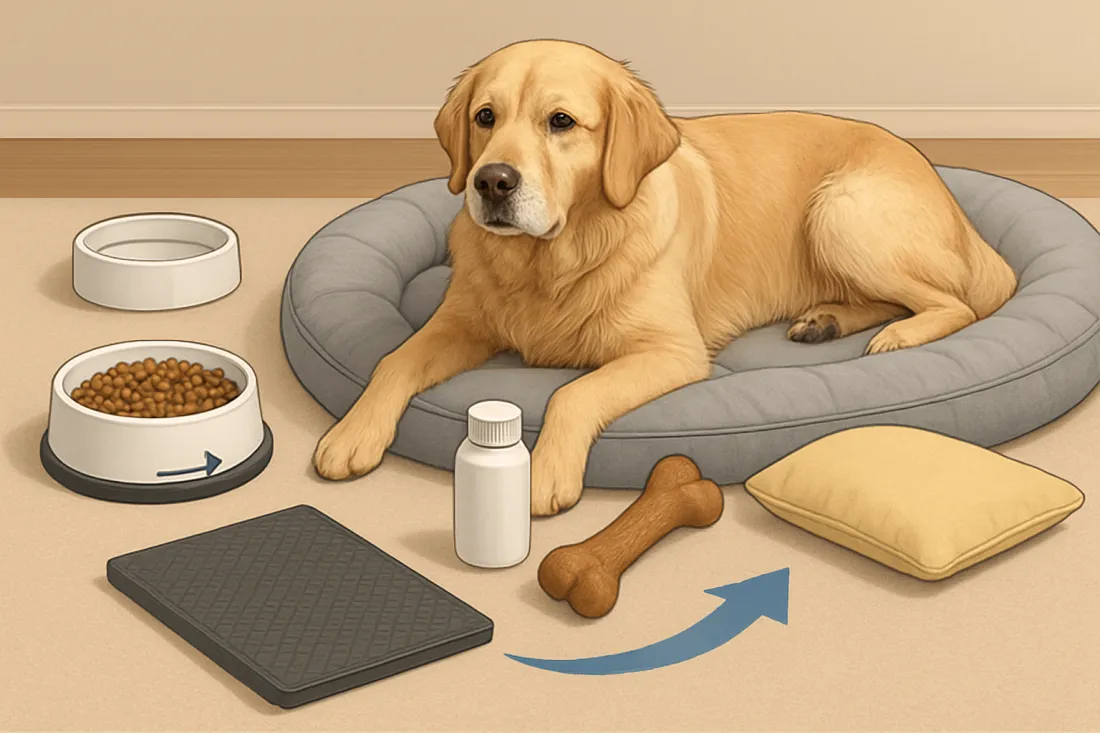
- Making the home easier to navigate (ramps, non-slip rugs, raised bowls)
- Using simple comfort measures like warm, supportive bedding
None of these replace a veterinary diagnosis. Arthritis looks similar to other serious joint and nerve problems, so the first step is always a vet visit to confirm what is going on and to set up a treatment plan you can safely continue at home.
Understanding canine arthritis before you treat it at home
Arthritis in dogs is usually a long-term (chronic) joint disease where the smooth cartilage in the joint wears down. That leads to pain, stiffness, and reduced mobility. It is most common in older dogs, large breeds, and dogs with a history of joint injury, but any dog can develop it. You cannot cure arthritis at home, but you can often:
- Slow down further joint damage
- Reduce day-to-day pain
- Maintain muscle strength and mobility
- Improve quality of life and comfort
To do that safely, you need to recognize the signs, know when home care is appropriate, and know when it is not.
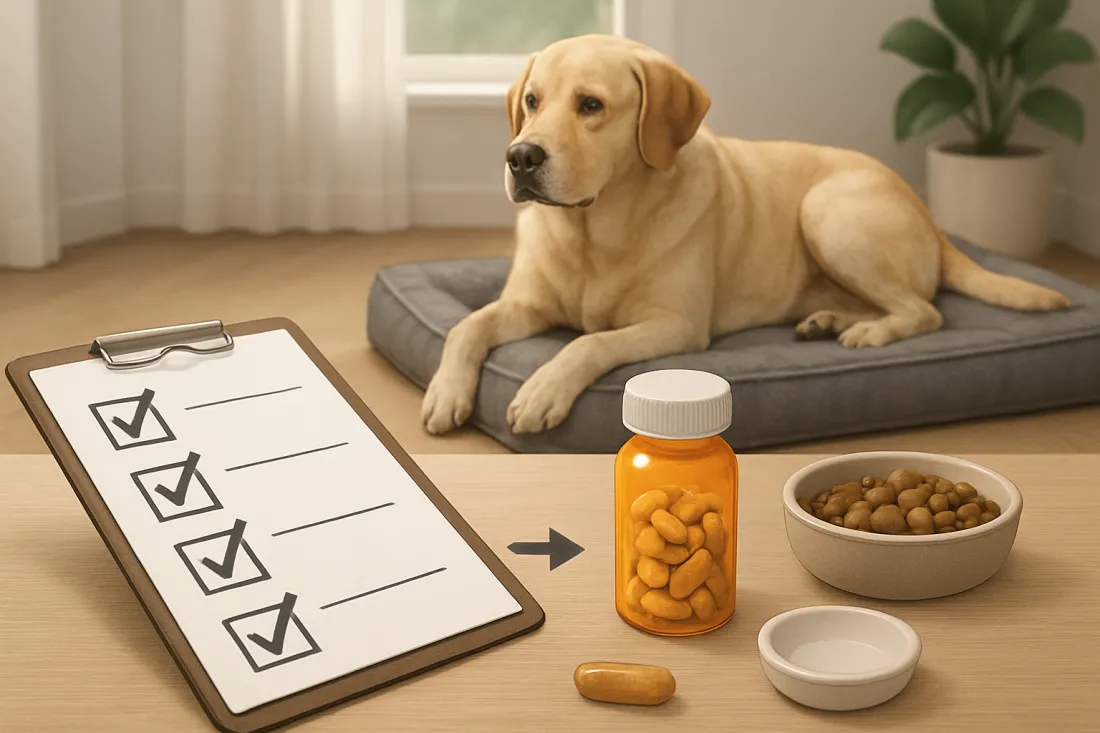
Checklist: common signs and symptoms of arthritis in dogs
Use this checklist to note what you see before you talk with your vet. Tick any that apply:
- Stiffness after rest – slow to get up after sleeping, then loosens up with gentle movement
- Limping or favoring a leg – especially after exercise or first thing in the morning
- Difficulty with stairs – hesitating, stopping halfway, or refusing stairs
- Trouble jumping – no longer jumping into the car, onto the couch, or onto the bed
- Slower on walks – lagging behind, wanting to turn back sooner, or sitting down mid-walk
- Exercise intolerance – tiring quickly from activities that used to be easy
- Joint sensitivity – flinching, growling, or moving away when you touch hips, knees, shoulders, or elbows
- Behavior changes – irritability, restlessness at night, or seeming depressed
- Muscle loss – thighs or shoulders looking thinner over time
- Changes in posture – hunched back, tucked tail, or shifting weight off a painful limb
These signs can strongly suggest arthritis, but they can also appear with other problems such as ligament tears or spinal issues. That is why a veterinary exam is essential before you rely on home treatment.
When to see a vet instead of relying on home treatment
Home management is only safe once a vet has confirmed arthritis and ruled out emergencies. Arrange a prompt vet visit if:
- Your dog has any new or worsening limp lasting more than a day or two
- There is sudden severe lameness – not bearing weight on a leg at all
- You notice swelling, heat, or obvious deformity in a joint
- Your dog cries out when moving, jumping, or being touched
- There is loss of bladder or bowel control or dragging of the back legs
- Your dog becomes very lethargic, stops eating, or vomits
Even if symptoms are mild, schedule a non-urgent appointment when you first notice stiffness, reluctance to jump, or slowing down. Early treatment usually means better long-term comfort. At the appointment, ask your vet to:
- Confirm whether it is arthritis or another condition
- Explain which joints are affected
- Outline a treatment plan you can follow at home
- Review any supplements or home remedies you are considering
Overview of arthritis treatment options for dogs at home
Once your vet has diagnosed arthritis, most long-term care happens at home. Common components include:
- Prescription medications – pain relief and anti-inflammatory drugs, sometimes joint-protective medications
- Joint supplements – products that support cartilage and joint fluid, if your vet recommends them
- Weight management – diet changes and portion control to keep your dog lean
- Controlled exercise – regular, gentle movement tailored to your dog’s ability
- Physical therapy exercises – simple at-home stretches or strengthening exercises your vet or rehab therapist demonstrates
- Environmental changes – ramps, non-slip surfaces, supportive bedding, and easier access to food, water, and the yard
- Comfort measures – warmth, rest breaks, and predictable routines
The best plan usually combines several of these rather than relying on a single treatment.
Comparison table: common at‑home arthritis options for dogs
| Home option | Best use case | Main benefits | Key risks or limits | What to ask your vet |
|---|---|---|---|---|
| Prescription pain/anti-inflammatory meds | Dogs with clear arthritis pain affecting daily life | Stronger pain relief, improved mobility, better sleep | Possible side effects; often need periodic monitoring | Which drug, dose, and monitoring schedule fit my dog’s age and health? |
| Joint supplements | Mild to moderate arthritis or as an add-on to meds | May support cartilage and joint fluid over time | Not a quick fix; quality varies between products | Which ingredients and brands do you trust for my dog? |
| Weight loss and body condition control | Any dog that is overweight or has a thick fat layer over ribs | Less load on joints, easier movement, better overall health | Requires consistent feeding changes and family cooperation | What is my dog’s ideal weight and daily calorie target? |
| Gentle, regular exercise | Most dogs with stable arthritis | Maintains muscle, joint lubrication, and mental health | Overdoing it can trigger flares; needs adjustment over time | How long and how often should we walk, and on what surfaces? |
| Environmental modifications | Dogs that slip, struggle with stairs, or hesitate to jump | Less strain on joints, fewer falls, more independence | Requires some rearranging and possibly buying ramps or rugs | Which areas of my home are most important to adapt first? |
| Home physical therapy exercises | Dogs whose vet or rehab therapist has given specific exercises | Improved strength, flexibility, and balance | Wrong technique can cause pain; needs clear instruction | Can you show me 2–3 safe exercises and how to do them? |
Home care strategies you can start once arthritis is diagnosed
Once your vet confirms arthritis and prescribes any needed medication, you can build a daily routine at home.
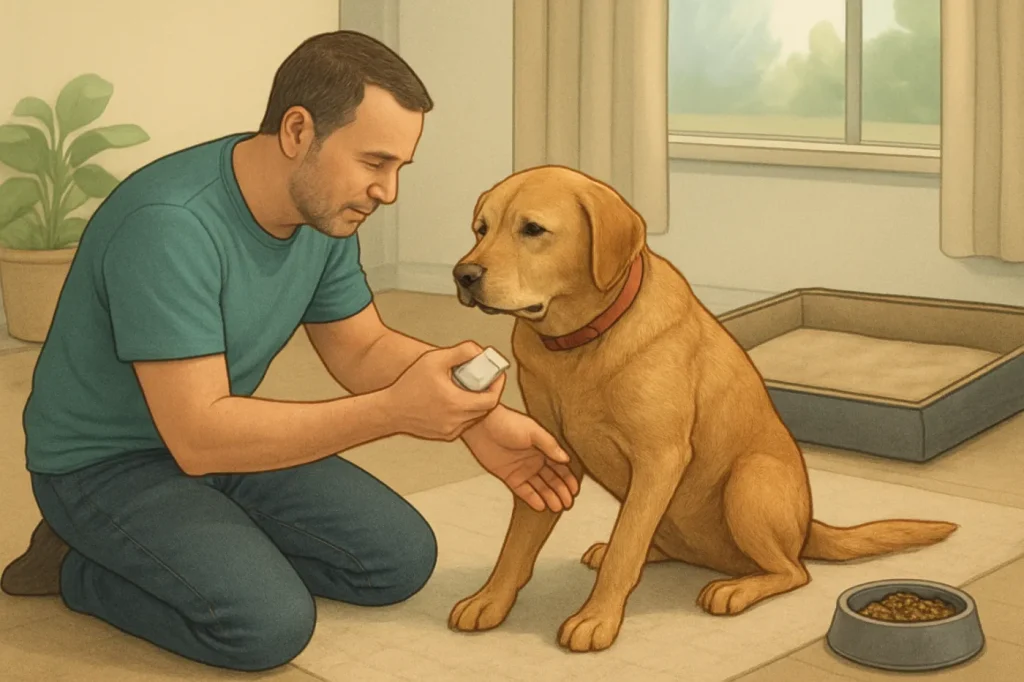
- Follow the medication plan exactly – give doses on time, do not skip or double up, and do not stop suddenly without checking with your vet.
- Track your dog’s comfort – keep a simple log of good days, bad days, and any changes in activity or mood.
- Use warm, supportive bedding – a thick, orthopedic-style bed in a draft-free area helps stiff joints relax.
- Offer gentle warmth – many arthritic dogs are stiffer in cold, damp weather. A warm room or a vet-approved warm compress (never too hot) can help.
- Plan rest breaks – let your dog lie down and rest between short bouts of activity, especially after walks or play.
- Keep nails trimmed – long nails change how paws hit the ground and can worsen joint strain.
If you are worried about costs of ongoing vet care or medications, resources on budgeting for veterinary bills, pet insurance, or payment options can help you plan ahead. For example, you can look into guidance such as how to afford vet bills for dogs and cats to explore ways to manage long-term care expenses.
Exercise and activity guidelines for dogs with arthritis
Movement is important for arthritic joints, but the type and amount of movement matter. General principles
- Prefer short, frequent walks over long, occasional ones.
- Walk on flat, non-slippery surfaces when possible (grass, dirt paths, rubberized surfaces).
- Aim for a pace where your dog can walk without panting heavily or lagging behind.
- Warm up with a few minutes of slow walking before slightly faster movement.
- Cool down with a slow, relaxed walk at the end.
Adjusting exercise based on your dog’s response Use your dog’s behavior as feedback:
- If your dog seems stiffer or more sore the next day, you likely did too much. Shorten the next walk or reduce play time.
- If your dog finishes walks still eager and comfortable, you may be at a good level.
- If your dog stops, lies down, or refuses to move during activity, stop and contact your vet for advice.
Activities that often work well
- Leash walks on flat ground
- Gentle sniff walks where your dog moves at their own pace
- Low-impact games like slow, short-distance fetch on grass (if your vet agrees)
- Simple indoor “find the treat” games that encourage light movement
Activities to avoid or limit
- High-impact jumping (frisbee, repeated ball throwing with sudden stops)
- Running alongside bikes or long-distance jogging
- Repeated stair climbing as exercise
- Rough play with younger, boisterous dogs
Ask your vet how many minutes of walking per day are reasonable for your dog’s age, breed, and arthritis severity, and adjust as needed.
Weight management tips for arthritic dogs
Extra body weight puts additional stress on already painful joints. Even modest weight loss can make a noticeable difference in comfort. Step 1: Find out your dog’s ideal weight Ask your vet:
- What is my dog’s current weight?
- What is a realistic target weight range for my dog?
- How long should healthy weight loss take?
Your vet can also show you how to use a body condition score chart so you can monitor at home. Step 2: Adjust food portions
- Measure food with a standard measuring cup or scale, not by eye.
- Feed for the target weight, not the current weight, using your vet’s guidance.
- Split daily food into two or more meals to help with hunger.
Step 3: Choose treats wisely
- Limit treats to a small part of daily calories.
- Use lower-calorie options like small pieces of carrot or green beans if your vet approves.
- Use part of the regular kibble ration as training treats.
Step 4: Weigh regularly
- Weigh your dog every few weeks at home (if possible) or at the vet clinic.
- Record the weight so you can see trends over time.
- Adjust portions with your vet’s guidance if weight loss is too fast or too slow.
Joint supplement options and how to choose them
Joint supplements are widely used in canine arthritis management, but they are not all the same. Common ingredients include compounds that aim to support cartilage, joint fluid, and normal joint metabolism. Typical supplement categories
- Products containing substances that support cartilage structure
- Products aimed at supporting joint fluid and lubrication
- Omega-3 fatty acid supplements from marine sources
- Combination products that include several joint-supporting ingredients
Decision criteria when picking a supplement
- Vet recommendation – ask your vet which brands they trust and have seen good results with.
- Form your dog accepts – chewable, liquid, powder, or capsule, depending on what your dog will reliably eat.
- Clear dosing instructions – based on your dog’s weight.
- Realistic expectations – supplements often take weeks to show any effect, and some dogs may not respond noticeably.
Always check with your vet before starting a new supplement, especially if your dog is on other medications or has liver, kidney, or digestive issues.
Environmental modifications checklist for arthritic dogs
Small changes at home can make a big difference in comfort and safety. Use this checklist to adapt your dog’s environment:
- Floors
- Add non-slip rugs or runners on slippery floors where your dog walks most.
- Use non-slip mats near food and water bowls.
- Stairs and furniture
- Use ramps or pet steps to help your dog get on the couch or bed if you allow it.
- Block access to steep or narrow stairs if they cause problems.
- Sleeping area
- Provide a thick, supportive bed that is easy to step onto (not too high).
- Place the bed away from drafts and dampness.
- Food and water
- Consider raised bowls so your dog does not have to bend down as far, especially for neck, shoulder, or elbow arthritis.
- Keep bowls in an easily accessible area without stairs.
- Yard access
- Use a ramp at steps leading outside if your dog struggles with them.
- Ensure paths are clear of ice, clutter, or obstacles that could cause slips.
- Temperature
- Provide a warm resting spot in cold weather.
- Avoid letting your dog lie on cold concrete for long periods.
Structured checklist: daily home routine for a dog with arthritis
Use this structured checklist to build a consistent routine. Adjust details with your vet’s guidance.
- Morning
- ☐ Give any prescribed morning medications with food.
- ☐ Offer a short, gentle walk to loosen stiff joints.
- ☐ Check for limping, reluctance to move, or unusual behavior.
- Midday
- ☐ Provide a comfortable resting area with supportive bedding.
- ☐ Encourage brief, light movement (a few minutes of walking or indoor activity) if your dog has been lying down for a long time.
- ☐ Keep water easily accessible.
- Evening
- ☐ Give any evening medications or supplements as directed.
- ☐ Take another short walk, adjusted to how your dog did earlier.
- ☐ Gently check joints for heat, swelling, or sensitivity.
- Weekly
- ☐ Weigh your dog or assess body condition if your vet has shown you how.
- ☐ Review whether exercise, food portions, or home setup need adjusting.
- ☐ Note any changes to discuss with your vet at the next visit.
What to avoid when treating dog arthritis at home
Some well-meant home remedies can be harmful or delay proper treatment.
- Do not give human pain medications such as common over-the-counter tablets unless a vet has explicitly prescribed a specific product and dose for your dog. Many human painkillers are dangerous for dogs.
- Do not change or stop prescription medications on your own because your dog “seems better” or you are worried about side effects. Call your vet first.
- Do not rely on internet remedies or unproven supplements without checking with your vet, especially if your dog takes other medications.
- Do not force intense exercise in hopes of “strengthening” joints. Overdoing it can cause flare-ups and more pain.
- Do not ignore sudden changes such as new lameness, crying out, or loss of coordination. These can signal new injuries or other conditions, not just arthritis.
- Do not let your dog become overweight by overfeeding or giving frequent high-calorie treats, even if you feel sorry for them.
Questions to ask your vet about at‑home arthritis care
Bringing a written list of questions helps you leave the appointment with a clear plan. Consider asking:
- Which joints are affected, and how advanced is the arthritis?
- What medications are recommended now, and what side effects should I watch for?
- Which joint supplements, if any, do you recommend for my dog?
- What is a realistic activity plan – how far and how often should we walk?
- Is my dog at a healthy weight? If not, what is our target and how do we reach it?
- Can you show me simple at-home exercises or stretches that are safe?
- How often should we schedule rechecks to adjust the plan?
- What signs would mean I should call you right away or seek urgent care?
If you are preparing your home for a new dog with arthritis or another special need, broader resources on setting house rules and safe spaces, such as house rules for dogs and cats new home, can help you think through routines and boundaries that support long-term comfort.
Common mistakes in home arthritis management and how to avoid them
Being aware of typical pitfalls can help you protect your dog.
- Inconsistent medication use – skipping doses or giving them only on “bad days.”
Better: follow the schedule your vet sets, and ask before changing it. - Letting activity vary wildly – very long, busy days followed by several days of rest.
Better: keep activity moderate and consistent from day to day. - Focusing only on pills – ignoring weight, exercise, and home setup.
Better: treat arthritis with a full plan: medication, lifestyle, and environment. - Waiting too long to adjust the plan – assuming worsening stiffness is just “old age.”
Better: contact your vet when you see changes; treatment often needs periodic updates. - Not involving the whole family – one person follows the plan while others overfeed or over-exercise the dog.
Better: share the plan with everyone who feeds, walks, or plays with your dog. - Skipping preventive care visits – missing checkups where arthritis and other issues can be reviewed together.
Better: fit arthritis rechecks into a broader routine, using tools like an annual vet care schedule for dogs and cats USA as a planning guide.
FAQ about arthritis treatment options for dogs at home
What should I understand before starting arthritis treatment for my dog at home?
Understand that home care works best as part of a plan your vet designs. You can usually help by combining prescribed pain control, weight management, gentle exercise, joint-friendly home changes, and possibly supplements your vet approves. Arthritis is long-term, so you are aiming to manage pain and maintain mobility over time, not to cure the condition. Regular check-ins with your vet are essential to adjust the plan as your dog ages or symptoms change.
What are the biggest mistakes owners make with home arthritis treatments for dogs?
Common mistakes include giving human pain medications without veterinary guidance, relying only on supplements instead of getting a proper diagnosis, letting the dog stay overweight, and swinging between over-exercising on good days and almost no movement on others. Another frequent issue is not telling the vet when things change, assuming it is just “getting older.” Avoid these by working closely with your vet, keeping a simple symptom log, and making steady, moderate lifestyle adjustments rather than big, occasional changes.
What should I do next after learning about at‑home arthritis care for dogs?
Next, schedule or confirm a veterinary appointment to discuss your dog’s specific situation. Bring notes about symptoms you have observed and questions about medications, supplements, exercise, and weight goals. At home, start with simple, low-risk steps: provide supportive bedding, reduce slipping hazards, and keep walks short and gentle until you have clear guidance. As you plan ongoing care, it can also help to map arthritis checkups into your broader preventive routine using an annual vet care schedule for dogs and cats so nothing important is missed.
Can I manage my dog’s arthritis at home without prescription medication?
Some dogs with very mild arthritis may do reasonably well for a time with weight control, gentle exercise, environmental changes, and vet-approved supplements. However, many dogs eventually need prescription pain relief to stay comfortable. Trying to avoid medication at all costs can leave a dog in unnecessary pain. The safest approach is to ask your vet whether your dog’s current level of discomfort can be managed without prescription drugs and to review that decision regularly as your dog ages or symptoms progress.