
Arthritis medications can give a stiff, painful dog a much more comfortable life, but every drug has potential side effects. The goal is not to avoid treatment, but to use it wisely: understand how the meds work, know what side effects are common, and recognize red flags early.
Most dogs do well on arthritis medications when a vet chooses the drug, sets the dose, and checks bloodwork as needed. Problems are more likely when medications are given without guidance, combined with other drugs or supplements, or when early warning signs are missed.
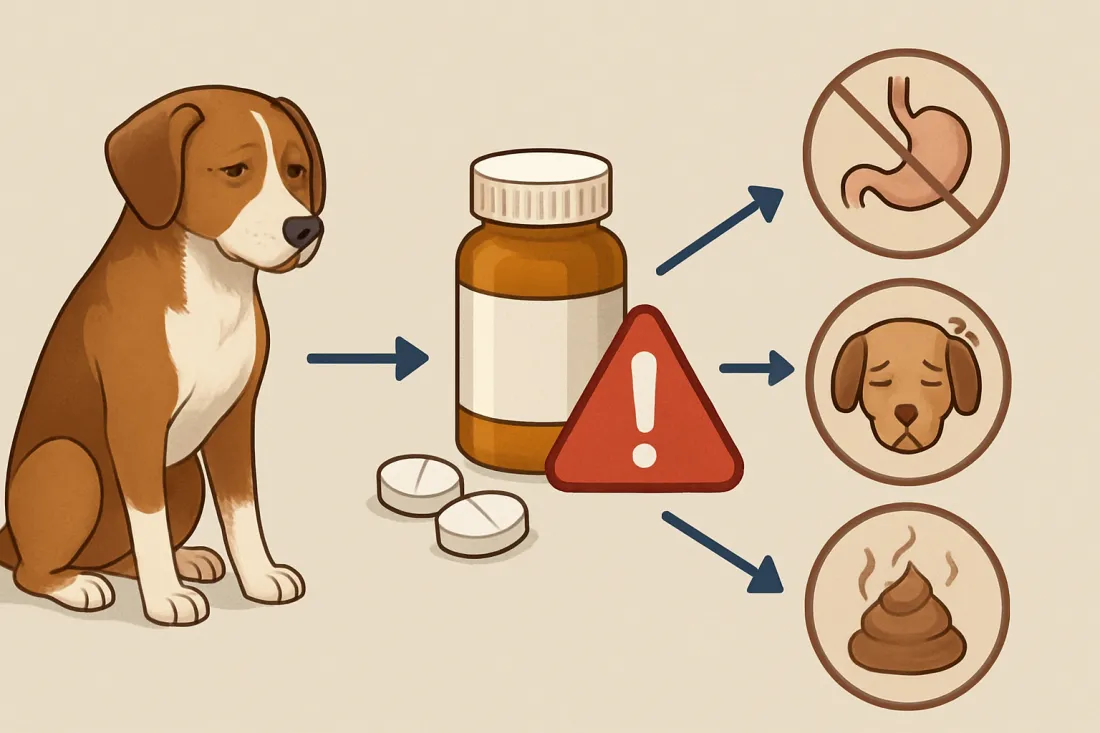
What you should know first about arthritis meds and side effects
- Most prescription arthritis medications for dogs are pain relievers and anti-inflammatories, especially NSAIDs (non-steroidal anti-inflammatory drugs).
- Common side effects are often mild at the start: softer stools, reduced appetite, mild lethargy, or occasional vomiting.
- Serious side effects usually involve the stomach and intestines, kidneys, or liver and can become emergencies if they are not caught early.
- Human painkillers such as ibuprofen or acetaminophen can be dangerous for dogs unless a vet has specifically prescribed a dog-safe form and dose.
- Regular vet checkups and bloodwork help catch problems early, especially with long-term medication use.
If your dog has not yet been diagnosed with arthritis and you are still trying to understand the condition itself, it can help to read more about what is arthritis in dogs before deciding on medications.
Types of arthritis medications for dogs and how they work
Vets use several categories of medications and supportive products to manage arthritis pain. Each type works differently and has its own pattern of side effects.
1. NSAIDs (non-steroidal anti-inflammatory drugs)
Veterinary NSAIDs are usually the first-line prescription medications for canine arthritis. They reduce inflammation in the joints and relieve pain, which can quickly improve mobility.
How NSAIDs are used
- Given by mouth as tablets, chews, or liquid, often once or twice daily.
- Sometimes used every day, sometimes only on “bad days,” depending on the vet’s plan.
- Often started after baseline bloodwork, with periodic rechecks for long-term use.
Typical mild NSAID side effects
- Decreased appetite or pickiness with food.
- Soft stool or mild diarrhea.
- Occasional vomiting, especially soon after dosing.
- Mild lethargy or seeming “off.”
Potential serious NSAID side effects (need urgent vet attention)
- Repeated vomiting or diarrhea, especially if there is blood.
- Black, tarry, or very dark stool (possible intestinal bleeding).
- Sudden severe lethargy, collapse, or marked weakness.
- Increased drinking and urination, or little to no urine.
- Yellow gums, eyes, or skin (possible liver involvement).
2. Other prescription pain relievers (non-NSAID)
When NSAIDs are not enough or cannot be used, vets may add or switch to other pain medications. These usually do not reduce inflammation directly but change how the body senses and processes pain.
How non-NSAID pain relievers are used
- Given by mouth once or multiple times per day.
- Often used together with NSAIDs for better pain control.
- Doses are adjusted based on your dog’s response and any side effects.
Typical mild side effects
- Drowsiness or sedation.
- Unsteady walking or wobbliness, especially when starting the drug or after dose increases.
- Occasional stomach upset (vomiting or diarrhea).
Potential serious side effects
- Extreme sedation or difficulty waking the dog.
- Disorientation, agitation, or unusual behavior.
- Seizure-like activity or tremors.
- Refusing to eat for more than a day or two.
3. Joint supplements and supportive products
Joint supplements and supportive diets are not painkillers in the same way as NSAIDs, but they can support joint health and may reduce the need for higher doses of stronger medications.
Common supportive options
- Joint supplements that may contain ingredients such as glucosamine, chondroitin, or omega-3 fatty acids.
- Special diets formulated for joint health or weight control.
- Topical or spot-on products designed to support mobility.
Typical side effects
- Usually mild, often limited to soft stool or gas when starting a new supplement.
- Occasional vomiting if given on an empty stomach.
Even though many of these products are sold over the counter, they can still interact with other medications or be inappropriate for some dogs, so it is wise to discuss them with your vet.
4. Steroids and other less common options
Steroids are powerful anti-inflammatory drugs. They are not usually the first choice for routine arthritis pain because of their side effect profile, but they may be used in specific cases or for short periods.
Typical steroid side effects
- Increased thirst and urination.
- Increased appetite and weight gain.
- Panting and restlessness.
- Thinning skin or coat changes with longer use.
More serious steroid risks
- Stomach ulcers or bleeding, especially if combined with NSAIDs.
- Higher risk of infections.
- Effects on liver or other organs with long-term use.
Because of these risks, steroids must only be used under close veterinary supervision. You should not combine them with NSAIDs unless your vet specifically directs and monitors this.
Why arthritis medications cause side effects
Understanding the basic “how it works” behind each medication type makes the side effects easier to recognize and manage.
How NSAIDs work and why problems appear
NSAIDs reduce the production of certain body chemicals that cause pain and inflammation. Those same chemicals also help protect the stomach lining and support blood flow to the kidneys.
- If the protective chemicals are reduced too much, the stomach and intestines can become irritated or start to bleed.
- Reduced support to the kidneys can be risky, especially in older dogs or those with pre-existing kidney disease or dehydration.
- Some dogs are simply more sensitive to a particular NSAID and react even at normal doses.
How non-NSAID pain relievers work
Many non-NSAID pain medications work by changing how pain signals are processed in the brain and spinal cord.
- Because they act on the nervous system, they can cause drowsiness, wobbliness, or behavior changes.
- Some are processed mainly by the liver or kidneys, so underlying organ disease can increase the risk of side effects.
How supplements and diets support joints
Joint supplements and special diets aim to support cartilage, reduce low-level inflammation, and maintain a healthy weight, which reduces stress on joints.
- New ingredients or higher fat content can upset the digestive system.
- Some supplements contain multiple active ingredients, making it harder to predict how an individual dog will respond.
Comparison table: arthritis medication types, benefits, and side effect risks
| Medication or support type | When vets often use it | Main benefits for the dog | Typical side effects owners may notice | Key risks and safety cautions |
|---|---|---|---|---|
| Veterinary NSAIDs | Most dogs with mild to severe arthritis pain | Reduces joint inflammation, improves mobility, often provides relatively fast relief | Mild vomiting, soft stool, decreased appetite, mild lethargy | Stomach or intestinal ulcers and bleeding, kidney or liver strain, higher risk if combined with steroids or human NSAIDs |
| Non-NSAID pain relievers | Dogs that need extra pain control or cannot take NSAIDs | Lowers pain perception, can improve comfort, sleep, and willingness to move | Drowsiness, wobbliness, occasional stomach upset, behavior changes | Over-sedation, rare neurologic signs, organ strain in dogs with liver or kidney disease |
| Steroids | Specific inflammatory conditions or short-term flare-ups | Strong anti-inflammatory effect, can quickly reduce swelling and pain | Increased thirst, urination, appetite, panting, weight gain | Stomach ulcers, infections, long-term organ and hormone effects, must not be mixed with NSAIDs without veterinary direction |
| Joint supplements and special diets | Long-term joint support and weight management | May improve joint comfort, support cartilage, and reduce reliance on stronger meds | Soft stool, gas, occasional vomiting when starting | Possible interactions with other meds, may be unsuitable for dogs with certain food sensitivities or health conditions |
Side effects and warning signs you should not ignore
Some side effects are uncomfortable but not immediately dangerous; others can become emergencies. A safe rule is to treat any sudden or severe change as a reason to contact your vet.
Mild side effects that still deserve a call
- Eating less than usual or skipping a meal.
- Soft stool or mild diarrhea that lasts more than a day.
- Occasional vomiting, especially soon after giving a medication.
- New or increased lethargy.
- Mild wobbliness or drowsiness after starting a new pain medication.
These signs do not always mean you must stop the medication immediately, but your vet may want to adjust the dose, change how you give the drug (for example, with food), or switch to a different option.
Red flag signs that need urgent veterinary help
- Repeated vomiting or diarrhea, especially if there is blood.
- Black, tarry, or very dark stool.
- Refusing all food for more than 24 hours, or refusing food plus vomiting.
- Severe lethargy, collapse, or inability to stand.
- Sudden swelling of the face, muzzle, or hives on the skin.
- Yellow gums, eyes, or skin.
- Seizures, severe disorientation, or unresponsiveness.
- Straining to urinate, not producing urine, or very dark urine.
If any of these occur, stop giving the medication (unless your vet has told you otherwise in advance) and contact a vet or emergency clinic immediately.
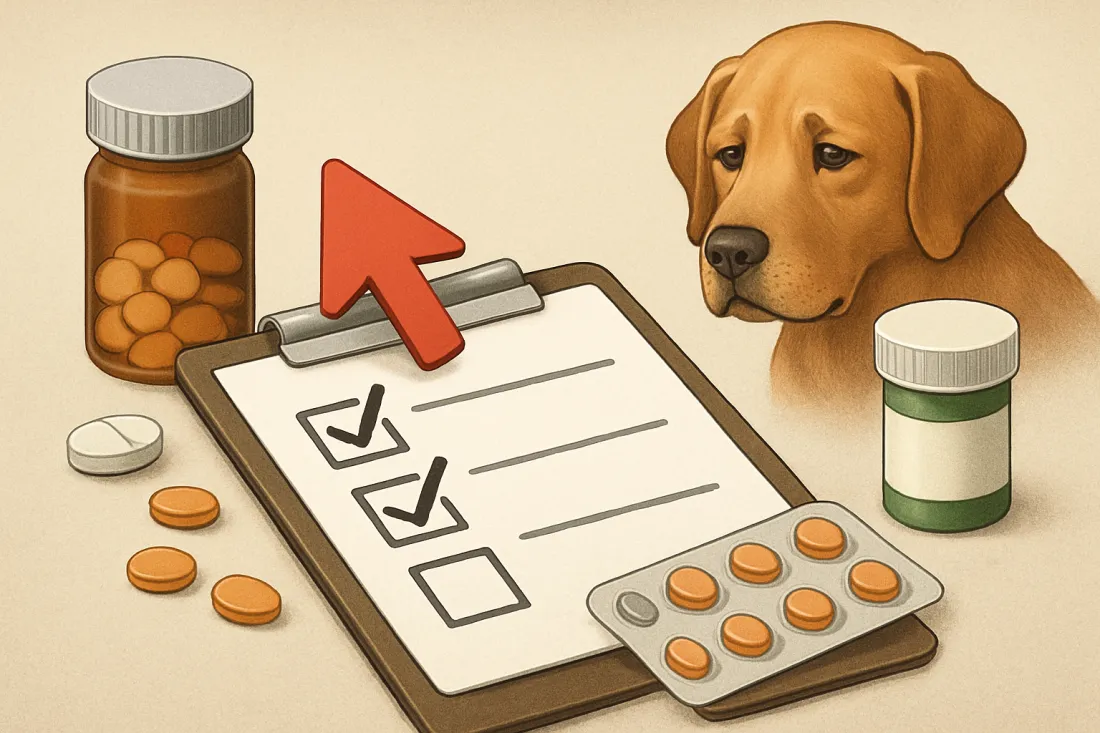
Practical checklist for using arthritis medications safely
Use this step-by-step checklist when starting or adjusting arthritis medications for your dog.
Before starting a new arthritis medication
- Confirm the diagnosis. Make sure a vet has examined your dog and discussed whether the signs are consistent with arthritis. If you have not yet done so, learning more about how is arthritis in dogs diagnosed can help you know what to expect.
- Share your dog’s full history. Tell the vet about kidney, liver, stomach, or bleeding issues, and any past drug reactions.
- List every medication and supplement. Include flea and tick products, heartworm preventives, over-the-counter supplements, and any human medications the dog might have received.
- Ask about baseline bloodwork. Especially for older dogs or those expected to be on long-term meds, blood tests help check liver and kidney function before starting.
- Clarify the dosing instructions. Confirm dose, frequency, whether to give with food, how long to continue, and what to do if you miss a dose.
When giving arthritis medications at home
- Use only the prescribed drug and dose. Do not substitute human painkillers or change the dose on your own.
- Give with food if advised. This can reduce stomach upset for many medications.
- Watch closely for the first week. Monitor appetite, stool, drinking, urination, energy level, and behavior every day.
- Keep a simple log. Note dose times and any side effects; this helps your vet adjust the plan.
- Store medications safely. Keep them out of reach of pets and children, and follow label guidance on temperature and moisture.
Ongoing monitoring for long-term use
- Schedule regular checkups. Your vet will recommend how often to recheck bloodwork and reassess pain control.
- Track mobility and comfort. Note changes in walking, jumping, using stairs, and willingness to play.
- Watch for creeping side effects. Increased thirst, gradual weight gain, or subtle behavior changes can be early clues of a problem.
- Review the full plan regularly. Ask if weight management, physical therapy, or arthritis treatment options for dogs at home could allow lower medication doses.
- Never stop or switch suddenly without guidance. Some medications need to be tapered; sudden changes can cause rebound pain or other issues.
Common mistakes to avoid with arthritis medications
Avoiding a few frequent errors can dramatically reduce the risk of side effects and keep your dog more comfortable.
1. Giving human painkillers without veterinary approval
Many human pain medications are unsafe for dogs, even in small amounts. Some can cause severe stomach ulcers, kidney failure, or life-threatening toxicity.
Better approach: Always call your vet before giving any human medication, even if it is something you take yourself for pain.
2. Mixing medications or supplements without telling the vet
Combining multiple pain relievers, supplements, or over-the-counter products can increase the risk of side effects or drug interactions.
Better approach: Keep a written list of everything your dog receives and bring it to every appointment. Ask specifically, “Is it safe to use all of these together?”
3. Ignoring early warning signs
Owners sometimes assume mild vomiting or a small appetite change is “just a bug” and keep giving the medication, which can allow a small problem to become serious.
Better approach: Treat new vomiting, diarrhea, or appetite loss as a reason to call your vet and ask if you should pause the medication.
4. Skipping bloodwork and rechecks
Because side effects can develop slowly, especially in older dogs, skipping recommended blood tests can mean missing early organ changes.
Better approach: Ask your vet to explain why each test is recommended and how often it should be repeated. Plan ahead for these visits.
5. Chasing a completely pain-free day with higher doses
It is natural to want your dog to feel completely normal, but pushing doses higher without guidance can increase the risk of side effects without much extra benefit.
Better approach: Work with your vet to balance pain control and safety, and use non-drug options such as weight control, gentle exercise, and home modifications to support comfort.
Decision criteria: choosing and adjusting arthritis medications safely
There is no single “best” arthritis medication for every dog. The safest and most effective plan depends on several factors that you and your vet should consider together.
Key factors your vet will weigh
- Age and overall health. Older dogs or those with kidney, liver, or stomach issues may need different drugs or lower doses.
- Severity of pain and mobility issues. Mild stiffness may respond to supplements and occasional NSAIDs; more severe pain may need combination therapy.
- Previous reactions to medications. Any history of vomiting, diarrhea, or other reactions will guide choices.
- Other conditions and medications. Heart disease, diabetes, or other chronic issues can affect what is safe.
- Owner’s schedule and comfort level. Some regimens are more complex and require strict timing or close monitoring.
Questions to ask your vet about arthritis meds and side effects
- “What is the main goal of this medication for my dog?” (Pain relief, inflammation control, or both.)
- “What side effects are common, and which ones are emergencies?”
- “How soon should I expect to see improvement, and how will we judge if it is working?”
- “What bloodwork or monitoring does my dog need, and how often?”
- “Are there non-drug options we should add, like weight loss, physical therapy, or home changes?”
- “If I notice a side effect, should I stop the medication immediately or call first?”
- “Is this medication meant for long-term use, and what might make us change the plan later?”
FAQ about arthritis medications for dogs and side effects
What should I understand about arthritis medication side effects before starting my dog on treatment?
Every arthritis medication has a balance of benefits and risks. You should expect some mild changes, such as softer stools or slight drowsiness, especially when a drug is first started. What matters most is knowing which signs are expected and which are red flags. Before starting, ask your vet to explain the most likely side effects for your dog’s specific medication, what to watch for in the first week, and exactly when to call or seek emergency care.
What are the biggest mistakes dog owners make with arthritis medications and side effects?
Common mistakes include giving human painkillers without veterinary approval, mixing multiple medications or supplements without telling the vet, ignoring early warning signs like vomiting or appetite loss, and skipping recommended bloodwork. Another frequent issue is increasing doses on your own to chase a perfectly pain-free day. Avoiding these mistakes and staying in close contact with your vet greatly reduces the risk of serious side effects.
Are arthritis medications safe for dogs to take long term?
Many dogs take arthritis medications for long periods and enjoy a good quality of life, but “safe long term” always depends on the individual dog and careful monitoring. Regular checkups, periodic bloodwork, and honest feedback about any changes you notice are essential. If blood tests or clinical signs suggest a problem, your vet may adjust the dose, change medications, or rely more on non-drug strategies.
What should I do if my dog vomits after an arthritis pill?
If your dog vomits once but otherwise seems normal, call your vet for advice before giving the next dose. Your vet may suggest giving the medication with food, adjusting the timing, or pausing it temporarily. If vomiting is repeated, contains blood, or is accompanied by lethargy, diarrhea, or refusal to eat, stop the medication and seek veterinary care promptly.
What should I do next if I am worried about side effects but my dog is still in pain?
Do not simply stop all medications and let your dog struggle with pain. Instead, schedule a conversation with your vet to review what you are seeing. Bring notes about side effects, timing, and any changes in behavior or appetite. Together you can decide whether to adjust the dose, switch drugs, add joint support or home-based treatments, or explore other pain management options so your dog stays as comfortable and safe as possible. You can also review broader treatment options and costs for dogs with arthritis to plan the next steps.