
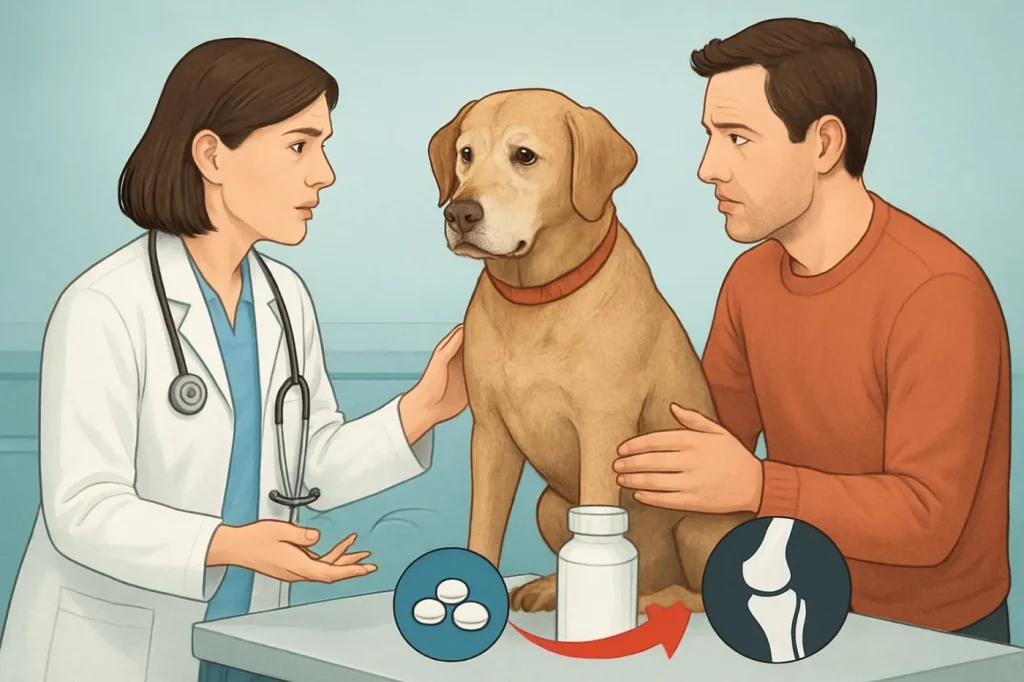
There is no single “best” treatment for arthritis in dogs. The most effective plan usually combines several tools: weight control, pain medication, joint support, and gentle movement, all tailored by your veterinarian to your dog’s age, health, and lifestyle.
Think of arthritis care as long-term pain management and quality-of-life support, not a one-time fix. The goal is to keep your dog comfortable, moving, and enjoying daily life for as long as possible.
How to choose the best arthritis treatment plan for your dog
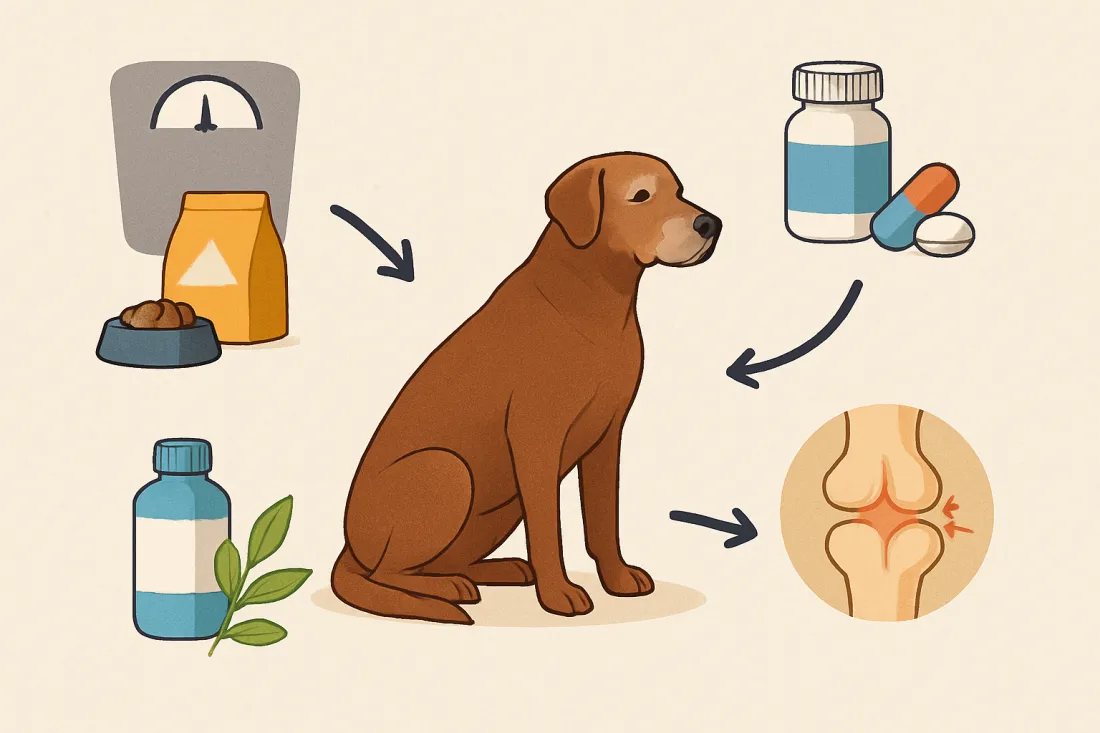
Before comparing specific medications and therapies, it helps to understand the big picture. Most successful arthritis plans for dogs include some mix of:

- Weight management – keeping your dog lean is often the single most powerful “treatment” for arthritic joints.
- Pain and inflammation control – usually with veterinary-prescribed medications.
- Joint support – supplements, special diets, and sometimes injections that support cartilage and joint fluid.
- Physical therapy and lifestyle changes – controlled exercise, home adjustments, and sometimes professional rehab.
- Advanced or emerging therapies – such as injections or regenerative medicine, when appropriate and available.
What is “best” for your dog depends on:
- How severe the arthritis is and which joints are affected.
- Your dog’s age, weight, and other health conditions (kidney, liver, stomach, heart, etc.).
- How your dog responds to specific medications or supplements.
- Your budget, schedule, and ability to manage home care.
If you are still learning the basics of the condition itself, it can help to read more about what is arthritis in dogs and the early signs of arthritis in dogs before you decide on a long-term plan.
Main categories of treatment for arthritis in dogs
Most veterinary arthritis plans draw from the following categories. Your dog may use several at once.
| Treatment category | When it is usually used | Main benefits | Key limitations or risks |
|---|---|---|---|
| Weight management & exercise | All arthritic dogs, from mild to severe | Reduces joint load, improves mobility, supports overall health | Requires consistency; weight loss is gradual and needs careful calorie control |
| NSAIDs (non-steroidal anti-inflammatory drugs) | Mild to severe pain and inflammation, often first-line medication | Can significantly reduce pain and stiffness, improve daily comfort | Not safe for every dog; potential stomach, kidney, or liver side effects; needs vet monitoring |
| Other pain medications | When NSAIDs are not enough or not appropriate | Target nerve pain or provide additional pain relief | May cause sedation or behavior changes; dosing must be precise |
| Joint supplements & therapeutic diets | Early or ongoing support, often long-term | May support cartilage and joint fluid; generally low risk | Effects are usually gradual and modest; quality varies by product |
| Physical therapy & rehab | Dogs who can still move but are stiff, weak, or recovering from injury | Builds muscle, improves range of motion, teaches safe movement patterns | Requires time, access to a rehab facility or home program, and owner participation |
| Injections & advanced therapies | Moderate to severe cases, or when standard care is not enough | May provide longer-lasting relief or target joint structures directly | Availability, cost, and suitability vary; not every dog is a candidate |
Most dogs do best with a combination approach. For example, a middle-aged Labrador might be on a weight-loss plan, a daily NSAID, a joint supplement, and weekly underwater treadmill sessions.
NSAIDs and other pain medications for dogs with arthritis
Pain control is usually the core of arthritis treatment. Dogs often hide discomfort, so by the time you notice limping or stiffness, they may already be in significant pain.
Veterinary NSAIDs: the usual starting point
Veterinary non-steroidal anti-inflammatory drugs (NSAIDs) are commonly prescribed for canine arthritis. They are designed for dogs and are different from many human over-the-counter pain relievers.
Potential benefits of vet-prescribed NSAIDs:
- Reduce inflammation inside the joint, not just pain.
- Often improve mobility within days when they are a good fit.
- Can be used long-term in many dogs with regular monitoring.
Important safety points:
- Never give human pain medications (such as common over-the-counter tablets for people) to your dog unless your veterinarian specifically instructs you to. Some human medications can be dangerous or even fatal to dogs.
- Your vet will usually check bloodwork before and during long-term NSAID use to monitor kidney and liver function.
- Watch for vomiting, diarrhea, black or bloody stool, loss of appetite, or extreme lethargy and contact your vet immediately if you see these signs.
Other pain medications your vet may suggest
When NSAIDs alone are not enough, or if your dog cannot take them, your veterinarian may add or substitute other pain-control options, such as:
- Medications that target nerve pain – often used when arthritis pain has a neuropathic component.
- Drugs that modify pain signaling in the spinal cord or brain – sometimes used for chronic pain that is not fully controlled by NSAIDs.
- Short courses of additional pain relief – for flare-ups or after a particularly active day.
These medications can be very helpful but may cause side effects such as drowsiness, wobbliness, or changes in appetite. Your vet will usually start at a low dose and adjust based on your dog’s response.
How to work with your vet on pain control
Because dogs cannot describe their pain, your observations are crucial. Keep a simple log for at least two weeks after starting or changing medication:
- How easily your dog gets up in the morning.
- How far they are willing to walk.
- Whether they hesitate on stairs or jumping into the car.
- Any side effects (vomiting, diarrhea, unusual behavior).
Share this with your veterinarian so you can adjust the plan together.
Joint supplements and therapeutic diets for arthritic dogs
Joint supplements and special diets are not magic cures, but they can be useful parts of a long-term arthritis plan, especially in early or mild cases.
Common joint supplement ingredients
Many canine joint supplements include combinations of:
- Compounds that support cartilage structure.
- Substances that may help joint lubrication.
- Omega-3 fatty acids from fish oil or other sources.
- Antioxidants and other supportive nutrients.
What to know about supplements:
- Benefits are usually gradual. It may take several weeks of consistent use before you notice changes.
- Quality varies widely. Look for products made specifically for dogs, with clear ingredient lists and dosing instructions.
- More is not always better. Giving multiple overlapping products can increase cost without added benefit and may upset your dog’s stomach.
Therapeutic diets for joint health
Some veterinary diets are formulated for joint support or weight management plus joint health. They may include:
- Controlled calories to support weight loss or maintenance.
- Higher levels of omega-3 fatty acids.
- Added joint-support ingredients.
These diets can be especially useful if your dog is overweight and arthritic. Your vet can help you choose a diet and set a safe weight-loss target. Avoid drastic calorie cuts without guidance; slow, steady weight loss is usually safer for most dogs.
Physical therapy, exercise, and home adjustments
Movement is medicine for arthritic dogs, but it must be the right kind of movement. Too much or the wrong type can cause flare-ups; too little leads to muscle loss and stiffness.
Safe exercise for dogs with arthritis
General principles:
- Short, frequent walks are usually better than one long outing.
- Flat, non-slippery surfaces are easier on joints than steep hills or rough terrain.
- Warm-up and cool-down (a few minutes of slow walking at the start and end) can reduce stiffness.
- Avoid high-impact activities like ball-chasing, hard landings, or sudden turns unless your vet or rehab therapist has cleared them.
Ask your vet for a specific exercise plan: how many minutes per walk, how many walks per day, and what signs mean you should cut back.
Professional rehab and physical therapy
Canine rehabilitation therapists may offer:
- Underwater treadmill sessions to reduce joint impact while building muscle.
- Targeted exercises to strengthen specific muscle groups.
- Manual therapies and stretching to improve range of motion.
- Guidance on home exercise programs tailored to your dog.
Rehab can be especially helpful after surgery, in dogs with muscle loss, or when you feel unsure how much exercise is safe.
Home environment changes that make a big difference
Simple adjustments at home can significantly reduce daily pain:
- Add non-slip rugs or runners on slick floors where your dog walks often.
- Use ramps or steps for getting into the car or onto furniture, if allowed.
- Provide a supportive, padded bed in a warm, draft-free spot.
- Raise food and water bowls slightly if your dog struggles to bend down.
- Block access to steep stairs if your dog is unstable.
These changes do not replace medication or other treatments, but they can reduce strain on sore joints every single day.
Emerging and advanced therapies for canine arthritis
Beyond standard medications and lifestyle changes, your veterinarian may discuss more advanced options, especially for moderate to severe arthritis or when other treatments are not enough.
Joint injections and disease-modifying treatments
Some dogs may benefit from injections that target the joint or joint-support structures. These can include:
- Medications given by injection on a schedule to support joint cartilage and fluid.
- Injections placed directly into the joint under sterile conditions.
These treatments are not right for every dog and may require repeat visits. Your vet will consider your dog’s overall health, the joints involved, and how they have responded to other therapies.
Regenerative and other advanced options
In some areas, veterinarians may offer regenerative therapies such as using your dog’s own cells or blood components to support joint health. Availability, protocols, and evidence for these options are evolving. They may be considered when:
- Standard therapies are not providing enough relief.
- Your dog is otherwise healthy enough for the procedures involved.
- You are able to commit to follow-up care and monitoring.
Because these therapies are specialized, ask your vet whether referral to a specialist is appropriate and what realistic goals would be for your individual dog.
Comparison of common arthritis treatment plans for dogs
The table below compares typical treatment combinations you might discuss with your veterinarian. It is not a prescription, but a way to understand trade-offs and decide what to ask about first.
| Typical plan | Best suited for | What it usually includes | Main pros | Key things to watch |
|---|---|---|---|---|
| Basic support plan | Early or mild arthritis in otherwise healthy dogs | Weight control, gentle exercise, joint supplement, home adjustments | Low risk, builds good habits, may slow progression of discomfort | May not be enough for dogs already in significant pain; benefits can be subtle and gradual |
| Medication-focused plan | Dogs with clear pain and stiffness affecting daily life | Veterinary NSAID, possible additional pain meds, plus basic support measures | Often provides noticeable pain relief and better mobility | Needs regular vet monitoring; potential side effects; must follow dosing instructions carefully |
| Rehab-centered plan | Dogs with weakness, muscle loss, or after surgery | Medication as needed, structured rehab sessions, home exercise program | Targets strength and function, not just pain; can improve long-term mobility | Requires time, consistency, and access to a rehab facility or trained provider |
| Advanced therapy plan | Moderate to severe arthritis not well controlled by standard care | Medication, rehab, plus injections or regenerative therapies when appropriate | May provide additional relief when other options are limited | Not suitable or available for every dog; requires careful discussion of goals and expectations |
Questions to ask your vet about arthritis treatment
Going into your appointment with clear questions helps you leave with a practical plan instead of confusion. Consider asking:
About diagnosis and severity
- Which joints are affected, and how severe is my dog’s arthritis right now?
- Do you recommend imaging (such as X-rays) to better understand the joints?
- Could any other condition be contributing to my dog’s stiffness or limping?
About medications
- Which pain medications do you recommend starting with, and why?
- What benefits should I expect to see, and how soon?
- What side effects should I watch for, and what should I do if I see them?
- How often will my dog need bloodwork or checkups while on these medications?
About lifestyle and home care
- Is my dog at a healthy weight, or should we work on weight loss?
- What is a safe daily exercise plan for my dog (minutes per walk, number of walks)?
- Are there specific activities I should avoid with my dog?
- What changes at home would make daily life easier on my dog’s joints?
About supplements and advanced options
- Do you recommend a joint supplement or special diet for my dog? If so, which one and why?
- Are there any advanced therapies or referrals that might be appropriate now or in the future?
- How will we know when it is time to adjust the treatment plan?
Structured checklist: building the best arthritis plan for your dog
Use this checklist to guide your discussion with your veterinarian and to keep track of decisions. You do not need to complete everything at once; think of it as a roadmap.
1. Confirm the problem and baseline
- Note your dog’s current symptoms (limping, stiffness, trouble jumping, slowing on walks).
- Record how long you have noticed these changes.
- Bring a list of all current medications and supplements, including doses.
- Ask your vet to explain which joints are affected and how severe the arthritis appears.
2. Agree on pain-control steps
- Discuss whether an NSAID is appropriate and safe for your dog.
- If prescribed, write down the exact dose, timing, and whether it should be given with food.
- Ask if any additional pain medications are recommended now or might be added later.
- Clarify which warning signs mean you should call the clinic right away.
3. Plan weight and activity
- Ask if your dog is at an ideal weight; if not, set a realistic weight goal.
- Get a specific daily calorie or feeding guideline if weight loss is needed.
- Agree on a starting exercise plan (walk length, frequency, and surfaces).
- Schedule a follow-up to reassess weight and mobility.
4. Decide on joint support
- Ask whether a joint supplement is recommended, and which product and dose.
- Discuss whether a therapeutic diet could help with joint support or weight control.
- Set a time frame to evaluate whether the supplement or diet seems helpful (for example, several weeks).
5. Explore rehab and advanced options
- Ask if a referral to a canine rehab therapist would benefit your dog.
- Discuss whether injections or other advanced therapies might be appropriate now or later.
- Clarify realistic goals: less pain, better mobility, or maintaining current function.
6. Make home-life changes
- Identify slippery areas at home and plan for rugs or runners.
- Decide whether ramps, steps, or rearranged furniture would help.
- Choose a supportive bed and a comfortable resting area.
- Plan how to limit stairs or jumping if needed.
7. Set a follow-up schedule
- Schedule the next checkup to review pain control and mobility.
- Ask how often bloodwork is recommended for long-term medications.
- Keep a simple weekly log of your dog’s activity and comfort to bring to follow-up visits.
Common mistakes to avoid when treating arthritis in dogs
Even well-intentioned owners can make choices that accidentally worsen arthritis or delay effective care. Avoid these pitfalls:
- Using human pain medications without veterinary guidance. Some common human drugs are unsafe for dogs and can cause serious harm.
- Stopping or changing medications on your own. Abrupt changes can lead to pain flare-ups or other problems. Always check with your vet first.
- Relying only on supplements and skipping pain control. Supplements can support joints but usually do not replace proper pain medication in a dog that is clearly uncomfortable.
- Letting your dog stay overweight. Extra pounds put extra stress on already painful joints. Weight management is one of the most powerful tools you control.
- Allowing high-impact play because your dog “seems fine today.” Dogs often push through pain to chase a ball or run; they may pay for it with a painful flare-up later.
- Ignoring subtle changes. Slower stairs, hesitation to jump, or shorter walks can be early signs. Addressing arthritis early often leads to better long-term comfort.
- Not scheduling regular rechecks. Arthritis is progressive. A plan that worked last year may need adjustment now.
If you are unsure whether your dog’s changes are early arthritis or something else, reading about the early signs of arthritis in dogs can help you decide when to call your vet.
What to do next if you suspect or know your dog has arthritis
After learning about the options, it is easy to feel overwhelmed. Focus on a few concrete next steps:
- Book a veterinary appointment if you have not already. Bring notes about your dog’s symptoms, activity level, and any current medications or supplements.
- Discuss a starter plan that covers pain control, weight and exercise, and at least one joint-support strategy.
- Make one or two home changes right away, such as adding non-slip rugs or a supportive bed.
- Track your dog’s comfort over the next few weeks: walking distance, ease of getting up, and any side effects.
- Follow up with your vet to fine-tune the plan based on how your dog is doing. If you want to think ahead about budgets and priorities, a detailed guide to treatment options and costs for dogs with arthritis can help you plan.
FAQ about the best treatment for arthritis in dogs
What should I understand first about the best treatment for arthritis in my dog?
The key idea is that “best” means the best combination for your individual dog, not a single miracle product. Most dogs need a mix of pain control, weight management, controlled exercise, joint support, and small home changes. Your veterinarian’s role is to help you layer these options safely, adjust them over time, and balance benefits with possible side effects and your budget.
How can I tell if my dog’s arthritis treatment plan needs to be changed?
Watch your dog’s everyday behavior over several weeks. A plan may need adjustment if your dog still struggles to get up, refuses or shortens walks, pants or trembles at rest, seems withdrawn, or has more “bad days” than good ones. New vomiting, diarrhea, or changes in thirst or appetite can also signal medication side effects. Share specific examples and timelines with your vet so they can tweak doses, add rehab, or consider different options.
What common mistakes should I avoid when trying to help my arthritic dog?
Big mistakes include giving human pain medicine without veterinary approval, stopping prescribed drugs suddenly because your dog “seems better,” letting your dog remain overweight, and relying only on supplements while your dog is clearly painful. Another frequent issue is allowing intense play on good days, which can trigger painful flare-ups later. Consistency and gradual changes are safer than big swings in activity or medication.
What should I do right after reading about arthritis treatments for dogs?
Start by scheduling or confirming a vet visit, then write down your dog’s symptoms and any questions you have about medications, supplements, and exercise. Make one simple home change today, such as adding a non-slip runner where your dog often slips. Over the next couple of weeks, keep a brief log of your dog’s comfort and activity so you and your vet can build or refine a long-term plan together.
Can arthritis in dogs be cured, or only managed over time?
Arthritis in dogs is typically a long-term, progressive condition. Current treatments focus on managing pain, reducing inflammation, supporting joint structures, and preserving mobility rather than reversing the underlying joint changes. With a thoughtful management plan and regular adjustments, many dogs continue to enjoy walks, play, and family time for years after diagnosis.