
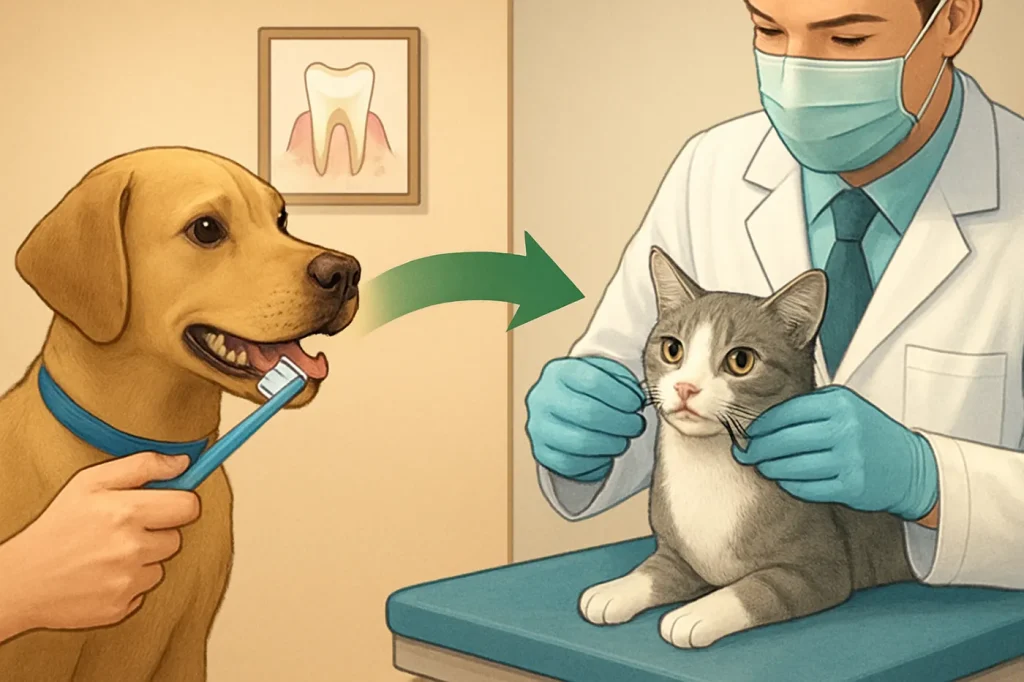
For most dogs and cats, the best dental plan is not choosing between home care and professional cleaning, but using both in the right way. Daily or frequent home dental care slows plaque and tartar buildup, while professional cleanings under anesthesia are the only way to fully clean below the gumline and treat existing dental disease. Home care is enough for prevention in a healthy mouth; professional cleaning is needed when there is visible tartar, bad breath, pain, or any red-flag signs.
How home dental care and professional cleaning fit together
Think of your pet’s mouth like your own: you brush and floss at home, but you still need the dentist to do deep cleanings and check for problems. Pets are the same, with one big difference: they cannot tell you when something hurts, so problems are often more advanced by the time you notice them.
For responsible pet ownership, a realistic plan usually looks like this:
- Daily or near-daily home care (brushing, dental chews, rinses or gels) to slow plaque and tartar.
- Regular veterinary dental exams during routine checkups to spot issues early.
- Professional dental cleanings under anesthesia when your vet sees tartar, gum inflammation, loose or damaged teeth, or other concerns.
The rest of this guide explains what each option actually does, where it falls short, and how to decide what your own dog or cat needs right now.
What counts as home dental care for dogs and cats
Home dental care means anything you can safely do yourself between vet visits to keep your pet’s teeth and gums healthier. Common tools include:
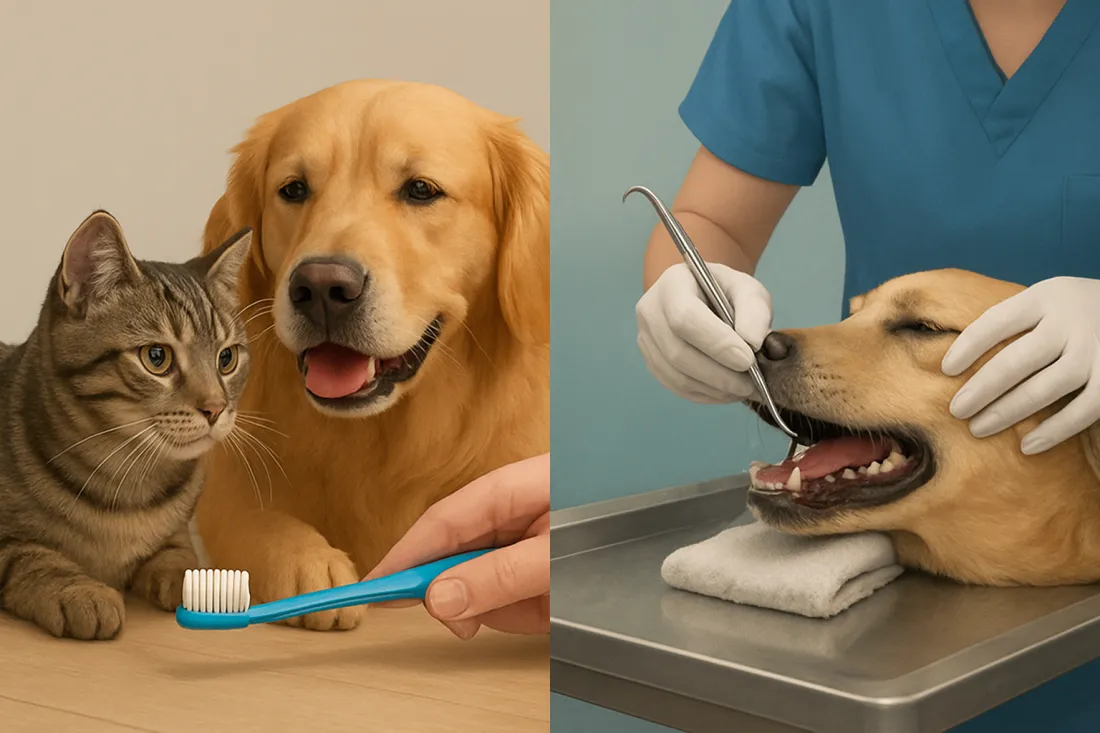
- Toothbrushing with a pet-safe toothbrush and toothpaste (never human toothpaste).
- Dental chews and treats designed to help reduce plaque through chewing.
- Dental diets or kibbles formulated to mechanically scrub teeth or support oral health.
- Water additives, gels, or rinses made for pets to help reduce bacteria and freshen breath.
- Chew toys that are firm but not rock-hard, encouraging safe chewing that can help scrape soft plaque.
What home care can realistically do
With consistent use, home dental care can:
- Slow plaque buildup so tartar forms more slowly.
- Reduce bad breath caused by bacteria on the teeth and gums.
- Help keep gums healthier in pets that do not yet have advanced dental disease.
- Extend the time between professional cleanings in many pets.
- Help you spot problems early because you are looking in your pet’s mouth regularly.
Limits and risks of relying only on home care
Home care is powerful for prevention, but it has clear limits:
- It cannot remove hardened tartar (the yellow-brown crust on teeth). Once plaque has mineralized, brushing and chews will not get it off.
- It cannot clean below the gumline, where many painful problems start.
- It cannot fix existing damage such as loose teeth, broken teeth, or infected roots.
- It can hide symptoms (for example, rinses may mask bad breath) without addressing the cause.
- It can be done incorrectly—using human toothpaste, hard bones, or aggressive brushing can cause harm.
Home care works best on relatively clean, healthy teeth. Once you see heavy tartar or gum problems, you are past the point where home care alone is enough.
What professional veterinary dental cleaning involves
Professional dental cleaning for pets is a medical procedure performed by a veterinarian or veterinary dental team, almost always under general anesthesia. While details vary by clinic and by pet, a typical professional cleaning includes:
- Pre-anesthetic evaluation (exam and, often, lab work) to check that anesthesia is as safe as possible for your pet.
- Full-mouth examination of teeth, gums, and oral tissues, including areas you cannot see in an awake pet.
- Scaling above and below the gumline using specialized instruments to remove plaque and tartar.
- Polishing to smooth the tooth surface so plaque does not stick as easily afterward.
- Dental X-rays in many cases, to look at tooth roots and bone that are not visible to the eye.
- Treatment of problems found during the procedure, such as extracting diseased teeth or treating deep pockets around teeth.
Why anesthesia is usually necessary
Pets cannot understand or cooperate with a detailed dental procedure the way people can. Anesthesia allows the veterinary team to:
- Clean thoroughly under the gumline without causing pain or stress.
- Take dental X-rays and examine each tooth closely.
- Perform extractions or other treatments safely and humanely.
- Protect your pet’s airway from water and debris used during cleaning.
Non-anesthetic “cleanings” that only scrape visible tartar from the tooth surface may make teeth look better briefly, but they do not address disease below the gumline and can give a false sense of security.
Benefits and limits of professional cleaning
Professional cleanings are the gold standard for treating dental disease, but they also have practical limits.
Benefits:
- Thorough cleaning above and below the gumline, including areas you cannot reach at home.
- Accurate diagnosis of hidden problems using X-rays and probing around teeth.
- Ability to treat disease (extractions, gum treatments, sometimes other procedures) during the same visit.
- Reset point for home care: once teeth are clean, home care is more effective and easier.
>
Limits and considerations:
- Requires anesthesia, which always carries some level of risk, especially in older or medically fragile pets.
- Cost can be significant, especially if many teeth need treatment or extractions. For help planning around costs, you may find it useful to read about affordable preventive care for pets.
- Not a one-time fix: plaque starts to return quickly if home care is not maintained.
- May reveal more disease than expected, leading to more extensive treatment than you anticipated.
Home dental care vs professional cleaning: side-by-side comparison
The table below compares what each option can and cannot do, and when it is usually appropriate.
| Aspect | Home dental care (brushing, chews, rinses) | Professional veterinary dental cleaning (under anesthesia) |
|---|---|---|
| Main purpose | Daily prevention and slowing plaque/tartar buildup. | Thorough treatment of existing plaque, tartar, and dental disease. |
| Who does it | Pet owner at home. | Veterinarian and trained veterinary staff. |
| Frequency | Ideally daily brushing; chews or rinses as directed on product or by vet. | As recommended by your vet based on exam; often every 6–24 months depending on the pet. |
| Can remove hardened tartar? | No. Can only affect soft plaque and early buildup. | Yes. Designed to remove tartar above and below the gumline. |
| Can clean below the gumline? | Not effectively. Surface only. | Yes, with specialized instruments while the pet is under anesthesia. |
| Can treat painful or infected teeth? | No. Cannot fix loose, broken, or infected teeth. | Yes. Diseased teeth can be extracted or treated during the procedure. |
| Best suited for | Pets with relatively clean teeth, after a professional cleaning, and as lifelong prevention. | Pets with visible tartar, gum inflammation, bad breath, or suspected dental disease. |
| Key risks or downsides | Can be done incorrectly (wrong products, overly hard chews); may delay needed vet care if used as a substitute for exams. | Requires anesthesia and a vet visit; cost and recovery time to consider. |
| What happens if you skip it | Dental disease tends to develop faster; more frequent or extensive professional cleanings may be needed. | Existing tartar and disease worsen, even if you brush; pain and tooth loss become more likely. |
When home dental care is enough vs when a professional cleaning is needed
Use both what you see at home and what your veterinarian finds on exam to decide what your pet needs.
Situations where home care may be enough for now
Home care alone may be appropriate for the moment if all of the following are true:
- Your pet recently had a professional dental cleaning and your vet was satisfied with the result.
- You see little to no visible tartar on the teeth (maybe a thin yellow line at most).
- The gums look pink, not bright red or swollen along the tooth edges.
- Your pet eats, chews, and plays normally without dropping food or favoring one side.
- There is no strong, persistent bad breath once you are past the puppy/kitten stage.
- Your vet has not recommended a cleaning at recent checkups.
Even in this “low concern” group, home care should be paired with regular veterinary exams. Dental disease can progress quietly, especially in cats and small-breed dogs.
Clear signs that a professional cleaning is likely needed
Plan to schedule a veterinary dental evaluation soon if you notice any of these:
- Visible yellow or brown tartar on multiple teeth, especially near the gums.
- Red, swollen, or bleeding gums, or gums that seem to be pulling away from the teeth.
- Persistent bad breath that does not improve with basic home care.
- Difficulty eating, dropping food, chewing on one side, or refusing hard kibble or treats.
- Pawing at the mouth, rubbing the face on the floor, or other signs of mouth discomfort.
- Loose, broken, or missing teeth that were not removed by a vet.
- Behavior changes such as irritability or reluctance to be touched around the face.
In these situations, starting or increasing home care is still helpful, but it should not replace a professional exam and likely a cleaning.
Red-flag dental signs that need urgent veterinary attention
Some mouth problems should be treated as urgent, not something to “watch and wait” or try to fix with chews or brushing. Contact your vet promptly if you see:
- Blood in the water bowl, on toys, or from the mouth that is more than a tiny streak from a one-time event.
- Swelling of the face, jaw, or around the eye, which can signal an abscessed tooth or deep infection.
- Sudden refusal to eat, especially if your pet is usually food-motivated.
- Drooling with blood or pus, or thick ropey saliva.
- Loose teeth in an adult pet (kittens and puppies normally lose baby teeth, but adults should not lose teeth on their own).
- Bad breath combined with lethargy, weight loss, or fever.
Do not try to brush painful areas or use over-the-counter human pain relievers. Many human medications are unsafe for pets. Instead, call your veterinarian or an emergency clinic for guidance.
Structured checklist: Is my pet due for a professional dental cleaning?
Use this step-by-step checklist as a practical decision tool. It does not replace a vet’s judgment, but it can help you decide whether to call for an appointment soon.
- Check the date of the last professional dental cleaning
- Less than 6–12 months ago and your vet was happy with the result: go to step 2.
- More than 12–24 months ago, or you are not sure: your pet is more likely due. Continue through the checklist and plan to ask your vet.
- Look at the teeth in good light
- If you see thick yellow or brown tartar on several teeth, especially near the gums, that is a strong sign a cleaning is needed.
- If you see only a thin film or very light discoloration, continue to step 3.
- Check the gums
- Gums should be pink and smooth along the tooth edges.
- If they are bright red, puffy, or bleed easily when touched, that suggests gum disease and a likely need for professional care.
- Smell your pet’s breath
- Mild “pet breath” can be normal, especially after eating.
- Strong, foul, or rotten-smelling breath is often a sign of dental disease or infection.
- Watch how your pet eats and chews
- Normal: eats eagerly, crunches kibble, chews toys on both sides.
- Concerning: drops food, chews only on one side, avoids hard food or chews, or takes longer to finish meals.
- Notice behavior around the face
- Does your pet pull away when you touch the muzzle or jaw?
- Do they paw at the mouth or rub their face on the floor or furniture?
- Consider age and breed
- Small-breed dogs and some purebred cats often need more frequent cleanings.
- Older pets may have more dental wear and tear, even if teeth look okay from a distance.
- Review your vet’s last comments
- If your vet has already recommended a dental cleaning, treat that as your main guide, even if your pet seems fine at home.
How to interpret the checklist:
- If you checked several concerning boxes (visible tartar, red gums, bad breath, eating changes, or pain signs), your pet is likely due or overdue for a professional dental evaluation and cleaning.
- If you checked one mild concern (slight tartar, mild odor) but everything else seems normal, schedule a non-urgent vet exam and ask specifically about dental health.
- If you checked no concerns and your pet had a cleaning within the last year or two, focus on maintaining strong home care and keeping up with routine vet visits.
Common mistakes in pet dental care to avoid
Good intentions can still lead to problems if you fall into these common traps:
- Waiting for obvious pain before seeing a vet. Many pets suffer quietly; by the time they stop eating, disease is often advanced.
- Using human toothpaste, which can contain ingredients that are unsafe for pets.
- Relying only on dental chews or treats and skipping brushing and vet exams.
- Using very hard objects as chews (real bones, antlers, hard nylon toys) that can crack teeth.
- Assuming small pets need less dental care. In reality, many small-breed dogs and some cats are more prone to dental disease.
- Skipping professional cleanings for years because home care seems “good enough.” Plaque and tartar still build up in hidden areas.
- Ignoring bad breath as “just dog breath” or “just cat breath” instead of a possible warning sign.
Decision criteria: choosing the right mix of home and professional care
Use these criteria to shape a long-term plan that fits your pet and your household.
1. Your pet’s current dental status
- Clean or mildly affected mouth: prioritize daily brushing, safe chews, and regular vet checks; schedule professional cleanings as your vet advises.
- Moderate tartar or gum redness: plan for a professional cleaning soon, then maintain with consistent home care.
- Severe tartar, loose teeth, or pain: treat professional dental work as a priority medical need.
2. Your ability to do home care
- If you can brush daily or several times a week, you may be able to extend the time between cleanings.
- If your pet refuses brushing, talk to your vet about alternative tools (chews, diets, rinses) and expect that more frequent professional cleanings may be needed.
3. Age, breed, and health
- Young, healthy pets benefit from early training with brushing and chews, plus baseline dental exams.
- Senior pets often have more dental issues and may need closer monitoring and tailored anesthesia plans.
- Small-breed dogs and certain cat breeds may need more frequent dental evaluations regardless of home care quality.
4. Budget and planning
Professional dental work is an investment. Planning ahead with savings, pet insurance, or wellness plans can make it more manageable. Spreading preventive costs over time can also help; you can learn broader strategies in guides on low cost preventive care for pets.
Practical next steps after reading
To turn this information into action:
- Do a quick mouth check today using the checklist above.
- Call your veterinarian if you see moderate or severe tartar, red gums, bad breath, or any red-flag signs.
- Start or improve home care with vet-approved products: brushing, chews, or rinses that fit your pet.
- Set a reminder to ask about dental health at every routine vet visit.
- Make your home more pet-friendly by providing safe chew toys and a calm space for toothbrushing; resources on how to set up a pet friendly home can help you think through the environment piece.
FAQ about home dental care vs professional cleaning for pets
How often should my dog or cat get a professional dental cleaning?
The ideal schedule depends on your pet’s age, breed, health, and how well you manage home care. Some pets with excellent home brushing and naturally strong teeth may go longer between cleanings, while small-breed dogs or pets with crowded teeth may need them more often. The most reliable guide is your veterinarian’s exam findings; ask at each visit whether your pet’s mouth looks like it is due for a cleaning.
Can good home dental care replace professional cleanings for pets?
Home care can delay and reduce the need for professional cleanings, but it usually cannot replace them entirely. Brushing and chews help with soft plaque and early buildup, but they do not remove hardened tartar or clean below the gumline. Over time, even pets with excellent home care typically need periodic professional cleanings to address hidden buildup and check for disease.
Is anesthesia-free dental cleaning a safe alternative for my pet?
Procedures that scrape visible tartar from the teeth of an awake pet may make the teeth look better on the surface, but they cannot clean under the gums or treat painful problems effectively. Because they do not allow for thorough examination, X-rays, or treatment, they can miss serious disease and give a misleading sense of security. Discuss any non-anesthetic options with your veterinarian so you understand what they can and cannot do for your individual pet.
What is the best way to start brushing my pet’s teeth at home?
Go slowly and make it positive. Start by letting your pet lick a small amount of pet-safe toothpaste from your finger. Then gently rub a few front teeth with your finger or a soft cloth. Gradually introduce a pet toothbrush or finger brush, adding more teeth over several days. Keep sessions short, praise often, and reward with something your pet enjoys so brushing becomes a routine rather than a struggle.
My senior pet has never had a dental cleaning. Is it too late to start?
It is usually not too late, but older pets need careful evaluation. Your veterinarian can assess your pet’s overall health, recommend any pre-anesthetic testing, and weigh the benefits of dental treatment against the risks of anesthesia. In many cases, treating painful dental disease in a senior pet improves comfort, appetite, and quality of life, even if it is the first cleaning they have ever had.