
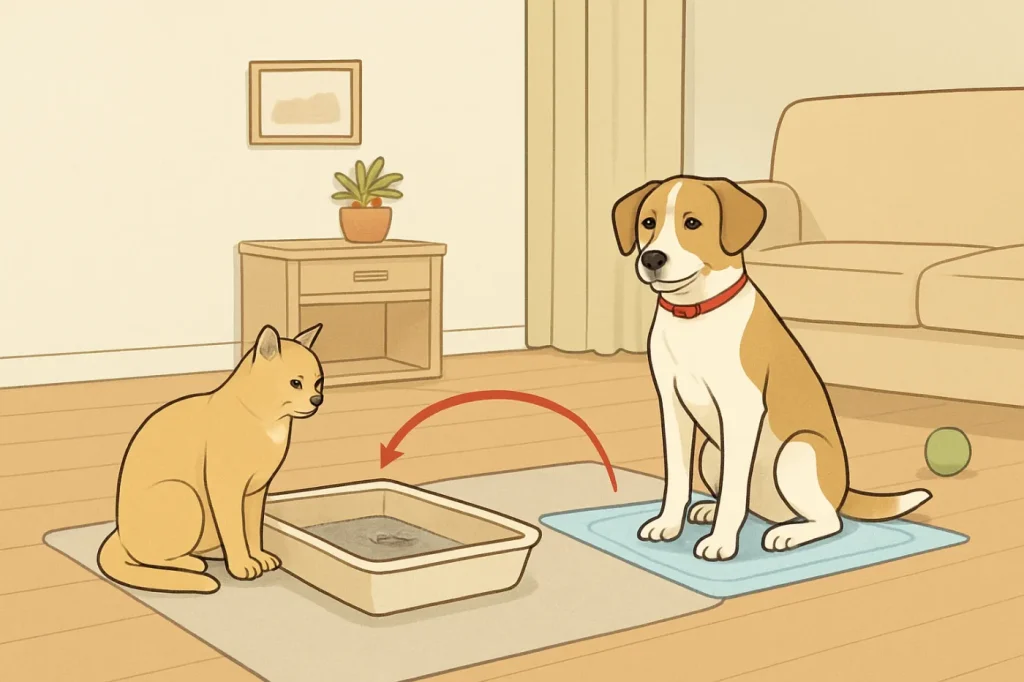
To prevent indoor accidents during house training, think in three parts: set up the space so your dog or cat is likely to choose the right spot, give them a clear and consistent potty routine, and reward every correct choice while calmly managing mistakes. When those three pieces line up, most pets have far fewer accidents and learn faster.
What actually counts as a house training accident for dogs vs. cats
Before you can prevent accidents, you need to know what you are trying to prevent and what it might mean.
For dogs
- Urinating or defecating indoors on floors, rugs, furniture, beds, or in the crate.
- Leaking small amounts of urine when excited or scared (may be training or medical, depending on age and pattern).
- Repeated soiling in the same indoor spot, even after cleaning, which usually means the dog still thinks that area is a bathroom.
One-off accidents during a big schedule change (moving, travel, illness) can be normal. Repeated accidents in a dog that seemed trained usually mean something in the routine, environment, or health has changed.
For cats
- Urinating or defecating outside the litter box on floors, rugs, laundry, or furniture.
- Perching on the edge of the box and missing regularly (often a box, litter, or pain issue).
- Spraying urine on vertical surfaces (walls, furniture). This is usually marking, not a simple house training problem, and often needs behavioral and sometimes medical help.
Kittens usually learn the litter box quickly if the setup is right. Adult cats that suddenly stop using the box often have a medical or stress trigger, not a “stubborn” personality.
How long house training really takes by age and situation
There is no single timeline that fits every pet, but you can use age and background to set realistic expectations and prevent frustration-based mistakes.
Typical dog timelines
- Young puppies (8–16 weeks): Need very frequent potty breaks, often every 1–2 hours when awake, plus after eating, drinking, playing, and waking up. Many still have accidents even with good routines.
- Older puppies (4–6 months): Can usually hold it longer, especially overnight, but still need a structured schedule and close supervision.
- Adolescents and adults who never learned: Can progress faster than tiny puppies because they have better bladder control, but they may have strong habits from previous environments.
- Rescue dogs: Progress depends on their past. Some are nearly perfect from day one; others act like untrained puppies and need a full, patient program.
Most dogs need consistent work over weeks, not days, before you can trust them with full freedom in the home. Even after they seem reliable, sudden changes (new schedule, guests, moving) can cause temporary setbacks.
Typical cat timelines
- Kittens: Many use a box reliably within days if the box is easy to find, low enough to enter, and filled with a comfortable litter.
- Adult cats in a new home: Often use the box right away if it is set up well and placed in a quiet, accessible spot.
- Cats with past box problems: May need gradual changes to box type, litter, or location, plus stress reduction, and sometimes veterinary help.
If a dog or cat is having frequent accidents after several weeks of consistent, appropriate training, it is time to review your setup and schedule and consider a vet check.
Setting up your home: crates, litter boxes, and gates that prevent accidents
A smart environment makes the “right” bathroom choice easy and the “wrong” choice harder. That alone can cut down accidents dramatically.
For dogs: crates, pens, and outdoor access
- Choose the right crate size: Big enough for the dog to stand up, turn around, and lie down comfortably, but not so large that they can pee in one corner and sleep in another.
- Use a playpen or gated area: When you cannot watch closely, confine the dog to a small, easy-to-clean area with a bed, water, and safe chew toys. This reduces the number of places they can sneak off to soil.
- Make the potty area clear:
- For houses with yards: Pick one or two outdoor spots and always walk the dog there on leash at first.
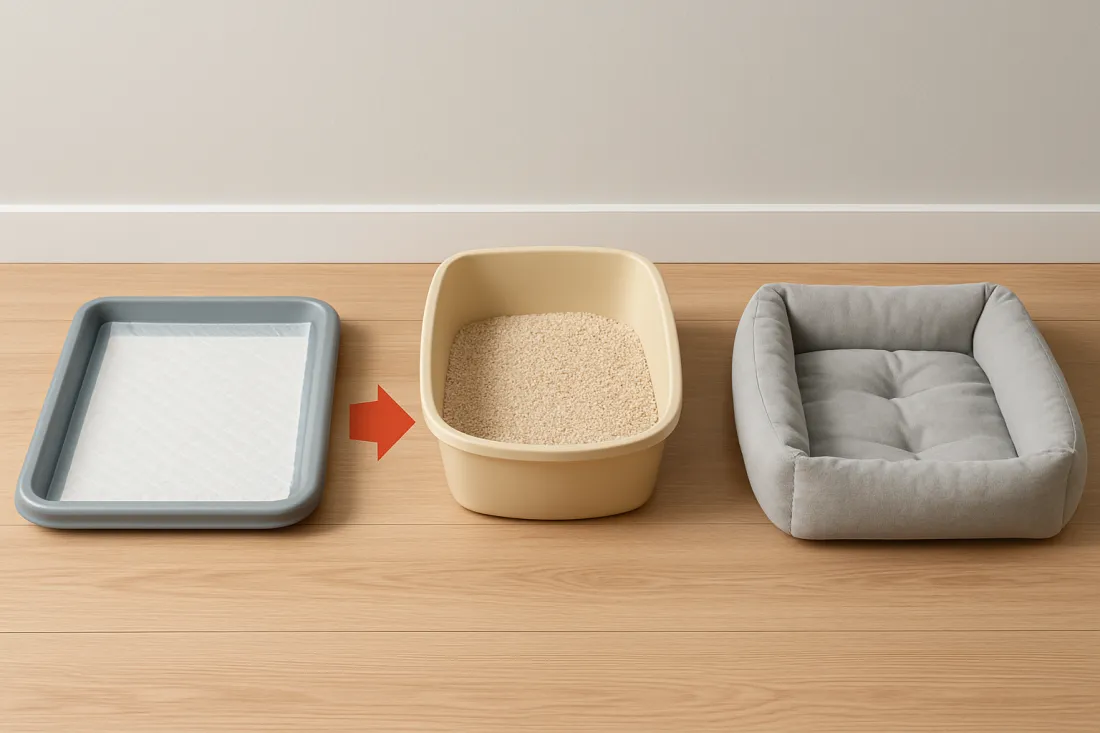
- For apartments: Decide whether you will use outdoor walks only, an indoor potty pad, a balcony potty area, or a combination. Be consistent.
- Remove or block tempting soft spots: Laundry piles, bath mats, and shag rugs can feel like grass or dirt to a dog. Put them away or block access until training is solid.
For cats: litter box basics that prevent accidents
- Number of boxes: Many trainers suggest having more than one box, especially in multi-cat homes. In a small apartment with one cat, at least one well-placed box is essential; more can help if accidents start.
- Box location: Quiet, easily accessible, and away from noisy appliances or busy doorways. Avoid placing the box right next to food and water.
- Box type and size: Most cats prefer a box that is large enough to turn around in and dig comfortably. Kittens and older cats may need low sides for easy entry.
- Litter choice: Many cats prefer unscented, soft litter. Sudden changes in litter type or strong fragrances can trigger accidents.
- Cleanliness: Scoop at least once daily and wash the box regularly with a mild, unscented cleaner.
Cleaning accidents so they do not become repeat spots
- Blot, do not rub fresh urine to remove as much as possible without spreading it.
- Use an enzymatic cleaner designed for pet messes so the pet cannot still smell the old spot and think it is a bathroom.
- Block access to heavily soiled areas until fully dry and odor-free, especially for dogs that return to the same place.
Creating a predictable potty schedule that actually prevents accidents
Accidents often happen because the pet simply cannot hold it any longer or is not sure when the next chance to go will be. A predictable schedule solves much of that.
Key timing rules for dogs
Most dogs need a potty break:
- Right after waking up (morning and naps).
- Shortly after eating a meal.
- After drinking a lot of water.
- After an energetic play session or training session.
- Before being crated or left alone.
- Before bedtime.
Young puppies may also need one or more overnight breaks. If you work full time, you may need help from a dog walker, neighbor, or daycare to avoid long stretches without a break. For more detailed timing ideas, see resources like house training a puppy while working full time.
Key timing rules for cats
- Cats usually use the litter box multiple times a day, often after waking, eating, or playing.
- Keep the box accessible at all times; do not close doors that block the cat’s path to the box.
- In multi-level homes, consider at least one box on each level so the cat does not have to travel far when the urge hits.
How to build and adjust your schedule
- Track for 2–3 days: Note when your pet eats, drinks, naps, plays, and has accidents or successful potty trips.
- Set planned potty times around those patterns, aiming to offer a bathroom break before typical accident times.
- Use a simple cue (like “go potty”) every time you reach the bathroom area, then praise and reward when they go.
- Adjust gradually as your pet’s bladder control improves, stretching the time between breaks a little at a time instead of suddenly.
Supervision vs. freedom: how much is too much?
Most accidents happen when a pet has too much freedom too soon. The rule of thumb: if you would be upset to find a puddle or pile there, do not give unsupervised access yet.
Supervision levels for dogs
- Full supervision: The dog is in the same room with you, within sight. Use baby gates, a leash attached to your belt, or a playpen to keep them close. This is essential for new puppies and newly adopted dogs.
- Partial freedom: The dog can move between a couple of rooms that you can still see into easily. Use this once the dog has gone several days without accidents under full supervision.
- Unsupervised freedom: The dog can roam the home while you are busy or away. Reserve this for later, after weeks of success and no recent accidents.
If accidents start again, step back one level: more supervision, smaller space, and more frequent potty breaks.
Supervision levels for cats
- New kittens or new adult cats: Start them in a smaller, safe room with their litter box, food, water, and bed. Gradually open more of the home once they are using the box reliably.
- Cats with recent accidents: Temporarily limit access to areas where they have soiled and give them easy access to a clean, appealing litter box in a quiet space.
Positive reinforcement basics that reduce accidents
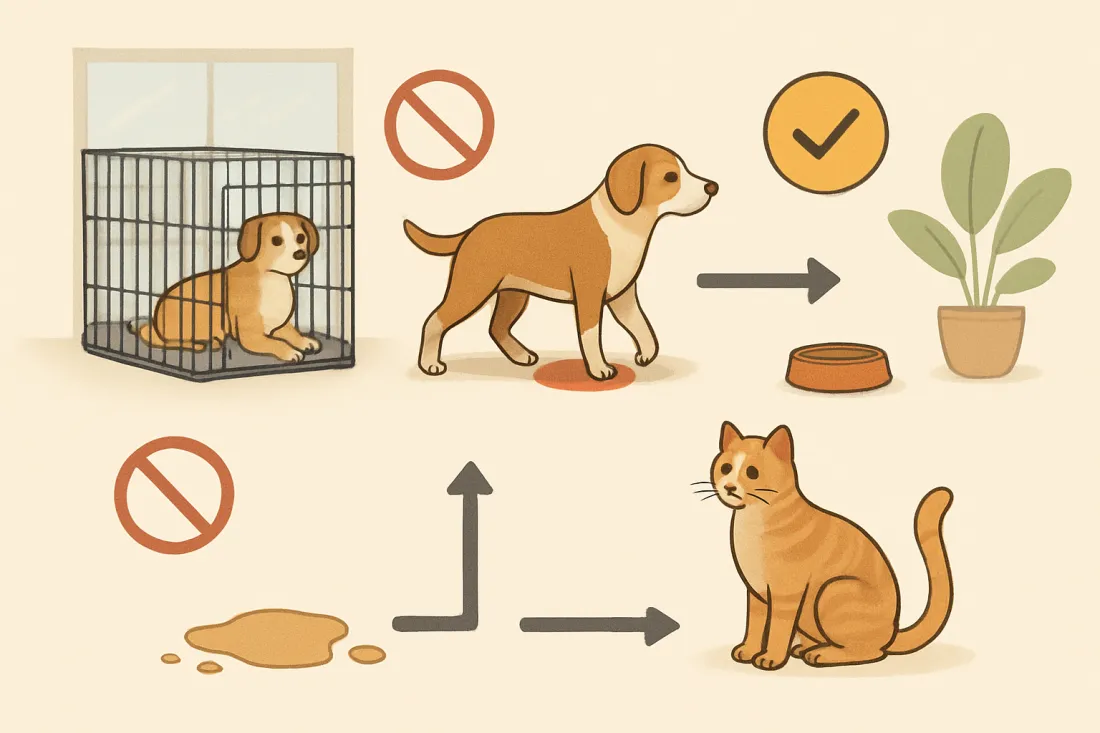
Rewarding the right behavior makes it more likely to happen again. Punishing accidents usually just makes pets hide from you when they need to go.
For dogs
- Use high-value rewards: Tiny treats, praise, or a quick play session immediately after the dog finishes going in the right spot.
- Reward timing matters: Bring treats with you so you can reward within a few seconds of the dog finishing. Waiting until you get back inside is often too late for them to connect the reward with the behavior.
- Stay calm about accidents: If you catch the dog in the act indoors, interrupt gently (a neutral “outside!”), take them quickly to the potty area, and reward if they finish there. If you find a mess later, just clean it; scolding after the fact does not teach them what you want.
For cats
- Make the litter box the easiest, most pleasant option: Soft litter, clean box, and a quiet location are more powerful than treats for most cats.
- Use gentle encouragement: You can drop a small treat or offer petting after the cat uses the box if they enjoy that, but do not hover or crowd them while they are in the box.
- Never punish near the box: Loud noises, scolding, or grabbing the cat near the box can make them avoid it.
Common mistakes that lead directly to accidents
Avoiding a few frequent errors can dramatically improve house training success. For more detail on pitfalls, you can also read about house training mistakes to avoid with dogs and cats.
- Giving too much freedom too soon: Letting a new puppy or rescue dog roam the whole home on day one almost guarantees hidden accidents.
- Inconsistent schedules: Skipping morning potty breaks on weekends or feeding at random times makes it harder for pets to predict when they can go.
- Not going out often enough: Expecting a young puppy or small dog to hold it for long workdays without help leads to accidents and can slow training.
- Changing litter or box type suddenly: For cats, a sudden switch to a new litter scent or a covered box can trigger box avoidance.
- Using punishment or rubbing noses in messes: This does not teach the correct behavior and can create fear or sneaky accidents.
- Ignoring early warning signs: Dogs may sniff, circle, or wander off; cats may pace, meow, or scratch near the box. Missing these signs means missed chances to guide them.
- Cleaning with the wrong products: Strong-smelling cleaners that do not break down urine can leave a scent that draws pets back to the same spot.
- Expecting “perfect” too fast: Assuming a puppy or new cat is fully trained after a few dry days often leads to relaxing supervision too early.
When to worry: signs an accident might be a medical issue
Not all accidents are training problems. Some are early signs of illness or discomfort. Always consult a veterinarian if you are concerned about your pet’s health.
Warning signs in dogs
- Sudden increase in accidents in a dog that was previously reliable.
- Straining, whining, or taking a long time to urinate, or producing only small dribbles.
- Blood in urine or stool, or very dark or unusual color.
- Drinking much more or much less water than usual.
- Leaking urine while sleeping, especially in spayed females or older dogs.
- Changes in behavior such as restlessness, hiding, or sudden aggression when touched near the belly or back end.
Warning signs in cats
- Frequent trips to the box with little or no urine produced.
- Straining, crying, or staying in the box for a long time.
- Urinating in unusual places like sinks, bathtubs, or right in front of you.
- Blood in urine or stool, or very strong odor.
- Sudden change in litter box habits in an adult cat that was previously consistent.
Some urinary problems, especially in male cats, can become emergencies. If your cat seems unable to urinate or is in obvious distress, contact a veterinarian immediately.
Comparison table: different accident-prevention strategies for dogs and cats
| Strategy | Best for dogs | Best for cats | When it helps most | Potential trade-offs |
|---|---|---|---|---|
| Crate or confined area | Very effective for puppies and new rescues to limit accidents and build routine. | Useful only as a temporary safe room with a litter box; cats should not be crated long term for house training. | First weeks in a new home, during schedule changes, or when you cannot supervise closely. | Too much confinement without exercise or enrichment can cause stress or frustration. |
| Frequent scheduled potty breaks | Essential for all dogs, especially puppies and small breeds with smaller bladders. | Helpful mainly to observe patterns; cats need constant access to a box more than scheduled trips. | When accidents happen at predictable times (after meals, naps, or play). | Requires planning and sometimes outside help during long workdays. |
| Indoor potty options (pads, balcony area) | Useful for apartment living, bad weather, or owners with limited mobility. | Not usually needed; cats already have indoor boxes. | When outdoor access is limited or unsafe, especially for very young or small dogs. | Some dogs may prefer pads and be slower to transition to outdoor-only habits. |
| Multiple litter boxes | Rarely needed; most dogs use outdoor spots. | Very helpful in multi-cat homes or large houses to prevent accidents due to distance or box guarding. | When a cat avoids a particular box or when there are conflicts between cats. | More boxes mean more cleaning and space requirements. |
| Positive reinforcement with treats and praise | Highly effective; many dogs quickly connect going in the right place with rewards. | Moderately helpful; some cats enjoy rewards, others prefer privacy and comfort. | When starting training or rebuilding habits after accidents. | Overfeeding treats can add calories; use tiny pieces and adjust meals if needed. |
| Changing environment (blocking rugs, moving boxes) | Blocking favorite accident spots and removing tempting soft surfaces reduces mistakes. | Moving boxes to quieter, more appealing locations can restore good habits. | When accidents repeatedly occur in the same locations. | May require rearranging furniture or living with temporary gates and barriers. |
You are house training a dog or cat in a U.S. home or apartment and want to cut down indoor accidents without confusing or punishing your pet. You have basic supplies (crate or safe room, leash or carrier, food, water, cleaning products) and can adjust your daily routine somewhat.
Start with three inputs: your pet’s age and health (young puppy, adult dog, kitten, adult cat), your living space (apartment vs. house, yard access, number of floors), and your typical daily schedule (work hours, sleep time, help from others). Keep a simple log for two days of when your pet eats, drinks, sleeps, plays, and has accidents or successful potty trips.
Based on your log, design a one-day accident-prevention plan: (1) Set up the environment so the correct bathroom spot is easy and the wrong spots are blocked or supervised; (2) Schedule potty opportunities or box checks just before your pet’s usual accident times; (3) Decide how you will supervise (same-room watch, gates, or safe room) during risky periods; (4) Prepare small rewards to give immediately after each correct potty; and (5) Choose a calm, consistent response for accidents (interrupt only if caught in the act, then clean thoroughly with an enzymatic cleaner).
At the end of the day, count how many accidents happened and when. If accidents mostly happened between planned breaks, shorten the time between opportunities. If they happened in specific rooms, tighten supervision or block those areas. Repeat the plan for several days, adjusting only one or two elements at a time. You should see accidents gradually decrease and successful bathroom trips increase; if they do not, or if your pet shows signs of discomfort, contact a veterinarian to rule out medical causes.
If you skip the logging step or change too many things at once, it becomes hard to tell what is working. Ignoring sudden changes in bathroom habits can delay diagnosis of medical issues. If your pet seems distressed, strains to urinate, or has blood in urine or stool, stop adjusting the training plan and seek veterinary advice promptly.
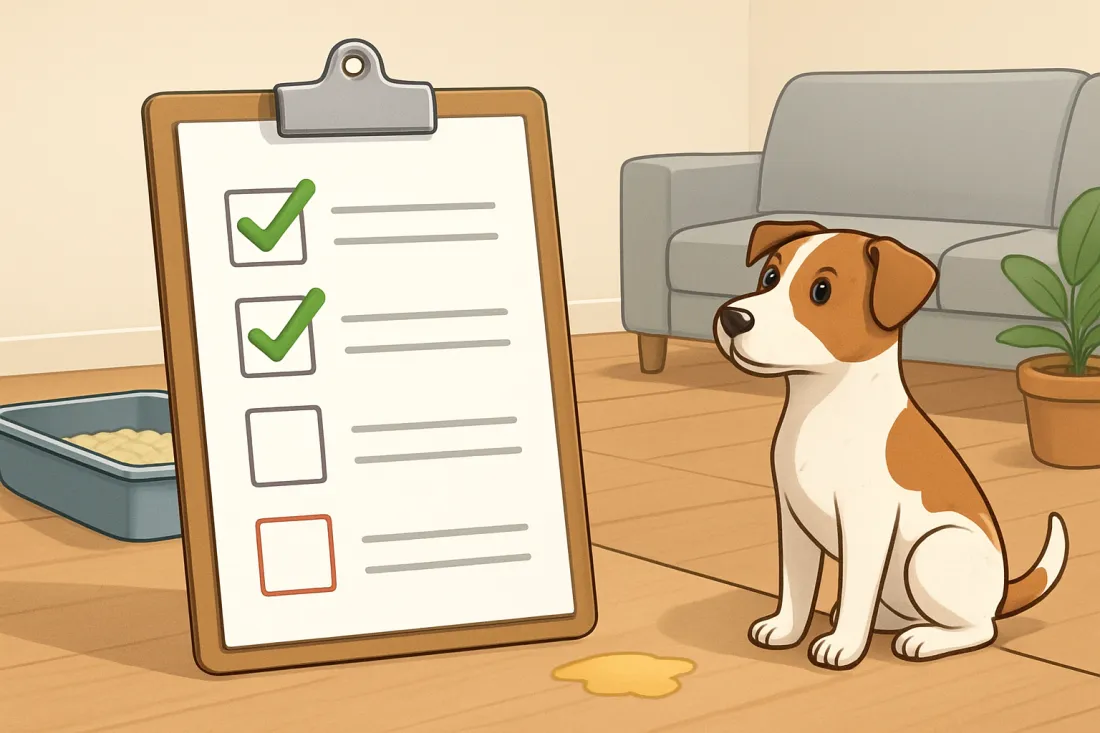
Structured daily accident-prevention checklist
Use this checklist as a simple daily routine to reduce accidents while house training.
Morning
- Let your dog out or take them to the potty area immediately after waking; or check that your cat’s litter box is clean and accessible.
- Reward your dog for going in the right place; note roughly what time they went.
- Feed breakfast at a consistent time; for cats, refresh water and check box cleanliness.
- Offer another potty break for dogs 10–30 minutes after eating, depending on age and past patterns.
- Set up supervision or confinement before you start work or leave the home.
Daytime
- Provide regular potty breaks for dogs based on age and previous accident times.
- Check that cats can reach their litter box and that no doors have been closed by accident.
- Use gates, pens, or a safe room to prevent unsupervised roaming in high-risk areas.
- Reward every correct bathroom trip that you see.
- Clean any accidents promptly with an enzymatic cleaner and block access until dry.
Evening
- Feed dinner at a predictable time and offer a potty break for dogs afterward.
- Play with your pet to burn off energy, then give one more bathroom opportunity before settling for the night.
- Do a quick scan of the home for any missed messes to clean before odors set in.
- Set up the crate, pen, or safe room for overnight with comfortable bedding and water as appropriate.
Weekly review
- Review where and when accidents happened and adjust potty times or supervision levels.
- For cats, evaluate whether litter box number, location, or cleanliness needs improvement.
- For dogs, consider whether you can gradually increase freedom in low-risk areas or need to step back to more structure.
Summary and practical next steps
Preventing accidents during house training is less about perfection and more about consistent, thoughtful management. Set up your home so the right bathroom choice is easy, give your pet frequent and predictable chances to go, supervise closely in risky areas, and reward every success. Stay patient, avoid punishment, and watch for any signs that accidents might be linked to health issues rather than training alone.
Next, choose one area to improve today: maybe tightening your dog’s supervision, adding a second litter box for your cat, or cleaning old accident spots with a better product. If you are working with a new puppy or rescue dog in a small space, you may also find it helpful to read about house training a puppy in an apartment or house training a rescue dog in an apartment for more situation-specific tips.
FAQ about house training accident prevention
What is the single most important thing to understand about preventing house training accidents?
The most important idea is that accidents are usually management problems, not “bad” pets. If a dog or cat has an accident, it almost always means they did not have a clear, timely chance to use the right bathroom spot, or the environment made the wrong spot too easy. Focusing on schedule, setup, and supervision—rather than blame—leads to faster progress and a better relationship.
What common house training mistakes should I avoid from day one?
Avoid giving a new pet full freedom in the home, skipping regular potty breaks, changing litter or box setups suddenly, and using punishment when accidents happen. These mistakes make it harder for pets to understand what you want and can create stress or sneaky behavior. Instead, start with a small, well-managed space, a predictable routine, and lots of praise for every correct bathroom trip.
What should I do right after reading this to reduce accidents in my home?
Pick one room to be your pet’s main supervised area, remove or block any rugs or soft items that would be hard to clean, and decide on a specific bathroom spot (outdoor area for dogs, litter box location for cats). Then set alarms on your phone for the next few hours to remind you to offer bathroom breaks or check the box. Reward your pet every time they use the correct spot. This small, focused change can start reducing accidents immediately.
How do I know if my pet’s accidents are a training issue or a medical problem?
Training issues usually follow a pattern: accidents happen when you miss a break, change the routine, or give too much freedom. Medical issues often show up as sudden changes in a previously reliable pet, frequent small urinations, straining, blood in urine or stool, or signs of pain or distress. If you see any of those warning signs, or if consistent training changes do not reduce accidents over time, contact a veterinarian to rule out health problems.