
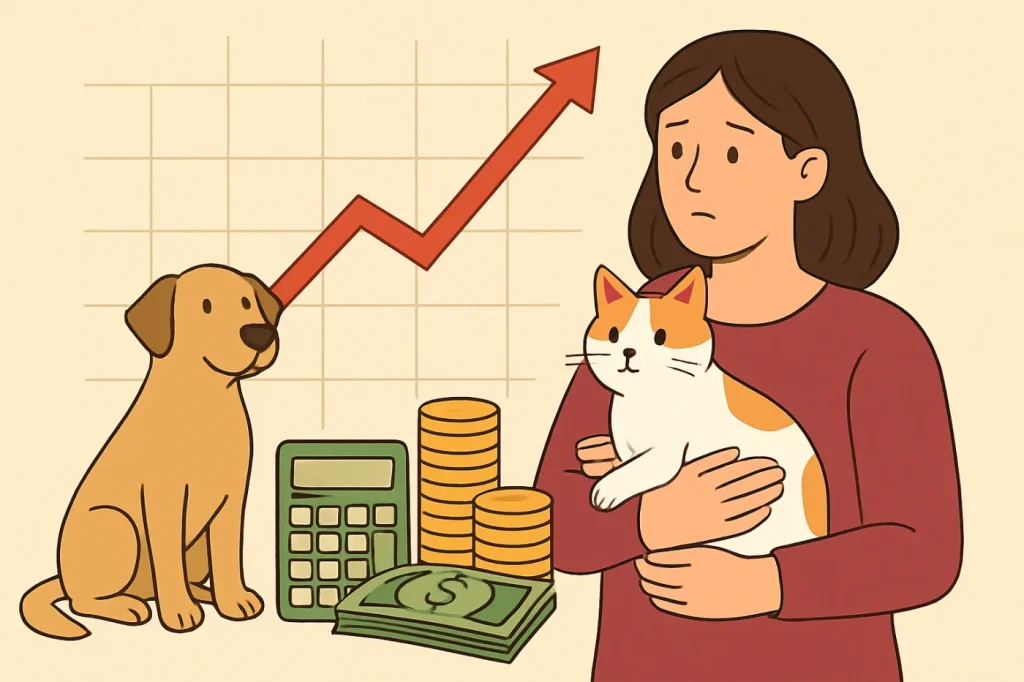
What the long term cost of owning a dog or cat really means
Owning a dog or cat in the United States is usually a 10–20 year commitment, and the money you spend will not be the same every year. Some phases are steady and predictable; others bring big one‑time or ongoing bills that can strain a household budget if you are not ready. Over a pet’s lifetime you will typically face:
- High upfront costs in the first year (vaccines, spay/neuter, basic supplies, training).
- More stable, routine costs in the healthy adult years (food, annual vet care, parasite prevention).
- Rising medical and medication costs in the senior years (arthritis, dental disease, chronic conditions).
Thinking in life stages helps you plan. Instead of asking, “Can I afford a dog or cat right now?” shift to, “Can I afford this pet through puppy/kitten, adult, and senior years, including emergencies and chronic illness?”
Life stages for dogs and cats and how costs shift over time
Dogs and cats move through similar broad life stages, but the timing is different by species and size.
- Puppy/kitten: roughly the first 12 months.
- Young adult: about 1–3 years for cats and small dogs; 1–4 years for larger dogs.
- Mature adult: mid‑life, when they are fully grown but not yet senior.
- Senior: the last third of their expected lifespan; often earlier for large‑breed dogs.
Across these stages, the type of spending changes even if your overall monthly outlay feels similar for a while.
Puppy and kitten stage: front‑loaded investment
During the first year, you are setting up your home and your pet’s health foundation. Expect higher spending on:
- Vaccination series and wellness visits: multiple vet appointments to build immunity and screen for early issues.
- Spay/neuter: a one‑time surgery most owners choose in the first year.
- Basic supplies: crate or carrier, bed, litter box and scoop, bowls, leash and harness, collar and ID tags, toys, grooming tools.
- Training and socialization (especially for dogs): group classes, private sessions, or online courses.
- Higher food needs for growth: puppies and kittens often eat more per pound than adults.
If you are comparing whether to start with a puppy or kitten, it can help to look at a focused breakdown of early costs; a guide such as the first year cost of owning a puppy or kitten can give more detail on that specific phase.
Young adult and mature adult stage: steadier but still significant
Once your dog or cat is fully grown, many one‑time costs drop away. At this stage, your budget is dominated by:
- Food: usually the largest predictable monthly cost, especially for medium and large dogs.
- Routine vet care: annual or semi‑annual exams, core vaccines, and screening tests.
- Parasite prevention: flea, tick, and heartworm prevention for dogs; flea and tick prevention for cats.
- Pet license and microchip registration (where required): often small but recurring.
- Grooming: professional grooming for some breeds; at‑home supplies for others.
- Pet sitting, boarding, or dog walking: if your schedule or travel requires it.
This is usually the most predictable period financially, which makes it a good time to build savings for future senior care and emergencies.
Senior stage: rising medical and support costs
As dogs and cats age, the risk of chronic disease and mobility issues increases. Costs often rise again due to:
- More frequent vet visits: many vets recommend checkups every 6 months for seniors.
- Diagnostic tests: bloodwork, urine tests, imaging, and other monitoring.
- Long‑term medications: for arthritis, heart disease, thyroid problems, diabetes, kidney disease, or other chronic conditions.
- Prescription diets: specialized food for kidney, urinary, or gastrointestinal issues.
- Mobility and comfort aids: orthopedic beds, ramps, harnesses, litter box adjustments.
- End‑of‑life care: palliative care, hospice‑style support, and euthanasia services.
For many families, the senior phase is where unexpected bills appear. Planning ahead for this stage is one of the most important parts of responsible pet ownership.
High‑cost phases to plan for: first year, training, spay/neuter, senior care
Not every year of pet ownership is financially equal. These phases tend to be the most expensive or most likely to cause budget stress.
First year with a dog or cat
The first year concentrates many one‑time or front‑loaded costs:
- Adoption or purchase fees.
- Initial vet exam and full vaccine series.
- Spay/neuter surgery.
- Microchipping and registration.
- Core supplies (crate, litter box, carrier, bed, leash, collar, toys, grooming tools).
- Training classes for dogs; behavior support for shy or fearful cats.
Because so many items hit at once, it is wise to:
- Set aside a dedicated first‑year fund before bringing the pet home.
- Prioritize essentials (health and safety) over non‑essentials (designer accessories).
- Use adoption packages that bundle vaccines and spay/neuter when available.
Training and behavior support
Training is not just an optional extra for dogs. It directly affects long‑term costs:
- Well‑trained dogs are less likely to damage property, escape, or injure someone, all of which can be expensive.
- Early behavior help for both dogs and cats can prevent problems that later require more intensive (and costly) intervention.
Budget for at least basic obedience classes for dogs and, if needed, a behavior consult for cats with litter box or aggression issues.
Spay/neuter and other early procedures
Spay/neuter is a one‑time cost but has long‑term financial implications:
- It may reduce the risk of certain reproductive diseases that are expensive to treat.
- It prevents unplanned litters, which come with their own costs and responsibilities.
Other early procedures that can add up include dental cleanings for small‑breed dogs and certain cat breeds, or corrective surgeries for inherited issues.
Senior and end‑of‑life care
Senior care can become the single largest category of lifetime spending, especially if your pet develops a chronic condition. Costs can rise due to:
- Ongoing medications.
- Regular monitoring tests.
- Specialist consultations.
- Assistive devices and home modifications.
- End‑of‑life decisions, including cremation or burial services.
Because these expenses often arrive later, it is easy to underestimate them when adopting a cute puppy or kitten. Building a senior‑care savings habit early can soften the impact.
How food, vet, and medication costs change as pets age
Exact dollar amounts vary widely across the United States, but there are clear patterns in how the main cost categories shift over time.
Food costs over a pet’s lifetime
Food is one of the most predictable long‑term expenses, but it still changes with age:
- Puppies and kittens: eat more frequently and require growth formulas; they may go through several bag sizes or brands as you figure out what works.
- Adults: usually settle into a consistent daily amount; large dogs can be a major ongoing food expense compared with cats or small dogs.
- Seniors: may need prescription or specialized diets for health conditions, which can cost more per meal than standard food.
To keep food costs manageable over the long term:
- Choose a nutritionally complete diet that fits your budget and your vet’s guidance.
- Avoid frequent, unnecessary brand changes that lead to waste.
- Measure portions to prevent obesity, which increases medical costs later.
Vet care costs over a pet’s lifetime
Veterinary spending tends to follow a curve:
- Higher in the first year (vaccines, spay/neuter, initial tests).
- Moderate and steady in healthy adult years (annual exams and boosters).
- Rising again in senior years (more frequent visits, diagnostics, and treatments).
Key patterns to expect:
- Routine care: predictable annual or semi‑annual visits, which you can plan into your yearly budget.
- Dental care: some pets, especially small dogs and certain cats, may need periodic dental cleanings under anesthesia.
- Unexpected illness or injury: accidents, infections, or sudden illnesses can create large, unplanned bills at any age.
Preventive care can reduce the risk or severity of some expensive problems. For a deeper look at how prevention affects long‑term spending, see guidance on preventive pet care that saves money long term.
Medication and chronic condition costs
Medication costs are often low or occasional during youth, then rise with age:
- Young pets: short courses of medication for minor issues (ear infections, stomach upsets) and regular parasite prevention.
- Middle‑aged pets: some may start long‑term meds for allergies, anxiety, or early joint pain.
- Seniors: higher chance of multiple chronic conditions, each with its own medication or prescription diet.
If your pet develops a chronic condition, the financial impact comes from:
- Daily or twice‑daily medications.
- Regular monitoring tests to adjust doses.
- Specialist consultations (for example, cardiology or internal medicine).
- Prescription diets that must be fed consistently.
Because these costs can last for years, it is worth learning strategies for managing long term medication and prescription diet costs for pets before you are in crisis mode.
Comparison table: dog vs cat lifetime cost patterns
| Aspect | Typical Dog Pattern | Typical Cat Pattern | Planning implication |
|---|---|---|---|
| Food over lifetime | Higher ongoing food volume, especially for medium and large breeds; cost rises with premium diets. | Lower daily food volume; even premium diets often use less per day than many dogs. | Dog owners should plan for a larger long‑term food budget; cat owners can often allocate more to medical savings. |
| Routine vet care | Regular exams, vaccines, and parasite prevention; some dogs need extra vaccines for boarding or daycare. | Regular exams and vaccines; indoor cats may need fewer parasite products but still require routine checks. | Both species need consistent preventive care; indoor cats are not “no‑vet” pets. |
| Training and behavior | Formal training is often essential to prevent damage, bites, or legal issues. | Training focuses on litter box use, scratching behavior, and stress management. | Dog owners should budget for classes; cat owners should budget for environmental enrichment and behavior support. |
| Senior medical needs | Joint disease and mobility issues are common; may need pain meds, supplements, and mobility aids. | Kidney disease, thyroid disease, and dental disease are common; may need prescription diets and regular lab work. | Dog owners should plan for mobility and pain management; cat owners should plan for lab monitoring and special diets. |
| Housing and travel | Boarding, pet‑friendly rentals, and travel arrangements can be more complex and costly. | Cats are often easier to board in‑home or leave with a sitter; some rentals still charge pet fees. | Dog owners should factor in higher travel and housing constraints; cat owners should still plan for pet deposits and sitters. |
Budgeting for chronic conditions and long‑term medications
Chronic conditions such as arthritis, diabetes, kidney disease, or heart problems can be managed for years, but they change your budget permanently. Planning ahead means thinking in terms of monthly and yearly commitments, not just the first prescription.
Steps to prepare for possible chronic conditions
- Know your pet’s risk factors. Breed, size, and species influence which conditions are more likely. Large dogs, for example, are more prone to joint issues; some cat breeds are more prone to heart or kidney disease.
- Ask your vet about typical long‑term care needs. During routine visits, ask what chronic issues are common for your pet’s type and what ongoing care usually involves.
- Build a dedicated medical savings buffer. Even a modest monthly contribution over several years can create a cushion for future medication and testing.
- Consider insurance or wellness plans carefully. Look at what is covered, what is excluded, and how deductibles and limits work. Avoid assuming that any plan will cover all chronic care.
- Review medication options. When a chronic condition is diagnosed, ask about different drug choices, dosing schedules, and whether a prescription diet is truly necessary.
Keeping long‑term treatment sustainable
To keep chronic care manageable over time:
- Be honest with your vet about budget limits so they can prioritize tests and treatments.
- Ask whether any medications can be safely adjusted, combined, or changed to generics.
- Use reminders or pill organizers to avoid missed doses that lead to complications and extra vet visits.
- Track your monthly spending on that condition so you can plan ahead for refills and rechecks.
How to adjust your pet budget every year
A pet budget is not “set it and forget it.” Reviewing it annually keeps you ahead of changes in your pet’s needs and your own finances.
You have a dog or cat in the United States and want to keep long‑term costs manageable from the first year through senior life, without being surprised by large vet or care bills.
Start with your current monthly pet spending (food, litter, routine vet care, parasite prevention, grooming, insurance, and any medications), your pet’s age and life stage, and a realistic view of your emergency savings.
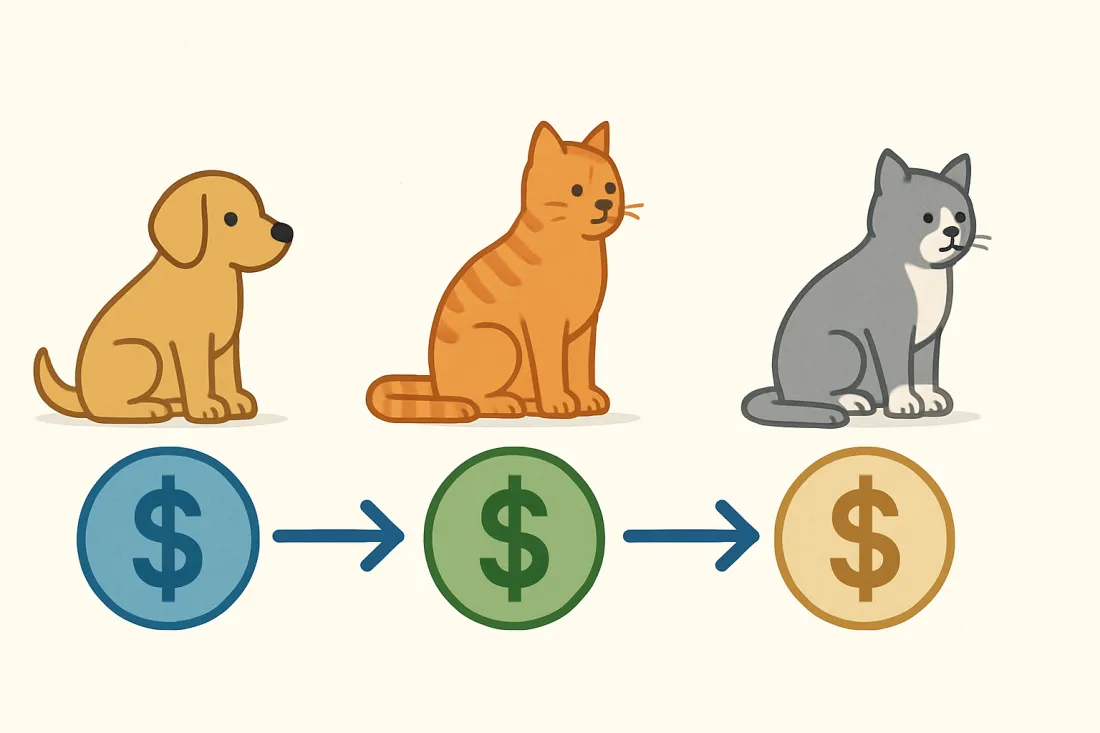
Once a year, review the past 12 months of pet expenses, note any new patterns (such as rising vet visits or new medications), and then adjust your budget by: (1) increasing the line items that are clearly trending up, (2) adding a separate category for future senior or chronic care savings, and (3) trimming non‑essentials like extra toys or subscriptions if needed to free up money for health‑related costs.
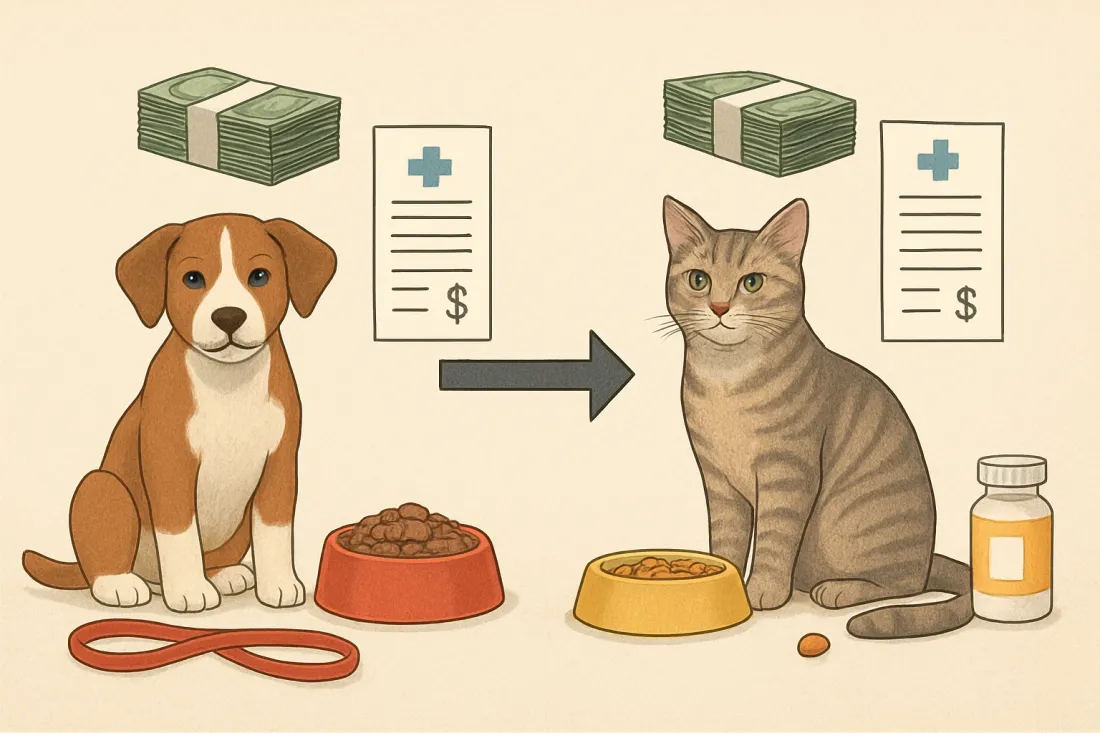
You know the adjustment worked if your updated budget covers your predictable monthly costs, includes a small but consistent contribution to a pet emergency or senior‑care fund, and you feel you could handle at least one unplanned vet visit without immediate financial crisis.
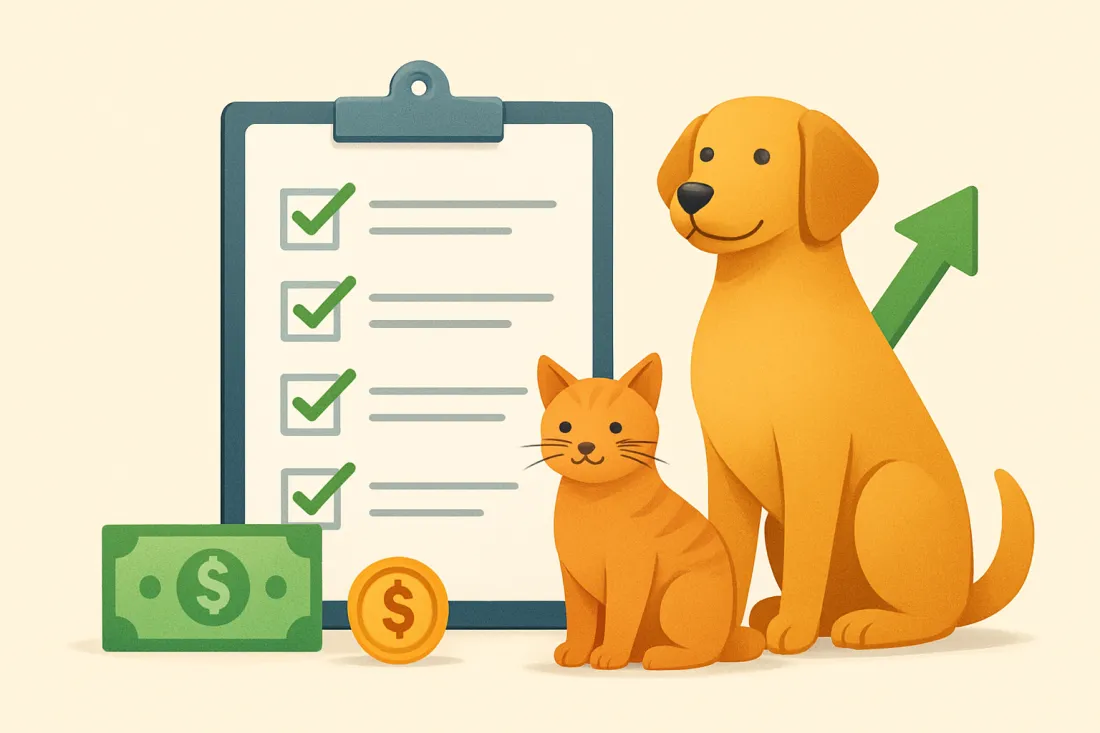
Annual pet budget review checklist
Use this simple yearly rhythm:
- Confirm your pet’s life stage. Puppy/kitten, young adult, mature adult, or senior. This shapes what to expect in the coming year.
- List all recurring costs. Food, litter, parasite prevention, grooming, insurance, dog walking, daycare, or pet sitting.
- Review last year’s vet records. How many visits? Any new diagnoses? Any recommendations you postponed due to cost?
- Note new or ongoing medications. Are they short‑term or long‑term? How often are refills and rechecks needed?
- Estimate upcoming one‑time costs. Dental cleaning, surgery, behavior consult, new crate or carrier, or a bigger bed for a growing dog.
- Adjust your monthly pet line item. Increase it if you consistently overspent last year or if your pet is entering a higher‑cost stage (such as senior years).
- Set or update a pet emergency fund goal. Decide on a target that feels realistic for your household, and automate a monthly transfer toward it.
- Revisit insurance or wellness plans. Check whether the coverage still matches your pet’s age and health; avoid canceling without a clear alternative plan.
- Plan for travel and housing. If you expect to move or travel more, factor in pet deposits, boarding, or pet‑friendly lodging.
- Schedule preventive care. Book the next wellness exam and any recommended tests so they are not forgotten and do not pile up later.
Structured checklist: long‑term financial planning for your pet’s lifetime
Use this checklist to think beyond the next few months and cover your dog or cat’s entire life.
Before adopting or buying
- Confirm you can afford first‑year costs (adoption fee, vaccines, spay/neuter, supplies, training).
- Research your chosen breed or type for common health issues and likely lifespan.
- Check your housing situation for pet fees, breed or size restrictions, and any required deposits.
- Decide whether you will likely use daycare, dog walking, or pet sitting and factor that into your budget.
- Talk with household members about who pays for what (routine care, emergencies, grooming).
During the first year
- Set up a separate pet savings account or envelope and start monthly contributions.
- Track all initial vet and supply costs to understand your baseline.
- Complete spay/neuter and core vaccines on schedule.
- Enroll in at least one training class for dogs or seek behavior advice for cats if needed.
- Decide whether to purchase pet insurance while your pet is young and typically more insurable.
Adult years
- Maintain annual or semi‑annual wellness exams and parasite prevention.
- Review your pet budget annually and adjust for any new recurring costs.
- Increase your emergency fund as your income allows.
- Address behavior issues early to avoid property damage or re‑homing later.
- Keep your pet at a healthy weight to reduce future medical costs.
Senior years
- Switch to more frequent vet checkups if recommended.
- Ask your vet for a senior care plan that outlines likely tests and treatments.
- Increase your monthly medical savings if possible.
- Budget for mobility aids, prescription diets, and pain management.
- Discuss end‑of‑life preferences with your family and, when appropriate, your vet so you are not making every decision in a crisis.
Common mistakes that make lifetime pet costs harder
Avoiding a few predictable mistakes can save both money and stress over the years.
Underestimating long‑term medical costs
Many owners budget for food and vaccines but not for chronic illness or emergencies. This can lead to:
- Delaying needed care until a condition worsens and becomes more expensive.
- High‑interest debt from emergency vet visits.
- Heartbreaking decisions about treatment vs. finances.
Skipping preventive care to “save money”
Skipping vaccines, parasite prevention, or dental care may feel cheaper now but can lead to:
- Preventable diseases that are far more expensive to treat.
- Advanced dental disease requiring extractions instead of a simpler cleaning.
- Parasite infestations that spread through the home.
Ignoring behavior and training issues
Unaddressed behavior problems can cause:
- Property damage (chewed furniture, scratched doors, ruined carpets).
- Injuries to people or other animals, with potential legal and medical costs.
- Increased risk of surrendering the pet to a shelter.
Early investment in training and enrichment is usually cheaper than fixing serious problems later.
Not planning for housing and life changes
Life changes—moving, having children, changing jobs—can all affect pet costs. Common oversights include:
- Choosing a pet that will be difficult to house in typical rentals (very large dogs, restricted breeds) without planning for higher rent or fewer options.
- Not budgeting for pet deposits or monthly pet fees in apartments.
- Assuming friends or family can always pet‑sit for free.
Responsible decisions if your finances change
Even with good planning, job loss, illness, or other life events can strain your ability to afford pet care. Responsible ownership includes having a plan for tough times.
Steps to take before considering re‑homing
If you are struggling to cover pet expenses:
- Talk openly with your vet. Explain your financial situation and ask about lower‑cost treatment options, generic medications, or prioritizing the most important tests.
- Look for local assistance. Many communities have low‑cost vaccine clinics, spay/neuter programs, or pet food pantries. Check with shelters, humane societies, or social service organizations.
- Trim non‑essential pet spending. Pause subscription boxes, limit new toys to replacements, and reduce optional services like daycare if safe to do so.
- Ask trusted friends or family for temporary help. This might include short‑term fostering, shared walking, or help with transport to low‑cost clinics.
When re‑homing may be the kindest option
In some situations, keeping the pet may no longer be in their best interest or yours. Re‑homing can be responsible when:
- Your financial situation is unlikely to improve soon, and you cannot meet basic needs like food, shelter, and essential medical care.
- Your housing options are extremely limited and unsafe or unstable for the pet.
- Severe behavior issues require more time, space, or expertise than you can realistically provide.
If you must re‑home:
- Work with reputable shelters or rescue groups that screen adopters.
- Be honest about the pet’s medical and behavior history.
- Provide medical records and any remaining supplies to ease the transition.
Re‑homing is emotionally difficult, but planning and seeking help early can sometimes prevent reaching that point.
FAQ about the long term cost of owning a dog or cat
What should I understand first about the long term cost of owning a dog or cat?
The most important thing to understand is that costs are uneven over time. You will likely spend more in the first year and again in the senior years than during the middle of your pet’s life. Food and routine care are predictable, but emergencies and chronic conditions can add large, ongoing expenses. Thinking in life stages and building a small, steady savings habit for future vet care is more realistic than hoping every year will cost the same.
What money mistakes should I avoid when planning lifetime costs for a dog or cat?
Avoid assuming that the adoption or purchase fee is the main expense, or that a healthy young pet will always stay inexpensive. Common mistakes include skipping preventive care to save money, choosing a breed whose likely medical or grooming needs do not fit your budget, and failing to set aside anything for emergencies or senior care. Ignoring behavior issues is another costly error, because property damage and bite incidents can quickly outweigh the price of early training.
What should I do next to plan for my pet’s lifetime costs?
Take 20–30 minutes to list your current pet expenses and your pet’s age, then map out the likely next stage: more training, a dental cleaning, or senior screening tests. Set a realistic monthly amount you can put toward a pet emergency or senior‑care fund, even if it is small. Finally, schedule your pet’s next wellness exam and use that visit to ask your vet what to expect financially over the next few years for your specific dog or cat.
Is adopting a shelter pet always cheaper over its lifetime?
Adopting from a shelter often reduces first‑year costs because vaccines, spay/neuter, and microchipping may be included in the adoption fee. However, lifetime cost still depends on the individual pet’s health, size, and behavior. A mixed‑breed shelter dog with few health issues may cost less over time than a purebred dog prone to certain diseases, but there are no guarantees. A detailed guide on the true cost of adopting a shelter pet can help you compare early savings with long‑term responsibilities.
How much should I keep in savings for pet emergencies and senior care?
There is no single right number because vet costs and incomes vary widely. Instead of chasing a perfect target, focus on consistency: choose an amount you can set aside every month without failing other essential bills. Over several years, even modest contributions can add up to a meaningful buffer. Review that target annually as your pet ages and as your own financial situation changes, increasing it when you are able.