
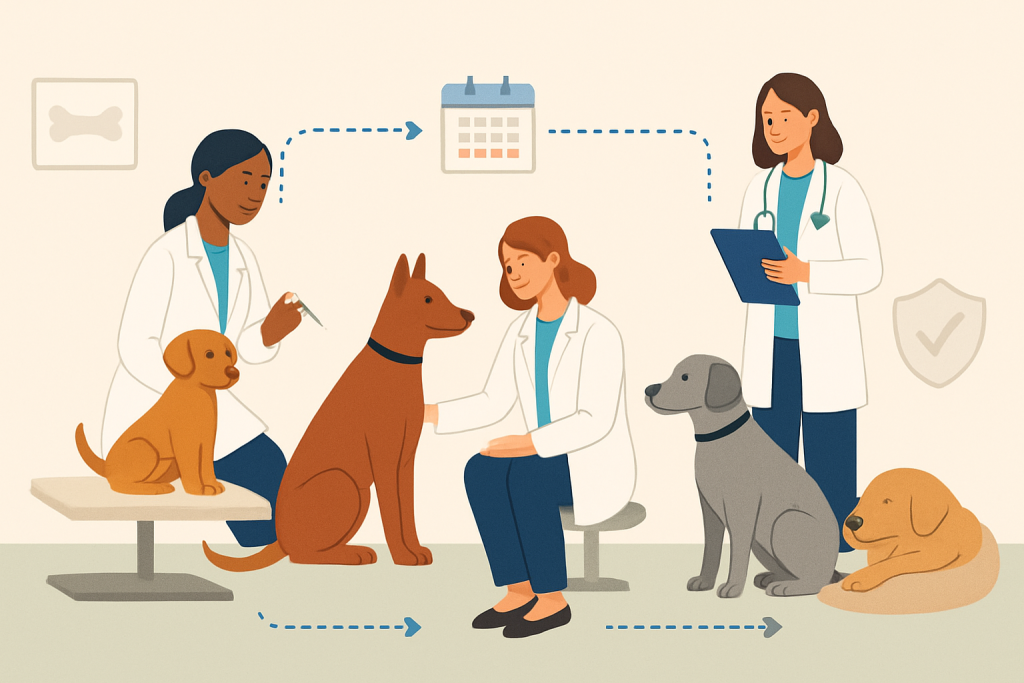
If your dog seems healthy, it can still be hard to know how often to schedule vet visits or what really happens at each appointment. This guide explains a recommended vet visit schedule for dogs in the US by life stage so you can plan routine care, budget realistically, and recognize when extra or emergency care is needed.
How often should a dog visit the vet at each life stage in the US
Most vets in the US follow a life-stage approach. Exact timing can vary by clinic and your dog’s health, but these are widely used patterns you can use as a starting point and then confirm with your own veterinarian:
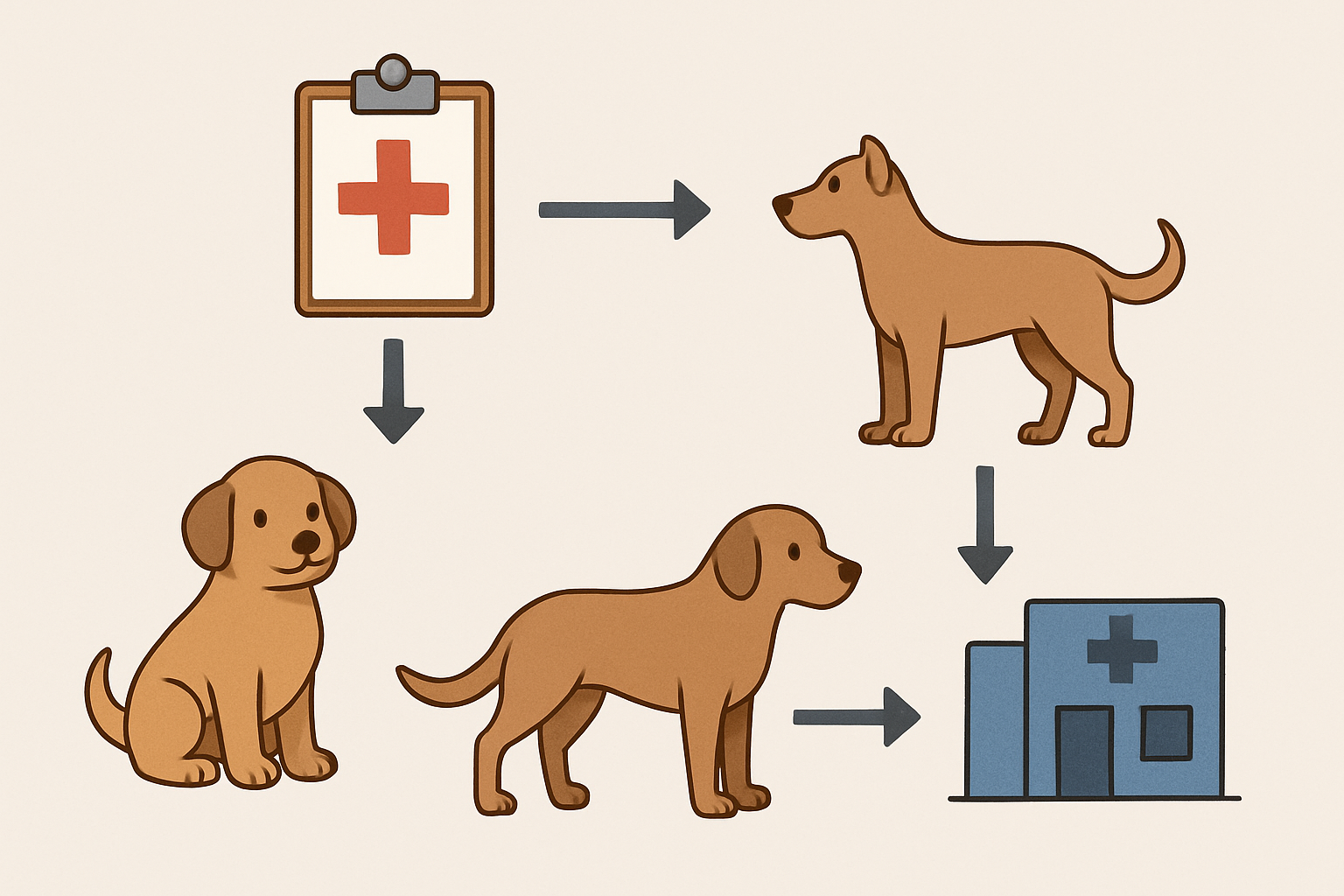
- Puppies (birth to about 12–18 months)
Typical pattern: a series of visits every few weeks, then a checkup around the first birthday.- First puppy visit usually around 6–8 weeks of age.
- Then visits roughly every 3–4 weeks until about 16–20 weeks old for vaccines and growth checks.
- Spay/neuter discussion and pre-surgery exam usually during this period.
- Follow-up visit around 1 year for booster vaccines and a full exam.
- Healthy adult dogs (about 1–7 years for many breeds)
Typical pattern: at least one full wellness exam per year, sometimes two.- Annual visit for physical exam, vaccine updates, and screening tests.
- Some vets recommend a checkup every 6 months, especially for dogs with chronic issues, large/giant breeds, or active outdoor lifestyles.
- Senior dogs (often around 7+ years, earlier for giant breeds)
Typical pattern: twice-yearly wellness visits are commonly recommended.- Full exam about every 6 months.
- More frequent lab work to look for age-related disease.
- Closer monitoring of weight, mobility, and behavior changes.
These schedules are guidelines, not rigid rules. Any time your dog is sick, injured, or acting very differently, you should schedule an extra visit regardless of the routine plan.
Life-stage comparison table: puppy vs adult vs senior vet schedules
The table below compares how often most dogs see the vet at different ages and what typically happens at those visits. Use it as a planning tool and adjust with your vet based on your dog’s breed, lifestyle, and health history.
| Life stage | Approx. age range | Typical visit frequency | Main goals of visits | Examples of what may be done |
|---|---|---|---|---|
| Puppy – early series | ~6–8 weeks to ~16–20 weeks | Every 3–4 weeks | Build immunity, monitor growth, start parasite prevention and training guidance | Physical exam, initial vaccines and boosters, deworming, stool checks, starting flea/tick/heartworm prevention, nutrition and behavior counseling |
| Puppy – late / adolescent | ~5–12 months | Every few months, then around 1 year | Finalize puppy vaccines, plan spay/neuter, transition to adult care | Booster vaccines, spay/neuter exam and surgery planning, microchipping if not done, growth and weight checks, training and socialization review |
| Young adult | ~1–3 years | At least once a year | Maintain protection, catch early issues, reinforce good habits | Annual exam, vaccine updates as needed, heartworm and stool tests, dental check, lifestyle risk review (travel, daycare, hiking) |
| Mature adult | ~3–7 years (varies by breed) | At least once a year; some dogs benefit from every 6 months | Monitor weight, joints, teeth, and early organ changes | Full exam, blood and urine screening as recommended, dental cleaning discussions, arthritis and weight management planning |
| Senior | Often ~7+ years (earlier for giant breeds) | About every 6 months | Detect age-related disease early, keep dog comfortable and mobile | Comprehensive exam, more frequent lab tests, blood pressure checks where available, pain and mobility assessment, medication review, diet adjustments |
For a more detailed annual breakdown that includes cats as well, you can also review an annual vet care schedule for dogs and cats USA and compare it with your dog’s current plan.
Health prevention planning: building a yearly vet care calendar
A recommended vet visit schedule for dogs in the US works best when you turn it into a simple yearly plan. This helps you spread out costs, avoid missed boosters, and keep preventive care on track.
- Pick a “wellness month” – choose the same month every year for your dog’s main wellness exam and mark it on your calendar.
- Group preventive tasks – pair the wellness visit with heartworm testing, stool checks, and vaccine updates when your vet recommends them.
- Set monthly reminders – use phone reminders for flea, tick, and heartworm preventives so doses are not skipped.
- Plan senior screening ahead – once your dog becomes a senior, ask your vet which month to repeat blood and urine tests and add those dates to your calendar.
- Review lifestyle changes yearly – at each annual visit, update your vet on boarding, daycare, hiking, travel, or moving to a new region so they can adjust vaccines and parasite prevention.
Core vs non-core vaccines for dogs in the US
Vaccines are a major reason for frequent puppy visits and regular adult checkups. In the United States, vets usually divide dog vaccines into two broad groups.
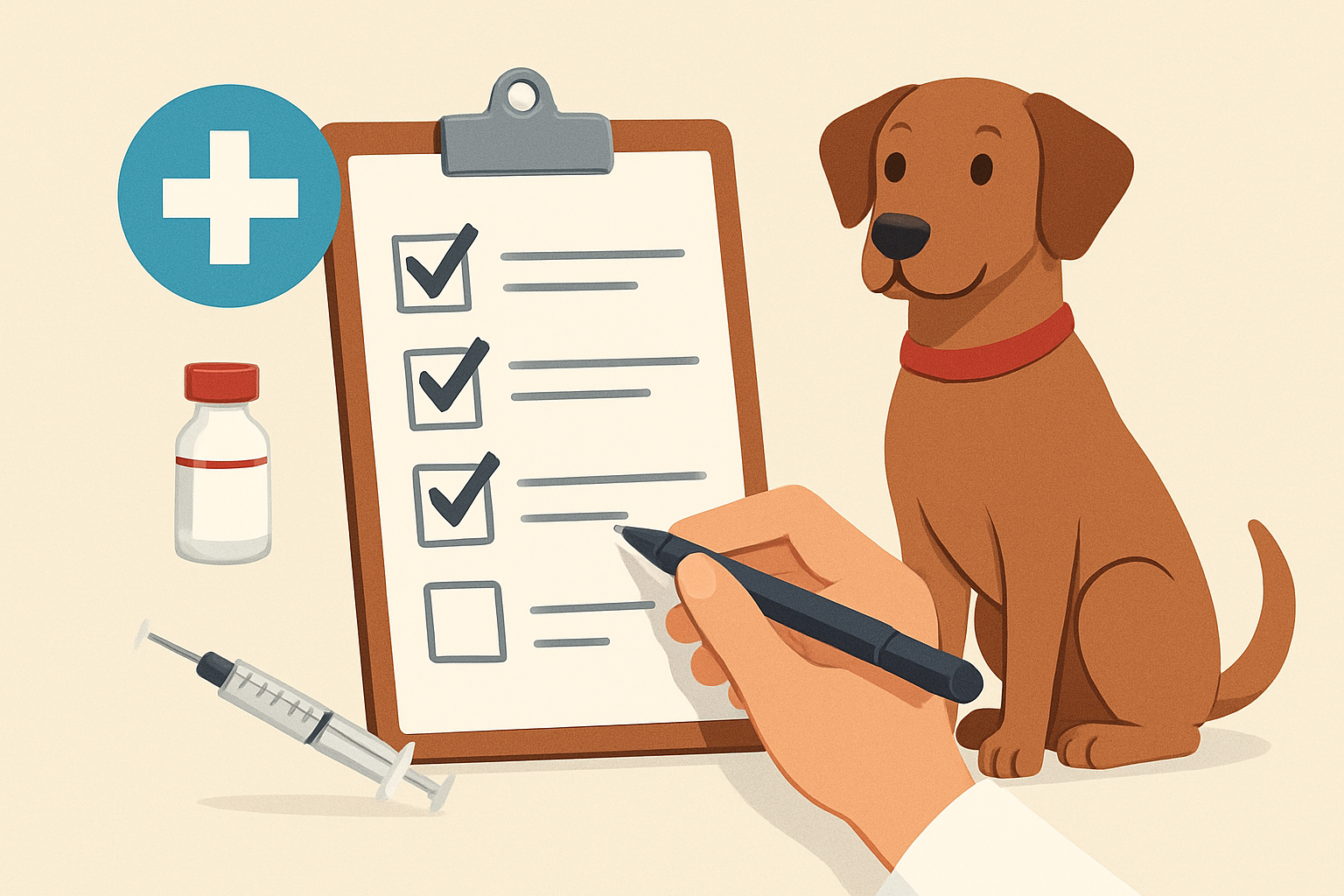
Core vaccines (recommended for almost all dogs)
Core vaccines are generally advised for nearly every dog because the diseases are widespread or very serious. Your vet will explain the exact products and timing, but core protection typically includes:
- Rabies – required by many local authorities; protects against a fatal disease that can affect animals and people.
- Combination vaccine often called “DHPP” or similar – covers several serious viral diseases (for example, distemper and parvovirus). Puppies usually receive a series of these shots, then boosters at intervals recommended by the vet.
The exact schedule and brand can vary, so your vet will map out a plan and record it in your dog’s medical file.
Non-core (lifestyle-based) vaccines
Non-core vaccines are recommended based on your dog’s lifestyle, region, and risk. Common examples in the US include vaccines that may help protect against:
- Respiratory infections that spread in boarding, daycare, grooming, or dog parks.
- Diseases carried by ticks, which may be more common in some parts of the country.
- Illnesses linked to standing water, wildlife, or farm environments.
Your vet will ask about where you live, whether your dog goes to daycare or boarding, if you hike or camp, and whether you travel to other states. Those answers help decide which non-core vaccines are worth adding to the schedule. For a deeper dive into timing and combinations, you can compare your vet’s plan with a general dog vaccination schedule USA and ask questions about any differences.
What happens at each visit: practical checklists by life stage
Knowing what to expect makes visits less stressful and helps you prepare good questions. Below are checklists for the main visit types across your dog’s life.
Puppy visit checklist (6–20 weeks)
- Before the visit
- Bring any records from the breeder, shelter, or previous vet.
- Write down feeding schedule, brand of food, and any treats.
- List questions about house-training, chewing, nipping, or socialization.
- Collect a fresh stool sample in a clean container if your vet requests it.
- During the visit
- Full physical exam: eyes, ears, mouth, heart, lungs, belly, skin, joints.
- Weight and body condition score to track growth.
- Vaccine doses according to the puppy series plan.
- Parasite checks and deworming as needed.
- Starting or adjusting flea, tick, and heartworm prevention.
- Guidance on crate training, socialization, and basic manners.
- After the visit
- Watch for mild vaccine reactions (sleepiness, mild soreness) and call the clinic if you see anything severe like facial swelling or trouble breathing.
- Schedule the next puppy appointment before you leave the clinic.
- Update your own puppy health log or tracker.
Adult wellness visit checklist
- Before the visit
- Note any changes in appetite, thirst, urination, stool, or activity.
- List new behaviors (restlessness, anxiety, aggression, clinginess).
- Bring a list of all medications, supplements, and preventives.
- Check when your dog last had vaccines, heartworm test, and dental cleaning.
- During the visit
- Head-to-tail physical exam and weight check.
- Discussion of diet, exercise, and ideal body condition.
- Vaccine updates based on your dog’s risk and previous schedule.
- Screening tests (for example, heartworm and stool checks) as recommended.
- Dental exam and cleaning plan if tartar or gum issues are present.
- Review of flea, tick, and heartworm prevention plan.
- After the visit
- Set reminders for monthly preventives and next annual or semiannual visit.
- Follow any diet or exercise changes for at least a few weeks before judging results.
Senior dog visit checklist
- Before the visit
- Track mobility: note stiffness, limping, or trouble with stairs or jumping.
- Record any accidents in the house or changes in sleep patterns.
- Bring a list of all medications and supplements, including over-the-counter products.
- Note any hearing or vision changes you’ve noticed.
- During the visit
- Thorough physical exam with extra attention to joints, heart, and abdomen.
- Discussion of pain signs and quality of life.
- Blood and urine tests as recommended to monitor organ function.
- Review of medications to avoid harmful interactions.
- Plan for weight management and gentle exercise.
- After the visit
- Monitor for side effects if any new medications are started.
- Keep a simple log of appetite, mobility, and mood to share at the next checkup.
Comparing routine visits, problem visits, and emergency care
Not every vet visit is the same. Understanding the differences helps you decide what kind of appointment to request and how urgently you need to act.
| Visit type | When it’s used | How soon to schedule | What usually happens | Owner preparation |
|---|---|---|---|---|
| Routine wellness visit | Dog seems healthy; due for annual or semiannual check | Book in advance; many clinics schedule these weeks ahead | Physical exam, vaccines, screening tests, preventive care planning | Bring questions, records, and medication list; note any subtle changes |
| Problem-focused visit | New issue like limping, vomiting, skin problem, or behavior change | Call the clinic the same day to ask how soon to come in | Exam focused on the problem, possible tests (bloodwork, x-rays, etc.), treatment plan | Describe when the problem started, how it has changed, and any home treatments tried |
| Emergency visit | Life-threatening signs such as trouble breathing, collapse, or major trauma | Immediate – go to an emergency clinic or call your vet right away | Stabilization, urgent diagnostics, and intensive treatment as needed | Stay calm, transport safely, bring any medications and recent records if possible |
When to seek emergency care instead of waiting
Some problems can wait for a regular appointment; others cannot. If you are unsure, call your vet or the nearest emergency clinic and describe the signs. In general, seek emergency care right away if you notice:
- Breathing problems – open-mouth breathing in a dog that normally doesn’t, blue or very pale gums, noisy or labored breathing, or choking.
- Collapse, inability to stand, or extreme weakness – especially if sudden.
- Uncontrolled bleeding – bleeding that soaks bandages quickly or doesn’t slow with gentle pressure.
- Serious trauma – hit by a car, fall from height, animal attack, or suspected broken bones.
- Repeated vomiting or attempts to vomit – especially if the dog is restless, has a swollen belly, or seems very uncomfortable.
- Seizures – a first seizure, multiple seizures close together, or a seizure lasting more than a few minutes.
- Suspected poisoning – ingestion of human medications, chemicals, toxic plants, or large amounts of chocolate, xylitol-containing products, or other known hazards.
- Severe pain – crying out, refusing to move, or reacting strongly when touched.
- Difficulty urinating – straining without producing urine, especially in male dogs.
For less urgent issues (mild limping, occasional soft stool, small skin bumps), call your regular vet and ask how soon your dog should be seen.
Estimated costs by visit type: how to think about budgeting
Exact prices vary widely across the United States and even between clinics in the same city. Instead of relying on a single number, use these steps to estimate and compare costs:
1. Break visits into components
Most vet bills are made up of several parts. Common components include:
- Exam fee (routine or emergency).
- Vaccines (each type is usually billed separately).
- Lab tests (bloodwork, urine tests, stool checks, heartworm tests).
- Medications (for example, parasite preventives, pain relief, antibiotics).
- Procedures (dental cleaning, x-rays, ultrasound, surgery).
2. Compare routine vs emergency costs
In many areas, an emergency exam fee is higher than a scheduled wellness exam, and emergency care may involve more intensive diagnostics. Preventive visits can feel expensive up front, but they often reduce the risk of larger bills later by catching problems early.
3. Ask your clinic for written estimates
When you schedule:
- Ask for a range for a puppy vaccine visit, an adult wellness visit, and a senior screening visit at your chosen clinic.
- Request a separate estimate for optional services like dental cleaning or non-core vaccines.
- Ask whether they offer wellness plans, multi-pet discounts, or payment options.
If you want to understand how vet care fits into your yearly budget, you can compare your clinic’s estimates with general patterns described in an overview of annual vet costs for dogs and cats in the US and then adjust for your region and dog’s needs.
Questions to ask your vet at each life stage
Good communication with your vet is as important as the visit schedule itself. Here are targeted questions you can bring to your next appointment.
Puppy stage questions
- Which vaccines are core for my puppy, and which are optional based on our lifestyle?
- How often should we come in for the rest of the puppy series?
- When do you recommend spay/neuter for my puppy’s breed and size?
- What should I watch for after vaccines or deworming that would require a call?
- What is a healthy weight range for my puppy over the next few months?
- How can I safely socialize my puppy before the vaccine series is complete?
Adult dog questions
- Based on my dog’s health and lifestyle, do you recommend annual or semiannual wellness visits?
- Are there any vaccines my dog can safely receive less often now?
- What screening tests do you recommend at this age, and how often?
- Is my dog at a healthy weight? If not, what is a realistic goal and timeline?
- Are there early signs of dental disease that we should address now?
- Does my dog’s activity level or travel history change your preventive care recommendations?
Senior dog questions
- How often should we repeat blood and urine tests for my senior dog?
- What subtle signs of pain or cognitive changes should I watch for at home?
- Are there diet changes that could support my dog’s joints, kidneys, or weight?
- How can we keep my dog comfortable and active without overdoing exercise?
- What is your plan if my dog’s condition suddenly worsens between visits?
- Are there medications or supplements we should avoid because of my dog’s age or lab results?
How to find a reputable vet in the United States
Choosing the right veterinarian is a key part of responsible pet ownership. Use these decision criteria to evaluate clinics in your area:
1. Qualifications and services
- Check that the clinic employs licensed veterinarians and credentialed support staff.
- Confirm which services they provide on-site (x-rays, lab work, surgery, dental care) and which they refer out.
- Ask about their experience with your dog’s breed and any known health issues.
2. Communication style
- Notice whether the vet explains options in plain language and invites questions.
- Ask how they handle follow-up questions after a visit (phone, email, online portal).
- Check whether they provide written discharge instructions and estimates.
3. Accessibility and hours
- Look at office hours and how they handle after-hours emergencies (on-call vet, referral to an emergency hospital, etc.).
- Ask how far in advance you need to book routine visits and how they handle urgent same-day issues.
- Confirm parking, accessibility, and whether they have separate waiting areas for dogs and cats if that matters to you.
4. Handling and low-stress care
- Observe how staff handle animals in the lobby and exam rooms.
- Ask whether they use low-stress or fear-reducing techniques, especially if your dog is anxious.
- Check whether they allow you to stay with your dog for most procedures when it’s safe to do so.
5. Transparency about costs and options
- Ask for written estimates before non-urgent procedures.
- Discuss different treatment options when they exist, including pros and cons.
- Check whether they are comfortable working with pet insurance or wellness plans if you use them.
Simple vet visit tracker: key details to record
Keeping basic notes about each appointment helps you follow the recommended schedule and notice patterns in your dog’s health. You can keep this information in any format that works for you.
- Date of visit – include every vet appointment, from puppy shots to emergencies.
- Type of visit – puppy series, wellness exam, dental, problem-focused, emergency.
- Weight and body condition – record the number and any comments from the vet.
- Vaccines given – name of vaccine and when the next dose or booster is due.
- Tests performed – heartworm test, stool check, bloodwork, urine test, x-rays, and other diagnostics.
- Medications and preventives – names, doses, and how long your dog should take them.
- Key findings – short notes on any diagnoses or concerns.
- Home care instructions – diet changes, activity restrictions, follow-up dates.
- Next scheduled visit – date and purpose (for example, “senior checkup” or “vaccine booster”).
Review these notes before each appointment so you can update your vet on what has changed since the last visit.
Decision checklist: is your current vet visit schedule on track
Use this quick checklist to see whether your dog’s routine care is roughly aligned with common US recommendations. If you answer “no” to several items, discuss your schedule with your vet.
- Puppy
- Has my puppy started vet visits by about 6–8 weeks of age or as soon as I adopted them?
- Are puppy vaccines being given as a series of visits spaced a few weeks apart, not just a single shot?
- Do I have the next puppy appointment already scheduled?
- Adult dog
- Has my dog had at least one full wellness exam in the past 12 months?
- Have we discussed whether my dog’s lifestyle calls for any non-core vaccines?
- Is my dog on a consistent plan for flea, tick, and heartworm prevention?
- Senior dog
- Is my senior dog seen by a vet about every 6 months, or as recommended for their health conditions?
- Have we done baseline blood and urine tests to screen for age-related disease?
- Do I have a plan with my vet for managing pain, mobility, and quality of life?
- All life stages
- Do I know which signs would make me call for an urgent or emergency visit?
- Do I keep records of vaccines, tests, and medications in one place?
- Do I feel comfortable asking my vet questions about costs, options, and timing?
Common mistakes owners make with vet visit schedules
Even caring owners can accidentally under- or overdo vet visits. Being aware of typical mistakes can help you avoid them.
- Stopping puppy vaccines too early – skipping the last one or two puppy shots can leave gaps in protection. Always confirm with your vet when the series is truly complete.
- Assuming a healthy-looking dog doesn’t need checkups – many issues (dental disease, early kidney or liver changes, heart problems) can be silent at first and only show up on exam or tests.
- Only going to the vet when something is wrong – this can mean missing chances to prevent disease or catch it early when treatment is easier.
- Ignoring subtle behavior changes – increased clinginess, irritability, or restlessness can be early signs of pain or illness, not just “personality.”
- Not adjusting the schedule as the dog ages – a plan that worked at age 2 may not be enough at age 9. Ask your vet when to shift from annual to more frequent visits.
- Skipping recommended tests to save money without discussing alternatives – sometimes there are phased or priority options; talk openly with your vet about budget so they can help you choose the most important items.
FAQ about vet visit schedules and dog health
How often should a dog visit the vet?
Most healthy adult dogs in the US are seen for a wellness exam at least once a year, while many senior dogs benefit from visits about every 6 months. Puppies usually go much more often, with visits every few weeks during their initial vaccine series. Your vet may suggest more frequent visits if your dog has chronic conditions, is a large or giant breed, or has specific lifestyle risks.
What is the 7 7 7 rule for dogs?
The phrase “7 7 7 rule” is sometimes used informally in dog discussions, but there is no single, universally accepted medical rule by that name. People may use similar phrases as memory aids for training, socialization, or aging milestones. Instead of relying on a slogan, ask your vet for a personalized schedule for vaccines, checkups, and senior screening based on your dog’s age and breed.
What is the 10 10 10 rule for dogs?
Like the 7 7 7 phrase, “10 10 10 rule” is not a standard veterinary guideline across the US. It may appear in online tips or training advice, but it is not a replacement for a proper vet-recommended schedule. Always confirm any rule-of-thumb you see online with your veterinarian, who can explain whether it applies to your dog.
What is the 150 rule for dogs?
The “150 rule for dogs” is not a formal veterinary standard in the United States. In some contexts, people use similar numbers to talk about weight limits, exercise targets, or aging estimates, but these are rough ideas rather than medical rules. For health prevention planning, it is safer to follow a life-stage vet visit schedule and your own vet’s advice instead of relying on a single number.
Do dogs really help lower stress or cortisol?
Many people report feeling calmer and less stressed when they spend time with their dogs, and some research suggests that interacting with pets can influence stress-related hormones in people. However, the effect can vary from person to person and depends on the situation. Regular vet care and training can help your dog be a relaxing companion rather than a source of stress.
How do I know if my dog needs an extra vet visit between annual checkups?
Schedule an extra visit if you notice ongoing vomiting or diarrhea, changes in appetite or thirst, weight loss, persistent coughing, limping that lasts more than a day or two, new lumps, or behavior changes like sudden aggression, confusion, or withdrawal. When in doubt, call your vet’s office and describe what you’re seeing; they can tell you whether to come in and how urgently.
Can I combine vaccine visits with other procedures to reduce stress?
Often, yes. Many clinics combine vaccine updates with wellness exams, and some minor procedures can be scheduled at the same time. For more involved procedures like dental cleanings or surgery, your vet may prefer a separate day for safety. Discuss your dog’s stress level and your schedule with the clinic so they can plan visits in a way that works for everyone.
Where can I see a sample yearly plan for my dog’s vet care?
Your own vet is the best source for a customized plan, but you can also look at a general annual schedule for context and then bring it to your clinic to compare. This can help you understand which visits are routine, which are age-specific, and which are based on your dog’s lifestyle and region.