
Renting with a pet in the US means juggling three things at once: keeping your animal safe, protecting the property, and staying on the right side of your lease and insurance. This guide walks through a practical, renter-focused pet safety checklist you can actually use before move-in, during your tenancy, and when you move out.
How to make a rental safe and compliant for pets
To keep your pet safe and avoid landlord or insurance problems, focus on four pillars:
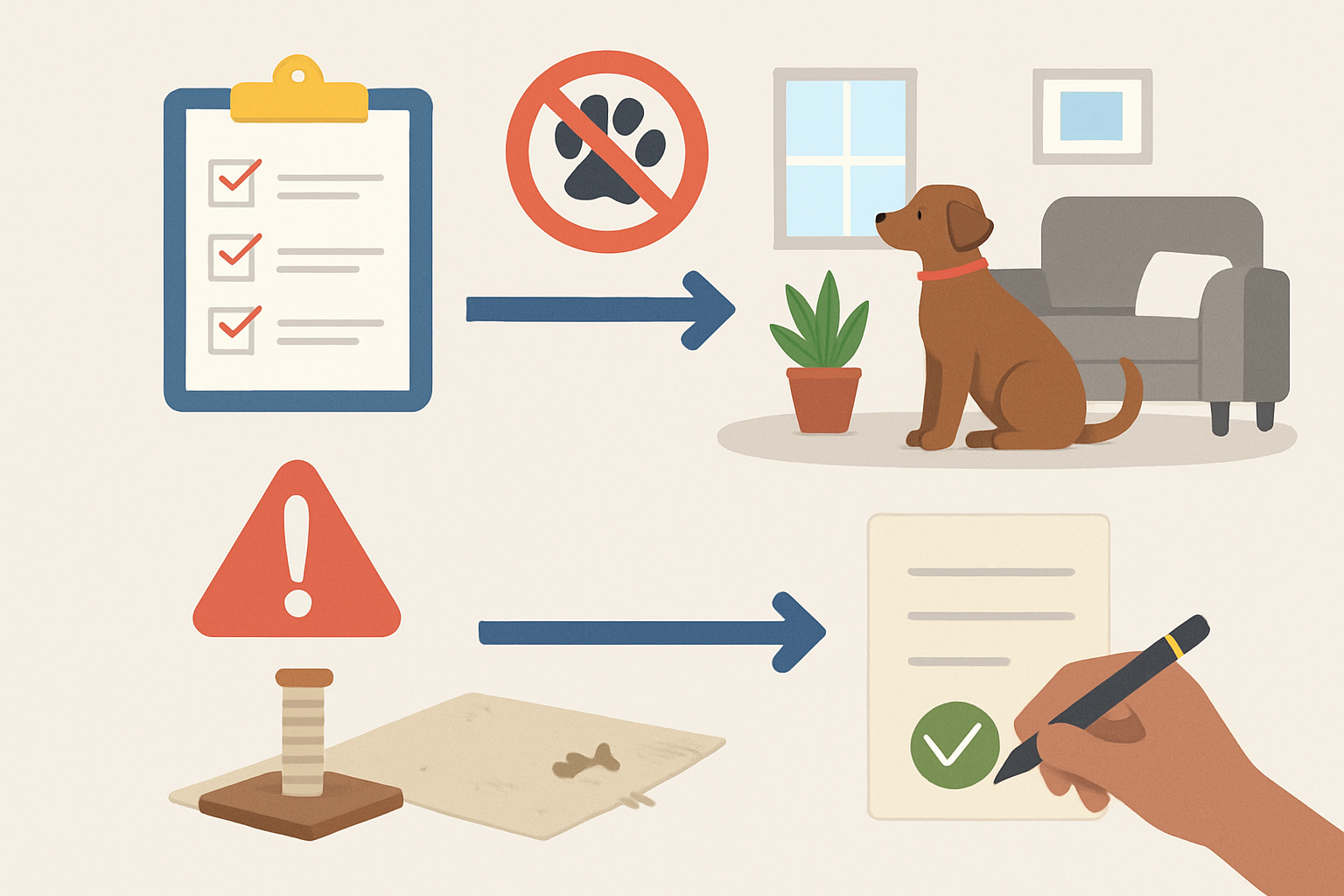
- Know your rules – understand the lease, building rules, and any pet-related fees or deposits.
- Pet-proof the space – room by room, remove hazards and protect surfaces.
- Prevent damage and nuisance – manage noise, scratching, chewing, and accidents.
- Document everything – condition at move-in, any damage, and communication with your landlord.
Everything else in this checklist fits under one of these pillars. If you consistently check all four, you greatly reduce the chances of surprise charges, conflict with neighbors, or safety incidents.
Renter-specific pet risks you should plan for
Living with pets in a rental comes with risks that homeowners do not always face in the same way. Understanding them helps you prioritize what to fix first.
- Lease violations – having an unapproved pet, wrong species or breed, or more animals than allowed can lead to warnings, fees, or in some situations even eviction.
- Hidden pet costs – pet rent, pet deposits, and cleaning fees can add up. If you do not understand them up front, you may be surprised at move-out.
- Damage to floors and doors – claws, accidents, and chewing often show up on carpets, baseboards, and door frames. In a rental, that can mean deductions from your security deposit.
- Noise complaints – barking, howling, or running across hard floors can trigger complaints in apartments and multi-unit buildings.
- Escape routes – loose window screens, balcony gaps, or poorly latched doors can let pets escape into hallways, stairwells, or outside.
- Liability if your pet injures someone – if your pet bites or knocks someone down, you may be personally responsible for injuries or property damage.
- Allergies and shared spaces – hair, dander, and litter odors can cause friction with roommates, neighbors, or future tenants.
Use these risks as a lens: whenever you look at a room or a rule, ask, “Which of these could happen here?” and adjust your setup accordingly.
Pre-move checklist for renters with pets (lease, fees, deposits)
Before signing or moving in, work through this pre-move checklist. It will save you stress later and helps you align pet safety with lease and insurance requirements.
1. Confirm whether pets are allowed and under what conditions
- Check if the property is pet-friendly, pet-restricted, or no-pet in the listing and the lease.
- Look for limits on species, size, number of pets, or types of animals (for example, dogs and cats only, no reptiles, weight limits).
- Ask whether there is a pet screening process (an application or questionnaire about your pet’s behavior, vaccinations, and history).
- If you have an assistance animal, ask how to request a reasonable accommodation and what documentation is appropriate in your area.
2. Understand pet fees, deposits, and rent
Policies and amounts vary widely by landlord and state. Instead of assuming, ask:
- Is there a one-time pet fee? Is it refundable or non-refundable?
- Is there a separate pet deposit? How is it different from the regular security deposit?
- Is there monthly pet rent? If so, how much and for how many pets?
- What kinds of pet-related damage are typically deducted from deposits at move-out?
Because exact amounts and rules differ by state and landlord, verify details in writing before you sign.
3. Clarify pet rules in the lease
Look for or ask to add clear language about:
- Where pets are allowed (inside only, balconies, yards, common areas, elevators).
- Leash rules in hallways, lobbies, and outdoor areas.
- Noise expectations and quiet hours.
- Who is responsible for pet waste cleanup and where to dispose of it.
- Any required vaccinations, licenses, or tags for pets on the property.
- Whether pet sitting or fostering extra animals is allowed.
4. Check your insurance and liability
- Ask your insurance agent whether your renter’s insurance includes liability coverage for pet-related injuries or damage.
- Confirm if there are breed or species exclusions or coverage limits.
- Ask your landlord whether they require proof of renter’s insurance and if they have any minimum coverage expectations.
5. Plan your pet’s daily routine in the new place
- Decide where your pet will sleep, eat, and use the bathroom (litter box, puppy pads, or outdoor walks).
- Plan how you will exercise and entertain your pet to reduce boredom and noise.
- If you are moving with a dog and into an apartment, make sure your routine fits typical apartment pet rules for dogs, including leash use and quiet hours.
Room-by-room pet safety checklist for renters
Use this room-by-room checklist to pet-proof your rental. Adjust it for your specific animal and layout so it works as a practical, everyday safety routine.
| Area | Key risks for pets | Key risks for your lease/deposit | What to check or do |
|---|---|---|---|
| Entryway and hall | Escape through open doors, slipping on smooth floors | Scratches on doors, scuffed walls, muddy paw prints | Use door mats at entrances, add a baby gate if needed, hang leashes and bags on wall hooks above chewing height, wipe paws before entering shared hallways |
| Living room | Cords, plants, small objects, unstable furniture | Chewed baseboards, scratched floors, stained rugs | Cover or hide cords, move toxic plants out of reach, use rugs or runners on high-traffic paths, trim nails regularly, place a scratching post near the sofa |
| Kitchen | Trash, cleaning chemicals, hot surfaces | Scratched cabinets, damaged linoleum, food messes | Use lidded trash or a trash cabinet, add child locks to chemical cabinets if needed, block access when cooking, place food and water bowls on a washable mat |
| Bedroom | String, hair ties, medications, chargers | Claw marks on doors, urine on carpets, damaged blinds | Keep small items in drawers, use cord clips for chargers, consider a washable mattress protector, close blinds or secure cords before leaving |
| Bathroom | Toilet water, medications, cleaners, razors | Water damage from spilled bowls, scratched doors | Close the toilet lid, store chemicals high or in closed cabinets, use non-slip mats under water bowls, keep the bathroom door closed if it is not pet-proofed |
| Laundry or utility area | Detergent pods, dryer sheets, machines | Chewed hoses, clawed doors, lint mess | Keep detergents sealed and out of reach, close machine doors when not in use, block access when machines are running, sweep lint and strings from the floor |
| Balcony and windows | Falls, getting stuck in railings, loose screens | Damaged screens, scratched frames, complaints about items falling from balcony | Check screens and railings for gaps, add temporary barriers that do not damage surfaces, supervise pets outdoors, keep windows opened only to a safe height |
Living room and common areas
- Secure or hide electrical cords behind furniture or in cord covers.
- Move toxic plants and fragile decor out of reach.
- Use rugs or runners on slick floors to prevent slips and reduce nail noise.
- Place a scratching post or pad near furniture your cat might target.
- Provide a pet bed or mat to encourage your pet to settle in one safe spot.
- Store remote controls, batteries, and small toys in baskets or drawers so they are not chewed or swallowed.
Kitchen and dining area
- Use a lidded trash can or place trash in a cabinet.
- Store cleaning products in cabinets with child locks if your pet can open doors.
- Keep food off low counters if your pet counter-surfs.
- Place water and food bowls on a mat to protect floors from spills.
- Check that stove knobs cannot be turned by jumping pets; use knob covers if needed.
Bedrooms
- Keep medications and supplements in closed drawers, not on nightstands.
- Store chargers and headphones when not in use to prevent chewing.
- Use door protectors or scratch guards if your pet paws at doors.
- For cats, build in daily play before bed to reduce nighttime zoomies and noise.
- Choose washable blankets or duvet covers if your pet sleeps on the bed.
Bathroom and laundry
- Close the toilet lid to prevent drinking or falling in.
- Store razors, floss, and cosmetics in cabinets.
- Keep detergent pods and cleaners in high cabinets or locked cupboards.
- Check behind the washer and dryer for gaps where small pets could get stuck.
- Hang wet towels so they can dry and do not develop odors that spread through a small rental.
Balcony and window safety for cats and small dogs
Balconies and windows are some of the most dangerous spots for pets in rentals, especially in multi-story buildings.
Balcony safety checklist
- Inspect railings and gaps. If your pet’s head can fit through, their body might too. Block gaps with temporary mesh or panels that do not damage the structure.
- Check the floor surface for splinters, loose boards, or hot surfaces that can burn paws.
- Remove or secure furniture near railings that a pet could climb on and jump from.
- Never leave pets unsupervised on balconies, even with barriers in place.
- Confirm with your landlord that any temporary barriers or screens you add are allowed and will not damage the property.
Window safety checklist
- Check that window screens are secure and free of tears. If they are loose, ask your landlord to repair or replace them.
- Use window stops or locks so windows only open a safe amount when pets are around.
- Keep furniture away from windows if your pet tends to jump or climb.
- Secure blind cords out of reach to prevent strangulation risks.
- For cats, create indoor perches away from open windows so they can watch outside safely.
Crate and confinement safety when you are away
In rentals, safe confinement protects both your pet and the property when you are not home.
Choosing a safe confinement method
- Crate – good for dogs who are crate-trained and see it as a safe den.
- Playpen or gated area – useful for puppies, small dogs, or rabbits who need more space.
- Pet-proofed room – common for cats or dogs who do not need a crate but cannot be trusted with the whole home.
Crate and confinement safety checklist
- Choose a crate or pen that is sturdy, well-ventilated, and appropriately sized for your pet.
- Place it on a flat, stable surface away from direct sun, heaters, or drafts.
- Remove collars with tags if there is any chance they could catch on bars.
- Provide safe bedding and toys (avoid easily shredded items for heavy chewers).
- Never use confinement as punishment; it should feel like a safe, predictable space.
- Do short practice sessions before leaving for long periods so your pet can adjust.
Noise and nuisance prevention for neighbors
Noise and nuisance issues are among the most common reasons landlords get complaints about pets. Preventing them protects your lease and your relationships.
Noise control strategies
- Give dogs enough exercise and mental stimulation to reduce boredom barking.
- Use rugs, runners, and soft furniture to dampen sound in upstairs units.
- Close windows and curtains if your dog barks at outside triggers.
- Consider white noise or soft music when you are away to mask hallway sounds.
- Practice short departures to help pets adjust and reduce separation anxiety.
Other nuisance prevention
- Always pick up pet waste immediately in shared outdoor spaces.
- Keep litter boxes clean and use odor control methods to avoid smells drifting into hallways.
- Use door mats and paw wipes to reduce dirt in common areas.
- Keep pets on leash in hallways and outdoor common areas unless clearly allowed off-leash.
- Let close neighbors know you have a pet and share how to reach you if there is a problem.
Insurance and liability basics for renters with pets
Insurance rules and coverage vary, but there are a few basics every renter with a pet should understand.
Key concepts to discuss with your insurer
- Liability coverage – ask if your renter’s policy covers injuries or property damage caused by your pet and up to what limit.
- Exclusions – some policies may exclude certain species or breeds, or animals with a known bite history.
- Medical payments to others – ask whether your policy helps cover minor injuries to guests on your premises.
- Proof of coverage – your landlord may ask for documentation that your policy is active.
Practical steps to reduce liability risk
- Keep your pet’s vaccinations and preventive care up to date according to your veterinarian’s advice.
- Use a sturdy leash and well-fitted collar or harness in all shared spaces.
- Supervise interactions with children and unfamiliar adults.
- Address signs of fear or aggression early with a trainer or behavior professional.
- Report any incidents to your insurer promptly and keep your landlord informed when appropriate.
Move-in inspection and pet damage checklist for renters
Documenting the condition of your rental at move-in and tracking any pet-related damage is one of the best protections you have for your deposit.
Move-in inspection checklist
- Walk through the unit before or on move-in day in good daylight.
- Check floors in every room for existing scratches, stains, loose boards, or cracked tiles.
- Look at walls and doors for scuffs, holes, chipped paint, or chew marks that were there before you arrived.
- Test windows and screens to confirm they open, close, and latch properly and that screens are intact.
- Inspect kitchen and bathroom surfaces for burns, chips, water damage, or mold.
- Note any odors from previous pets or smoke that could later be blamed on your animal.
- Take clear, dated photos of anything you find and store them with your lease.
- Send a short summary email to your landlord listing pre-existing issues so there is a written record.
Ongoing pet damage checklist during your tenancy
- Do a quick monthly walk-through of each room to look for new scratches, stains, or chewed areas.
- Clean accidents immediately with an enzyme cleaner to reduce staining and odor.
- Use area rugs, runners, or furniture covers in spots where your pet spends the most time.
- Trim nails regularly and provide scratching posts or chew toys to redirect natural behaviors.
- If you notice damage that may worsen over time (for example, a torn screen or chewed door frame), notify your landlord and ask about repair options.
- Before move-out, schedule time to patch minor scuffs, deep clean, and replace inexpensive items like scratched door stoppers or bent blinds, if allowed.
When to talk to your landlord and what to document
Good communication with your landlord can prevent small issues from becoming big conflicts.
Situations where you should contact your landlord
- Before bringing a new pet into the unit or adding another animal.
- If your pet causes noticeable damage (chewed door frame, stained carpet, torn screen).
- If you notice maintenance issues that affect pet safety (loose balcony railings, broken windows, mold, exposed nails).
- If you receive a noise or nuisance complaint from neighbors or building staff.
- If you need to request a reasonable accommodation related to an assistance animal.
What to document and how
- Use email or written messages for important communication so there is a record.
- Attach photos or short videos when reporting damage or safety concerns.
- Keep a simple communication log with dates, topics, and outcomes.
- Save copies of pet addendums, approvals, and rule changes.
- At move-out, take final photos of each room after cleaning.
Common mistakes renters make with pet safety and compliance
Avoid these frequent missteps that can cost money or strain relationships.
- Skipping the lease details – assuming pets are allowed or that rules are flexible without written confirmation.
- Not disclosing a pet – trying to “sneak in” a pet can lead to serious lease issues if discovered.
- Underestimating noise – thinking occasional barking or running will not bother anyone in a multi-unit building.
- Ignoring small damage – letting scratches or stains accumulate instead of addressing them early.
- Leaving windows or balconies unsecured – especially dangerous for cats and small dogs.
- Not updating insurance – assuming your policy automatically covers any pet without checking.
- Failing to plan for absences – leaving pets alone too long without a safe confinement or care plan.
Quick decision guide: what to prioritize first
If you are overwhelmed, use this simple order of operations:
- Legal and rules check – confirm pets are allowed, understand fees, and sign any pet addendum.
- Immediate safety hazards – fix or block off balconies, loose screens, exposed wires, and toxic items.
- Noise and neighbor impact – add rugs, set up a routine, and plan exercise and enrichment.
- Damage prevention – nail trims, scratch posts, washable covers, and litter or pee area setup.
- Documentation and insurance – complete your move-in inspection, photo log, and confirm coverage.
Step-by-step checklist for pet-safe move-in
Use this as a practical sequence when you move into a new rental with your pet.
- Two weeks before move
- Confirm pet approval and any fees in writing.
- Schedule a vet visit if vaccinations or health records need updating.
- Arrange pet-friendly transport and a quiet room for move-in day.
- Move-in day (before bringing pet inside)
- Walk through the unit with your move-in checklist and take photos.
- Identify and block obvious hazards (open windows, balcony gaps, exposed nails).
- Choose a temporary “safe room” for your pet with the door closed.
- First 48 hours
- Set up food, water, bed, and litter box or potty area.
- Secure cords, move chemicals, and store small items.
- Introduce your pet gradually to each room while you supervise.
- First week
- Establish a consistent feeding, exercise, and bathroom schedule.
- Test leaving your pet alone for short periods using your chosen confinement method.
- Introduce yourself to close neighbors and share your contact information.
- First month
- Review your lease pet rules again and adjust your routine if needed.
- Check for early signs of wear or damage and address them.
- Confirm your renter’s insurance coverage and keep proof handy.
FAQ: Pet safety and rules for renters in the US
What is a pet screening when renting a house?
Pet screening is a process some landlords use to evaluate pets before approving them. It can include a questionnaire about your pet’s age, breed, size, behavior, training, vaccination history, and any past incidents, along with photos or vet records. The goal is to help the landlord understand the risk level and whether your pet fits their property and insurance guidelines.
What do landlords usually want to know about pets?
Landlords typically want to know your pet’s species, size, age, breed or mix, vaccination status, whether they are spayed or neutered, if they are house-trained or litter-trained, how they behave around people and other animals, and how long you have had them. They may also ask about your daily routine (how long the pet is alone) and whether you have renter’s insurance with liability coverage.
Is there a way to work around a renter’s no-pet rule?
Trying to work around or hide a pet in a no-pet rental can put your housing at risk. If a listing or lease clearly says no pets, your safest options are to look for a different property that allows pets or to discuss your situation openly with the landlord to see if they are willing to make an exception and update the lease. For assistance animals, there may be different rules, but you should follow the appropriate process for requesting an accommodation rather than trying to bypass the policy.
What should a landlord include in a lease provision about pets?
From a renter’s perspective, a clear pet provision should state whether pets are allowed, which types and how many, any size or breed limits, required fees or deposits, rules for leashes and common areas, expectations for noise and waste cleanup, and what happens if rules are broken. If you do not see these details, you can ask your landlord to clarify them in writing so both sides know what to expect.
How can I show a landlord that I am a responsible pet owner?
You can prepare a simple “pet resume” with your pet’s photo, age, training, vet records, and references from previous landlords or neighbors. Showing that you follow a consistent routine for exercise, training, and cleaning can also reassure landlords that you take safety, cleanliness, and behavior seriously.
What if my pet damages something in the rental?
First, make sure your pet is safe and the damage is not an immediate hazard. Then document the damage with photos, note when you discovered it, and contact your landlord with a clear description and images. Ask whether they prefer to arrange repairs or if you may hire a professional. Being proactive and transparent usually leads to better outcomes than waiting until move-out.
Can my landlord require renter’s insurance because I have a pet?
Many landlords do require renter’s insurance for all tenants, and some specifically encourage or expect it for tenants with pets. Requirements can vary, so check your lease and ask questions before signing. Even when not required, renter’s insurance with liability coverage can help protect you financially if your pet injures someone or damages property.