
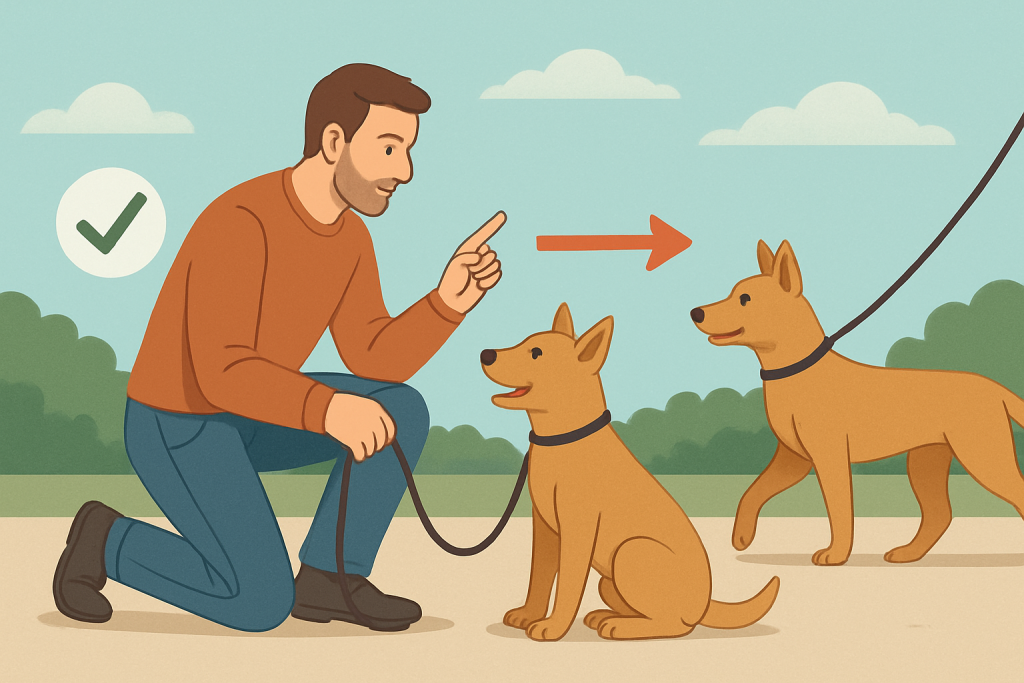
Responsible dog ownership in the U.S. starts with one thing: consistent, kind training. A well-trained dog is safer, easier to live with, and more welcome in housing, parks, and public spaces.
At a minimum, a responsible owner teaches their dog to:
- Come when called
- Walk safely on a leash
- Keep teeth and paws to themselves
- Settle quietly at home and in public
- Cope with everyday sights, sounds, and handling
The guidance below walks through the core rules, routines, and decisions that help U.S. owners raise a dog who fits comfortably into family life and community expectations.
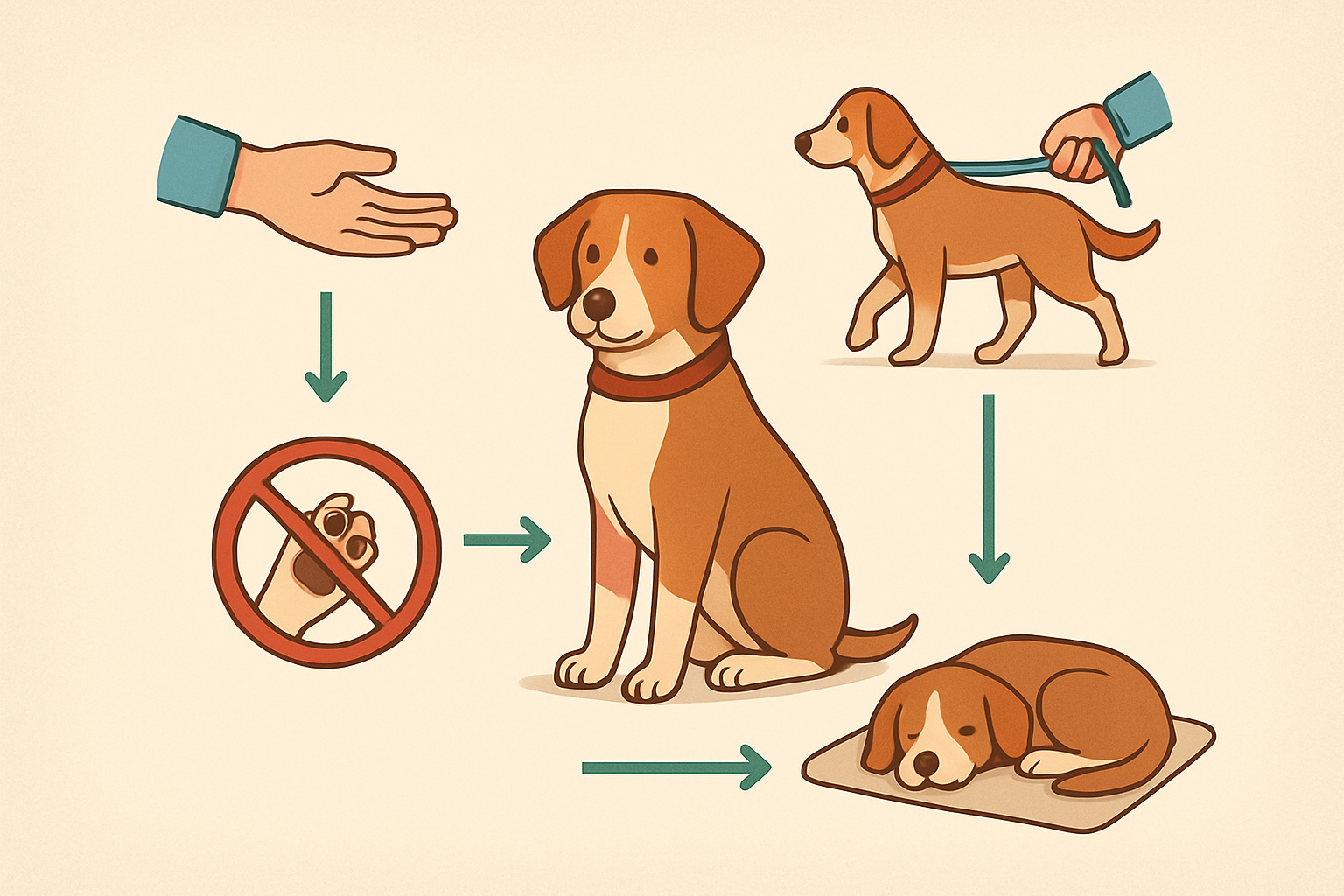
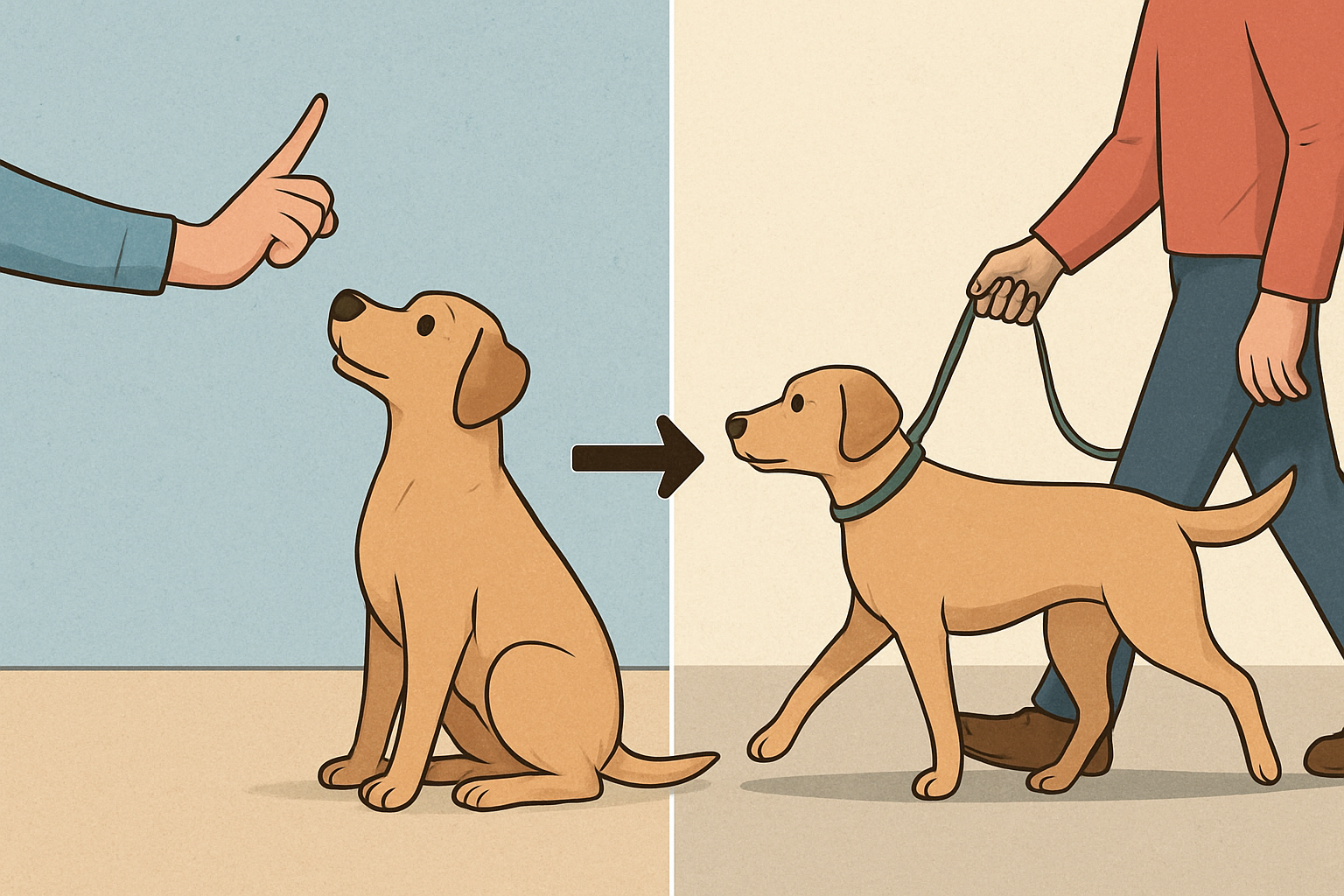
Core safety behaviors vs “nice-to-have” tricks for family dogs
Tricks are optional. Safety and manners are not. When time is limited, focus on the behaviors that protect people, other animals, and your dog.
Non-negotiable behaviors every responsible owner teaches
These are the baseline skills that support legal and social responsibility in most U.S. communities:
- Reliable recall (coming when called)
Your dog should turn away from distractions and move toward you when you say their name and cue (for example, “Buddy, come”). This protects them from traffic, wildlife, and conflicts with other dogs. - Leash manners
Many U.S. cities and suburbs expect dogs to be leashed in public. Your dog should walk on a loose leash without dragging you, lunging, or weaving into others. - No biting or rough mouthing
Even playful nipping can frighten people or cause injury. Responsible owners teach bite inhibition, redirect chewing to toys, and never encourage rough play with hands. - No uncontrolled jumping on people
Jumping can knock over children, older adults, or anyone with mobility challenges. A default “four paws on the floor” or “sit to say hi” is safer and more polite. - House training and appropriate toileting
Dogs must learn where and when to eliminate, and owners must pick up waste. This keeps homes sanitary and public spaces usable for everyone. - Comfort with basic handling
Dogs should tolerate gentle handling of paws, ears, mouth, and body for grooming and veterinary care. This reduces stress and risk during exams and emergencies. - Calm behavior in common situations
Barking, lunging, or panicking at visitors, delivery drivers, or other dogs can create complaints and safety concerns. Training a “go to your spot” or “settle” behavior helps.
Step-by-step foundations: house training, crate training, name recognition
These three foundations make almost every other behavior easier to teach.
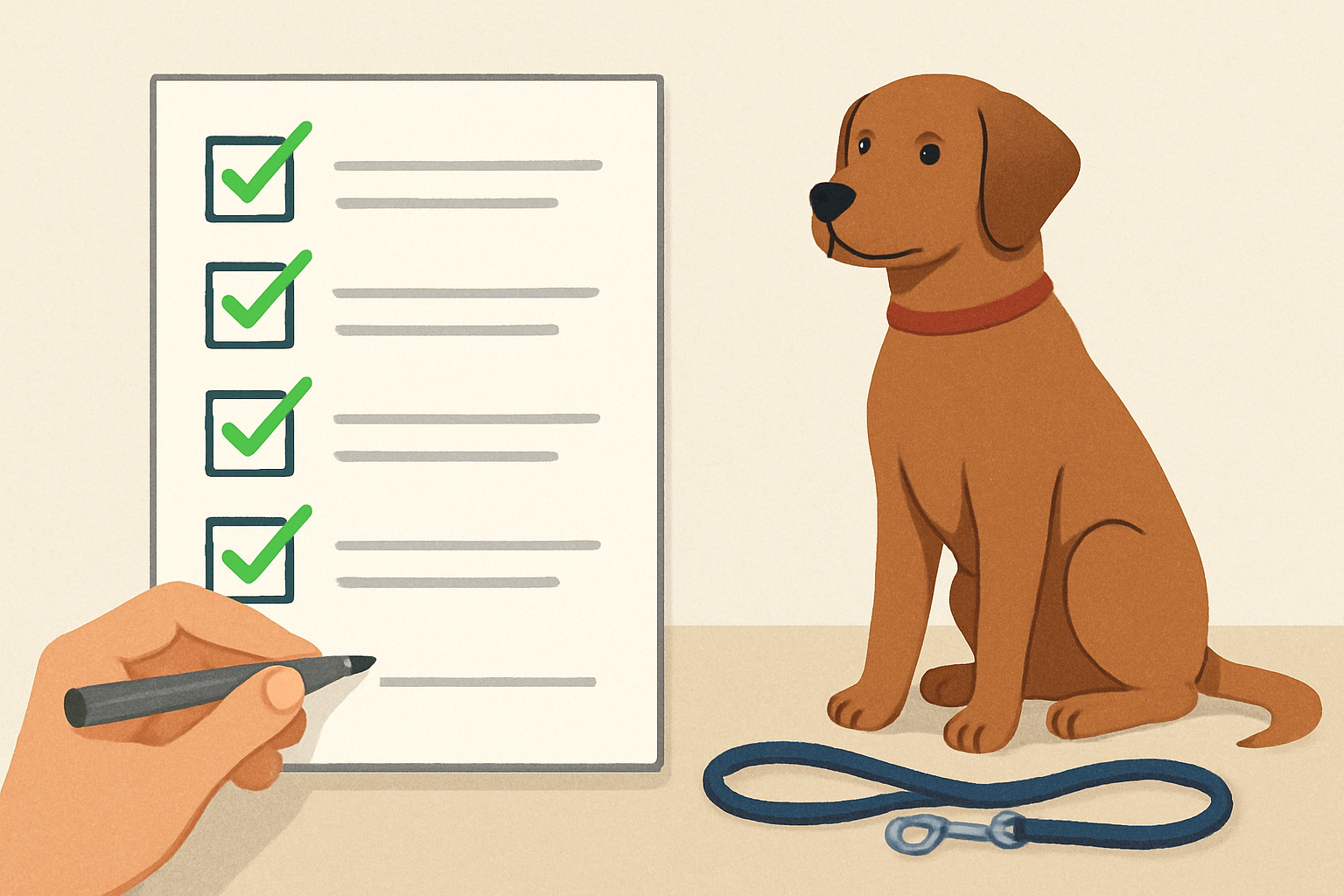
House training in simple daily steps
House training is mostly about timing and supervision. A practical routine:
- Choose a bathroom spot
Pick a consistent outdoor area (or a specific indoor pad area if needed). Always walk your dog to this spot on leash at first. - Use a regular schedule
Take your dog out after waking, after eating or drinking, after play, and before bed. Young puppies and small dogs may need very frequent trips; adjust based on age and health by watching how long they can stay dry when supervised. - Quietly wait and reward
Stand still, give a simple cue like “go potty” if you like, and calmly wait. The moment your dog finishes, praise and give a small treat. This makes the location and behavior worth repeating. - Supervise indoors
When your dog is loose in the house, keep them in the same room as you. If you can’t watch them, use a crate, playpen, or tether to prevent sneaky accidents. - Handle accidents calmly
If you catch your dog mid-accident, interrupt with a neutral sound, take them to the bathroom spot, and reward if they finish there. Clean indoor messes with an enzymatic cleaner so the smell doesn’t invite repeats.
Crate training as a safe, calm space
A crate can be a helpful tool for house training, travel, and giving your dog a quiet place to rest. It should feel like a den, not a punishment.
- Introduce the crate gradually
Place the crate in a living area with the door open. Toss treats inside, feed meals in the crate, and let your dog explore at their own pace. - Add a cue and short sessions
Use a phrase like “crate time” as you toss a treat inside. Close the door for a few seconds, then open and reward. Slowly increase the time with you nearby. - Build up to alone time
Once your dog is relaxed in the crate while you’re in the room, start leaving for short periods. Return before they become distressed, and keep arrivals and departures low-key. - Use the crate fairly
Avoid crating for long stretches without breaks, especially for puppies or seniors. The crate is for rest and safety, not for punishment or isolation.
Name recognition: your dog’s “attention switch”
Before you can teach “come,” “sit,” or “leave it,” your dog needs to notice you when you say their name.
- Say your dog’s name once in a normal tone.
- When they glance toward you, immediately praise and give a treat or toy.
- If they don’t look, make a small sound or move a treat near their nose, then reward when they turn toward you.
- Repeat in different rooms, then in the yard, then on quiet walks. Gradually add mild distractions.
Over time, their name becomes a reliable cue to check in with you, which supports recall and leash manners.
Reward-based training vs punishment-focused methods
Modern training emphasizes reward-based methods. That means you reinforce behaviors you like with things your dog values: food, toys, play, or access to sniff and explore.
How positive reinforcement works in daily life
- Mark the behavior you want (for example, your dog sits instead of jumping).
- Reward immediately with a treat, praise, or a chance to greet someone.
- Repeat in many situations so your dog learns that the same behavior pays off in different places.
This approach builds trust and encourages your dog to offer good behavior voluntarily, not just to avoid consequences.
Why relying on punishment backfires
Punishment-heavy methods (yelling, leash jerks, physical corrections) can stop behavior in the moment but often create new problems:
- Your dog may learn to hide behavior instead of changing it.
- They may associate fear with you, children, visitors, or other dogs present during the correction.
- Stress can increase barking, reactivity, or house-soiling.
Responsible owners aim to:
- Prevent unwanted behavior with management (baby gates, leashes, crates).
- Teach and reward an alternative (sit instead of jump, chew a toy instead of furniture).
- Use mild, fair consequences when needed (ending play when teeth touch skin, calmly removing access to something they’re misusing).
Leash rules and public space manners in U.S. communities
Specific rules vary by city, county, and housing community, so always check local ordinances and your lease or homeowners’ association rules. In many U.S. areas, owners are expected to:
- Keep dogs leashed in public spaces unless in a designated off-leash area.
- Pick up and properly dispose of dog waste.
- Prevent dogs from harassing people, wildlife, or other pets.
- Control excessive barking that disturbs neighbors.
Practical leash manners for everyday walks
- Start in a low-distraction area
Practice in your home or yard first. Reward your dog for walking beside you with a loose leash. - Use short, frequent sessions
Practice for a few minutes at a time, several times a day, rather than one long, frustrating walk. - Reward position, not distance
Give a treat when your dog is near your side and the leash is slack. If they pull ahead, stop moving. When they return to you or the leash slackens, move forward again. - Teach a “let’s go” cue
Say “let’s go” as you start walking. Over time, this becomes a signal to move with you instead of toward distractions.
Public etiquette that keeps dogs welcome
- Ask before allowing your dog to greet people or other dogs.
- Shorten the leash and keep your dog at your side when passing strollers, wheelchairs, joggers, or cyclists.
- Avoid letting your dog run up to others, even if they are friendly; not everyone is comfortable with dogs.
- Respect posted signs about dogs in parks, playgrounds, and buildings.
If you live in an apartment or rental, it can help to review an apartment pet rules for dogs guide so your training matches building expectations.
Handling barking, jumping, chewing, and other nuisance behaviors
Many complaints about dogs come from a few common behaviors. Instead of just saying “no,” teach what you want your dog to do instead.
Barking: identify the trigger, then train
Common barking triggers include:
- Noises in hallways or outside windows
- People or dogs passing the yard
- Boredom or lack of exercise
- Separation from family members
Once you know the trigger, you can:
- Reduce exposure (close curtains, use white noise, move the dog away from windows).
- Provide more mental and physical activity (training games, sniff walks, puzzle feeders).
- Teach a “quiet” cue by calmly rewarding brief pauses in barking and gradually asking for longer quiet periods.
- Teach an incompatible behavior like going to a mat when the doorbell rings.
Jumping on people: replace with “sit to greet”
- Ask visitors to ignore your dog if they jump (no eye contact, no talking, no touching).
- When all four paws are on the floor or your dog sits, have the visitor calmly greet and reward.
- Practice with family members first, then with friends who understand the plan.
- Be consistent: if jumping sometimes works, your dog will keep trying.
Chewing and digging: give legal outlets
- Offer a variety of safe chew toys and rotate them to keep interest.
- Supervise and redirect to toys whenever your dog chews something off-limits.
- For diggers, provide a designated digging area (like a sandbox) and bury toys there. Reward digging in the allowed spot.
Socialization checklists for puppies and adult rescues
Socialization means teaching your dog to feel safe and confident around everyday people, animals, places, and sounds. It is not just “meeting lots of dogs” – it is about positive experiences at a pace your dog can handle.
Socialization goals for puppies
Work with your veterinarian to balance early socialization with disease-prevention advice. Many vets encourage controlled, clean environments (like puppy classes with vaccination requirements) while your puppy’s immune system develops.
A practical puppy socialization checklist includes gentle exposure to:
- People of different ages, sizes, and clothing styles (hats, uniforms, umbrellas)
- Other friendly, vaccinated dogs and calm cats (if safe and supervised)
- Surfaces like grass, concrete, tile, carpet, gravel, and ramps
- Sounds such as doorbells, traffic at a distance, vacuum cleaners, and kitchen noises
- Handling experiences: touching paws, ears, tail, collar, and gently opening the mouth
- Short car rides and visits to pet-friendly outdoor spaces
Keep sessions short, pair new experiences with treats or play, and move away if your puppy seems overwhelmed.
Socialization for adult rescues
Adult dogs can also learn new associations, but they may have existing fears. Go slower and watch body language carefully.
- Start with distance: let your dog observe people and dogs from far away while you reward calm behavior.
- Avoid crowded dog parks at first; choose quiet walks and one-on-one meetings with stable, friendly dogs.
- Introduce new environments (elevators, stairwells, parking lots) gradually, with plenty of treats and praise.
- If your dog shows intense fear or aggression, pause and consult a qualified trainer or behavior professional.
Structured training vs “they’ll grow out of it” vs punishment-heavy methods
Many owners hope that puppies or new rescues will simply mature out of problem behaviors. In reality, most behaviors that are rewarded (even accidentally) get stronger. The comparison below shows how different approaches play out over time.
| Approach | What it looks like day-to-day | Short-term outcome | Long-term risks or benefits |
|---|---|---|---|
| Positive, structured training | Short daily sessions, clear cues, rewards for good choices, management tools (gates, leashes, crates). | Dog learns what works; behaviors become more predictable. | Stronger bond, safer behavior in public, fewer complaints from neighbors or landlords. |
| “They’ll grow out of it” (no plan) | Inconsistent rules, reacting only when problems appear, few rewards for calm behavior. | Some behaviors may fade, but many (barking, jumping, pulling) become habits. | Higher risk of bites, property damage, rehoming pressure, or housing conflicts. |
| Punishment-heavy focus | Frequent scolding, physical corrections, or harsh tools without teaching alternatives. | Dog may stop behavior in the moment but becomes tense or confused. | Potential fear, reactivity, and damaged trust; harder vet and grooming visits. |
For most families, a structured, reward-based plan is the safest and most sustainable choice.
When to call a professional trainer and how to choose in the U.S.
Many owners can teach basics at home, but some situations call for professional help:
- Persistent aggression (growling, snapping, biting)
- Severe fear, panic, or separation distress
- Leash reactivity that feels unsafe to manage alone
- House training that is not improving despite consistent effort
- Complex households (young kids, multiple dogs, or frequent visitors)
Decision criteria for choosing a trainer
In the U.S., titles and certifications vary, so focus on how the trainer works and how they communicate.
- Methods: Ask what happens when the dog gets it right and when they get it wrong. Look for an emphasis on rewards, management, and teaching alternatives rather than fear or pain.
- Transparency: Reputable trainers explain their plan, welcome questions, and encourage you to be involved in sessions.
- Experience with your issue: A trainer who specializes in puppy manners may not be the best fit for serious aggression cases, and vice versa.
- Setting: Decide whether you need group classes (social practice, typically lower cost) or private sessions (custom plan, home-specific issues).
- Referrals: Ask your veterinarian, local shelters, or rescue groups for names of trainers they see good results from.
If you are also working through broader responsibilities like vet care, identification, and home setup, it can help to pair training with a first time dog owner checklist USA so nothing important is missed.
Weekly training plan for busy owners (ready-to-use structure)
Even with a full schedule, short, focused sessions add up. Use the structure below as a weekly template you can adapt to your dog’s age, health, and energy level.
| Day | Morning (about 5–10 minutes) | Evening (about 5–10 minutes) | Real-life practice |
|---|---|---|---|
| Monday | Name recognition + sit | Loose-leash walking in a quiet area | Ask for “sit” before meals and going outside. |
| Tuesday | Recall games indoors (short distances) | Crate time with a chew while you relax nearby | Practice recall from room to room during the day. |
| Wednesday | “Leave it” with low-value items | Mat or bed training (“go to your spot”) | Use “leave it” on walks with safe, low-stakes distractions. |
| Thursday | Handling practice (paws, ears, collar) | Short grooming session paired with treats | Brief, positive visit to the car or building lobby. |
| Friday | Loose-leash walking with slightly more distractions | Recall games in a fenced yard or long-line area | Ask for calm behavior before greeting familiar people. |
| Saturday | Socialization outing (pet-friendly store entrance, park perimeter) | Review of the week’s cues in a new location | Practice settling on a mat while you sit on a bench. |
| Sunday | Fun trick (spin, paw) to keep training enjoyable | Short recap session of any weak areas | Quiet rest day with puzzle toys and gentle play. |
Adjust the plan if your dog seems tired, stressed, or overstimulated. Many dogs do better with several very short sessions than with one long block of training.
Owner checklist: are you meeting basic training responsibilities?
Use this quick checklist to see where you are on track and where to focus next. Many owners revisit it every few months as their dog matures.
- Safety basics
- My dog comes when called in low-distraction environments.
- My dog walks on a leash without constant pulling in familiar areas.
- My dog does not nip or bite people during play or handling.
- Home manners
- My dog is reliably house trained in our current home.
- My dog has a safe resting area (crate, bed, or quiet room).
- Barking, chewing, and jumping are managed and improving.
- Social and public behavior
- My dog can pass people and dogs on walks without causing a scene in most situations.
- I follow local leash and waste rules and know where dogs are allowed.
- Neighbors or building staff are not regularly complaining about my dog.
- Ongoing learning
- I set aside a few minutes most days for training or mental enrichment.
- I know when I would call a trainer or vet for behavior help.
- I review broader responsibilities, such as ID tags and vet care, using tools like a responsible pet ownership checklist for new dog owners.
Common training mistakes and how to fix them
Even caring owners fall into patterns that slow progress. Recognizing them early makes training smoother.
Mistake 1: Inconsistent rules
Example: Sometimes the dog is allowed on the couch, sometimes they are scolded for it.
Fix: Decide house rules as a family. Post them on the fridge if needed. Make sure everyone responds the same way every time.
Mistake 2: Repeating cues without follow-through
Example: Saying “sit, sit, sit” while the dog stands and stares.
Fix: Say the cue once, wait a few seconds, then help your dog succeed (lure with a treat, move to a quieter spot). Reward when they respond, and gradually reduce help.
Mistake 3: Training only in one room
Example: The dog sits perfectly in the kitchen but “forgets” outside.
Fix: Dogs do not automatically generalize. Practice each behavior in multiple rooms, then in the yard, then on quiet streets, then in busier places.
Mistake 4: Ignoring good behavior
Example: You only notice your dog when they are barking or jumping, not when they are lying calmly.
Fix: Catch your dog doing something right and reward it – a treat, a kind word, or a brief game. This makes calm behavior more likely.
Mistake 5: Expecting too much, too fast
Example: Taking a brand-new rescue to a crowded festival on day one.
Fix: Break goals into small steps. Let new dogs settle at home, then gradually add new people, places, and challenges.
FAQ on basic dog training rules and routines
What are the most important basic commands for responsible owners?
Focus on commands that support safety and manners: name recognition, come, sit, down, stay or wait, leave it, and a loose-leash walking cue like “let’s go.” These help you guide your dog in most everyday situations.
How long should daily training sessions be?
Short and frequent tends to work well. Many dogs learn with several sessions of a few minutes spread through the day, plus real-life practice (asking for a sit before meals, for example). Puppies and high-energy dogs may benefit from more frequent but still brief sessions.
What is the 3-3-3 idea people mention for new dogs?
Many trainers and rescues talk about a “3-3-3” style guideline to remind owners that new dogs often need time to adjust: a few days to start recovering from the move, a few weeks to learn the household routine, and a few months to really settle in. The exact timeline varies by dog, but the message is to be patient and keep training gentle and consistent while your dog is still adapting.
Is it ever okay to use punishment in training?
Harsh punishment and pain-based tools carry significant risks and are not necessary for most family dogs. Responsible owners focus on preventing problems, rewarding good choices, and using mild, fair consequences like ending play when teeth touch skin. For serious behavior issues, consult a qualified professional before trying any aversive methods.
When should I start training a puppy?
Training starts as soon as your puppy comes home. Keep early sessions very short and fun: name recognition, gentle handling, simple sits, and house training routines. Work with your veterinarian to plan safe socialization experiences while vaccinations are in progress.
Can older dogs still learn basic manners?
Yes. Adult and senior dogs can learn new behaviors, though they may need more patience and gradual steps, especially if they have long-standing habits or fears. Use the same reward-based methods, adjust expectations for physical comfort, and consider professional help if you see signs of anxiety or aggression.