Daily dog care routine for working owners: what “good enough” really looks like
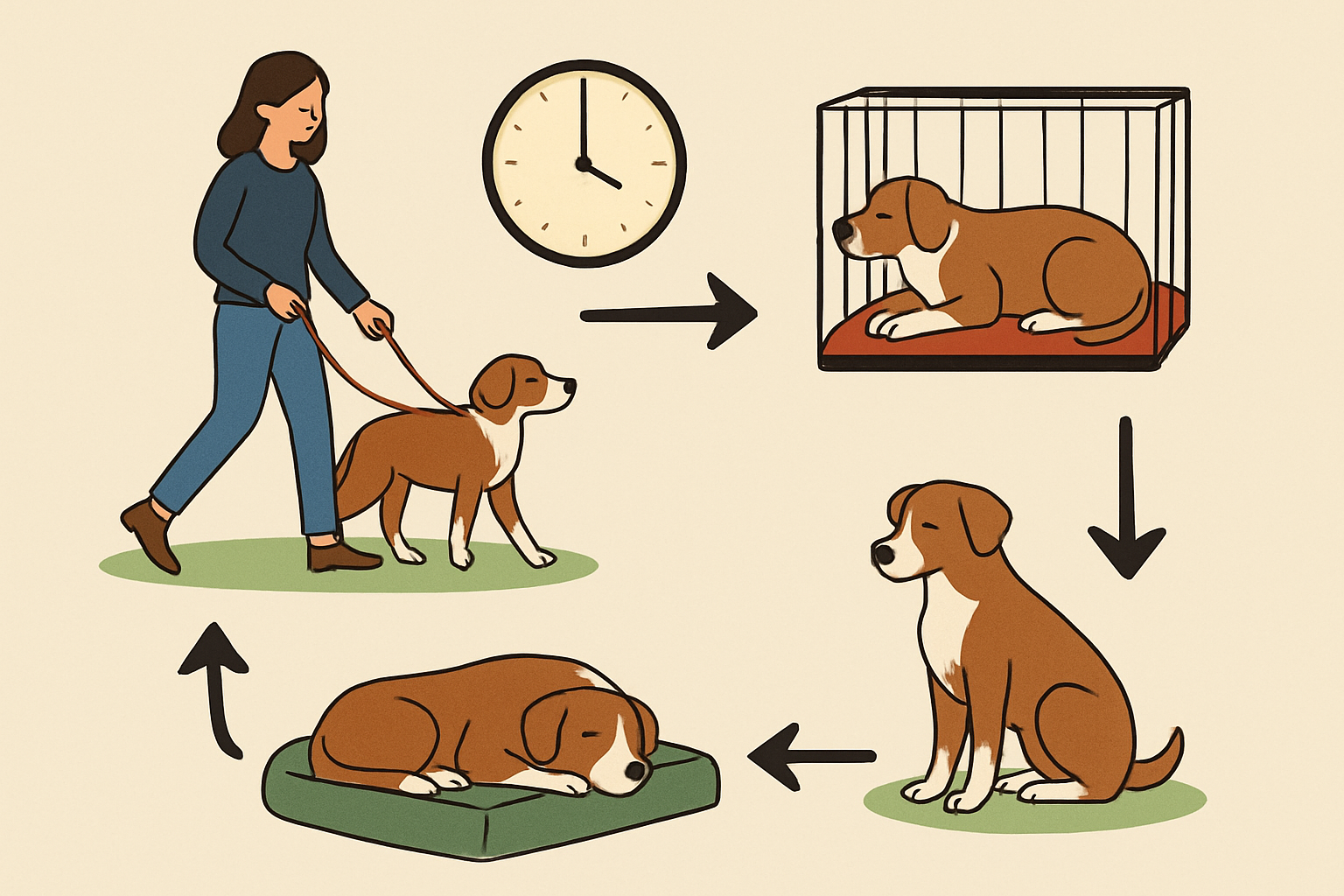
A realistic daily dog care routine for a full-time worker in the United States usually means:
- Quality time before and after work (walks, play, training)
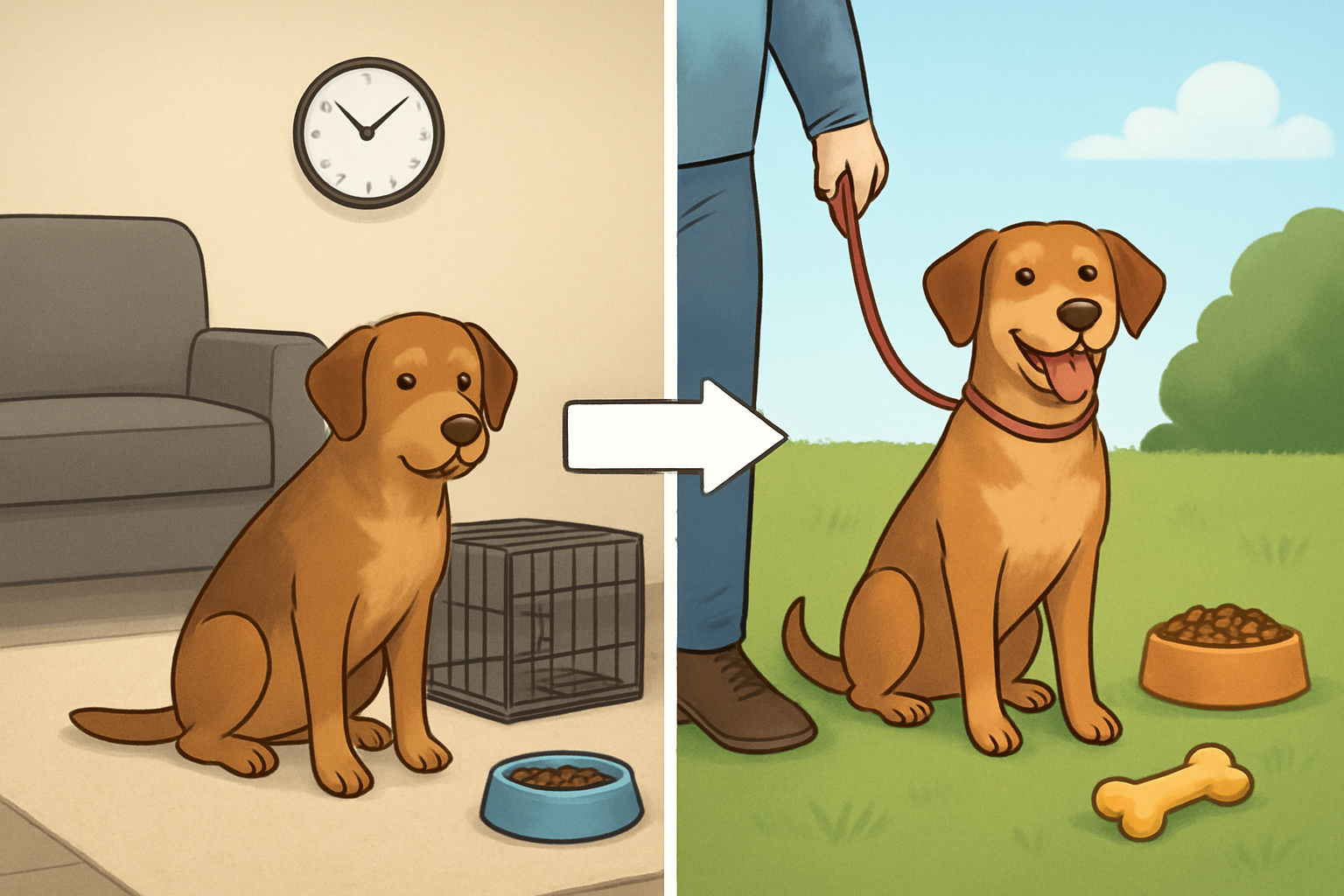
- Safe, calm alone time during your workday
- Predictable toilet breaks, feeding, and sleep
- Enough exercise and mental enrichment for your dog’s age and size
You do not need to be home all day to be a responsible dog owner, but you do need a plan. This guide walks through concrete schedules, decision points, and practical checklists so you can design a routine that works for both your job and your dog.
Minimum daily welfare needs for a dog when you work full-time
When you build a schedule, check that you are covering these minimum welfare needs every day. Exact limits vary by dog, so treat these as ranges and adjust with your vet’s guidance.
1. Physical needs
- Toilet breaks
Most healthy adult dogs can comfortably hold their bladder for several hours, but puppies and many seniors need much more frequent breaks. If your workday plus commute means your dog would be alone for a long stretch, plan a midday break with a trusted person or service. For any dog, aim to avoid long, repeated stretches without a chance to go out; if you must push the limit occasionally, make it the exception, not the rule. - Food and water
Fresh water should be available whenever your dog is awake and not traveling. Many adult dogs do well on two meals per day; puppies often need more frequent meals, and some seniors do better with smaller, more frequent portions. Follow your vet’s advice on food type and amount. - Exercise
Every dog needs daily movement. The intensity and duration depend on age, health, and breed type. A young, athletic dog may need multiple active sessions, while a senior or short-nosed dog may need shorter, gentler walks.
2. Mental and emotional needs
- Social contact
Dogs are social animals. Even if your dog can stay home alone during your shift, they still need meaningful interaction with you (and possibly other people or dogs) every day. - Mental enrichment
Sniffing, problem-solving, and exploring new environments help prevent boredom and frustration. Food puzzles, training games, and varied walking routes all count. - Rest and predictability
Dogs sleep a lot, especially when home alone. A predictable routine—similar wake, walk, feed, and sleep times—helps most dogs feel secure.
Use these needs as a checklist when you look at your own weekday: if any category is consistently thin, adjust your routine or add support (walker, daycare, neighbor, family member). For a broader view of long-term commitments, you can also review a responsible pet ownership checklist for new dog owners.
Sample weekday schedules for working owners by dog age
The following sample schedules assume a typical 9–5 job with some commute. Adjust times to your reality (shift work, remote work, split shifts, etc.).
Sample weekday schedule for a puppy (under roughly 6–8 months)
Puppies need:
- More frequent toilet breaks (often every few hours when awake)
- Short, gentle exercise sessions
- Multiple small meals
- Lots of sleep in between
Example puppy day for a 9–5 worker
- 6:00 am – Wake up, outside for toilet break and a short sniffy walk.
- 6:30 am – Breakfast, then 10–15 minutes of calm play or basic training.
- 7:00–7:30 am – Another quick toilet break, then into a safe puppy-proofed area (pen, gated room, or crate if crate-trained) with a safe chew or food puzzle.
- Mid-morning – Trusted person (family, neighbor, sitter) visits for toilet break, short play, and possibly a small snack if your vet recommends multiple meals.
- Early afternoon – Second visit for toilet break, brief walk, and quiet time.
- 5:30–6:00 pm – You arrive home, immediate toilet break and short walk.
- 6:30 pm – Dinner, then calm play, training, and cuddling.
- 8:00–10:00 pm – Several short toilet breaks, quiet time, and sleep in a safe area.
If you cannot arrange at least one midday visit for a young puppy, reconsider timing of adoption or explore options like bringing the puppy to work (if allowed), flexible hours, or reputable daycare.
Sample weekday schedule for an adult dog
Healthy adult dogs are usually the most flexible.
Example adult dog day for a 9–5 worker
- 6:00 am – Wake up, 20–40 minute walk (length and pace depend on your dog). Include time to sniff and at least a few minutes of focused play or training.
- 6:45–7:00 am – Breakfast, fresh water, short calm time.
- 7:30 am – Final toilet break before you leave. Set up safe alone space with a long-lasting chew or puzzle feeder.
- Midday (optional but ideal) – Dog walker or neighbor visit for toilet break and 10–20 minutes of movement and interaction.
- 5:30–6:00 pm – You arrive home, toilet break and 20–40 minute walk or play session.
- 7:00 pm – Dinner (if feeding twice daily), then quiet family time.
- 8:30–10:00 pm – Short evening toilet break, light play or training, then bedtime.
Sample weekday schedule for a senior dog
Senior dogs often:
- Need more frequent but shorter walks
- May require more toilet breaks
- Benefit from gentle mental enrichment
- Need comfortable, warm, non-slippery resting areas
Example senior dog day for a 9–5 worker
- 6:00 am – Wake up, gentle 10–20 minute walk with plenty of sniffing.
- 6:30 am – Breakfast and medications or supplements as prescribed.
- 7:15 am – Toilet break and settle in a quiet, comfortable area with water nearby.
- Midday – Check-in by trusted person for toilet break, brief stroll, and comfort check.
- 5:30–6:00 pm – You arrive home, toilet break and short walk.
- 6:30–7:00 pm – Dinner, gentle massage or brushing if your dog enjoys it.
- Evening – Short toilet breaks as needed, calm family time, early bedtime.
For any age, adjust for weather, health conditions, and your dog’s individual energy level. When in doubt, your vet is the best person to help tailor the schedule. For long-term health planning, you can also look at an annual vet care schedule for dogs and cats USA.
Exercise and mental enrichment by breed size: comparison table
Every dog is an individual, but breed size and type give you a starting point for planning exercise and enrichment. Use this table as a quick reference, then fine-tune based on your dog’s behavior and your vet’s advice.
| Dog type / size | Typical physical activity focus | Suggested daily structure for working owners | Examples of mental enrichment | Risks if needs are under-met |
|---|---|---|---|---|
| Toy & small companion breeds (many lap-type dogs) |
Several short, gentle walks and indoor play rather than long intense sessions. |
|
|
|
| Medium family breeds (many mixed-breed dogs) |
Balanced mix of walks, play, and training; often enjoy moderate activity. |
|
|
|
| Large & working breeds (many herding, working, sporting dogs) |
Often need more structured activity and “jobs,” not just long walks. |
|
|
|
| Brachycephalic or low-energy breeds (short-nosed or naturally calm dogs) |
Short, gentle walks; avoid overheating and overexertion. |
|
|
|
Always adjust for weather, health conditions, and your vet’s guidance. In hot or very cold U.S. climates, shift more activity to early morning and late evening and keep midday outings short.
Toilet break timing, alone time, and safe use of crates or pens
Planning toilet breaks around a workday
Because exact time limits vary by dog, use these principles instead of rigid numbers:
- Young puppies – Need very frequent breaks when awake. If you work away from home, plan multiple daytime visits or daycare. Relying on a puppy to “hold it” for your entire shift is likely to cause accidents and stress.
- Healthy adults – Many can manage a typical work stretch, especially with a good morning walk and a toilet break right before you leave. A midday visit is still kinder and helps prevent discomfort and boredom.
- Seniors and dogs with medical issues – Often need more frequent breaks. Work closely with your vet to decide what is reasonable.
If you are unsure whether your dog is coping, use a pet camera or ask a trusted person to observe. Signs of pacing, whining, or repeated accidents suggest the current schedule is too demanding.
Crate, pen, or free-roam: how to choose
- Crate
Best used as a short-term safe space, especially for puppies or dogs in training. The crate should be large enough for your dog to stand, turn around, and lie comfortably. It should never be used as punishment. For longer stretches, many dogs are more comfortable in a larger area. - Exercise pen or gated room
Good for puppies and active dogs who need room to move but still require management. Include a bed, water, safe chews, and, for puppies, a designated toilet area if they truly cannot hold it yet. - Free-roam
Suitable for dogs who are fully house-trained, not destructive, and safe around household items. Start with limited access and expand as your dog proves reliable.
Whichever option you choose, introduce it gradually when you are home so your dog associates the space with calm and comfort, not just your absence.
Feeding schedule and safe food handling for busy owners
Structuring meals around your workday
Typical patterns that work for many U.S. working owners:
- Adult dogs – Morning meal after the first walk, and evening meal after the after-work walk. This spacing helps reduce begging and keeps energy more stable.
- Puppies – Several smaller meals spread through the day. If you cannot be home, coordinate with a helper or use safe, vet-approved ways to portion food (for example, pre-measured meals a sitter can serve).
- Senior dogs – Some do better with smaller, more frequent meals to support digestion and comfort. Ask your vet what is best for your dog’s health conditions.
Avoid heavy exercise immediately after large meals; instead, allow a calm period after eating.
Safe food handling tips
- Follow storage instructions on your dog’s food packaging to keep it fresh.
- Wash food and water bowls regularly with hot, soapy water and rinse well.
- Do not leave perishable wet or raw food out at room temperature for long periods; check the product’s guidance and your vet’s advice.
- Introduce new foods gradually to reduce the risk of digestive upset.
- Keep human foods that are unsafe for dogs out of reach and confirm with your vet before sharing table scraps.
If you use food puzzles or slow feeders, clean them as often as bowls, especially if you fill them before leaving for work.
Alone-time limits and support options for working owners
Every dog has a different comfort level with alone time. Some relax and sleep; others become anxious or destructive. Instead of relying on a single rule, combine observation with support options.
Common support options
- Dog walker
A walker can provide a midday toilet break, walk, and social interaction. This is especially helpful for puppies, high-energy adults, and seniors who need more frequent breaks. - Dog daycare
Daycare can offer supervised play and company. It suits social, healthy dogs who enjoy other dogs and people. It may not be ideal for very shy, reactive, or medically fragile dogs. - Neighbor, friend, or family member
Sometimes a trusted person nearby can stop in for a quick break or even host your dog for part of the day. - Pet sitter in your home
A sitter can stay for a portion of the day, giving your dog companionship and breaks without changing environment. - Bringing your dog to work
If your workplace allows it and your dog is comfortable in that environment, this can be an excellent solution. Make sure your dog has a quiet space, water, and chances to go outside.
How to decide what your dog needs
Ask yourself:
- How does my dog behave when I return home—calm and sleepy, or frantic and stressed?
- Are there accidents, chewing, or barking complaints while I am gone?
- Is my workday plus commute regularly very long?
- Is my dog young, senior, or dealing with health issues?
If you see signs of distress or your schedule is demanding, err on the side of more support. For new dog owners, a resource like the first time dog owner checklist USA can help you think through time and care needs.
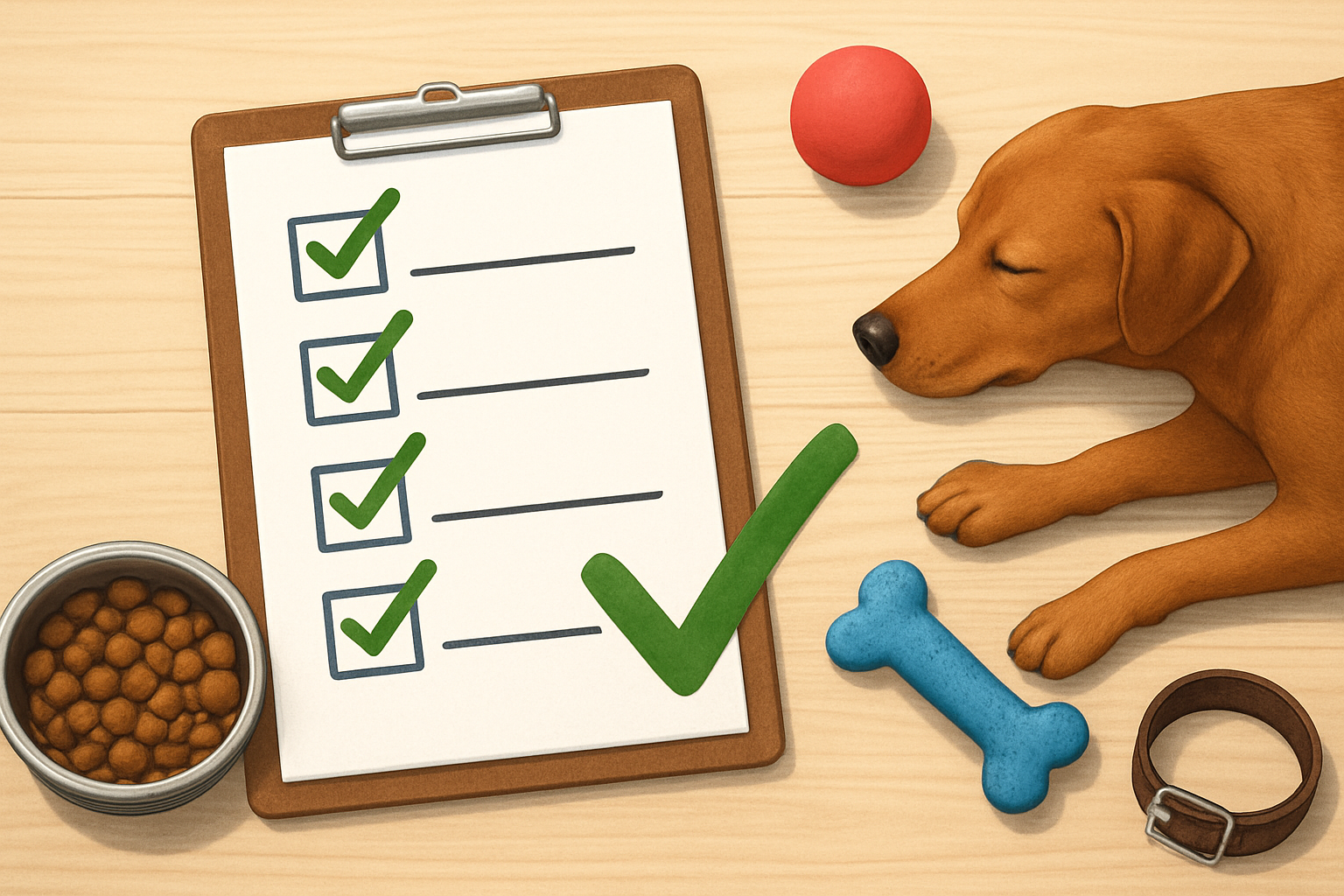
Checklist: is your current daily routine working for your dog?
Use this practical checklist once or twice a month. If you answer “no” to several items, adjust your routine or seek professional help.
- Morning
- My dog gets a chance to toilet soon after waking.
- My dog has some form of exercise (walk, play, or training) before I leave.
- Breakfast is given with enough time for a calm period before I go.
- During my workday
- My dog has access to fresh water.
- My dog is in a safe, comfortable space (crate, pen, or dog-proofed area).
- My dog gets at least one toilet break if my total time away is long.
- My dog has at least one safe chew or enrichment toy available.
- Evening
- My dog gets another walk or active play session after I return.
- Dinner is served at a consistent time.
- My dog has calm time with me (cuddling, grooming, or just relaxing together).
- Night
- My dog has a final toilet break before bed.
- My dog has a comfortable sleeping spot where they can rest undisturbed.
- Overall behavior and health
- My dog maintains a steady, healthy body condition (not rapidly gaining or losing weight).
- My dog can relax at home and is not constantly pacing or whining.
- My dog’s accidents, if any, are rare and have been discussed with a vet if they persist.
- My dog seems generally happy and engaged when awake.
Common signs your current routine is not working
Watch for these patterns over time, not just one-off incidents.
- Frequent indoor accidents – May mean toilet breaks are too far apart, or there is a medical issue. Rule out health problems with your vet before assuming it is “just behavior.”
- Destructive chewing or scratching – Especially focused on doors, windows, or exit points can signal separation-related distress. Chewing random items may also mean boredom or lack of appropriate chew toys.
- Excessive barking or howling – Neighbors may report noise while you are away. A camera can help you see if your dog is distressed or reacting to outside triggers.
- Refusing food when alone – Some dogs are too anxious to eat when left. This can be a sign that alone time is very stressful.
- Clinginess when you are home – Following you constantly, panicking when you pick up keys, or being unable to settle can indicate that your dog is struggling with your absences.
- Changes in sleep or energy – Sudden restlessness at night or extreme fatigue may reflect unmet needs or health issues.
If you see several of these signs, consider:
- Adding or lengthening walks or play sessions.
- Introducing more mental enrichment (puzzles, training, scent games).
- Arranging midday help (walker, sitter, daycare).
- Working with a qualified trainer or behavior professional, especially for separation-related problems.
- Scheduling a vet check to rule out pain or illness.
Resources like a pet preventive care schedule USA can help you plan regular checkups to catch issues early.
Step-by-step template to design a custom daily schedule
Use this step-by-step process as a simple framework to build a schedule that fits your job and your dog.
Step 1: Map your fixed time blocks
Write down:
- Wake-up time
- Leave-home time
- Return-home time
- Bedtime
- Commute length
These are your non-negotiable anchors.
Step 2: List your dog’s specific needs
Consider:
- Age (puppy, adult, senior)
- Breed type and energy level
- Health issues (mobility, digestion, medications)
- Current behavior (relaxed vs. anxious when alone)
Note any vet instructions (for example, medication times or exercise limits).
Step 3: Place toilet breaks
Plan at least:
- Morning break soon after waking
- Break right before you leave
- Break as soon as you return
- Final break before bed
For puppies, seniors, or dogs with medical needs, add one or more midday breaks with help from a walker, sitter, or neighbor.
Step 4: Add exercise and enrichment blocks
- Morning: Decide how long you can realistically walk or play before work. Even 15–20 focused minutes are valuable if used well (sniffing, training, brisk walking).
- Evening: Plan a second block of movement and interaction after work.
- During the day: Choose safe enrichment your dog can enjoy alone (puzzle feeders, safe chews, rotated toys).
Match intensity to your dog’s size and health, using the comparison table above as a guide.
Step 5: Place meals and water
- Decide on meal frequency with your vet (once, twice, or more per day).
- Schedule meals so your dog has time to digest before intense activity.
- Ensure water is available whenever your dog is home and awake.
Step 6: Reality-check your plan
Ask:
- Is there at least one meaningful interaction block (walk, play, training) before and after work?
- Is any single stretch without a toilet break longer than my dog can comfortably manage?
- Do I have backup options for unusually long days (overtime, traffic, social events)?
- Can I sustain this routine most weekdays without constant stress?
Adjust until the plan feels realistic for you and kind to your dog.
Step 7: Test and tweak
Follow your new routine for at least a couple of weeks and observe:
- Your dog’s behavior when you leave and return.
- Energy levels throughout the evening.
- Any accidents or destructive behavior.
Tweak one element at a time (for example, longer morning walk, new puzzle toy, added midday visit) so you can see what actually helps.
Common mistakes working owners make with daily dog care
Avoid these frequent pitfalls:
- Relying only on a quick backyard potty break – Many dogs need mental stimulation from walks and new smells, not just a few minutes outside in the same yard.
- Over-exercising to “make up for” long alone time – Suddenly adding very intense exercise on weekends can risk injury, especially for unconditioned or senior dogs. Aim for consistent, moderate activity instead.
- Leaving no safe activities for alone time – A bored dog with nothing to do is more likely to chew furniture or bark. Provide safe chews, puzzle feeders, or rotated toys.
- Ignoring early signs of stress – Waiting until problems are severe makes them harder to fix. Address mild separation issues or destructive behavior early with professional help if needed.
- Inconsistent rules and routines – Allowing behaviors sometimes and not others (for example, sometimes jumping is allowed, sometimes discouraged) can confuse your dog. Predictable routines help dogs relax.
- Skipping vet checks due to a busy schedule – Health problems can look like “behavior issues.” Regular preventive care helps catch pain or illness that might be making your dog restless, irritable, or accident-prone.
FAQ: daily dog care routine for working owners
What is the 3-3-3 rule for dogs?
Many people use the phrase “3-3-3 rule” as a rough way to describe how long it can take a newly adopted dog to adjust: a few days to decompress, a few weeks to start settling into a routine, and a longer period to fully feel at home. It is not a strict scientific rule, but it is a reminder to be patient, keep routines consistent, and avoid overwhelming your new dog with too many changes at once.
What is the 7-7-7 rule for dogs?
The “7-7-7 rule” is another informal saying some owners and trainers use to describe stages of adjustment or training progress over time. Different people define it differently, so do not treat it as a fixed schedule. Instead, focus on steady progress, kind training methods, and regular check-ins with your vet or a qualified trainer if you feel stuck.
What is the 10-10-10 rule for dogs?
The “10-10-10 rule” is sometimes mentioned in discussions about training or behavior change as a way to think about gradual improvement over time. Definitions vary, and it is not an official guideline. The key idea is that meaningful change often takes weeks or months, not days, so consistent routines and realistic expectations matter more than catchy numbers.
What should I do with my dog when I work all day?
If you work all day away from home, combine several strategies:
- Give a good morning walk and some training or play before you leave.
- Provide a safe space with water, a comfortable bed, and safe enrichment (chews, puzzle toys).
- Arrange at least one toilet break and interaction during your shift via a walker, sitter, neighbor, or daycare.
- Spend quality time with your dog in the evening with walks, play, and calm companionship.
- Monitor your dog’s behavior and adjust if you see signs of stress or boredom.
Is it fair to have a dog if I work a 9–5 job?
It can be fair if you plan carefully and meet your dog’s needs for toilet breaks, exercise, mental enrichment, and social contact. Many people with full-time jobs share their lives with happy, well-cared-for dogs by using support options (walkers, daycare, family help), prioritizing morning and evening time with their dogs, and choosing a dog whose energy level and temperament match their lifestyle.
How can I keep my dog from being bored while I am at work?
Rotate safe toys, use food-dispensing puzzles, leave a long-lasting chew if your vet approves, and vary your walking routes before and after work. Training short, fun skills in the morning and evening also tires your dog mentally. For some dogs, background sounds (like a radio at low volume) can help them relax, but always prioritize safety and your dog’s preferences.
How do I know if my dog is getting enough exercise?
Look at your dog’s behavior and body condition over time. A dog who can settle calmly at home, maintains a healthy weight, and shows enthusiasm (but not frantic overexcitement) for walks is often getting a reasonable amount of exercise. A dog who is constantly restless, destructive, or gaining weight may need more or different types of activity. Your vet can help you fine-tune the plan for your dog’s age and health.
Can I crate my dog while I am at work?
Crates can be helpful for short periods and for training, but many dogs are more comfortable in a larger safe area for longer stretches. If you use a crate, introduce it gradually with positive associations, never as punishment. Make sure your dog has had a chance to toilet and exercise before crating, and discuss reasonable crate times for your specific dog with your vet or a qualified trainer.
How does a daily routine change on weekends?
Try to keep wake-up, meal, and main walk times roughly similar so your dog’s body and expectations stay stable. You can add extra adventures (longer hikes, new parks, training classes), but avoid huge swings—such as very little activity on weekdays and extremely intense exercise only on weekends—especially for dogs who are not conditioned for it.
With a thoughtful routine, realistic expectations, and a willingness to adjust as your dog and job change, it is possible to balance full-time work with responsible, compassionate dog care.