
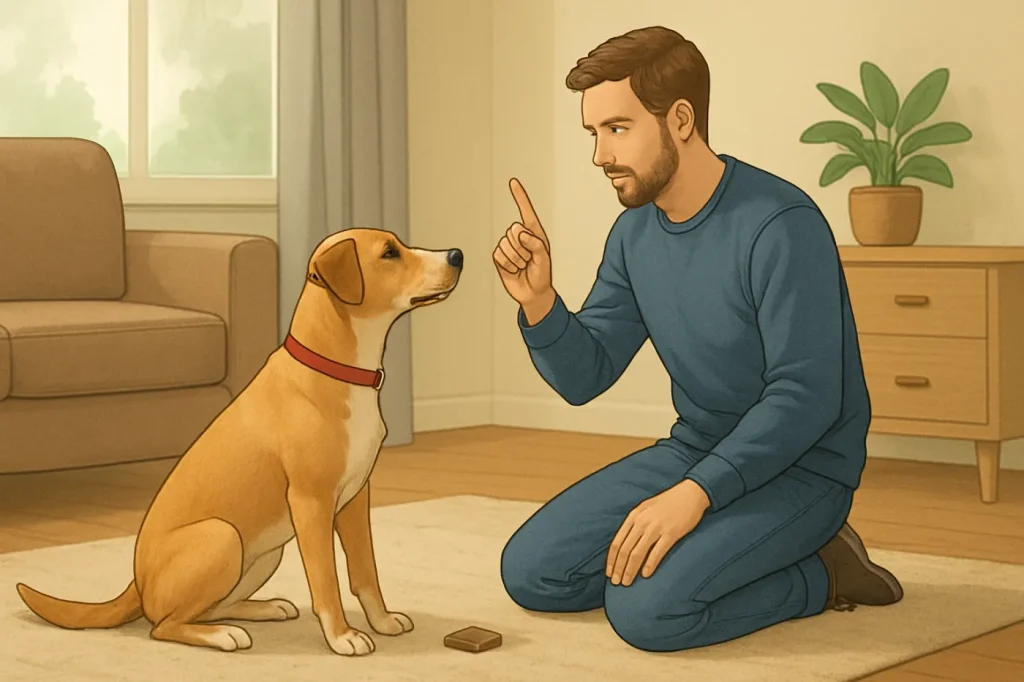
Basic obedience training for rescue dogs starts with one priority: help your new dog feel safe before you ask for perfect manners. The most effective plan combines a calm first week, short daily training sessions, and simple, consistent rules the whole household follows.
Understanding rescue dog adjustment and the 3‑3‑3 rule
Many adopters notice that rescue dogs change a lot in the first weeks and months. A common way to describe this is the “3‑3‑3 rule”:
- First 3 days – your dog is often overwhelmed, shut down, or overexcited. They may sleep a lot, pace, pant, or ignore food.
- First 3 weeks – your dog starts to learn your routine, test boundaries, and show more of their real personality.
- First 3 months – your dog usually feels more secure, understands house rules, and can focus better on training.
This is not a strict timetable, but it is a useful reminder: do not expect a newly adopted dog to behave like a well‑trained family pet in the first few days. Obedience training works best when you match your expectations to your dog’s stress level.
First‑week decompression and bonding guidelines
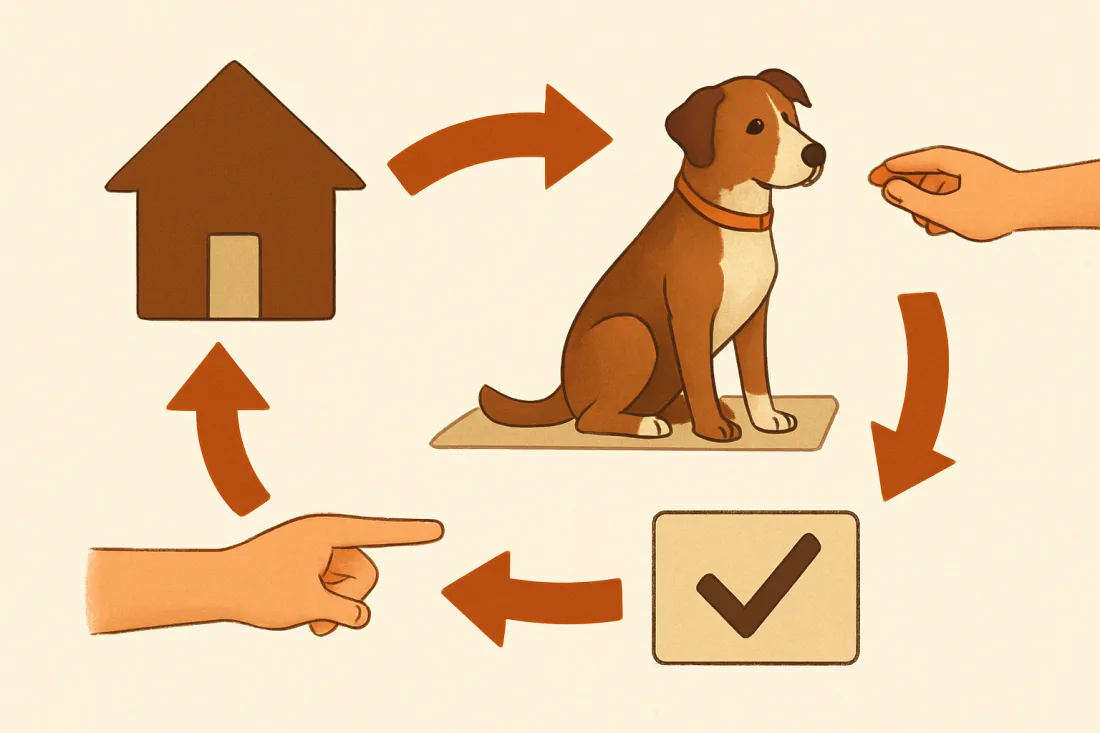
The first week is about decompression and safety more than obedience. Think of it as giving your dog a “soft landing” so training can stick later.
Set up a safe, quiet base camp
- Choose a calm room or corner with a crate or bed, water, and a chew toy.
- Limit access to the whole house at first with baby gates or closed doors.
- Keep noise low: avoid loud TV, parties, or lots of visitors.
Keep the schedule simple and predictable
- Feed at the same times each day.
- Use consistent potty breaks (for example, first thing in the morning, after meals, after play, and before bed). If you live in a small space, see the dedicated guide on house training a rescue dog in an apartment.
- Walks should be short, on a secure harness and leash, in quiet areas when possible.
Bonding without overwhelming your dog
- Let the dog approach you instead of crowding or hugging them.
- Offer treats from your hand or toss them gently on the floor nearby.
- Use a soft, calm voice; avoid shouting, even if you are excited.
- Keep petting brief at first; stop every few seconds and see if the dog leans in for more or moves away.
What not to do in week one
- Do not take your dog to busy events, dog parks, or crowded stores.
- Do not invite lots of people over to “meet the new dog.”
- Do not punish accidents, growling, or nervous behavior. Focus on safety and redirection.
30‑day step‑by‑step training plan for rescue dogs
This 30‑day plan balances decompression, bonding, and basic obedience. Adjust the pace if your dog is very fearful or very confident.
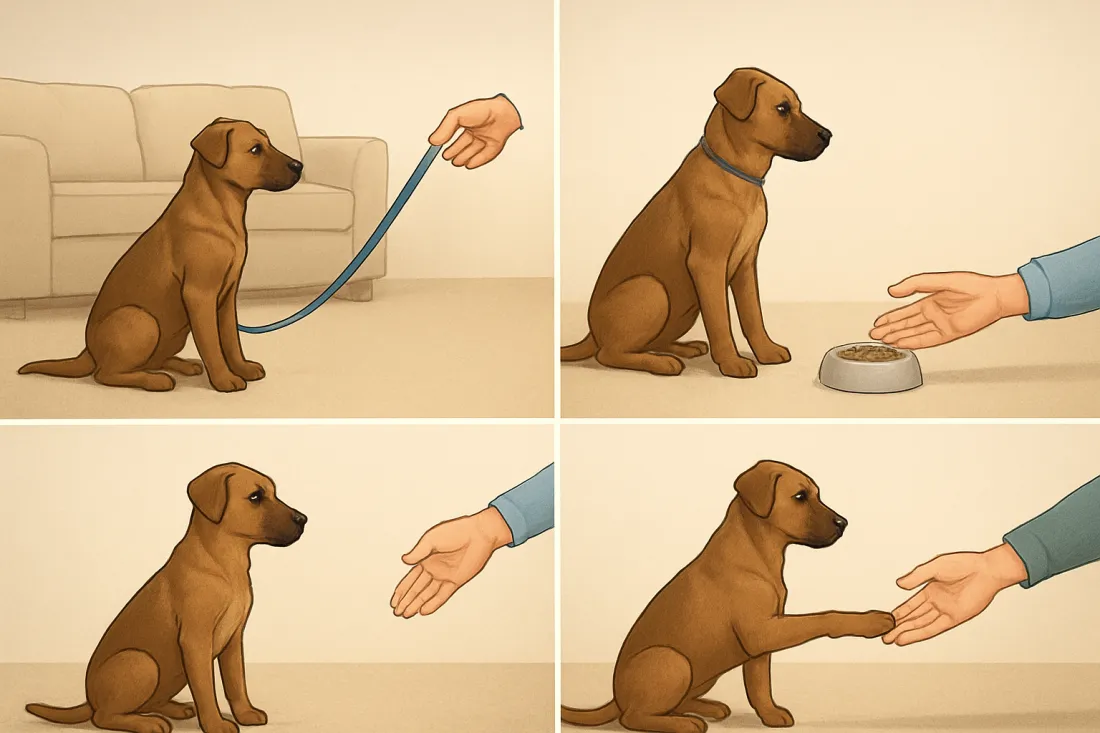
Days 1–7: Safety, routine, and name recognition
- Goal: Your dog knows their name, follows you for treats, and starts to relax in your home.
- Daily focus (5–10 minutes total):
- Name game: Say the dog’s name once, in a happy tone. When they glance at you, mark with “Yes!” or a click, then give a treat. Repeat 5–10 times, a few times per day.
- Follow me: Walk around your home. When your dog chooses to walk near you, mark and treat. This builds attention without pressure.
- Handling practice: Briefly touch collar, shoulders, or paws, then treat. Keep it short and positive.
Days 8–14: Core cues – sit, come, and beginning stay
- Goal: Your dog offers sit, starts to understand “come,” and can hold a short stay.
- Daily focus (10–15 minutes total):
- Sit: Hold a treat to your dog’s nose, then slowly move it up and back over their head. As their rear hits the floor, say “Sit,” mark, and treat. After a few repetitions, say “Sit” first, then lure if needed.
- Come (indoors): In a quiet room, crouch down, say your dog’s name + “come!” in a happy voice, then open your arms or pat your legs. When they move toward you, mark and reward with treats and praise. Start at 3–6 feet and gradually increase distance.
- Short stay: Ask for a sit. Say “Stay,” hold your hand out like a stop sign, wait 1–2 seconds, then mark and treat. Slowly add a second or two at a time.
Days 15–21: Leave it, loose‑leash walking, and longer stays
- Goal: Your dog starts to ignore dropped items on cue, walks with less pulling, and can stay for several seconds.
- Daily focus (15–20 minutes total):
- Leave it (foundation): Hold a treat in your closed fist. Present your fist; when your dog sniffs, paws, or licks, wait. The moment they move their nose away or look at you, say “Yes,” then give a different treat from your other hand. Add the cue “Leave it” once they consistently back off.
- Loose‑leash walking (indoors or yard): With your dog on leash, take a step. If the leash stays loose, mark and treat by your leg. If they surge ahead, stop. Wait for them to turn back or loosen the leash, then move forward again. Reward heavily for walking near you.
- Stay with distance: Ask for sit, say “Stay,” take one step back, then return and reward. Gradually add steps and seconds, but only change one thing at a time (either distance or duration).
Days 22–30: Real‑life practice and mild distractions
- Goal: Your dog can use their cues in everyday situations.
- Daily focus (15–20 minutes total):
- Come with mild distractions: Practice in the yard or a quiet park on a long line. Call once; if your dog hesitates, gently reel in the line while encouraging them, then reward generously when they arrive.
- Loose‑leash walking outside: Start in low‑distraction areas. Reward frequently for checking in with you and walking by your side.
- Stay during daily life: Ask for a stay while you open the fridge, step over a doorway, or put on your shoes. Keep it easy and reward success.
- Review and mix: Randomly ask for sit, come, or leave it throughout the day and reward. This helps your dog generalize the cues.
Core obedience cues for rescue dogs and how to teach them
Most families benefit from teaching at least five core cues: sit, stay, come, leave it, and loose‑leash walking. Many trainers also add down and drop it to reach seven basic commands.

| Command | What it is for | How to teach it | Common mistakes |
|---|---|---|---|
| Sit | Polite greeting, impulse control at doors, before meals. | Lure the head up and back with a treat; mark and reward when the rear hits the floor. Add the word “Sit” once the motion is predictable. | Pushing the dog’s back; repeating the cue many times; asking for sit on slippery floors. |
| Stay | Safety at doors, sidewalks, and around guests. | Start with 1–2 seconds in place, then gradually add time, distance, and distractions one at a time. | Moving too fast; using “stay” and then calling the dog for punishment (like nail trims only). |
| Come | Recall away from doors, people, or mild distractions. | Practice indoors first, reward heavily every time, and use a long line outside for safety. | Calling when you cannot enforce it; scolding the dog when they finally come. |
| Leave it | Preventing your dog from grabbing unsafe items. | Reward the choice to move away from the item and look at you; always pay with a better reward. | Taking items from the dog without trading; using “leave it” as a scolding word. |
| Loose‑leash walking | Comfortable walks without pulling or choking. | Reward your dog for staying near you; stop moving when they pull and move again when the leash loosens. | Allowing pulling sometimes; using harsh equipment instead of training. |
| Down | Relaxation on a mat, settling in public places, polite behavior around kids. | Lure from sit by moving a treat from the nose straight down to the floor, then slightly out. Mark and reward when elbows touch the ground. | Dragging the treat too far away; pushing the dog into position; practicing only on hard, uncomfortable surfaces. |
| Drop it | Letting go of toys or safe objects on cue. | Offer a high‑value treat near your dog’s nose while they hold a toy. When they release the toy to take the treat, mark and say “Drop it,” then give the treat and sometimes return the toy. | Prying items from the mouth; chasing the dog; only saying “drop it” when you are angry. |
Positive reinforcement methods and reward ideas
Rescue dogs often have unknown or difficult histories. Positive reinforcement is the safest and most effective way to build trust and teach obedience.
What positive reinforcement looks like
- Reward what you like – give treats, praise, or play immediately when your dog does something you want (like sitting calmly).
- Ignore or redirect what you do not like – instead of yelling, guide your dog to a different behavior and reward that.
- Use a marker – a short word like “Yes!” or a clicker to mark the exact moment your dog gets it right.
Reward ideas for different dogs
- Food rewards: small, soft treats, bits of plain cooked chicken, or part of their regular meal used during training.
- Toy rewards: a quick game of tug or fetch after a successful recall.
- Life rewards: going outside, greeting a friend, or jumping on the couch when invited.
Many dogs work best for a mix of these rewards. If your dog is too stressed to eat, keep sessions extremely short and focus on calm presence and gentle praise until their appetite improves.
Daily training schedule and progress tracker
You do not need hours of training. Consistency matters more than length. The schedule below shows a realistic daily structure you can adapt.
| Time of day | Activity | Duration | What to track |
|---|---|---|---|
| Morning | Potty break, short walk, 3–5 minutes of sit/come practice. | 15–20 minutes total | Did your dog respond to their name? How many successful sits/comes? |
| Midday | Calm enrichment (chew, puzzle toy) and 3–5 minutes of leave it or handling. | 10–15 minutes | Can your dog back off a treat in your hand? Are they more relaxed with gentle touch? |
| Evening | Walk with loose‑leash practice and 3–5 minutes of stay or recall indoors. | 20–30 minutes | How often was the leash loose? How long can your dog hold a stay? |
| Bedtime | Short potty break, quiet cuddle or presence near their bed. | 5–10 minutes | Is your dog settling faster than last week? |
Simple progress checklist for the first 30 days
- My dog eats, drinks, and rests comfortably in their safe space.
- My dog responds to their name at least most of the time indoors.
- My dog can sit on cue without a food lure.
- My dog can stay in place for several seconds with me nearby.
- My dog can walk for several steps on a loose leash in a quiet area.
- My dog can leave a treat in my closed hand when I say “Leave it.”
- My dog can come when called indoors from another room.
- My dog recovers from mild surprises (a dropped object, a new sound) within a few minutes.
Use these points to notice small wins and decide when your dog is ready for more challenging situations.
Handling fear, reactivity, and unknown history safely
Many rescue dogs arrive with gaps in their socialization or past experiences that you will never fully know. Focus on what your dog is showing you now.
Signs your dog is fearful or overwhelmed
- Tail tucked, ears pinned back, body low to the ground.
- Refusing food, freezing, or trying to hide.
- Growling, barking, or lunging when people or dogs approach.
- Excessive panting, pacing, or drooling in calm situations.
Safety rules for fearful or reactive rescue dogs
- Use secure equipment: a well‑fitted harness and sturdy leash; consider a backup clip to the collar for extra security.
- Avoid crowded places until your dog can handle simple environments calmly.
- Do not punish growling. Growling is a warning sign; punishing it can suppress the warning without changing the fear.
- Give space: if your dog is reacting, calmly move away to a distance where they can notice the trigger but still eat treats and think.
- Pair scary things with rewards: at a safe distance, every time your dog sees a trigger (person, dog, bike), calmly feed a few treats, then move away.
When obedience can wait
If your dog is too stressed to take food, sleep, or relax indoors, focus on:
- Predictable routine and quiet rest.
- Very short, easy sessions like name recognition and hand‑feeding.
- Reducing triggers (closing curtains, avoiding busy times outside).
Once your dog can eat and rest reliably, you can gradually increase obedience training.
Common mistakes in training rescue dogs
- Moving too fast: expecting perfect manners in the first week can damage trust. Use the 3‑3‑3 idea as a reminder to slow down.
- Inconsistent rules: one person allows couch time, another scolds for it. Agree on basic house rules for dogs and cats so your dog is not confused.
- Overusing the dog’s name: saying the name repeatedly without rewarding attention teaches the dog to tune it out.
- Training only when things go wrong: waiting until guests arrive or the dog bolts at the door is too late. Practice skills in easy situations first.
- Relying on punishment: yelling, leash jerks, or harsh tools can increase fear and aggression, especially in dogs with unknown histories.
- Skipping health checks: pain, ear infections, or dental issues can make a dog irritable or unwilling to train. Regular preventive care, such as following an annual vet care schedule for dogs and cats USA, supports behavior work.
Decision criteria: when to seek a professional trainer or behaviorist
Many families can teach basic obedience at home, but some situations call for professional help. Use these criteria to decide.
Consider a positive reinforcement trainer if
- Your dog is not improving with consistent, reward‑based training over several weeks.
- You feel unsure how to handle jumping, mouthing, or leash pulling safely.
- Family members disagree on rules or training methods and need guidance.
Seek a veterinary behaviorist or behavior‑focused professional if
- Your dog has bitten a person or another animal, even if the bite did not break skin.
- Your dog shows severe fear (cannot eat, hides most of the day, or panics on walks).
- There are signs of possible medical issues alongside behavior changes (sudden aggression, sensitivity to touch, or changes in appetite or sleep).
Helpful credentials and what they mean
When looking for help, search for professionals who emphasize humane, science‑based, reward‑focused methods. Many trainers and behaviorists list their education, continuing education, and memberships in professional organizations on their websites. Ask questions such as:
- “What happens when the dog gets it right?” (You should hear about rewards.)
- “What happens when the dog gets it wrong?” (Look for answers about management, redirection, and setting the dog up for success, not pain or fear.)
- “Can I watch a class or session first?”
FAQ about basic obedience training for rescue dogs
What is the 3‑3‑3 rule for rescue dogs?
The 3‑3‑3 rule is a guideline that describes common adjustment stages for adopted dogs: about 3 days to decompress and recover from the stress of change, about 3 weeks to start learning your routine and testing boundaries, and about 3 months to feel more fully settled and secure. Some dogs move faster or slower, but the idea helps you keep expectations realistic.
What is the 7‑7‑7 rule for rescue dogs?
The 7‑7‑7 idea is a similar way of thinking about adjustment in longer chunks. People use it to remind themselves that many rescue dogs need weeks and even months to fully relax, trust, and show their true personalities. The exact numbers are not strict; they simply encourage patience over the long term.
How do you obedience train a rescue dog?
Start with safety and decompression, then add short, positive training sessions. Teach one or two simple cues at a time, such as sit and come, using treats and praise. Keep sessions under 5–10 minutes, repeat them several times a day, and gradually add distractions only when your dog is succeeding in quiet environments. Avoid punishment and focus on rewarding the behaviors you want.
What are the 7 basic obedience commands for dogs?
Many trainers focus on seven core skills: name recognition, sit, down, stay, come, leave it, and loose‑leash walking or heel. Some families also teach drop it and go to bed as everyday essentials. For rescue dogs, start with name, sit, come, and loose‑leash walking, then add the others as your dog relaxes and learns.
How long does it take to train a rescue dog?
Many adopters see progress in the first few weeks, especially with simple cues like sit and name recognition. Building reliable obedience around distractions and helping a dog feel fully settled can take several months or longer. Progress is usually not a straight line; expect good days and setbacks, and focus on steady improvement rather than perfection.
Can an older rescue dog still learn basic obedience?
Yes. Adult and senior dogs can learn new cues and house rules with patient, reward‑based training. Older dogs may need shorter sessions, softer treats, and accommodations for vision, hearing, or joint issues, but they are often very eager to please once they feel safe.