Key principles of US leash laws and safe dog walking
Most US communities expect two things from dog owners on walks: 1. Your dog is under control at all times (usually on a leash in public). 2. Your dog does not disturb, threaten, or injure people, pets, or wildlife (and you clean up after them). Leash rules and penalties are set locally, but across the United States you will usually see patterns like:
- Dogs must be on a leash in most public streets, sidewalks, and shared areas.
- Off‑leash is allowed only in specific places (designated dog parks, some private property, or clearly signed off‑leash areas).
- Owners are responsible if their dog bites, knocks someone down, or causes damage.
- Licensing and rabies vaccination are typically required for dogs over a certain age.
Safe dog walking etiquette builds on those rules. It means:
- Using appropriate equipment (well‑fitted collar or harness and a sturdy leash).
- Giving other people and dogs space unless they clearly invite interaction.
- Managing your dog’s excitement, fear, or reactivity so others feel safe.
- Being prepared for problems: loose dogs, bikes, kids running up, or a bite incident.
If you want a deeper legal overview beyond daily walks, you can also review US pet laws every dog owner should know for broader responsibilities.
Why leash laws exist and when they usually apply
Leash laws are not just about control; they balance several interests:
- Public safety: Preventing bites, falls, and traffic accidents caused by loose dogs.
- Animal welfare: Protecting dogs from cars, aggressive animals, and getting lost.
- Cleanliness: Making it easier to see and clean up waste.
- Wildlife and property protection: Reducing chasing, digging, and damage.
>
Typical situations where a leash is expected in many US cities and counties:
- Sidewalks and streets: Dogs are usually required to be on a leash when off your property.
- Parks and playgrounds: Many parks require leashes everywhere except in clearly marked off‑leash areas; playgrounds often ban dogs entirely or require strict control.
- Shared residential spaces: Apartment hallways, elevators, lobbies, and parking lots commonly require leashes.
- Trails and nature areas: Some allow off‑leash with reliable voice control; others require leashes to protect wildlife and other visitors.
Because rules are local, two neighboring towns can treat the same situation differently. Always confirm your own city or county’s requirements before assuming your dog can be off‑leash.
Common patterns in US city and county leash regulations
Exact wording varies, but many US communities use similar concepts. You will often see language about:
- “At large” dogs: A dog is considered “at large” when off the owner’s property and not restrained by a leash or reliable control. Being “at large” is often a violation.
- Maximum leash length: Some places specify a maximum leash length in public areas (for example, a typical rule might limit leashes to a moderate length so you can keep control). Very long retractable leashes may not meet this standard in crowded areas.
- Designated off‑leash areas: Dog parks or signed off‑leash fields where dogs can run free under voice control. Rules usually require supervision, waste pickup, and sometimes a limit on the number of dogs per handler.
- Times of day: A few communities have time‑based rules (for example, dogs allowed off‑leash only during certain hours in specific parks). Check posted signs carefully.
- Licensing and vaccination: Many cities require dogs to be licensed and vaccinated against rabies to use public spaces or dog parks.
- Dangerous or aggressive dogs: Dogs with a history of bites or attacks may face stricter rules, such as mandatory muzzling or shorter leashes.
Because there is no single nationwide leash law, treat any online summary as a starting point, not a final answer. Always verify with your local government.
How to find your local leash and licensing rules
Use this simple process to confirm what applies where you live.
- Identify your local authority
Most leash and licensing rules are set by:- Your city or town (for people in incorporated areas).
- Your county (for people in unincorporated areas).
- Sometimes a special district for parks or trails.
- Search official sources
Use search terms like:- “[your city] dog leash law”
- “[your county] animal control ordinances”
- “[your city] dog license requirements”
Look for pages hosted by city, county, or parks departments, or animal control agencies.
- Check posted signs where you walk
At park entrances, trailheads, and beaches, look for:- Leash requirements and maximum leash length.
- Off‑leash hours or designated dog areas.
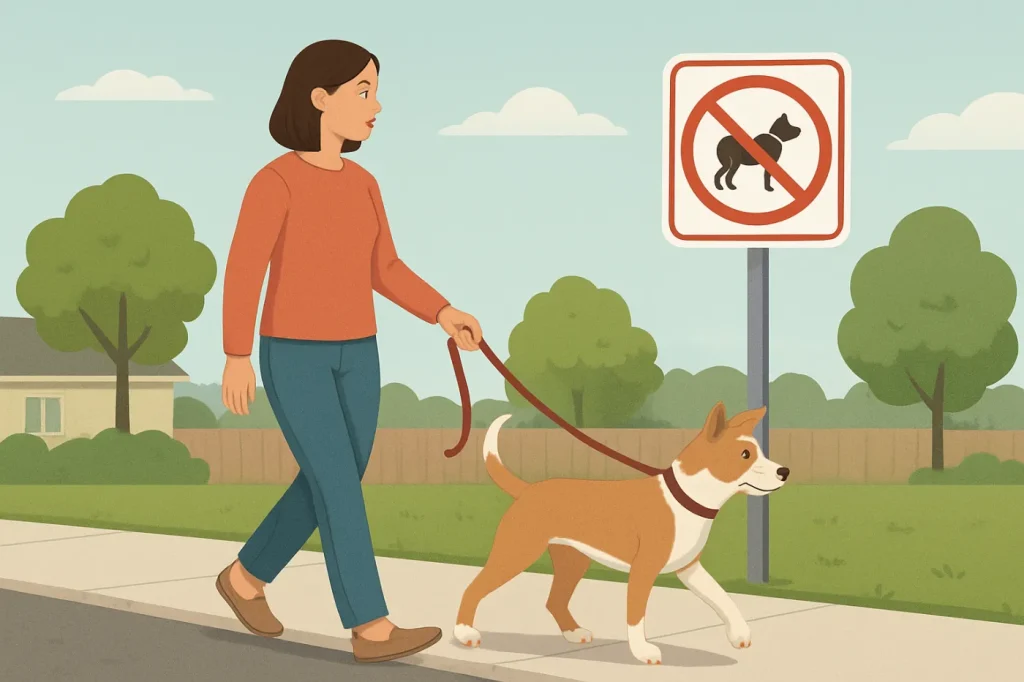
- Areas where dogs are prohibited (playgrounds, sports fields, some beaches).
- Call or email animal control if unclear
If rules are confusing, contact your local animal control or parks department and ask specific questions, such as:- “Can my dog be off‑leash on this trail if under voice control?”
- “Is there a maximum leash length on city sidewalks?”
- “Do I need a license tag visible on my dog’s collar?”
- Confirm special rules for rentals and HOAs
If you live in an apartment, condo, or HOA community, review your lease or community rules for:- Required leash use in hallways, elevators, and shared yards.
- Breed or size restrictions.
- Limits on the number of dogs per unit.
Choosing safe equipment: collars, harnesses, and leashes
The right equipment helps you follow the law and keep your dog comfortable.
Collars vs. harnesses
Flat collar
- Good for dogs that walk politely without pulling.
- Holds ID tags and license.
- Should be snug enough that it cannot slip over the head, but loose enough to fit a couple of fingers under it.
Harness
- Helps protect the neck, especially for small dogs, brachycephalic breeds, or strong pullers.
- Front‑clip harnesses can reduce pulling by redirecting the dog’s body.
- Back‑clip harnesses are comfortable for many dogs but can encourage pulling if not trained.
Equipment to use with caution
- Slip, choke, or prong collars: Often marketed as training tools but can cause pain or injury if misused. If you consider them, work with a qualified trainer and check local rules; some areas restrict certain collar types.
- Head halters: Can give extra control for strong dogs but require careful introduction so the dog is comfortable.
Leash types and when to use them
| Leash type | Best use | Pros | Risks / limitations |
|---|---|---|---|
| Standard 4–6 ft flat leash | Sidewalks, busy streets, apartment areas, most city parks | Good control, usually acceptable under local rules, easy to manage around people and traffic | Less freedom for the dog to roam or sniff at a distance |
| Retractable leash | Open areas with low foot traffic where local rules allow longer leashes | Allows more roaming and sniffing without unclipping the leash | Can cause tangles, burns, or sudden jerks; often unsafe in crowds or near roads; may exceed maximum legal length |
| Long line (10–30 ft) | Training recall in open spaces, some off‑leash training areas | Gives freedom while maintaining a physical connection | Easy to trip people or entangle other dogs; not suitable for busy sidewalks or tight trails |
| Hands‑free waist leash | Running or hiking with well‑trained dogs in low‑traffic areas | Keeps hands free, can be more comfortable for long outings | Less immediate control if the dog lunges; not ideal for reactive or untrained dogs |
Before buying, consider:
- Your dog’s size and strength: Strong dogs need sturdy hardware and secure clips.
- Your environment: City sidewalks favor shorter, non‑retractable leashes; open fields may allow longer lines.
- Your dog’s behavior: Pullers and reactive dogs benefit from harnesses and shorter leashes for better control.
Best practices for walking in neighborhoods, parks, and trails
Neighborhood and sidewalk etiquette
- Keep your dog on the side away from traffic. This reduces the risk of lunging into the street.
- Use a short, relaxed leash. Aim for your dog walking near your side, not far ahead or behind.
- Respect private property. Do not let your dog walk on lawns, flower beds, or up to parked cars without permission.
- Always pick up waste. Carry more bags than you think you need and dispose of them in appropriate bins.
- Manage barking. If your dog barks at fences or doorways, move along calmly and reward quiet behavior.
Dog park and open area etiquette
- Follow posted rules exactly. Many dog parks require proof of vaccination, age limits, and sometimes separate areas for small and large dogs.
- Remove the leash inside the off‑leash area. Leashes can cause tension between dogs if one is restrained and others are not.
- Supervise constantly. Stay engaged instead of using your phone; watch for signs of stress or bullying.
- Limit toys and treats. These can trigger resource guarding or fights in a group setting.
- Leave if your dog looks overwhelmed or is overwhelming others. It is fine to cut a visit short for safety.
Trail and nature area etiquette
- Check if dogs are allowed. Some nature preserves or wildlife areas prohibit dogs entirely.
- Use a leash unless signs clearly allow off‑leash. Even if your dog is friendly, others may be fearful or reactive.
- Yield the trail. Step aside with your dog at your side when passing hikers, runners, bikes, or horses.
- Prevent chasing wildlife. Keep your dog close when you see birds, squirrels, or other animals.
- Pack out waste. If there are no trash cans, carry bagged waste back to a bin.
Handling encounters with other dogs and people
Meeting other dogs on leash
- Ask before approaching. A simple “Is your dog friendly?” or “Can they say hi?” gives the other owner a chance to decline.
- Keep leashes loose and short. Tight leashes can increase tension and make dogs feel trapped.
- Avoid face‑to‑face greetings. Let dogs approach in a curve and sniff briefly; then move on.
- Watch body language. Stiff bodies, hard stares, raised hackles, or tucked tails are signs to separate calmly.
When someone wants to pet your dog
- Advocate for your dog. It is always acceptable to say “No, thank you, he’s nervous” or “We’re training right now.”
- Teach kids to ask first. Encourage children to ask permission and show them how to offer a hand for sniffing instead of hugging.
- Position your dog. Ask your dog to sit and reward calm behavior while being petted, or step aside if they are too excited.
Dealing with off‑leash or loose dogs
- Stay calm and shorten your leash. Keep your dog close to your side.
- Use your voice. In a firm, low tone, say something like “Go home!” or “No!” toward the approaching dog.
- Move away at an angle. Avoid running; instead, create space while keeping your body between the dogs if safe.
- Consider tools. Some owners carry a spare slip leash, umbrella, or noise‑making device to interrupt an approaching dog. Use any tool carefully to avoid escalating the situation.
- Report repeated problems. If a particular dog is often loose and causing issues, contact local animal control.
Etiquette for shared spaces: sidewalks, elevators, and apartments
Sidewalks and crosswalks
- Walk on the right with your dog close. This makes it easier for others to pass.
- Stop at corners. Ask for a sit before crossing; this builds safety around traffic.
- Give extra space to strollers, wheelchairs, and mobility devices. Step aside and keep your dog at your side.
Elevators and hallways
- Wait for an empty elevator when possible. If others are inside, ask if they are comfortable sharing with your dog.
- Keep your dog behind or next to you. Do not let them rush into elevators or around blind corners.
- Shorten the leash in tight spaces. Aim for your dog to stay close to your leg.
Apartment complexes and shared yards
- Follow building rules. Many complexes require leashes from your front door to the street.
- Prevent barking in common areas. Move along if your dog is vocal at neighbors or other pets.
- Clean up immediately. Leaving waste in shared spaces causes conflict and can lead to stricter rules.
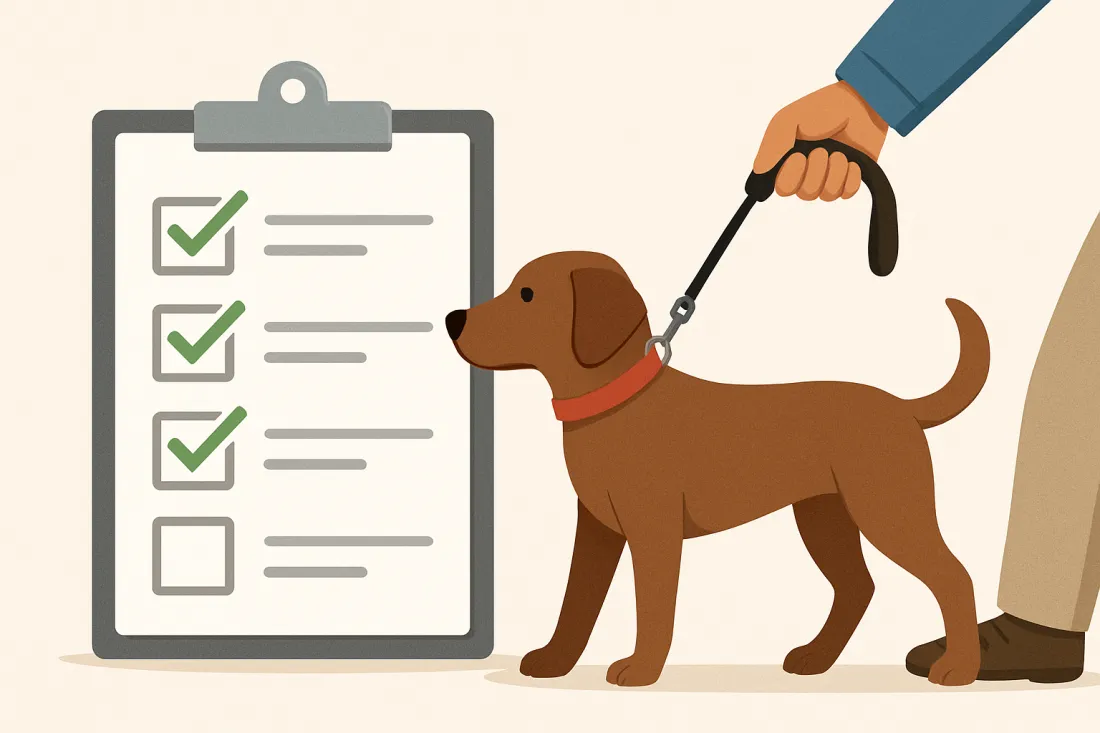
Checklist for safe dog walks: before, during, and after
Use this practical checklist to make each walk safer and more enjoyable.
Before the walk
- Check that your dog’s collar or harness fits and cannot slip off.
- Attach a current ID tag and any required license tag.
- Inspect the leash clip and stitching for wear or damage.
- Pack waste bags (take more than one) and optional treats.
- Consider the weather: hot pavement, ice, or extreme cold may require shorter walks or paw protection.
- Plan your route based on your dog’s energy level and any known triggers (busy streets, other dogs, etc.).
During the walk
- Keep your dog on a suitable leash for the environment (shorter in crowds, longer only where safe and allowed).
- Watch your dog’s body language for stress, fear, or over‑excitement.
- Give space to other dogs, people, and wildlife.
- Pick up waste promptly and dispose of it properly.
- Offer water breaks on longer walks or in warm weather.
- Use positive reinforcement (praise, treats) for calm walking and polite behavior.
After the walk
- Check your dog’s paws and coat for cuts, burrs, ticks, or ice buildup.
- Offer fresh water and a chance to rest.
- Note any behavior changes (limping, excessive panting, stiffness) and adjust future walks accordingly.
- Store the leash and harness where you can quickly inspect them next time.
What to do if your dog bites or is bitten
Bite incidents are stressful, but a calm, organized response helps protect everyone involved.
Immediate steps if your dog bites someone
- Secure your dog. Move them away from the person and other animals. Use your leash and a calm voice.
- Check for injuries. Ask the person if they are hurt and encourage them to seek medical attention if the skin is broken.
- Exchange information. Provide your name, contact details, and your dog’s vaccination status. Ask for the other person’s contact information as well.
- Contact your veterinarian. Confirm that your dog’s rabies vaccination is current and ask what records you may need.
- Follow local reporting requirements. Many areas require reporting dog bites to animal control or a similar authority. Check your local rules or ask your veterinarian or animal control office what to do.
- Consult a qualified trainer or behavior professional. Address the underlying cause of the bite before resuming normal public walks.
If your dog is bitten by another dog
- Separate the dogs safely. Avoid putting your hands near their mouths. Use leashes, loud noises, or barriers if possible.
- Assess injuries. Even small punctures can become serious; contact your veterinarian promptly.
- Exchange information with the other owner. Get their contact details and their dog’s vaccination status.
- Document the incident. Note the date, time, location, and what happened. Photos of injuries can be helpful for veterinary care and any required reports.
- Report if necessary. If the other dog was loose or the owner is uncooperative, contact local animal control.
- Monitor behavior afterward. Some dogs develop fear or reactivity after being attacked; consider professional help if you see changes.
Common mistakes in leash use and walking etiquette
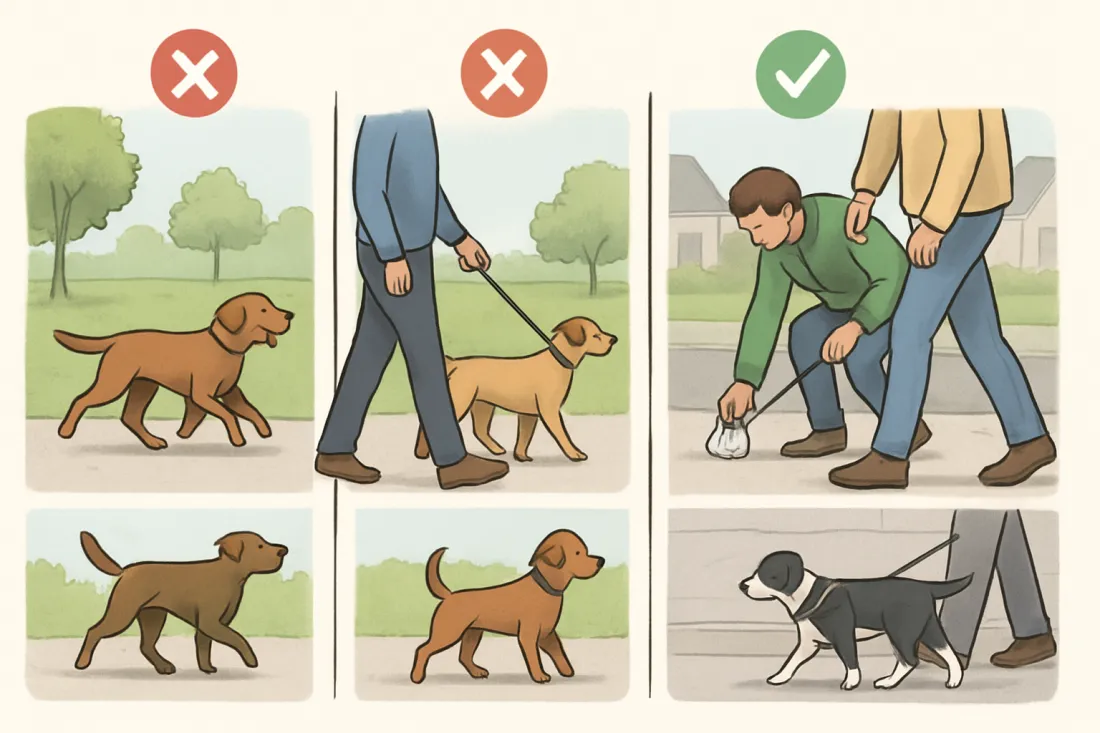
Avoid these frequent errors that lead to conflicts, injuries, or legal trouble.
- Assuming “friendly” means off‑leash is okay. Even a friendly dog can scare people, knock someone over, or trigger a fight with a reactive dog.
- Using a retractable leash in crowded areas. Long, thin cords can trip people, wrap around other dogs, or allow your dog to dart into traffic.
- Letting dogs greet every dog they see. Many dogs are uncomfortable with on‑leash greetings; it is fine to walk past without stopping.
- Ignoring body language. Stiffness, yawning, lip‑licking, or trying to move away are signs your dog may be stressed and needs more space.
- Not securing gates and doors at home. Many “at large” incidents start with a gate left open or a door not fully latched.
- Walking without ID tags. If your dog slips the leash, visible ID greatly improves the chance of a safe return.
Decision guide: when off‑leash might be appropriate
Use this comparison to decide whether off‑leash is a good idea in a given situation.
| Condition | Off‑leash is usually a bad idea | Off‑leash might be reasonable |
|---|---|---|
| Local rules | Signs or ordinances require leashes; area is not designated off‑leash | Clearly marked off‑leash park or area where dogs are allowed off‑leash |
| Dog’s recall | Dog ignores you when excited, chases animals, or will not come when called | Dog reliably returns to you even around distractions |
| Environment | Near roads, playgrounds, busy sidewalks, or wildlife‑sensitive areas | Fenced dog park or large open field away from traffic and crowds |
| Other people and dogs | Many people appear nervous, or there are leashed dogs that may be reactive | Most other dogs are also off‑leash and owners are actively supervising |
| Your control tools | No leash or backup plan if something goes wrong | Leash and treats ready, and you can quickly re‑leash if needed |
If any “bad idea” conditions apply, keep your dog leashed and focus on training and safer environments.
FAQ: leash laws, safety rules, and dog walking etiquette
Is it legal to walk a dog without a leash?
In many US cities and counties, walking a dog without a leash on public streets, sidewalks, or parks is not allowed unless you are in a designated off‑leash area. Some rural or less regulated areas may allow off‑leash walking if the dog is under reliable voice control, but this is not guaranteed. Always check your local ordinances and posted signs before walking off‑leash.
What is the 7‑7‑7 rule for dogs?
The “7‑7‑7 rule” is an informal guideline some trainers use when discussing puppy socialization or time alone, but it is not a legal standard or a universal rule. Because different dogs have different needs, it is better to work with your veterinarian or a qualified trainer on a plan tailored to your dog’s age, health, and temperament instead of relying on a single numeric rule.
What is the 5‑second rule for walking dogs?
The “5‑second rule” is a simple way to check if pavement is too hot for your dog’s paws. Place the back of your hand on the pavement and hold it there. If you cannot comfortably keep it there for about five seconds, the surface may be too hot for your dog to walk on safely. In that case, walk during cooler times of day, choose grassy routes, or use protective gear recommended by your veterinarian.
What words do dogs love to hear the most?
Many dogs respond especially well to upbeat, consistent words that predict good things, such as their name, “good dog,” “walk,” “treat,” or “play.” What matters most is your tone of voice and consistency. Pairing specific words with rewards (food, toys, or affection) helps your dog learn that those words signal something positive.
How long should my dog’s leash be?
For most neighborhood walks and city sidewalks, a leash around a moderate length gives you good control while allowing some freedom to sniff. Some local rules limit maximum leash length in public spaces, so check your ordinances and posted signs. Use longer leashes or long lines only in open areas where they are safe and allowed.
Can my dog be off‑leash if they are well trained?
Even a very well‑trained dog must follow local leash requirements. If your city or park rules say dogs must be leashed, training does not replace that rule. Use off‑leash privileges only in designated areas or where local rules clearly allow it and your dog has reliable recall.
Do I always have to let people or dogs greet mine?
No. You are allowed to say no to greetings if your dog is shy, reactive, in training, or simply not in the mood. A polite response such as “We’re training right now, so we’re going to keep walking” protects your dog and respects others.
Understanding your local leash laws and practicing thoughtful dog walking etiquette keeps your dog safer, protects your neighbors, and reduces the risk of conflicts or legal problems. With the right equipment, awareness, and habits, daily walks can be enjoyable for everyone who shares your sidewalks, parks, and trails.