
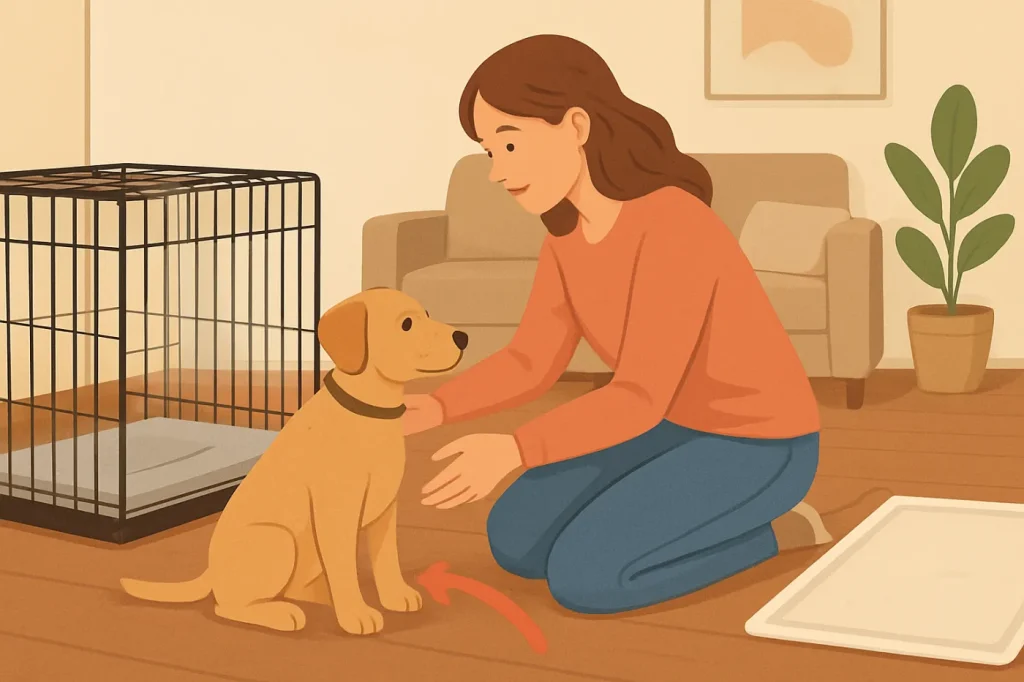
Bringing home a rescue dog is exciting, but the first 30 days can also feel overwhelming. You want to do everything right, build trust, and avoid behavior problems later.
This guide gives you a clear, practical routine for the first month: what to do on days 1–3, how to structure each week, how to set up crates and confinement, and how to handle house-training, manners, and socialization in a typical U.S. setting (apartments, suburbs, parks).
How the first 30 days with a rescue dog should look overall
For most rescue dogs, the first month works best if you follow three big phases that line up with the popular “3‑3‑3 rule”:
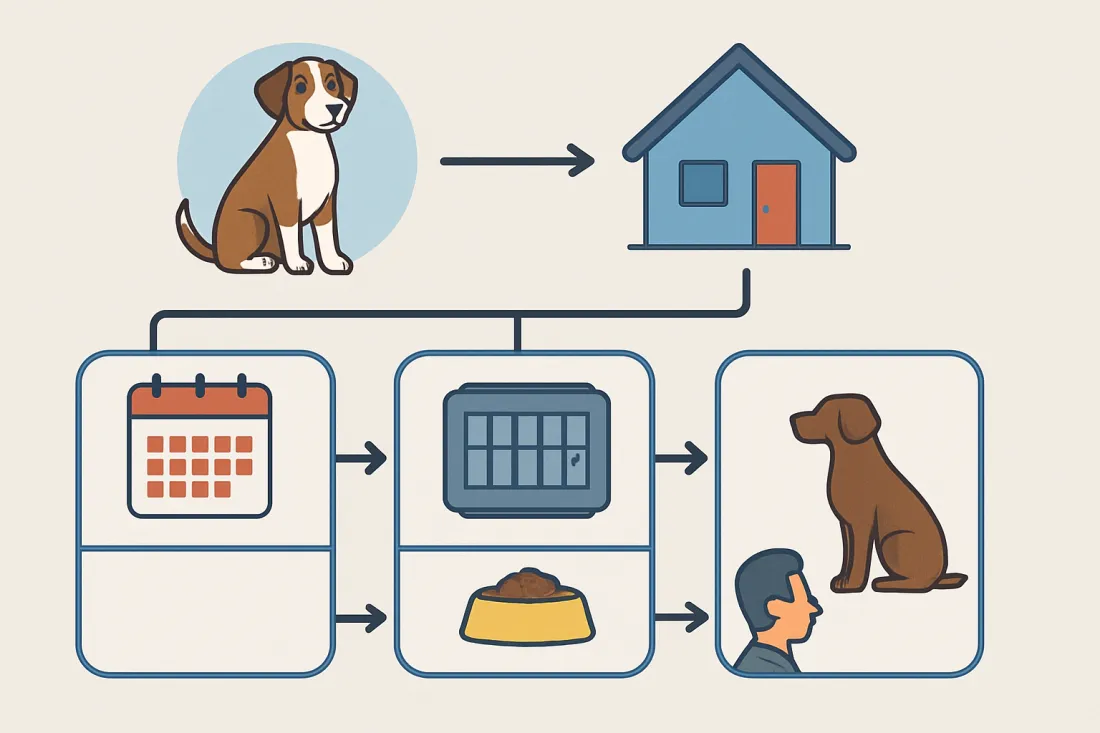
- First 3 days – Decompression: Keep life quiet and predictable. Focus on safety, rest, and basic needs. Very little social pressure.
- First 3 weeks – Learning your routine: Add structure: feeding times, potty schedule, short training sessions, and gentle exposure to normal life.
- First 3 months – Feeling at home: Deeper bonding, more training, and broader socialization. The dog starts to show their real personality.
This guide focuses on the first 30 days, which mostly covers the first two parts of that rule. Your main goals in this period are:
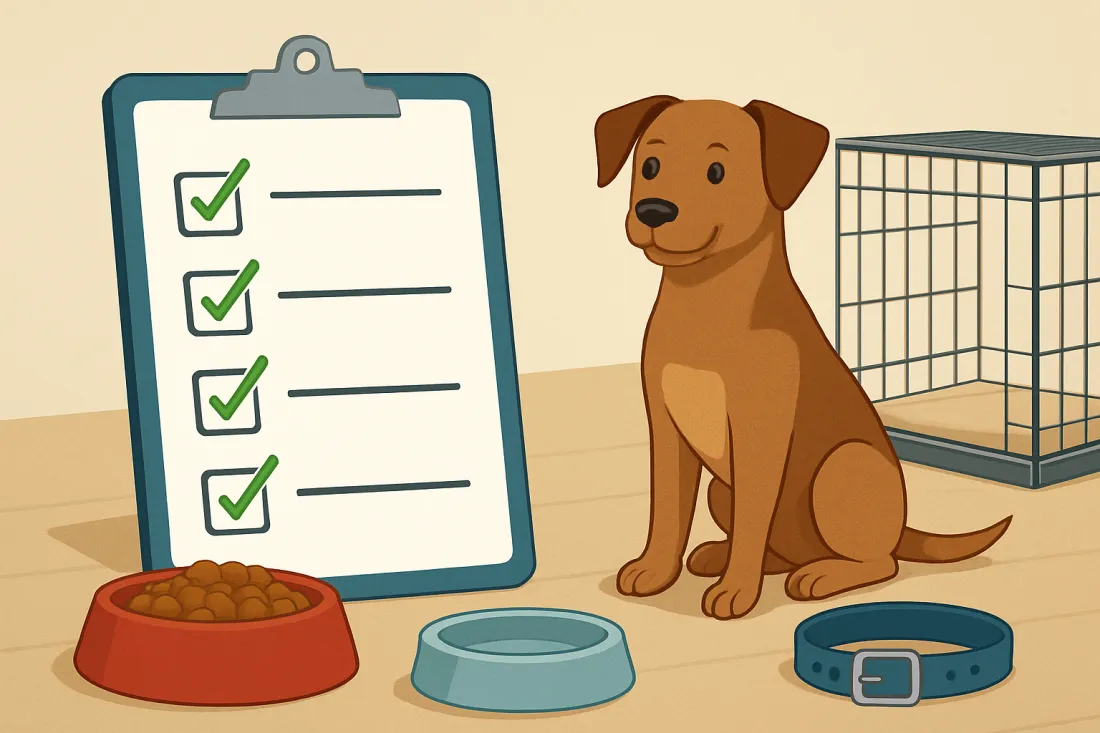
- Help your dog feel safe (predictable routine, quiet space, no pressure).
- Prevent problem behaviors (chewing, accidents, reactivity) with management and early training.
- Build trust and communication (kind handling, rewards, calm consistency).
If you want a deeper training plan after you get through the first week or two, you can layer this routine with basic obedience training for rescue dogs.
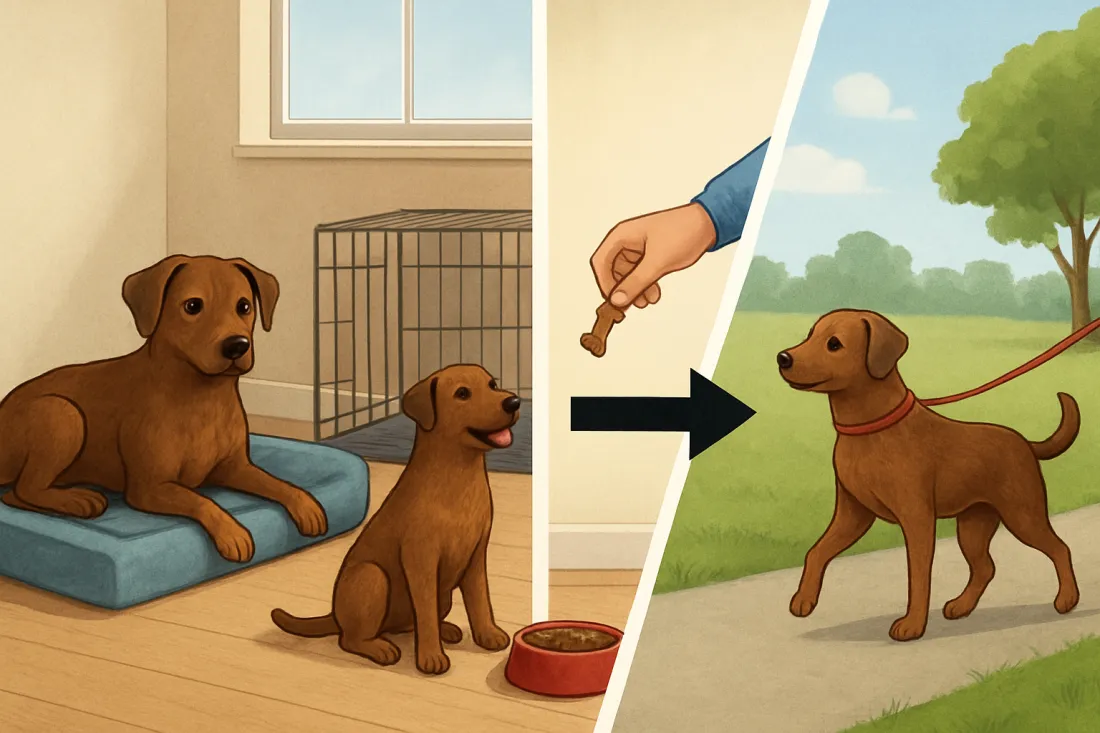
Days 1–3 decompression plan: what to do and what to avoid
The first 72 hours are about decompression—letting your dog’s stress levels drop after the shelter or rescue environment. Many behavior problems later start because the dog was flooded with new experiences too quickly in this window.
Day 1: Arrival day routine
Before you bring the dog home:
- Set up a quiet “safe zone” (crate or pen) in a low-traffic room.
- Have one collar or harness fitted and a secure leash ready for transport.
- Decide who in the household will handle feeding, walks, and potty breaks for the first few days.
When you arrive home:
- Take the dog straight to the potty area before going inside. Stay calm and quiet. If they go, reward with a small treat.
- Bring them inside on leash and walk them through only the areas they’ll use at first (not the whole house).
- Guide them to their crate or pen, leave the door open, and let them sniff around. Toss a few treats inside so they associate it with good things.
- Keep visitors away. No welcome party, no kids’ friends, no neighbors “just stopping by.”
Day 1 schedule example (adjust times to your life):
- Morning/arrival: Potty, short sniff walk, water, quiet time in safe zone.
- Midday: Potty break, small meal, 5–10 minutes of gentle interaction (petting if the dog wants it), then rest.
- Afternoon: Potty, short walk around your immediate block or yard, back to rest.
- Evening: Potty, dinner, quiet time near you (on leash or in pen), last potty, then sleep.
Days 2–3: Quiet routine and observation
Keep things boring on purpose. Your dog is still figuring out where they are and whether it is safe.
- Stick to a simple rotation: potty → short walk → quiet time → meal → quiet time.
- Limit handling to what is necessary (leash on/off, feeding, gentle petting if the dog seeks it).
- Keep noise low: no loud TV, parties, or long car trips unless absolutely necessary.
- Watch for stress signals: panting when not hot, pacing, yawning, lip licking, hiding, refusing food. If you see these, scale back stimulation.
- Start a behavior notebook: note what scares them, what they enjoy, and any early signs of resource guarding or reactivity.
Avoid during days 1–3:
- Dog parks or pet stores.
- Busy family gatherings.
- Off-leash time in unfenced areas.
- Long training sessions or strict obedience expectations.
Week-by-week routine for the first 30 days
The following is a practical week-by-week structure. Adjust for your dog’s age, energy level, and health. If your vet or rescue gave specific instructions, follow those first.
| Timeframe | Main goals | Daily focus | What to avoid |
|---|---|---|---|
| Days 1–3 | Decompression, safety | Quiet routine, short walks, basic potty pattern, bonding through calm presence | Visitors, dog parks, long outings, overwhelming training |
| Days 4–7 | Establish routine | Set fixed times for meals, potty, walks; introduce 3–5 minute training; gentle house rules | Changing schedule daily, rough play, crowded places |
| Week 2 | Basic manners & house-training | Consistent potty schedule, simple cues (name, sit, come), crate comfort, short car rides | Off-leash freedom, high-pressure socialization, punishment for accidents |
| Week 3 | Confidence & social skills | Controlled introductions to people/dogs, slightly longer walks, handling practice (paws, collar) | Dog parks, forcing greetings, ignoring early reactivity |
| Week 4 | Settling into home life | Longer training sessions, more independence at home, gradual exposure to normal noise & errands | Dropping structure too soon, assuming they are “done” adjusting |
Days 4–7: Lock in the basic routine
By day 4, your dog is starting to understand that this new place might be permanent. This is when many dogs begin to test boundaries or show more of their true personality.
Key tasks for days 4–7:
- Set fixed times for meals (usually 2–3 times per day).
- Take regular potty breaks (often every 2–4 hours for adults, more for puppies).
- Introduce very short training sessions (3–5 minutes, 2–3 times per day).
- Start crate or pen training if you have not already (details in the next section).
- Begin gentle alone-time practice so they do not panic when you leave.
Sample day 4–7 schedule (adult dog, adjust as needed):
- 7:00 – Potty + 10–15 minute walk.
- 7:30 – Breakfast in crate or pen.
- 8:00 – Quiet time while you get ready for the day.
- 10:00 – Potty break + 3–5 minutes of training (name, sit, hand target).
- 12:30 – Potty + short walk.
- 1:00 – Rest in crate/pen with chew toy.
- 4:00 – Potty + short play or sniff walk.
- 6:00 – Dinner.
- 7:00 – Light training + calm time with family.
- 9:30 – Final potty, then bed.
Week 2: Strengthen house-training and manners
By week 2, your dog should recognize the basic rhythm of your home. This is the time to get serious about house-training and basic manners so bad habits do not set in.
Focus areas for week 2:
- Potty schedule: Take them out after waking, after meals, after play, and before bed. Praise and reward outside.
- Basic cues: Name, sit, come, and “leave it” are a good starting set.
- Leash skills: Short, calm walks; reward for walking near you with a loose leash.
- Handling: Brief, gentle touches of paws, ears, tail, and collar, paired with treats.
At this stage, many owners benefit from a structured training plan like a 30‑day program. If you need help building one, see the guide on basic obedience training for rescue dogs.
Week 3: Build confidence and social skills
Once your dog is more settled, you can gently expand their world.
- Introduce new people one or two at a time, in your home or a quiet outdoor space.
- Let your dog approach at their own pace; no forced petting or hugging.
- Arrange calm dog-to-dog greetings with stable, vaccinated dogs you know.
- Practice short car rides to neutral places (quiet park, drive-through, etc.).
- Continue daily training and mental enrichment (puzzle toys, sniff walks).
Week 4: Settle into your long-term lifestyle
By week 4, your dog may seem “at home,” but they are still learning. This is when some dogs start to show guarding, reactivity, or separation issues. Keep structure in place while slowly giving more freedom.
- Increase training difficulty (longer stays, more distractions).
- Gradually expand access to more rooms if they are reliable with potty and chewing.
- Keep a consistent daily routine for walks, meals, and rest.
- Monitor for emerging behavior issues (growling over food, barking at strangers, etc.) and seek professional help early if needed.
Crate and confinement setup guide for rescue dogs
A good crate or confinement area is not a punishment; it is a bedroom and safe zone. Used correctly, it helps with house-training, prevents destructive behavior, and gives your dog a place to decompress.
Choosing and placing the crate or pen
- Size: Your dog should be able to stand up, turn around, and lie down comfortably. Too big and they may potty in one corner; too small and it is uncomfortable.
- Location: Place it in a quiet but not isolated area—often the living room or bedroom corner. Avoid direct sun, drafts, or right next to loud appliances.
- Bedding: Use washable bedding. For dogs with accidents, start with towels or a thin mat you can easily clean.
- Safety: Remove collars with tags if there is a risk of them getting caught in the crate bars.
Introducing the crate or pen positively
- Make it inviting: Leave the door open. Toss treats inside, feed meals near or inside, and place a chew toy there.
- Short sessions: Close the door for a few seconds while you sit nearby, then open it before the dog fusses. Gradually increase time.
- Pair with good things: Give long-lasting chews or food puzzles only in the crate or pen.
- Never use it as punishment: Do not send your dog there for “time out” after misbehavior.
Confinement rules for the first 30 days
- Use the crate or pen for sleeping at night and short daytime rests.
- For adult dogs, aim to let them out for a potty break at least every 3–4 hours during the day; puppies need more frequent breaks.
- If your dog panics in the crate (not just mild whining), consider a larger pen or gated room and consult a trainer if it does not improve.
- Always give a potty break before and after crate time.
House-training and basic manners schedule for the first month
Even if your rescue dog was “house-trained” before, a new home means new rules. Assume they need a fresh start and set them up to succeed.
House-training schedule and rules
General potty timing (adjust for your dog):
- First thing in the morning.
- After each meal.
- After play or excitement.
- After naps.
- Before bed.
- Every few hours in between, especially in the first weeks.
House-training steps:
- Pick one potty spot (yard area or a consistent route outside your apartment).
- Go on leash to that spot, say a simple cue like “go potty,” and wait quietly.
- When they go, praise calmly and give a treat within a couple of seconds.
- After success, allow a short sniff walk as a bonus reward.
- If they do not go in 5–10 minutes, go back inside, supervise closely, and try again soon.
If accidents happen:
- Interrupt gently if you catch them in the act (clap once, say “outside”), then take them to the potty spot.
- Clean thoroughly with an enzymatic cleaner to remove odor.
- Do not punish after the fact; it only teaches fear, not where to go.
- Review your schedule—accidents usually mean the dog was left too long or not supervised.
Basic manners to teach in the first 30 days
Short, fun sessions work best. Aim for 2–3 mini-sessions per day, 3–5 minutes each.
- Name recognition: Say their name once, then reward when they look at you.
- Sit: Lure with a treat over their head; when their bottom hits the floor, say “sit” and reward.
- Come: Start indoors on a long leash. Say “come,” move backward, and reward generously when they reach you.
- Leave it: Hold a treat in a closed fist. When they stop trying to get it and look away, mark and reward with a different treat.
- Polite greetings: If they jump, step back and ignore; reward when all four paws are on the floor.
For working owners, combining this with a consistent daily care plan can help. You can pair this 30‑day routine with a structured daily dog care routine for working owners if your schedule is tight.
Socialization do’s and don’ts in U.S. parks and apartments
Many rescue dogs are under-socialized or have had stressful experiences. Socialization in the first month should be slow, controlled, and positive, especially in typical U.S. environments like apartment buildings and public parks.
Apartment and neighborhood etiquette
Do:
- Use leashes in all common areas (hallways, elevators, lobbies) as required by most building rules.
- Teach a simple “sit” or “watch me” cue for passing neighbors in tight spaces.
- Plan potty trips during quieter times of day at first to avoid overwhelming your dog.
- Inform close neighbors that you have a new dog and are working on training; this can help with patience if there is some initial barking.
Don’t:
- Let your dog rush up to people in hallways or elevators.
- Allow off-leash time in unfenced or shared areas where it is not allowed.
- Ignore noise complaints; instead, track when barking happens and adjust your routine or seek training help.
Dog parks and public spaces
Dog parks can be overwhelming for many new rescue dogs, especially in the first month.
Generally safer approach for the first 30 days:
- Skip off-leash dog parks at least until you know your dog’s play style, recall, and comfort level around other dogs.
- Choose quiet parks or trails where you can keep distance from other dogs and people.
- Let your dog observe from afar at first—watching other dogs play from a distance while you feed treats.
- Arrange one-on-one playdates with calm, friendly dogs in fenced yards if possible.
Red flags during socialization (scale back and seek guidance if you see these repeatedly):
- Freezing or refusing to move when approached.
- Growling, snapping, or lunging at people or dogs.
- Shutting down (no interest in treats, tail tucked, trying to hide).
Common mistakes new adopters make in the first 30 days
Avoiding a few common pitfalls can prevent many behavior problems later.
Typical mistakes and better alternatives
| Mistake | Why it is a problem | Better approach |
|---|---|---|
| Doing too much in the first week (visitors, trips, dog parks) | Overwhelms a stressed dog and can trigger fear or reactivity | Keep the first week quiet; introduce new people and places slowly |
| Giving full house freedom immediately | Increases accidents, chewing, and counter-surfing | Use crates, pens, and baby gates; expand access gradually |
| Inconsistent rules between family members | Confuses the dog and slows training | Agree on clear rules (sofa, bed, feeding, walks) before the dog arrives |
| Punishing accidents or fear reactions | Damages trust and can worsen anxiety or aggression | Manage environment, reward desired behavior, and seek professional help if needed |
| Skipping early vet and trainer support | Health or behavior issues can grow more serious over time | Schedule a vet check within the first week and contact a trainer early if you see red flags |
30‑day checklist and progress tracker
Use this checklist as a practical tracker for your first month. You can copy it into a notebook or app and check items off as you go.
Week 1 checklist (days 1–7)
- Safe zone (crate or pen) set up before arrival.
- First potty trip done before entering the house.
- Food, water, and bedding placed in consistent spots.
- Basic daily schedule drafted (meals, walks, potty times).
- Visitors limited; household kept calm and quiet.
- Dog has a collar with ID tag and microchip information checked/updated if available.
- Vet appointment scheduled within the first week or two.
- Behavior notebook started (likes, fears, triggers).
Week 2 checklist (days 8–14)
- Potty schedule mostly predictable (fewer accidents indoors).
- Dog eats meals reliably and shows interest in treats.
- Short training sessions started (name, sit, come).
- Crate or pen used comfortably for short periods.
- First calm car ride completed (if medically safe).
- Gentle handling practice started (paws, ears, collar).
Week 3 checklist (days 15–21)
- Dog can settle in crate/pen for longer stretches (for example, while you work nearby).
- Basic cues improving even with mild distractions.
- At least one positive, controlled meeting with a new person.
- At least one calm, on-leash interaction with a known, friendly dog.
- Barking, chewing, or other issues tracked with notes on when they happen.
Week 4 checklist (days 22–30)
- Daily routine feels predictable for both you and the dog.
- House-training mostly reliable; accidents are rare and have clear triggers.
- Dog responds to name, sit, and come in most indoor situations.
- You have a plan for ongoing training and enrichment beyond 30 days.
- Any concerning behavior (guarding, reactivity, separation distress) has been noted and you have contacted or researched a qualified trainer or behavior professional if needed.
Decision criteria: when to push forward and when to slow down
Every rescue dog is different. Use these criteria to decide whether to move to the next step in your routine or give your dog more time.
Signs your dog is ready for more:
- Eating and drinking normally.
- Sleeping and resting without constant pacing.
- Showing curiosity (sniffing, exploring) rather than constant fear.
- Accepting treats and engaging in short training sessions.
Signs you should slow down:
- Frequent hiding, shaking, or refusal to leave the crate or bed.
- Loss of appetite not explained by vet-checked health issues.
- Escalating growling, snapping, or lunging.
- Destructive behavior that worsens when left alone.
If you see worrying signs, pause new challenges, go back to a simpler routine, and consult your vet or a qualified trainer.
FAQ about the first 30 days with a rescue dog
What is the 3‑3‑3 rule when adopting a dog?
The 3‑3‑3 rule is a simple way to remember common adjustment stages for many rescue dogs: about 3 days to decompress, 3 weeks to learn your routine, and around 3 months to feel truly at home and show their full personality. It is a guideline, not a strict timeline—some dogs need more or less time.
What is the 3‑3‑3 rule for rescue dogs’ adjustment period?
For rescue dogs, the 3‑3‑3 rule highlights that the first 3 days should be quiet and low-pressure, the first 3 weeks should focus on building a consistent routine and basic training, and the first 3 months are about deepening trust, socialization, and long-term behavior habits.
What is the 7‑7‑7 rule for rescue dogs?
Some people use a “7‑7‑7” idea to describe longer adjustment milestones, such as noticing changes after about 7 days, 7 weeks, and 7 months. Like the 3‑3‑3 rule, it is a rough way to think about how behavior can evolve over time, not a guarantee. The exact pace depends on the individual dog, their history, and how consistent and supportive the new home is.
What is the 7‑7‑7 rule for dogs in general?
When people mention a 7‑7‑7 rule for dogs, they are usually talking about the same idea applied more broadly: that you may see noticeable changes in your dog’s comfort and behavior around the one-week, seven-week, and seven-month marks. It is a reminder to stay patient and keep up training and structure well beyond the first few days.
How much training should I do in the first week?
In the first week, keep training very short and light: a few minutes at a time, a couple of times per day. Focus on name recognition, simple cues like sit, and rewarding calm behavior. The priority is helping your dog feel safe, not perfect obedience.
When can I leave my new rescue dog home alone?
Start with very short absences in the first week—just a few minutes while you step outside or into another room—and gradually build up. Many dogs need several weeks to feel comfortable alone. If your dog shows intense distress (howling, destruction, attempts to escape), slow down and consider professional help.
Should my rescue dog sleep in my bedroom?
Many dogs settle better if they can sleep in the same room as their person, especially at first. A crate or bed in your bedroom can provide comfort while still giving boundaries. If you prefer the dog to sleep elsewhere long-term, you can gradually move their bed once they are more settled.