
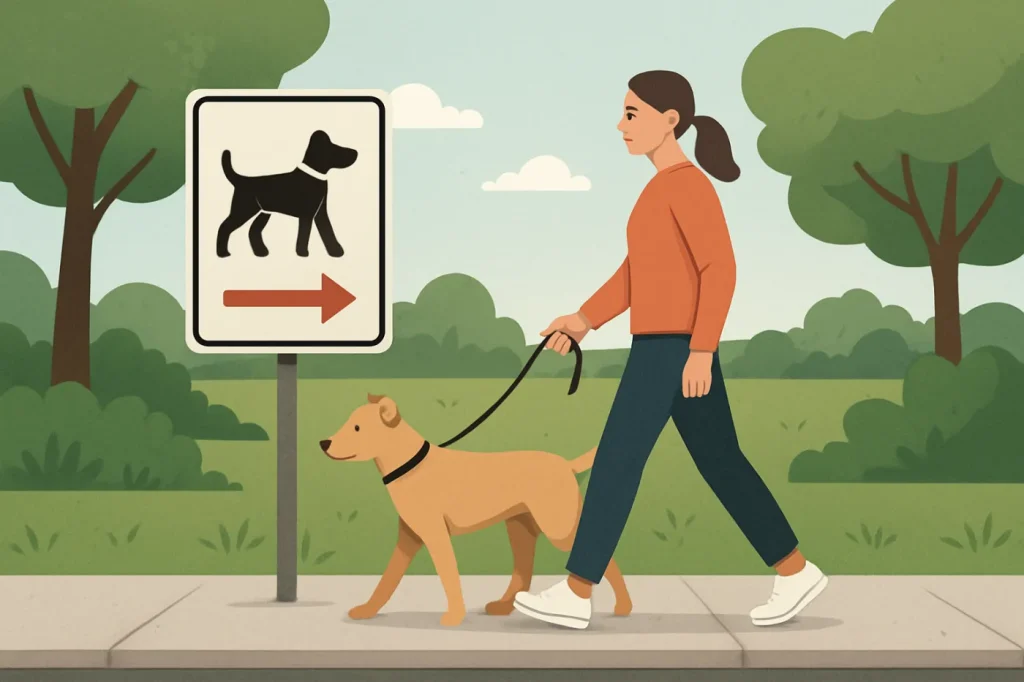
Most places in the United States expect dogs to be leashed in public, except in clearly marked off-leash areas. That means: if you are on a sidewalk, in a park, or on a trail and you do not see a sign saying dogs may be off leash, you should assume a leash is required and keep your dog under control.
Leash laws are set locally, but the basic idea is the same almost everywhere: protect people, other dogs, wildlife, and your own pet. Responsible dog walking is about more than avoiding a ticket. It is about planning your walk, choosing the right gear, reading your dog and your surroundings, and respecting other people’s space.
Why US leash laws matter for everyday dog walks
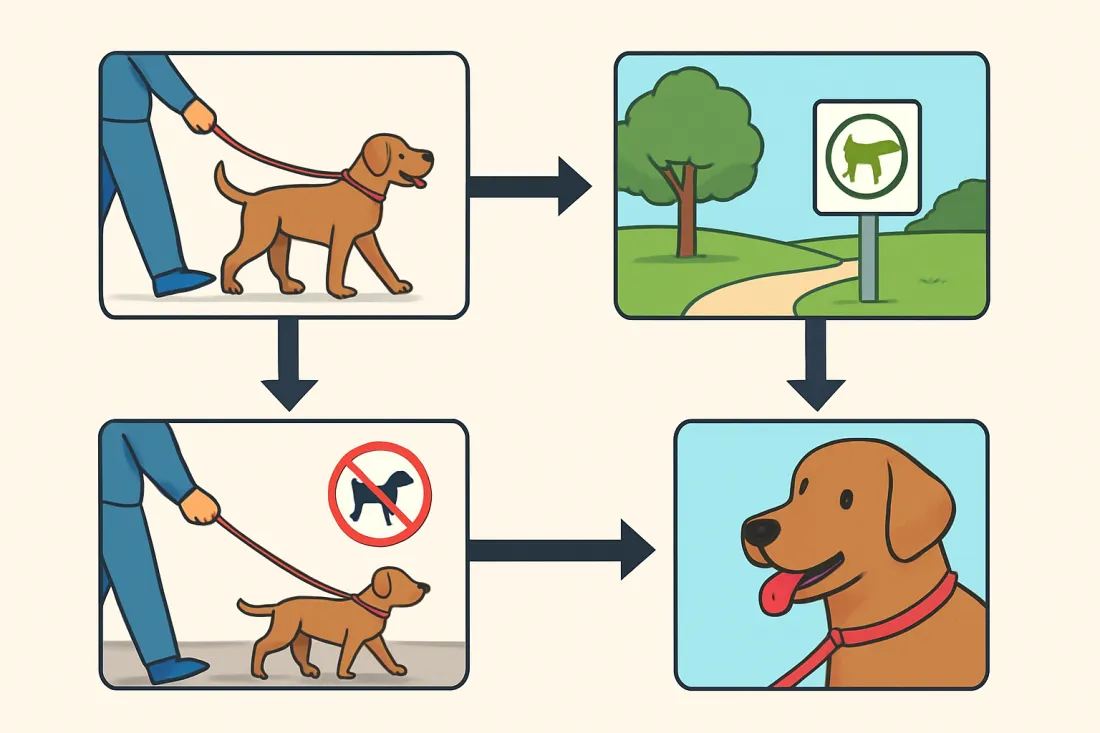
Leash rules can feel annoying until you look at what they actually prevent. When a dog is leashed and under control, you dramatically reduce the risk of:
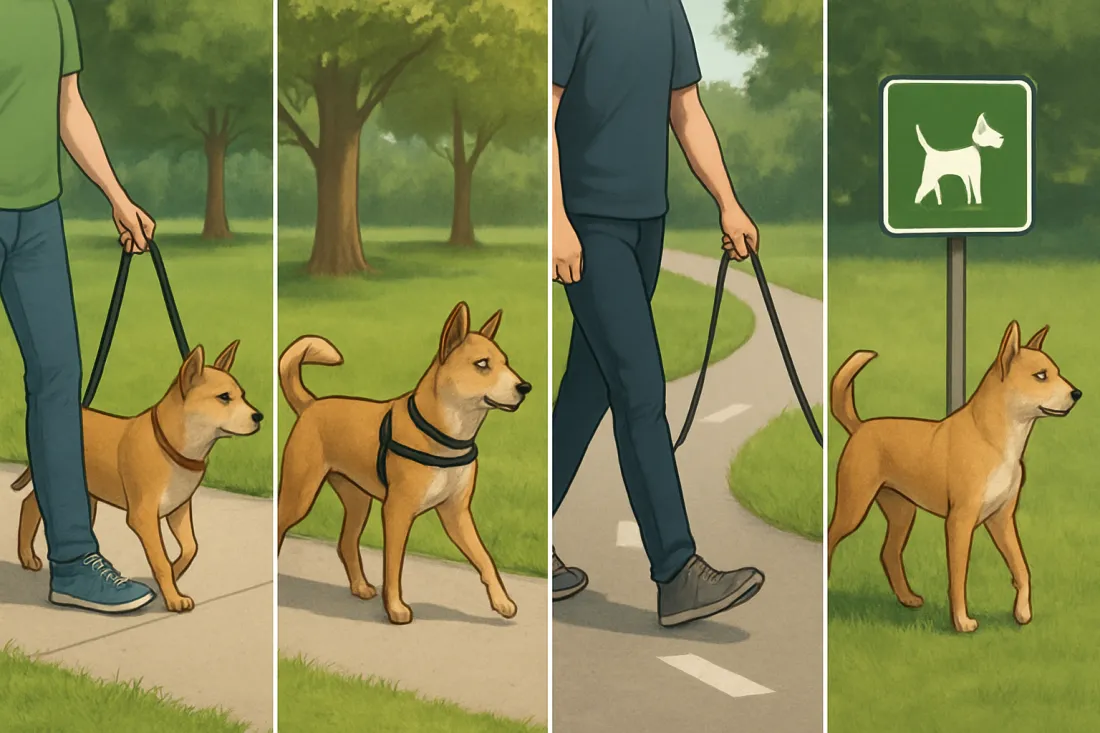
- Traffic accidents – A loose dog can dart into a road in seconds. A basic 4–6 foot leash gives you a physical brake.
- Dog fights and bites – Even friendly dogs can react badly when surprised. A leash lets you create distance quickly.
- Scaring or injuring people – Many people, including children and older adults, are afraid of dogs or unsteady on their feet. A jumping dog can knock someone down.
- Wildlife and habitat damage – On trails and beaches, unleashed dogs can chase birds, disturb nests, or trample fragile plants.
- Legal and financial trouble – If your dog injures someone or another pet while off leash where a leash is required, you may face fines and liability for medical or vet bills.
Even where the law allows off-leash dogs, responsible owners still treat the leash as a safety tool. If your dog is nervous, reactive, or still in training, keeping them leashed is often the kinder choice for them and everyone around you.
How US leash laws vary by state, city, and situation
There is no single nationwide leash law in the United States. Instead, rules are set at several levels:
- State level – Some states set broad expectations, such as requiring dogs to be under control or allowing local governments to pass stricter rules.
- County and city level – Many cities and counties have specific ordinances that say when and where dogs must be leashed, and what “under control” means.
- Property or land manager level – Parks, trail systems, beaches, and housing communities often have their own posted rules.
Because of this layering, two parks only a few miles apart can have very different dog rules. You cannot safely assume that what is allowed in one town or trail system is allowed in another.
Typical local leash law patterns you may see
While the exact wording varies, many US communities follow similar patterns:
- Sidewalks and streets – Dogs must be on a physical leash and under the handler’s control in all public rights-of-way.
- City parks and playgrounds – Leashes are usually required everywhere except in designated off-leash dog areas.
- Nature preserves and trails – Many require leashes to protect wildlife and other visitors; some allow off-leash only on specific trails or at certain times.
- Beaches – Rules can change by season and time of day; some beaches ban dogs entirely during busy hours and allow leashed dogs early or late.
- Private property – Owners may allow dogs off leash on their own land, but they are still responsible if the dog leaves the property or harms someone.
Because rules differ so much, a practical habit is to check the website or posted signs for any park, trail, or beach before you go. For a deeper overview of how these expectations fit into broader pet rules, it can help to read about US leash laws and dog owner responsibilities as a starting point.
Comparing common public spaces: where leashes are usually required
The table below summarizes typical expectations in many US communities. Always confirm local rules, but use this as a quick decision guide when you are unsure.
| Public space type | Typical leash expectation | What to check locally | Risks if you guess wrong |
|---|---|---|---|
| Residential sidewalks and streets | Leash almost always required; dog must stay close to handler. | City or county animal control rules; HOA or building policies. | Fines, complaints from neighbors, dog running into traffic. |
| Neighborhood parks | Leash usually required except in marked dog runs. | Park signs at entrances; city parks department website. | Tickets, conflicts with families using playgrounds or sports fields. |
| Playgrounds and school grounds | Often no dogs allowed, or leashed dogs only on paths. | Signs on fences; school district or city rules. | Being asked to leave, complaints about safety around children. |
| Hiking trails and nature preserves | Many require leashes; some have specific off-leash trails. | Trailhead kiosks, maps, and online trail descriptions. | Disturbing wildlife, conflicts with hikers, possible fines. |
| Beaches | Rules vary widely; some allow leashed dogs at limited times. | Beach access signs; local parks or coastal authority info. | Tickets, being ordered off the beach, dog ingesting unsafe items. |
| Dog parks and fenced off-leash areas | Off leash usually allowed inside the fence; leash required entering and leaving. | Posted dog park rules; city parks department guidance. | Fights if dogs are unleashed too early; gate crowding and scuffles. |
| Apartment complexes and HOAs | Leash almost always required in all shared areas. | Lease agreement; community handbook or posted notices. | Warnings, fines, or lease violations from management. |
Common rules for sidewalks, parks, and trails
Even when the law is not spelled out in detail, there are widely accepted rules that make walking safer and more pleasant for everyone.
Sidewalk and neighborhood walking etiquette
- Use a short, non-retractable leash – A 4–6 foot fixed-length leash keeps your dog close and predictable around driveways, bikes, and strollers.
- Keep your dog on the inside – When possible, walk with your dog on the side away from traffic to reduce the chance of lunging into the street.
- Shorten the leash when passing others – Bring your dog to your side and keep them close when passing people, other dogs, or narrow spaces.
- Do not allow unwanted greetings – Ask, “Is it okay if they say hi?” before letting your dog approach. Many dogs and people do not enjoy surprise contact.
- Pick up waste promptly – Always carry bags and dispose of them in a trash can, not in someone’s yard or left on the curb.
City parks and open grass areas
- Respect no-dog and on-leash zones – Sports fields, playgrounds, and picnic areas often have stricter rules than open lawns.
- Stay off sports fields unless clearly allowed – Cleats, kids, and dog holes do not mix well; many parks ban dogs on playing surfaces.
- Use long lines only where space allows – If you use a 15–30 foot long line for training, choose a quiet corner and stay alert so the line does not trip someone.
- Watch for wildlife and small children – Squirrels, ducks, and running toddlers can trigger chasing or herding instincts.
Trails, nature preserves, and shared-use paths
- Yield to others – Step to the side with your dog at your heel to let runners, cyclists, or horses pass safely.
- Keep dogs out of sensitive areas – Stay on marked trails; do not let your dog roam into ponds, dunes, or restoration zones.
- Use extra caution around horses – Move off the trail, keep your dog close, and speak calmly so the horse sees and hears you.
- Control barking – Occasional excitement is normal, but continuous barking disturbs wildlife and other visitors. If your dog is overwhelmed, take a break or head home.
Off-leash areas and dog parks: rules and etiquette that really matter
Designated off-leash areas and dog parks can be great outlets for exercise, but they are also where many conflicts happen. Laws often allow dogs off leash only in these specific spaces, and only when the dog is under voice control.
Typical rules you will see posted
- Dogs must be licensed, vaccinated, and wearing ID.
- No aggressive dogs or dogs that have previously attacked people or pets.
- Handlers must be present and attentive – no leaving dogs unattended.
- Limit on number of dogs per person – often 2 or 3, to ensure control.
- Children under a certain age discouraged or restricted for safety.
- Pick up after your dog and dispose of waste properly.
Practical dog park etiquette
- Observe before entering – Watch the dogs already inside. If you see bullying, rough play that is not mutual, or owners staring at phones, consider skipping it.
- Leash on, then off, at the right time – Keep your dog leashed in the parking lot and entry area. Once inside the double gate, remove the leash quickly so your dog is not trapped and tense.
- Match size and play style – Use small-dog and large-dog sections if available. A gentle large dog can still accidentally injure a tiny one.
- Interrupt and redirect rough play – If play is one-sided, escalating, or making a dog uncomfortable, call your dog away for a break.
- Leave if your dog is stressed or over-aroused – Signs include tail tucked, hiding, constant mounting, or ignoring your calls.
Gear checklist for safe, responsible dog walks
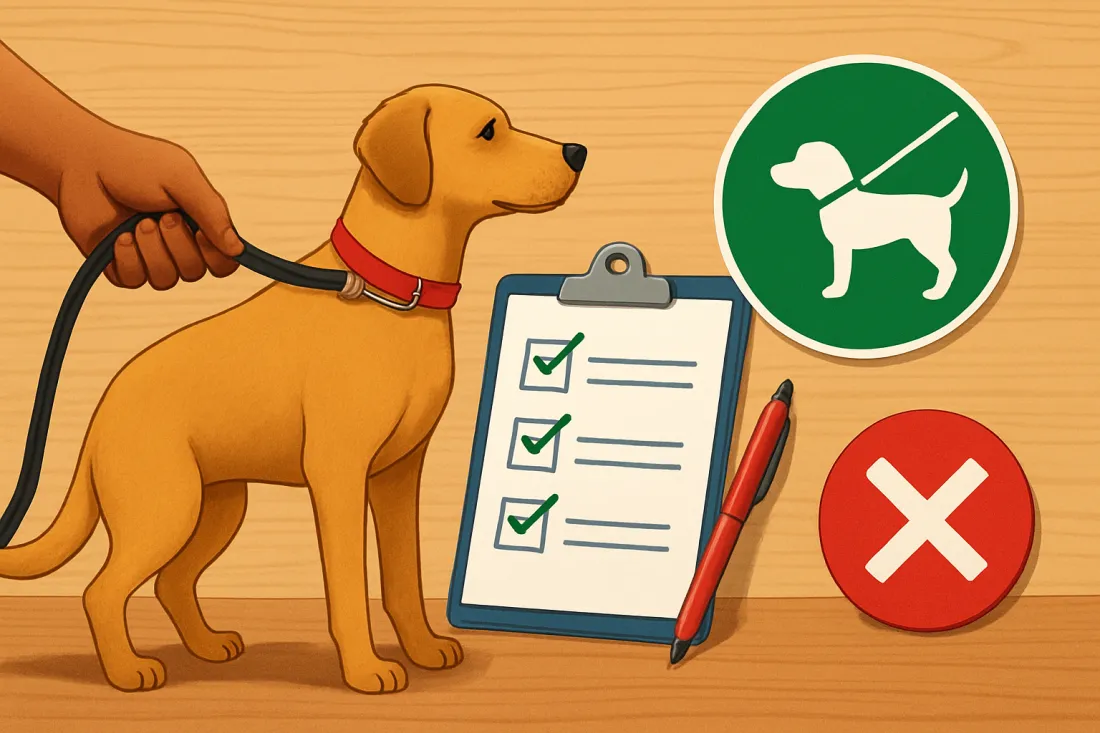
The right gear makes it easier to follow leash laws and keep your dog safe. Use this checklist to prepare before heading out.
Essential walking gear
- Standard leash (4–6 feet) – A sturdy, non-retractable leash gives you reliable control in most public spaces.
- Well-fitted collar or harness – You should be able to fit two fingers under it, but your dog should not be able to slip out when backing up.
- ID tags – Include your phone number and, if possible, your city or neighborhood.
- Waste bags – Carry more than you think you need; stash extras in your car, coat, or leash handle.
Helpful extras for safety and comfort
- Front-clip harness or head halter – Useful for strong pullers, giving you more control without harsh corrections.
- Reflective gear and lights – Reflective collars, leashes, and clip-on LED lights help drivers and cyclists see you in low light.
- Water and collapsible bowl – Especially important for longer walks, hot days, or hikes.
- Treat pouch – Makes it easy to reward calm behavior, loose-leash walking, and ignoring distractions.
- Long line (15–30 feet) – For training recalls in open areas where long leashes are allowed.
- Weather protection – A dog coat for short-haired breeds in cold weather, or paw balm/booties if surfaces are very hot or icy.
Quick pre-walk safety checklist
Use this short checklist before each walk to avoid many common problems:
- 1. Gear check
- Collar or harness fits snugly and is not damaged.
- Leash clip is secure and the leash is not frayed.
- ID tag is attached and readable.
- 2. Environment check
- Weather is safe for your dog’s breed and health (heat, cold, ice).
- You know where you are going and what the dog rules are likely to be.
- You have a plan for shade and water on longer walks.
- 3. Dog check
- Your dog is not limping, coughing, or showing signs of illness.
- You have considered your dog’s energy level and chosen a suitable route.
- You have treats or rewards if your dog is still in training.
- 4. Supplies check
- Enough waste bags for the full walk.
- Phone, keys, and any needed medications (for you or your dog).
- Reflective gear or lights if it may get dark.
How to handle encounters with other dogs and people
Many leash law problems start with simple misunderstandings during encounters. A few habits can prevent most tense moments.
Passing other people
- Shorten the leash and move aside – Bring your dog to your side, ask for a sit or heel, and give the other person space.
- Do not assume everyone likes dogs – Some people may be afraid, allergic, or simply not interested. Respect their space even if your dog is friendly.
- Control jumping and sniffing – Reward your dog for keeping four paws on the ground and ignoring people unless invited.
Meeting other dogs on leash
- Ask before approaching – “Is your dog friendly?” or “Do you want them to say hi?” gives the other owner a chance to decline.
- Avoid tight, face-to-face greetings – Parallel walking (side by side with some distance) is often calmer than nose-to-nose meetings.
- Watch body language – Stiff posture, hard staring, or a high, tight tail can signal tension. If you see these, calmly move away.
- Keep leashes loose during brief greetings – Tight leashes can increase tension. If you are not comfortable keeping it loose, skip the greeting.
Dealing with off-leash dogs approaching you
- Stay calm and shorten your leash – Bring your dog close to your side.
- Use your voice and body – In a firm, low voice, say “No” or “Go home” to the approaching dog while stepping between the dogs if safe.
- Avoid yelling at your own dog – That can increase their stress. Focus on creating space.
- If needed, change direction – Cross the street, turn around, or move behind a barrier like a car or fence.
When your dog is nervous, reactive, or in training
- Use visual signals – A brightly colored leash wrap or vest with wording like “In training” or “Needs space” can help others understand.
- Choose quieter routes and times – Early mornings or less busy streets reduce stressful encounters.
- Reward calm behavior heavily – Treats for looking at triggers and then back at you can build better habits.
- Consider professional help – A qualified trainer can help you build skills for safe, enjoyable walks.
Legal and financial consequences of ignoring leash rules
Ignoring leash laws is not just a social issue; it can have real legal and financial impacts.
Possible consequences if your dog is off leash where it should not be
- Warnings and fines – Animal control officers or park rangers may issue warnings or monetary penalties for leash violations.
- Increased liability in an incident – If your off-leash dog injures a person, another dog, or damages property, you may be held responsible for medical or veterinary bills and other costs.
- Restrictions on your dog – In serious cases, authorities may impose conditions on your dog’s behavior in public, such as requiring muzzles or stricter confinement.
- Insurance complications – Some homeowners or renters insurance policies consider prior incidents when handling future claims.
Because rules and penalties vary, a sensible step is to check your city or county animal control website or contact local authorities to understand how leash laws are enforced where you live. If you are unsure whether your dog is covered for potential incidents, reviewing your insurance policy with an agent can also be useful.
Common mistakes in leash use and dog walking (and how to avoid them)
Even well-meaning owners make mistakes that can lead to conflicts or accidents. Recognizing them early helps you walk more confidently.
- Using a retractable leash in crowded areas
- Problem: Thin cords can trip people, and long lengths give too much freedom near traffic.
- Better: Use a fixed-length leash on sidewalks and busy paths; save retractables for open, low-traffic areas where they are allowed.
- Letting dogs greet everyone by default
- Problem: Not all dogs are friendly or healthy; not all people want contact.
- Better: Teach your dog that most people and dogs are to be calmly ignored unless you give a clear “go say hi” cue.
- Walking a dog that is not wearing ID
- Problem: If your dog slips the leash or gets spooked, it is harder for anyone who finds them to contact you.
- Better: Keep an ID tag on your dog’s collar or harness at all times, even if they are microchipped.
- Overestimating your dog’s recall
- Problem: A dog that comes when called at home may ignore you around wildlife, other dogs, or traffic.
- Better: Treat off-leash privileges as something earned gradually, starting on long lines and in fenced areas.
- Ignoring early signs of stress or reactivity
- Problem: A dog that is constantly on edge is more likely to lunge, bark, or bite.
- Better: Shorten walks, choose quieter routes, and seek training help if your dog regularly struggles on walks.
Decision criteria: when to keep your dog leashed even if it is allowed off leash
Sometimes the law allows dogs to be off leash, but it is still wiser to keep the leash on. Use these criteria to decide.
- Recall reliability – Does your dog come immediately when called, even around other dogs, people, or wildlife? If not, keep the leash on or use a long line.
- Social skills – Does your dog read other dogs’ signals well and disengage when asked? If they tend to overwhelm others, a leash helps you manage greetings.
- Environment – Are there roads, cliffs, water hazards, or wildlife nearby? If yes, a leash is a simple safety backup.
- Other users – Are there families with children, picnickers, or people who look uncomfortable around dogs? Keeping your dog leashed shows respect.
- Your own focus – Can you give your dog full attention, or are you distracted by calls, kids, or errands? If you are distracted, keep the leash on.
FAQ about US leash laws and responsible dog walking
Does the US have leash laws?
The United States does not have a single nationwide leash law. Instead, states, counties, cities, and land managers set their own rules. Many communities require dogs to be leashed in public places and only allow off-leash dogs in designated areas or under specific conditions. To know what applies to you, check your local animal control or parks department information and read posted signs wherever you walk.
What is the 3-3-3 rule with dogs, and how does it relate to walking?
The “3-3-3 rule” is a common guideline used by many trainers and shelters to describe how long it can take a new dog to settle in: roughly 3 days to decompress, 3 weeks to start learning routines, and 3 months to feel truly at home. For walks, this means you should keep things simple and controlled at first: short, calm, on-leash walks in quiet areas, gradually adding new routes and busier environments as your dog becomes more comfortable and confident.
What fruit can’t dogs eat before or after a walk?
Some fruits are unsafe for dogs. Grapes and raisins are widely recognized as dangerous for dogs and should be avoided entirely. Fruit pits and large seeds, such as those in peaches, cherries, or plums, can be choking hazards and may contain substances that are not safe if chewed. Citrus fruits can upset some dogs’ stomachs. If you want to offer fruit as a treat around walk time, choose dog-safe options in small pieces, such as plain apple slices without seeds, and consult your veterinarian if you are unsure about a specific fruit.
How should I deal with a neighbor who doesn’t leash their dog?
Start with a calm, direct conversation if you feel safe doing so. Explain that their off-leash dog makes you or your dog uncomfortable and mention that local rules may require leashes in shared areas. If talking does not change the behavior, or if you feel unsafe, avoid confrontation and instead adjust your walking route and schedule to reduce encounters. For ongoing problems, you can document incidents and contact your local animal control or community management so they can address the issue according to local rules.
Is it ever okay to walk my dog off leash in my neighborhood?
In many US neighborhoods, dogs must be leashed on public sidewalks and streets, even if they are well trained. Some areas may allow off-leash dogs only on private property with the owner’s permission or in designated off-leash spaces. Because rules vary, check your city or county ordinances and any homeowners association or building policies before walking your dog off leash near homes and roads.
What should I do if my leashed dog bites someone during a walk?
Stay calm, secure your dog, and check whether anyone is injured. Offer your contact information to the person involved and, if needed, seek medical or veterinary care. Local rules may require you to report the incident to animal control or another authority, so check your area’s guidance. It is also wise to contact your veterinarian to confirm your dog’s vaccination status and discuss next steps, and to review your insurance coverage in case a claim is made.
By understanding how leash expectations work in your area, choosing the right gear, and following simple walking etiquette, you protect your dog, your neighbors, and yourself—and turn everyday walks into safer, more enjoyable routines.