
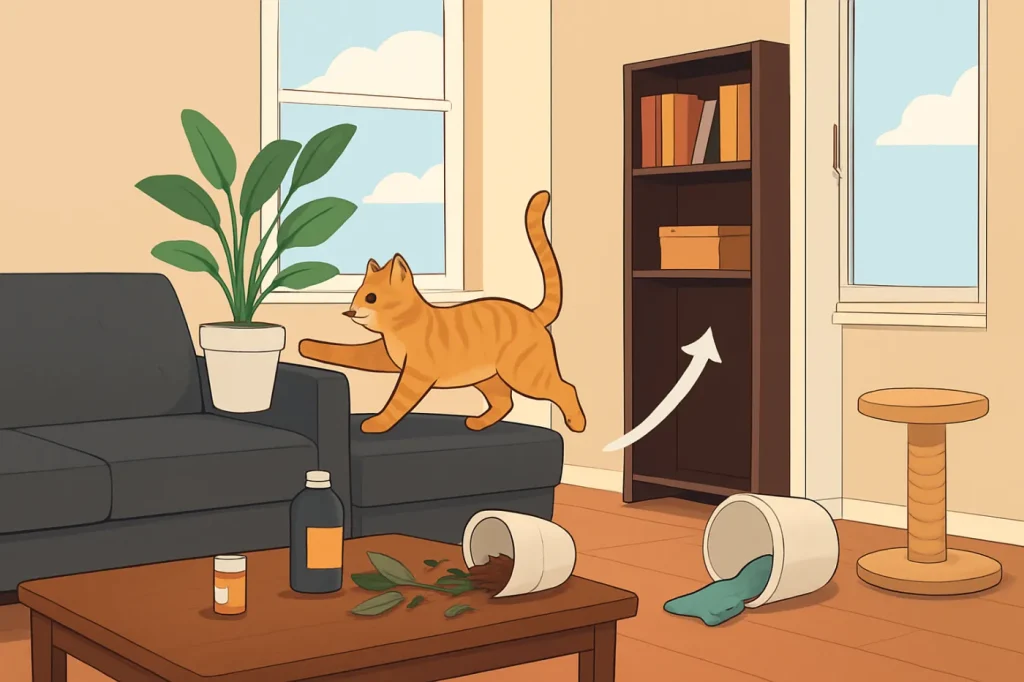
Cats are agile and curious, which makes them fun roommates—and surprisingly good at finding trouble. To cat proof an apartment and avoid accidents, you need to think like a cat: anything that can be climbed, chewed, knocked over, or squeezed through is a potential risk.
The core of cat proofing is simple: remove toxins, secure heights and escape routes, and stabilize anything that can fall or trap a paw. Then add safe alternatives for scratching, climbing, and playing so your cat is less tempted by dangerous options.
Key principles of a safe apartment for cats
Before going room by room, it helps to understand the main types of risks in a typical U.S. apartment:
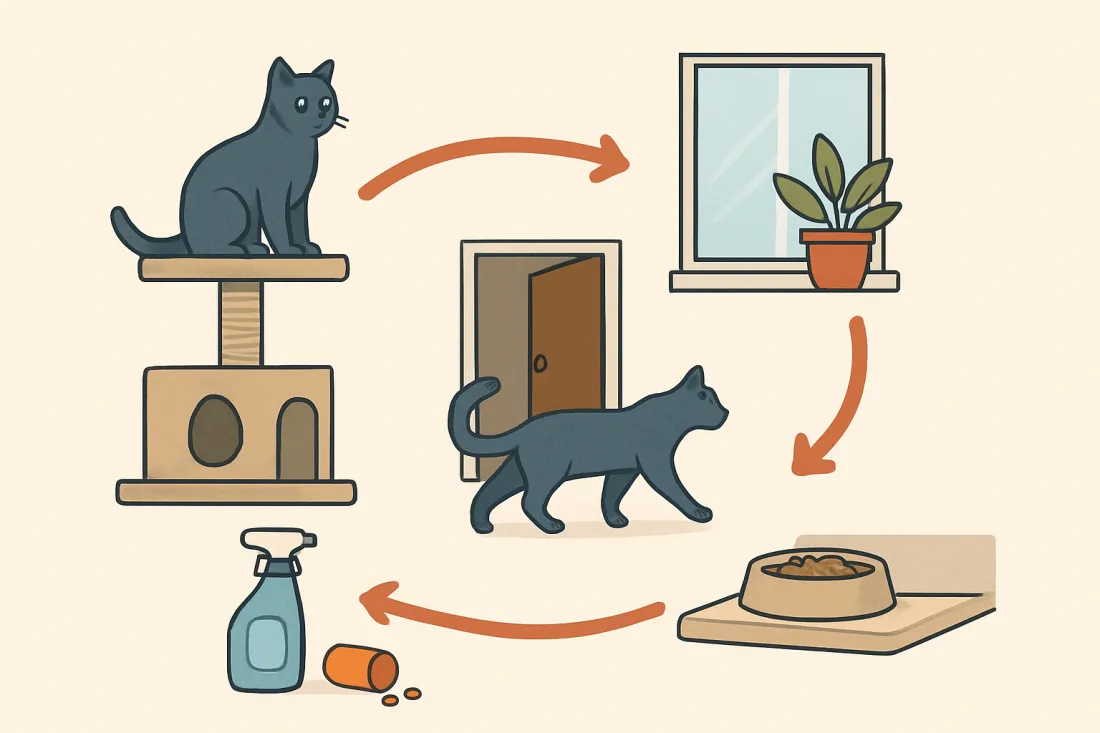
- Toxic items: plants, foods, medications, cleaning products, and some essential oils can be dangerous if licked or chewed.
- Falls and escapes: open windows, unsecured balcony railings, and doors that do not latch well can lead to falls or lost cats.
- Strangling or trapping hazards: cords, looped strings, recliners, and heavy objects that can tip over.
- Burns and cuts: hot stoves, candles, space heaters, broken glass, and sharp tools.
- Choking and blockage risks: small objects, hair ties, thread, and toys that can be swallowed.
Cat proofing means spotting each of these categories in your own space and either removing the hazard, blocking access, or supervising when it is in use.
Room-by-room guide to cat proof an apartment
Use this section as a walkthrough of your apartment. Take it one room at a time and fix what you see before moving on.
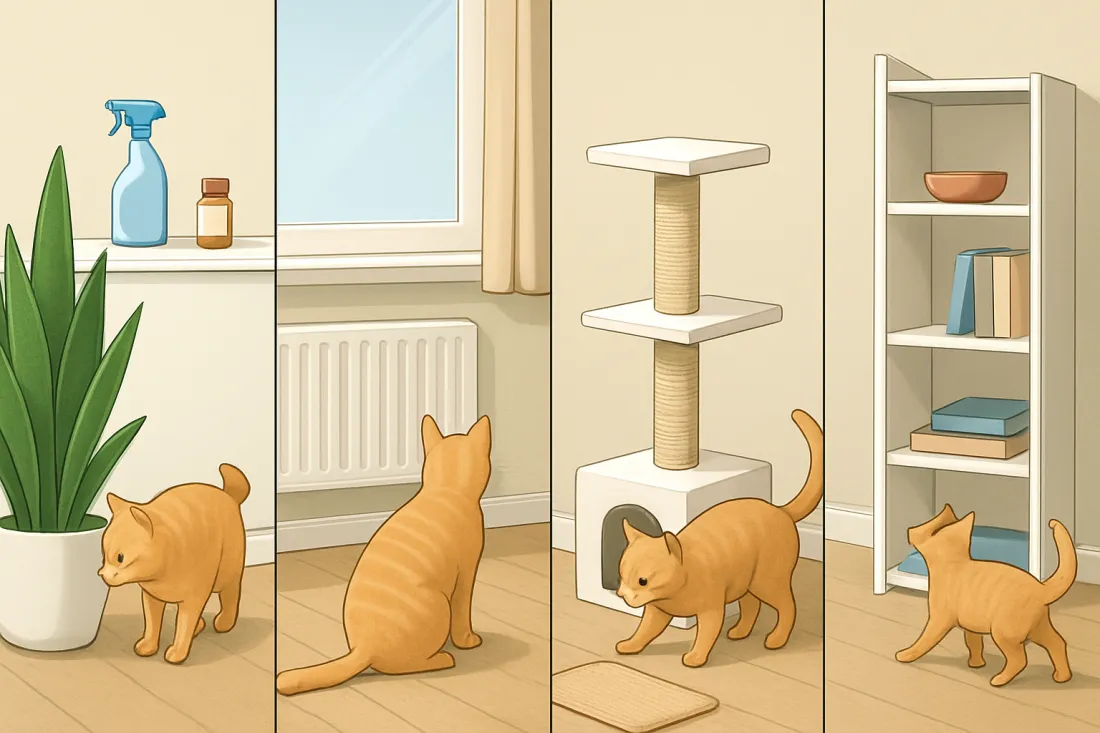
Kitchen: hot surfaces, sharp tools, and tempting food
The kitchen is one of the most dangerous rooms for cats because it combines heat, sharp objects, and strong smells that attract curious noses.
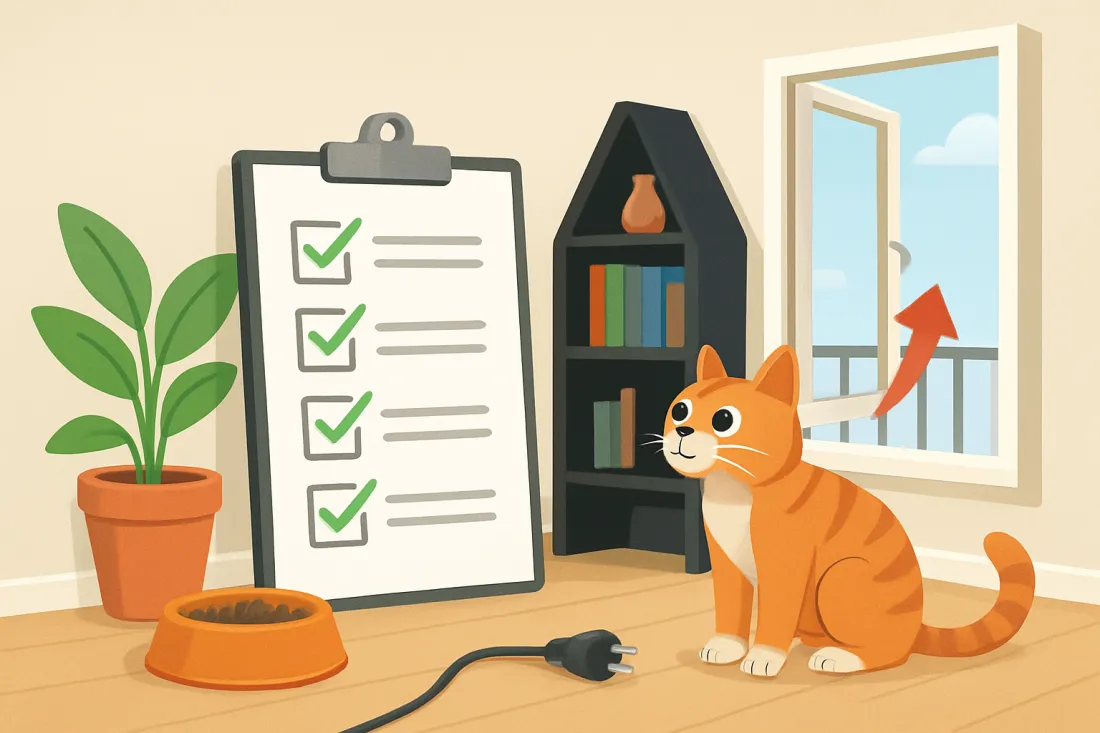
Common kitchen hazards for cats
- Hot stovetops and open oven doors
- Sharp knives and open utensil drawers
- Trash cans with food scraps, bones, and packaging
- Uncovered food on counters (especially toxic foods)
- Plastic bags and crinkly packaging that can cause suffocation
- Cleaning products under the sink
- Dishwasher doors left open with sharp cutlery inside
How to cat proof your kitchen
- Block access during cooking: Close the door or use a baby gate when the stove or oven is on. Never leave a pan handle sticking out where a cat can knock it.
- Use stove knob covers or remove knobs if your cat likes to jump on the stove, to reduce the chance of accidentally turning on a burner.
- Keep counters clear of food, especially foods that are unsafe for cats (see the toxic foods section below).
- Use a lidded trash can or place the trash inside a cabinet with a child lock.
- Store knives and sharp tools in drawers or blocks, not loose on counters or in open drying racks.
- Secure cleaning products in a cabinet with a latch so a cat cannot nudge it open.
- Close the dishwasher door when loading and unloading, and check inside before starting it so your cat has not climbed in.
Bathroom: medications, chemicals, and small objects
Bathrooms often contain concentrated chemicals and small items that are easy to bat around and swallow.
Common bathroom hazards for cats
- Human medications and vitamins on counters or open shelves
- Cleaning products, bleach, and toilet bowl tablets
- Hair ties, cotton swabs, dental floss, and razors
- Open toilet lids (risk of drinking treated water or falling in)
- Essential oil diffusers and scented products
How to cat proof your bathroom
- Keep all medications and supplements in closed cabinets or high drawers, never on the counter.
- Store cleaning products in a latched cabinet; avoid leaving open bottles in the tub or on the floor.
- Use a covered trash can for bathroom waste so your cat cannot fish out floss or cotton swabs.
- Close the toilet lid when not in use, especially if you use cleaning tablets or strong cleaners.
- Be cautious with essential oils: many are not safe for cats. If you use them, keep diffusers in a room your cat cannot access and ensure good ventilation.
Bedroom: cords, clutter, and hiding spots
Bedrooms feel safe and cozy, but they often hide small, chewable items and dangling cords.
Common bedroom hazards for cats
- Electrical cords from lamps, phone chargers, and alarm clocks
- Jewelry, hair ties, and small accessories
- Open closets with bags, strings, and shoes with loose parts
- Under-bed clutter where a cat can get stuck or chew on items
- Windows without secure screens
How to cat proof your bedroom
- Bundle and cover cords using cord covers or tubing, especially if your cat likes to chew.
- Keep small items like hair ties, earrings, and rings in closed boxes or drawers.
- Check under the bed for plastic bags, string, or other items that could be swallowed.
- Ensure windows have secure screens and cannot be pushed open by a jumping cat.
- Provide safe sleeping spots (cat beds, blankets) so your cat is less likely to burrow into drawers or closets.
Living room: cords, plants, and unstable furniture
The living room is usually where your cat spends the most time, so it needs special attention.
Common living room hazards for cats
- TVs and bookshelves that are not anchored to the wall
- Blind and curtain cords that form loops
- Candles and wax warmers
- Houseplants (some are toxic)
- Small decorative items that can be knocked off and broken
- Recliners and rocking chairs that can pinch tails or paws
How to cat proof your living room
- Anchor tall furniture like bookshelves and TV stands to the wall so they cannot tip if your cat climbs them.
- Shorten or secure blind cords so there are no loops at cat height; use cord winders or cleats.
- Avoid open flames where a cat can reach them; consider flameless candles instead.
- Place breakable decor in cabinets or on stable surfaces your cat cannot easily access.
- Check recliners and rocking chairs before sitting or closing them to ensure your cat is not underneath or inside.
- Choose cat-safe plants and move any questionable plants out of reach or to rooms your cat cannot enter.
Balcony and windows: preventing falls and escapes
Even indoor-only cats can slip through a cracked window or balcony railing. Falls from height can cause serious injury, even if your cat seems agile.
Common balcony and window hazards for cats
- Windows opened wide enough for a cat to squeeze through
- Screens that are loose, torn, or not designed to hold a cat’s weight
- Balcony railings with wide gaps
- Furniture near railings that creates a launch point
- Plants or decor that tempt a cat to climb onto ledges
How to secure windows and balconies
- Install sturdy screens on all windows your cat can access. Check regularly for tears or loose frames.
- Use window stops or limiters so windows only open a few inches—too narrow for your cat to squeeze through.
- Keep balcony doors closed unless you are actively supervising your cat.
- Ask your landlord before adding netting or barriers to balcony railings, and make sure any solution is firmly attached and weather-resistant.
- Move furniture away from balcony edges so your cat cannot easily jump onto the railing.
- Never rely on your cat’s balance alone; even confident cats can slip if startled.
Laundry area: machines and chemicals
In many apartments, the laundry area is a closet or shared space, which can make it easy for a cat to slip in unnoticed.
Common laundry hazards for cats
- Open washer and dryer doors (cats may climb in to nap)
- Laundry detergents, pods, and fabric softeners
- Bleach and stain removers
- Loose dryer sheets and fabric softener sheets
- Hampers with strings, hooks, or plastic bags
How to cat proof your laundry area
- Always check inside the washer and dryer before starting a cycle.
- Keep machine doors closed when not in use.
- Store detergents and cleaning products on high shelves or in closed cabinets.
- Throw away used dryer sheets immediately; do not leave them on top of the machine or in a basket.
- Use solid hampers without strings or plastic bags that can entangle your cat.
Garage or storage areas: if your cat can access them
Not every apartment has a garage, but many have storage units or shared spaces. If your cat can access these areas, treat them as high-risk zones.
Common garage or storage hazards for cats
- Paints, solvents, and automotive fluids
- Pest control products and traps
- Sharp tools and hardware
- Boxes and clutter that can topple
- Small gaps where a cat can hide and get stuck
How to cat proof garage or storage areas
- Keep the door closed and do not allow unsupervised access.
- Store chemicals and tools on high shelves or in locked cabinets.
- Use pet-safe pest control methods where possible, and place any traps where your cat cannot reach them.
- Stabilize stacked boxes and avoid tall, unstable piles.
Common toxic plants, foods, and products in U.S. homes
Many everyday items in U.S. households can be dangerous for cats if eaten, chewed, or sometimes even licked off their fur. The safest approach is to remove or secure anything that could be harmful and check new products before bringing them home.
Toxic or risky plants for cats
This is not a complete list, but these plants are commonly found in apartments and are known to be unsafe for cats:
- Lilies (many types used in bouquets)
- Pothos (devil’s ivy)
- Philodendron varieties
- Dieffenbachia (dumb cane)
- Sago palm
- Aloe vera (the plant; some processed products may be different)
- Snake plant (mother-in-law’s tongue)
Safer plant strategies
- Choose plants that are generally considered non-toxic to cats, or use high shelves and closed rooms to keep risky plants out of reach.
- If you receive a bouquet, remove lilies and any unknown plants before placing it where your cat can reach.
Human foods that can be dangerous for cats
Cats may not be as food-driven as dogs, but many will lick plates, chew on wrappers, or steal bites from counters. Some common foods to keep away from cats include:
- Onions, garlic, chives, and leeks (including powders and cooked dishes)
- Chocolate and cocoa products
- Alcohol (including mixed drinks and uncooked dough made with yeast)
- Caffeine (coffee, tea, energy drinks)
- Grapes and raisins
- Xylitol and some other sugar substitutes often found in gum, candy, and some peanut butters
- Fatty or heavily seasoned foods that can upset a cat’s stomach
Safe food habits
- Do not leave plates or takeout containers where your cat can reach them.
- Store snacks and baking ingredients in closed cabinets.
- Explain to guests that your cat should not be given table scraps.
Household products and chemicals to secure
Many cleaning and personal care products are not meant to be ingested or licked off fur. Some common categories to secure include:
- All-purpose cleaners, bleach, and disinfectant sprays
- Drain cleaners and oven cleaners
- Toilet bowl cleaners and tablets
- Insect sprays, ant baits, and rodent poisons
- Essential oils and oil-based diffusers
- Paints, solvents, and glues
Safer product habits
- Follow label directions and keep products out of reach when not in use.
- Ventilate rooms after using strong cleaners and keep your cat out until surfaces are dry.
- When in doubt about a product, check with your veterinarian or a trusted pet poison resource.
Securing windows, balconies, and doors against escapes
Preventing escapes is as important as removing toxins. Even a brief dash into a hallway or stairwell can lead to a lost or injured cat.
Window safety for cats
- Install secure screens on all windows your cat can access. Check that they fit tightly and cannot be pushed out.
- Use window stops or limiters so windows only open a small amount. Aim for an opening smaller than your cat’s head.
- Avoid tilt-only openings that create wedge-shaped gaps a cat can get stuck in; if you use them, block the gap with a fitted guard.
- Do not rely on flimsy temporary screens that are not designed to hold a cat’s weight.
Balcony and patio safety
- Supervise any balcony time; do not leave your cat alone outside, even for a few minutes.
- Use secure barriers or netting where allowed by your building, and check regularly for wear or gaps.
- Remove climbable objects near railings, such as chairs or planters, that make it easier for your cat to reach the edge.
- Keep balcony doors closed when you are not present in the room.
Door and hallway safety
- Practice “door awareness”: pause and look for your cat before opening the front door.
- Consider a double barrier such as a baby gate or an entryway screen if your cat is a known door-dasher.
- Ask visitors to enter carefully and close the door behind them quickly.
- Keep your cat’s ID updated with a collar tag and microchip information in case an escape does happen.
Comparison table: common cat hazards and safer alternatives
| Hazard in a typical apartment | Why it is risky for cats | Safer alternative or fix |
|---|---|---|
| Open windows without secure screens | Risk of falls or escapes if a cat pushes through or slips | Install sturdy screens and window stops; limit opening size and check frames regularly |
| Open flame candles on coffee tables | Burns from flames or hot wax; fire risk if knocked over | Use flameless LED candles or place real candles in rooms your cat cannot access |
| Lilies and other toxic houseplants | Some plants can cause serious illness if chewed or pollen is ingested | Replace with non-toxic plants or keep plants in closed rooms or high, inaccessible spots |
| Loose blind cords with loops | Strangulation or limb entanglement while playing | Shorten cords, use cord winders, or switch to cordless blinds |
| Unanchored bookshelves and TV stands | Can tip over if a cat climbs or jumps on them | Anchor furniture to the wall using brackets or straps |
| Bathroom trash without a lid | Cats can swallow floss, cotton swabs, or razor covers | Use a covered trash can or place trash inside a cabinet |
| Plastic grocery bags left on the floor | Risk of suffocation or ingestion of handles and pieces | Store reusable bags in a cabinet and recycle plastic bags promptly |
| Essential oil diffusers in shared rooms | Some oils can irritate or harm cats if inhaled or licked | Use unscented options or keep diffusers in cat-free rooms with good ventilation |
Structured checklist: before bringing a cat home
Use this checklist in the week leading up to adoption or move-in day. It focuses on the most important steps to prevent immediate accidents.
- Kitchen
- Install a lidded trash can or move trash into a cabinet.
- Clear counters of food and store toxic foods in cabinets.
- Secure cleaning products under the sink with a latch.
- Plan to keep the cat out of the kitchen while cooking.
- Bathroom
- Move medications, vitamins, and cosmetics into closed cabinets.
- Store cleaners and toilet products out of reach.
- Get a covered bathroom trash can.
- Make a habit of closing the toilet lid.
- Living room
- Anchor tall furniture and TV stands to the wall.
- Shorten or secure blind and curtain cords.
- Remove or relocate fragile decor from cat-height surfaces.
- Check houseplants and remove any that are unsafe for cats.
- Bedroom
- Bundle and cover electrical cords.
- Put small items (hair ties, jewelry) into drawers or boxes.
- Check under the bed for plastic bags, string, or small objects.
- Confirm windows have secure screens.
- Windows, doors, and balcony
- Install or check window screens and window stops.
- Review balcony rules with your landlord if you plan to add netting or barriers.
- Decide how you will prevent door-dashing (baby gate, entry mat reminder, etc.).
- Update your cat’s ID tag and microchip registration once you know their name and your address.
- Supplies and safe outlets
- Set up at least one scratching post and a stable cat tree or shelves.
- Provide safe toys without loose strings or tiny parts.
- Choose a secure litter box location away from loud appliances.
- Pick food and water bowl spots away from busy doorways.
Checklist for the first week with your cat
Once your cat is home, use this checklist to adjust your setup based on their behavior and to catch hazards you may have missed.
- Watch where your cat spends the most time and look for nearby hazards (cords, plants, unstable objects).
- Notice if your cat chews on cords or plastic; if so, add cord covers and store plastic bags out of sight.
- Check that your cat cannot open cabinets with their paws; add child locks if needed.
- Observe how your cat reacts to doors and windows; if they rush them, consider extra barriers.
- Test your furniture stability by gently wiggling shelves and stands your cat climbs.
- Confirm that litter box and food areas are easy to access and not near loud or hot appliances.
- Schedule a veterinary visit to discuss vaccines, microchipping, and any questions about toxins or products.
Safety review checklist every 6–12 months
Cat proofing is not a one-time task. Apartments change over time as you buy new furniture, switch cleaning products, or rearrange rooms. Plan a safety review at least once or twice a year.
- Walkthrough of each room
- Check for new cords, chargers, or electronics that need covers or cable management.
- Review plants and decor; remove or relocate anything that could be knocked over or chewed.
- Test furniture anchors and tighten or replace them if loose.
- Windows and balcony
- Inspect window screens for tears, gaps, or loose frames.
- Confirm window stops or limiters still work properly.
- If you use balcony netting or barriers, check for weather damage or loose attachments.
- Cleaning and chemicals
- Review all cleaning products and chemicals; move any new items into secure storage.
- Check bathroom and kitchen cabinets for leaks or spills that need cleaning.
- Reassess pest control methods to ensure they remain pet-safe.
- Trash and clutter
- Confirm all trash cans have lids or are in cabinets.
- Clear out under-bed and closet clutter that could hide hazards.
- Recycle or store plastic bags, ribbons, and packaging promptly.
- Behavior changes
- Note any new behaviors (chewing, climbing higher, door-dashing) and adjust your setup.
- Update your cat’s ID tag and microchip registration if you have moved or changed phone numbers.
Typical mistakes when cat proofing an apartment
Even careful owners can overlook certain risks. Avoid these common mistakes to keep your cat safer.
- Assuming indoor-only cats are automatically safe: Indoor cats still face risks from falls, toxins, and choking hazards inside the home.
- Relying on “my cat never goes there”: Cats often explore new areas when bored, stressed, or when something changes in the home.
- Underestimating window and balcony risks: A startled or chasing cat can misjudge a jump, even if they usually balance well.
- Leaving small items out: Hair ties, string, and small toys are easy to swallow and can cause serious internal problems.
- Using strong cleaners without ventilation: Cats walk on surfaces and then groom their paws, so residue matters.
- Not providing safe alternatives: Without scratching posts, climbing spots, and toys, cats are more likely to target plants, cords, and furniture.
- Skipping regular checks: New electronics, furniture, or roommates can introduce hazards you did not plan for.
Decision tips: how safe is “safe enough” for your cat?
Every apartment and cat is different. Use these criteria to decide where to focus your effort.
- Age and health
- Kittens and very active young cats need more physical barriers and supervision.
- Senior cats may be less likely to climb high but more prone to slipping or getting stuck.
- Personality and habits
- Door-dashers need extra entryway barriers and training.
- Chewers need cord covers and careful toy selection.
- Plant nibblers need non-toxic plants only and possibly no plants at cat height.
- Apartment layout
- High-rise apartments require especially careful window and balcony security.
- Open-plan spaces may need gates or room dividers to block access during risky activities like cooking.
- Other people in the home
- Children and guests may forget to close doors or put away small items, so build in extra safety margins.
- Roommates should know basic rules: no letting the cat out, no feeding table scraps, and keeping medications stored.
If you want a deeper dive into setting up a rental space specifically, you can also read a broader guide on how to pet proof an apartment for a cat, which covers landlord-friendly changes and deposit-safe fixes.
Next steps after cat proofing your apartment
Once you have walked through your apartment and completed the checklists, keep building a safe and happy environment:
- Introduce your cat to the apartment gradually, starting with one safe room.
- Watch how they explore and adjust your setup based on what they actually do.
- Rotate toys and add new climbing or scratching options to keep them engaged and away from hazards.
- Learn about new cat owner mistakes to avoid so you can prevent problems beyond physical safety, such as stress and behavior issues.
- Plan a reminder every 6–12 months to repeat the safety review checklist.
FAQ: cat proofing an apartment to avoid accidents
What is the most important thing to do first when cat proofing an apartment?
Start with anything that could cause serious harm quickly: remove or secure toxic plants, medications, and cleaning products; install or check window screens; and anchor tall furniture. These steps reduce the risk of poisoning, falls, and crush injuries, which are among the most serious apartment dangers for cats.
How can I tell if a plant or product in my apartment is safe for my cat?
When you are unsure about a plant, food, or household product, do not guess. Check the label for pet warnings, look up the item using a trusted pet safety resource, or ask your veterinarian. Until you are sure, keep the item in a closed cabinet or a room your cat cannot access.
What common mistakes lead to cat accidents in apartments?
Many accidents happen because of small oversights: a window left open without a secure screen, a hair tie or string left on the floor, a lily bouquet placed on a low table, or a washer door left open. Another frequent mistake is assuming a cat “never goes there” and leaving a risky area unprotected. Building habits—like closing toilet lids, checking machines before use, and doing regular safety walk-throughs—helps prevent these situations.
How often should I redo a cat safety check in my apartment?
Plan a full safety review every 6–12 months, and also after any big change such as moving furniture, getting new electronics, bringing in new plants, or adding a roommate. Cats’ habits can change over time, so a setup that was safe last year may need adjustments now.
What should I do right after reading about cat proofing?
Pick one room—often the kitchen or living room—and walk through it with a short list: toxins, heights, cords, and small objects. Fix what you can immediately, like putting away medications and bundling cords, then schedule time over the next few days to complete the full apartment checklist. If you are preparing for a new cat, aim to finish the “before bringing a cat home” tasks at least a day or two before their arrival.
How do I balance cat safety with keeping my apartment looking nice?
Many safety changes are nearly invisible: clear cord covers, lidded trash cans, anchored furniture, and secure screens do not have to change your style. You can also choose attractive scratching posts, modern cat trees, and decorative storage boxes for small items. Thinking of safety features as part of your interior design makes it easier to maintain both a stylish and cat-friendly home.
By combining hazard removal, secure barriers, and regular reviews, you create a safe home environment for your cat without turning your apartment into a fortress. Thoughtful cat proofing is a key part of responsible pet ownership and helps your cat stay healthy, confident, and accident-free.