
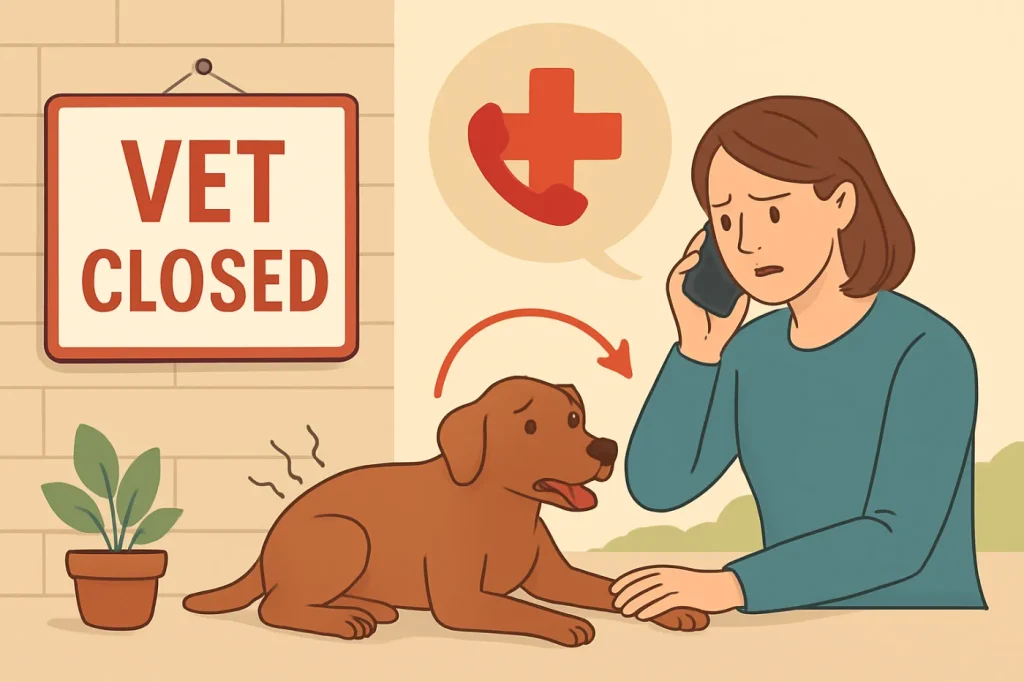
Your regular vet is closed and your pet is suddenly in trouble. In that moment, you need a clear plan, not a long search. Use this simple sequence:
- Check for obvious life-threatening signs.
- Listen to your vet’s voicemail and check their website for after-hours instructions.
- If they cannot see you, find the nearest open emergency or urgent care clinic and call ahead.
- Stabilize your pet as safely as you can while arranging transport.
- Bring key information, payment, and a way to document what happens.
- Afterward, share records with your regular vet for follow-up.
this guide turn that into a practical, step-by-step plan for U.S. pet owners, with decision points, a comparison table, and a ready-to-use emergency checklist.
First 5 minutes when your vet is closed and your pet is in crisis
The first few minutes shape everything that follows. Focus on three things: danger signs, safety, and a phone call.
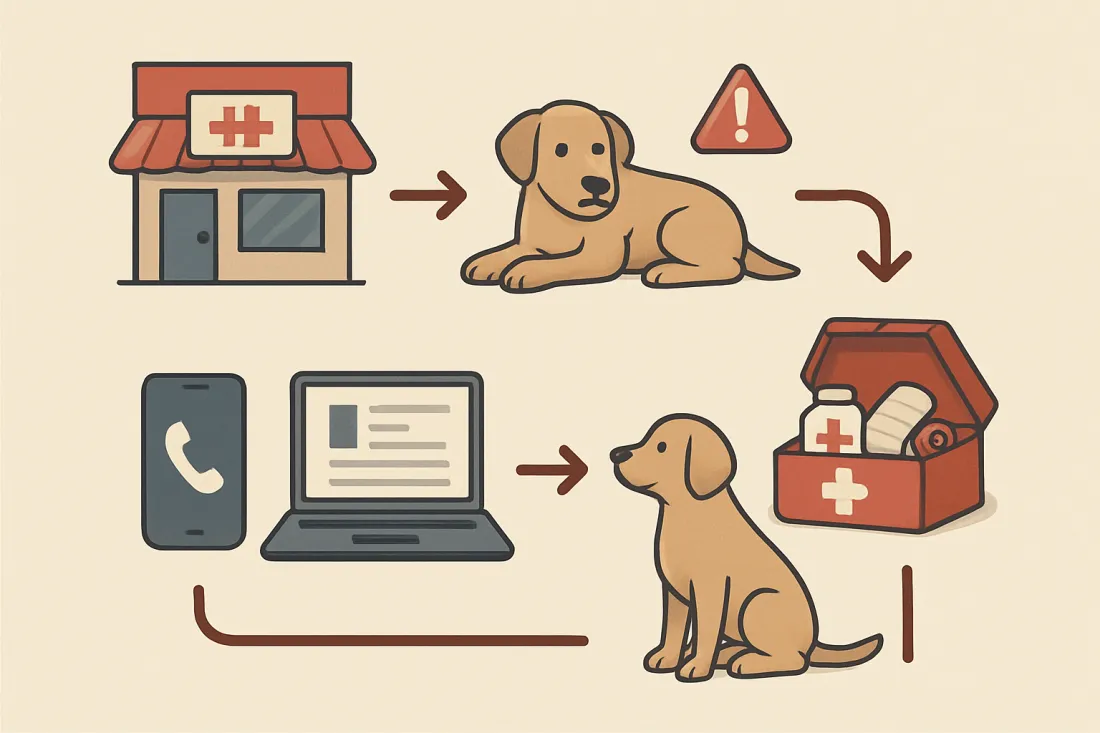
- Scan for immediate life-threatening red flags.
Act as an emergency if you see any of these:- Not breathing, struggling to breathe, or open-mouth breathing in a cat.
- Blue, gray, or very pale gums.
- Collapse, unresponsiveness, or your pet cannot stand.
- Seizure lasting more than a couple of minutes or repeated seizures close together.
- Severe bleeding that soaks a towel within minutes or spurts with each heartbeat.
- Hit by a car, fall from a height, or other major trauma (even if your pet seems “okay”).
- Suspected poisoning (chewed medication, toxic food, plants, or chemicals nearby).
- Bloated, hard abdomen with restlessness, pacing, or trying to vomit but nothing comes up (especially in large, deep-chested dogs).
- Straining to urinate with little or no urine, especially in a male cat.
If any of these are present, treat it as an emergency and plan to go to an open emergency hospital right away.
- Make the scene safe for you and your pet.
Turn off stoves or heaters, unplug any obvious hazards, move other pets away, and gently confine your pet with a towel, blanket, or carrier if they are panicking or trying to hide. - Avoid home remedies and human medications.
Do not give over-the-counter pain relievers, leftover prescriptions, or internet “fixes” unless a veterinarian or poison expert has told you to do so for this exact situation. - Grab your phone and something to write with.
You will need to make calls, write down addresses, and note instructions. If you are alone, put your phone on speaker so you can listen while you help your pet.
Typical U.S. vet clinic hours and why after-hours gaps matter
Most general veterinary clinics in the United States are set up for daytime care, not round-the-clock emergencies. A common pattern is:
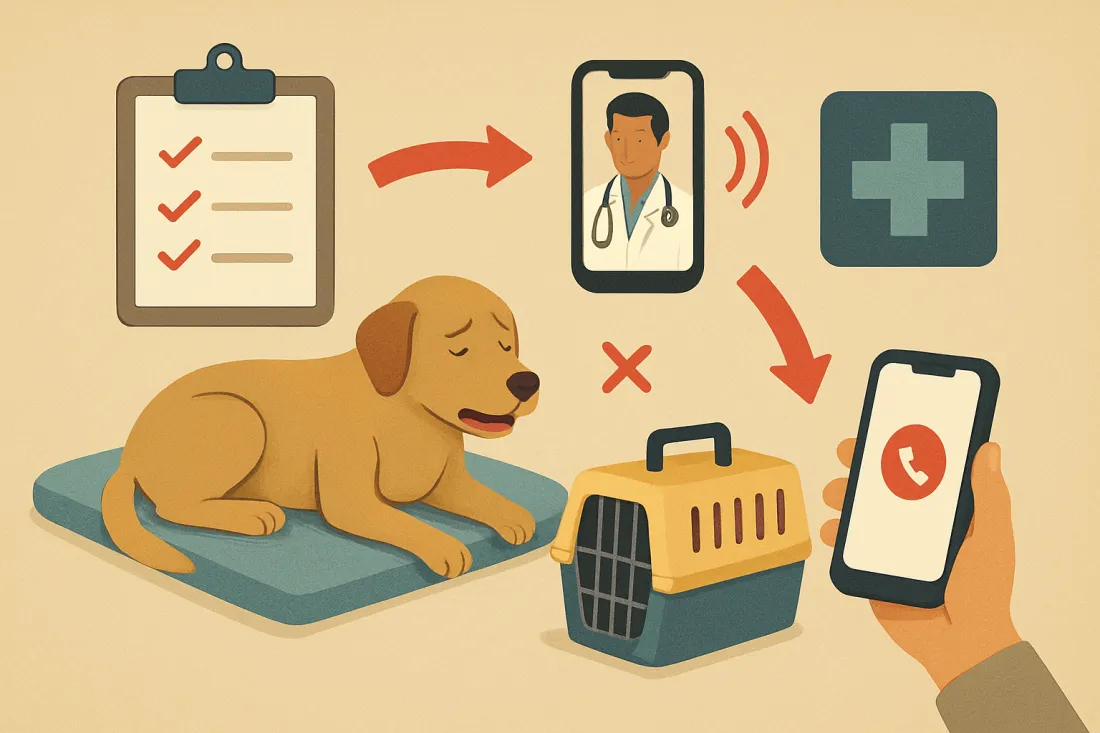
- Weekday hours during the day, sometimes with limited evening appointments.
- Shorter hours on Saturdays.
- Closed on Sundays and major holidays.
That creates three predictable “risk windows” when your regular vet is likely unavailable:
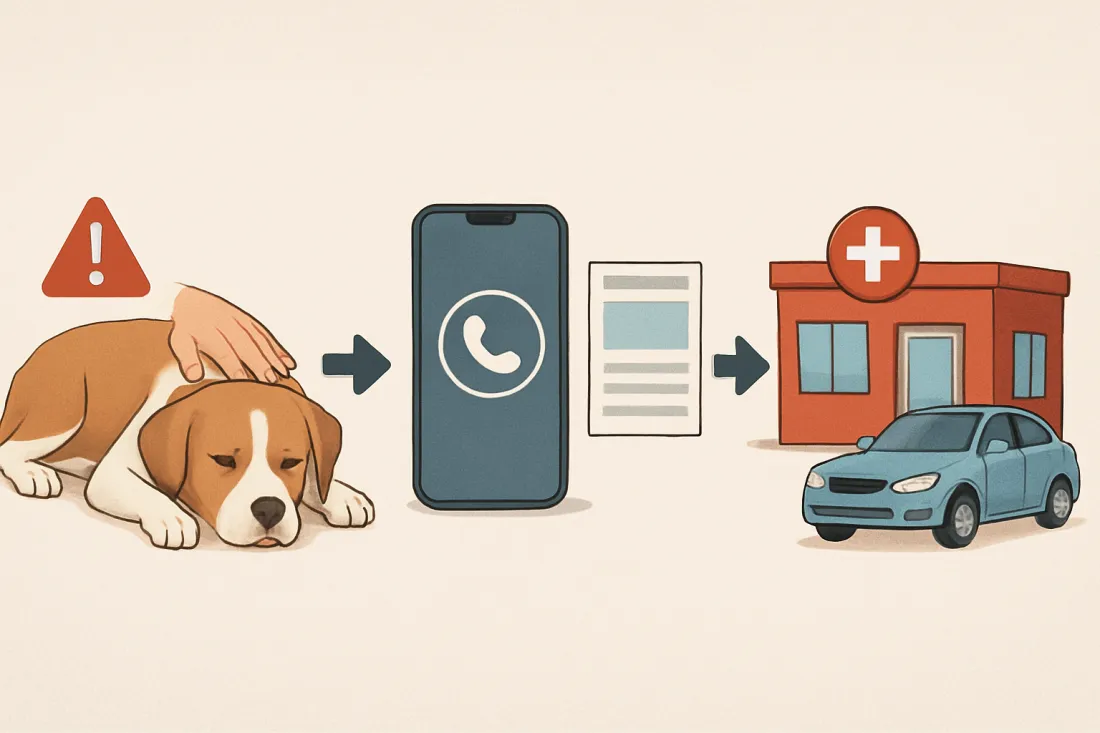
- Evenings and overnight after the clinic closes until the next morning.
- Weekends, especially Sunday afternoons and nights.
- Holidays, when both regular clinics and some emergency facilities may run reduced hours.
Responsible pet ownership means planning for those gaps before you need help. At a minimum:
- Identify at least one 24/7 emergency animal hospital and any nearby urgent care clinics with extended hours.
- Save their phone numbers and addresses in your phone and post them on your fridge.
- Keep a basic pet emergency kit ready at home; a resource such as a pet emergency kit checklist for US households can help you stock practical items.
If you are reading this during a calm moment, use the checklist section below to build a weekend and holiday emergency plan now so you are not starting from zero at 11 p.m. on a Sunday.
Step-by-step: use your vet’s voicemail and website for after-hours instructions
Many U.S. clinics have a plan for when they are closed, even if they do not run their own emergency service. They may partner with a local emergency hospital, use a nurse triage line, or give specific instructions for poison cases.
Follow this sequence as soon as you realize your vet is closed:
- Call your regular vet’s main number.
Let the voicemail play all the way through. Listen for:- The name, address, and phone number of a recommended emergency or urgent care clinic.
- Whether they have a doctor on call for established clients.
- Any special instructions for poison exposures or trauma.
Write down the details, even if you think you will remember them.
- Check your vet’s website.
Look for pages labeled “Emergency,” “After-hours care,” or “Contact.” You may find:- Updated weekend and holiday hours.
- Links to emergency or urgent care partners.
- Guidance on what they consider a true emergency versus something that can wait until morning.
If you cannot find an emergency page, check the contact or about section for notes about after-hours care.
- Use any teletriage or nurse line they offer.
If the voicemail or website lists a phone triage service or chat, use it. Have this information ready:- Your pet’s species, breed, age, and approximate weight.
- Current medications and known medical conditions.
- What happened and when (for example, “ate grapes 15 minutes ago,” “fell down stairs 30 minutes ago”).
- Visible symptoms (vomiting, limping, breathing changes, bleeding, behavior changes).
They can help you decide whether to go straight to an emergency hospital, use urgent care, or monitor at home with clear safety instructions.
If your vet’s voicemail and website do not mention any after-hours plan, move on quickly to finding an open emergency or urgent care clinic yourself.
Where to go when your regular vet is closed: ER vs urgent care vs phone advice
When your usual clinic is unavailable, you typically have three main options. Use the table below to compare them and decide what fits your situation.
| Care option | Best for this kind of situation | Examples of problems | Main trade-offs to consider |
|---|---|---|---|
| 24/7 emergency animal hospital | Clearly life-threatening or rapidly worsening problems | Trouble breathing, collapse, repeated seizures, severe bleeding, suspected bloat, inability to urinate, major trauma, serious poisoning | Often higher fees and longer waits, but usually has full diagnostics, surgery, and intensive care on site |
| After-hours or weekend urgent care clinic | Serious but stable issues that still need same-day care | Deep but controlled cuts, vomiting or diarrhea in a bright, alert pet, minor allergic reactions, eye injuries, sudden lameness, painful ear infections | May not be open overnight; may transfer you to a 24/7 hospital if your pet worsens or needs intensive care |
| Telehealth or nurse triage line | Unclear severity or “does this need to be seen now?” questions | Mild stomach upset, small cuts, behavior changes, questions about monitoring vs. going in | Cannot examine your pet or run tests; may still direct you to in-person care if they are concerned |
To find an open clinic quickly when your vet is closed:
- Use your phone’s map app to search for “emergency vet,” “animal hospital,” or “urgent care vet.”
- Filter by “open now,” then call to confirm they are accepting emergencies and can see your pet’s species.
- On the phone, ask:
- “Are you currently open for emergency or urgent walk-ins?”
- “Do you have a veterinarian on site right now?”
- “How long is the current wait for a stable pet?”
- “Are there any conditions you cannot treat tonight?”
- If you have more than one option, choose a clinic that:
- Is open and staffed right now.
- Is reasonably close, to reduce travel time.
- Sees your type of pet (for example, some clinics do not treat exotics).
What to do while you arrange transport to an emergency or urgent care vet
Once you know where you are going, your job is to keep your pet as safe and stable as possible until you arrive.
Stabilize without causing extra harm
- Keep your pet warm and quiet. Use a light blanket or towel, especially if they feel cold or seem weak. In hot weather, avoid overheating by using only a light covering and keeping them out of direct sun.
- Control visible bleeding. Apply firm, steady pressure with clean gauze, a towel, or cloth. Avoid repeatedly lifting the cloth to check; that can restart bleeding.
- Protect yourself from bites and scratches. Pain can make even gentle pets react. Use a towel around the head or a soft muzzle if you know how to apply one safely and your pet is breathing comfortably.
- Limit movement. Do not try to splint suspected broken bones unless a vet has guided you through it. Instead, place your pet in a box, carrier, or on a padded surface to reduce jostling.
- Do not induce vomiting unless told to. Some toxins and sharp objects can cause more damage if vomited back up, and some pets are at higher risk when vomiting is forced. Call a vet or poison expert for instructions.
Prepare for a safe car ride
- Use a carrier or crate for small pets. Line it with a towel. If your pet is vomiting or bleeding, bring extra towels or disposable pads.
- For larger dogs, use a blanket as a stretcher. Two people can hold the corners to move the dog with less twisting or lifting strain.
- Secure your pet in the vehicle. Place carriers on the floor behind a seat or secure them with a seatbelt. Larger dogs should ride in the back seat or cargo area, not the front seat with an airbag.
- Have one person drive and one person monitor, if possible. If you are alone, focus on safe driving. Pull over if you need to check on your pet.
- Bring essentials:
- Your pet’s regular medications.
- Any medical records you have at home or on your phone.
- A form of payment and your ID.
- Your phone charger or power bank.
Weekend and holiday emergency action plan checklist
Use this structured checklist as a practical emergency plan. If you are not in a crisis, work through each item now. If you are in the middle of an emergency, skim and complete what you can.
Before an emergency (planning during calm times)
- Save key contacts in your phone and post them at home.
- Your regular vet’s name, address, and main number.
- At least one 24/7 emergency animal hospital within reasonable driving distance.
- Any local urgent care vet clinics with evening or weekend hours.
- A pet poison hotline number recommended by your vet.
- Ask your vet about their after-hours plan.
- At your next visit, ask, “If I have an emergency at night or on a Sunday, where should I go?”
- Write their answer on a card and keep it on your fridge or inside a cabinet door.
- Prepare a pet emergency kit.
- Basic first-aid supplies such as gauze, bandage material, tape, and pet-safe antiseptic wipes.
- Extra leash, appropriately sized muzzle (if recommended), and a towel or blanket.
- Copy of vaccination records and a list of current medications and doses.
- A carrier or crate that is clean, accessible, and in good condition.
- Plan how you will get to an emergency clinic.
- Decide which household vehicle is easiest for loading a pet.
- Identify at least one neighbor, friend, or family member who could help drive or lift.
- Make a basic financial plan for emergencies.
- Talk with your household about how you would handle unexpected vet bills.
- Consider building an emergency vet fund; a guide such as emergency vet fund how much per year can help you think through realistic targets and savings habits.
During an emergency when your vet is closed
- Check your vet’s voicemail and website for after-hours instructions or partner clinics.
- Compare your pet’s signs with the red flags listed earlier; if in doubt, treat it as an emergency.
- Call the recommended emergency or urgent care clinic, or use your map app to find an open one and confirm they can see you.
- Follow any first-aid advice they give over the phone while you prepare to leave.
- Secure your pet in a carrier, crate, or on a blanket stretcher to limit movement.
- Bring medications, any available records, a payment method, and your ID.
- Drive safely and call the clinic if your pet’s condition changes on the way.
After the emergency visit
- Ask for a written summary of the visit and clear discharge instructions.
- Confirm how and when the clinic will send records to your regular vet.
- Schedule a follow-up appointment with your regular vet as soon as recommended.
- Update your emergency plan and contact list based on what you learned.
Handling long wait times at busy emergency clinics
Emergency and urgent care clinics often use a triage system. Pets are seen based on how sick they are, not strictly in the order they arrive. A stable pet with a minor issue may wait while a critical case is treated immediately.
What usually happens when you arrive
- Initial triage. A technician or nurse typically checks your pet’s vital signs and asks brief questions. If your pet is critical, they may be taken to the treatment area right away.
- Paperwork and deposit. You may be asked to fill out forms and provide a deposit before full treatment begins. This is common for emergency facilities.
- Updates as they can provide them. Staff should give you periodic updates, but they may be juggling many urgent cases. It is reasonable to politely ask for a status update if you have been waiting for a while.
Staying prepared and calm during a long wait
- Ask about your pet’s triage status. Questions like “Is my pet considered stable right now?” and “What changes should I watch for while we wait?” can give you clarity.
- Monitor for changes. If you see new or worsening signs—such as difficulty breathing, collapse, more bleeding, or repeated vomiting—tell staff immediately.
- Keep your pet comfortable. Offer a blanket, keep noise and stimulation low, and avoid letting your pet interact with unfamiliar animals in the waiting area.
- Take care of yourself. If possible, bring water, a snack, and a phone charger. Long waits are easier to manage if you are not hungry, dehydrated, or worried about your phone battery.
- Ask for a rough time frame. You can say, “I understand you are busy. Do you have a rough idea of how long it might be before a doctor can examine my pet?”
Making financial and treatment decisions under pressure
- Request a written estimate for major treatments when possible. This helps you understand what is being recommended and the likely costs.
- Clarify priorities if money is tight. Ask, “If we need to start with the most important tests or treatments, which would those be?”
- Take brief notes. Write down names of tests, medications, and any key numbers so you can review them later with your regular vet.
Documenting the emergency visit for smooth follow-up
Good documentation helps your regular vet understand what happened and continue care without repeating tests or missing important details.
Information to collect during or right after the visit
- Clinic details. Name, address, and phone number of the emergency or urgent care clinic.
- Timeline. When symptoms started, when you arrived, and when key treatments were given.
- Diagnosis or working diagnosis. What the emergency vet thinks is going on, even if it is tentative.
- Tests performed. For example, bloodwork, X-rays, ultrasound, urinalysis, or other imaging.
- Treatments given. Medications, fluids, procedures, or surgery.
- Medications to continue at home. Names, doses, how often to give them, and for how long.
- Home-care instructions. Activity limits, diet changes, wound care, and what warning signs should trigger a return visit.
Sharing information with your regular vet
- Ask the emergency clinic to send records directly. Provide your regular vet’s name and clinic details so they can fax or email the records.
- Request a copy for yourself. Many clinics can give you printed discharge papers or email a digital copy.
- Schedule a follow-up visit. Call your regular vet as soon as they open and say, “My pet was seen at an emergency clinic for [problem]. They were diagnosed with [diagnosis]. I have discharge papers. When should we follow up?”
- Bring everything to the follow-up. Take medications, discharge instructions, and any imaging reports so your vet has the full picture.
Common mistakes to avoid when your vet is closed
Stress and panic can lead to choices that unintentionally put your pet at risk. Watch for these common pitfalls:
- Waiting too long with serious signs. Breathing problems, severe pain, inability to urinate, or suspected poisoning should not be “watched overnight.” Delays can make treatment harder and outcomes worse.
- Using human medications without guidance. Many common pain relievers and cold medicines are dangerous for pets even in small amounts.
- Relying only on internet searches instead of calling a professional. Online information cannot assess your specific pet. Use it to understand terms, not to replace a vet’s judgment in an emergency.
- Driving to a clinic without confirming it is open. Hours can change, especially on weekends and holidays. Always call first.
- Forgetting medications and records. Without this information, the emergency vet may need to repeat tests or guess about your pet’s history.
- Leaving without clear instructions. Before you go home, make sure you understand how to give medications, what activity is allowed, and what warning signs should send you back.
- Not updating your regular vet afterward. Your regular vet is your long-term partner. Keeping them informed helps avoid gaps or conflicting treatments.
Decision guide: go now, call first, or monitor at home
Not every late-night worry needs an immediate emergency visit, but some absolutely do. Use this guide as a starting point, then confirm with a vet or triage line when you can.
| Situation you are seeing | Most likely safe action | Reasoning | Practical next step |
|---|---|---|---|
| Trouble breathing, blue or very pale gums, collapse, or repeated seizures | Go to a 24/7 emergency hospital immediately | These are life-threatening signs that can worsen within minutes | Call the nearest emergency hospital to say you are coming, then leave right away while keeping your pet as calm as possible |
| Hit by a car, fall from height, or other major trauma (even if your pet seems okay) | Emergency visit strongly recommended | Internal injuries and bleeding are not always obvious at first | Call an emergency clinic for guidance and go in as soon as you safely can |
| Vomiting or diarrhea but your pet is bright, alert, and drinking | Call for advice; may be urgent care or home monitoring | Some mild cases can be monitored, but repeated vomiting, blood, or lethargy can become serious | Call a vet or triage line, describe frequency and behavior, and follow their specific instructions |
| Minor cut, small limp, or mild eye redness with no other signs | Call or schedule urgent care | Not usually life-threatening but still needs timely care to prevent complications | Ask whether it can wait until morning or if same-day urgent care is better |
These are general patterns, not strict rules. When you are unsure, a brief phone call with a veterinary professional is often the fastest way to a safe decision.
FAQ about after-hours pet emergencies when your vet is closed
What is the first thing I should do if my vet is closed and my pet has an emergency?
Start by checking for obvious emergency red flags such as trouble breathing, collapse, severe bleeding, repeated seizures, or suspected poisoning. If any are present, plan on going to an open emergency hospital right away. While you get ready, call your regular vet’s number to listen to their voicemail for after-hours instructions, then contact the recommended emergency clinic or use your phone’s map to find an open one and confirm they can see you.
Are there extra fees for after-hours or emergency vet care in the United States?
Many emergency and after-hours clinics charge higher fees than daytime general practices. You may see an emergency exam fee, an after-hours surcharge, or a required deposit before treatment begins. Exact amounts vary by clinic and region, so you will need to ask the clinic directly when you call or check in. If cost is a concern, mention it early and ask for an estimate and a breakdown of which tests or treatments are most important.
What mistakes should I avoid when my regular vet is closed?
Common mistakes include waiting too long with serious signs, giving human medications without veterinary guidance, driving to a clinic without confirming it is open, and leaving an emergency visit without clear written instructions. You can avoid these by calling ahead, asking questions, and erring on the side of prompt care for obviously serious problems. Planning in advance also helps; resources such as how to avoid having to give up my pet can support broader planning for responsible pet ownership.
What should I do next to be ready for weekend or holiday emergencies?
Turn this guidance into a concrete plan. Save contact details for your regular vet, at least one 24/7 emergency hospital, and any local urgent care clinics in your phone and on a visible card at home. Build or update a basic pet emergency kit and check that your carrier or crate is easy to reach. Talk with your household about how you will handle emergency costs and who could help with transport. Taking these steps during calm times makes it much easier to act quickly and confidently if your vet is closed and your pet suddenly needs help.