
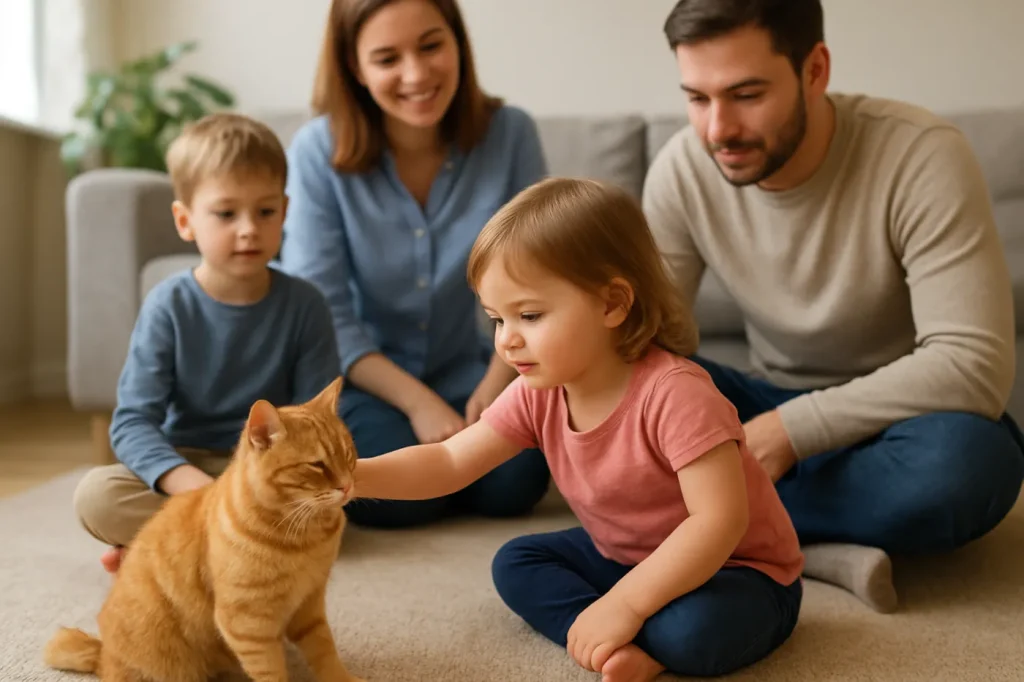
Adopting a cat when you have small children can be safe and very positive, if you choose the right cat, set clear rules, and manage the first weeks carefully. It becomes risky when families pick the wrong match, let kids handle the cat without supervision, or skip basic safety steps.
This guide walks you through how to decide if a cat is a good fit for your family right now, how to choose a child-friendly cat, and how to introduce your kids and new pet in a way that protects everyone.
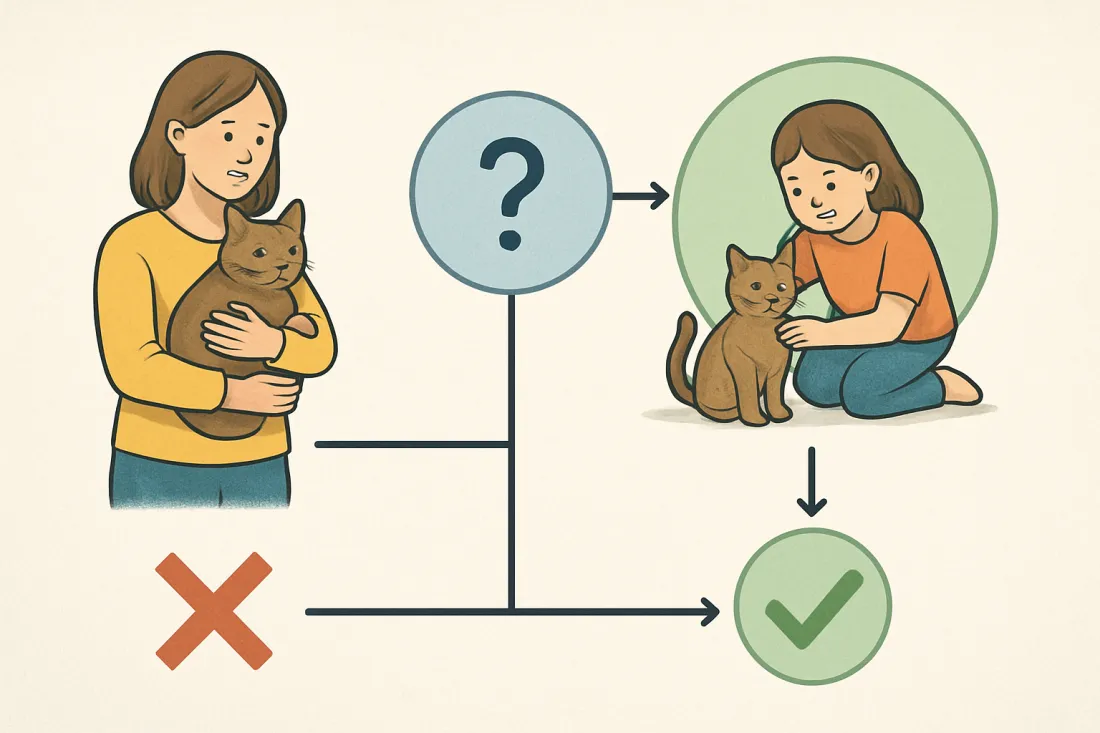
When adopting a cat with small children is usually safe
For most families, adopting a cat with young kids is reasonably safe when these conditions are true:
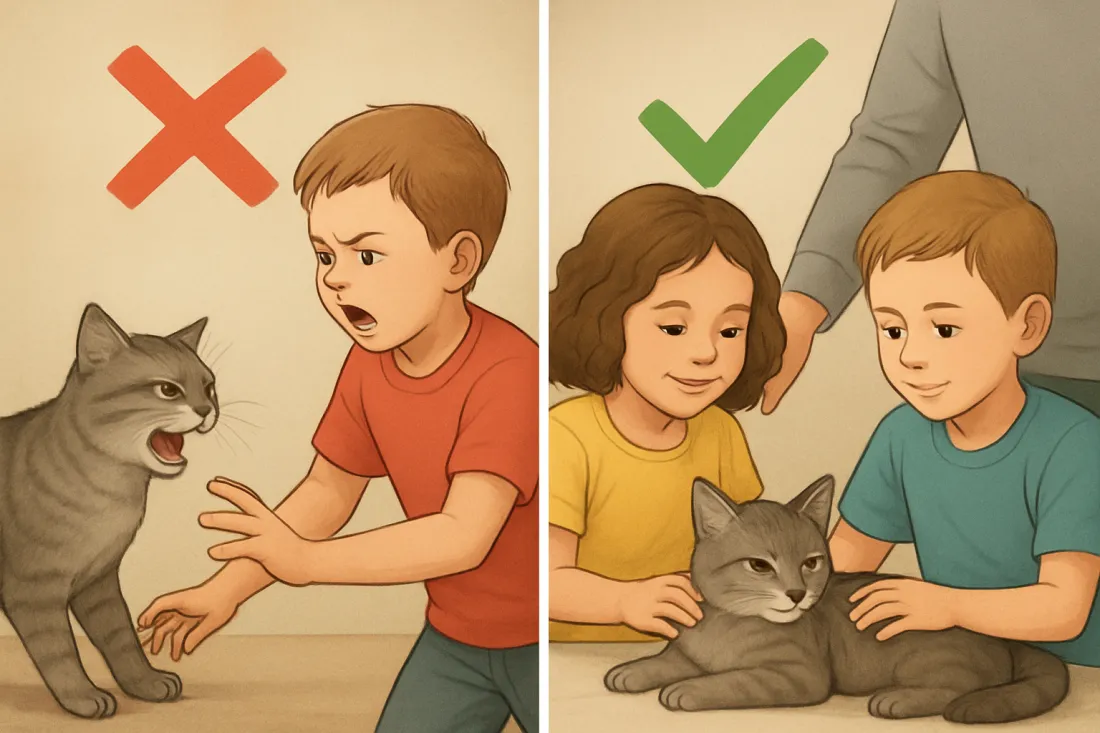
- Your children can follow simple rules like “gentle hands,” “no chasing,” and “let the cat walk away.”
- Adults can supervise most kid–cat interactions, especially in the first few months.
- You choose a cat with a calm, social temperament instead of focusing only on looks or age.
- You are ready to manage the environment (separate spaces, safe litter box setup, scratching options).
- No one in the home has severe allergies or immune issues that a doctor has warned about regarding pets.
If several of these are not true, it does not mean you can never adopt a cat. It usually means you should slow down, prepare more, or delay adoption until your kids are a bit older or your situation is more stable.
Key benefits and real risks of cats around young children
Understanding both sides helps you decide with a clear head instead of emotion alone.
Benefits for kids and family life
- Emotional support and comfort: Many children find it soothing to pet or sit near a calm cat, especially during stressful moments like starting school or after a tough day.
- Learning empathy and responsibility: Helping with simple tasks (refilling water, gently brushing) teaches kids to notice another being’s needs.
- Routine and stability: Daily feeding and playtime can give children a sense of structure.
- Quieter companion than many dogs: For families in apartments or with noise-sensitive kids, cats are often easier to manage than high-energy dogs. If you are also considering a dog, you might compare this with a resource like how to safely adopt a shelter dog with young children.
Realistic risks to consider
- Scratches and bites: Even a friendly cat may scratch if grabbed, cornered, or startled. Young children move unpredictably, which can trigger defensive reactions.
- Allergies and asthma: Some kids (or adults) may react to cat dander. Symptoms can range from mild sneezing to more serious breathing issues.
- Hygiene concerns: Litter boxes, fur, and occasional hairballs require consistent cleaning so kids do not play in or near unsanitary areas.
- Stress for the cat: A cat that constantly hides, hisses, or swats because of kid noise and handling is not having a good life, and stressed cats can develop behavior or health problems.
- Time and money: Vet visits, food, litter, and supplies are long-term commitments. Families already stretched thin may find this stressful; it can help to review realistic expectations like those in pet costs for families with children.
Most of these risks can be reduced with good planning and supervision, but they never drop to zero. The goal is to decide whether your family is ready to manage them.
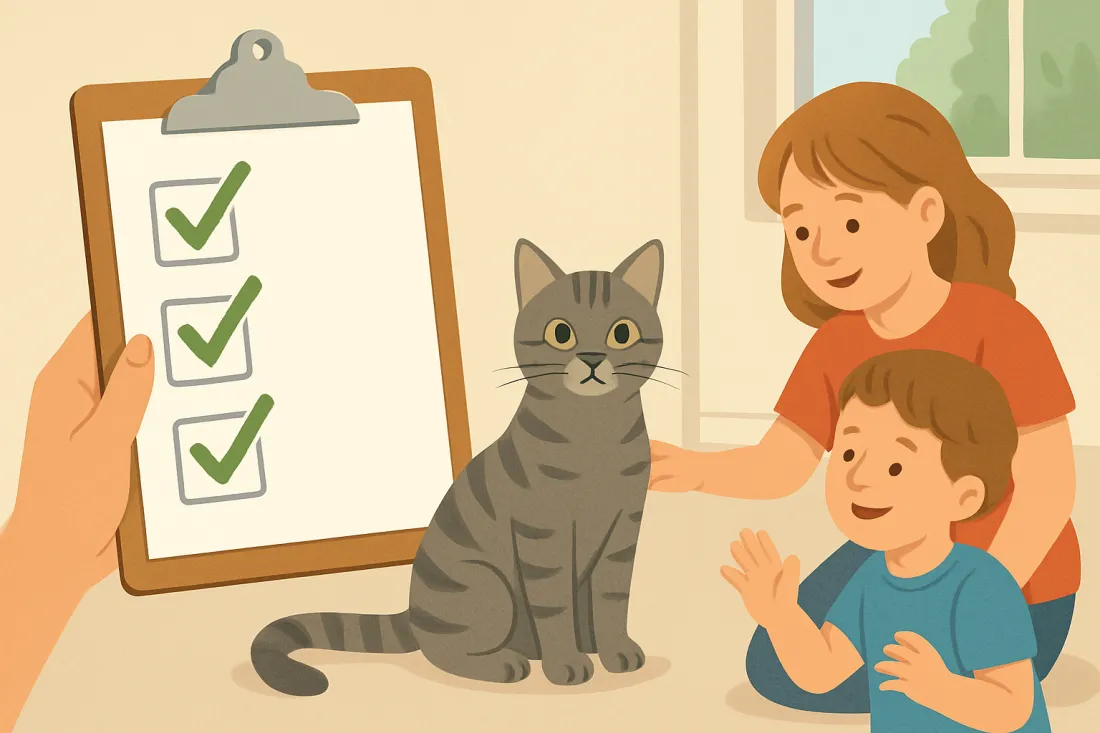
How to choose a child-friendly cat instead of a risky match
The single biggest safety factor is which cat you adopt. A calm, social adult cat that likes people is usually safer for small children than a nervous kitten or a cat that dislikes handling.
Age: kitten vs. young adult vs. older cat
| Cat age | When it can work with small kids | Main risks | Best for families who |
|---|---|---|---|
| Young kitten (under ~6 months) | When adults can supervise closely and teach kids to be very gentle. | Sharp claws and teeth, high energy, still learning bite inhibition; more likely to scratch during play. | Have time for training, do not mind chaos, and want to shape behavior from the start. |
| Young adult (~1–4 years) | Often a sweet spot: energy for play but personality is mostly formed. | May still be rambunctious; needs daily play to avoid rough behavior. | Want a playful but more predictable cat and can commit to interactive play. |
| Mature adult (5+ years) | Often calmer, may prefer lounging and gentle affection. | May have less patience for rough handling; some prefer quiet homes. | Prefer a relaxed companion and can provide quiet retreat spaces. |
Age alone does not guarantee safety. A calm 3-year-old cat that loves kids is usually safer than a nervous kitten that panics when touched.
Temperament signs to look for
When you meet potential cats, pay more attention to behavior than appearance:
- Social with people: The cat approaches visitors, rubs on hands, or seems curious instead of hiding.
- Tolerant of gentle handling: Staff or foster caregivers can pick up or touch paws and belly without the cat panicking.
- History with children: If the cat has lived with respectful kids before and did well, that is a strong positive sign.
- Play style: A cat that plays gently with toys instead of attacking hands is safer for small children.
- Recovery from stress: A cat that startles but quickly relaxes again is usually more adaptable than one that stays on edge.
Red flags that a cat may not be a good fit for young kids
- Hissing, growling, or swatting when people walk by the cage or approach slowly.
- Extreme fear: frozen, wide-eyed, or constantly hiding even in a calm environment.
- History of biting or scratching when touched in normal ways (not just when hurt or cornered).
- Needs a very quiet, adult-only home according to shelter notes.
If you are unsure how to read a cat’s body language, ask shelter or rescue staff to demonstrate how the cat behaves when handled and how they think the cat would do with small children.
Questions to ask before you adopt a cat with small children
Before signing any paperwork, ask detailed questions. This helps you avoid surprises and shows the shelter you are serious about safety.
Questions about the cat
- Has this cat lived with children before? If yes, what ages and how did it go?
- How does the cat react to noise and sudden movement? (Shelters often see this during cleaning or visiting hours.)
- How does the cat handle being picked up, brushed, or touched on paws and tail?
- Does the cat ever scratch or bite during normal handling or play? If so, what seems to trigger it?
- Does the cat have any medical issues that might make it more sensitive to touch (for example, joint pain or past injuries)?
Questions about behavior and support
- What is this cat’s energy level? (Couch potato, moderate, very active.)
- What toys and activities does the cat enjoy? This helps you plan safe play for kids.
- Is the cat reliably using the litter box here? Any accidents or marking?
- What happens if the adoption is not a good fit? Ask about returns, exchanges, and any post-adoption support.
Questions about your family’s readiness
- Can we realistically supervise kid–cat time for at least the first few weeks?
- Do we have a quiet room where the cat can stay at first and retreat later?
- Is anyone in the home allergic to cats or prone to asthma? If you are unsure, consider spending time with cats beforehand.
- Are we prepared for the long-term commitment of food, litter, vet care, and attention for many years?
If you are still at the research stage and want to compare different types of pets, you might also look at tools like the should I adopt a dog or cat quiz to clarify what fits your family best.
Step-by-step plan to introduce a new cat to small children safely
A careful introduction is one of the strongest protections against scratches, fear, and long-term problems. Use this staged approach rather than letting kids rush in.
Step 1: Prepare the cat’s safe room before adoption day
- Choose a quiet room (bedroom, office, or guest room) where the cat can stay for the first days or week.
- Set up litter box, food, water, scratching post, bed, and hiding spots (cardboard box, covered bed).
- Explain to kids that this is the cat’s “bedroom” and they can only enter with an adult.
- Remove small toys or items kids might leave on the floor that could be chewed or swallowed.
Step 2: First arrival – no kids touching yet
- Carry the cat in the carrier straight to the safe room and open the carrier door, then sit quietly.
- Let the cat come out on its own time. This may take minutes or hours.
- Allow kids to peek from the doorway with an adult, but no reaching in or chasing.
- Keep the first day focused on calm observation, not cuddling.
Step 3: Guided, gentle meetings with kids
- Have one child at a time sit on the floor with you in the safe room.
- Show them how to offer a hand for sniffing and then gently pet the cat’s back or side only.
- Use toys on a string or wand toys so kids can play without putting fingers near claws.
- End the session if the cat walks away, hides, flicks its tail rapidly, or shows signs of stress.
Step 4: Expand the cat’s space slowly
- Once the cat is eating, using the litter box, and seems relaxed in the safe room, open the door to a small part of the home.
- Keep doors to kids’ bedrooms closed at first so the cat is not overwhelmed.
- Continue supervised play sessions and remind kids that the cat chooses when to interact.
Step 5: Ongoing rules and routines
- Teach kids that the cat’s bed, hiding spots, and litter box are “no kid zones.”
- Set daily playtime with toys so the cat can burn energy in safe ways.
- Show kids how to read basic cat signals: relaxed body and slow blinks mean “okay”; flattened ears, hissing, or tail lashing mean “back off.”
- Reinforce that adults must be told if the cat scratches or bites, so you can adjust rules or environment.
Litter box and scratching safety around small children
Litter boxes and scratching behavior are normal for cats but need thoughtful setup when you have young kids.
Safe litter box setup
- Location: Place the litter box in a quiet, low-traffic area that kids do not play in but the cat can easily reach.
- Access control: Use a baby gate, door latch, or covered nook so toddlers cannot easily get to the litter, but the cat can slip through.
- Hygiene: Scoop daily and wash hands afterward. Teach older kids that the litter box is for adults to clean unless they are old enough and can follow hygiene rules.
- Supplies: Store litter and cleaning products out of children’s reach.
Managing scratching safely
- Provide multiple scratching options: At least one sturdy scratching post and one horizontal scratcher in areas the cat spends time.
- Place scratchers near furniture the cat might target, so you can redirect scratching.
- Trim the cat’s claws regularly (or have a groomer or vet help) to reduce the severity of accidental scratches.
- Teach kids never to pull the cat’s paws or tail, which can trigger defensive scratching.
- Avoid punishment like yelling or hitting if the cat scratches; instead, redirect to a scratcher and reward using it.
Declawing is a controversial procedure and not a simple safety fix. It can cause pain and behavior changes. Focus instead on training, appropriate scratchers, and nail trims.
Family readiness checklist: are you prepared to adopt a cat with small children?
Use this structured checklist to decide if now is the right time and what you still need to prepare. Aim to honestly answer “yes” to most items before moving forward.
Practical readiness
- An adult is home enough to supervise kid–cat interactions daily, especially for the first 1–2 months.
- We have a quiet room that can be the cat’s safe space with a door that closes.
- We can afford ongoing food, litter, and vet care for many years.
- We have a plan for who cares for the cat during vacations or emergencies.
Children’s behavior and understanding
- Our children can follow simple rules like “gentle hands,” “no chasing,” and “let the cat go.”
- At least one adult is willing to actively coach the kids on how to interact with the cat.
- We are prepared to separate kids and cat if anyone is too wound up or rough.
Health and safety
- No one in the home has a known severe allergy to cats or has been advised by a doctor to avoid pets.
- We are ready to keep the litter box and cleaning supplies out of children’s reach.
- We understand that minor scratches may still happen and have a plan to clean and monitor them.
Expectations and commitment
- We understand that a cat is a long-term commitment, not a short-term experiment.
- We are choosing a cat based on temperament and fit with kids, not just looks or impulse.
- We are prepared to work with the shelter or a behavior professional if early issues arise.
If you are checking “no” on many items, consider waiting or adjusting your plan. You can still prepare your home and kids now so adoption goes more smoothly later.
Common mistakes families make when adopting a cat with small children
Avoiding a few predictable mistakes can dramatically improve safety and happiness for everyone.
- Choosing based on looks alone: Picking the cutest kitten instead of the cat whose personality fits your kids often leads to stress and scratches.
- Letting kids overwhelm the cat on day one: Crowding, loud excitement, and grabbing can scare the cat and set a negative pattern.
- Assuming cats “teach kids a lesson” by scratching: Scratches are a sign that boundaries were crossed, not a training method. Adults need to step in and guide behavior.
- Leaving toddlers and cats alone together: Even a gentle cat can react defensively if a toddler falls on them, pulls fur, or corners them.
- Ignoring early warning signs: Hissing, hiding, or litter box problems are signals to adjust the environment or routine, not to be brushed off.
- Not giving the cat a safe retreat: A cat with nowhere to escape from kid noise is more likely to become stressed and defensive.
When to delay or reconsider adopting a cat
Sometimes the safest and kindest choice is to wait. Consider delaying adoption if any of these apply:
Family and home circumstances
- Major life changes are happening right now (new baby, move, divorce, serious illness) and everyone is already overwhelmed.
- No one has time to supervise kid–cat interactions or handle daily care reliably.
- Housing is unstable or you are unsure where you will live in the near future, especially if pet policies might change.
Children’s age and behavior
- Your children are too young to understand “gentle” and often throw toys, hit, or grab without meaning harm.
- There is a history of rough behavior toward animals or toys that has not yet improved with guidance.
- Your child has significant fear of animals that causes panic or screaming when near pets.
Health and allergy concerns
- Someone in the home has severe allergies or asthma and you have not yet discussed pets with a medical professional.
- There are immune-compromised family members and your doctor has advised caution with pets.
Delaying does not mean giving up. You can use the time to teach kids about gentle handling, visit friends with cats, or volunteer at a shelter to learn more before making a long-term commitment. When your situation is more stable, you can explore options again, possibly starting with guidance on pet adoption requirements for families with children.
Summary: how to move forward safely
Adopting a cat with small children can be safe and rewarding when you:
- Choose a calm, people-friendly cat whose temperament fits a busy family home.
- Prepare a safe room, litter setup, and scratching options before adoption day.
- Follow a gradual introduction plan with supervised, gentle interactions.
- Teach and enforce clear kid rules: gentle touch, no chasing, respect for the cat’s space.
- Use the family readiness checklist to confirm that your home, time, and expectations are aligned with a long-term commitment.
If you can honestly say that your family is ready on these points, adopting a cat can be a safe and meaningful step in responsible pet ownership. If not, you have already taken a smart first step by thinking it through before bringing an animal home.
FAQ about adopting a cat with small children
What should parents understand first about safety when adopting a cat with small children?
Parents should understand that safety depends far more on match and management than on the idea that “cats are safe” or “cats are dangerous.” A well-chosen, social cat in a home where adults supervise and kids follow simple rules is usually a low-risk companion. In contrast, a fearful or high-strung cat in a chaotic home with unsupervised toddlers is more likely to scratch or bite. Expect some level of risk, plan for supervision, and treat the first weeks as a training period for both kids and cat.
What mistakes should families avoid when bringing a new cat into a home with young kids?
Families should avoid rushing the process, letting kids crowd or grab the cat on day one, and choosing a pet based only on appearance. Skipping a safe room, placing the litter box where kids can play in it, and leaving toddlers alone with the cat are also common mistakes. Another big one is ignoring early signs of stress—like hiding, hissing, or swatting—instead of adjusting rules, giving the cat more retreat space, or asking the shelter or a professional for guidance.
What should families do next after deciding they might adopt a cat with small children?
Next steps are to prepare your home and kids before visiting shelters. Set up a potential safe room, talk with your children about gentle behavior, and walk through the readiness checklist together. Then contact local shelters or rescues, explain that you have small children, and ask to meet cats known to be good with families. Bring your list of questions about temperament, history with kids, and support if the match is not right. Taking these steps before you fall in love with a specific cat helps you make a safer, more thoughtful decision.
Is a kitten or an adult cat better for a family with toddlers?
Neither is automatically better; each has trade-offs. Kittens are cute and can grow up alongside your kids, but they are also energetic, have sharp claws and teeth, and are still learning how to play without scratching. Adult cats have more predictable personalities, and many are calmer, which can be easier around toddlers. For many families with very young children, a gentle, social adult cat that already likes people is a safer choice than a high-energy kitten.
How can I tell if my child is ready to live safely with a cat?
Your child is more likely to be ready if they can follow simple instructions most of the time, like “touch softly” and “stop and step back.” Watch how they treat toys and other children: do they often hit, throw, or grab, or can they be gentle when reminded? You can also practice with a stuffed animal, showing how to pet, how to let the cat walk away, and how to stay calm. If your child cannot yet control impulses or becomes very rough when excited, it may be better to wait and keep practicing gentle behavior before bringing a real cat home.