
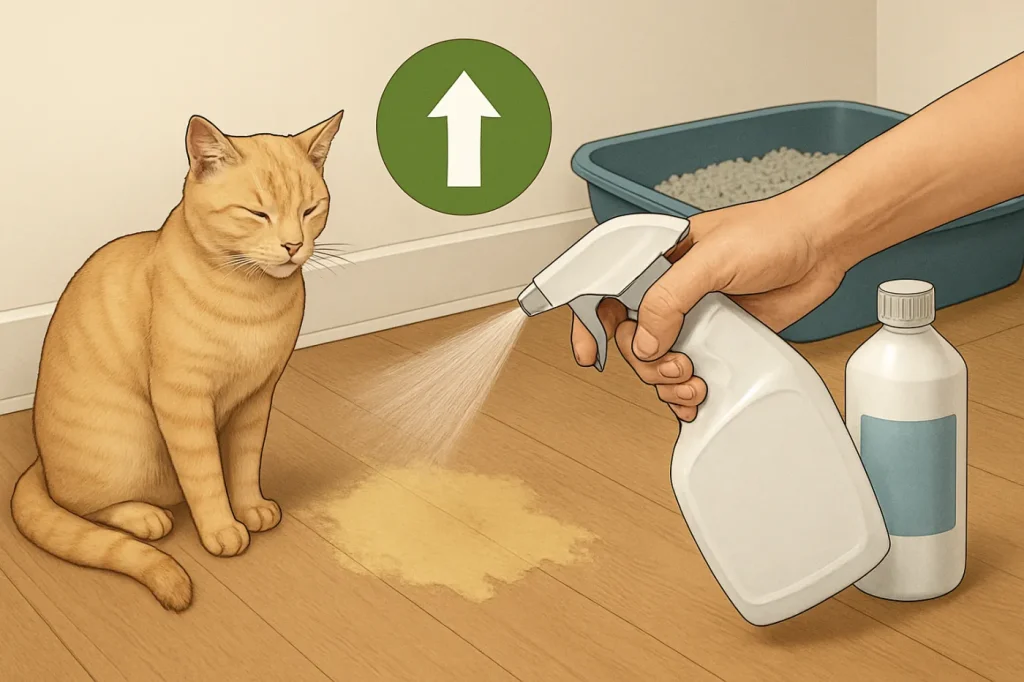
To get rid of cat urine smell in the house, you need to do three things: find every spot, clean it with the right products (not just cover it), and fix whatever caused the accident so it does not keep happening. That means using an enzymatic cleaner on all urine, dealing differently with fresh vs dried stains, and checking your cat’s litter box setup and health.
What makes cat urine smell so strong and hard to remove
Understanding why the smell is so stubborn helps you choose the right cleaning strategy.
- Concentrated waste: Cat urine is more concentrated than many other pets’ urine, so it has more urea and waste products in a small amount of liquid.
- Urea turns into ammonia: When urine sits, bacteria break down urea into ammonia. That is the sharp, eye-watering smell you notice in old accidents or dirty litter boxes.
- Crystals and hormones: Cat urine can contain uric acid crystals and, in intact cats, hormones and pheromones. These can cling to surfaces and keep smelling even after basic cleaning.
- Porous surfaces soak it up: Carpets, rugs, mattresses, wood floors, and even drywall can absorb urine. If you only clean the surface, the smell can come back when the area is humid or warm.
Because of this, regular soap, vinegar, or air freshener alone usually will not solve the problem. You need something that breaks down the urine compounds themselves, not just masks the odor.
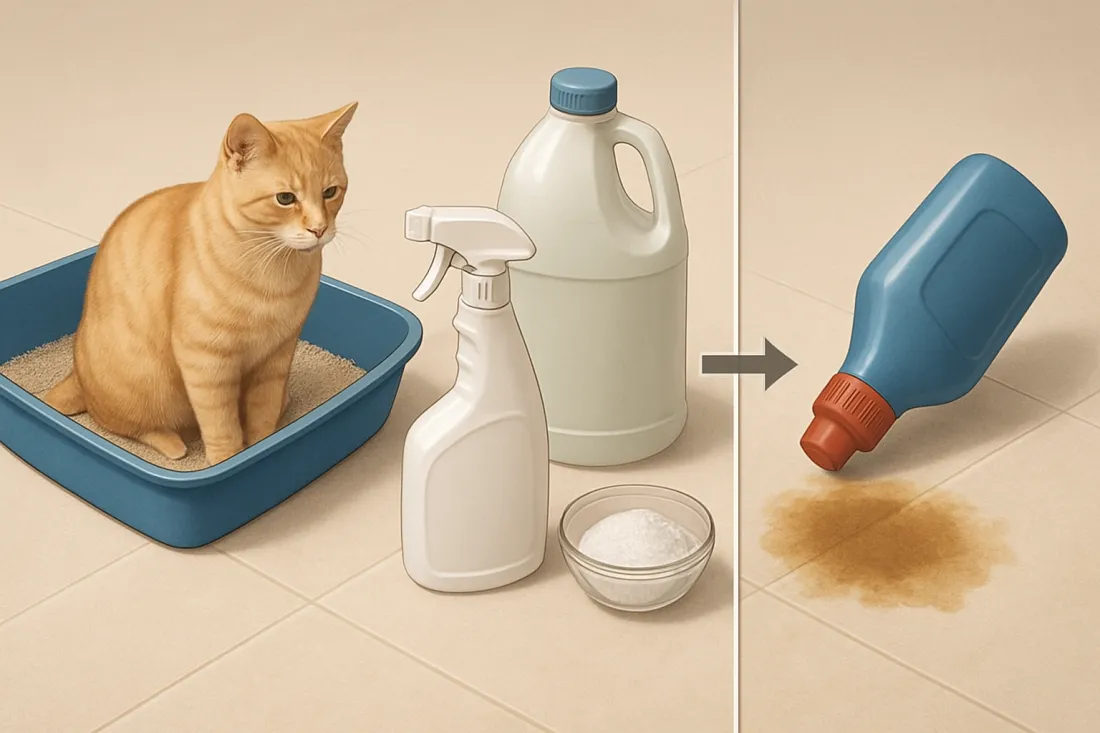
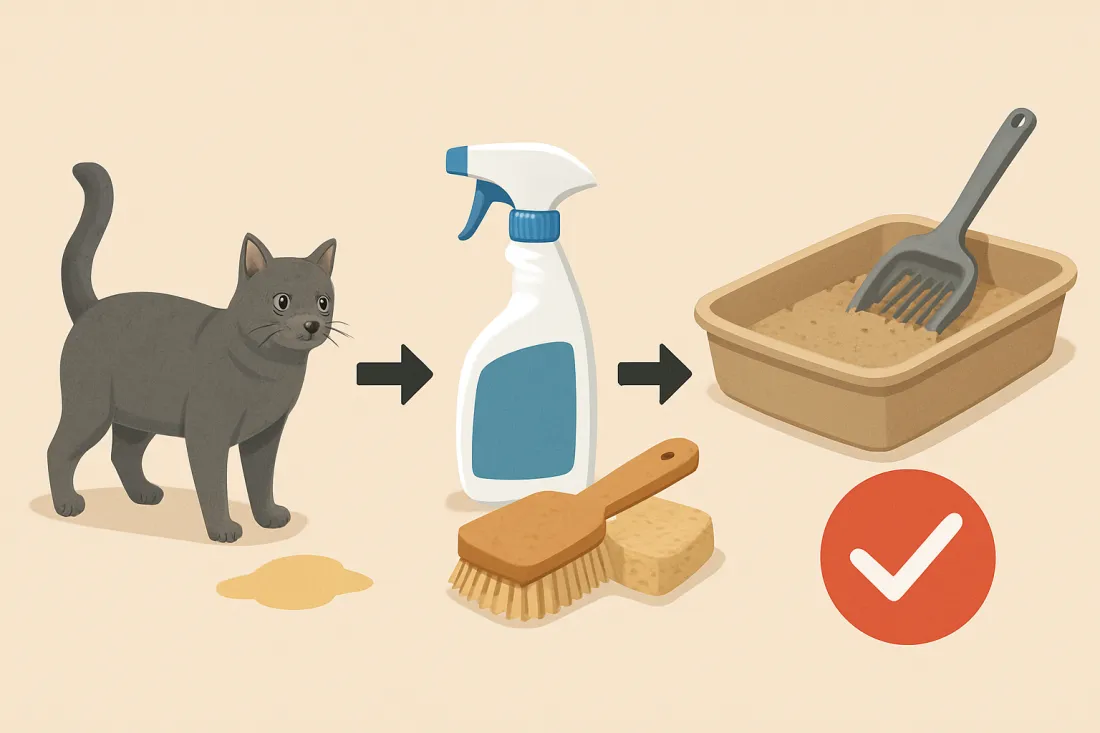
Comparison: common cat urine cleaning methods and when to use them
Different products do different jobs. Here is how they compare so you can pick the right one for each situation.
| Method / Product | Best for | Limitations or risks | How to use effectively |
|---|---|---|---|
| Enzymatic pet urine cleaner | Fresh and dried cat urine on most washable surfaces (carpet, upholstery, bedding, hard floors) | May need several applications on old or heavy stains; must follow label exactly | Saturate the area, let it sit for the full recommended time, then blot and air-dry fully before judging results. |
| Plain water + paper towels/cloths | Immediate blotting of fresh puddles to remove as much liquid as possible | Does not remove odor on its own; only a first step | Blot (do not rub) from the outside of the puddle inward until towels come up mostly dry. |
| Mild dish soap solution | Hard, sealed surfaces (tile, sealed vinyl, sealed laminate) after initial blotting | Can leave residue; does not fully remove deep odor | Wipe with soapy water, rinse with clean water, then follow with an enzymatic cleaner if odor remains. |
| White vinegar solution | Neutralizing general odor on some hard surfaces and in laundry | Strong smell at first; may not fully remove cat urine odor from porous materials | Use diluted (for example, equal parts water and vinegar) after testing a small hidden area for colorfastness. |
| Baking soda (dry) | Absorbing residual odor from carpets and mattresses after enzymatic treatment | Messy if overused; must be vacuumed thoroughly; not a stand-alone cleaner | Sprinkle lightly on dry fabric or carpet, let sit several hours, then vacuum well. |
| Bleach or harsh chemicals | Disinfecting some hard, non-porous surfaces only (not for fabrics) | Can be toxic to cats, damage surfaces, and set odors in porous materials; never mix with ammonia | Generally avoid for urine odor removal; if used, keep pets away and ventilate well, and never use on fabrics or unsealed floors. |
How to clean fresh cat urine before it soaks in
Acting quickly on a fresh accident can prevent long-term odor.
Step-by-step for fresh puddles on hard floors
- Blot up urine immediately with paper towels or an old cloth. Press firmly; do not smear it around.
- Clean with mild soap and water on sealed tile, vinyl, or laminate. Wipe the area, then rinse with clean water.
- Apply an enzymatic cleaner labeled safe for hard floors. Follow the instructions for dwell time.
- Dry the area with a clean towel and allow it to air-dry completely before letting your cat back into the room.
Step-by-step for fresh urine on carpet or rugs
- Blot, do not rub. Place folded paper towels or a cloth over the spot and press down. Replace with fresh towels until they come up only slightly damp.
- Use cool or lukewarm water to lightly dampen the area, then blot again. Hot water can set stains and odors.
- Saturate with enzymatic cleaner. The liquid needs to reach the same depth as the urine, so use enough to soak the carpet and pad in that area.
- Let it sit for the full time recommended on the bottle. This is often at least 10–15 minutes, sometimes longer.
- Blot excess and let the area air-dry fully. This can take many hours. Avoid walking on it while it dries.
Fresh urine on bedding, clothes, or washable fabrics
- Rinse with cool water as soon as possible, ideally from the back of the stain to push urine out of the fibers.
- Soak in an enzymatic laundry additive or a pet urine cleaner that is safe for fabrics, following label directions.
- Wash on a cool or warm cycle with regular detergent. Avoid hot water in the first wash.
- Air-dry first. Do not put items in the dryer until you are sure the smell is gone. Heat can set remaining odor.
How to tackle dried or mystery cat urine smells
Dried urine and “mystery smells” you cannot see usually take more detective work and repeated cleaning.
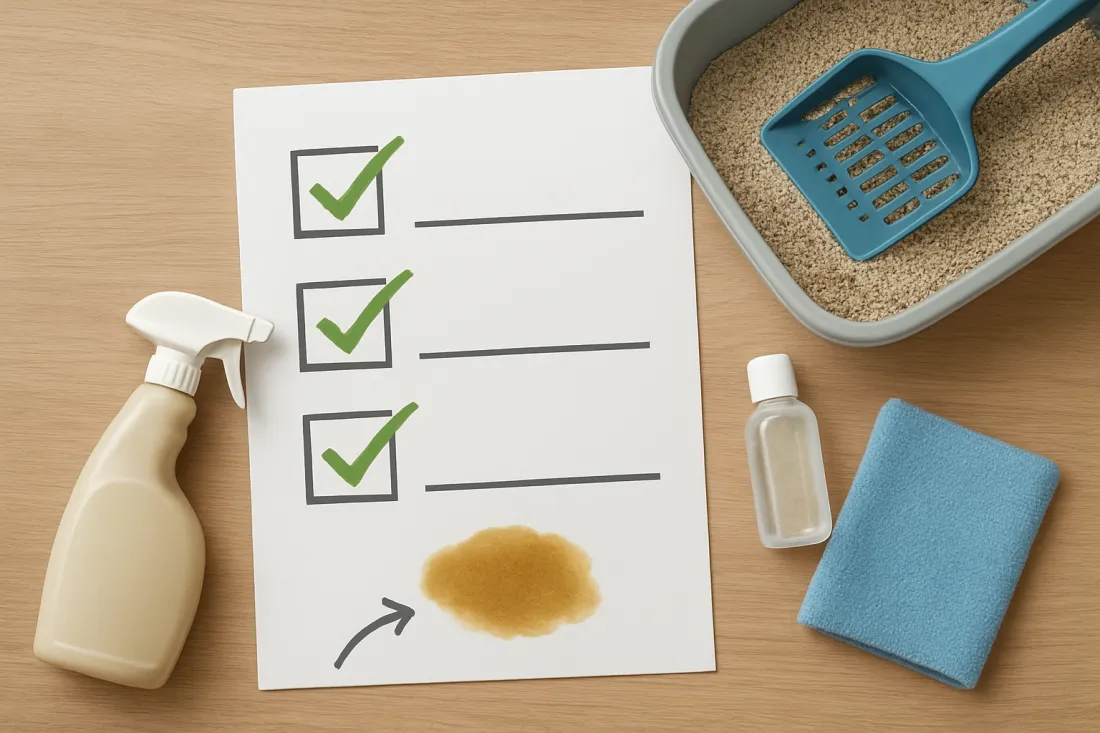
Step 1: Find every urine spot
- Use your nose and eyes: Smell along baseboards, corners, and around furniture. Look for yellowish stains or discolored patches on carpet, walls, or furniture.
- Check common targets: Laundry piles, bath mats, kids’ toys, backpacks, gym bags, and soft furniture are frequent accident spots.
- Consider a UV/blacklight: Many cat urine stains glow under UV light in a dark room, helping you find hidden spots on carpet, walls, and furniture.
Step 2: Deep-clean dried urine on different surfaces
Carpet and rugs
- Mark the area with tape or sticky notes so you do not lose track once lights are on.
- Pre-dampen with water to rehydrate the dried urine lightly.
- Saturate with enzymatic cleaner, making sure it reaches the carpet pad.
- Cover with a clean towel and let it sit for the full recommended time or longer if the stain is old.
- Blot and allow to dry. Repeat the process if any odor remains after it is completely dry.
Upholstery and mattresses
- Test a hidden spot with your cleaner to ensure it does not discolor the fabric.
- Lightly dampen the stained area with water.
- Apply enzymatic cleaner generously, but avoid soaking to the point of dripping through cushions or mattress layers.
- Let it sit as directed, then blot thoroughly.
- Use baking soda on fully dry fabric to absorb lingering odors, then vacuum.
Hard floors and walls
Unsealed wood, grout, and drywall can absorb urine deeply, which sometimes makes complete odor removal difficult.
- Clean the surface with mild soap and water first.
- Apply an enzymatic cleaner safe for the material and let it sit.
- Repeat treatments if odor improves but does not disappear.
- Consider repairs if the smell persists from a small area of unsealed wood or drywall. In some cases, sanding, sealing, or replacing a section is the only way to fully remove deep-set odor.
Dealing with litter box tracking, spills, and general box odor
Sometimes the smell is not from random accidents but from the litter box area itself.
Reduce litter box odor
- Scoop daily: Remove clumps and solid waste at least once a day, more often if you have multiple cats.
- Change litter regularly: Follow the litter brand’s guidance and adjust based on how many cats use the box.
- Wash the box: Empty and wash the litter box with mild soap and water periodically. Avoid strong-smelling cleaners that may repel your cat.
- Ventilate the area: Keep the box in a well-ventilated spot, not a tiny, closed cabinet where odors build up.
Control litter tracking and spills
- Use a litter mat under and in front of the box to catch granules and small clumps.
- Vacuum or sweep often around the box to remove tracked litter that may smell.
- Check for leaks: If your cat pees over the edge or at the entrance, consider a higher-sided box or a top-entry design.
- Clean under and behind the box regularly. Urine can splash or leak into corners and under mats.
Preventing repeat cat urine accidents in the house
Cleaning is only half the job. You also need to make sure your cat has no reason to keep using the same spots.
Optimize the litter box setup
- Enough boxes: Many behavior experts suggest having more than one litter box, especially in multi-cat homes. If you have several floors, consider at least one box per floor.
- Box location: Place boxes in quiet, low-traffic areas that are easy for your cat to reach. Avoid loud appliances, tight corners, or spots where another pet might ambush them.
- Box size and type: Most cats prefer a box that is large enough to turn around in comfortably. Some dislike covered boxes because odors build up inside.
- Litter type: Many cats prefer unscented, fine-grain litter. Strongly scented litters can be off-putting.
Make old accident spots unattractive
- Clean thoroughly with enzymatic cleaners so your cat cannot smell previous urine.
- Block access to repeat spots temporarily with furniture, baby gates, or closed doors.
- Change the function of the area: Place a food bowl, water dish, or cat bed in the cleaned spot. Cats are less likely to pee where they eat or sleep.
Address stress and routine changes
- Keep a stable routine for feeding, playtime, and bedtime when possible.
- Provide hiding spots and vertical space (cat trees, shelves) so your cat feels secure.
- Manage multi-pet tension by giving each pet their own resources (bowls, beds, resting spots) and safe zones.
If you are working on house rules and consistency for all your pets, you may also find it useful to read about basic house rules for dogs and cats so everyone in the home follows the same expectations.
When to see a vet about inappropriate urination
Sometimes peeing outside the litter box is not a behavior problem but a medical one. Cleaning alone will not fix it.
Warning signs that need a vet visit
- Frequent trips to the box with little or no urine produced.
- Straining, crying, or obvious discomfort while urinating.
- Blood in the urine or very dark, unusual color.
- Sudden change in habits, especially in a previously well-trained cat.
- Urinating on beds, couches, or your belongings after a stressful event (move, new baby, new pet).
- Excessive licking of the genital area.
These signs can be associated with urinary tract infections, bladder inflammation, crystals, or other health issues. In male cats especially, straining to urinate or producing no urine can be an emergency. If you see these signs, contact a veterinarian immediately.
Structured checklist: step-by-step plan to remove cat urine smell and stop repeat accidents
Use this checklist to work through the problem systematically.
- Identify all odor sources
- Walk through the house and sniff around baseboards, corners, and soft furnishings.
- Use a UV/blacklight in dark rooms to spot hidden stains.
- Mark each location with tape or sticky notes.
- Handle any fresh accidents immediately
- Blot up urine with paper towels or cloths (no rubbing).
- Rinse with cool water if on fabric, then blot again.
- Apply an enzymatic cleaner appropriate for the surface.
- Deep-clean dried stains
- For carpet and rugs: rehydrate lightly, saturate with enzymatic cleaner, let sit, blot, and repeat if needed.
- For upholstery and mattresses: spot-test, apply cleaner, blot, and use baking soda once fully dry.
- For hard floors and walls: clean with mild soap, then treat with enzymatic cleaner; consider repair if odor persists from a small area.
- Refresh the litter box area
- Scoop at least once daily and fully change litter on a regular schedule.
- Wash the box with mild soap and water before refilling.
- Add a litter mat and check for leaks or over-the-edge peeing.
- Improve your cat’s bathroom options
- Ensure you have enough boxes for the number of cats and floors.
- Place boxes in quiet, accessible locations.
- Try unscented, fine-grain litter if your cat seems reluctant to use the box.
- Discourage repeat use of old spots
- Re-clean any area where you still detect odor.
- Block access or change the function of the spot (food, water, or bed there).
- Monitor your cat closely for a few weeks to catch any new attempts early.
- Watch for signs of medical issues
- Note any straining, frequent small urinations, blood, or vocalizing in the litter box.
- Schedule a vet visit if accidents continue despite a clean house and good litter setup.
- Address stress and routines
- Keep feeding and playtimes consistent.
- Provide hiding spots, vertical spaces, and quiet resting areas.
- Introduce new pets or changes gradually, with extra attention and play.
Common mistakes that keep cat urine smell lingering
A few missteps can undo a lot of cleaning work. Avoid these if you want the smell gone for good.
- Using only air fresheners or sprays: These mask the smell for humans but do not remove the scent markers your cat can still detect.
- Skipping enzymatic cleaners: Regular cleaners, vinegar, or soap alone often leave behind compounds that keep smelling and attract repeat accidents.
- Rubbing instead of blotting: Rubbing pushes urine deeper into carpet or fabric and spreads the stain.
- Using hot water or heat too soon: Hot water and dryers can set odors and stains into fabrics.
- Not checking under and around the litter box: Leaks, over-the-edge peeing, and tracked litter can all smell like “mystery” urine.
- Punishing the cat: Scolding or rubbing a cat’s nose in urine does not teach them to use the box and can increase stress, which may lead to more accidents.
- Ignoring sudden behavior changes: A cat that suddenly starts peeing outside the box may be in pain or distress and needs a vet check, not just more cleaning.
Decision guide: what to do next based on your situation
Use these quick decision points to choose your next step.
- If you smell cat urine but cannot find it: Do a slow walk-through with lights off and a UV/blacklight, check soft furnishings and corners, and mark any glowing spots to clean with an enzymatic product.
- If your cat has one random accident: Clean thoroughly, review litter box cleanliness and location, and watch for any repeat issues or signs of discomfort.
- If accidents are happening regularly: Deep-clean all known spots, upgrade your litter box setup, reduce stress, and schedule a vet visit to rule out medical causes.
- If the smell will not go away from one area: Confirm you have treated the right spot, repeat enzymatic treatments, and consider whether the material (such as unsealed wood) may need repair or replacement.
FAQ about getting rid of cat urine smell in the house
What is the most important thing to understand about removing cat urine smell in a house?
The key is that you must remove the urine itself, not just cover the odor. Cat urine contains compounds that cling to surfaces and keep smelling even when the area looks clean. If your cat can still smell their own urine, they are more likely to return to that spot. Using an enzymatic cleaner, giving it enough time to work, and treating every affected area are more important than any air freshener or scented product.
What cleaning mistakes make cat urine smell harder to remove?
Common mistakes include rubbing instead of blotting, using hot water or a dryer before the smell is gone, relying only on vinegar or regular cleaners without an enzymatic product, and spraying strong perfumes to hide the odor. Another big mistake is cleaning only the obvious spot and ignoring nearby areas, under furniture, or under the litter box, where urine may have splashed or soaked in.
How many times should I treat the same spot if the cat urine smell keeps coming back?
Old or heavy urine stains often need several rounds of enzymatic treatment. Each time, re-dampen the area lightly, apply enough cleaner to reach the full depth of the stain, let it sit for the recommended time, and allow it to dry completely before deciding whether it worked. If, after multiple thorough treatments, a small area of wood, drywall, or carpet still smells strongly, it may be more effective to repair or replace that section.
What should I do after I finish cleaning to prevent new cat urine accidents?
Once everything is clean and dry, focus on your cat’s environment and routine. Make sure you have enough litter boxes in quiet, accessible locations, keep them clean, and use a litter your cat seems to like. Block or repurpose old accident spots so they are less attractive. Pay attention to stressors such as new pets, moves, or schedule changes, and give your cat extra playtime and safe resting places. If accidents continue, schedule a vet visit to rule out medical problems and consider working on broader house training mistakes to avoid with dogs and cats so your whole household stays consistent.
When is it time to call a professional cleaner for cat urine odor?
Professional help can be useful when large areas of carpet or upholstery are affected, when urine has soaked into padding or subfloors, or when you have tried multiple enzymatic treatments without success. A professional with experience in pet odor removal may have tools and techniques to reach deeper layers. However, even with professional cleaning, you still need to address litter box setup, stress, and possible medical issues to prevent new accidents.