
When a rental listing says “pet-friendly,” it almost never means “any pet, no questions asked.” In most US rentals, “pet-friendly” means pets are allowed only under specific rules about species, breed, size, number, behavior, and extra costs. Those rules can be strict, and they vary widely from one property to another.
If you do not dig into the details before you sign, you can end up with surprise fees, find out your particular dog or cat is not actually allowed, or even be told to remove your pet after you move in. Understanding what “pet-friendly” really covers is part of responsible pet ownership and smart renting.
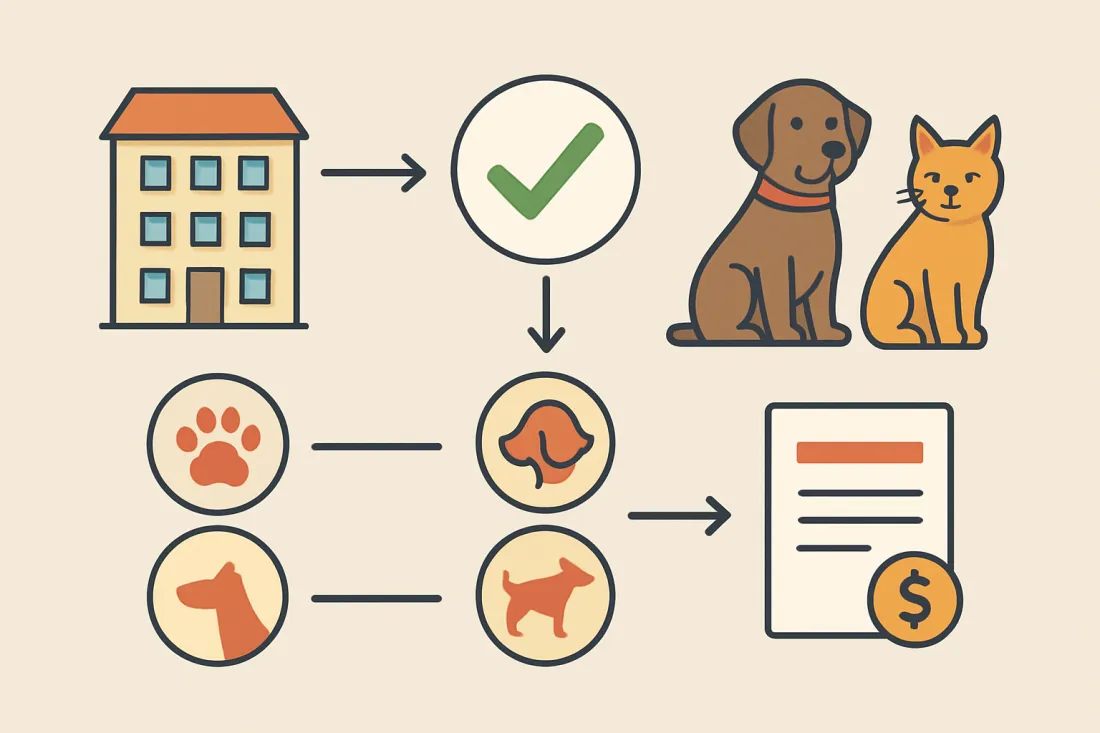
Pet-Friendly vs Pet-Tolerant vs Pet-Restricted Apartments
Rental ads use vague labels that sound similar but feel very different once you live there. Here is what those terms usually mean in practice in US rentals.

What “pet-friendly” usually means
- Pets are allowed, but under written rules.
- Common limits: maximum number of pets, weight caps for dogs, breed restrictions, no exotic animals.
- Extra costs: pet deposit, one-time pet fee, monthly pet rent, and sometimes required cleaning at move-out.
- Behavior expectations: no excessive noise, no aggressive behavior, and strict cleanup rules.
- Often some basic amenities: waste stations, a small dog walk area, or clear pet routes through the building.
A genuinely pet-friendly place is clear, consistent, and reasonably flexible as long as you are a responsible pet owner.
What “pet-tolerant” feels like
These places may advertise as pet-friendly, but the attitude is closer to “we will put up with your pet if we have to.” Signs of a pet-tolerant property include:
- Very tight limits (for example, one small cat only, no dogs at all).
- High pet fees or pet rent compared with similar rentals in the area.
- Few or no pet amenities, and little thought given to where pets can relieve themselves.
- Leasing staff sound annoyed when you mention pets or say things like “we prefer no pets, but we allow them.”
You technically can have a pet, but you may feel like you are always one complaint away from a problem.
What “pet-restricted” usually means
Pet-restricted buildings allow only certain pets under narrow conditions. Common patterns:
- Cats only, no dogs.
- Only caged pets (fish, small birds, hamsters) and maybe one cat.
- Very low weight limits for dogs and strict breed lists.
- Rules that quietly rule out many real-life pets, such as “one pet under a very low weight limit.”
These places can work if you have a single low-impact pet and no plans to add more, but they are risky if you might want a different type of pet later.
What “no pets” means
“No pets” properties do not allow animals that are considered pets in the unit. This is different from legally protected service animals or some assistance animals, which are handled under separate rules and are not treated as pets in the lease. If that might apply to you, ask the property manager directly and check current local guidance before you assume anything.
Comparison Table: Pet-Friendly vs Pet-Tolerant vs Pet-Restricted
Use this table to compare how different labels usually play out. Always confirm the exact policy with the landlord or property manager.
| Type of rental | How pets are treated day to day | Typical rules and limits | Costs you might face | Best fit for | Key risks |
|---|---|---|---|---|---|
| Genuinely pet-friendly | Staff welcome pets, other animals are visible, rules are clear and consistently enforced. | Allows common pets (dogs, cats) with reasonable size/number limits; behavior-based expectations instead of blanket hostility. | Moderate pet deposit or fee, predictable pet rent, clear move-out cleaning expectations. | Most responsible pet owners with dogs or cats who want a stable, long-term home. | Still may have breed or weight limits; pet costs can rise at renewal; rules can tighten over time. |
| Pet-tolerant | Pets are allowed but not encouraged; complaints may escalate quickly. | Strict limits (for example, one small cat), little flexibility, low tolerance for noise or accidents. | Higher fees and pet rent, fines for minor rule violations, possible extra cleaning charges. | Tenants with one quiet, low-impact pet who do not plan to add more animals. | Stressful if your pet is anxious or vocal; hard to add another pet; risk of tension with management. |
| Pet-restricted | Policy is written around limiting pets rather than supporting them. | Cats only, or only very small dogs or caged pets; many breeds and larger animals excluded. | Deposit, fee, and pet rent may still apply even for small or caged pets. | People with a single cat, fish, or small caged pet who are sure they do not want a dog. | Not suitable if you might want a dog or larger pet; easy to violate rules by adding the “wrong” pet. |
| No pets | Pets are not part of building life; any pet presence is treated as a violation. | No animals considered pets allowed in the unit, even for short visits, with limited exceptions for assistance animals. | Usually no pet-related charges because pets are not allowed. | People without pets who do not plan to get one during the lease term. | Bringing in a pet anyway can lead to fees, formal warnings, or being asked to remove the animal. |
Common Pet Policies You Will See in US Rentals
Even when two listings both say “pet-friendly,” the actual rules can be very different. These are the policy areas you are most likely to see in US leases.
Species rules: what kinds of animals are allowed
- Dogs and cats only: Many apartments limit pets to dogs and cats.
- Small caged pets: Fish, small birds, and small caged animals may be allowed but still need to be disclosed.
- No exotics: Reptiles, large birds, and unusual pets are often banned or require special approval.
If you have anything other than a dog or cat, assume you need explicit written permission.
Breed and weight limits for dogs
- Weight caps: Many properties set a maximum weight per dog. This may be based on expected adult weight for puppies.
- Breed lists: Some landlords use lists of restricted or “aggressive” breeds. Mixed-breed dogs can be affected if they look similar to a listed breed.
- Case-by-case decisions: Some managers will meet your dog and decide individually, sometimes asking for training records or references.
Always ask to see the current written list of restricted breeds and how mixed breeds are handled.
Limits on number of pets
- Many apartments cap the total number of pets per unit (for example, one or two pets).
- Some set separate limits for dogs and cats (for example, one dog and one cat, or two cats only).
- Shared housing, studios, or small units often have stricter limits than large apartments or townhomes.
If you foster animals, pet-sit, or plan to add a second pet, this limit matters as much as breed or weight rules.
Behavior and noise expectations
- Pets must not disturb neighbors with frequent barking, howling, or other noise.
- Pets must not show aggressive behavior toward people or other animals in common areas.
- Leash rules usually apply in hallways, elevators, lobbies, and outdoor common spaces.
- Some buildings have quiet hours that apply to pets as well as people.
Even if your pet is allowed on paper, ongoing noise or behavior issues can lead to warnings, fines, or pressure to remove the animal.
Damage and cleanliness rules
- You are usually responsible for any pet damage to flooring, doors, blinds, or walls.
- Many leases require immediate cleanup of pet waste in outdoor areas.
- Some properties require professional carpet cleaning or deodorizing at move-out if you had a pet.
Planning ahead with training and pet-proofing can reduce damage and protect your deposit. If you have a cat, learning how to pet proof an apartment for a cat can make a big difference.
How Pet Deposits, Fees, and Pet Rent Work
“Pet-friendly” almost always affects your budget. You may see one or more of these charges in a US lease.
Pet deposit
- What it is: Money you pay up front that is meant to cover possible pet damage.
- Refundable? Often it can be refundable if there is no pet damage beyond normal wear and tear, but the lease should say this clearly.
- What to check: Whether it is separate from your main security deposit, and what the landlord considers “damage” versus normal use.
Nonrefundable pet fee
- What it is: A one-time charge for the privilege of having a pet, usually nonrefundable.
- Why it matters: You will not get this money back even if your pet never causes damage.
- What to check: Whether the fee is per pet or per unit, and whether it is due at move-in or when you add a pet later.
Monthly pet rent
- What it is: An extra amount added to your rent every month for each pet or for all pets.
- How it adds up: Even a modest monthly amount becomes a noticeable cost over a year or a full lease term.
- What to check: Whether pet rent is per pet, whether it can increase at renewal, and what happens if a pet passes away or you rehome them mid-lease.
Other possible costs
- Required professional cleaning at move-out if you had a pet.
- Charges for odor removal or flea treatment if needed.
- Fines for not picking up after your dog or violating leash rules.
These costs sit on top of your regular pet budget for food, vet care, and supplies. If you are still planning your first pet, it can help to look at resources such as how much does a cat really cost monthly so you can see how housing costs fit into the bigger picture.
Limits on Species, Breeds, Size, and Number of Pets
Before you fall in love with an apartment, make sure the policy fits your actual animal, not just the idea of “pets.”
Species limits
- Dogs and cats: Most pet-friendly places are designed around dogs and cats.
- Fish and small caged pets: Often allowed but may still need to be disclosed and approved.
- Reptiles, large birds, and exotics: Frequently banned or only allowed with special written approval.
If you have a less common pet, ask directly: “Is this specific species allowed, and are there any extra conditions?”
Breed limits
Many US rentals use breed restrictions, especially for dogs. To protect yourself:
- Ask for the full written list of restricted breeds.
- Check how they handle mixed breeds and what proof they accept (for example, vet records).
- Ask what happens if the property’s breed list changes while you are already living there.
Size and weight limits
Weight caps are common in multi-story buildings and older properties. To avoid issues:
- Confirm whether the limit is based on current weight or expected adult weight for puppies.
- Ask how they verify weight (vet records, visual estimate, or not at all).
- Check whether the limit applies per pet or to the combined weight of all pets.
Number of pets
- Ask for the maximum number of pets allowed per unit.
- Clarify whether there are different limits for dogs vs cats.
- Ask if there are rules about adding a second pet after move-in and whether that changes your fees or rent.
Key Questions to Ask Property Managers Before You Sign
Do not rely on the listing label alone. Use these questions at showings, on calls, or by email to uncover the real pet policy.
Questions about what pets are allowed
- What types of pets are allowed here (dogs, cats, small caged pets, others)?
- Are there any breed restrictions for dogs? Can I see the list in writing?
- Is there a weight limit? How is it enforced?
- What is the maximum number of pets allowed per unit?
Questions about costs
- Is there a pet deposit? Is it refundable, and under what conditions?
- Is there a nonrefundable pet fee? Is it per pet or per apartment?
- How much is monthly pet rent, and is that per pet?
- Are there any required cleaning or treatment charges at move-out for pet owners?
Questions about rules and daily life
- What are the leash rules in hallways, elevators, and outdoor areas?
- Are there any areas where pets are not allowed (pool, gym, certain lawns)?
- Are there quiet hours or noise rules that apply to barking or other pet noise?
- What happens if a neighbor complains about my pet?
- Are there any size or breed limits for using elevators or certain entrances?
Questions about procedures and enforcement
- How do I register my pet with the building?
- Do you require proof of vaccinations or spay/neuter?
- Can I add a pet later if I do not have one at move-in? What is the process?
- What would be a reason you might ask a tenant to remove a pet?
Structured Checklist: Pet Policy Questions to Ask at a Showing
Use this step-by-step checklist when you tour or apply for a pet-friendly apartment. Copy it into your notes app and tick items off as you go.
- Confirm your current pet is allowed
- State your pet’s species, breed (or mix), age, and approximate weight.
- Ask directly: “Is this specific pet allowed under your current policy?”
- Request any breed, species, or weight limits in writing.
- Clarify how many pets you can have
- Ask for the maximum number of pets per unit.
- Confirm whether limits are different for dogs vs cats.
- If you might add a pet later, ask: “Would a second pet like this be allowed?”
- List every pet-related cost
- Pet deposit amount and whether it is refundable.
- One-time pet fee and whether it is per pet or per unit.
- Monthly pet rent and whether it is per pet.
- Any required cleaning or treatment charges at move-out for pet owners.
- Understand behavior and noise expectations
- Ask what counts as “excessive” barking or noise.
- Ask how complaints are handled (warning, fine, or other steps).
- Confirm quiet hours and whether they apply to pets.
- Check daily logistics for your pet
- Where can you walk your dog on the property?
- Where are pet waste stations located, if any?
- Are there pet relief areas or nearby parks?
- Are pets allowed in elevators, or must you use stairs or a service entrance?
- Ask about documentation
- Are vaccination records required?
- Is proof of spay/neuter required?
- Do they ask for training certificates or references for dogs?
- Clarify what happens if things change
- What happens if your pet gains weight and passes the limit?
- What if the property updates its breed list while you live there?
- What if you need to pet-sit for a friend’s animal temporarily?
- Get everything in writing
- Ask for a copy of the pet addendum or pet policy before signing.
- Make sure any special approvals (for your breed, size, or extra pet) are written into the lease.
Tips for Getting Pet Policies in Writing
Verbal promises are easy to forget or misunderstand. Protect yourself and your pet by locking down the details on paper or in email.
Ask for the pet addendum early
- Request the full pet policy or pet addendum before you pay application fees or deposits.
- Read it carefully for any differences from what the leasing agent said.
Confirm special approvals inside the lease
- If the manager makes an exception (for example, allowing your large dog in a building with a weight limit), ask them to write that exception into the lease.
- Make sure the exception clearly describes your pet (name, approximate weight, and type).
Use email to create a paper trail
- After a conversation, send a short email summarizing what you understood: species allowed, fees, deposits, and any exceptions.
- Ask them to reply confirming or correcting your summary.
- Save these emails with your lease documents.
Check move-out expectations in writing
- Look for any clauses about required cleaning, deodorizing, or repairs related to pets.
- Ask what kind of condition they expect the unit to be in to avoid extra charges.
- Plan ahead for pet-proofing and cleaning so you can meet those expectations.
Common Mistakes Renters Make With “Pet-Friendly” Apartments
A few avoidable mistakes cause most pet-related rental headaches. Watching for these can save you money and stress.
1. Assuming “pet-friendly” means your pet is automatically allowed
Many renters see “pet-friendly” and stop asking questions. If your dog is a large breed, a mix that might be on a restricted list, or a high-energy animal, you need to confirm that your specific pet is acceptable under the current policy and that any exceptions are written into the lease.
2. Not disclosing a pet on the application
Trying to sneak in a pet can backfire. If the landlord discovers an undisclosed animal, you may face fines, be asked to remove the pet, or risk your lease. Being honest and finding a place that truly fits your situation is usually safer for both you and your pet.
3. Ignoring pet costs when budgeting
Pet deposits, fees, and monthly pet rent can significantly change what an apartment really costs over a full lease term. If you are already stretching your budget, adding pet rent and possible cleaning charges can make the unit unaffordable and increase the risk that you will struggle to keep your pet long term.
4. Overlooking behavior and noise expectations
Even if your pet is allowed on paper, frequent barking, scratching at doors, or accidents in hallways can lead to complaints. Repeated issues may result in warnings, fines, or pressure to remove the pet. Training, enrichment, and realistic expectations about your pet’s energy level are part of responsible pet ownership in an apartment.
5. Failing to plan for emergencies or changes
Job loss, illness, or a move can affect your ability to keep a pet in a rental. If you ever face a situation where you cannot keep your pet, it helps to understand what happens when you surrender a pet to a shelter and to explore alternatives like rehoming with trusted friends or family.
Decision Criteria: Is This Pet-Friendly Apartment Right for You?
Once you know the rules, you still need to decide whether a specific apartment is a good match for you and your pet. Use these criteria to compare options.
1. Fit with your current pet
- Does your pet’s species, breed, size, and age clearly fit the written policy?
- Is there enough indoor space for your pet’s energy level?
- Are there safe outdoor areas or nearby parks for exercise and bathroom breaks?
2. Flexibility for future plans
- Do you plan to add another pet during the lease?
- Would you ever want to foster animals or pet-sit for friends?
- Does the policy allow for any of that, or is it too tight for your long-term plans?
3. Financial comfort
- Can you comfortably afford rent plus pet rent, deposits, and potential cleaning charges?
- Have you considered other pet costs like food, routine vet visits, and emergency care?
- Would a slightly higher base rent in a more genuinely pet-friendly building be better than high ongoing pet fees?
4. Management attitude toward pets
- Do staff seem welcoming to pets, or annoyed by them?
- Are pet rules explained clearly and calmly, or only mentioned when you push?
- Do you see signs of a responsible pet culture (waste stations, posted rules, clean common areas)?
5. Building environment
- Do you see or hear many other pets in the building?
- Are hallways and outdoor areas clean, or full of pet messes?
- Would your pet be comfortable with the level of noise, elevator use, and foot traffic?
What to Do Next Once You Understand “Pet-Friendly”
After you understand what “pet-friendly apartment” really means, you can take a few concrete next steps:
- Make a simple profile of your pet (species, breed or mix, weight, age, behavior quirks) to share with landlords.
- Save the checklist from this guide and use it at every showing.
- Compare at least two or three pet-friendly options so you can see how policies and costs differ.
- Ask for all pet rules and any exceptions in writing before you sign anything.
- Plan training, enrichment, and pet-proofing so your animal is a good neighbor and you protect your deposit.
FAQ: Understanding Pet-Friendly Apartments in the US
What should I really understand about a “pet-friendly apartment” before I move in?
You should understand that “pet-friendly” is not a guarantee that your specific pet is allowed without conditions. You need to know exactly which species, breeds, sizes, and numbers of pets are permitted; what deposits, fees, and pet rent you will pay; what behavior and noise rules apply; and what happens if there are complaints or policy changes. All of this should be clear in writing before you sign the lease.
What mistakes should I avoid when renting a pet-friendly apartment?
Avoid assuming that any pet is fine just because the listing says “pet-friendly,” skipping the step of reading the pet addendum, hiding a pet from the landlord, and ignoring ongoing costs like pet rent and required cleaning. It is also a mistake to overlook your pet’s behavior needs—an anxious or high-energy animal in a tight, strict building can create constant stress for you and your neighbors.
What should I do next if I am currently searching for a pet-friendly rental?
Gather your pet’s basic information, then contact potential landlords and ask direct questions about species, breed, size, and number limits, as well as all pet-related costs. Use a written checklist during showings, request the full pet policy or addendum, and compare how different properties treat pets. Choose the place where your pet clearly fits the written rules, the costs are manageable, and the management’s attitude toward pets feels genuinely supportive.
How can I tell if a building is truly pet-friendly and not just pet-tolerant?
Look beyond the listing label. In a truly pet-friendly building, staff talk about pets in a positive, practical way, rules are clear and written down, you see signs of responsible pet ownership (waste stations, clean common areas), and other pets seem relaxed and welcome. In a pet-tolerant place, rules may feel grudging, fees may be high, and staff may sound irritated when you ask pet questions.
How can I be a responsible pet owner in an apartment setting?
Being responsible in a rental means choosing a pet that fits your space and schedule, keeping vaccinations and preventive care up to date, training your pet to minimize noise and damage, always cleaning up waste, and respecting shared spaces and neighbors. It also means being honest with your landlord about your pet and planning ahead so you can keep your animal safely housed even if your situation changes.