
Feeling like you might need to give up your dog is heartbreaking. You are not a bad owner for asking, “What are my alternatives to surrendering my dog?” It usually means you care enough to look for a responsible solution instead of acting on impulse.
Below is a practical guide for dog guardians in the United States who are struggling with behavior, money, housing, health, or life changes. You will find concrete options to try before surrendering, plus clear steps for rehoming safely if keeping your dog truly is not possible.
First decision: Can this problem be fixed if you get the right help?
Start by separating two questions:
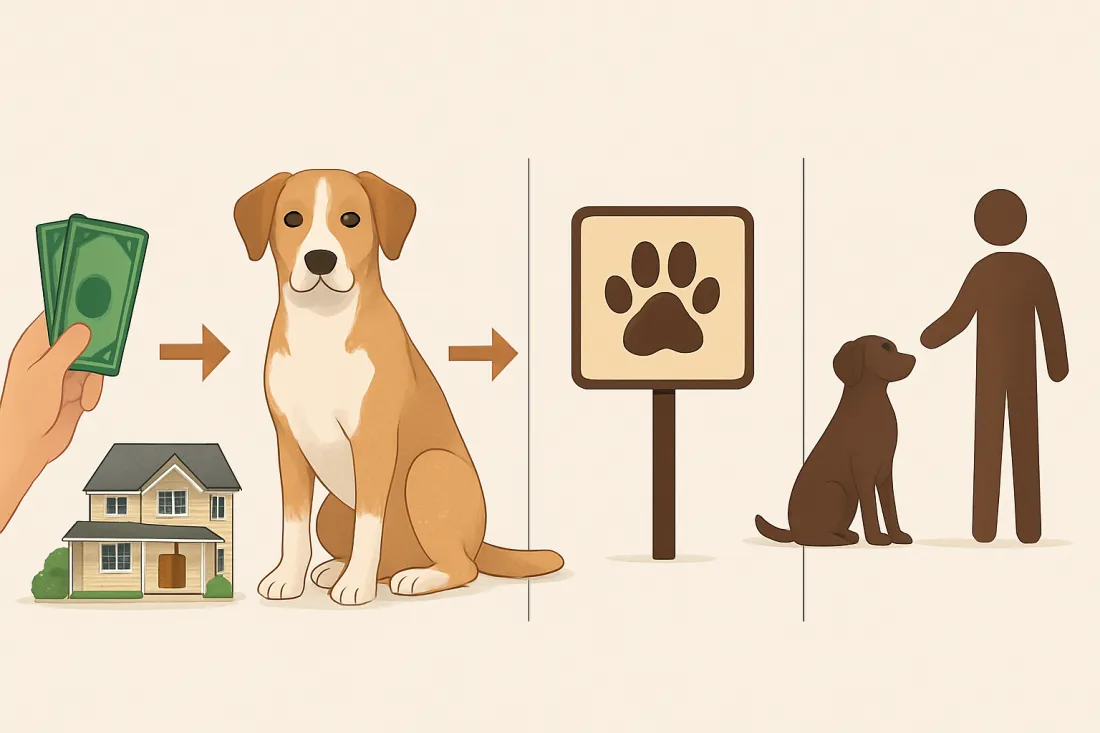
- Is the problem temporary or solvable with support? (training, money, housing, schedule, health)
- Or is there a long-term safety or welfare issue that makes rehoming the kinder choice?
Use this quick decision flow as a guide:
- Safety risk? Has your dog seriously bitten someone, attacked another pet, or shown dangerous aggression? If yes, talk to your vet and a certified behavior professional before any other step. Surrendering to a regular shelter may not fix a true safety risk.
- Money or time problem? If the main issue is vet bills, food, grooming, or long work hours, look for financial aid, low-cost services, dog walkers, or daycare before rehoming.
- Housing problem? If you are moving or your landlord changed rules, explore pet-friendly rentals, letters from your vet or trainer, and temporary care options.
- Health or life crisis? If you are ill, pregnant, or caring for a family member, consider short-term fostering by friends, family, or local rescue groups.
- Mismatch in energy or lifestyle? If your dog’s needs are far beyond what you can realistically meet, responsible rehoming may be fairer to both of you.
If you are unsure, a deeper guide on how to decide if you should rehome your dog can help you think through the long-term picture.
Common reasons for wanting to surrender a dog and targeted alternatives
Understanding the real root of the problem makes it easier to find a solution that does not involve surrendering your dog to a shelter. Below is a comparison of frequent situations, realistic alternatives, and when rehoming may still be the kindest choice.
| Reason you feel you must surrender | Practical alternatives to try first | When rehoming may still be kinder |
|---|---|---|
| Behavior problems (pulling, barking, chewing, accidents, jumping) | Vet check to rule out medical issues; basic training class; one-on-one trainer; more exercise and mental enrichment; consistent house rules for all family members | If after consistent work with a qualified professional the dog’s behavior still makes daily life unmanageable for your household |
| Aggression or bites | Immediate vet visit; behavior specialist; strict management (muzzles, gates, leashes); safety plan for family and visitors; avoiding known triggers | If a qualified professional advises that risk is too high for your home situation or you cannot safely follow the management plan |
| Can’t afford food or vet care | Pet food banks; low-cost clinics; payment plans; charity funds; adjusting your budget; asking trusted friends or family for short-term help | If even with assistance you cannot meet basic needs like food, shelter, and necessary medical care |
| Landlord or HOA says “no dogs” or has breed/size restrictions | Ask for an exception with references and proof of training; offer a pet deposit; search pet-friendly housing; consider different neighborhoods or housing types | If you have exhausted realistic housing options and must move by a fixed deadline |
| New baby, illness, or major life change | Temporary foster with trusted people; dog walkers; daycare; baby gates and routines to keep everyone safe; simplifying the dog’s routine | If your health or caregiving duties make it impossible to give the dog safe, basic daily care long term |
| Dog’s energy level is overwhelming | More structured exercise; enrichment toys; training games; dog sports; dog walkers or daycare; switching to calmer activities later in the day | If your lifestyle is permanently incompatible (for example, very high-energy working breed with a mostly sedentary home) |
| Time pressure from work or school | Adjusting your schedule; hiring a dog walker; sharing walks with neighbors; using daycare a few days a week; simplifying training to short daily sessions | If your schedule will be long-term incompatible and you cannot arrange reliable help |
Decision checklist: Keep your dog or plan to rehome?
Use this checklist as a simple step-by-step algorithm. Go through each step honestly and write down your answers so you can see the full picture.
- Clarify the main problem.
- Write down the top 1–2 reasons you are thinking about surrendering your dog (money, housing, behavior, health, time, safety).
- Note how long the problem has been going on and what you have already tried.
- Check for medical causes.
- If behavior changed suddenly (new aggression, accidents, growling, hiding, snapping), schedule a vet exam. Pain or illness can cause behavior changes.
- Ask your vet whether medication, supplements, or a behavior referral might help.
- Rate your safety concerns.
- If your dog has bitten or you are afraid of your dog, treat this as urgent.
- Contact a certified trainer or veterinary behavior professional for a safety plan.
- Until you get help, manage strictly: use leashes, baby gates, crates, and avoid known triggers.
- Calculate what you can realistically afford.
- List current dog expenses: food, routine vet care, grooming, medications, training, boarding.
- Compare that to your monthly budget. If you are unsure what is realistic, a guide on can I afford to keep my dog can help you think through typical costs and where to cut back.
- Look up local low-cost clinics and pet food assistance. Many communities have support you may not know about.
- Audit your time and energy.
- For one week, track how much time your dog actually gets for walks, play, training, and cuddles.
- Ask: Could I realistically add 20–30 minutes a day if it would solve most behavior issues?
- If not, could a dog walker, daycare, or a trusted neighbor help?
- Review your housing options.
- Check pet policies in your lease or HOA documents.
- Search rental sites using “pet-friendly” filters and expand your area or budget range if possible.
- Ask your current landlord whether a pet deposit, slightly higher rent, or proof of training could change their mind.
- List all support people and organizations.
- Friends or family who like your dog and might foster or help with walks.
- Local rescues, humane societies, or community groups that offer behavior advice, food banks, or temporary boarding.
- Your vet and any trainer you have used before.
- Decide on a time frame to try keeping your dog.
- Set a realistic trial period (for example, several weeks) to apply new training, financial help, or housing search.
- During that time, track progress: fewer accidents, less barking, better leash manners, more stable finances.
- Reassess after the trial.
- If there is clear improvement and you feel more hopeful, continue with the plan.
- If nothing has changed and you are still overwhelmed or unsafe, start a responsible rehoming plan.
- If rehoming is needed, choose the safest route.
- Prioritize direct rehoming to a screened individual or through a reputable rescue.
- Use a written agreement and be honest about your dog’s needs and behavior.
- Only consider surrendering to a shelter after you have tried safer alternatives.
Training and behavior support options before surrendering your dog
Many dogs are surrendered for problems that are frustrating but fixable with training and management. Common issues include:
- Pulling on leash
- Jumping on people
- House soiling
- Chewing and destruction
- Excessive barking
- Separation anxiety
Here are realistic ways to get help in the United States.
Work with a qualified trainer or behavior professional
Look for trainers who use reward-based methods and are transparent about their approach. When you contact them, describe:
- Your dog’s age, breed or mix, and history
- Specific behaviors you are seeing (what, when, how often)
- Who is in the household (kids, older adults, other pets)
- Your budget and schedule
Options often include:
- Group classes for basic manners, leash walking, and social skills
- Private sessions at home or at a training facility for more serious or specific issues
- Virtual consults if you live in a rural area or have limited transportation
Ask for a written plan after your first session so you know exactly what to practice between visits.
Use management to prevent problems while you train
Training takes time. Management tools help keep everyone safe and reduce damage while your dog is learning:
- Baby gates to block off rooms or keep your dog away from doors and kids
- Crates or playpens for safe confinement when you cannot supervise
- Muzzles (properly fitted and introduced positively) for dogs with a bite history
- Leashes indoors to guide your dog away from jumping or door dashing
- Chew toys and food puzzles to redirect chewing and give mental exercise
Management is not a failure. It is a safety net that can make it possible to keep your dog while you work on the underlying behavior.
Understand the 3-3-3 rule for dogs
The “3-3-3 rule” is a simple way to remember how long it can take a dog to adjust to a new home:
- First 3 days: Many dogs feel overwhelmed, shut down, or overexcited. They may sleep a lot, pace, have accidents, or test boundaries.
- First 3 weeks: Your dog starts to learn the routine and show more of their true personality. Some behavior issues may appear as they get comfortable.
- First 3 months: With consistent routines and training, most dogs settle in, bond with their family, and understand house rules.
If your dog is new and you are already thinking about surrendering, remember that adjustment takes time. Clear routines, gentle structure, and patience during those first weeks can prevent problems that might otherwise push you toward giving up.
Financial assistance resources in the US that may help you keep your dog
Money stress is one of the most common reasons people feel they cannot keep a dog. Before you decide to surrender, look for these types of support in your area:
- Pet food banks and pantries. Many animal organizations and community groups run programs that provide free or low-cost dog food to families in need.
- Low-cost vaccination and spay/neuter clinics. These can reduce routine vet expenses and help prevent some future medical costs.
- Nonprofit veterinary clinics and charity funds. Some clinics and organizations offer sliding-scale fees, payment plans, or limited financial aid for urgent care.
- Short-term emergency assistance. In some communities, local charities or religious organizations may help with one-time bills, including pet-related costs, during a crisis.
- Budget adjustments. Review nonessential spending (subscriptions, eating out, entertainment) to see if you can temporarily redirect funds to your dog’s basic needs.
If you are unsure where to start, ask your vet’s office or local animal shelter if they maintain a list of financial assistance programs in your region. Many do, and they can point you toward current, legitimate options.
Housing problems and finding pet-friendly rentals
Housing is another major reason people consider surrendering a dog. Landlords may ban pets, limit size or breed, or charge high pet deposits. Here are steps to explore before giving up your dog.
Talk to your current landlord or property manager
It may feel intimidating, but a respectful conversation can sometimes change the outcome:
- Explain that you are committed to being a responsible dog guardian.
- Offer a pet resume with your dog’s photo, age, training certificates, and vet records.
- Provide references from previous landlords or neighbors who can vouch for your dog’s behavior.
- Ask whether a pet deposit, slightly higher rent, or proof of renter’s insurance would make them more comfortable.
Some landlords are more flexible when they see you are proactive and organized.
Expand your search for pet-friendly housing
When you look for a new place:
- Use search filters for “dogs allowed” or “pet-friendly.”
- Be honest about your dog’s size and any breed restrictions that may apply.
- Consider slightly different neighborhoods or housing types (for example, a duplex instead of a large complex) where individual owners may be more flexible.
- Prepare your pet resume and references in advance so you can apply quickly when you find a suitable place.
Keep in mind that local rules and insurance policies can affect what landlords allow. Always confirm pet policies in writing before signing a lease.
Use temporary care while you transition
If you must move quickly and cannot find pet-friendly housing in time, look into short-term options:
- Trusted friends or family who can foster your dog for a set period
- Local rescues that offer temporary foster programs for people in crisis
- Reputable boarding facilities if you can afford short-term stays
Make sure any temporary arrangement is clear about the time frame and who is responsible for food, vet care, and decisions about the dog.
Temporary care and fostering options when you need a break, not a goodbye
Sometimes you do not truly want to give up your dog forever—you just cannot care for them right now. In those cases, temporary care can be a lifesaver.
Informal fostering by people you know
Start with your own network:
- Friends, coworkers, or neighbors who already like your dog
- Family members who have dog experience and space
- People who have recently lost a pet and might welcome temporary companionship
When you ask, be specific:
- How long you expect to need help (for example, “about three months while I recover from surgery”)
- What you will provide (food, vet care, supplies, transportation)
- How often you can visit or get updates
Put the agreement in writing, even if it feels awkward. It protects both sides and, most importantly, your dog.
Community or rescue-based temporary foster programs
Some animal organizations run programs that place pets in foster homes while their guardians are in the hospital, fleeing domestic violence, experiencing homelessness, or dealing with other crises. Availability and rules vary by location, so you will need to check what exists in your area.
When you contact an organization, be ready to share:
- Your situation and why you need temporary care
- Your dog’s age, size, and behavior with people and other animals
- Any medical needs or medications
- How long you expect to need help
Paid options: boarding and pet sitters
If you have some funds available and only need short-term help (for example, during a hospital stay or move), consider:
- Boarding kennels or dog hotels
- In-home pet sitters who can stay at your place
- Daycare facilities that also offer overnight care
Always tour the facility or meet the sitter in advance, ask about vaccination requirements, and check reviews or references.
How to responsibly rehome your dog if keeping them is not possible
If you have worked through the options above and still conclude that you cannot keep your dog, you are not failing them by planning a careful, responsible rehome. In many cases, this is kinder than waiting until a crisis forces you to surrender them with no preparation.
Choose between direct rehoming, rescue, or shelter
You generally have three main paths:
- Direct rehoming to someone you know. Often the safest because you already have a relationship and can stay in touch.
- Rehoming through a reputable rescue or breed-specific group. They usually screen adopters, provide support, and may take the dog back if a placement fails.
- Surrendering to a shelter. This should be a last resort when other options are not available or safe.
Whenever possible, start with people you know and trusted rescue groups before turning to a shelter.
Create an honest profile of your dog
Whether you are talking to friends, posting in community spaces, or working with a rescue, prepare a clear description that includes:
- Age, size, and breed or mix (if known)
- Personality traits (affectionate, shy, energetic, independent)
- Behavior with children, strangers, and other animals
- Any training they have (house trained, crate trained, basic commands)
- Medical history and current medications
- Daily routine and what kind of home you think would suit them best
- Any behavior concerns (resource guarding, separation anxiety, reactivity, bite history)
Do not hide problems. Being honest protects both your dog and the new family. Surprises are a common reason rehomed dogs are surrendered again.
Screen potential adopters carefully
If you are rehoming directly, treat it like a job interview for your dog:
- Ask about their experience with dogs and why they want your dog specifically.
- Ask who lives in the home and whether they have other pets.
- Discuss their schedule, yard or walking plans, and budget for vet care.
- Consider a home visit or meeting in a neutral place first.
- Trust your instincts—if something feels off, you can say no.
Many people also use a simple written questionnaire to keep information organized.
Use a written rehoming agreement
A basic written agreement should cover:
- Names and contact information for both parties
- Dog’s identifying details (name, microchip number if applicable)
- Any known medical or behavior issues
- Who is responsible for future vet care and decisions
- Whether you want updates or the option to take the dog back if things do not work out (if you are able to do so)
While a simple document may not cover every legal detail, it helps clarify expectations and shows that you are taking the process seriously. For more depth on this step, a dedicated guide on how to responsibly rehome a dog in the US can be helpful.
Legal and contract considerations when you rehome or surrender a dog
Dog guardianship in the United States is generally treated as ownership of personal property, but there are important practical and legal points to keep in mind when you are considering rehoming or surrendering.
Check any adoption or purchase contract
If you originally adopted your dog from a shelter or rescue, or purchased from a breeder, you may have signed an agreement that:
- Requires you to return the dog to them if you cannot keep the dog
- Prohibits selling or giving the dog away without their consent
- Gives them a “right of first refusal” before you rehome the dog elsewhere
Review any paperwork you received at adoption or purchase. If you are unsure, contact the organization or breeder and ask about their policy. Some are willing to help with rehoming or take the dog back.
Update microchip and license information
If your dog is microchipped or licensed with your city or county:
- Contact the microchip company to update the registered owner and contact details when the dog is rehomed.
- Check your local rules about dog licenses and how to transfer or cancel them.
Accurate information helps ensure your dog can be returned to the correct person if they are ever lost.
Be careful with online listings
Online classifieds and social media can reach many people, but they also carry risks:
- Avoid “free to good home” listings. Charging a reasonable rehoming fee can deter some bad actors.
- Do not hand over your dog without meeting the person, asking questions, and feeling comfortable.
- Be cautious about sharing your home address publicly. Arrange first meetings in safe, public places if needed.
If you are unsure how to navigate this safely, working with a reputable rescue or humane organization can add an extra layer of screening and support.
Common mistakes when looking for alternatives to surrendering a dog
When you are stressed and emotional, it is easy to make rushed decisions. Watch out for these typical mistakes:
- Waiting until a crisis point. The earlier you ask for help with money, housing, or behavior, the more options you will have.
- Ignoring safety concerns. Hoping aggression will “just go away” can put people and other animals at risk. Take any bite or serious threat seriously.
- Underestimating training. Many people assume a dog “just is that way” when a few weeks of consistent training and management could change daily life.
- Rehoming without screening. Handing your dog to the first person who says yes can lead to neglect, abandonment, or your dog ending up in a worse situation.
- Hiding behavior problems. Not telling a new family about issues like resource guarding or separation anxiety increases the chance your dog will be surrendered again.
- Assuming shelters are always the best solution. Shelters can be stressful, and many are full. Direct rehoming or rescue placement is often easier on your dog.
Summary: Choosing the kindest path for you and your dog
Feeling like you might need to surrender your dog is painful, but you have more options than “keep or shelter”:
- Identify the real problem—money, housing, behavior, time, health, or safety.
- Use training, management, and the 3-3-3 rule to give your dog a fair chance to succeed.
- Look for financial aid, pet food banks, and low-cost vet care before deciding you cannot afford your dog.
- Explore pet-friendly housing, landlord negotiations, and temporary foster care if you are moving or in crisis.
- If rehoming is necessary, do it thoughtfully: be honest, screen adopters, and use a written agreement.
- Review any contracts you signed, and update microchip and license information when ownership changes.
Most importantly, remember that asking for help is a sign of responsibility, not failure. Whether you find a way to keep your dog or rehome them safely, you are doing the hard work of putting their welfare first.
FAQ about alternatives to surrendering a dog
What should I do with a dog that I can’t keep anymore?
Start by confirming that you truly cannot keep your dog, even with support. Check for financial aid, pet-friendly housing, and training help. If you still need to rehome, first contact the shelter, rescue, or breeder you originally got the dog from to see if they will take the dog back. At the same time, ask trusted friends, family, and coworkers if they are interested or can help you network. If you rehome directly, screen potential adopters carefully, be honest about your dog’s needs and behavior, and use a written agreement. Surrendering to a shelter should be a last resort when other safe options are not available.
What are realistic alternatives to surrendering a dog to a shelter?
Realistic alternatives include: working with a trainer or behavior specialist, using management tools like gates and crates, seeking pet food banks and low-cost vet care, negotiating with your landlord or finding pet-friendly housing, arranging temporary foster care with friends, family, or local programs, and rehoming directly to a carefully screened new family or through a reputable rescue group. Often, combining several of these options—such as training plus financial assistance—makes it possible to keep your dog.
What is the 3-3-3 rule for dogs, and how does it affect surrender decisions?
The 3-3-3 rule is a guideline that describes how dogs typically adjust to a new home: about 3 days to feel less overwhelmed, about 3 weeks to start understanding the routine and showing their true personality, and about 3 months to feel fully settled and secure. Knowing this can help you avoid surrendering a dog too quickly. If your dog is new and you are struggling, remember that some confusion, accidents, or testing of boundaries are normal early on. With consistent routines, gentle structure, and training support, many early problems improve significantly over those first weeks and months.
What can I do if I can no longer keep my dog and need help near me?
If you are in the United States, start locally. Contact your vet and nearby animal shelters or rescues and ask about behavior help, financial assistance, pet food banks, and temporary foster programs. Many communities have resources that are not widely advertised. You can also ask neighbors, coworkers, and community groups if they know of local support. When you search online, include your city or county name plus terms like “pet food bank,” “low-cost vet,” or “dog rehoming help” to find nearby options. Always verify that any organization or person you work with is reputable and transparent about their process.