
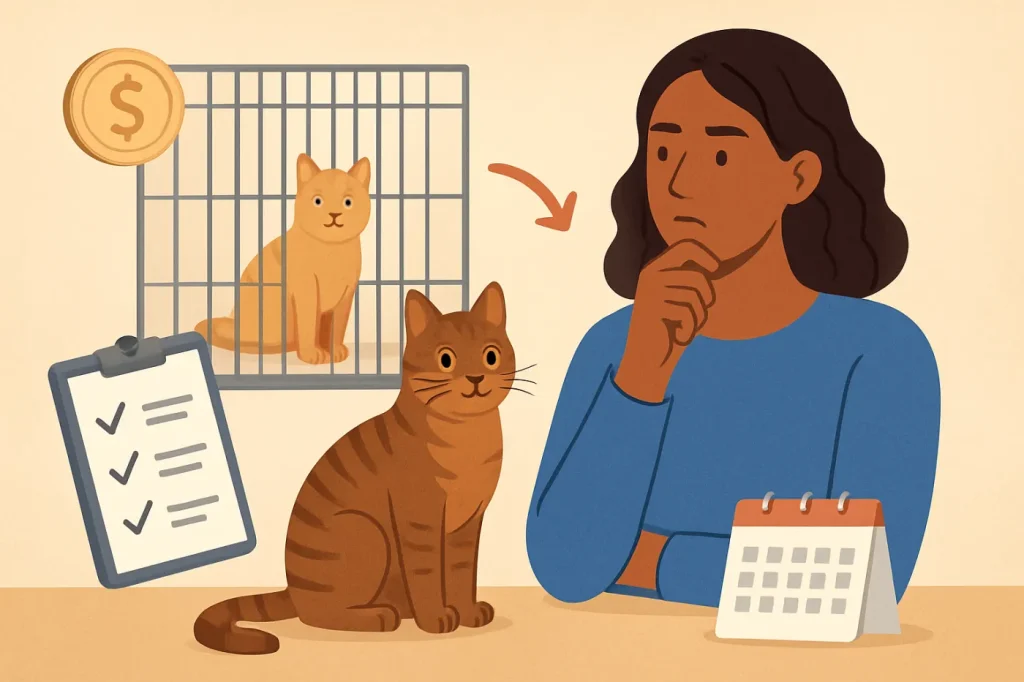
Before adopting a cat from a shelter in the US, it helps to step back and look at the full picture: your lifestyle, your budget, and your home setup. Knowing what to expect before you adopt makes it much more likely that your new cat will settle in smoothly and stay with you for life.
At a minimum, you should understand three things before adopting: you can afford the long-term costs, your home and schedule fit a cat’s needs, and you are ready for a few weeks of adjustment that may not look “perfect” at first. When those three pieces line up, shelter adoption is one of the most rewarding ways to become a pet guardian.
Deciding if you are truly ready to adopt a shelter cat
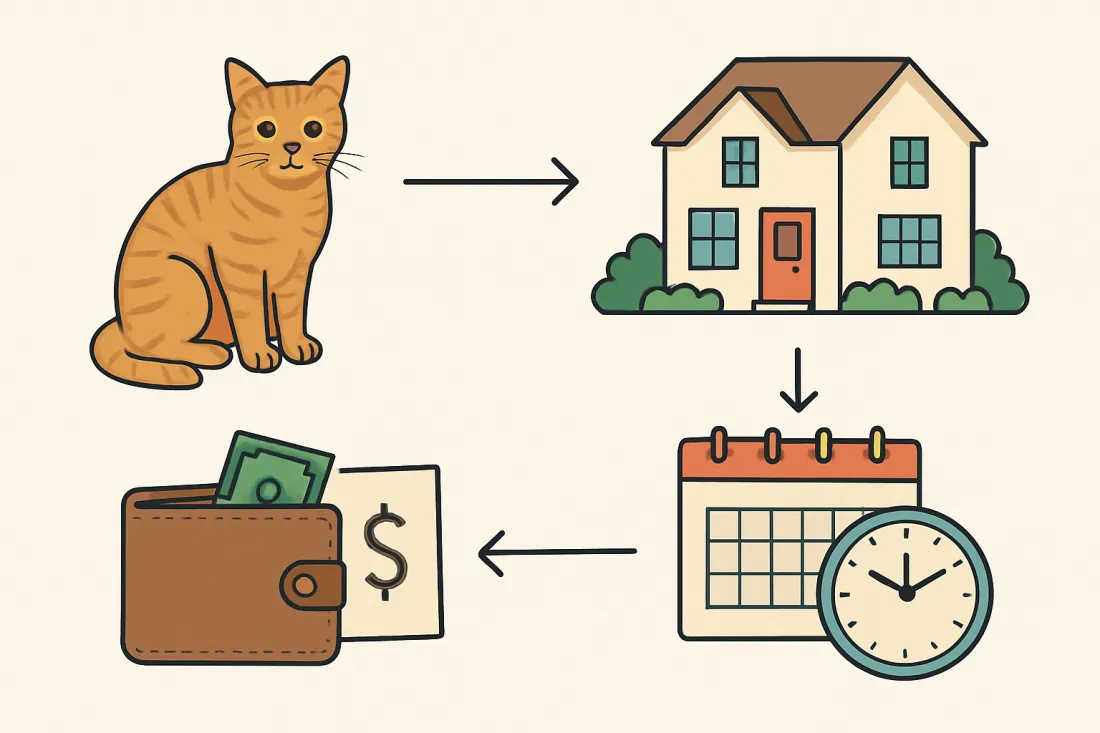
Adopting a cat is a 10–20 year commitment. A quick way to check if you are ready is to look at your lifestyle, budget, and expectations.
Lifestyle and time commitment: does a cat really fit your day?
Before you focus on specific cats at the shelter, think about how a cat fits into your daily and weekly routine.
- Daily care time
- Plan on at least 20–40 minutes a day for feeding, scooping the litter box, and interactive play or cuddling.
- Cats are more independent than dogs, but they still need regular attention and mental stimulation.
- Work schedule
- If you work long hours away from home, a calm adult or senior cat may cope better than a high-energy kitten.
- Shift work or irregular hours are fine as long as you can keep feeding and play roughly consistent.
- Travel and social life
- Think about how often you travel or stay out overnight.
- Do you have reliable pet care options (friends, family, or paid sitters) when you are away?
- Noise and activity level at home
- Busy, loud homes may overwhelm shy cats but can suit confident, social cats.
- Quiet homes are ideal for nervous or older cats who prefer predictable routines.
- Future changes
- Consider likely changes in the next 5–10 years: moving, having children, changing jobs, or starting school.
- Ask yourself if you are willing to keep your cat through those transitions, even if it limits some choices.
Self-assessment questions before you visit a shelter
- Time and routine
- Can you reliably feed, scoop the litter box, and spend at least some quality time with a cat every day?
- Are you often away overnight or for long weekends without pet care plans?
- Do you have the patience for a few weeks of settling in, possible hiding, and some trial-and-error with food or litter?
- Housing stability
- Is your current housing pet-friendly, with cats explicitly allowed in your lease or HOA rules?
- If you might move in the next few years, are you prepared to limit your housing choices to cat-friendly places?
- If your landlord changes their mind about pets, do you have a plan? (If you ever face that, resources like what to do if my landlord says no pets can help you think through options.)
- Health and allergies
- Has anyone in your household had reactions to cats before (sneezing, itchy eyes, asthma)?
- Are you willing to keep the home cleaner, use air filters, or restrict the cat from certain rooms if needed?
- Long-term commitment
- Can you imagine caring for the same animal through life changes like new jobs, relationships, or children?
- Are you prepared for end-of-life decisions many years from now, including emotional and financial aspects?
- Expectations and temperament
- Do you expect a cuddly lap cat from day one, or are you open to a shy cat who warms up slowly?
- Are you okay with normal cat behaviors like scratching, zoomies at night, and the occasional hairball?
If several of these questions make you hesitate, pause and think through your options. You might delay adoption, foster first, or use tools like the should I adopt a dog or cat quiz to clarify what kind of pet fits you best.
Indoor vs. outdoor cat: what to decide before you adopt
One of the biggest decisions to make before adopting is whether your cat will live strictly indoors, have supervised outdoor time, or be allowed to roam freely outside. This choice affects safety, costs, and even which cat is the best match for you.
- Indoor-only cats
- Pros: Lower risk of injury, traffic accidents, fights with other animals, and some infectious diseases.
- Cons: You must provide more indoor enrichment (climbing, scratching, play) to prevent boredom.
- Good to know: Many US shelters strongly prefer or require indoor-only homes for safety reasons.
- Indoor cats with supervised outdoor time
- Options include leash walks, secure “catio” enclosures, or screened porches.
- Requires extra equipment (harness, secure fencing or enclosure) and supervision time.
- Can be a good compromise for active or curious cats while keeping risk lower than free roaming.
- Free-roaming outdoor access
- Risks: Cars, predators, fights, getting lost, and higher chances of parasites or infectious disease.
- May increase vet costs over time due to injuries or outdoor-related illnesses.
- Some shelters will not adopt to homes that plan to let cats roam freely, especially in high-traffic areas.
Before you adopt, decide what you are comfortable with and check the shelter’s policies. If you plan to keep your cat indoors only, look for a cat who already seems content in indoor spaces rather than one who is constantly trying to dart through doors at the shelter.
Should you adopt one cat or two?
Another key decision before adopting is whether to bring home a single cat or a pair. There is no one right answer; it depends on your budget, time, and the cats’ personalities.
- Reasons to adopt one cat
- Your budget is tight and doubling food, litter, and vet costs would be stressful.
- You want to focus on bonding with one animal, especially if this is your first cat.
- You are adopting an adult cat who clearly prefers to be the only pet.
- Reasons to adopt two cats together
- You are considering kittens. Kittens often do better in pairs, giving each other play and social learning.
- You are away from home many hours a day and want your cat to have a feline companion.
- The shelter recommends a bonded pair that has already lived together successfully.
- What changes with two cats?
- Costs roughly double for food, litter, and routine vet care.
- You need more litter boxes (at least three for two cats if space allows).
- You may see more play and activity, which can be fun but also louder at times.
Before you visit the shelter, decide your maximum number of cats and your realistic budget. That way, you will not feel pressured into taking on more than you can comfortably support long term.
One-time costs to expect when adopting a shelter cat
Even though shelters often include basic vet care in the adoption fee, you will still have a set of one-time setup costs when you bring a cat home. Exact amounts vary widely by region and product quality, so treat this as a planning checklist, not a quote.

One-time costs checklist
- Adoption fee (often includes spay/neuter, initial vaccines, and basic vet check).
- Initial vet visit with your own veterinarian (wellness exam, records review, microchip check).
- Spay/neuter surgery if not already done (many shelters handle this before adoption, but confirm).
- Microchip registration or update (if the cat is already chipped, you may still need to update owner details).
- Basic supplies (carrier, litter box, scoop, bowls, starter litter, food).
- Comfort items (bed, scratching post, toys, grooming tools).
- Safety upgrades at home (window screens, securing cords, blocking dangerous gaps).
- Optional: first month of pet insurance or savings set aside for emergencies.
Before adoption day, call a local vet clinic to ask what a new-cat exam typically includes and what you should budget for vaccines or tests that may not be covered by the shelter. This helps you avoid surprises in the first week.
Ongoing cat care costs you should plan for
Most of the financial commitment is ongoing: food, litter, and healthcare over many years. Instead of focusing on exact dollar amounts, think in terms of categories and how they scale with your choices.
Monthly and annual cost breakdown (by category)
Actual prices vary across the US, but it helps to think about your budget in terms of recurring monthly and yearly categories.
- Food
- Monthly: Regular dry or wet food plus occasional treats.
- Annual: Multiply your monthly estimate by 12, then add extra for special diets if your vet recommends them.
- What affects cost: Brand quality, type of food (wet is usually more expensive than dry), and your cat’s age or medical needs.
- Litter and waste supplies
- Monthly: Litter refills and any liners or poop bags you use.
- Annual: Your monthly litter cost times 12, plus occasional replacement of litter boxes if they crack or retain odor.
- What affects cost: Number of cats, type of litter (clumping, non-clumping, specialty), and box size.
- Routine veterinary care
- Annual: At least one wellness exam per year, recommended vaccines, and parasite prevention.
- Monthly planning tip: Divide your expected yearly vet cost by 12 and set that amount aside each month.
- What affects cost: Your region, your cat’s age, and whether your cat has any chronic conditions.
- Unplanned vet visits
- Annual (variable): Illness, injuries, or dental procedures can be unpredictable.
- Planning tip: Aim to keep an emergency fund or consider pet insurance to soften the impact of sudden bills.
- Grooming and supplies replacement
- Annual: Replacement scratching posts, toys, beds, and basic grooming tools.
- Monthly planning tip: Set aside a small amount each month for wear-and-tear items.
- Pet sitting or boarding
- Annual (variable): Depends on how often you travel and whether friends or family can help.
- Planning tip: Estimate how many days per year you might need paid care and budget accordingly.
To test your budget, estimate a monthly amount you are comfortable spending on a pet. Then mentally add a buffer for unexpected vet care. If that total feels stressful, consider waiting or adjusting your expectations (for example, choosing mid-range food instead of premium, while still meeting your cat’s nutritional needs).
Preparing your home for a new shelter cat
A cat-friendly home is less about being large and more about being safe, predictable, and rich in vertical and hiding spaces. You can live in a studio apartment and still give a cat a great life if you set it up thoughtfully.
Home preparation steps
- Choose a safe “starter room”
- Pick a quiet room (bedroom, office, or bathroom) where the cat will spend the first few days.
- Place all essentials there: litter box, food, water, bed, and hiding spots.
- Cat-proof hazards
- Secure window screens and balcony railings.
- Hide or cover electrical cords and blind cords.
- Remove or secure small objects that could be swallowed (rubber bands, hair ties, string).
- Store cleaning products, medications, and chemicals in closed cabinets.
- Protect furniture and surfaces
- Provide scratching posts or pads near furniture you care about.
- Use washable throws or blankets on favorite sitting spots.
- Plan litter box locations
- General rule: at least one box per cat, plus one extra if space allows.
- Place boxes in quiet, low-traffic areas, not right next to noisy appliances.
- Create vertical and hiding spaces
- Use cat trees, shelves, or the back of a sturdy couch for climbing.
- Offer cardboard boxes or covered beds for hiding.
- Plan for other pets and children
- Set up baby gates or closed doors to separate animals at first.
- Talk with children about gentle handling and respecting hiding spots.
Essential supplies to buy before adoption day
Having the basics ready before your cat comes home makes the first 48 hours calmer for everyone. You can always upgrade or add items later.
Supplies shopping list
- Transport and containment
- Sturdy cat carrier (hard-sided or well-structured soft carrier).
- Extra blanket or towel for inside the carrier to absorb accidents and add comfort.
- Optional: spare carrier or crate if you plan to separate pets during introductions.
- Food and feeding
- Food the cat is already eating at the shelter (ask them in advance).
- Gradual transition food if you plan to change brands later.
- Two bowls for food and water (ceramic, glass, or stainless steel are easy to clean).
- Measuring scoop or cup to keep portions consistent.
- Optional: slow-feeder bowl or puzzle feeder for fast eaters or bored indoor cats.
- Litter setup
- Litter box (large enough for the cat to turn around comfortably; covered or uncovered based on your and your cat’s preference).
- Litter type similar to what the shelter uses, at least for the first weeks.
- Litter scoop and small trash bags or covered trash can.
- Optional: litter mat to catch tracked litter near the box.
- Comfort and enrichment
- Soft bed or blanket.
- Scratching post or pad (ideally both vertical and horizontal options).
- Interactive toys (wand toys, balls, toy mice).
- Solo toys the cat can bat around alone.
- Optional: cat tree or shelves to add vertical space.
- Grooming and health basics
- Brush or comb suitable for your cat’s coat length.
- Nail clippers designed for cats.
- Basic pet-safe wipes or cloths for minor cleanups.
- Optional: toothbrush and cat-safe toothpaste if you plan to work on dental care at home.
- Identification and safety
- Breakaway collar.
- ID tag with your phone number (even for indoor-only cats, in case of escape).
- Microchip registration information so you can update your contact details after adoption.
Health, vaccines, and vet basics for shelter cats
Most US shelters follow a standard medical protocol: cats are examined, vaccinated, and often spayed or neutered before adoption. Still, you should confirm exactly what has been done and plan follow-up care with your own veterinarian.
Key health points to clarify
- Spay/neuter status
- Ask if the cat is already spayed or neutered.
- If not, ask whether the shelter will arrange it or if you must schedule it yourself.
- Vaccination history
- Request a printed record of all vaccines given and due dates for boosters.
- Common vaccines include core protection against serious viral diseases; your vet will explain which are recommended for your area and lifestyle.
- Testing and parasite control
- Ask which infectious diseases the cat has been tested for (for example, common viral infections in cats) and the results.
- Confirm whether the cat has been treated for fleas, ticks, and intestinal worms, and when.
- Existing medical conditions
- Find out about any chronic issues (allergies, special diets, mobility problems).
- Ask if the cat is on any medications and how long they are needed.
Schedule a vet appointment within the first week or two after adoption. Bring all shelter paperwork so your vet can build a complete medical record and advise you on future vaccines, dental care, and parasite prevention tailored to your region.
How shelter cats typically adjust in the first days and weeks
Many first-time adopters worry that something is “wrong” when their new cat hides, does not eat much on day one, or seems uninterested in cuddles. In most cases, this is normal stress and will ease with time.
Behavior and adjustment timeline
| Time frame | What you might see | What your cat needs from you | When to be concerned |
|---|---|---|---|
| First 24–48 hours | Hiding, minimal exploring, limited appetite, wide eyes, startle easily. | Quiet space, predictable routine, gentle voice, no forced handling. | If the cat does not eat or drink at all, or cannot use the litter box, call a vet for guidance. |
| First week | More exploring, some play, still retreating to hiding spots, may be unsure about new people. | Short play sessions, hand-feeding treats, consistent feeding and scooping schedule. | If aggression is intense or constant, or if you see signs of illness (vomiting, diarrhea, labored breathing), contact a vet. |
| Weeks 2–4 | Settling into a routine, showing preferred sleeping spots, more confident play, clearer personality. | Regular interaction, gentle handling, continued patience with any remaining shyness. | If the cat still hides almost all the time or seems fearful of normal household sounds, ask your vet or a behavior professional for advice. |
| After 1–3 months | Feels like part of the household, predictable habits, stronger bond with favorite people. | Ongoing enrichment, vet care, and attention to any behavior changes. | Sudden changes in appetite, litter box use, or social behavior should be checked by a vet. |
Every cat is an individual. Some will be on your lap the first night; others may need weeks before they feel safe enough to sleep on your bed. Your job is to create a calm, predictable environment and let the cat set the pace.
Key questions to ask the shelter before you adopt
Good shelters want to make strong, lasting matches. Asking detailed questions helps you choose a cat whose needs and personality fit your life.
Background and personality questions
- What do you know about this cat’s history (stray, owner surrender, previous home)?
- How does the cat behave in the shelter: shy, outgoing, vocal, independent?
- Has the cat lived with other cats, dogs, or children before? How did that go?
- What kind of play does the cat enjoy (wand toys, chasing, climbing)?
- Does the cat like being picked up or prefer to sit near people instead of on them?
Health and care questions
- Which vaccines has the cat received, and when are the next ones due?
- Has the cat been spayed or neutered?
- Has the cat been tested for common infectious diseases, and what were the results?
- Is the cat currently on any medications or special diets?
- Have you noticed any ongoing issues like sneezing, coughing, diarrhea, or dental problems?
Behavior and home-fit questions
- How does the cat handle being alone? Does it seem anxious or destructive?
- Does the cat use the litter box reliably in the shelter?
- Has the cat shown any signs of aggression (hissing, swatting, biting) and in what situations?
- What type of home do you think this cat would do best in (quiet, active, with/without other pets)?
- Do you offer post-adoption support if I have behavior or health questions later?
Comparison: different types of shelter cats and who they suit
Not every cat in a shelter is the same. Thinking about age, personality, and background helps you choose a cat that fits your lifestyle.
| Type of cat | Best for adopters who | What to expect at home | Potential challenges |
|---|---|---|---|
| Kitten (under 1 year) | Want high energy and are home enough to supervise and train. | Lots of play, curiosity, and learning; frequent zoomies and exploration. | More likely to scratch, chew, and get into trouble; needs patient training and safe spaces. |
| Young adult (1–5 years) | Want a playful but more predictable cat. | Settled personality, still enjoys play, easier to match with your routine. | May need time to unlearn habits from previous homes. |
| Senior (around 8+ years) | Prefer a calmer companion and are open to potential age-related health care. | More relaxed, often very affectionate, lower activity needs. | Higher chance of medical needs over time; may require more frequent vet visits. |
| Shy or fearful cat | Can offer a quiet home and lots of patience. | May hide for days or weeks; slow, rewarding trust-building process. | Not ideal for loud homes or young children; progress can be slow and requires consistency. |
| Outgoing, social cat | Want a confident, interactive pet and may have visitors often. | Greets people, seeks attention, adapts quickly to new environments. | May become bored without enough interaction; can get into mischief if understimulated. |
Printable-style pre-adoption checklist (copy and keep)
Use this checklist as a final run-through before you submit an adoption application or bring your cat home.
Pre-adoption readiness checklist
- Lifestyle and commitment
- Everyone in the household agrees to adopting a cat.
- My housing allows cats, and I have checked my lease or HOA rules.
- I have a plan for pet care during vacations or work trips.
- I am ready for a 10–20 year commitment.
- Budget and vet care
- I have estimated monthly costs for food, litter, and routine vet care.
- I have set aside money or considered insurance for emergencies.
- I have identified a local veterinarian and know how to book a new-pet exam.
- Home preparation
- I have chosen a quiet starter room for the first days.
- Windows, balconies, and cords are secured.
- I have at least one litter box, placed in a low-traffic area.
- I have scratching options and safe hiding spots ready.
- Supplies
- Carrier, bowls, food, and litter are ready before adoption day.
- I have basic toys, a bed or blanket, and grooming tools.
- I have a breakaway collar and ID tag or plan to update microchip details.
- Information from the shelter
- I know the cat’s spay/neuter and vaccination status.
- I have copies of medical records and test results.
- I understand any special diet, medication, or behavior notes.
- I know who to contact at the shelter if I have questions after adoption.
Common mistakes to avoid when adopting from a shelter
Many adoption problems come from rushed decisions or unrealistic expectations. Avoiding these mistakes makes it far more likely that your new cat will stay with you for life.
- Choosing only by looks
- Falling for a cute face without considering age, energy level, or temperament can lead to a poor match.
- Instead, spend time with several cats and ask staff who they think fits your lifestyle.
- Skipping the slow introduction phase
- Letting the cat roam the entire home immediately can overwhelm them.
- Start with one room and gradually expand their space as they relax.
- Changing food or litter too quickly
- Sudden changes can cause stomach upset or litter box avoidance.
- Transition slowly over several days, mixing old and new products.
- Expecting instant affection
- Some cats need time before they feel safe enough to cuddle or play.
- Let the cat approach you; use treats and gentle play to build trust.
- Ignoring early behavior or health changes
- Changes in appetite, litter box use, or activity can signal stress or illness.
- Contact your vet early instead of waiting for problems to resolve on their own.
- Not planning for long-term housing
- Adopting when your living situation is unstable increases the risk of needing to rehome the cat.
- Try to adopt when you expect to stay put for a while, or have strong backup plans if you must move.
What to do next if you are considering adopting a shelter cat
Once you feel reasonably confident about your readiness, turn your research into action with a simple process.
Step-by-step process to move from research to adoption
- Clarify your “must-haves” and “nice-to-haves”
- Decide on age range, energy level, and whether you are open to special needs.
- List deal-breakers (for example, must be okay with children, or must be indoor-only).
- Contact local shelters and rescues
- Check their adoption requirements and hours.
- Ask if they have cats that match your criteria and whether they offer trial periods or foster-to-adopt options.
- Visit and meet several cats
- Take your time; do not feel pressured to choose on the first visit.
- Observe how each cat responds to you and to the environment.
- Ask detailed questions and review records
- Use the question lists above as a guide.
- Make sure you understand the cat’s health and behavior history.
- Prepare your home fully before adoption day
- Set up the starter room, litter box, food, and water.
- Double-check your pre-adoption checklist.
- Plan the first week
- Choose a quieter period in your schedule if possible.
- Limit visitors and big changes while your cat settles in.
- Book the first vet visit
- Schedule an appointment within the first week or two.
- Bring all shelter paperwork and any questions you have.
FAQ about what to know before adopting a cat from a shelter
What is the most important thing to understand before adopting a shelter cat?
The most important thing is that adoption is a long-term, relationship-style commitment, not a short-term experiment. A shelter cat may arrive stressed, shy, or unsure how to behave in a new home. If you are prepared to give them time, structure, and consistent care for many years, you are far more likely to build a strong bond and avoid rehoming later.
What common mistakes do first-time adopters make with shelter cats?
First-time adopters often rush the process: they choose a cat based only on appearance, skip asking about health or behavior history, and let the cat loose in the entire home on day one. They may also change food or litter too quickly and expect instant affection. Slowing down, following a gradual introduction, and keeping some continuity with the shelter’s routine can prevent many early problems.
How should I prepare my schedule for the first week with a new shelter cat?
Try to bring your cat home when you can be around more than usual, such as a weekend or a few days off. Plan time for quiet observation, short play sessions, and gentle interaction. Avoid hosting parties or making major household changes that week. Your presence and a predictable routine help the cat feel safe and settle in faster.
What should I do right after reading this if I still feel unsure about adopting?
If you are unsure, do not rush into adoption. Instead, complete the self-assessment questions, draft a simple monthly pet budget, and talk with a local veterinarian or shelter staff about what to expect. You can also consider fostering a cat first to see how a pet fits into your daily life without making an immediate lifelong commitment.
Summary: turning preparation into a successful adoption
Before adopting a cat from a US shelter, make sure your lifestyle, budget, and home setup can support a cat for the long term. Ask yourself honest questions about time, housing stability, and expectations. Plan for both one-time and ongoing costs, prepare a safe starter room with essential supplies, and understand that many cats need days or weeks to fully relax in a new environment.
Use the checklists and questions above to guide your conversations with shelters and your own planning at home. When you match the right cat to a well-prepared home, adoption becomes less about solving a momentary impulse and more about building a stable, loving relationship that lasts for years.