
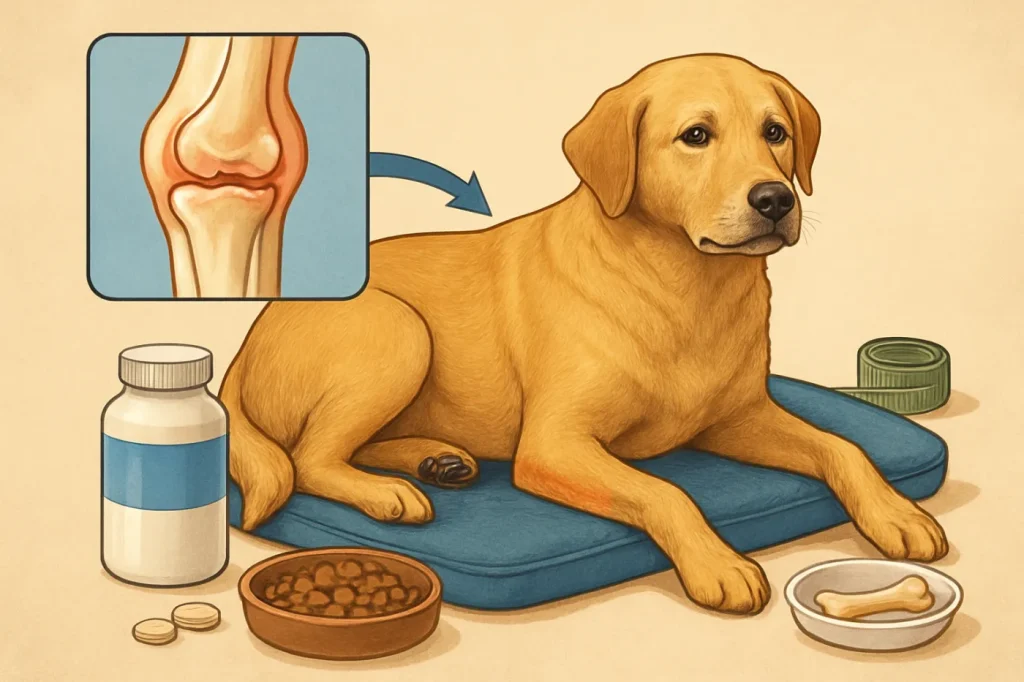
For most dogs with arthritis, the most realistic plan is a mix of pain control, joint support, weight management, and gentle exercise that you can afford to keep doing for years. There is rarely a single “best” treatment. Instead, vets combine options to keep your dog comfortable while fitting your budget and daily routine. In the United States, arthritis care usually means steady monthly costs for meds and checkups, plus occasional bigger expenses for imaging, injections, or rehab.
What canine arthritis is and why it shapes treatment choices
Before comparing treatment options and costs, it helps to understand what is happening inside your dog’s joints and why arthritis needs long-term management.
Most dogs with arthritis have osteoarthritis (degenerative joint disease). Over time, the smooth cartilage that cushions the ends of bones wears down. The joint space becomes rough and inflamed, which causes:

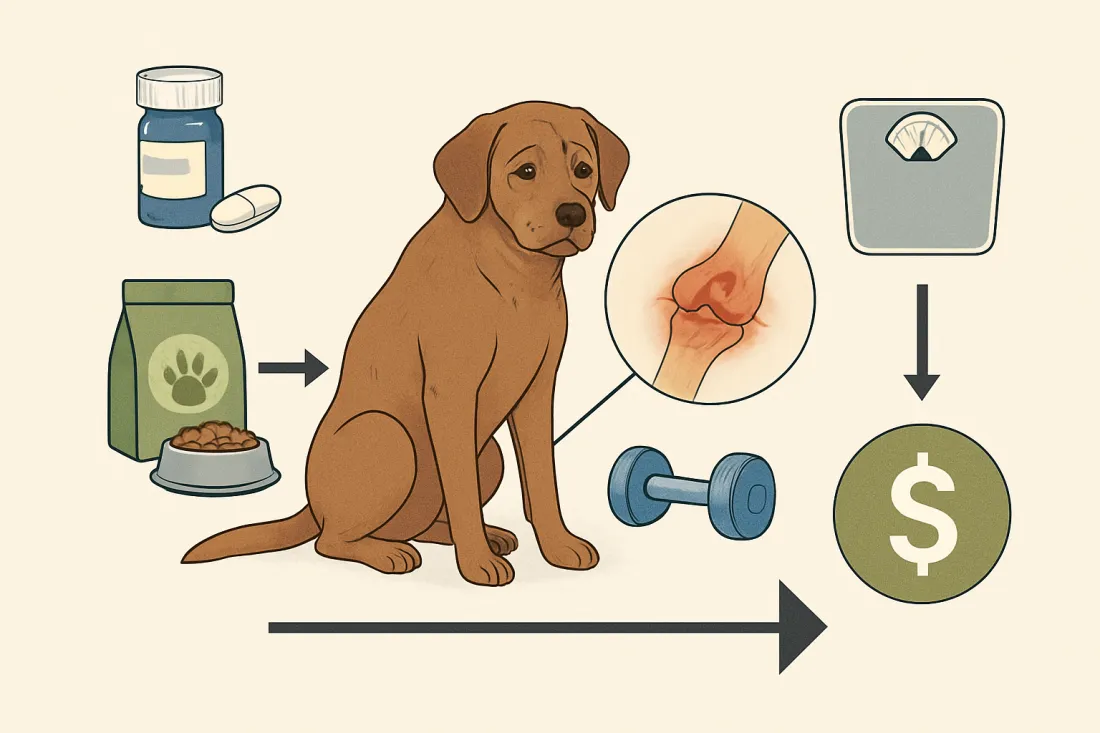
- Pain and stiffness, especially after rest
- Reduced range of motion
- Muscle loss around the affected joint
- Behavior changes from chronic discomfort
Common signs that lead owners to the vet include:
- Stiffness or limping when getting up
- Reluctance to jump into the car or onto furniture
- Slowing down on walks or refusing longer routes
- Trouble with stairs or slippery floors
- Irritability when touched near sore joints
Arthritis is a chronic condition. You cannot cure it, but you can slow progression and improve comfort. That is why treatment decisions should balance three things from the start:
- Effectiveness: How much pain relief and mobility your dog actually gets.
- Safety: Side effects and how well your dog’s body can handle long-term treatment.
- Affordability over time: Whether you can realistically maintain the plan for years, not just a few weeks.
Comparison of main arthritis treatment options for dogs
Most arthritis care falls into a few main categories. Many dogs use several at the same time. The table below compares how they are used, typical benefits, limits, and cost patterns in the US.
| Treatment type | Best fit / when vets consider it | What it usually helps with | Main risks or limitations | Typical US cost pattern |
|---|---|---|---|---|
| Prescription NSAIDs (dog-specific anti-inflammatory pain meds) | Mild to severe arthritis pain; often first-line drug | Reduces pain and inflammation; many dogs move more easily within days | Can affect stomach, kidneys, or liver; needs vet exam and periodic bloodwork | Ongoing monthly medication expense that scales with dog’s weight, plus periodic lab tests |
| Additional pain meds (nerve pain or adjunct pain relievers) | When NSAIDs alone are not enough or cannot be used | Extra pain control, especially for moderate to severe or nerve-related pain | Drowsiness, wobbliness, behavior changes in some dogs | Added monthly cost on top of NSAIDs or other treatments |
| Oral joint supplements (nutraceuticals) | Early arthritis, long-term joint support, or when meds must be minimized | May support cartilage and reduce stiffness over weeks to months | Not a fast pain reliever; quality varies widely by brand | Predictable monthly over-the-counter expense; price depends on brand and dog size |
| Injectable joint support or joint injections | Dogs needing stronger joint help or not tolerating oral options | Can improve comfort and joint function for weeks to months | Requires vet visits; not all dogs respond; small risk of injection-site issues | Periodic per-injection or per-series cost, plus exam or visit fees |
| Physical therapy and rehab | Moderate to severe arthritis, post-surgery, or athletic/working dogs | Builds muscle, improves range of motion, teaches safe movement patterns | Requires time, travel, and owner participation; not available everywhere | Per-session or package fees; often weekly at first, then less frequent |
| Weight management and exercise changes | Any arthritic dog, especially if overweight or deconditioned | Less strain on joints, better stamina, often lower medication needs | Requires consistent owner effort; results are gradual, not instant | Food and lifestyle changes; may slightly change food costs but not always vet bills |
| Home environment changes (ramps, rugs, beds) | Dogs struggling with stairs, slick floors, or jumping | Reduces daily pain and risk of slips or falls | Needs some rearranging at home; dogs may need time to adapt | Mostly one-time purchases; can start with low-cost DIY solutions |
| Complementary therapies (acupuncture, laser, massage) | Dogs needing extra comfort or limited by standard meds | Some dogs show better comfort, relaxation, and mobility | Response varies; should not replace core medical care | Per-session out-of-pocket costs; often add to overall monthly spend |
| Orthopedic surgery (joint repair or replacement) | Severe joint damage, specific hip or elbow issues, some younger dogs | Can significantly improve function and long-term comfort in selected cases | Major procedure with anesthesia and rehab; not right for every dog | One-time high cost plus follow-up visits and rehab sessions |
Medication options for dogs with arthritis
Medication is often the backbone of arthritis treatment because it directly targets pain and inflammation. Your vet will choose drugs based on your dog’s age, other health issues, and how severe the pain is.
Dog-specific NSAIDs: core pain and inflammation control
Non-steroidal anti-inflammatory drugs (NSAIDs) made specifically for dogs are commonly used for arthritis. They are not the same as human over-the-counter painkillers and must be prescribed.
How well they work:
- Many dogs show better comfort and mobility within a few days.
- Dogs may be more willing to walk, climb stairs, and interact with family.
- Can often be used long term with proper monitoring.
Side effects and safety checks:
- Stomach upset such as vomiting, diarrhea, or loss of appetite.
- Potential impact on kidneys or liver, especially in older dogs or those with pre-existing disease.
- Vets usually recommend baseline bloodwork before starting and periodic rechecks.
Cost pattern in the US: NSAIDs are a recurring monthly expense. Larger dogs cost more to medicate because doses are based on weight. Brand-name versus generic options can also change the price. Plan for the medication itself plus periodic blood tests and recheck exams as part of your overall annual vet costs for dogs and cats in the US.
Additional pain medications for tougher cases
When NSAIDs alone do not provide enough relief, or when a dog cannot take them, vets may add other pain-relief medications. These can include drugs that target nerve pain or adjust how the brain perceives pain.
How well they work:
- Often used alongside NSAIDs for moderate to severe arthritis.
- Can help dogs that still limp or seem uncomfortable despite standard treatment.
- Sometimes allow lower NSAID doses, which may improve safety.
Common side effects:
- Drowsiness or sedation, especially when starting or increasing the dose.
- Wobbliness or unsteady walking if the dose is too high.
- Occasional behavior changes such as restlessness or vocalizing.
Cost pattern: These medications add to your monthly budget. Some are widely available generics; others are newer and more expensive. Because they are usually given daily, even small per-dose costs add up over months and years.
Oral joint supplements and nutraceuticals
Joint supplements are non-prescription products that may support cartilage and reduce inflammation. Common ingredients include glucosamine, chondroitin, omega-3 fatty acids, and other joint-support compounds.
How well they work:
- Best viewed as long-term support rather than quick pain relief.
- Some dogs show less stiffness and better mobility after several weeks of consistent use.
- Quality, dose, and formulation matter; not all products are equal.
Side effects:
- Generally mild; occasional digestive upset such as soft stools or gas.
- Because they are often flavored chews, some dogs may overeat them if left within reach.
Cost pattern: Usually a predictable monthly cost. Higher-quality products tend to cost more, but very cheap options may not deliver the same benefit. Ask your vet which brands they trust and what dose fits your dog’s weight.
Injectable joint support and joint injections
Some vets use injectable products that support joint health or reduce inflammation inside the joint. These may be given under the skin or directly into the joint, depending on the product and your dog’s condition.
How well they work:
- Can help dogs that need more than oral supplements but are not ready for surgery.
- May improve comfort and mobility for weeks to months at a time.
- Often used as part of a broader plan that also includes weight control and home changes.
Side effects and limits:
- Most are well tolerated, but any injection carries a small risk of local irritation or infection.
- Not every dog responds; your vet may suggest a trial series to see if it helps.
- Requires visits to the clinic, which may be challenging for very anxious or mobility-limited dogs.
Cost pattern: Each injection or series has a set cost, plus the exam or visit fee. Over a year, this may be similar to or higher than some oral medications, depending on how often they are repeated and your local clinic’s pricing.
Therapies, lifestyle changes, and home care for arthritic dogs
Medication alone rarely gives the best outcome. Non-drug therapies and daily habits can dramatically affect your dog’s comfort and long-term joint health.
Weight management and diet changes
Extra body weight puts constant stress on joints. For many arthritic dogs, safe weight loss is one of the most powerful “treatments.”
What this usually involves:
- Switching to a calorie-controlled or joint-support diet recommended by your vet.
- Measuring food portions instead of free-feeding.
- Cutting back on high-calorie treats and table scraps.
- Using low-calorie training treats or part of the regular meal as rewards.
Benefits: Less strain on joints, better mobility, and often lower medication needs over time. Many owners notice their dog seems more energetic as weight comes off.
Cost pattern: You may spend more on a specialized diet but less on treats and extras. Over time, better weight control can help avoid some emergency visits or complications, which supports overall responsible pet ownership.
Exercise adjustments and activity planning
Arthritic dogs still need movement to keep muscles strong and joints lubricated, but the type and amount of exercise matter.
Helpful changes:
- Shorter, more frequent walks instead of long, intense outings.
- Avoiding high-impact activities like repetitive ball throwing, jumping off furniture, or rough play on hard surfaces.
- Letting your dog set the pace and watching for signs of fatigue or limping.
- Using gentle warm-up and cool-down periods around walks.
Cost pattern: Mostly time and consistency. You may invest in a supportive harness or non-slip booties if your dog struggles on certain surfaces, but many changes are free.
Physical therapy and rehabilitation
Canine physical therapy (rehab) is similar to human physical therapy. Certified professionals use exercises, stretches, and tools like underwater treadmills to build strength and protect joints.
Benefits:
- Improved muscle tone to support sore joints.
- Better balance and range of motion.
- Guidance on safe home exercises tailored to your dog’s specific joints and lifestyle.
- Structured progress tracking so you can see what is working.
Limitations:
- Requires regular visits, especially at the beginning.
- Not available in every area; you may need to travel or use home-based programs.
- Some dogs are anxious in clinic settings and need gradual introduction.
Cost pattern: Typically charged per session or as a package. Some dogs need an initial intensive period and then occasional tune-ups; others benefit from ongoing sessions. Ask the clinic for a written estimate for the first few months.
Home environment changes that reduce daily pain
Small changes at home can significantly reduce daily strain on your dog’s joints.
- Ramps or steps: To get into the car or onto the bed without jumping.
- Non-slip rugs or mats: To prevent sliding on hardwood or tile floors.
- Supportive bedding: Orthopedic beds that cushion joints and keep your dog off cold, hard floors.
- Raised food and water bowls: To reduce neck and back strain for taller dogs.
- Blocked-off stairs: To limit unnecessary trips up and down when your dog is unsupervised.
Cost pattern: Mostly one-time purchases. You can often start with low-cost options like yoga mats or carpet runners before investing in specialized ramps or orthopedic beds.
Complementary therapies
Some owners explore acupuncture, laser therapy, massage, or other complementary options alongside standard veterinary care.
Potential benefits:
- Additional pain relief and relaxation.
- May help dogs that cannot tolerate high doses of medication.
- Can be a good fit for owners who are comfortable with frequent hands-on care.
Limitations:
- Response varies widely between dogs.
- Should be provided by trained professionals, ideally in coordination with your primary vet.
- Usually add to, rather than replace, core treatments like NSAIDs and weight management.
Cost pattern: Usually per-session fees. Because these are often add-ons, they increase the overall monthly cost of arthritis care.
Estimated cost patterns by treatment type
Exact prices vary by region, clinic, and dog size, so you should always ask your own vet for written estimates. Still, it helps to think of arthritis costs in a few broad categories when planning your budget.
Recurring monthly costs
- Daily medications: NSAIDs and other pain meds are typically filled monthly or every few months. Larger dogs usually cost more to medicate than small dogs because doses are based on weight.
- Joint supplements: Often sold as a one- or two-month supply. Higher-quality products may cost more but can be more effective per dose.
- Special diets: Joint-support or weight-management diets may be slightly more expensive per bag than standard food, but they can reduce other health risks.
- Ongoing complementary therapies: If you choose acupuncture, laser, or similar options, regular sessions can become part of your monthly pet budget.
Periodic and one-time costs
- Vet exams and bloodwork: Needed to monitor long-term medication safety. Frequency depends on your dog’s age, health, and medication type.
- Imaging (such as X-rays): Often done at diagnosis or if your dog’s condition changes significantly.
- Physical therapy sessions: Often weekly at first, then less frequent. Some clinics offer packages that reduce per-session cost.
- Joint injections or injectable support: Given as a series or at set intervals, with costs grouped around those visits.
- Home equipment: Ramps, orthopedic beds, and non-slip flooring solutions are usually one-time purchases.
- Surgery: A major one-time cost if your dog needs joint repair or replacement, plus follow-up visits and rehab.
When you look at your overall pet budget, arthritis care often shifts spending from occasional big bills to more predictable monthly costs. If you are already planning broader pet costs for families with children, include arthritis care as a long-term category, not a temporary spike.
How vets choose a treatment plan for a dog with arthritis
Vets rarely use a one-size-fits-all plan. Instead, they weigh several factors and often start with a basic approach, then adjust based on how your dog responds.
Key decision criteria vets consider
- Severity of pain and mobility issues: Mild stiffness might start with weight loss, supplements, and low-dose medication. Severe pain may need multiple medications and rehab.
- Dog’s age and lifestyle: A young, active dog with early arthritis may be a candidate for surgery or aggressive joint support. A senior dog might focus more on comfort and gentle activity.
- Other health conditions: Kidney, liver, or stomach issues can limit which medications are safe.
- Owner’s schedule and comfort level: Some owners are comfortable with injections or complex home exercises; others need simpler routines.
- Budget and insurance: Vets can often design “good, better, best” plans to match what you can realistically maintain.
Typical step-by-step process from diagnosis to long-term care
- Initial assessment: Physical exam, joint palpation, and often X-rays to confirm arthritis and rule out other problems.
- Baseline plan: Usually includes pain control (often an NSAID), weight and exercise guidance, and possibly a joint supplement.
- Trial period: You try the plan for several weeks and track changes in your dog’s comfort and activity.
- Recheck and adjust: The vet may change doses, add or remove medications, or suggest rehab or injections based on results.
- Long-term monitoring: Regular checkups and bloodwork to ensure medications remain safe and effective, and to adjust the plan as your dog ages.
Common mistakes to avoid with arthritic dogs
A few avoidable mistakes can reduce the effectiveness of treatment or even harm your dog.
- Using human painkillers: Giving over-the-counter human medications without vet guidance can be dangerous or fatal for dogs.
- Stopping meds as soon as the dog looks better: Arthritis is chronic. Stopping medication abruptly often leads to pain returning, and restarting without vet input can be risky.
- Over-exercising on “good days”: Pushing a dog to run or jump because they seem better can cause painful flare-ups.
- Ignoring weight: Keeping an arthritic dog overweight undermines every other treatment.
- Skipping follow-up visits: Without monitoring, side effects or disease progression can be missed until they become serious.
- Not adjusting the home: Expecting an arthritic dog to manage stairs, slippery floors, or high jumps can cause daily pain and accidents. As with house training mistakes to avoid with dogs and cats, environment and routine often matter as much as the dog’s behavior.
- Changing treatments without telling the vet: Swapping brands, doses, or supplements on your own can create interactions or gaps in pain control.
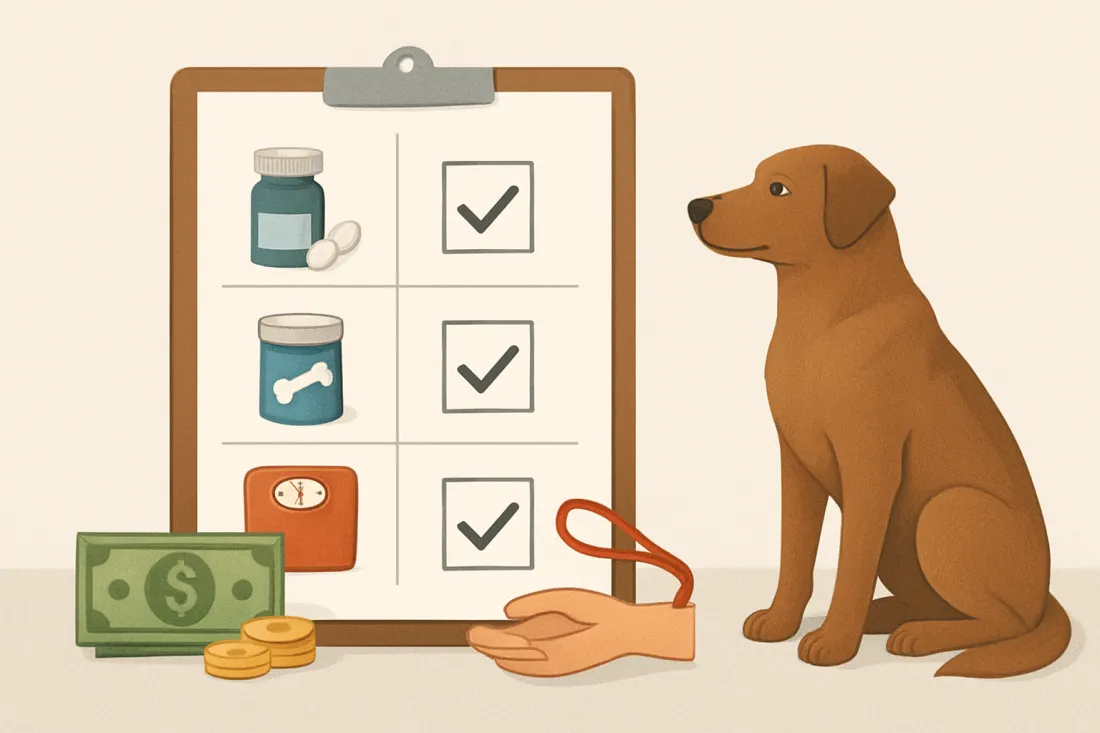
Arthritis treatment discussion checklist for your next vet visit
Use this structured checklist to prepare for a focused, practical conversation with your vet about treatment options and costs.
Before the appointment
- Write down your dog’s current symptoms: stiffness, limping, trouble with stairs, changes in play, or reluctance to jump.
- Note how long symptoms have been present and whether they are getting worse, better, or staying the same.
- List all current medications and supplements, including over-the-counter products and doses.
- Gather your dog’s medical history, including past injuries or surgeries involving joints.
- Estimate your monthly budget range for ongoing arthritis care so you can discuss realistic options.
- Take short videos of your dog walking, climbing stairs, or getting up from rest to show the vet.
Questions to ask about diagnosis and severity
- “Which joints are affected, and how advanced does the arthritis look?”
- “Are there any other conditions that might be causing or worsening the pain?”
- “Do you recommend X-rays or other tests now, or can we start treatment based on the exam?”
- “How often should we recheck my dog to track progression?”
Questions to ask about treatment options and costs
- “What is your first-choice medication for my dog, and why?”
- “What side effects should I watch for, and how often will we need bloodwork?”
- “If this plan works well, what will my typical monthly costs look like, including meds and checkups?”
- “Are there alternative medications or generics that could lower costs without sacrificing safety?”
- “Which joint supplements do you trust, and what dose fits my dog’s weight?”
- “Would my dog benefit from physical therapy, injections, or complementary therapies now, or should we wait?”
- “If surgery is an option, what are the realistic benefits, risks, and recovery time for my dog?”
Questions to ask about lifestyle and home care
- “What weight goal should we aim for, and how quickly should we get there?”
- “How much and what kind of daily exercise is safe?”
- “What home changes (ramps, rugs, bedding) would make the biggest difference for my dog?”
- “How will I know if the current plan is not enough and we need to adjust?”
- “Are there specific signs of a flare-up when I should call you sooner?”
After the appointment
- Mark your calendar for recheck visits and bloodwork so they do not get missed.
- Track your dog’s daily comfort for the first few weeks on a simple 1–5 scale (1 = very painful, 5 = very comfortable).
- Note any side effects such as vomiting, diarrhea, loss of appetite, extreme lethargy, or sudden worsening of mobility, and contact your vet if they appear.
- Review your budget after the first month and talk to your vet if the plan is hard to sustain financially; they may be able to adjust it.
Frequently asked questions about treatment options and costs for dogs with arthritis
What should I understand first about treatment options and costs for a dog with arthritis?
Arthritis care is usually a long-term commitment that combines medication, lifestyle changes, and sometimes therapies like rehab or injections. Instead of one big bill, you are more likely to see ongoing monthly costs for medications, supplements, and periodic vet visits. The most effective plan is one you can maintain consistently, so it is important to be honest with your vet about your budget and your ability to follow daily routines.
How can I keep arthritis treatment affordable without shortchanging my dog’s comfort?
Focus on the highest-impact basics first: safe pain control, weight management, and appropriate exercise. Ask your vet about generic medications, trusted over-the-counter joint supplements, and realistic monitoring schedules. Sometimes small changes, like getting your dog to a healthier weight or adding non-slip rugs, can reduce pain without adding much cost. Pet insurance or a dedicated savings fund can also help you handle periodic larger expenses such as imaging, injections, or rehab.
What mistakes should I avoid when managing my dog’s arthritis at home?
Avoid giving human painkillers, skipping follow-up visits, or stopping medications abruptly when your dog seems better. Do not push your dog into intense exercise on good days, and do not ignore gradual weight gain. Failing to adjust your home—such as leaving your dog to struggle with slippery floors or high jumps—can undo the benefits of medical treatment and lead to preventable injuries.
What should I do next after learning about arthritis treatment options and costs?
Schedule a vet appointment if you have not already, bring notes about your dog’s symptoms and your budget, and use the checklist above to guide the conversation. Ask for a written plan that includes medications, lifestyle changes, and a rough cost outline for the next few months. Then, monitor your dog’s comfort closely and stay in touch with your vet to fine-tune the plan as your dog’s needs change over time.
Choosing a realistic, kind plan for a dog with arthritis
Arthritis does not have to mean the end of an active, happy life for your dog. With a thoughtful mix of medications, joint support, weight management, and home adjustments, many dogs stay comfortable for years. The key is to treat arthritis as a chronic condition that needs steady, well-planned care rather than short bursts of attention when your dog is obviously in pain.
Work with your vet to build a plan that fits your dog’s health and your budget, use the checklist to keep conversations focused, and be ready to adjust as your dog ages. That combination of medical care, daily routines, and realistic cost planning is at the heart of responsible pet ownership for a dog living with arthritis.