
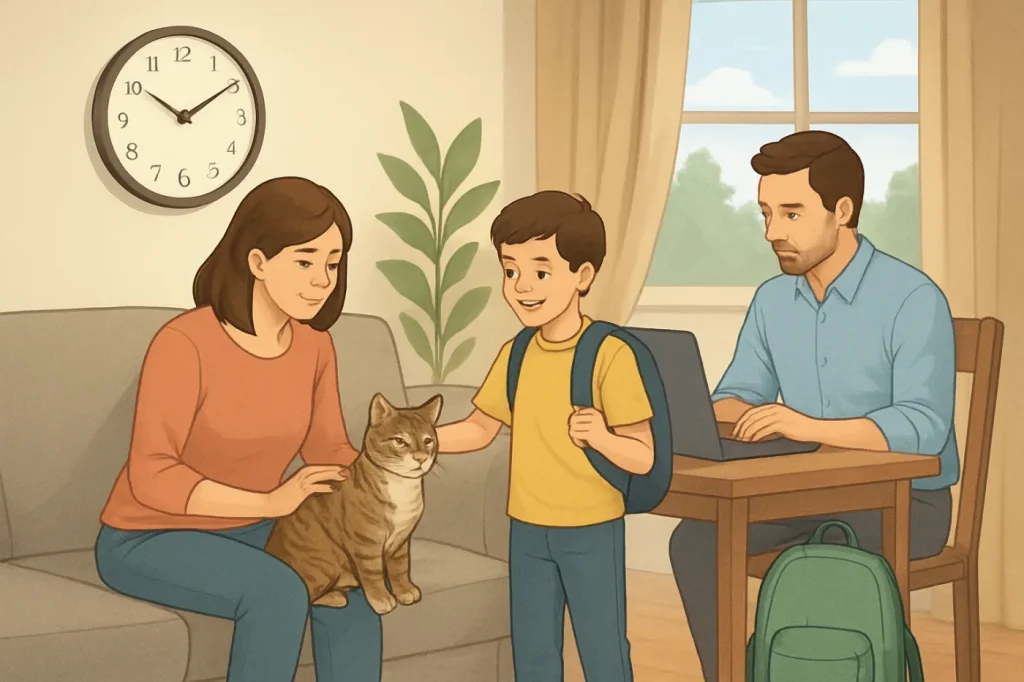
The best cat for a busy family is usually a calm, people-friendly adult shelter cat with a moderate to low energy level, not a tiny kitten or a very high-energy, attention-hungry cat. Look for a cat that is comfortable being alone for part of the day, enjoys gentle affection, and has a history of living indoors with people or kids.
There is no single “best breed” for every busy home. What matters most is how your family’s schedule, noise level, and experience match a cat’s age, temperament, and background. Use this guide to make that match step by step so your new cat fits your real life, not your ideal one.
How a Busy Family Lifestyle Changes What Your Cat Needs
Before falling in love with a cute face online, picture what a normal week looks like in your home. Many busy U.S. households have:

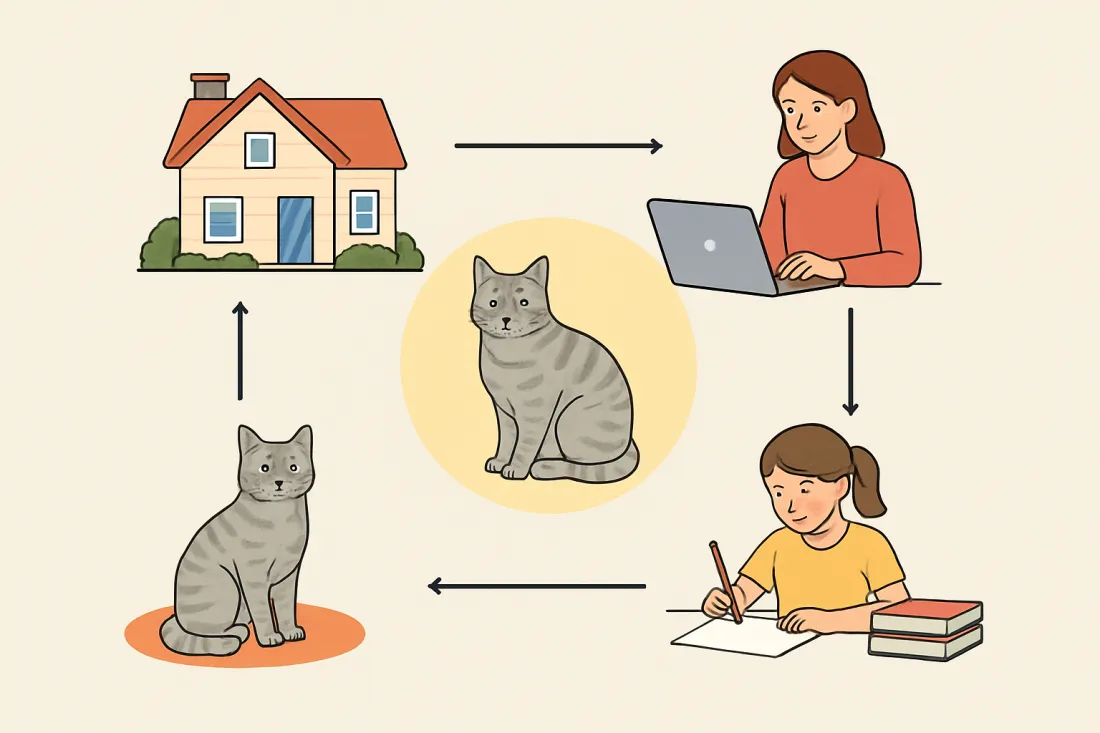
- Adults out at work most of the day
- Kids at school, sports, and activities
- Evenings that are noisy and rushed with homework, dinner, and chores
- Weekends filled with errands, games, and social plans
This rhythm shapes what kind of cat will actually be content living with you.
Key lifestyle factors to consider
- Hours away from home
If your home is empty for long stretches, you need a cat that is comfortable entertaining itself and does not panic when alone. Very clingy or anxious cats may struggle with a quiet, empty house. - Noise and activity level
Some cats enjoy a busy, chatty household and will hang out in the middle of the action. Others hide from loud voices, slamming doors, and running kids. A shy cat may be happier in a quieter home. - Consistency of routine
Cats like predictability. If your schedule is chaotic, choose a cat that shelter staff describe as easygoing and adaptable, not one that gets stressed by small changes in feeding or play times. - Hands-on time available
Be honest about how many minutes of daily play, brushing, and cuddling you can offer. High-energy cats need more active play; low-energy cats may be content with shorter, calmer sessions. - Experience level
First-time cat families usually do better with a stable, adult cat whose personality is already clear, instead of a demanding kitten or a cat with complex behavior needs.
If you are still deciding whether a cat fits your lifestyle at all, a broader guide like are cats good pets for busy people can help you compare cats with other pet options.
Age Comparison: Kittens vs Adult vs Senior Cats for Busy Families
Age is one of the biggest factors in how much time and structure a cat needs. The table below compares the main life stages for a busy household.
| Cat life stage | Best for which busy families | Daily time and energy needed | Main pros | Main challenges for busy homes |
|---|---|---|---|---|
| Kitten (up to ~1 year) | Families with someone home several hours a day and willing to supervise and train | High: multiple short play sessions, litter training, socialization, and kitten-proofing | Very playful and entertaining; kids may enjoy growing up with them | Can be destructive and noisy; need lots of attention; not ideal if home is empty all day |
| Young adult (1–4 years) | Active families who can commit to daily play but are out at work/school | Moderate to high: at least one or two good play sessions plus affection time | Personality mostly formed; still playful and fun | High-energy individuals may get bored and act out if left alone too long without enrichment |
| Adult (4–8 years) | Typical busy families wanting a balance of play and calm | Moderate: predictable routine, some play, daily check-ins and affection | Energy level is clearer; often calmer; easier to match to your schedule | May have existing habits you need to learn and respect |
| Senior (8+ years) | Families who want a calm companion and can budget for potential vet care | Low to moderate: more naps, gentle play, regular health monitoring | Usually low-energy and cuddly; often fine with long naps while you are out | Higher chance of age-related health issues; may need medication or special diets |
Why kittens are usually a poor fit for very busy families
Kittens are adorable, but they are also:
- High maintenance: they need frequent meals, litter training, and lots of supervised play.
- Curious and reckless: they climb, chew, and squeeze into unsafe spaces if not watched.
- Still learning boundaries: they may scratch or bite during play and need gentle training.
If your home is empty most of the day and evenings are rushed, a kitten can easily become bored, lonely, or develop behavior issues. Two kittens together can help each other burn energy, but that doubles your costs and still requires time and attention.
Why a calm adult cat is often the sweet spot
For many busy families, a middle-aged adult cat is the best match because:
- Their personality is already visible, so shelter staff can tell you if they are playful, shy, or lap-focused.
- They usually need less supervision than kittens and have reliable litter box habits.
- They often enjoy quiet companionship in the evenings and are content to nap while you are away.
When a senior cat can be a wonderful choice
Senior cats are often overlooked but can be a great fit for a busy home that wants a calm, loving companion. They typically:
- Spend long stretches napping, which fits a workday schedule.
- Appreciate gentle affection and a stable routine.
- Are less likely to climb curtains or race around at night.
The trade-off is that older cats may need more frequent vet visits or special diets over time. If your budget and emotional bandwidth can handle that, adopting a senior can be deeply rewarding.
Understanding Shelter Cat Personality Categories
Most U.S. shelters and rescues use simple personality labels to help match cats with families. The exact words vary, but you will often see categories like:
- Lap cat / couch potato: loves cuddling, lower energy, often ideal for calm, busy homes that want a snuggly companion after work.
- Playful / active / explorer: curious and energetic, needs daily interactive play and enrichment. Good for families who can commit to regular playtime.
- Independent / reserved: okay doing their own thing, may not seek constant attention. Can suit long workdays but may not be ideal for kids wanting a very hands-on pet.
- Shy / fearful: may hide at first, needs a quiet, patient environment and slow introductions. Not usually the best choice for loud, unpredictable homes.
- Talkative / social butterfly: enjoys people and may follow you around the house. Great if you want interaction, but can be noisy.
Ask shelter staff how they define each label and what behaviors they have personally seen. A label like “independent” might mean anything from “happy to nap alone” to “does not like being touched much,” which are very different experiences for a family.
Matching personality type to a busy family
- Best fits for most busy families:
Lap cats, calm social cats, and moderate-energy playful adults who are described as adaptable, gentle, and good with handling. - Sometimes fits, depending on your home:
Independent cats can be fine if your kids understand that the cat may not want to be carried or cuddled often. - Often poor fits for noisy, busy homes:
Very shy or easily startled cats, unless your household is actually quiet and patient.
Comparison Table: Cat Types for Different Busy-Family Scenarios
Use this comparison table to match common busy-family situations with the type of cat that usually works best.
| Family scenario | Better cat choice | Why it fits | What to watch out for |
|---|---|---|---|
| Both adults work full-time, kids in school, home empty most weekdays | Calm adult or senior cat, moderate to low energy, comfortable alone | Can nap through the day and enjoy attention in evenings and on weekends | Confirm the cat has a history of coping well with alone time and is not very clingy or anxious |
| Shift work or rotating schedules, someone home at odd hours | Young adult or adult cat that is adaptable and not easily stressed | Irregular hours still provide company; adaptable cats handle changing routines better | Very routine-dependent cats may get stressed by changing feeding or play times |
| Busy family with young kids and lots of noise | Confident, people-social adult cat with a history of living with children | Used to handling and noise, more likely to seek interaction instead of hiding | Teach kids clear rules so the cat has safe spaces and is not overwhelmed |
| Quiet but long workdays, no children | Independent adult or senior cat, possibly shy but not fearful | Okay with long quiet stretches, appreciates calm evenings | Very shy cats may hide for weeks; be sure you are comfortable with a slow bond |
| Family often travels on weekends or holidays | Easygoing adult cat comfortable with a pet sitter or boarding | Adaptable cats handle temporary changes better | Very attached or anxious cats may struggle when routines and people change |
Example Daily Routines for Busy Families and Their Cats
It helps to picture how a cat actually fits into your day. Here are sample routines for a typical work/school schedule.
Weekday routine for a calm adult cat
- 6:30–7:00 a.m. – Feed breakfast, scoop litter box, 10 minutes of play (wand toy, chase game).
- 7:00 a.m.–5:30 p.m. – Family out. Cat has access to windows, scratching posts, safe toys, and cozy beds.
- 5:30–6:00 p.m. – Greet cat, check water and litter, offer a few treats and affection.
- 6:00–8:00 p.m. – Normal family evening. Cat can be around you while you cook, help with homework, or relax.
- 8:00–8:20 p.m. – Focused play session to burn energy before bed.
- Before bed – Feed dinner (if you feed twice daily), final litter scoop, quiet cuddle time if the cat enjoys it.
Weekday routine for a playful young adult cat
- 6:30–7:00 a.m. – Feed breakfast, 15 minutes of active play (wand toy, fetch, puzzle feeder).
- 7:00 a.m.–5:30 p.m. – Family out. Provide puzzle feeders, climbing spaces, and safe toys to reduce boredom.
- 5:30–6:00 p.m. – Short play or grooming session, check litter and water.
- 7:30–8:00 p.m. – Another 15–20 minutes of active play to prevent nighttime zoomies.
- Before bed – Calm interaction: petting, brushing, or quiet time on the couch.
Weekend adjustments
On weekends, try to keep feeding times similar but add:
- Longer play sessions.
- Extra grooming or lap time.
- New enrichment, like a cardboard box “fort” or a new toy.
The goal is not perfection but a predictable rhythm your cat can rely on.
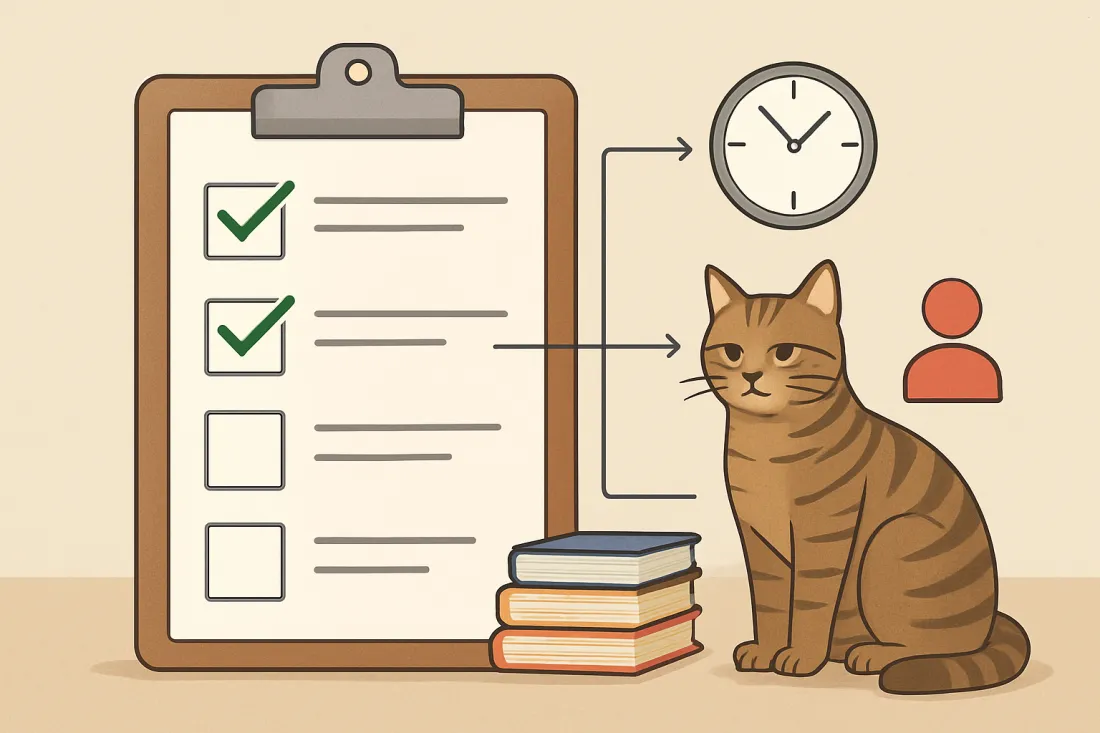
Structured Checklist: Is Our Schedule Cat-Friendly?
Use this structured checklist to see if your current lifestyle can support a cat and what type might fit best.
Time and routine checklist
- We can reliably feed a cat at least twice a day at roughly consistent times.
- Someone can scoop the litter box daily (or every other day at most).
- We can provide at least 20–30 minutes of focused interaction (play, petting, grooming) most days.
- Our home is empty for no more than a typical full workday at a stretch on weekdays, or we can arrange a pet sitter if it is longer.
- We can keep a basic routine for feeding, play, and quiet time, even if our days are busy.
Household and environment checklist
- We can set up at least one quiet, kid-free safe space where the cat can retreat (room, high perch, or gated area).
- We are willing to cat-proof (secure cords, toxic plants, small objects, and breakables).
- Everyone in the family understands and agrees on basic cat rules (no tail pulling, no chasing, let sleeping cats rest).
- We can budget for food, litter, and routine vet care, plus some savings for unexpected issues.
- If we rent, we have confirmed with our landlord that cats are allowed.
Fit to cat type checklist
- If we are away most of the day, we will prioritize an adult or senior cat described as calm or independent.
- If we want a very playful companion, we are ready to commit to daily active play with a young adult cat.
- If we are first-time cat owners, we will avoid very shy or behaviorally complex cats unless we have support.
- If we have young children, we will look for a cat with a history of living with kids or described as very tolerant.
If you find that many of these boxes are hard to tick, you may want to consider options like fostering, waiting until your schedule calms down, or exploring low maintenance pets for busy owners instead.
Questions to Ask Shelters About Temperament
When you visit or contact a shelter or rescue, go beyond “Is this cat good with kids?” and ask specific questions. Staff and foster carers often know a lot about how a cat behaves day to day.
Questions about daily behavior
- “How does this cat usually spend their day?” (Napping, playing, watching out the window, following people, hiding.)
- “How does the cat react when people come and go?” (Curious, indifferent, hides, runs to the door.)
- “What happens when the cat is left alone?” (Any signs of stress, vocalizing, or destructive behavior.)
- “How much play does this cat seem to want?” (Short bursts, long sessions, mostly cuddles.)
Questions about people and kids
- “Has this cat lived with children before? If yes, what ages?”
- “How does the cat respond to being picked up, petted, or brushed?”
- “What does the cat do if someone is loud or moves quickly near them?”
- “Where does the cat go when the environment is busy or noisy?”
Questions about other animals and change
- “Has this cat lived with other cats or dogs? How did that go?”
- “How did the cat handle moving from their previous home or into foster?”
- “Does the cat adjust quickly to new rooms and people, or do they take a long time to settle?”
Questions about health and special needs
- “Does this cat have any ongoing medical needs or special diets we should plan for?”
- “Have you noticed any stress-related behaviors, like overgrooming or not using the litter box?”
Take notes and be honest about your schedule. A cat that needs constant company or has complex medical needs may not be fair to adopt if your family is rarely home or stretched thin.
Common Mistakes Busy Families Make When Choosing a Cat
Avoiding a few typical mistakes can save a lot of stress for both your family and the cat.
Choosing by looks or breed alone
It is tempting to pick the fluffiest or most unusual-looking cat, but appearance tells you almost nothing about whether the cat will cope with your lifestyle. Focus on temperament and history first, looks second.
Underestimating kitten demands
Many families assume a kitten will “adapt” to their schedule. In reality, kittens need more supervision and interaction than most adults. If you are already stretched thin, a kitten can quickly feel like too much.
Ignoring the cat’s stress signals
Some families interpret hiding, hissing, or swatting as the cat being “mean,” when it is often a sign of fear or overwhelm. A cat that is clearly stressed by noise and handling may never be comfortable in a very busy home.
Not setting family rules
Without clear rules, kids may chase, grab, or corner the cat, leading to scratches and fear. Before adoption, agree on simple rules like:
- Let the cat come to you.
- No picking up without an adult’s permission.
- Never disturb the cat in its safe space or when eating or using the litter box.
Skipping enrichment because “cats are low maintenance”
Cats are often easier than dogs, but they still need mental and physical stimulation. Without scratching posts, toys, and climbing options, even a calm cat can become bored or destructive.
Decision Checklist: How to Choose the Best Cat for Your Busy Family
Use this step-by-step process to move from idea to a well-matched cat.
- Map your real schedule
Write down typical weekday and weekend routines: when people leave, come home, and have 10–20 free minutes. - Decide on age range
If your home is empty most days, focus on adult or senior cats. If someone is home a lot and wants a very playful cat, include young adults. Only include kittens if you truly have time for supervision and training. - List must-have traits
Examples: “okay with kids,” “not too vocal,” “likes some cuddles,” “comfortable alone during work hours.” Keep this list short and realistic. - Contact shelters with your list
Share your schedule, home setup, and must-have traits. Ask which cats they think match, instead of picking only by photos. - Meet more than one cat
Visit or talk to fosters about several cats that fit your criteria. Notice who seems calm but interested, not frozen with fear or wildly overexcited. - Ask targeted temperament questions
Use the question lists above to understand how each cat behaves in daily life, not just in a cage or photo. - Picture the first month
Imagine where the litter box will go, where the cat will sleep, and who will handle feeding, play, and vet visits. If this feels impossible, adjust your expectations or timing. - Prepare your home before adoption
Set up a safe room, scratching posts, food and water stations, and hiding spots. Plan a slow introduction to kids and other pets. - Commit to a settling-in period
Even a well-matched cat may take days or weeks to fully relax. Plan for extra patience and gentle routines during this time.
FAQ: Best Cat for a Busy Family
What should busy families understand first about choosing the best cat?
The most important point is that your schedule and household energy matter more than any specific breed. A calm, people-friendly adult cat that is comfortable being alone for part of the day will almost always adapt better to a busy family than a high-energy kitten or a very shy cat. Matching temperament and age to your real routine is the key to a low-stress relationship.
What mistakes should busy families avoid when picking a cat?
Common mistakes include choosing a kitten without enough time for supervision, picking a cat based only on looks, and ignoring signs that a cat is stressed by noise or handling. Another frequent issue is assuming cats are “no work” and not planning for daily play, litter box care, and basic enrichment. Avoid these by being honest about your schedule, asking shelters detailed questions about temperament, and choosing a cat whose needs match the time and attention you can reliably give.
What should a busy family do next after reading about the best cat for a busy household?
Next, sit down as a family and complete the schedule and environment checklist above. Decide on an age range and a few must-have traits that fit your lifestyle. Then contact local shelters or rescues, share your situation, and ask which cats they recommend. When you are ready, prepare your home with a safe space, litter box, scratching posts, and toys before bringing a cat home. If you are still unsure whether a cat is the right fit, you can compare with other options such as best dog breeds for busy professionals to see what suits your family best.
Is it better to adopt one cat or two for a busy family?
Two well-matched cats can keep each other company during long workdays, which is especially helpful for young, playful cats. However, this also increases costs for food, litter, and vet care, and you need enough space and resources for both. For many busy families, a single calm adult cat with good enrichment at home is a simpler and more manageable starting point. If you are considering two, ask the shelter about bonded pairs that already get along.
Can a busy family successfully adopt a shy or special-needs cat?
It is possible, but it requires extra patience, emotional bandwidth, and sometimes additional costs. Shy or special-needs cats often do best in stable, predictable homes where someone can spend quiet time helping them feel safe and can manage any medical routines. If your days are already overwhelming, it may be kinder to choose a more adaptable, low-maintenance cat now and consider a higher-needs cat in the future when your schedule is more flexible.
Summary: The Best Cat Match for a Busy Household
For most busy U.S. families, the best match is a calm, people-social adult shelter cat with a moderate to low energy level and a history of living comfortably indoors with people. Focus on:
- Choosing age and temperament that fit your real schedule (often adult or senior).
- Using shelter personality categories and detailed questions to understand how a cat behaves day to day.
- Setting up a predictable routine with feeding, play, and quiet time.
- Avoiding common mistakes like picking by looks alone or underestimating kitten demands.
When you match the cat to your lifestyle instead of trying to bend your life around the cat, you set up your family—and your new feline roommate—for a calmer, happier life together.