
To fill out a pet adoption application in a way that actually helps you get approved, focus on three things: honesty, specific details, and showing you understand what the pet needs. Shelters and rescues are not looking for perfect people; they are looking for safe, realistic homes where the animal is likely to stay for life.
This guide walks through the most common questions, how to answer tricky parts (like past pet losses or behavior issues), what not to promise, and how to prepare before you even start the form.
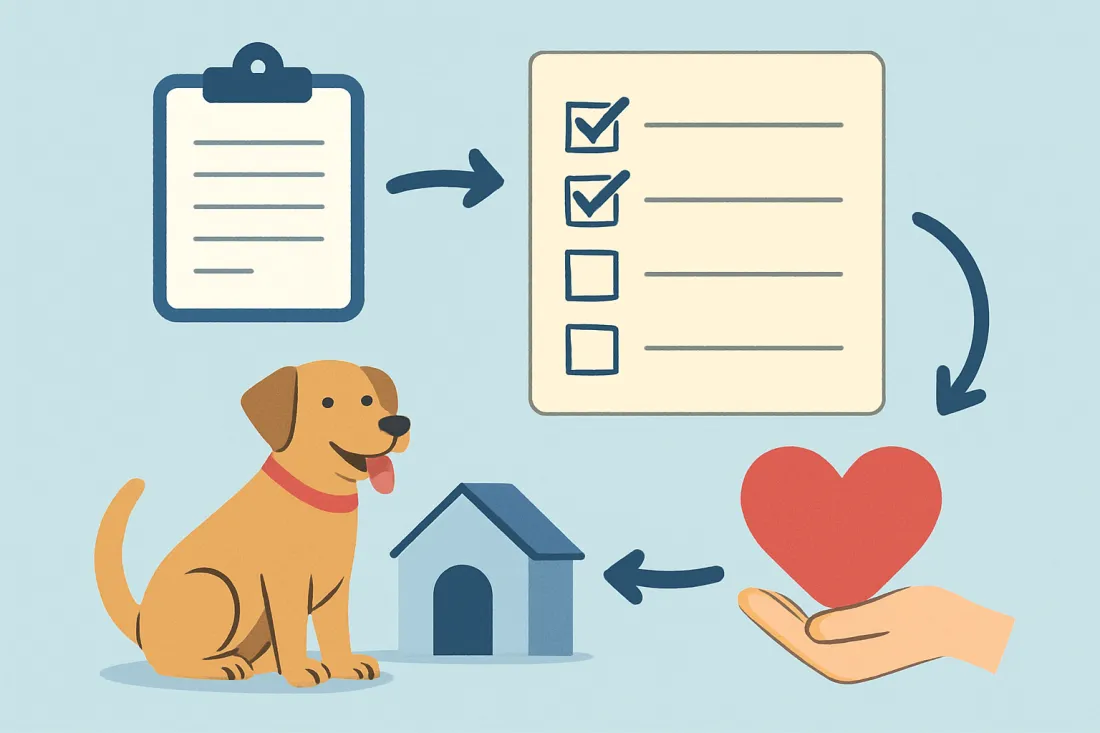
Why Pet Adoption Applications Matter To Shelters And Rescues
Adoption applications are not a test you “pass” or “fail” based on one right answer. They are a screening tool to:

- Match the right pet to the right home and lifestyle
- Reduce the risk that the pet will be returned or abandoned
- Check basic safety: housing, finances, and responsible pet care habits
- Understand your expectations so they can coach you realistically
Most U.S. shelters require adopters to be adults (often 18+), show a valid photo ID, and provide proof of current address such as a utility bill. Beyond that, each organization has its own policies, so always read their instructions carefully and ask questions if anything is unclear.

Common Sections Of Pet Adoption Applications And How To Handle Them
Most applications cover similar areas. Knowing what is coming makes it easier to prepare strong, consistent answers.
1. Basic contact and identity information
Typical questions:
- Name, age, phone, email
- Current address and how long you have lived there
- Emergency contact
Tips:
- Use an email and phone number you check often; they may call with follow-up questions or to schedule a meet-and-greet.
- Make sure your ID and address documents match what you write on the form.
2. Household members and daily environment
Typical questions:
- Who lives in your home (adults, children, roommates)? Ages of children.
- Does anyone have allergies or fears of animals?
- Who will be primarily responsible for the pet?
Why it matters: Shelters want to know the pet will be safe and that everyone in the home agrees with the adoption. If you have children, you may also want to review pet adoption requirements for families with children so your answers reflect realistic expectations.
3. Housing and landlord information
Typical questions:
- Do you own or rent?
- Type of home: house, apartment, condo, mobile home, etc.
- Do you have a yard? Is it fenced?
- If renting: landlord’s name and phone, pet policy, weight or breed restrictions.
Why it matters: They need to confirm that pets are allowed and that your space fits the animal’s needs. For renters, some organizations will call your landlord or ask for a copy of your lease. If you rent, it can help to review guidance on pet adoption rules for renters in the US before you apply.
4. Work schedule and lifestyle
Typical questions:
- What are your work hours and commute?
- How many hours per day will the pet be alone?
- Do you travel often? Who will care for the pet when you are away?
Why it matters: They are checking whether your schedule fits the species and age you want. For example, a young puppy cannot be left alone as long as an adult cat.
5. Experience with pets and past pet history
Typical questions:
- Have you had pets before? What kind?
- What happened to your previous pets?
- Have you ever surrendered a pet to a shelter?
- Have any of your pets been lost, hit by a car, or died from preventable causes?
Why it matters: They want to understand your experience level and how you handle long-term responsibility and difficult situations.
6. Veterinary care and financial readiness
Typical questions:
- Do you have a current veterinarian? Name and phone.
- Are your current pets spayed/neutered and vaccinated?
- How much do you expect to spend on pet care each year?
Why it matters: This shows whether you understand that pets require ongoing medical care and budget planning, not just a one-time adoption fee.
7. Training, rules, and expectations
Typical questions:
- Where will the pet sleep?
- Will the pet be allowed on furniture?
- How will you handle house training or litter box training?
- How will you address behavior problems like barking, scratching, or chewing?
Why it matters: They want to see that you have realistic expectations and a plan for normal pet behavior, not that you expect a “perfect” animal.
8. What kind of pet you want and why
Typical questions:
- Which animal are you interested in, or what type (age, size, energy level)?
- Why do you want to adopt this particular pet?
- What qualities are most important to you (cuddly, active, good with kids, etc.)?
Why it matters: This helps them decide if the pet you chose is a good match or if they should suggest a different one.
How To Answer Lifestyle And Housing Questions Honestly But Positively
Many people worry that admitting they work full-time or live in an apartment will get them rejected. In reality, shelters see all kinds of successful homes. What matters is how you plan to meet the pet’s needs within your situation.
Describing your work schedule
Instead of trying to sound “ideal,” explain your real schedule and your plan:
- Be specific: “I work 8:30 a.m.–5:30 p.m., Monday–Friday.”
- Explain breaks: “I come home for lunch three days a week” or “My partner works evenings, so someone is home most of the day.”
- Describe support: “If we adopt a dog, we will use a midday dog walker on long days.”
Talking about your home and yard
Do not exaggerate your space. A small apartment can be fine for many cats and lower-energy dogs if you commit to exercise and enrichment.
- If you do not have a yard, emphasize walks, playtime, and indoor enrichment.
- If your yard is not fully fenced, say how you will keep the pet safe (leash walks, long line, supervised time only).
- If you rent, clearly state that your landlord allows pets and how you confirmed it (lease, written permission, email).
Explaining time alone
Most adults work. The key is to show you understand limits, especially for puppies and kittens.
- For adult dogs: explain how you will keep time alone reasonable (e.g., no more than a typical workday without a break, plus walks before and after).
- For puppies: describe a concrete plan for potty breaks, crate training, and socialization.
- For cats: mention litter box access, toys, and safe windows or perches.
How To Address Past Pet History Or Behavior Issues Without Hurting Your Chances
Many people fear that admitting a pet was rehomed, got lost, or had behavior problems will automatically disqualify them. In most cases, shelters are looking for what you learned, not perfection.
Be honest about past pets
Common sensitive questions include:
- “Have you ever surrendered a pet to a shelter or rescue?”
- “Have any of your pets died from accidents or preventable causes?”
- “Have you had a pet euthanized for behavior?”
When answering:
- Tell the truth. Many shelters verify vet records and may notice gaps.
- Give brief context without blaming others or oversharing.
- Focus on changes you have made to prevent the same issue again.
Examples of sensitive but strong answers
- Previous pet hit by a car
“Yes. When I was younger, our dog was hit by a car after slipping out of an open gate. Since then, I have learned how important secure fencing is. Now I always use a leash outside unfenced areas and double-check gates and doors.” - Pet surrendered in the past
“Yes. Ten years ago I surrendered a dog when I lost my housing and could not find a pet-friendly place in time. It was a very hard decision, and I regret not planning better. Now I only adopt when I have stable housing and savings, and I have researched pet-friendly options if I ever need to move.” - Behavior issues
“My previous dog had severe separation anxiety. I worked with a trainer and veterinarian, but he still struggled. I learned how much time and patience behavior work takes. For my next dog, I am looking for a more confident, lower-anxiety personality and I am prepared to use positive reinforcement training from the start.”
What Not To Say Or Promise On A Pet Adoption Application
Trying to sound perfect can backfire. Shelters read applications every day and can spot unrealistic promises quickly.
Common mistakes that raise red flags
- Claiming the pet will never be alone when you work full-time and live alone, without explaining a realistic plan.
- Promising the pet will “never have any problems” or that you expect a “perfectly trained” animal.
- Minimizing normal costs by saying you will only go to the vet “if something is really wrong.”
- Blaming past pets (“The cat was mean,” “The dog was crazy”) without any reflection on training or environment.
- Writing what you think they want to hear instead of what you will actually do.
Better ways to phrase your intentions
- Instead of “The dog will never be alone,” say, “On workdays the dog will be alone from about 9 a.m. to 12 p.m. and 1 p.m. to 5 p.m. We will hire a dog walker for a midday break and do a long walk in the morning and evening.”
- Instead of “We will do anything for this pet,” say, “We understand pets can get sick or develop behavior issues. We are prepared to work with a veterinarian and trainer if needed and to budget for ongoing care.”
- Instead of “We want a perfect dog,” say, “We know every dog has quirks. We are looking for a friendly, moderate-energy dog and are ready to continue training and socialization.”
Comparison Table: Weak vs Strong Answers To Common Application Questions
| Application Question | Weak Answer | Why It’s Weak | Stronger Answer | Why It’s Strong |
|---|---|---|---|---|
| How many hours will the pet be alone each day? | “Not much, we love animals.” | Vague, avoids the real schedule, gives no plan. | “On weekdays, the dog will be alone from about 9 a.m.–12 p.m. and 1 p.m.–5 p.m. My partner works from home two days a week, and we will use a dog walker on the other days.” | Specific schedule plus concrete support plan. |
| Where will the pet sleep at night? | “Anywhere it wants.” | Suggests no structure or safety plan, especially for puppies. | “For the first few months, the puppy will sleep in a crate in our bedroom so we can hear if it needs to go out. As it matures, we may transition to a dog bed in our room.” | Shows thought about routine, training, and safety. |
| What happened to your previous pets? | “They died.” | Too brief, no context, can sound evasive. | “Our last dog passed away at an old age from cancer under our vet’s care. Before that, we had two indoor-only cats who lived into their teens.” | Honest, respectful, shows long-term care. |
| How will you handle behavior problems? | “We won’t have any; we’re good with animals.” | Unrealistic, suggests poor understanding of normal behavior. | “If behavior issues come up, we will first rule out medical causes with our vet, then work with a positive reinforcement trainer and adjust our routine to help the pet succeed.” | Realistic, proactive, and specific about resources. |
| Why do you want this specific pet? | “It’s cute.” | Focuses only on appearance, ignores needs and personality. | “We’re drawn to this dog because she is described as friendly with children and moderate energy. That fits our family with two school-age kids and our active but not overly athletic lifestyle.” | Connects the pet’s traits to the adopter’s real life. |
Structured Checklist: Information To Gather Before You Apply
Use this checklist to prepare before you start filling out applications. Having these details ready makes your answers more complete and consistent.
- Identity and contact
- Valid photo ID (driver’s license, state ID, or passport)
- Current address and how long you have lived there
- Phone number and email you check daily
- Housing details
- Own vs rent status
- Type of home (house, apartment, condo, etc.)
- Yard details (size, fencing, shared or private)
- If renting: landlord’s name, phone, and written pet policy or lease section
- Household information
- Names and ages of all household members
- Any allergies, mobility issues, or animal fears in the home
- Who will be the primary caregiver for the pet
- Work and lifestyle
- Your typical weekly schedule (work, school, travel)
- How many hours the pet will be alone on a typical day
- Backup care options (family, friends, pet sitter, dog walker)
- Pet experience and history
- List of previous pets (species, how long you had them)
- What happened to each pet (re-homed, passed away, still with you)
- Any past behavior or medical challenges and what you did
- Current pets
- Species, ages, and personalities of current pets
- Spay/neuter and vaccination status
- How they typically react to new animals
- Veterinary and financial readiness
- Name and phone number of your current or planned veterinarian
- Approximate monthly or yearly budget range you can set aside for pet care (food, supplies, vet visits, grooming, pet insurance if you choose)
- Emergency plan for unexpected vet bills (savings, credit, payment plans, pet insurance)
- Training and house rules
- Where the pet will sleep at night
- Where the pet will stay when you are not home
- House rules (on furniture or not, areas that are off-limits)
- Preferred training methods (ideally positive reinforcement)
- Pet preferences
- Species and general age range (kitten/puppy, adult, senior)
- Size and energy level that fit your lifestyle
- Any must-haves (good with kids, okay with cats, low-shedding, etc.)
Sample Strong Vs Weak Answers To Key Application Questions
Use these anonymized examples to shape your own answers. Do not copy them word for word; instead, adapt the structure and level of detail to your real situation.
1. Work schedule and time alone
Question: “How long will the dog be alone on a typical day?”
Weak answer: “Not long, we will be with the dog all the time.”
Why it’s weak: It is unrealistic for most adults and does not explain your actual routine.
Stronger answer: “On weekdays, the dog will be alone from about 8:30 a.m.–12:30 p.m. and 1:30 p.m.–5:30 p.m. My partner works from home two days a week, so on those days the dog will have company most of the time. On the other three days, we plan to hire a dog walker for a midday walk and potty break.”
Why it works: It is honest, specific, and shows a plan to meet the dog’s needs.
2. Housing and landlord approval
Question: “Do you rent or own your home? If you rent, are pets allowed?”
Weak answer: “Rent, but it’s fine, the landlord doesn’t care.”
Stronger answer: “We rent a two-bedroom apartment on a one-year lease. Our lease allows up to two cats or dogs under a certain weight. We have written permission from our landlord to adopt one medium-size dog, and we can provide a copy of the lease or landlord contact if needed.”
3. Past pet surrendered
Question: “Have you ever surrendered a pet to a shelter or rescue? If yes, please explain.”
Weak answer: “Yes, it didn’t work out.”
Stronger answer: “Yes. About eight years ago, I surrendered a dog when I had to move suddenly for a job and could not find pet-friendly housing in time. I did not have a support network or savings then. Since that experience, I have made sure I have stable housing and a backup plan before adopting again. I now have a more flexible job and several pet-friendly housing options if I ever need to move.”
4. Handling behavior problems
Question: “How will you deal with behavior issues such as barking, scratching, or chewing?”
Weak answer: “We’ll just tell the pet no and it will learn.”
Stronger answer: “We expect some normal behavior issues, especially during adjustment. We will redirect unwanted behavior, provide appropriate outlets (chew toys, scratching posts), and reward good behavior. If problems continue, we will consult a positive reinforcement trainer and our veterinarian to rule out medical causes.”
5. Why you want this pet
Question: “Why do you want to adopt this particular cat?”
Weak answer: “She’s adorable and we want a cute cat.”
Stronger answer: “We are interested in this cat because she is described as friendly but independent, which fits our home where we work from home but also have busy periods. She is said to be good with other cats, and we have one calm, neutered male who enjoys feline company. We are looking for a companion for him and a family pet.”
Understanding The 3-3-3 Rule And Why Shelters Care About It
The “3-3-3 rule” is a popular guideline many shelters use to explain how long it can take a newly adopted pet to adjust:
- First 3 days: The pet may feel overwhelmed, shut down, or overly excited. They are still figuring out where they are and what is happening.
- First 3 weeks: The pet starts to settle into a routine, show more of their real personality, and test boundaries.
- First 3 months: The pet is usually more fully adjusted, bonded, and comfortable with the household rules.
On an application, you can show you understand this by:
- Stating that you expect an adjustment period and are prepared to be patient.
- Mentioning that you will give the pet a quiet space, consistent routine, and gradual introductions to family members and other pets.
- Explaining that you will not give up quickly if the first days or weeks are challenging.
How Long A Pet Adoption Application Can Take
Processing time varies widely between organizations. Some open-admission shelters can approve same-day adoptions once you meet basic requirements and complete a counseling session. Foster-based rescues often take longer because they may:
- Call your references and veterinarian
- Contact your landlord if you rent
- Schedule a phone or video interview
- Arrange a meet-and-greet with the foster family
Because policies differ, the best approach is to:
- Read the organization’s website for their typical timeline.
- Ask politely when you submit your application how long reviews usually take.
- Respond quickly to calls or emails asking for more information.
What To Do If Your Application Is Denied
Being denied can feel personal, but it often means the organization decided that specific pet or timing was not the right fit, not that you are a bad pet owner.
Step-by-step response if you are denied
- Ask for feedback respectfully
Send a brief, polite message: “Thank you for reviewing my application. If you have time, could you share any feedback on what I could improve for future applications?” - Listen without arguing
If they mention concerns (housing, schedule, other pets), take notes. You do not have to agree with everything, but it can highlight areas to strengthen. - Decide what you can realistically change
Examples:- Clarify landlord permission in writing.
- Line up a dog walker or pet sitter.
- Take a basic pet care or training class.
- Consider a different type of pet or organization
Some rescues specialize in high-need animals and have stricter criteria. A municipal shelter might have more flexible policies and many wonderful pets who need homes. You can also consider a different age or energy level that better fits your current lifestyle. - Use the time to prepare your home
Set up supplies, create safe spaces, and review resources such as a how does adopting from an animal shelter work guide or a family cat adoption checklist so you are ready when the right pet comes along.
Decision Checklist: Are You Ready To Submit Your Application?
Before you hit “submit,” run through this quick decision checklist:
- Honesty check
- Have you answered every question truthfully, even the uncomfortable ones?
- Do your answers match what your landlord, vet, and references would say?
- Clarity check
- Are your work hours, time alone, and care plans clearly explained?
- Did you avoid vague phrases like “not much” or “we’ll figure it out”?
- Safety check
- Have you described where the pet will sleep and stay when unsupervised?
- Do you have a plan for secure doors, windows, and yard or leash use?
- Financial check
- Have you thought about ongoing costs (food, vet care, supplies) and how you will cover emergencies?
- Are you being realistic about what you can afford long-term?
- Expectation check
- Do your answers show that you expect an adjustment period and normal behavior challenges?
- Are you open to guidance from shelter staff about which pet is the best match?
- Consistency check
- If you are applying to multiple organizations, are you giving consistent information about your home, schedule, and history?
Frequently Asked Questions About Filling Out Pet Adoption Applications
What should I say on a pet adoption application to improve my chances?
Focus on clear, honest details about your home, schedule, and experience. Explain where the pet will sleep, how long it will be alone, who will care for it, and how you will handle training and vet care. Use specific examples instead of vague promises. Showing that you understand the 3-3-3 adjustment period and are prepared for normal behavior issues also reassures shelters that you are thinking long-term.
What is the 3-3-3 rule for pet adoption, and should I mention it?
The 3-3-3 rule is a guideline that says many pets take about 3 days to decompress, 3 weeks to start settling into a routine, and 3 months to feel fully at home. You do not have to mention it by name, but it helps to show that you expect an adjustment period and are prepared to be patient, keep a consistent routine, and give the pet space while it learns your household.
How long does a pet adoption application usually take to be approved?
Timelines vary. Some shelters can review your application and complete an adoption on the same day, especially if you meet basic requirements and bring ID and proof of address. Foster-based rescues often take longer because they may contact your landlord, vet, and references and schedule interviews or meet-and-greets. The best way to know is to ask the organization about their typical review time when you apply and to respond quickly to any follow-up questions.
What if I have a complicated history, like surrendering a pet or a past accident?
You should still apply, but be open and thoughtful in your answers. Briefly explain what happened, take responsibility where appropriate, and focus on what you have changed since then—such as improved fencing, more stable housing, or using training and vet support earlier. Many shelters appreciate applicants who have learned from past experiences and can now offer a safer, more stable home.
Can I file pet adoption papers myself in a specific state like Florida?
For typical shelter or rescue adoptions, the organization prepares and files the necessary paperwork; you complete their application and sign their adoption contract. If you are dealing with a private transfer or a legal issue such as ownership disputes, the process can be more complex and may require legal advice. For state-specific questions, including Florida, check with local shelters, animal control, or a qualified attorney to understand current requirements.
Summary: Be Transparent, Be Prepared, And Think Long-Term
A strong pet adoption application does not come from sounding perfect; it comes from being transparent, prepared, and realistic about what a new pet needs. When you:
- Gather your housing, household, and vet information in advance
- Describe your schedule and home honestly, with concrete plans
- Address past pet history openly and show what you have learned
- Avoid unrealistic promises and vague answers
- Show you understand that adjustment takes time
you make it much easier for shelters and rescues to say yes—or to help you find the pet that truly fits your life. That honesty is the foundation of responsible pet ownership and a lifelong match for both you and your new companion.