
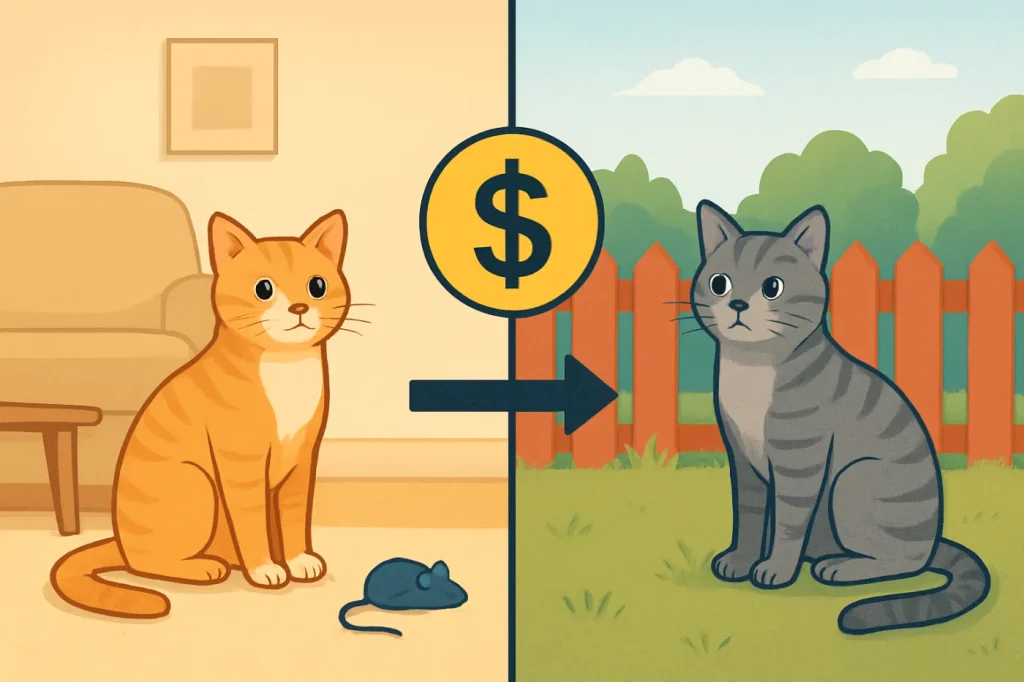
Choosing whether your cat will live strictly indoors or have outdoor access is not just about personality and lifestyle. It also changes your budget, risk level, and how you plan routine care.
In the United States, an outdoor-access cat usually costs more over time than a strictly indoor cat because of higher preventive care needs, more frequent injuries and illnesses, and potentially higher insurance costs. Indoor cats tend to have more predictable, steady expenses, while outdoor cats bring more surprise bills and risk of large one-off costs.
Below is a practical breakdown so you can plan realistically and decide what fits your household, your finances, and your cat’s safety.
Indoor-only vs outdoor-access cats: how the costs typically differ
For most U.S. owners:
- Indoor-only cats usually mean lower medical risk, more predictable annual costs, and more spending on enrichment (toys, scratching posts, climbing furniture) to keep them active and mentally stimulated.
- Outdoor-access cats often mean higher medical risk, more frequent vet visits for injuries and infections, stronger parasite prevention, and a higher chance of emergency bills.
Exact dollar amounts vary widely by city, vet clinic, and your cat’s health. Instead of fixed numbers, use these patterns:
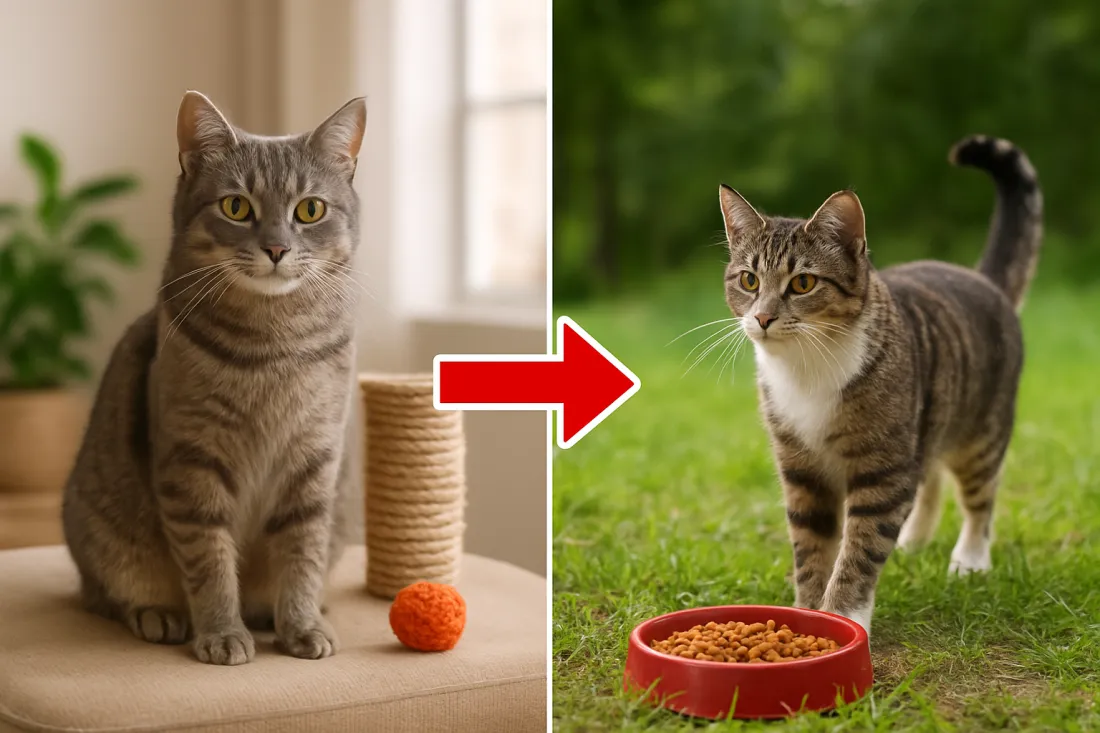
- Expect more frequent vet visits for outdoor cats due to bites, scratches, abscesses, road accidents, and contagious diseases.
- Plan for stronger and more frequent flea, tick, and deworming treatments for outdoor cats, as they are exposed to more parasites.
- Budget for more indoor enrichment for indoor-only cats (climbing trees, puzzle feeders, window perches) to prevent boredom and behavior issues.
- Consider that some pet insurance policies charge more or have different conditions for outdoor cats because of higher risk.
If you want a deeper breakdown of overall cat budgets, you can also compare lifestyle choices with a general guide on how much does a cat cost per year, then layer indoor vs outdoor differences on top.
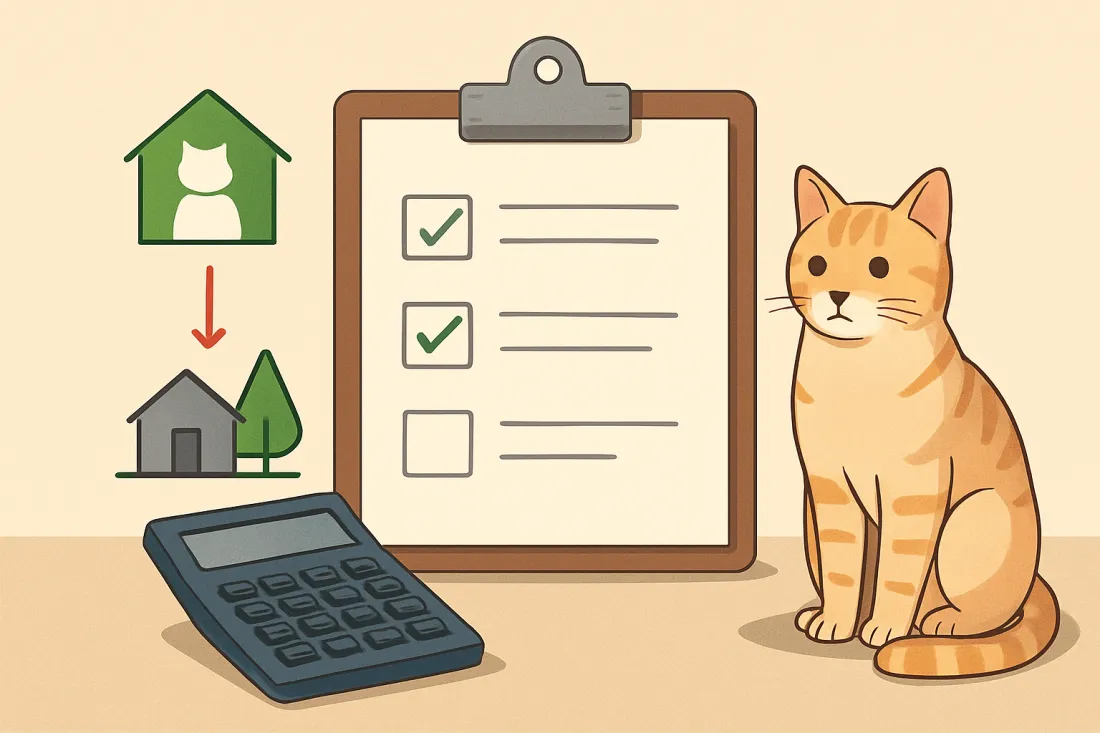
Key comparison criteria: cost, risk, and lifestyle fit
When you compare the cost of an indoor vs outdoor cat, you are really comparing three things:
- Routine costs
Food, litter, basic vet care, and enrichment. These are fairly predictable and similar between lifestyles, with a few differences (indoor cats use more litter; outdoor cats may need more parasite control). - Risk-related costs
Emergency vet visits, treatment for injuries, and contagious diseases. These are much more common for outdoor cats and can be financially and emotionally heavy. - Long-term health and lifespan
Indoor cats are generally protected from cars, predators, harsh weather, and many contagious diseases, which is associated with longer, safer lives. Outdoor access can offer mental stimulation but adds many hazards that can shorten lifespan and increase medical costs.
Use these criteria as you read the comparison table and checklist below.
Indoor vs outdoor cat costs: side-by-side comparison table
| Cost / Risk Area | Indoor-only Cat | Outdoor-access Cat | What this means for your budget |
|---|---|---|---|
| Food | Similar baseline; may be easier to monitor exact intake and weight. | Similar baseline; may burn more calories and need slightly more food. | Food costs are broadly similar; outdoor cats might need a bit more, but this is usually a small difference. |
| Litter | Higher use because all bathroom needs are indoors; steady, predictable expense. | Lower use if the cat toilets outside part of the time; still need indoor litter for bad weather and safety. | Indoor cats may cost more in litter; outdoor cats save a little here but not enough to offset higher medical risk. |
| Routine vet checkups | Annual wellness exam is usually recommended; vaccines tailored to indoor risk. | Annual or more frequent exams often recommended; vaccines typically kept fully up to date due to higher exposure. | Outdoor cats may need more frequent monitoring and broader vaccine coverage, increasing routine vet costs. |
| Vaccinations | Core vaccines; some vets may adjust schedule for strictly indoor cats depending on risk and local guidance. | Core vaccines plus strong emphasis on protection against diseases spread by other cats and wildlife. | Outdoor cats are more likely to need every recommended vaccine on schedule, which can increase total vaccine spending. |
| Flea and tick prevention | Regular prevention still advised, but exposure is lower if the cat never goes outside and other pets are indoor-only. | Strong, consistent flea and tick prevention is essential; higher risk from grass, wildlife, and other animals. | Outdoor cats usually need more robust and sometimes more frequent parasite control, adding to monthly costs. |
| Deworming and parasite treatment | Occasional deworming depending on vet advice and household risk. | More frequent deworming often recommended due to hunting, eating prey, or contact with contaminated soil. | Outdoor cats are more likely to need repeated parasite treatments, which can add up over the year. |
| Emergency vet care | Less common; indoor cats are mostly protected from cars, predators, and fights. | Higher risk of accidents, fights, abscesses, and sudden illnesses from outdoor exposure. | Outdoor cats carry a significantly higher chance of large, unexpected emergency bills. |
| Chronic illness related to outdoor hazards | Lower risk from outdoor-transmitted diseases; still need monitoring for age-related issues. | Higher risk of diseases spread by other cats or wildlife; may lead to long-term treatment costs. | Outdoor lifestyle can increase the chance of long-term medical expenses that continue for years. |
| Enrichment and toys | Higher need for indoor stimulation: scratching posts, climbing trees, puzzle feeders, window perches. | Still need indoor enrichment, but some mental and physical stimulation comes from outdoor time. | Indoor cats may cost more in toys and furniture, but these are usually smaller, predictable purchases. |
| Home damage and replacements | Potential scratching of furniture if not provided with alternatives; hair and litter tracking indoors. | Potential for mud, burrs, and outdoor debris indoors; more wear on doors and screens. | Both lifestyles can cause some home wear; good training and scratching options help limit costs. |
| Pet insurance | Policies may be priced for lower risk; fewer claims if the cat stays safe indoors. | Some insurers may charge more or exclude certain outdoor-related incidents; higher chance you will need to claim. | Outdoor cats can face higher premiums and deductibles, and you are more likely to hit policy limits. |
| Liability and property damage | Low risk of your cat damaging neighbors’ property or wildlife. | Higher risk of your cat harming wildlife, entering neighbors’ yards, or causing minor property damage. | Outdoor access can create neighbor disputes or costs if your cat damages property or preys on pets like small birds. |
| End-of-life and long-term care | Indoor cats often reach older age, which can mean more years of senior care but also more time together. | Outdoor hazards can shorten lifespan; some cats may never reach the senior stage where age-related costs rise. | Indoor cats may have more years of routine senior care; outdoor cats may face earlier, sudden high-cost events. |
Health and safety risks that drive cost differences
Many of the cost differences between indoor and outdoor cats come from risk. Even if your outdoor cat seems street-smart, they cannot control everything outside your yard.
Common outdoor risks that can lead to big vet bills
- Traffic accidents – Cars, bikes, and other vehicles can cause serious injuries that require surgery, hospitalization, or long-term care.
- Fights with other animals – Fights with other cats, dogs, or wildlife can lead to bite wounds, abscesses, infections, and scarring.
- Contagious diseases – Outdoor cats are more exposed to viruses and infections spread through bites, saliva, or shared food and water sources.
- Parasites – Fleas, ticks, worms, and other parasites are more common outdoors and can cause anemia, skin problems, or internal illness.
- Poisoning and toxins – Outdoor cats can encounter antifreeze, pesticides, toxic plants, or contaminated water.
- Weather extremes – Heat, cold, storms, and sudden temperature changes can cause hypothermia, heatstroke, or dehydration.
Each of these risks can turn into a single high-cost emergency visit or a long-term medical condition. Indoor cats are not completely risk-free, but they are shielded from many of these outdoor hazards, which usually means fewer surprise bills.
Indoor risks that still matter for your budget
- Obesity and inactivity – Indoor cats can gain weight if they do not get enough exercise, which can lead to diabetes, joint problems, and other costly conditions.
- Stress and boredom – Without enough stimulation, indoor cats can develop behavior issues like inappropriate scratching or urination, which may require vet visits or behavior support.
- Household toxins – Indoor plants, cleaning products, and human medications can still be dangerous if not stored safely.
These indoor risks are usually easier to control with good routines, safe storage, and plenty of play and enrichment. That makes indoor life generally more predictable and budget-friendly over time.
Preventive care needs and costs for indoor-only cats
Indoor cats still need regular preventive care. Skipping it can lead to bigger bills later.
Core preventive care for indoor cats
- Regular wellness exams – Most vets recommend at least an annual checkup to monitor weight, teeth, heart, and early signs of disease.
- Vaccinations – Indoor cats usually still need core vaccines, especially when they are young. Your vet may adjust the schedule based on your cat’s age and risk.
- Spay/neuter – This is a one-time cost that helps prevent certain health and behavior problems and avoids accidental litters.
- Parasite prevention – Even indoor cats can get fleas or worms, especially if other pets go outside or you bring pests in on clothing or shoes.
- Dental care – Dental disease is common in cats and can lead to pain and infection. Your vet may recommend professional cleanings and at-home care.
Enrichment and environment costs for indoor cats
To keep indoor cats healthy and happy, you will likely invest in:
- Scratching posts and pads – To protect furniture and let your cat stretch and maintain their claws.
- Climbing furniture or shelves – Cat trees, window perches, or shelves give vertical space and exercise.
- Toys and puzzle feeders – To mimic hunting and keep their brain active.
- Litter boxes and accessories – Boxes, scoops, mats, and odor control products.
These purchases are usually flexible. You can choose budget-friendly options, DIY some items, and replace things gradually. If you want more detail on daily routines and enrichment, a guide on daily care routine for indoor cats can help you plan your time and budget.
Additional and higher-risk costs for outdoor-access cats
Outdoor-access cats need everything indoor cats do, plus extra layers of protection and a bigger emergency buffer.
Extra preventive care for outdoor cats
- Stronger parasite control – Outdoor cats usually need consistent, year-round flea and tick prevention and more frequent deworming.
- Full vaccination coverage – Because outdoor cats meet other animals and wildlife, vets are more likely to recommend staying fully up to date on all relevant vaccines.
- More frequent health checks – Outdoor cats may benefit from more frequent exams to catch injuries, infections, or weight changes early.
Common unplanned costs for outdoor cats
- Treatment for bite wounds and abscesses – Fights can lead to infections that require draining, antibiotics, and follow-up visits.
- Road accidents and trauma – Broken bones, internal injuries, and shock often require emergency care and possibly surgery.
- Infections from wildlife or other cats – Some infections can lead to long-term treatment or monitoring.
- Foreign body or poisoning treatment – Eating something toxic or non-food items can require hospitalization and intensive care.
Because these events are unpredictable, it is wise to keep a larger emergency fund if your cat goes outdoors. Even if you never need it, planning for the possibility protects both your cat and your finances.
Who should choose indoor-only vs outdoor-access from a budget standpoint
Your financial situation and risk tolerance should play a big role in this decision.
Indoor-only is usually better if you:
- Have a limited or fixed budget and cannot easily absorb large, sudden vet bills.
- Prefer predictable monthly expenses over occasional big surprises.
- Live near busy roads, aggressive wildlife, or unsafe neighbors.
- Are willing to invest time and some money in indoor enrichment to keep your cat active and mentally engaged.
Outdoor or controlled outdoor access may be considered if you:
- Can maintain a larger emergency fund or have robust pet insurance.
- Live in a relatively quiet, safe area and can supervise or limit outdoor time.
- Are prepared for higher preventive care costs and more frequent vet visits.
- Are willing to use safer outdoor options such as a catio, secure fenced yard, or leash walks to reduce risk.
Many U.S. vets lean toward recommending indoor-only or very controlled outdoor access (like catios or leashes) because of the safety and health benefits. This approach usually aligns with more stable, manageable costs over your cat’s lifetime.
Insurance and liability considerations for indoor vs outdoor cats
Pet insurance and liability are often overlooked when people think about cost, but they matter more for outdoor cats.
Pet insurance differences
Policies vary, but you may find that:
- Some insurers ask whether your cat goes outdoors and may adjust premiums or coverage based on that risk.
- Outdoor cats are more likely to use insurance because of accidents and injuries, which can lead to deductibles and co-pays adding up.
- Certain outdoor-related incidents may have limits or exclusions, so it is important to read the policy carefully.
If you plan to let your cat outside, consider:
- Choosing a policy that clearly covers accidents, emergencies, and surgeries.
- Checking how the insurer handles pre-existing conditions that might arise from outdoor injuries.
- Comparing the cost of premiums with the size of your emergency savings.
Liability and neighbor relations
Outdoor cats can sometimes cause problems beyond your own property:
- Property damage – Scratching cars, screens, or garden furniture, or using neighbors’ gardens as litter boxes.
- Impact on wildlife – Hunting birds or small mammals, which can upset neighbors and local bird enthusiasts.
- Conflicts with other pets – Entering other people’s homes or yards and fighting with their pets.
While not every situation leads to a bill, you may face costs to repair damage, pay for another pet’s vet care if your cat is clearly responsible, or invest in fencing and deterrents to keep your cat on your property.
Responsible recommendations for U.S. pet owners
From both a welfare and budgeting perspective, many U.S. owners and vets favor keeping cats indoors or providing very controlled outdoor access. This approach:
- Reduces the chance of serious injury or disease, which protects your cat and your wallet.
- Makes costs more predictable, since you mainly deal with routine care and enrichment.
- Helps protect local wildlife and reduces neighbor conflicts.
If you want your cat to enjoy the outdoors more safely, consider:
- Catio or enclosed porch – A secure outdoor enclosure where your cat can enjoy fresh air without roaming.
- Leash and harness training – Supervised walks in safe areas.
- Secure fenced yard with cat-proofing – Fencing or toppers designed to keep cats in.
These options still require some investment, but they can be cheaper and safer in the long run than repeated emergency vet visits.
Decision checklist: which lifestyle and budget fit your situation
Use this checklist to decide whether an indoor-only or outdoor-access lifestyle makes more sense for your cat and your finances.
Budget and risk tolerance checklist
- Can you comfortably set aside money for unexpected vet bills that could be much higher for an outdoor cat?
- Would a large, sudden vet bill cause serious financial stress for your household?
- Are you willing to pay for stronger parasite prevention and more frequent vet visits if your cat goes outdoors?
- Do you understand that outdoor access can shorten your cat’s life and increase the chance of emergencies?
- Are you prepared to keep vaccines and preventive care fully up to date for an outdoor cat?
Home and environment checklist
- Do you live near busy roads, construction, or heavy traffic that could endanger a roaming cat?
- Are there predators or aggressive dogs in your area?
- Do your neighbors tolerate roaming cats, or have there been complaints about pets in the past?
- Can you create a stimulating indoor environment with climbing spots, scratching posts, and playtime?
- Could you build or buy a catio or secure outdoor space as a compromise?
Time and lifestyle checklist
- Do you have time for daily interactive play with an indoor cat?
- Can you supervise outdoor time if you choose leash walks or a yard?
- Are you comfortable with the possibility that an outdoor cat may not always come home on time?
If you answered “no” to several questions about emergency funds, safety, and supervision, an indoor-only lifestyle with good enrichment is usually the safer and more budget-friendly choice.
Common mistakes when budgeting for indoor vs outdoor cats
A few predictable mistakes cause many owners to underestimate the true cost of an outdoor cat or the needs of an indoor cat.
- Assuming outdoor cats are “self-sufficient” – Outdoor cats still need full vet care, quality food, and parasite prevention. They do not replace these needs by hunting.
- Skipping parasite prevention for indoor cats – Fleas and worms can still get indoors. Treating an infestation can be more expensive than regular prevention.
- Not planning for emergencies – Hoping nothing will happen is not a plan. Outdoor cats, in particular, need a realistic emergency fund or insurance.
- Underestimating enrichment needs for indoor cats – Boredom can lead to behavior issues and stress-related health problems that cost money to address.
- Letting cats roam without considering neighbors – Ignoring neighbor concerns can lead to conflicts, property damage costs, or pressure to change your cat’s lifestyle suddenly.
A bit of planning and honest budgeting up front can prevent many of these problems.
FAQ about cost, happiness, and lifestyle for indoor vs outdoor cats
What is the 3-3-3 rule for cats, and does it affect costs?
The “3-3-3 rule” is a simple way to remember how long it can take a new cat to adjust to a home:
- 3 days – Many cats feel overwhelmed and may hide or act unsure.
- 3 weeks – They start to learn routines and feel more comfortable.
- 3 months – Many cats feel fully settled and show their true personality.
During this adjustment period, it is usually safer and cheaper to keep your cat strictly indoors. Letting a new cat outside too soon increases the risk of them getting lost or injured before they are bonded to you and familiar with home. Waiting also gives you time to complete vet checks, vaccinations, and parasite prevention before considering any outdoor access.
Are cats happier as indoor or outdoor pets from a cost and welfare perspective?
Happiness depends on the individual cat and the quality of care, not just whether they go outside. Many cats are very content indoors if they have:
- Regular play and interaction with people
- Places to climb, scratch, and hide
- Windows or safe perches to watch the outside world
- Predictable routines and gentle handling
Outdoor access can offer extra stimulation, but it also introduces serious risks that can lead to pain, stress, and high vet bills. From a combined welfare and budget perspective, a well-enriched indoor life or controlled outdoor access (like a catio or leash walks) usually offers a better balance of safety, mental health, and manageable costs.
Do vets generally recommend indoor or outdoor lifestyles for cats?
Many U.S. veterinarians lean toward recommending that cats live indoors or have very controlled outdoor access. This is because indoor cats are protected from cars, predators, harsh weather, and many contagious diseases, which is associated with safer, longer lives and fewer emergencies. Vets also see the financial and emotional impact when outdoor cats are injured or lost. If you are unsure what is best for your cat, ask your vet to discuss risks and costs based on your specific neighborhood and your cat’s personality.
Is it cruel to leave an indoor cat alone all day while I work?
Leaving a cat alone during a typical workday is not automatically cruel, especially if their needs are met. To keep an indoor cat content while you are away:
- Provide fresh water, food, and clean litter before you leave.
- Offer toys, scratching posts, and window views for entertainment.
- Use puzzle feeders or treat-dispensing toys to keep them busy.
- Schedule quality playtime and affection when you are home.
If your schedule is very long, you might add a second cat (after careful introduction) or ask a trusted friend or sitter to check in occasionally. These steps are usually far safer and cheaper than letting a cat roam outdoors unsupervised just to avoid being alone.
Conclusion: balancing safety, happiness, and budget
When you compare the cost of an indoor vs outdoor cat in the United States, the pattern is clear:
- Indoor-only cats usually have more predictable, lower-risk expenses focused on routine vet care and enrichment.
- Outdoor-access cats often bring higher preventive care needs, more frequent vet visits, and a greater chance of large, unexpected bills.
If your budget is tight or you want to minimize risk, a well-enriched indoor lifestyle is usually the most responsible choice. If you are considering outdoor access, plan for stronger preventive care, a solid emergency fund or insurance, and safer options like catios or leash walks.
Whichever lifestyle you choose, thoughtful planning, regular vet care, and daily attention will do more for your cat’s happiness than any single decision about going outdoors.