
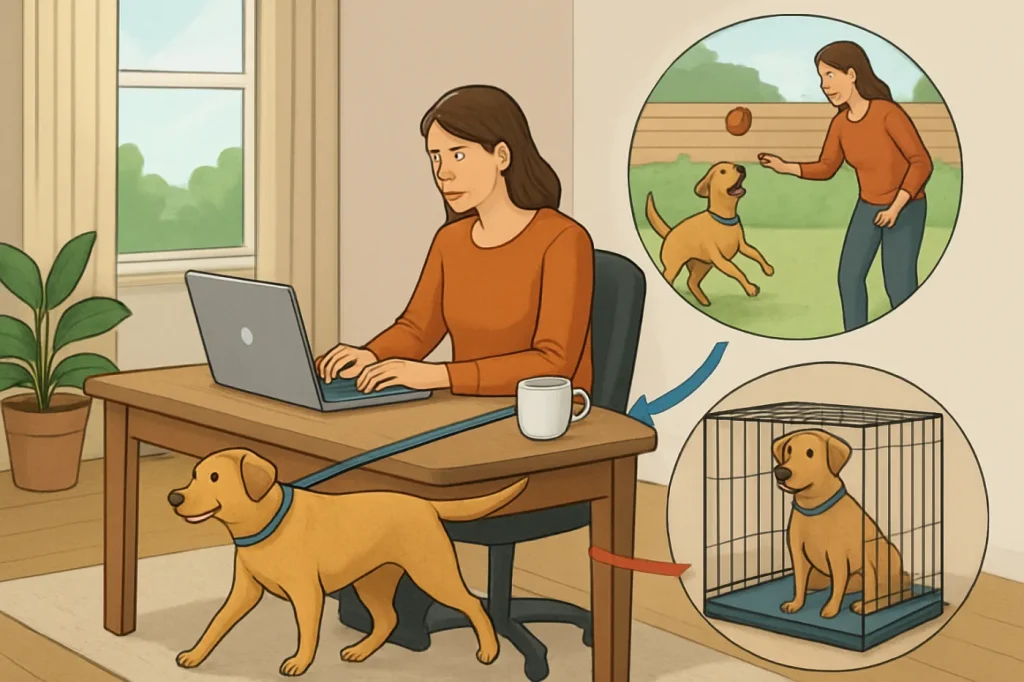
Why a daily dog care routine matters
A predictable daily dog care routine is not just about convenience for busy owners. Dogs feel safer and behave better when they know what happens next. A steady pattern of potty breaks, walks, meals, rest, and family time helps:
- Reduce stress and anxiety: Clear routines make it easier for dogs to relax when you leave and settle when you come home.
- Prevent accidents and behavior issues: Regular bathroom trips, exercise, and mental work lower the odds of chewing, barking, or house soiling.
- Support health: Consistent feeding, movement, and sleep patterns make it easier to spot changes in appetite, energy, or bathroom habits.
- Fit dog care into a 9–5 lifestyle: When you plan your dog’s day around your work schedule, you are less likely to skip walks or enrichment on busy days.
The goal is not a perfect, minute-by-minute schedule. A realistic daily dog care routine is a repeatable pattern that works for your dog and your U.S. work and home life most days of the week.
Daily dog care routine for busy owners: the practical baseline
If you work full-time, a realistic, responsible daily dog routine usually needs to include:
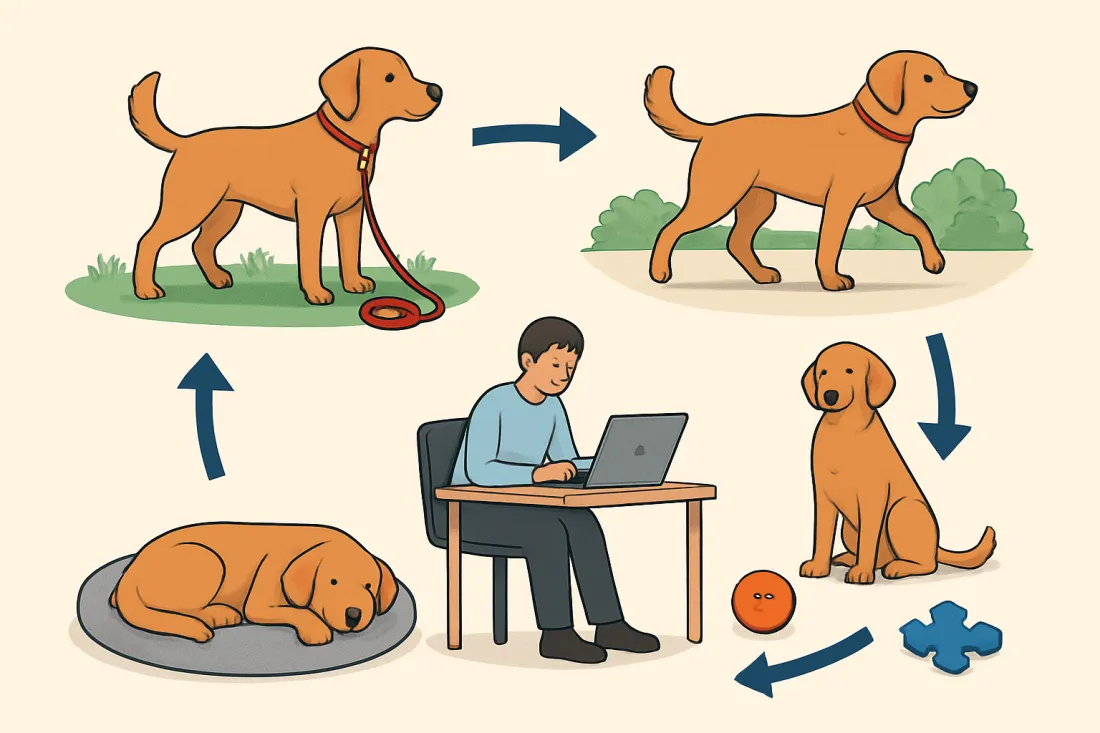
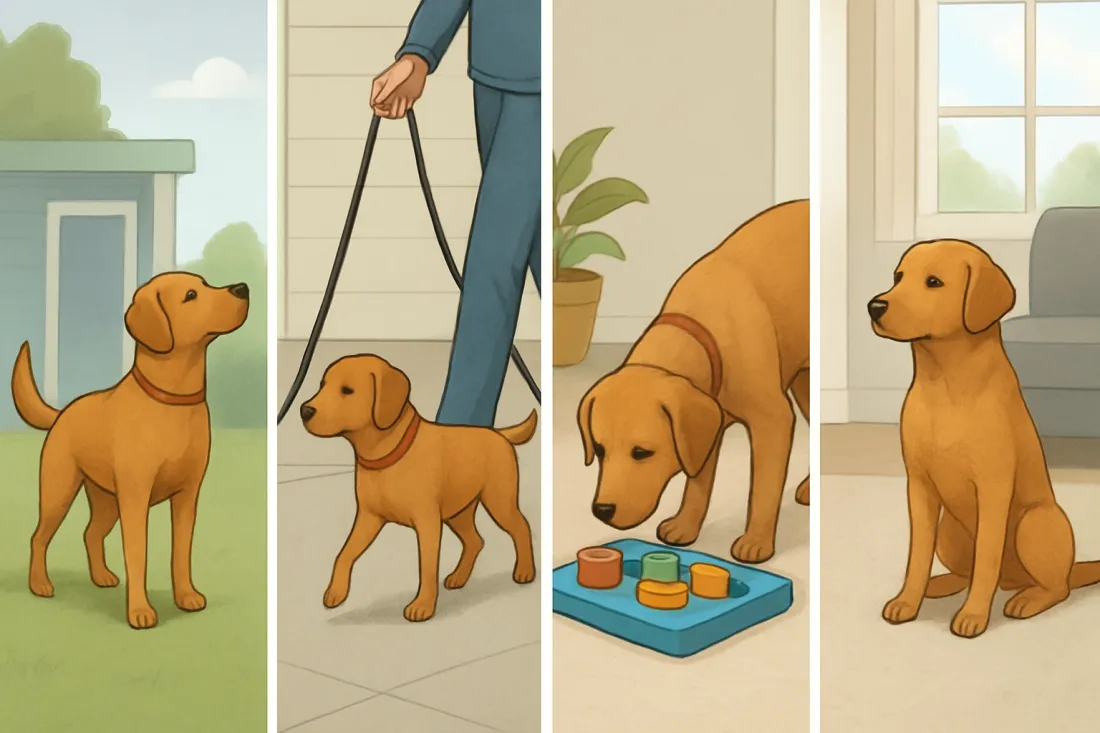
- Multiple potty breaks outside as an absolute minimum (more for puppies and seniors).
- At least one decent walk for exercise, plus a few shorter breaks.
- Daily mental enrichment (training, sniffing, puzzle toys).
- Human contact spread through the day (not just one hour at night).
- Safe alone-time limits based on age and training level.
For many U.S. 9–5 owners, this often looks like:
- Morning: Around 30–60 minutes total for potty, walk, breakfast, and a short training or play session.
- Midday: Someone checks on the dog (you, a walker, daycare, neighbor, or family) for potty, water, and a bit of interaction.
- Evening: Roughly 60–90 minutes total of exercise, decompression walk, family time, and a calm wind-down.
The exact routine depends on your dog’s age, energy level, and health, plus your commute and housing (apartment vs. house with yard). The goal is to design a schedule that fits your life without shortchanging your dog.
How U.S. work schedules and apartment living change dog care
Many U.S. owners are away from home for much of the day because of work and commuting. A typical pattern is:
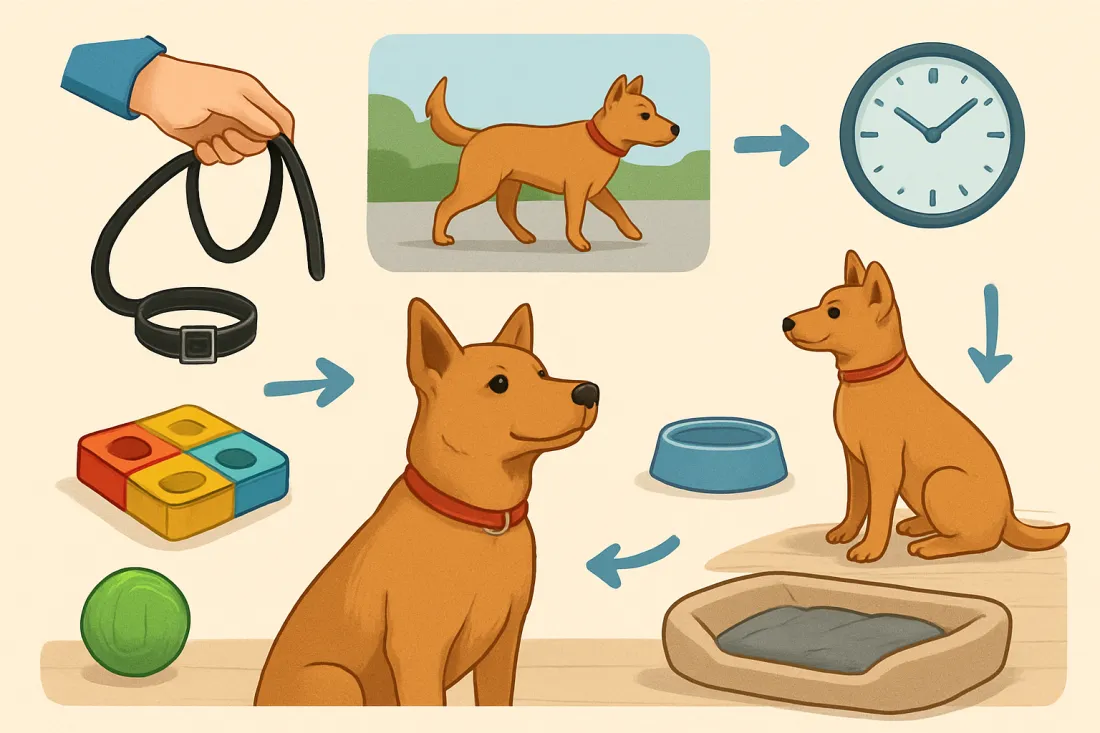
- Roughly 8–10 hours away from home including commute and overtime on some days.
- Urban apartments or condos with no yard, relying on elevators and sidewalks for every potty break.
- Suburban homes with small yards but close neighbors and leash rules to follow.
- Hybrid or remote jobs with some days at home and some in the office.
These realities create common constraints:
- Limited morning time: Many people have only 30–60 minutes between waking up and leaving.
- Long alone stretches: Dogs may be alone 6–9 hours if no help is arranged.
- Noise and neighbors: Barking in apartments can cause complaints and stress.
- Weather extremes: Hot summers and cold winters can shorten walks or require indoor alternatives.
A responsible routine accepts these constraints but adds support where needed: dog walkers, daycare, indoor enrichment, and realistic alone-time limits. If your schedule is especially tight, pairing this guidance with a daily dog care checklist for busy owners can help you see what truly fits into your day.
Morning routine: feeding, potty, walk, and enrichment
A solid morning routine is the foundation of a healthy daily dog care routine. It sets your dog up to cope better while you are gone and prevents a rush of pent-up energy in the evening. For a typical 9–5 schedule, aim for a predictable sequence rather than exact times.
1. Wake-up and first potty break
- Let your dog out as soon as you wake up, especially puppies and seniors.
- In apartments, plan extra time for elevators, leashing, and getting to an appropriate potty area.
- Keep it calm and predictable so your dog learns what to expect every morning.
2. Morning walk or exercise
Adjust length and intensity to your dog:
- High-energy adults: Aim for a brisk or sniffy walk long enough that your dog comes home more relaxed than when you left.
- Moderate/low-energy adults or seniors: Shorter, slower walks with plenty of sniffing are fine.
- Puppies: Several short outings are often better than one long walk; avoid over-exercising growing joints and check with your veterinarian for safe limits.
If mornings are tight, even around 10–15 focused minutes of walking plus sniffing is better than a rushed 3-minute potty trip.
3. Breakfast and calm time
- Feed after the walk so your dog is not exercising on a full stomach.
- Use part of the meal in a slow feeder or simple puzzle to add enrichment without extra time.
- Give a short rest after eating before any intense play or crating.
4. Micro training or bonding session
You can fit this into a busy 9–5 morning while coffee brews or before you grab your bag:
- Practice sit, down, stay, recall, or leash manners for a few minutes.
- Play a quick “find it” game by scattering a few pieces of kibble for your dog to sniff out.
- Work on calm behaviors like going to a mat or bed on cue.
5. Preparing to leave
- Offer a safe chew or stuffed food toy as you leave to create a positive association with alone time.
- Avoid long, emotional goodbyes that can increase anxiety.
- Double-check water, temperature, and that your dog is safely contained if needed (crate, pen, or dog-proofed room).
Once you repeat this pattern for a few weeks, it becomes the automatic morning part of your daily dog care routine.
Midday options when you are gone all day
If you are away many hours, most dogs benefit from some kind of midday support as part of their daily routine. Options include:
1. Dog walker
- What they do: Come to your home for a walk, potty break, and quick check-in.
- Best for: Dogs who are okay alone but need a break and some movement.
- Decision criteria: Look for someone insured, with good references, and who understands your dog’s needs and equipment.
2. Doggy daycare
- What it is: A supervised facility where dogs can play, rest, and interact.
- Best for: Social, healthy dogs who enjoy other dogs and people.
- Decision criteria: Staff-to-dog ratio, supervision style, vaccination policies, rest areas, and how they handle shy or reactive dogs.
- Limitations: Not every dog enjoys daycare; some find it overstimulating or stressful.
3. Neighbor, friend, or family help
- What they can do: Let your dog out, refresh water, offer a short walk or play.
- Best for: Friendly dogs and tight budgets.
- Decision criteria: Reliability, comfort with dogs, and clear instructions.
4. Indoor enrichment for days without visitors
Even with a midday visitor, it helps to set up activities your dog can safely enjoy alone:
- Safe chew items approved by your veterinarian.
- Food-dispensing toys or simple puzzles.
- Snuffle mats or cardboard “treasure hunts” prepared before you leave.
If your dog is regularly alone for long stretches with no break, redesigning this part of the routine is one of the most important changes you can make.
Evening routine: exercise, training, and calm-down time
After a long workday, it is tempting to collapse on the couch. Your dog has also had a long day, often with less stimulation than you. A consistent evening routine is the second anchor of a healthy daily dog care routine and helps both of you unwind.
1. Arrival and potty break
- Greet your dog calmly, then head out for a potty break.
- For apartment dogs, plan enough time for a proper walk, not just a quick trip to the nearest patch of grass.
2. Main exercise or walk
- High-energy dogs: Combine brisk walking, jogging if appropriate, or fetch with sniffing breaks.
- Moderate/low-energy dogs and seniors: Gentle walks with time to sniff and move at their pace.
- Bad weather days: Shorter outdoor time plus indoor games like tug, hide-and-seek, or hallway fetch.
3. Dinner and decompression
- Feed dinner after the main walk.
- Use part of the meal in a puzzle or training session.
- Allow a calm period after eating before intense play.
4. Training and mental work
You can split this into two short blocks:
- Practice cues, tricks, or leash skills.
- Play scent games like hiding treats around a room.
- Work on impulse control with simple exercises like waiting at doors.
5. Family time and wind-down
- Invite your dog to relax near you while you watch TV, read, or work on a hobby.
- Offer a safe chew or lick mat to encourage calm behavior.
- Keep the environment quieter and dimmer as bedtime approaches.
6. Bedtime routine: last potty break, sleep setup, and safety checks
A short, predictable bedtime routine helps your dog sleep through the night and closes out the daily dog care routine on a calm note.
- Last potty break: Take your dog out one more time, especially puppies, small breeds, and seniors who may need more frequent bathroom trips.
- Sleep setup: Make sure your dog’s bed, crate, or pen is comfortable, with appropriate bedding and temperature. Keep the sleep area consistent so your dog knows where to settle.
- Water and food: Most adult dogs can have water available overnight; ask your veterinarian if your dog has medical issues. Avoid large late-night meals unless directed by your vet.
- Safety checks: Secure doors and windows, remove access to trash or unsafe items, and confirm that collars or harnesses used for walking are not caught on anything.
- Quiet cue: Use the same simple phrase each night (for example, “bedtime”) as you guide your dog to their sleep spot.
Over time, this bedtime pattern helps your dog shift from evening activity to rest more easily.
Quick sample daily routines by age and energy level
Use these as starting points and adjust for your actual schedule. Times are examples, not strict rules. Each row shows how a full daily dog care routine can look for different dogs when you work a typical 9–5.
| Dog type | Morning (before work) | Midday (while you are at work) | Evening (after work) | Key notes |
|---|---|---|---|---|
| Puppy, high energy (roughly under 6–8 months) | 2–3 potty trips; 10–20 minute sniffy walk; breakfast; 5–10 minute training or play | Potty break every few hours via you, walker, or neighbor; short play; nap in safe area | 15–30 minute walk plus play; dinner; 2–3 more potty trips; 5–10 minute training; calm chew before bed | Cannot be left alone long; focus on house-training and crate/pen comfort |
| Puppy, lower energy or small breed | 2–3 potty trips; 5–15 minute gentle walk or indoor play; breakfast; short training | Frequent potty breaks; brief play; safe rest area | Short walk; gentle play; several potty trips; quiet bonding time | Still needs frequent breaks even if not very active |
| Adult dog, high energy | 20–40 minute brisk or sniffy walk; breakfast; 5–10 minute training | Midday walk or potty break; simple enrichment such as a food toy afterward | 30–45 minute exercise (walk, fetch, jog if appropriate); dinner; 10–15 minute training or games; cuddle time | Needs solid exercise and mental work most days to avoid problem behaviors |
| Adult dog, moderate energy | 15–30 minute walk; breakfast; 5–10 minute training | Potty break plus short walk or play; rest | 20–30 minute walk; dinner; light play; family time | Often fits well with 9–5 if midday help is arranged |
| Adult dog, low energy | 10–20 minute gentle walk; breakfast; brief interaction | Potty break; short stroll or sniff time; nap | 15–25 minute easy walk; dinner; couch time; simple enrichment | Still needs daily movement and contact even if calm |
| Senior dog | Short, slow walk; breakfast; medications if needed; gentle affection | More frequent but shorter potty trips; mostly rest | Another short walk; dinner; quiet family time; extra comfort | Watch for pain, mobility issues, and bathroom urgency |
If you want a more detailed schedule by hour, you can use these examples as a guide and line them up with your own workday, commute, and sleep times.
Minimum responsible standards: potty, exercise, and social contact
Every dog is different, but there are widely used minimums you can use as a baseline and then adjust with your veterinarian or trainer.
Potty break basics
- Young puppies: Often need a potty opportunity every few hours when awake. Many cannot hold it through a full workday.
- Healthy adult dogs: Many can hold it for several hours, but regularly pushing to the limit is uncomfortable and can lead to accidents or stress.
- Senior dogs or dogs with medical issues: Often need more frequent breaks and may not be able to wait long after drinking or eating.
Aim for multiple chances to go out across the day, not just morning and night. If you are unsure what is reasonable for your dog, ask your veterinarian based on age, size, and health.
Exercise and movement
Instead of chasing a specific number of minutes, think in categories:
- Movement: At least a couple of walks or outdoor sessions daily, even for low-energy dogs.
- Heart rate up: For healthy, active dogs, some days should include brisk walking, fetch, or similar activity that gets them moving more than a slow stroll.
- Sniffing and exploring: Slow, sniffy walks can be as tiring as fast ones because they work the brain.
If your dog is bouncing off the walls in the evening, the current level of exercise or enrichment is probably too low.
Social contact and mental enrichment
Dogs are social animals. A responsible routine includes:
- Daily human interaction beyond just feeding and letting out.
- Short training sessions (around 5–10 minutes) to work the brain.
- Opportunities to sniff, chew, and explore safely.
If your dog spends most of the week alone and only gets attention on weekends, it is time to redesign the routine.
Safe alone-time guidelines by age and training level
Every dog is an individual, but you can use these general principles to plan.
- Young puppies: Often cannot handle long alone periods without accidents or distress. Many need frequent breaks and gradual training to be comfortable alone.
- Adolescent and adult dogs: With proper training, many can stay alone for several hours, but regularly leaving any dog alone all day without breaks is not ideal.
- Senior dogs: May tolerate being alone emotionally but need more frequent bathroom trips and may have medical needs.
Other factors:
- Training history: Dogs used to being alone from a young age generally cope better than dogs suddenly left alone for long days.
- Health: Dogs with medical conditions, anxiety, or mobility issues may need shorter alone periods and more check-ins.
- Environment: Quiet, safe spaces with familiar scents and predictable routines help dogs relax.
If your workday regularly keeps you away for very long stretches, building in a midday visit or daycare day is part of responsible ownership.
Enrichment ideas that work in small U.S. homes and apartments
You do not need a big yard to keep a dog’s brain busy. These options fit most U.S. apartments and small homes.
Food and scent-based enrichment
- Stuffed food toys: Fill safe, durable toys with part of your dog’s meal.
- Snuffle mats: Scatter kibble or small treats in a mat or on a towel for your dog to sniff out.
- Cardboard puzzles: Hide treats in a cardboard box filled with paper balls (supervise to prevent eating non-food items).
Low-space games
- Hide-and-seek: Have your dog stay while you hide in another room, then call them.
- “Find it”: Toss treats around a room and let your dog search.
- Trick training: Teach spins, bows, paw shakes, or going to a mat.
Calming activities
- Chewing on safe items approved by your veterinarian.
- Licking from a textured mat spread with a small amount of dog-safe food.
- Relaxing music or white noise to mask hallway sounds in apartments.
Rotate activities so your dog does not get bored with the same toy every day.
Checklist and step-by-step plan: building your realistic daily dog care routine
Use this checklist as a simple algorithm to design a routine that fits your life and your dog.
Step 1: Map your workday
- Note what time you usually wake up, leave, and return on a typical day.
- Factor in your commute door to door.
- Mark which days are longer or more flexible.
Step 2: Define your dog’s profile
- Age: puppy, adult, or senior.
- Energy level: low, moderate, or high.
- Health issues that affect bathroom needs or exercise.
- Current behavior when alone: calm, anxious, destructive, or vocal.
Step 3: Set non-negotiables
- Morning potty and walk length that you can realistically commit to most days.
- Minimum number of potty breaks across the day based on your dog’s age and health.
- At least one meaningful exercise or enrichment session daily.
Step 4: Choose midday support
- Decide whether you can come home at lunch on some days.
- Consider whether you need a walker, daycare, or neighbor check-in.
- Plan what indoor enrichment you can safely leave out when no one visits.
Step 5: Plan evening and bedtime structure
- Pick a typical walk or play window after work.
- Choose one or two short training or game slots, even if they are only a few minutes each.
- Set a consistent bedtime routine with a final potty break and calm wind-down.
Step 6: Test and adjust
- Follow the routine for a week or two.
- Watch your dog’s behavior, energy, and bathroom habits.
- Adjust walk length, enrichment, or support services as needed.
For a more structured planning tool, you can combine this with a responsible pet ownership checklist for new dog owners so daily care fits into the bigger picture of health and training.
Red flags that your current routine is not meeting your dog’s needs
Watch for these signs that your dog’s needs are not being met by the current schedule:
- Destructive behavior: Chewing furniture, doors, or crates when left alone.
- Excessive barking or howling: Especially soon after you leave or for long periods.
- House soiling: Accidents despite previous house-training.
- Restlessness: Pacing, whining, or constant demand for attention in the evening.
- Withdrawal: Hiding, low energy, or loss of interest in play.
- Changes in appetite or sleep: Eating much less or more, or sleeping far more than usual.
If you notice these, consider:
- Adding or lengthening walks.
- Increasing mental enrichment.
- Arranging more midday contact.
- Consulting your veterinarian to rule out medical issues.
- Working with a qualified trainer or behavior professional if anxiety or reactivity is involved.
Planning for unusual days: overtime, travel, and illness
Life does not always follow the routine. Plan ahead for days when you cannot stick to the usual schedule.
Overtime or late meetings
- Have a backup walker or sitter you can contact on short notice.
- Keep a spare key and clear instructions ready.
- If you know about overtime in advance, add extra morning enrichment and confirm midday help.
Business trips or vacations
- Decide between in-home pet sitting, boarding, or trusted friends or family.
- Leave a written routine: feeding times, walk preferences, medications, and emergency contacts.
- Introduce your dog to new caregivers ahead of time when possible.
Owner illness or injury
- Identify neighbors, friends, or services who can step in temporarily.
- Prioritize bathroom breaks and basic feeding; enrichment can be simpler but should not disappear entirely.
- Use more low-effort mental work like food puzzles and sniff games when you cannot walk far.
Having a backup plan written down makes it easier for others to help your dog when you cannot.
Common questions about rules like 3-3-3, 7-7-7, and 10-10-10
You may see different “rules” mentioned online. These are usually simple frameworks, not strict scientific standards.
- 3-3-3 rule: Often used as a rough guide for how long a newly adopted dog may take to start settling in (for example, first 3 days, 3 weeks, 3 months). It is a reminder to be patient, not a guarantee.
- 7-7-7 or 10-10-10 rules: Sometimes used informally to talk about stages of adjustment or training timelines. Again, they are general ideas, not fixed deadlines.
Instead of relying on a single rule, watch your individual dog’s behavior and comfort level, and adjust your routine with that feedback.
FAQ: crates, doggy daycare, and long workdays
Is it okay to crate my dog while I am at work?
Crates can be useful tools for safety and training when used humanely and for reasonable periods. Problems arise when dogs are crated for very long stretches with few breaks, or when they have not been properly introduced to the crate. If you use a crate, make sure your dog has enough space to stand, turn around, and lie down comfortably, and build in regular potty and exercise breaks.
How many days per week can my dog go to daycare?
The right number depends on your dog’s age, health, and personality. Some dogs enjoy several days a week; others do better with fewer, quieter days. Watch for signs of stress or overexcitement, such as your dog coming home overly wired, irritable, or reluctant to go back. Balance daycare with calmer days at home and quiet walks.
Can a dog be alone for a full 9–10 hour workday?
Many owners are away from home for that long, but leaving a dog completely alone without any break is not ideal. Most dogs do better when someone provides a midday potty break and some interaction. If your schedule regularly keeps you away for very long stretches, arranging help is part of responsible care.
What if I work shifts or nights?
Shift work can actually be easier for some dogs if it means you are home during typical daytime hours. The key is consistency: keep feeding, walks, and sleep times as predictable as possible, and use blackout curtains or white noise so your dog can rest when you do. If your shifts change often, plan extra support from walkers, sitters, or trusted friends.
How do I create a pet care routine as a first-time, busy owner?
Start with your work hours, then layer in non-negotiables: morning potty and walk, at least one midday break, and an evening walk plus enrichment. Use short training sessions and food puzzles to make the most of limited time. A simple written checklist or note on your phone can make the routine easier to follow and adjust.
Conclusion: turn this guidance into your daily dog care routine
A responsible daily dog care routine for a busy owner does not have to be perfect, but it does need to be consistent, humane, and realistic for your dog’s age, energy, and health. When you map your workday, set non-negotiables, and build in morning, midday, evening, and bedtime patterns, you create a predictable rhythm your dog can rely on.
Review your routine every few weeks and adjust based on how your dog is actually doing. With a clear plan, a few support tools, and a willingness to tweak the schedule, it is possible to work full-time and still give your dog the everyday care and enrichment they need.