
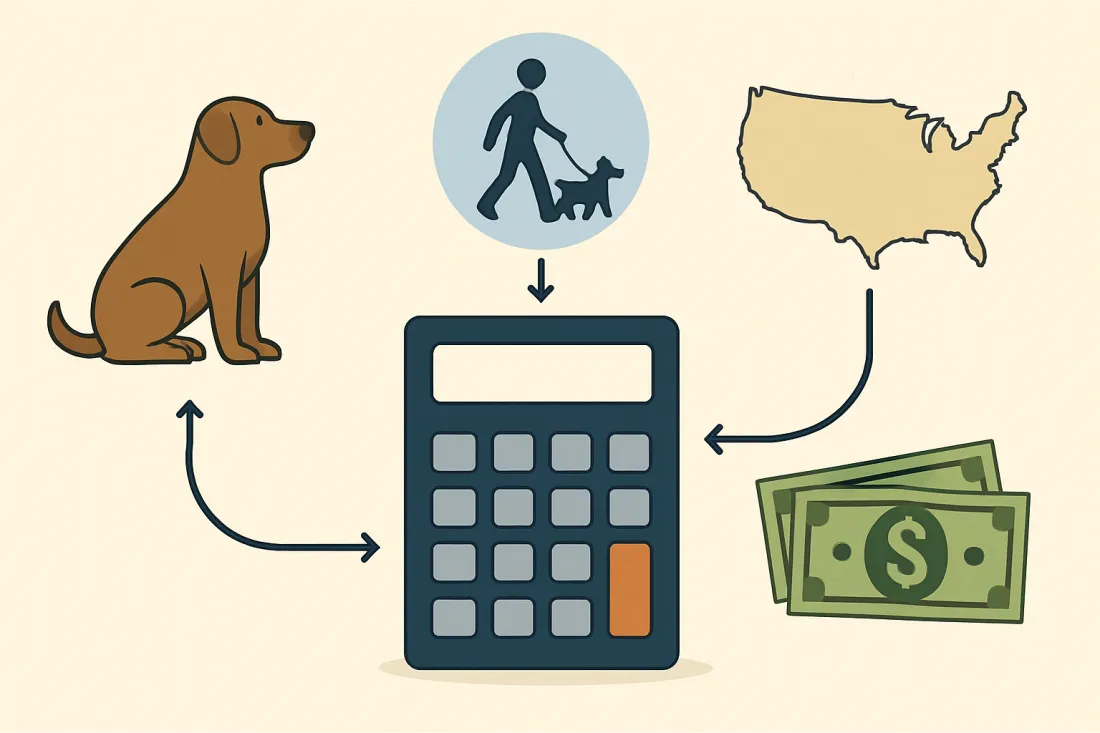
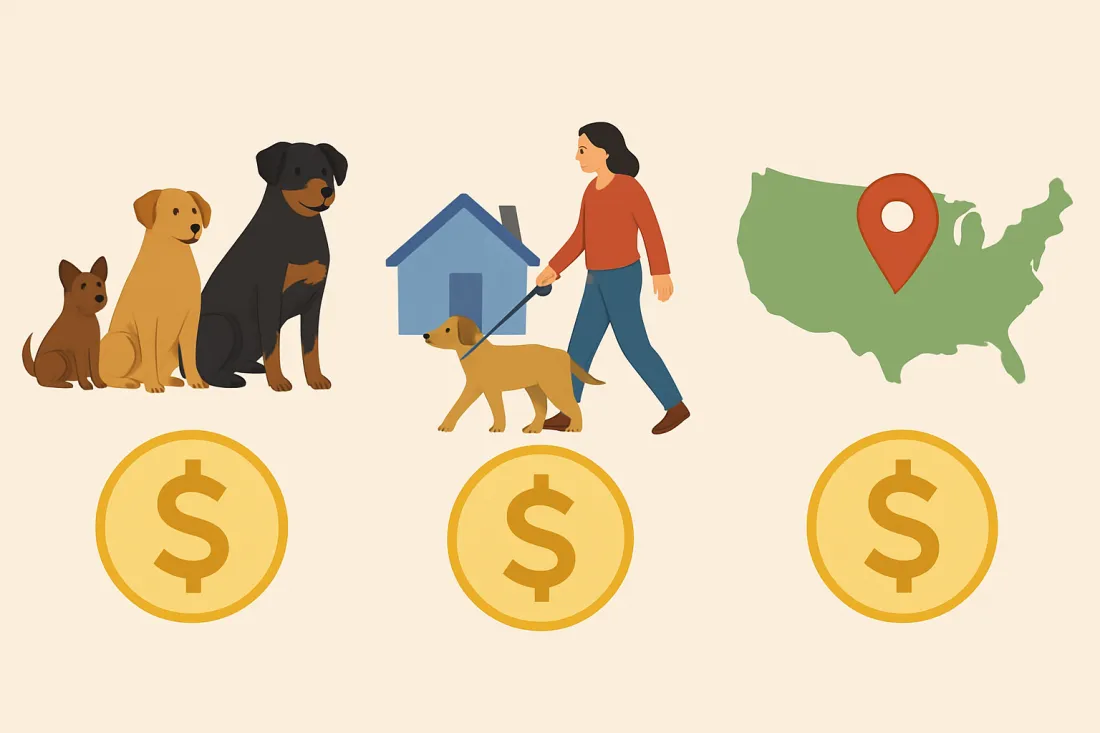
To use a dog annual cost calculator effectively, start by deciding three things: your dog’s size, your lifestyle with the dog, and your region in the US. Those three factors drive almost every recurring expense you will face in a year.
This guide walks you through a calculator-style process you can follow on paper or in a spreadsheet. You will see which inputs matter, how to choose realistic values, and what a typical yearly range might look like for small, medium, and large dogs in the United States.
Key cost drivers that shape a dog’s annual budget
Before you plug anything into a calculator, it helps to understand what actually moves the numbers up or down. For most US dog owners, the biggest annual cost drivers are:
- Dog size and weight – Heavier dogs usually eat more, need larger doses of medications, and may require bigger crates, beds, and equipment.
- Food quality and type – Budget kibble vs. premium brands, fresh or raw food, and special veterinary diets all sit at different price levels.
- Veterinary care – Routine wellness exams, vaccines, parasite prevention, and occasional illness or injury visits. Preventive care is predictable; emergencies are not.
- Grooming needs – Short-haired dogs you can bathe at home cost less than long-coated or curly breeds that need regular professional grooming.
- Training and behavior support – Group classes, private sessions, or online programs. Some dogs need only a basic course; others need ongoing help.
- Pet insurance or savings buffer – Monthly premiums if you insure your dog, or money you set aside yourself for unexpected vet bills.
- Region and cost of living – Urban, high-cost areas tend to have higher prices for vets, groomers, daycare, and boarding than smaller towns or rural areas.
- Lifestyle extras – Dog walkers, daycare, boarding, travel costs, toys, and enrichment all depend on how you live with your dog.
Any dog annual cost calculator that ignores these factors will likely give you a number that looks neat but does not match your real life. The goal is not a perfect prediction, but a realistic range that you can stress-test against your budget.
How to “run” a dog annual cost calculator step by step
You can treat this section as a manual calculator. Grab a notepad or spreadsheet and follow the steps. For each category, choose the option that best matches your situation and write down a yearly estimate (or a low–high range if you prefer).
Step 1: Define your dog profile
- Size category
- Small (up to about 20 lb)
- Medium (roughly 20–50 lb)
- Large (over about 50 lb)
- Coat and grooming needs
- Low maintenance (short coat, minimal shedding, easy home baths)
- Moderate (regular brushing, occasional professional grooming)
- High maintenance (long, curly, or double coat; frequent professional grooming)
- Age and health status
- Puppy (extra vaccines, training, and supplies in the first year)
- Adult, generally healthy
- Senior or chronic health issues (more frequent vet visits and meds)
Your dog’s size and coat type will feed directly into food, grooming, and medical cost estimates in later steps.
Step 2: Choose your food plan
Food is one of the most predictable recurring costs. Think about:
- Food type
- Budget kibble (store-brand, basic formulas)
- Mid-range kibble (well-known brands with decent ingredients)
- Premium or specialized diets (limited ingredient, grain-free, prescription, fresh, or raw)
- Feeding style
- Strictly measured portions based on vet guidance
- Free-feeding or frequent treats (often increases total food use)
For your calculator, decide on a monthly food budget that feels realistic for your dog’s size and your chosen food type, then multiply by 12 to get an annual figure. If you are unsure, you can set a low and high estimate to create a range.
Step 3: Estimate routine veterinary care
Every dog needs basic preventive care. A simple way to budget is to think in terms of:
- Annual wellness visit – A check-up with your vet, including a physical exam and discussion of any concerns.
- Core vaccines and boosters – Puppies have a more intensive schedule; adults usually need periodic boosters.
- Parasite prevention – Heartworm, flea, and tick prevention are often given monthly or seasonally.
- Routine tests – Heartworm tests, fecal exams, and other screening tests as recommended by your vet.
Because exact prices vary widely by region and clinic, a calculator-style approach is:
- Call or check websites for 2–3 local veterinary clinics.
- Ask for a rough yearly cost for a healthy dog of your dog’s size, including wellness exam, core vaccines, and parasite prevention.
- Use the average of those quotes as your annual preventive care estimate.
For more detail on how preventive care fits into your yearly plan, you can also review an annual vet care schedule for dogs and cats USA and align your budget with that timeline.
Step 4: Decide on insurance or an emergency fund
Unexpected vet bills can be one of the biggest financial shocks for dog owners. You have two main strategies:
- Pet insurance
- Pay a monthly premium to an insurer.
- In return, you may get partial reimbursement for covered illnesses or injuries, subject to deductibles and limits.
- Self-funded emergency savings
- Skip insurance and set aside money in a dedicated savings account.
- Requires discipline to keep the fund intact for pet emergencies.
For your calculator, either:
- Use a yearly total of your expected insurance premiums, or
- Choose a yearly savings target for emergencies (for example, a few hundred dollars or more, depending on your risk tolerance and local vet costs).
Step 5: Add grooming, training, and supplies
Next, estimate the “care and setup” side of your budget:
- Grooming
- Low-maintenance dogs: occasional home baths, nail trims, and basic supplies.
- High-maintenance dogs: regular professional grooming sessions throughout the year.
- Training
- Puppies and new rescues often need at least one basic group class.
- Reactive or anxious dogs may need private sessions or ongoing support.
- Supplies and replacements
- Leashes, collars, harnesses, beds, crates, bowls, poop bags, toys, and enrichment items.
- Assume some items will need replacing each year due to wear and tear.
For your calculator, decide how many grooming appointments you expect per year (if any), how many training courses you plan, and a reasonable yearly allowance for supplies and toys.
Step 6: Factor in lifestyle services and region
Your location and daily routine can significantly change your annual dog costs:
- Region
- High-cost urban areas: expect higher vet, grooming, daycare, and boarding prices.
- Suburban or rural areas: some services may be more affordable, but you may travel farther to reach them.
- Daily care needs
- Do you need a dog walker on workdays?
- Will your dog go to daycare regularly?
- Travel and boarding
- How many trips per year will require boarding or pet-sitting?
- Do you plan to travel with your dog (airfare, pet fees, hotel surcharges)?
Estimate how often you will use each service in a typical year, then multiply by a realistic per-visit or per-day cost based on local quotes.
Step 7: Add it all up and stress-test your number
Once you have estimates for each category, add them together:
- Food (annual)
- Routine vet care (annual)
- Insurance or emergency savings (annual target)
- Grooming (annual)
- Training (annual)
- Supplies and toys (annual)
- Lifestyle services and boarding (annual)
Compare the total to your household budget. Ask yourself:
- Can I comfortably cover this amount every year without cutting into essentials like rent, utilities, or emergency savings?
- What happens if an unexpected vet bill or life change increases costs by 25–50% for a year?
- Do I have room to adjust (for example, fewer daycare days or a different food brand) if needed?
If the numbers feel tight even before adding a safety margin, consider whether you need to adjust your dog choice (size, breed type, or age) or delay adoption until your budget is more flexible.
Comparison table: typical annual cost patterns by dog size
Exact amounts vary by region and lifestyle, but the pattern of costs tends to be similar across US households. The table below compares how size and lifestyle usually affect different parts of the yearly budget.
| Dog size & lifestyle | Food & treats pattern | Vet & meds pattern | Grooming & supplies pattern | Typical budget pressure points |
|---|---|---|---|---|
| Small dog, basic lifestyle (apartment, mostly home, low grooming) |
Smaller portions keep food costs relatively low; treats can still add up if overused. | Routine vet care similar to other sizes; medications may be cheaper due to lower doses. | Smaller, cheaper beds and crates; many owners can handle grooming at home. | Less pressure from food and meds; main risk is underestimating vet care and dental cleanings. |
| Medium dog, active lifestyle (suburban, regular walks, some travel) |
Moderate food use; costs rise if you choose premium or fresh diets. | Preventive care similar to other sizes; some meds priced by weight can be mid-range. | Standard-size gear; occasional professional grooming if coat requires it. | Budget often feels balanced but can spike with training, boarding, or sports activities. |
| Large dog, active lifestyle (yard, hiking, frequent outings) |
Highest food consumption; premium diets can significantly increase yearly costs. | Weight-based meds and some procedures can be more expensive. | Larger, more durable gear costs more; some large breeds need regular grooming. | Food, meds, and emergency vet care can strain budgets if not planned for in advance. |
| Any size, high-service lifestyle (daycare, walker, frequent boarding) |
Food costs vary by size, but are often overshadowed by service fees. | Routine vet costs stay similar; more social dogs may have minor injuries or illnesses from group settings. | Extra leashes, harnesses, and travel gear may be needed. | Ongoing daycare, walking, and boarding can exceed all other categories combined. |
Use this table to sense-check your own calculator result. If you have a large, active dog in a high-cost city and your annual estimate looks similar to a small, low-maintenance dog in a rural area, you may be underestimating some categories.
Sample annual cost calculations for small, medium, and large dogs
The following examples show how a calculator-style estimate might look for three different dogs. These are not price promises; they are structured examples to help you think through your own numbers.
Example 1: Small adult dog, low-maintenance lifestyle
- Profile: 15 lb adult dog, short coat, generally healthy, lives in a mid-cost suburban area, owner works from home.
- Food: Modest monthly budget for mid-range kibble and treats → annual total based on 12 months.
- Routine vet care: One wellness exam, vaccines as recommended, year-round parasite prevention based on local vet quotes.
- Insurance or savings: Either a moderate yearly insurance premium or a similar amount set aside in savings.
- Grooming: Occasional home baths and nail trims; minimal professional grooming.
- Training: One refresher group class or online course in the year.
- Supplies and toys: Replacement bed or harness if needed, plus toys and enrichment.
- Lifestyle services: Rare boarding (maybe one short trip) and no regular dog walker.
In many US areas, this type of dog and lifestyle often leads to a relatively moderate annual budget, with the largest predictable pieces being food, routine vet care, and either insurance premiums or emergency savings.
Example 2: Medium young dog, active family
- Profile: 40 lb young dog, active family with kids, lives in a suburban area, moderate grooming needs.
- Food: Higher monthly food use than a small dog, especially if using a mid-range or premium brand.
- Routine vet care: Wellness exam, vaccines, parasite prevention, and possibly extra checks if the dog is very active outdoors.
- Insurance or savings: Many families choose either a mid-level insurance plan or a more substantial emergency fund.
- Grooming: Occasional professional grooming plus regular brushing at home.
- Training: At least one basic obedience course and possibly a follow-up class.
- Supplies and toys: Durable toys, a sturdy crate, and replacements for worn-out gear.
- Lifestyle services: Some boarding for vacations; occasional dog walker on busy days.
This scenario often produces a mid-to-higher annual total compared with the small dog example, mainly due to increased food, training, and service use.
Example 3: Large dog in a high-cost urban area
- Profile: 75 lb adult dog, lives in a major city, owner works long hours, moderate-to-high grooming needs.
- Food: Significant monthly food budget, especially if using premium or specialized diets.
- Routine vet care: Urban clinics may charge more for exams, vaccines, and parasite prevention; weight-based meds add to the total.
- Insurance or savings: Many owners in this situation choose a robust insurance plan or a larger emergency fund due to higher local vet costs.
- Grooming: Regular professional grooming appointments throughout the year.
- Training: At least one structured training program; possibly additional behavior support if the city environment is stressful.
- Supplies and toys: Large, durable gear and beds, which cost more than small-dog equivalents.
- Lifestyle services: Frequent dog walking and possibly daycare due to long workdays; boarding during travel.
When you run these inputs through a calculator, the annual total for this kind of dog and lifestyle can be substantially higher than for a small dog in a low-service household. This is why size and region are such important inputs.
Checklist: build your own dog annual cost estimate
Use this checklist as a quick algorithm to create your personal dog budget:
- Identify your dog type
- Size: small / medium / large
- Coat: low / moderate / high maintenance
- Age: puppy / adult / senior
- Set a monthly food budget
- Choose food type (budget, mid-range, premium, special diet).
- Adjust for dog size and treat habits.
- Multiply by 12 for annual food cost.
- Call local vets
- Ask 2–3 clinics for a rough yearly cost for wellness exam, core vaccines, and parasite prevention for your dog’s size.
- Average the quotes for your annual preventive care estimate.
- Decide on insurance vs. savings
- Get sample quotes from a few pet insurers, or
- Choose a yearly savings target for emergencies.
- Estimate grooming
- Decide how often your dog will need professional grooming (if at all).
- Add a small amount for home grooming supplies.
- Plan training
- Decide how many classes or sessions you will realistically attend in the next year.
- Use local prices to estimate the total.
- Budget for supplies and toys
- List items you may need to replace (bed, leash, harness, crate, toys).
- Assign a reasonable yearly allowance.
- Add lifestyle services
- Estimate days per year of daycare, walking, and boarding.
- Multiply by local per-day or per-visit costs.
- Calculate your total
- Add all categories to get your estimated annual cost.
- Create a low and high range if you are unsure of some numbers.
- Stress-test your budget
- Ask whether you can still manage if costs are 25–50% higher for a year.
- If not, adjust your plan (dog size, services, or timing of adoption).
Tips to reduce dog costs without harming welfare
Responsible Pet Ownership means saving money in ways that keep your dog healthy and happy, not cutting corners that create suffering or bigger bills later. Consider these strategies:
- Prioritize preventive vet care
- Staying current on vaccines and parasite prevention can help avoid more serious and expensive illnesses.
- Regular check-ups allow early detection of issues, which is often less costly to treat.
- Choose food for health, not just marketing
- Ask your vet for a nutritionally sound option that fits your budget.
- A balanced, appropriate diet can help prevent obesity and related health problems.
- Learn basic grooming at home
- Brushing, nail trimming (if you are comfortable), and simple baths can reduce professional grooming frequency.
- Regular brushing also helps you spot skin issues or lumps early.
- Buy durable, multi-use gear
- Sturdy leashes, harnesses, and beds may cost more upfront but can last longer than cheap items that need frequent replacement.
- Rotate a smaller number of quality toys instead of constantly buying new ones.
- Use community resources
- Look for low-cost vaccine clinics, spay/neuter programs, or training classes offered by shelters or community centers.
- Ask your vet about generic medications when appropriate.
- Plan ahead for travel
- Book boarding or pet-sitting early to avoid last-minute, higher-priced options.
- Consider trips where your dog can stay with trusted friends or family when appropriate.
- Train for good manners
- Investing in early training can reduce the risk of damage to your home or belongings.
- Well-trained dogs are easier to include in daily life, which can reduce the need for paid services.
If you are also comparing costs with other pets, a guide on the monthly cost of owning a cat in the US can help you see how dog and cat budgets differ over a year.
Warning signs that your dog budget is too low
Under-budgeting does not just affect your wallet; it can directly harm your dog’s welfare. Watch for these red flags:
- Skipping or delaying vet visits due to cost
- Putting off vaccines, parasite prevention, or exams because of money concerns can increase the risk of preventable disease.
- Waiting until a problem is severe often makes treatment more expensive and harder on your dog.
- Feeding inadequate or inconsistent diets
- Frequently switching to whatever food is cheapest that week without considering nutrition can upset your dog’s digestion.
- Feeding less than recommended to “stretch” food can lead to weight loss and health issues.
- Relying on unsafe DIY solutions
- Using home remedies or human medications instead of vet-prescribed treatments can be dangerous.
- Choosing unproven online advice to avoid vet costs can put your dog at risk.
- Inability to handle minor emergencies
- Needing to borrow money or delay care for relatively common issues (such as minor injuries or sudden illness) suggests your budget is too tight.
- If a small unexpected bill would cause a crisis, your annual plan likely needs adjustment.
- Chronic stress about pet expenses
- Constant worry about affording routine care can affect your relationship with your dog.
- Feeling resentful or trapped because of costs is a sign that the financial plan is not sustainable.
If you recognize several of these signs, revisit your calculator, update your estimates, and consider changes such as increasing your pet budget, adjusting lifestyle services, or seeking financial counseling or community support programs.
Common mistakes when using a dog annual cost calculator
Even a well-designed calculator can mislead you if you use it with unrealistic assumptions. Avoid these frequent errors:
- Only counting food and basic vet care
- Many people forget grooming, training, supplies, and boarding, which can add significantly to the yearly total.
- Ignoring regional price differences
- Using a national average without adjusting for your city can leave you underprepared in high-cost areas.
- Assuming no emergencies
- Planning for a “perfect” year with zero unexpected vet visits is risky.
- Build in a buffer through insurance, savings, or both.
- Underestimating lifestyle services
- New owners often realize only later how often they need a walker, daycare, or boarding.
- Be honest about your work hours, travel habits, and social life.
- Not updating the estimate as your dog ages
- Puppy costs (training, vaccines, initial supplies) differ from adult and senior years.
- Recalculate annually to reflect your dog’s current needs.
- Using the lowest possible numbers for everything
- Choosing the cheapest options in every category may produce an attractive total but rarely matches real life.
- Use realistic mid-range values and then see if you can still afford the dog comfortably.
Decision criteria: can you afford the dog profile you want?
Once you have a yearly estimate from your calculator, use these criteria to decide whether your plan is sustainable:
- Stability of your income
- Is your income predictable enough to support this annual pet budget year after year?
- Existing financial obligations
- Consider rent or mortgage, debt payments, childcare, and other recurring costs.
- If your dog budget would force you to cut essentials, reconsider your plan.
- Emergency cushion
- Do you have savings or access to credit for unexpected vet bills?
- If not, can you build a pet-specific emergency fund before or soon after adoption?
- Time and lifestyle fit
- Can you realistically avoid overusing paid services like daycare and walking, or do your work hours make them necessary?
- Flexibility
- If your income dropped or expenses rose, could you adjust non-essential pet costs (for example, fewer toys or a different boarding option) without harming your dog’s welfare?
If your calculator result passes these checks, you are closer to a responsible decision. If not, you might explore a different dog size, a different adoption timeline, or another pet type with a lower annual cost profile. For comparison, a guide on the average yearly cost of a cat can help you see how a cat’s budget might fit your situation.
FAQ about using a dog annual cost calculator
What should I understand about a dog annual cost calculator before relying on it?
A dog annual cost calculator is a planning tool, not a guarantee. It can help you see how dog size, lifestyle, and region affect your budget, but it cannot predict exact vet bills or life changes. Treat the result as a starting range, then refine it with local quotes from vets, groomers, trainers, and boarding facilities. Always add a buffer for emergencies and remember that costs can change over time as your dog ages or your circumstances shift.
What mistakes should I avoid when estimating my yearly dog costs?
Avoid focusing only on food and basic vet care while ignoring grooming, training, supplies, and services like daycare or boarding. Do not assume a year with zero emergencies or use only the lowest possible prices in every category. Failing to adjust for your local cost of living or your actual work and travel schedule can also lead to under-budgeting. Revisit your estimate at least once a year to keep it realistic.
What should I do next after building my dog annual cost estimate?
After you have a yearly estimate, compare it to your household budget and savings. If the number fits comfortably, start preparing: build or top up a pet emergency fund, research local vets and trainers, and plan how you will cover recurring costs. If the number feels tight, adjust your plan—consider a smaller dog, fewer paid services, or delaying adoption until your finances are stronger. Re-run your calculator with different assumptions until you find a scenario that supports both your dog’s welfare and your financial stability.