
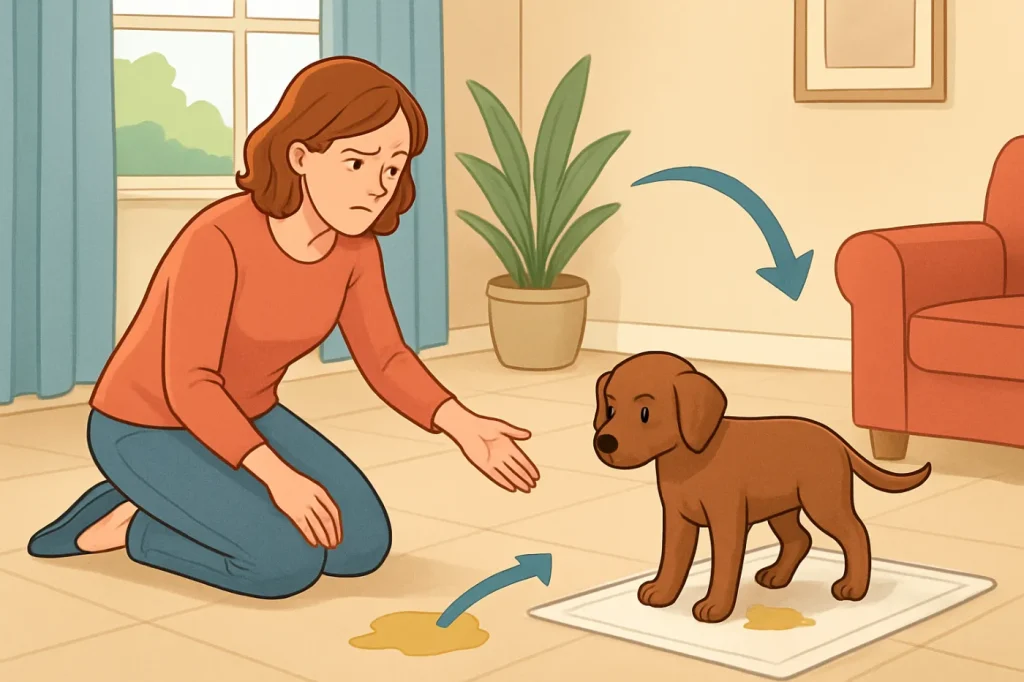
Most house training problems come down to a few fixable mistakes, not a “bad” dog. If you tighten your routine, manage your dog’s freedom, and reward the right behavior, your dog usually learns to go in the right place much faster and with far less stress.
This guide walks through how house training really works, the most common mistakes new dog owners make, and exactly what to do instead, with schedules, checklists, and clear decision points.
How house training actually works in your dog’s brain
House training is not about your dog “knowing better” or feeling guilty. It is a simple learning pattern built on three pieces:
- Management – Controlling where your dog is and how much freedom they have so accidents are unlikely.
- Timing – Getting them to the right potty spot before they need to go, and rewarding them immediately after.
- Repetition – Repeating the same pattern until it becomes a habit.
From your dog’s point of view, house training looks like this:
- “When I pee or poop on this surface (grass, gravel, pad), I get relief, treats, praise, and maybe a walk or play.”
- “When I am indoors, I mostly rest, chew toys, or play calmly. I do not feel desperate to go because I am taken out often enough.”
They do not automatically understand:
- Why grass is okay but carpet is not.
- Why you are upset about a puddle that happened 5–10 minutes ago.
- That they are supposed to “hold it” for hours before their body is ready.
Once you see house training as a habit-building project, it becomes easier to spot which part is broken: management, timing, or repetition.
Top basic house training mistakes new dog owners make
Most setbacks come from a small group of predictable errors. Use this list as a quick overview, then the later sections explain each one and how to fix it.
- Giving the dog too much indoor freedom too soon
- Running on an inconsistent potty schedule
- Missing key potty windows (after sleep, play, and meals)
- Misusing crates or pens or avoiding them completely
- Expecting the dog to “tell you” when they need to go
- Relying on punishment instead of rewards
- Playing and exploring outside before the dog has gone potty
- Letting the dog use many different potty spots with no clear toilet area
- Not cleaning accidents properly, so odor cues remain
- Changing rules between family members
- Relying on pee pads without a plan to phase them out
- Expecting adult-level bladder control from a young puppy or stressed rescue
Comparison table: common mistakes and better choices
| Mistake | What it looks like | Better choice | Why it works better |
|---|---|---|---|
| Too much freedom | Puppy roaming the whole house, disappearing into spare rooms | Limit to one main area plus crate/pen | Fewer chances to sneak off and create “secret” toilet spots |
| Random schedule | Letting dog out only when you remember | Planned potty trips around sleep, play, and meals | Dog’s body learns a predictable rhythm |
| Play before potty | Fetch and zoomies as soon as you go outside | Calm walk to potty area first, play after they go | Dog focuses on eliminating before getting excited |
| Punishing accidents | Scolding, rubbing nose in urine | Quietly interrupt, take outside, reward success | Dog learns where to go, not to fear you |
| Dirty accident spots | Using regular cleaner, still faint smell | Use pet-specific odor remover and block repeat spots | Reduces scent cues that invite repeat accidents |
| Inconsistent rules | One person lets dog on rugs, another does not | Family agrees on potty area, cues, and rules | Dog gets one clear message instead of mixed signals |
Detailed mistake and fix: too much indoor freedom too soon
New owners often feel guilty about confinement and let a puppy or new rescue wander the whole home. That almost guarantees accidents.
Why this mistake causes trouble
- Puppies and many rescues do not yet see the entire home as their “den,” so peeing in a far hallway or guest room feels fine.
- You cannot supervise every second if they have access to multiple rooms.
- Every accident leaves a scent marker that quietly says, “This is a bathroom spot.”
Fix: shrink your dog’s world
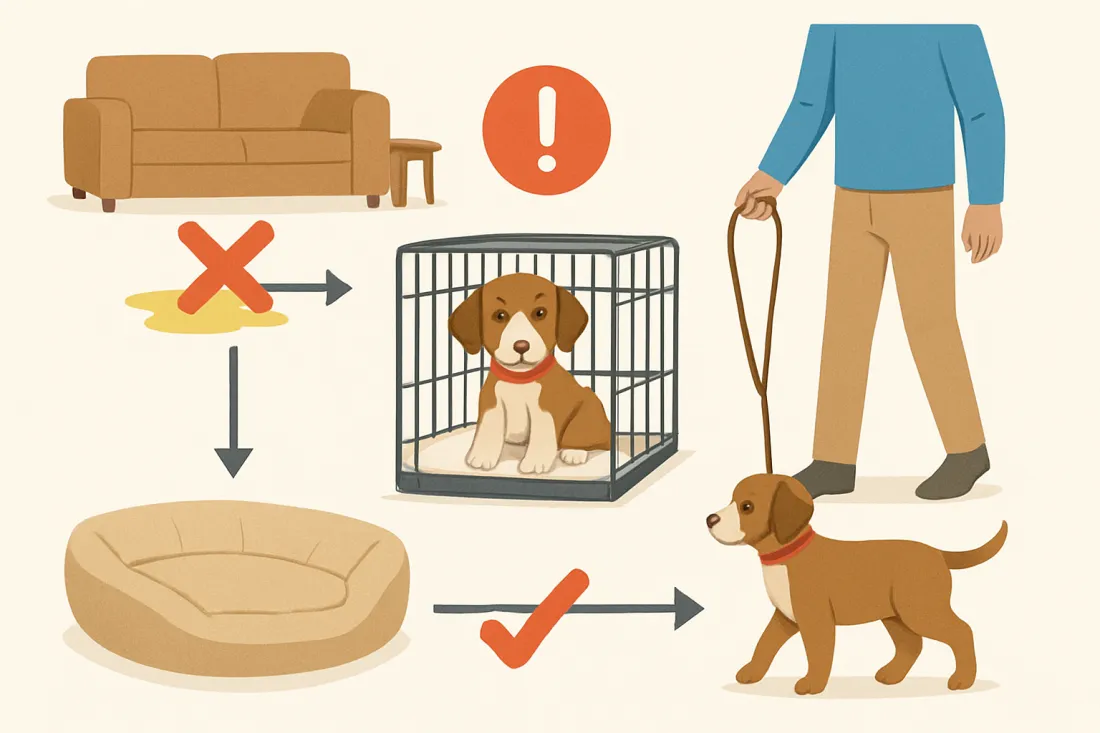
- Start with one main living area plus a crate or pen. Use baby gates or closed doors to block other rooms.
- When the dog is out of the crate or pen, keep them within arm’s reach using a leash or drag line if needed.
- Only increase freedom after at least several accident-free days in the current space.
- Roll up rugs or block access to carpeted rooms until your dog is reliably trained.
Detailed mistake and fix: inconsistent schedule and missed potty windows
Dogs learn patterns. If potty breaks happen at random times, they cannot predict when relief is coming, so they go whenever they feel the urge.
Common schedule mistakes
- Letting the dog out “when you remember” instead of on a plan.
- Skipping breaks because the dog “just went” an hour ago.
- Not taking the dog out immediately after waking, playing, or eating.
Key potty windows to protect
- First thing in the morning – bladder is full after sleep.
- After every nap – even short ones on the couch.
- After active play – running and wrestling stir up the bladder and bowels.
- After meals – many dogs need to poop within a short time of eating.
- Before bed and before longer crate time – to reduce night or alone-time accidents.
Many young puppies and small dogs need breaks roughly every 1–2 hours when awake. Adult rescue dogs may need more frequent breaks at first while they adjust and you learn their signals.
Detailed mistake and fix: misusing crates and pens
Crates and pens are powerful tools when used correctly. Used badly, they can create more accidents or stress.
Helpful crate and confinement guidelines
- Pick a crate where your dog can stand up, turn around, and lie down comfortably, but not walk to a separate “bathroom corner.”
- Introduce the crate gradually with treats, meals, and calm praise so it feels like a safe den, not a punishment box.
- Do not leave a young puppy crated longer than they can reasonably hold it; many can only manage a couple of hours when awake.
- Use a playpen or gated area when you cannot watch closely but do not want to crate (for example, cooking or a short work call).
Common crate mistakes
- Using the crate only for punishment or time-outs, so the dog dreads going in.
- Leaving thick bedding in the crate with a puppy who repeatedly pees on it; some puppies learn to soak the bedding and sleep on the dry edge.
- Assuming the crate alone will “train the dog” without a consistent schedule of outdoor breaks.
Crate and confinement are most effective when they are part of a bigger structure of basic house rules for dogs and cats, not the only tool you rely on.
Detailed mistake and fix: expecting your dog to “tell you”
Many new owners wait for a dog to bark, scratch, or ring a bell at the door. Most dogs do not start with clear signals; they just quietly wander off, sniff, or circle.
Signal misunderstandings
- Assuming a puppy will hold it until you notice subtle signs.
- Believing a rescue dog’s previous home taught them the same rules you want now.
- Thinking a dog who stands by the door “knows” the rules after just a few days.
Fix: be proactive, then teach a signal on purpose
- Follow a proactive schedule rather than waiting for signals.
- Use the same door and cue word each time (for example, “Outside” or “Go potty”).
- If you want a bell or mat signal, train it deliberately with rewards instead of hoping the dog invents it.
Detailed mistake and fix: punishment instead of rewards
Scolding, rubbing a dog’s nose in urine, or punishing them for accidents is one of the most damaging house training mistakes.
Why punishment backfires
- The dog learns that you are scary when there is pee or poop nearby, not that the location was wrong.
- They may start hiding to eliminate in secret spots behind furniture or in other rooms.
- They can become afraid to go in front of you, even outside, which slows training.
Fix: reward the behavior you want
- If you catch an accident in progress, calmly say “Outside!” and guide the dog to the potty area.
- Reward generously when they finish outside: treats, praise, and a minute of calm affection.
- Ignore old accidents you did not see happen. Clean them thoroughly and move on.
Choosing and sticking to one main potty location
Where you want your dog to eliminate shapes your training plan. New owners often send mixed messages by allowing multiple options without a clear long-term goal.
| Potty location choice | Best for | Pros | Risks / trade-offs |
|---|---|---|---|
| Outdoor yard spot | Most houses with secure yards | Clear separation between indoors and toilet; relatively easy cleanup. | Requires going out in all weather; some dogs resist going elsewhere at first. |
| Outdoor street/sidewalk | Apartment living with regular walks | Builds exercise routine; no indoor odor. | Timing depends on your schedule; can be harder with very young puppies. |
| Balcony or porch potty area | High-rise apartments, limited mobility owners | Short distance; helpful in bad weather or late at night. | Needs careful hygiene; some dogs get confused between balcony and indoor flooring. |
| Indoor pee pads or grass tray | Very small puppies, medical issues, extreme weather | Convenient; reduces risk of accidents when outdoor access is limited. | Harder to transition to fully outdoor potty; dog may generalize to rugs or mats. |
Decision tip: Choose your long-term goal first. If you use pads as a temporary step, decide in advance when and how you will phase them out so your dog is not stuck in a confusing in-between stage.
Sample 24-hour house training schedule for a new dog
Every dog is different, but a sample day helps you see how structure supports house training. Adjust times to your routine and your dog’s age and health.
| Time | What you do | House training goal |
|---|---|---|
| 6:30 am | Wake up, carry or leash dog straight outside to potty area. | Prevent first-thing accidents and reward outdoor elimination. |
| 6:40 am | Reward potty, short walk or calm play, then breakfast. | Link “go potty first” with fun and food. |
| 7:00 am | Back outside for another potty chance after breakfast. | Catch the common post-meal urge. |
| 7:15–9:00 am | Supervised play and rest in main area; potty break every 60–90 minutes. | Prevent accidents through frequent trips and supervision. |
| 9:00–11:30 am | Crate or pen time with a safe chew; quick potty break halfway if possible. | Teach calm alone time and holding it in a den space. |
| 11:30 am | Outside potty, then lunch (if your dog still has midday meals). | Reinforce potty-before-meal pattern. |
| 12:00–3:00 pm | Cycle of supervised play, short training, naps, and potty breaks every 1–2 hours. | Build routine and reduce random accidents. |
| 3:00–5:30 pm | Crate/pen or calm time with a chew; potty break mid-way. | Support bladder control while you handle other tasks. |
| 5:30 pm | Outside potty, then dinner. | Keep the same meal–potty rhythm. |
| 6:00–9:00 pm | Family time in main area, light play, short walk, potty every 1–2 hours. | Supervised freedom in the busiest part of the day. |
| 9:00 pm | Last water top-up if needed, calm time. | Wind-down before night. |
| 10:00 pm | Final potty trip, then crate or safe sleep area for the night. | Empty bladder before bed to reduce night accidents. |
Very young puppies may also need brief nighttime potty trips. Many adult rescue dogs can sleep through the night once they are relaxed and on a consistent routine. If you are balancing work hours, a plan like house training a puppy while working full time can help you adapt this schedule.
Crate and confinement guidelines for faster progress
Used thoughtfully, crates and pens speed up house training by preventing unsupervised accidents and teaching your dog to relax in a “den” space.
Basic crate rules
- Size: big enough to stand, turn, and lie down; not big enough for a separate toilet corner.
- Location: in a quiet area where the dog can still see or hear family activity, not isolated in a basement.
- Association: pair the crate with meals, treats, and calm praise so your dog chooses to go in.
- Duration: match crate time to your dog’s age and bladder control; plan potty breaks before and after.
When to use a pen or gated area instead
- During short tasks when you cannot watch closely (cooking, shower, quick work call).
- For dogs who are comfortable in a slightly larger space with bed, water, and chew toys.
- For gradual freedom training: pen inside the main room so the dog is near you but not underfoot.
If your new dog is a rescue, combining this structure with basic obedience training for rescue dogs can build confidence and make house training smoother.
Accident cleanup and odor control that actually works
Even with a great plan, accidents happen. The key is to clean them in a way that removes both the stain and the odor your dog can smell.
Common cleanup mistakes
- Using regular household cleaners that leave a scent humans like but dogs can still smell underneath.
- Only blotting the surface of carpet without treating the padding underneath.
- Letting the dog watch you clean, which can turn it into a strange attention game.
Better cleanup steps
- Blot up as much liquid as possible with paper towels or cloths.
- Use a cleaner designed to break down pet urine odors (often called an enzymatic cleaner). Follow the label instructions for soak time.
- For carpets, apply enough cleaner to reach the padding and allow it to air dry fully.
- Keep the dog away from the area while it dries so they are not drawn back to remark it.
- If an area has been used repeatedly, consider temporarily blocking access or placing a bed or crate there once it is fully clean, so it becomes a “resting spot,” not a toilet.
When to seek professional help with house training
Sometimes, even with a solid plan, house training does not improve or suddenly gets worse. That is a sign to bring in extra help instead of just trying the same thing longer.
Talk to your veterinarian if:
- Your dog suddenly starts having frequent accidents after being reliable.
- There is blood in urine or stool, straining, or obvious discomfort.
- Your dog drinks or urinates much more than usual.
- An adult dog seems unable to hold it for even short periods.
Medical issues such as urinary tract infections, digestive problems, or age-related changes can all affect house training. A vet exam helps rule out health causes before you assume it is a training issue.
Consult a qualified trainer or behavior professional if:
- Your dog seems very anxious about going outside or using the yard.
- They refuse to go when on leash but have accidents as soon as they come back in.
- They have a history of harsh punishment and now hide to eliminate.
- You feel overwhelmed, angry, or stuck despite following a plan.
A professional can help you adjust your routine, read your dog’s signals, and address any fear or anxiety that is blocking progress. For many families, reviewing basic dog training rules for responsible owners alongside house training creates a more consistent home environment.
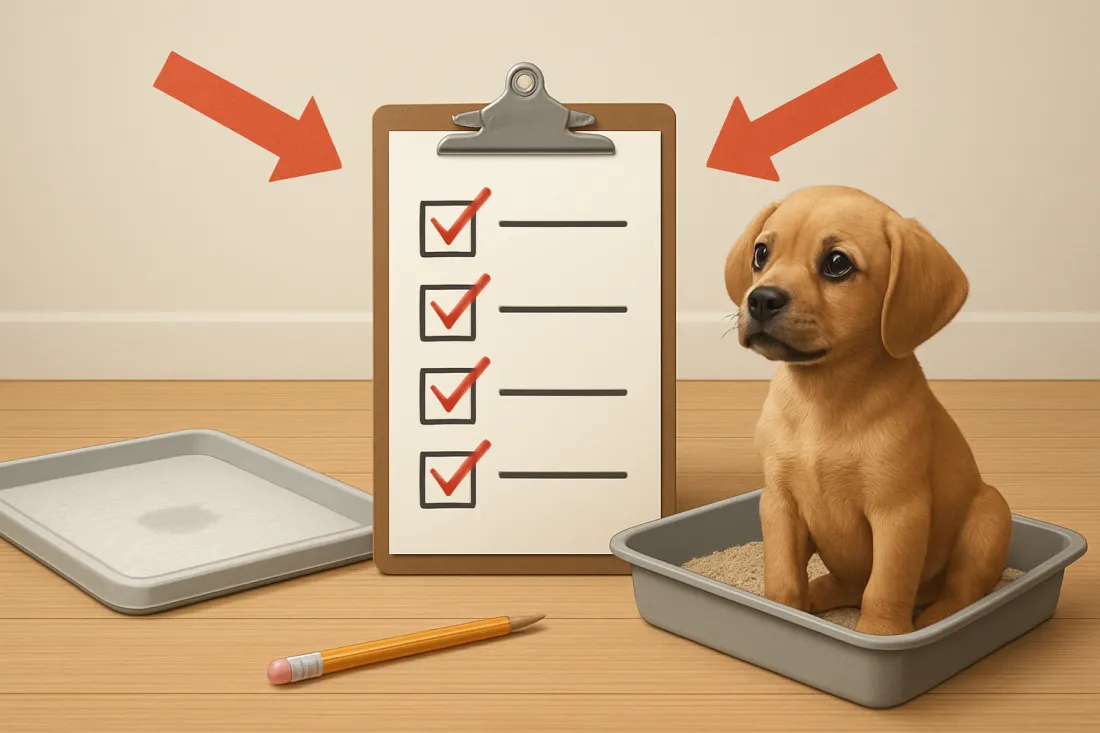
Printable-style house training checklist for new dog owners
Use this checklist as a daily reference to avoid the most common house training mistakes. You can copy it into your notes app or print it for the fridge.
- Environment
- Dog is limited to one main area plus crate/pen.
- Baby gates or doors block off carpeted or hard-to-clean rooms.
- Designated potty area (yard spot, street route, balcony, or pad) is chosen and used consistently.
- Rugs in high-risk areas are rolled up or removed temporarily.
- Schedule
- First potty trip happens immediately after waking.
- Dog goes out after every meal, nap, and play session.
- Daytime potty breaks are roughly every 1–2 hours for puppies or new dogs.
- Last potty trip is right before bedtime.
- Crate or pen times are planned around realistic bladder limits.
- Supervision
- Dog is within sight when loose in the house.
- When you cannot watch, dog is in crate or pen with a safe chew.
- You interrupt wandering, circling, or intense sniffing by calmly taking the dog outside.
- Children know not to let the dog roam unsupervised.
- Rewards and cues
- You use the same door and potty cue word each time.
- You keep treats near the door or in a pocket so you can reward within a few seconds of finishing.
- Play and walks happen after the dog goes, not before.
- Family members use the same words and reward style.
- Accident handling
- No scolding or rubbing nose in accidents.
- Old accidents are cleaned with a pet-safe odor remover.
- Frequent accident spots are blocked off or repurposed as rest areas.
- You note patterns (time of day, location) to adjust the schedule.
- Health and comfort
- Dog has regular access to fresh water, with a predictable routine.
- You watch for signs of discomfort, straining, or sudden changes.
- Vet contact info is handy if problems appear.
- Family consistency
- Everyone uses the same potty area, cue words, and rules.
- Children understand not to tease or disturb the dog in the crate.
- One person tracks progress and patterns for the first few weeks.
Step-by-step algorithm to fix house training setbacks
If your dog keeps having accidents, walk through this simple decision process.
- Check health first
- Any sudden change in potty habits, straining, or discomfort? If yes, call your veterinarian.
- Review your schedule
- Write down potty times for 2–3 days.
- If more than 2–3 hours pass between daytime breaks for a young dog, add more trips.
- Shrink freedom
- Go back to one main area plus crate/pen.
- Use gates and doors to block problem rooms.
- Reset rewards
- Carry treats or keep them by the door.
- Reward every outdoor success for at least a week, even if your dog “knows” the rules.
- Deep-clean accident spots
- Use a pet-specific odor remover on every known accident area.
- Block repeat spots if needed.
- Track progress
- Note accidents and successes for another week.
- If accidents are still frequent, consider a trainer or behavior professional.
Common myths: 3-3-3 rule, 10-10-10 rule, and first-night sleep
New owners often hear catchy rules and wonder how they apply to house training.
What is the 3-3-3 rule in dog training?
Many trainers use the “3-3-3” idea as a rough way to describe how a new dog settles in:
- About 3 days to start coming out of shock and show their real personality.
- About 3 weeks to learn your routine and basic rules.
- About 3 months to feel fully at home and secure.
It is not a strict law, but it reminds you that house training and other manners often improve as your dog relaxes and understands your household.
What is the 10-10-10 rule of potty training?
Different people use “10-10-10” in different ways. One common idea is to give a dog a focused period outside to potty, bring them back in for a short supervised period if they do not go, and then try again. The exact numbers are less important than the pattern:
- Give a focused chance to go in the right place.
- Supervise indoors so accidents do not happen unnoticed.
- Repeat until the dog succeeds and can be rewarded.
Use time frames that fit your dog’s age and your schedule, but keep the structure: short, calm potty opportunities instead of endless, distracted outdoor time.
Where should a new dog sleep the first night?
For house training and bonding, many trainers recommend that a new dog sleep:
- In a crate or secure bed area near your bed, so you can hear them if they need a nighttime potty break.
- On a washable surface with safe bedding.
- With a chew or comfort item, but not with food or water bowls that might spill.
Having the dog close by reduces anxiety and helps you respond quickly if they wake and need to go out, which prevents overnight accidents from becoming a habit.
FAQ about basic house training mistakes and fixes
How long does house training usually take?
Many puppies and new dogs show clear progress within a few weeks of consistent training, but full reliability often takes several months. Age, previous habits, health, and how consistent your routine is all play a role. Expect occasional setbacks and treat them as feedback to tighten supervision or adjust the schedule.
Is it too late to house train an adult rescue dog?
No. Adult dogs can absolutely learn new bathroom rules. They may even progress faster than puppies because they have more physical control. The main differences are unlearning old habits and giving them time to feel safe in a new environment.
Should I leave water out all the time during house training?
Most healthy dogs should have regular access to fresh water. Instead of restricting water heavily, focus on predictable water access and potty breaks. You can pick up the water bowl a little while before bedtime for some dogs, but check with your veterinarian if you have any concerns about hydration or medical conditions.
Do belly bands or diapers help with house training?
They can protect surfaces in the short term, but they do not teach the dog where to go. In some cases, they hide the problem and delay real training. If you use them, treat them as a temporary management tool while you still follow a structured potty routine and reward outdoor success.
My dog only pees when I am not looking. What should I do?
This often means the dog has learned that accidents near you lead to stress or scolding. Go back to basics: no punishment, more supervision, and more frequent outdoor trips. Use a leash indoors if needed so you can gently guide the dog outside at the first sign of sniffing or circling, then reward heavily for going in the right place.
What if my dog pees in the crate?
First, rule out medical issues with your veterinarian. Then check crate size, schedule, and bedding. The crate may be too big, the dog may be left too long, or bedding may be absorbing urine and hiding the problem. Shorten crate periods, take more frequent potty breaks, and temporarily reduce bedding if needed while you rebuild the habit of keeping the crate clean.
With clear structure, realistic expectations, and a focus on rewarding the behavior you want, most house training problems can be turned around. The fewer basic mistakes you make, the faster your dog will understand the rules and relax into life as a well-mannered member of your home.