Key early signs of arthritis in dogs you can spot at home
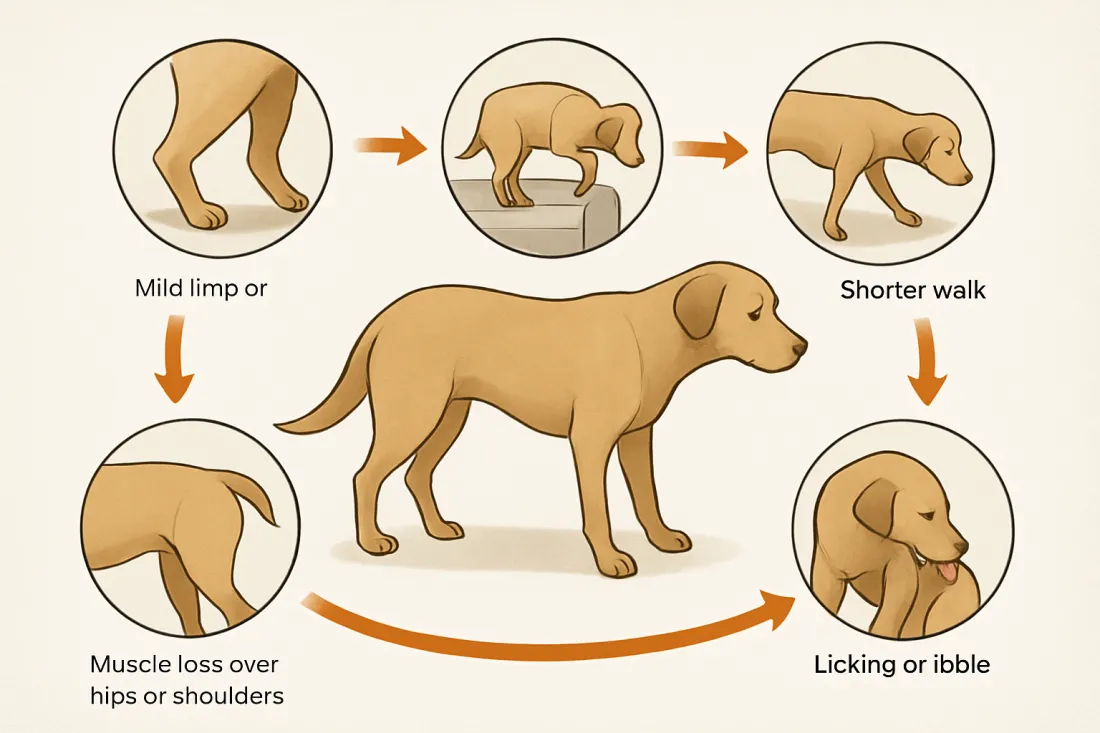
Arthritis in dogs usually starts with small, easy-to-miss changes. The most common early signs are:
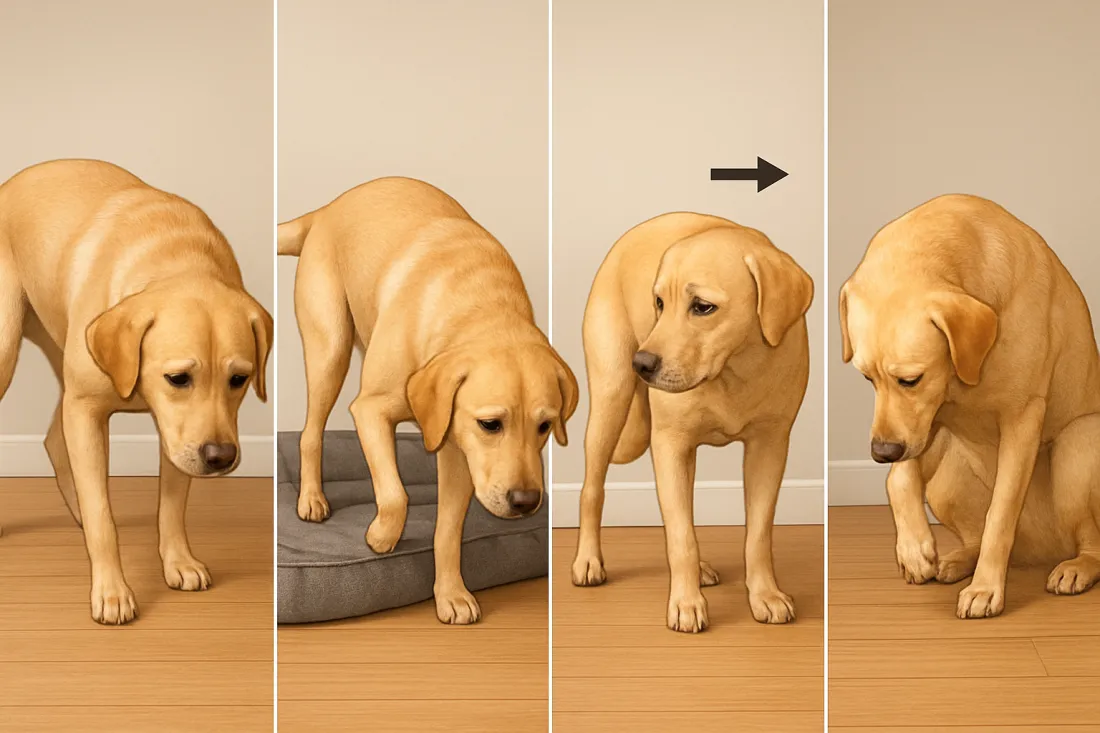
- Mild limp or stiffness, especially after rest or first thing in the morning
- Slower to get up, lie down, or climb stairs
- Hesitation to jump on the couch, into the car, or onto the bed
- Shorter walks, lagging behind, or stopping more often
- Subtle behavior changes: irritability, less playful, avoiding being touched in certain areas
- Licking, chewing, or nibbling at joints (hips, knees, elbows, wrists)
- Muscle loss over hips or shoulders over time
If you notice two or more of these changes lasting more than a week, it is time to schedule a vet visit. Early diagnosis lets you start pain control, weight management, and lifestyle changes before the joints are badly damaged.
When early arthritis signs matter and when they might be something else
Not every limp means arthritis. Understanding when to suspect arthritis versus a short-term injury helps you react appropriately.
Typical situations where early arthritis shows up
You are more likely to be seeing early arthritis if:
- Your dog is middle-aged or older – many dogs start to show joint wear as they move into their senior years.
- Large or giant breeds – big dogs put more stress on their joints and often show signs earlier than small dogs.
- History of joint issues or injuries – previous cruciate ligament tears, hip or elbow problems, or fractures increase arthritis risk.
- Extra body weight – overweight dogs place more load on their joints, which can speed up wear and tear.
- High-impact lifestyle – dogs that jump a lot, work, or do intense sports may show earlier joint changes.
You are more likely to be seeing a short-term injury if:
- The limp or stiffness started suddenly after a specific event (hard landing, rough play, slipping).
- Your dog is otherwise young and healthy with no previous joint problems.
- The problem is clearly one-sided (for example, only one paw is held up) and appeared overnight.
In both cases, a vet visit is important. The difference is urgency: a sudden, severe limp or refusal to bear weight is more of an emergency than a slow, mild stiffness that builds over weeks.
Symptom checklist by body area: where arthritis shows up first
Use this body-area checklist to guide what you look for. You do not need to see every sign for arthritis to be present.
Hips and lower back
Common in: many large breeds and older dogs.
- Reluctance or refusal to jump into the car or onto furniture.
- Bunny-hopping gait with the back legs when running (both back legs move together).
- Difficulty standing up from lying, especially on slippery floors.
- Wobbling or swaying in the rear end when walking.
- Muscle loss over the hips and thighs; the back end may look narrower.
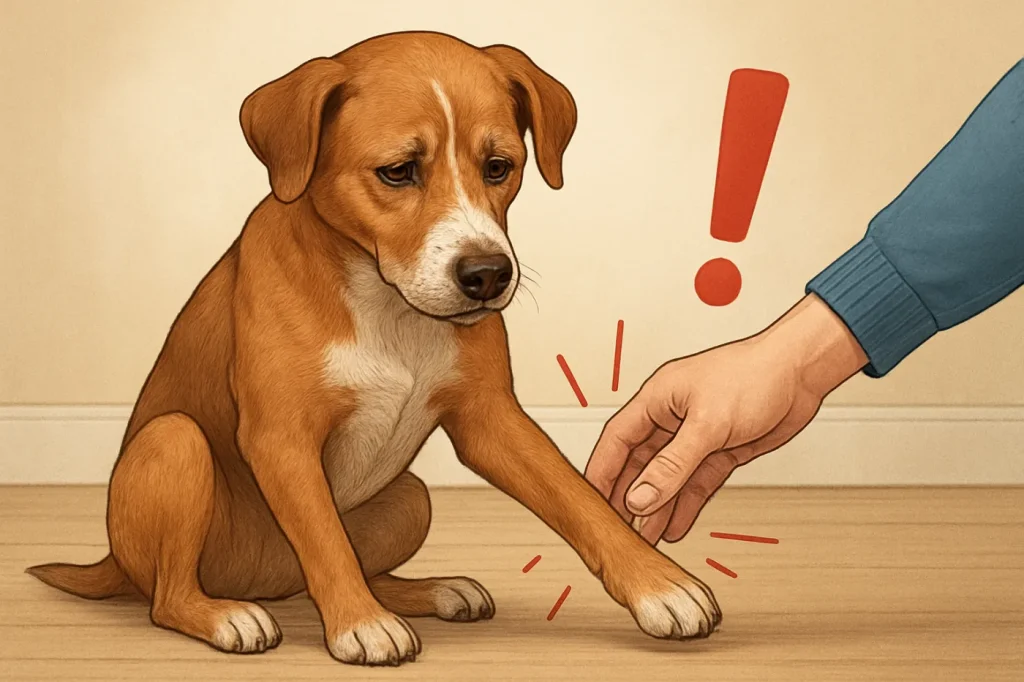
- Flinching, tensing, or moving away when you touch the lower back or hips.
Knees (stifles)
Common in: dogs with previous ligament injuries or very active dogs.
- Intermittent hind-limb lameness that comes and goes.
- Occasional toe-touching with one back leg while standing.
- Stiffness or limping after running, jumping, or playing fetch.
- Reluctance to sit squarely; your dog may sit with one leg stuck out to the side.
Elbows
Common in: many medium and large breeds.
- Front-leg lameness that is worse after rest and improves a bit with gentle movement.
- Head bobbing when walking or trotting (head lifts when the sore leg hits the ground).
- Preferring to lie down rather than stand for long periods.
- Thickening or bony swelling around the elbow joint over time.
Wrists, toes, and shoulders
- Shortened front stride; your dog may look like it is taking tiny steps.
- Reluctance to walk on hard or uneven surfaces.
- Turning paws slightly outward when standing to shift weight away from sore joints.
- Licking or chewing at paws or lower legs without obvious skin problems.
Neck and spine
- Reluctance to lower the head to eat or drink; preferring raised bowls.
- Stiff neck, difficulty turning the head to one side.
- Crying out or snapping when the collar is put on or the neck is touched.
- Back arching or a hunched posture when standing or walking.
If you recognize several signs in one area, note them down. The structured weekly log later in this guide will help you track patterns.
Behavior changes that often signal early arthritis
Physical limping is only part of the story. Many early arthritis signs are behavioral and easy to dismiss as “getting older” or “being stubborn.”
Subtle behavior shifts to watch for
- Less excited about walks – your dog still wants to go, but pulls less, lags behind, or wants to turn back sooner.
- Changes in play – shorter play sessions, choosing gentler games, or avoiding rough play with other dogs.
- Grumpiness when touched – growling, moving away, or giving you a warning look when you touch hips, back, or legs.
- More time alone – choosing quiet spots away from family activity, especially after exercise.
- Restlessness at night – pacing, changing positions often, or difficulty getting comfortable.
- House-soiling in previously trained dogs – not because they forgot, but because getting up or going outside hurts.
Common mistakes owners make with early behavior changes
Avoid these traps that delay diagnosis and treatment:
- Calling it “slowing down with age” – age itself is not a disease. Pain is treatable, and many older dogs become more active again once their joints are managed.
- Assuming it is a training problem – a dog that refuses stairs or jumps may be protecting painful joints, not being disobedient.
- Using punishment for reluctance – scolding or forcing a dog to move can increase stress and make pain-related behavior worse.
- Over-exercising to “build strength” without guidance – pushing a sore dog to go farther or faster can aggravate joint damage.
If you are working on manners and boundaries, pairing that with an understanding of your dog’s physical comfort is key. Resources on topics like basic house rules for dogs and cats can help you balance structure with compassion.
Video-friendly observation tips: how to record what your vet needs to see
Short, clear videos of your dog moving can be extremely helpful for your vet, especially when lameness is intermittent.
What to film
Aim for several 10–20 second clips rather than one long video:
- Walking on a straight line – film from the side, then from the front, then from behind while your dog walks on a flat surface.
- Trotting – a slow trot often makes subtle limps more obvious.
- Getting up and lying down – capture how your dog rises from rest and how it lies down.
- Stairs or small steps – if safe, film how your dog goes up and down a few steps.
- Jumping (if already happening) – do not ask your dog to jump if it is reluctant, but if it still jumps on furniture, film how it does so.
How to film clearly
- Use good lighting and a non-slippery, uncluttered floor.
- Keep the whole dog in the frame, including paws and tail.
- Hold the camera steady at your dog’s level if possible; avoid zooming in and out.
- Record both good and bad days so your vet can see the range of movement.
Before your appointment, label each clip with the date and a short note (for example, “morning stiffness,” “after 20-minute walk”). This context helps your vet interpret what they see.
How vets diagnose arthritis in dogs
Your vet’s goal is to confirm that the joints are the source of pain and to rule out other conditions that can look similar.
1. History and lifestyle discussion
Expect questions like:
- When did you first notice changes, and have they gotten better or worse?
- Which legs or body areas seem affected?
- Is stiffness worse after rest, after exercise, or at certain times of day?
- What kind of exercise does your dog get, and how often?
- Has your dog had any previous injuries or surgeries?
- What is your dog’s diet and body condition like?
Bringing your weekly symptom log and videos will make this part much easier.
2. Physical and orthopedic exam
Your vet will:
- Watch your dog walk and trot, looking for lameness, stiffness, or uneven movement.
- Feel each joint for heat, swelling, thickening, or reduced range of motion.
- Gently flex and extend joints to see where pain appears.
- Check muscles for loss or asymmetry between left and right sides.
- Assess your dog’s weight and overall condition.
Some dogs may need mild sedation if they are very anxious or painful, so the vet can examine joints safely and thoroughly.
3. Imaging and further tests
Depending on what the exam shows, your vet may recommend:
- X-rays – to look for joint changes such as narrowed joint spaces, bone spurs, or deformities that suggest arthritis.
- Advanced imaging – in some cases, scans such as CT or MRI may be suggested to evaluate complex joints or the spine.
- Joint fluid analysis or blood tests – to rule out infections, immune-related joint disease, or other systemic problems.
The exact combination of tests depends on your dog’s age, symptoms, and overall health. Your vet will explain why each test is recommended and what information it can provide.
Comparison table: early arthritis vs normal aging vs acute injury
| Sign or pattern | More typical of early arthritis | More typical of normal aging | More typical of acute injury |
|---|---|---|---|
| Onset of problem | Gradual over weeks or months | Very gradual, mostly reduced speed and stamina | Sudden, often after a specific event |
| Stiffness after rest | Common; improves slightly with gentle movement | Mild; dog still moves comfortably once up | May be present but often with clear pain on one limb |
| Willingness to exercise | Still wants to go but tires sooner or lags behind | Prefers shorter outings but no obvious pain | Reluctant to move at all or refuses to bear weight |
| Specific joint pain | Noticeable discomfort in certain joints when touched or moved | Generally comfortable to touch all over | Marked pain in one area, often with swelling or heat |
| Behavior changes | Grumpiness, avoiding touch, restlessness at night | More sleeping but normal mood and interaction | Whining, guarding the injured area, sudden change in behavior |
| Response over a week of rest | Some improvement but stiffness returns with activity | Little change; dog remains about the same | Often clear improvement or worsening, depending on injury |
Use this table as a guide, not a diagnosis tool. Any ongoing pain or lameness deserves a vet check.
Weekly symptom log: structured checklist to track your dog
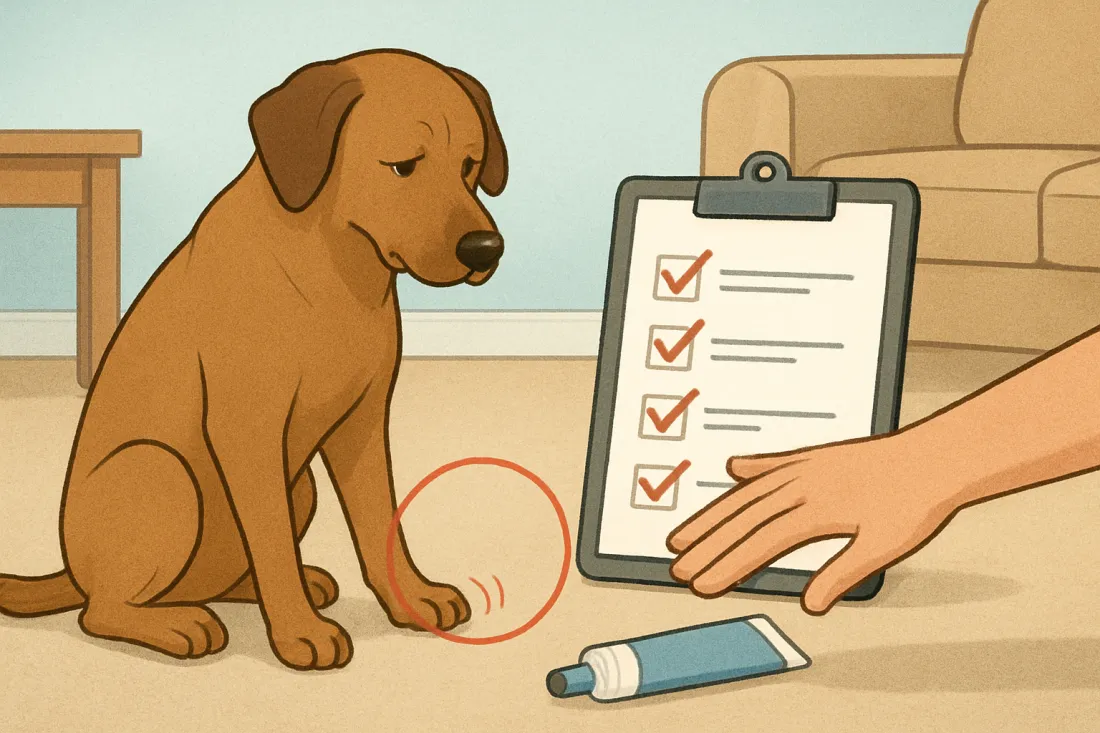
Consistent tracking helps you and your vet see patterns and judge whether treatment is working. Use this checklist once a week (or more often if you prefer) and keep notes for at least a month.
How to use the log
- Pick one day each week to do a full check (for example, Sunday evening).
- Rate each item as 0 = not present, 1 = mild, 2 = moderate, 3 = severe.
- Write short notes about what you saw and when it happened.
- Bring your notes to vet visits.
Weekly arthritis symptom checklist
- Getting up and lying down
- Difficulty rising from bed or floor (0–3)
- Slow or awkward when lying down (0–3)
- Needs help or uses furniture to pull up (0–3)
- Walking and movement
- Limping or uneven gait at a walk (0–3)
- Limping or uneven gait at a trot (0–3)
- Stiffness after rest that lasts more than a few minutes (0–3)
- Reluctance to walk usual distance (0–3)
- Stairs and jumping
- Hesitation or refusal to use stairs (0–3)
- Difficulty jumping into car or onto furniture (0–3)
- Stumbling or slipping on stairs or slick floors (0–3)
- Joint sensitivity
- Flinching, tensing, or moving away when hips are touched (0–3)
- Same for knees, elbows, or shoulders (0–3)
- Licking or chewing at joints (0–3)
- Behavior and mood
- Less interested in play or family activities (0–3)
- Grumpiness when handled or groomed (0–3)
- Restlessness at night or frequent position changes (0–3)
- General notes
- Appetite changes (better, same, worse)
- Any new medications or supplements started
- Exercise changes (longer/shorter walks, new activities)
If scores are rising over two to three weeks, or new areas become painful, contact your vet even if you already have a diagnosis.
Decision criteria: when to call the vet and what to ask
You do not need to wait until your dog is clearly lame to seek help. Use these criteria to decide on timing.
Call your vet soon (within a few days) if
- You notice mild stiffness or limping on most days for more than a week.
- Your dog is reluctant to do activities it used to enjoy (stairs, car, play).
- Behavior changes (grumpiness, withdrawal) appear alongside movement issues.
- Your weekly log shows several items at level 1–2 that are not improving.
Seek urgent vet care (same day if possible) if
- Your dog refuses to bear weight on a leg.
- There is sudden, severe pain, crying out, or inability to stand.
- You see obvious swelling, heat, or deformity of a joint.
- Your dog seems unwell in general (fever, extreme lethargy, vomiting) along with joint pain.
Questions to ask your vet at the first arthritis visit
Bring your notes and videos, then use questions like these to guide the conversation:
- Which joints seem affected, and how advanced do you think the arthritis is?
- What tests do you recommend now, and what will they tell us?
- What are our options for pain relief and long-term joint support?
- Are there activities my dog should avoid or limit?
- What type and amount of exercise is safe and helpful?
- Is my dog at a healthy weight, and if not, what is a safe weight-loss plan?
- Are there home changes (ramps, rugs, raised bowls) that would make life easier?
- How will we monitor whether the treatment plan is working?
- When should we schedule follow-up visits or repeat imaging?
Writing these down beforehand helps you remember them during the appointment.
Common mistakes that make early arthritis worse
Avoiding a few key errors can protect your dog’s joints and comfort.
- Waiting for obvious limping – by the time a limp is constant, joint damage may be advanced. Act on subtle signs.
- Self-medicating with human painkillers – many over-the-counter medications for people are unsafe or even deadly for dogs. Always check with your vet before giving any medication.
- Weekend warrior exercise – long, intense weekend hikes after a week of rest can overload sore joints. Consistent, moderate exercise is usually better than occasional extremes.
- Ignoring weight – extra pounds add stress to every step. Ask your vet for a target body condition and feeding plan.
- Slippery home surfaces – hardwood or tile floors can make movement harder and risk falls. Rugs and runners can make a big difference.
- Skipping regular checkups – routine preventive care visits help catch early changes before they become crises. A resource like an annual vet care schedule for dogs and cats USA can help you stay on track.
Practical next steps after you spot early signs
Once you suspect early arthritis, you can take action in stages.
Step 1: Start observing and recording
- Use the weekly symptom log for at least two weeks.
- Record short videos of your dog walking, trotting, and getting up.
- Note any patterns: time of day, after which activities, which surfaces.
Step 2: Make a vet appointment
- Share that you suspect early arthritis and describe the key signs.
- Mention any sudden changes that might need quicker attention.
- Prepare your list of questions and bring your notes and videos.
Step 3: Make simple home adjustments
While you wait for your appointment (and after), you can:
- Add non-slip rugs or runners on slick floors and stairs.
- Provide a supportive, padded bed away from drafts.
- Use ramps or steps for getting into the car or onto furniture, if allowed.
- Keep walks shorter but more frequent, avoiding sudden intense exercise.
- Monitor food portions to avoid weight gain; ask your vet before making big diet changes.
Step 4: Review training and routines
- Avoid asking for repeated high-impact moves (jumping, sudden stops, tight turns).
- Focus on calm, low-impact mental enrichment: scent games, gentle training, puzzle feeders.
- If you are working on obedience or manners, adapt exercises so they are physically comfortable. Guides such as basic obedience training for rescue dogs can be adjusted to your dog’s physical needs.
FAQ about early signs of arthritis in dogs
What is the earliest sign of arthritis in dogs that owners usually notice?
One of the earliest and most common signs is mild stiffness when getting up after rest, especially in the morning or after a long nap. Dogs may take a few extra steps to “warm up” before moving normally. Owners often notice that their dog is slower to rise from the floor or hesitates briefly before using stairs or jumping, even though the dog still wants to be active.
How can I tell if my dog’s limp is arthritis or just a minor injury?
A minor injury often appears suddenly after a specific event, such as a hard landing or rough play, and may affect one leg clearly. Early arthritis tends to develop gradually over weeks, with stiffness after rest and subtle changes in activity level. If a limp or stiffness lasts more than a few days, keeps returning, or is accompanied by behavior changes like grumpiness or withdrawal, have your vet examine your dog. Only a physical exam and, if needed, imaging can reliably distinguish between the two.
Can young dogs show early signs of arthritis?
Yes, young dogs can develop arthritis, especially if they have underlying joint issues, previous injuries, or grow very quickly. In young dogs, early signs may look like intermittent limping after exercise, reluctance to jump or use stairs, or favoring one leg. Because arthritis is less expected in young dogs, these signs are sometimes dismissed as simple sprains, so it is important to involve your vet if problems keep returning.
What should I do right away if I suspect early arthritis in my dog?
Begin by observing and recording specific signs: when your dog is stiff, which activities are difficult, and how long problems last. Use a simple weekly log and record short videos of your dog walking and getting up. Then schedule a vet appointment, explain what you have seen, and bring your notes and videos. While you wait, keep exercise gentle and consistent, avoid high-impact activities, and make small home adjustments like adding non-slip rugs and providing a supportive bed.
What mistakes should I avoid when my dog starts showing early arthritis signs?
Avoid assuming that changes are just normal aging, waiting for severe limping before calling your vet, or pushing your dog to exercise more in hopes of “working out the stiffness.” Do not give human pain medications without veterinary guidance, as many are unsafe for dogs. Also avoid slippery floors, repeated jumping, and harsh corrections for reluctance to move, since these can increase pain and stress.
How often should a dog with early arthritis see the vet?
The ideal schedule depends on your dog’s age, severity of signs, and treatment plan. Many dogs benefit from at least yearly checkups, and some need more frequent visits when medications are being adjusted or when signs change. Your vet can suggest a follow-up schedule based on your dog’s response to treatment and any new symptoms you record in your weekly log.